

Saffron Market Size and Trends - 2026 to 2033
The saffron market is estimated to be valued at USD 816.8 Mn in 2026 and is expected to reach USD 1,390.8 Mn by 2033, exhibiting a compound annual growth rate (CAGR) of 7.9% from 2026 to 2033.
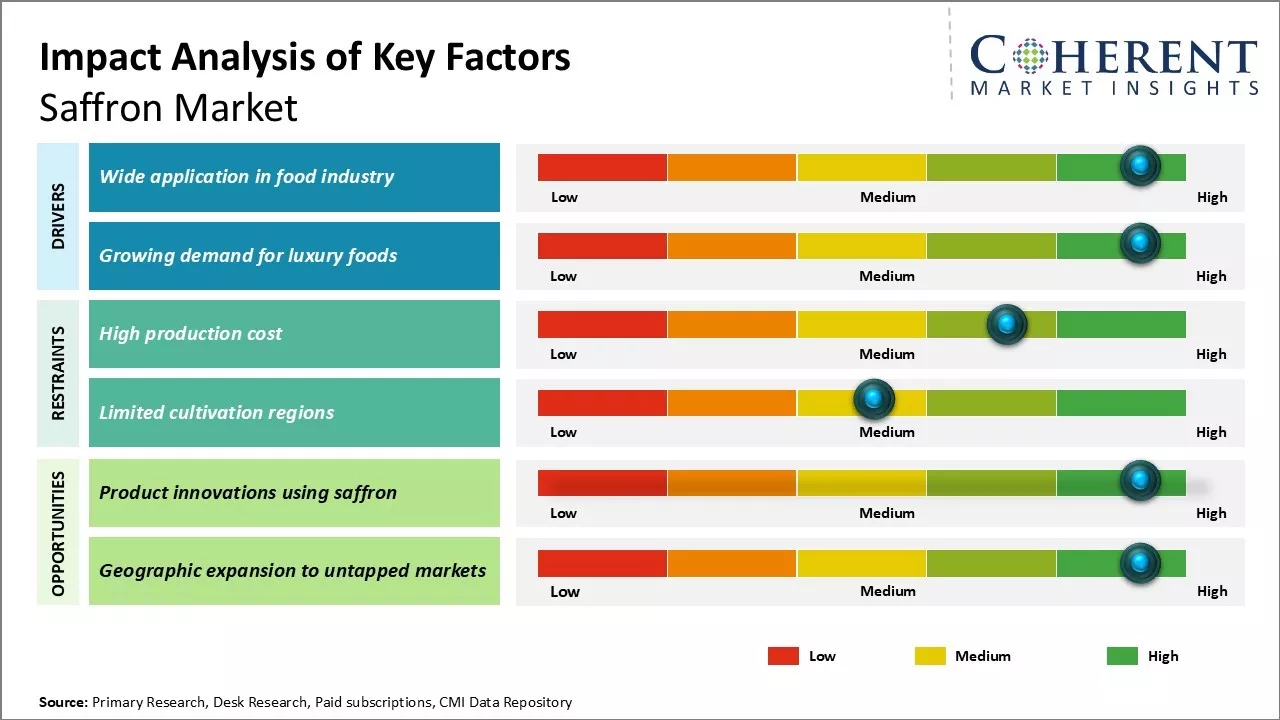
Key Takeaways
- Based on Product Type, Saffron Thread segment will hold around 70.2% of market shares in 2026.
- By End Use, Culinary segment will hold dominating position with 59.8% shares in the global saffron market during the forecast period.
- On the basis of Distribution Channel, Supermarket & Hypermarkets is likely to hold 36.1% share in the global market.
- North America will be the dominating region with 41.7% of market shares during the forecast period.
Market Overview
The increasing demand for natural food colors and flavors along with rising consumer preference for organic spices are some of the key factors driving the market growth. Key trends include premiumisation, traceability and origin verification. Demand is especially strong in major producing regions like Iran, Spain and India, where improved cultivation practices and value-chain investments are enhancing output and quality.
Current Events and their Impact on the Saffron Market
Current Event | Description and its Impact |
Food Authentication Technology and Quality Standards |
|
Emerging Market Demand and Culinary Globalization |
|
Pricing Analysis – Saffron Market
Premium Retail Segment ($80-150/gram)
- Zaran Saffron: Kashmir Super Negin grade retails at $140-150/gram
- Rumi Spice: Afghan saffron priced at $85-95/gram
- The Spice House: Spanish Coupe saffron at $90-110/gram
- Whole Foods Market: Organic Iranian saffron at $75-85/gram
Mid-Range Market ($40-80/gram)
- McCormick: Spanish saffron threads at $45-55/gram
- Simply Organic: Certified organic saffron at $60-70/gram
- Spicely Organics: Various origin blends at $50-65/gram
- Mountain Rose Herbs: Bulk Spanish saffron at $40-50/gram
Economy Segment ($15-40/gram)
- Great Value (Walmart): Basic saffron blend at $15-25/gram
- 365 Everyday Value (Amazon): Standard grade at $20-30/gram
- Kroger Brand: Conventional saffron at $18-28/gram
- Current Industry Events of 2026
- Market Size Estimation
- Regional Breakdown
- Competitive Landscape
- Customer Intelligence
- Segmental Analysis
- Pricing Analysis
- Key Market Drivers, Challenges & Future Trends
- Customized Insights Section
Saffron Market Driver - Wide application in food industry
Saffron is being increasingly used in wide range of food applications all over the world. It is one of the most expensive spices by weight but a little amount adds bright orange-red color and distinctive flavor to foods. The excellent color retention property of saffron makes it suitable for coloring and flavoring various delicacies. Its intense flavor and subtle notes of grassy-sweetness results in enhancing the overall taste of dishes.
Segmental Insights
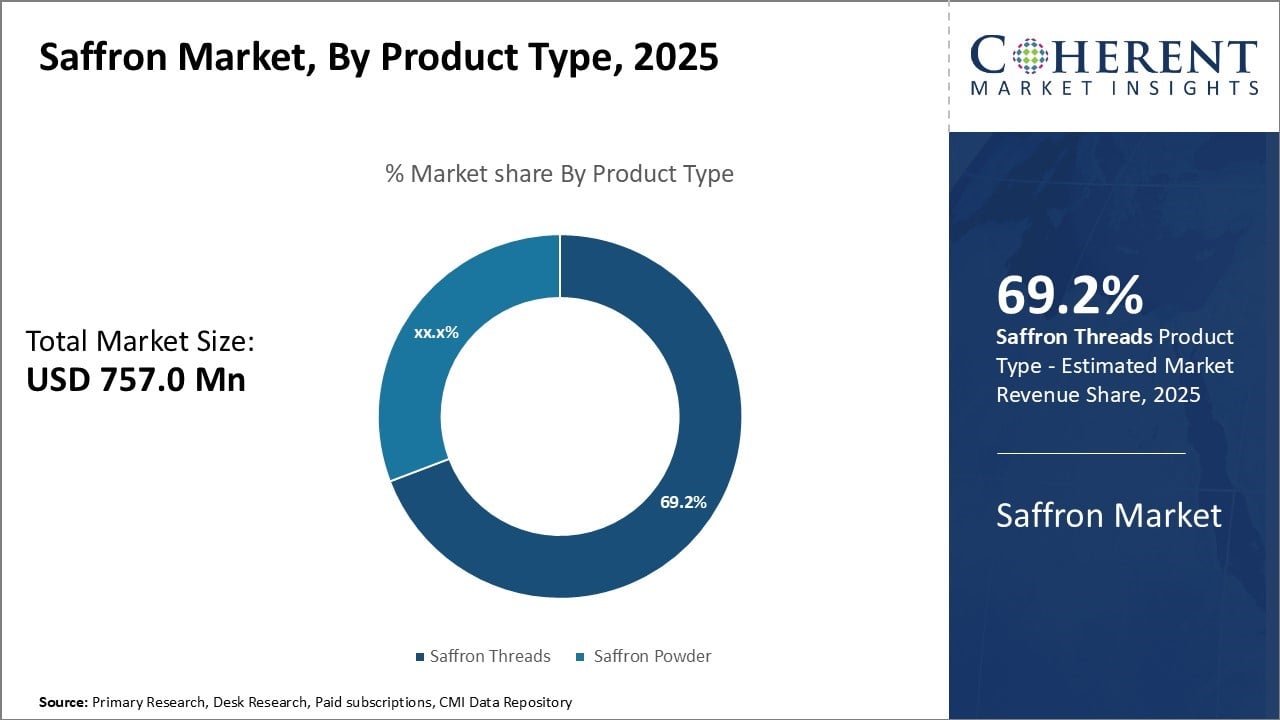
Global Saffron Market Insights, By Product Type
In terms of product type, the saffron threads segment is expected to contribute 70.2% share of the market in 2026, owing to its premium quality and attributes over powdered saffron. Saffron threads, which are the dried stigma of Crocus sativus flowers, offer consumers the purest and highest concentration of bioactive compounds.
They retain the colour, aroma and taste of natural saffron undiluted, unlike powdered variants which can sometimes be adulterated. The intact thread form also makes for easier identification and prevents addition of any illegal colouring agents or dilution.
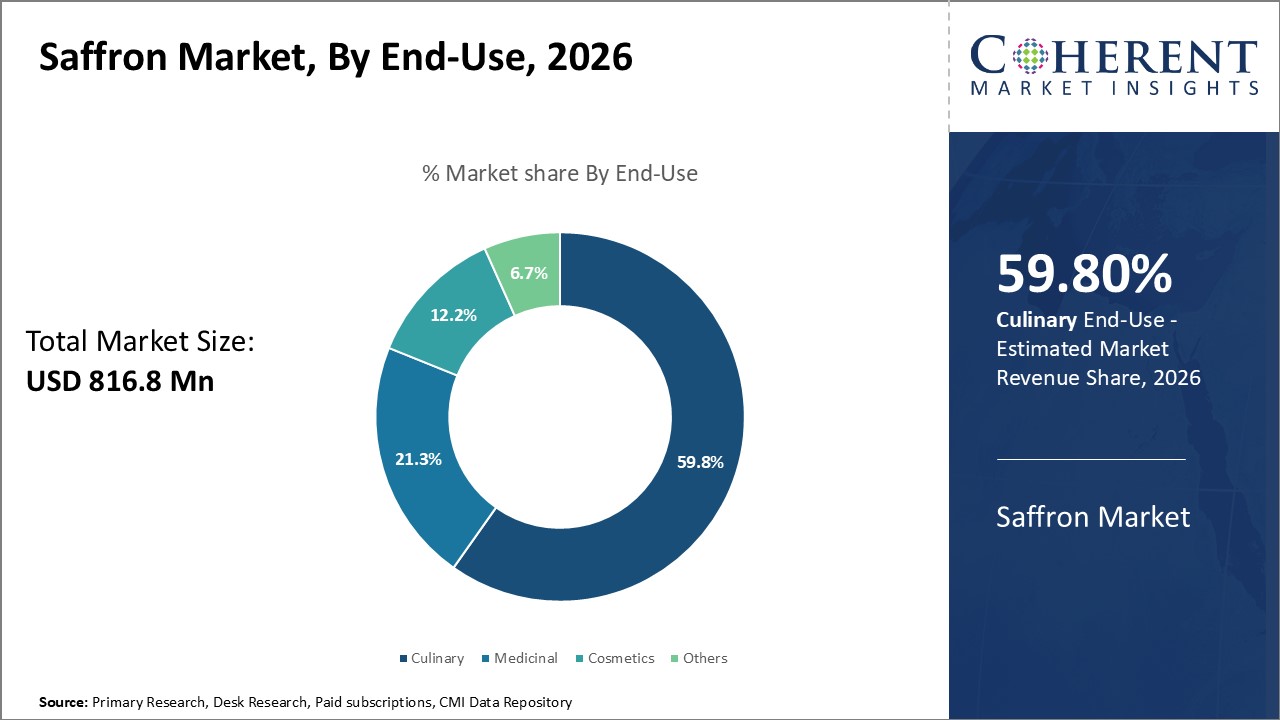
Global Saffron Market Insights, By End-Use
In terms of end-use, the culinary segment is expected to contribute 59.8% share to the saffron market in 2026, owing to its deep-rooted cultural importance in many cuisines globally. Saffron adds its golden yellow hue and distinctive flavour to add grandeur to culinary preparations.
In South Asian, Middle Eastern and Mediterranean cuisines, use of saffron in biryani, pulao, shorba and paella has been a prized tradition for generations. The advent of these ethnic foods worldwide has further popularized saffron's culinary virtues on a global scale.
For instance, in February 2025, Jebel Ali Free Zone (Jafza) joined forces with the renowned Indian multinational food brand Haldiram’s to establish one of the largest saffron processing facilities in the Gulf Cooperation Council (GCC). The agreement was signed on the sidelines of Gulfood in Dubai, according to an official release from Jafza.
Global Saffron Market Insights, By Distribution Channel
In terms of distribution channel, the supermarkets & hypermarkets segment is expected to contribute 36.1% share in 2026, owing to their widespread presence and high store traffic. As modern retail expands in urban and rural markets alike, these retail giants have established themselves as one-stop shops for everyday needs including specialty foods and ingredients.
For instance, the Jammu & Kashmir UT administration launched GI-tagged saffron in the UAE retail market following an agreement with supermarket stores in Dubai.
Regional Insights
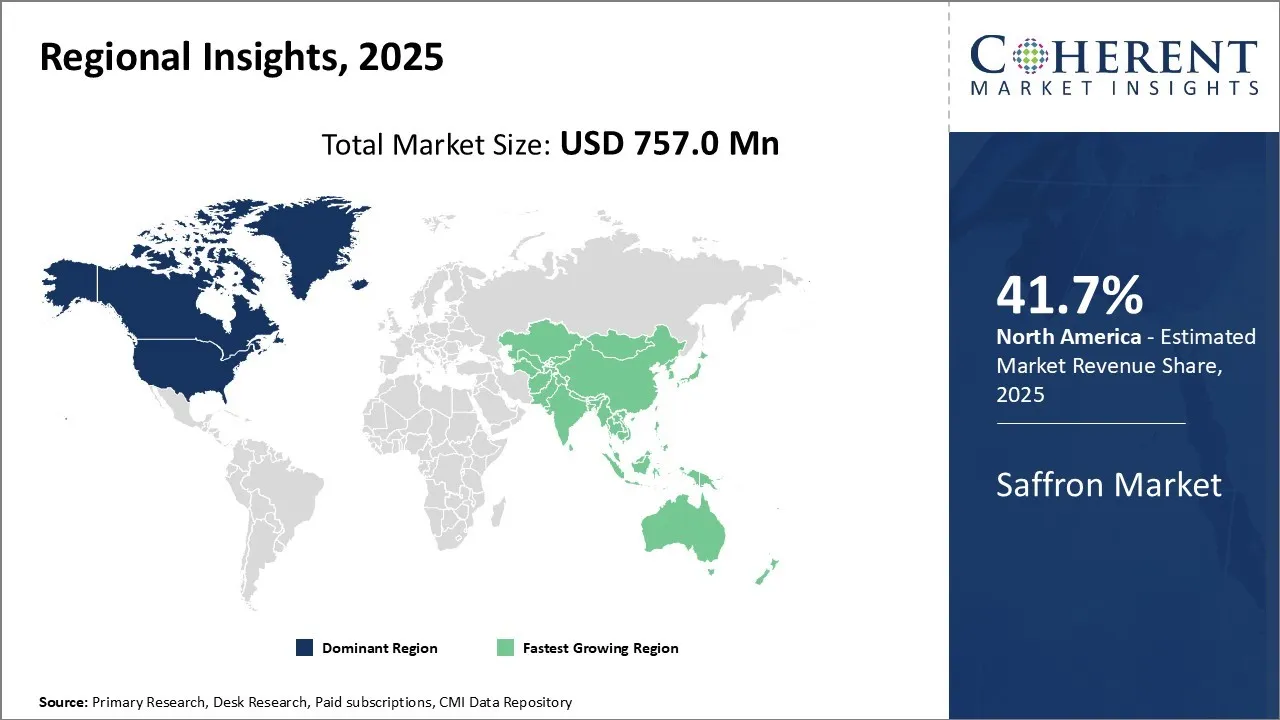
North America Saffron Market Analysis and Trend
North America region dominates the global saffron market. The region is expected to account for 41.7% share of the market in 2026. This prominent position can be attributed to the region's well-established culinary traditions, growing consumer awareness about the health benefits of saffron, and the rising popularity of ethnic cuisines.
For instance, in a bid to promote Kashmir saffron, the New York–based Consulate General of India, in association with the Jammu & Kashmir Trade Promotion Organisation (JKTPO) and the US-India Strategic Partnership Forum (USISPF), organized a virtual conference to promote the export of saffron.
Asia Pacific Saffron Market Analysis and Trend
The Asia Pacific region is the fastest growing market for saffron, fueled by the rising consumer disposable incomes, evolving dietary preferences, and the increasing adoption of traditional medicines and herbal remedies. The Asia Pacific saffron market is poised for continued expansion, driven by the region's burgeoning food and beverage industry, the increasing popularity of ethnic cuisines, and the growing awareness about the therapeutic properties of saffron.
For instance, in June 2024, TeaFit, a health-focused beverage brand, launched premium beverages like Saffron Instant Tea, Lemongrass Instant Tea, and Matcha Latte, sourced from Japan and expanding on various platforms.
India Saffron Market Analysis and Trends
India is the major producers and consumers of saffron, are the key contributors to the region's market growth. India, in particular, is the largest producer and exporter of saffron, catering to the growing domestic demand as well as the global market. This is owing to growing demand from food and beverage industry.
For instance, in October 2024, Starbucks India collaborated with Bombay Sweet Shop to launch a festive menu featuring saffron-infused beverages, mithai-inspired desserts, and exclusive gift hampers, supporting education and skills development for girls in India.
The U.S. Saffron Market Analysis and Trends
The U.S is the largest consumer of saffron in North America, driven by the increasing demand from the food and beverage industry, as well as the growing health-conscious consumer base. Additionally, the region's robust e-commerce platforms and efficient distribution channels have further amplified the accessibility of high-quality saffron products to consumers.
For instance, in October 2024, Saffron Tech, a California-based agricultural technology company focused on innovating saffron production, launched a pilot site that allowed the cultivation of saffron year-round.
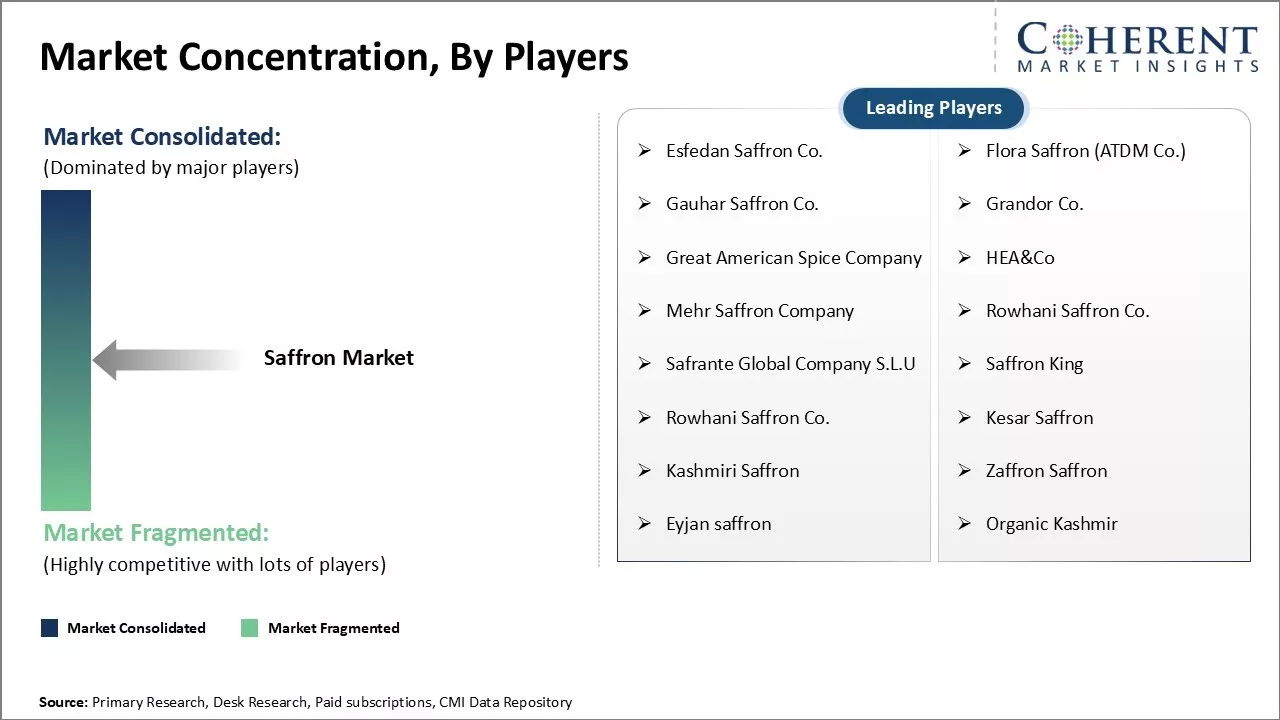
Market Concentration and Competitive Landscape
Key Takeaways from Analyst
As consumer preference shifts towards using more premium and natural ingredients in food, saffron is poised to benefit given its high nutritional and medicinal value. Saffron demand is expected to rise from the food and beverage industry as more consumers and restaurants seek to enhance dishes with saffron's distinctive flavor and color. Additionally, with greater awareness of saffron's traditional use in alternative medicines, demand may increase from the pharmaceuticals and cosmetics industry.
Currently, North America dominates global saffron market. However, countries such as Spain, Greece, India and Italy have also emerged as significant cultivators in recent years, improving supply diversity.
Saffron Industry News
- In August 2023, Tata Consumer Products made a strategic move into the premium Kashmiri saffron market. The company launched its Himalayan brand's Grade 1 saffron. This high-quality offering caters to the growing demand for authentic and pure saffron, leveraging Tata's expertise in the consumer goods sector.
- In June 2023, Natac, announced its acquisition of Inoreal, to enhance its saffron product offerings. This strategic move will leverage Inoreal's brands, Satieral—known for its weight loss benefits and Moodreal.
Market Report Scope
Saffron Market Report Coverage
| Report Coverage | Details | ||
|---|---|---|---|
| Base Year: | 2025 | Market Size in 2026: | USD 816.8 Mn |
| Historical Data for: | 2020 To 2024 | Forecast Period: | 2026 To 2033 |
| Forecast Period 2026 to 2033 CAGR: | 7.9% | 2033 Value Projection: | USD 1,390.8 Mn |
| Geographies covered: |
| ||
| Segments covered: |
| ||
| Companies covered: | Esfedan Saffron Co., Flora Saffron (ATDM Co.), Gauhar Saffron Co., Grandor Co., Great American Spice Company, HEA&Co, Mehr Saffron Company, Rowhani Saffron Co., Safrante Global Company S.L.U, Saffron King, Rowhani Saffron Co., Kesar Saffron, Kashmiri Saffron, Zaffron Saffron, Eyjan saffron, and Organic Kashmir | ||
| Growth Drivers: |
| ||
| Restraints & Challenges: |
| ||
Saffron Market Opportunity: Product Innovations using Saffron
The saffron market has huge potential for product innovations using this exotic spice. Due to its rich color and distinct flavor, saffron can be utilized in developing new food and beverage products. Food manufacturers can come up with saffron infused teas, coffees, biscuits, cakes and desserts to expand the existing consumer base for saffron.
Apart from the food industry, saffron also has applications in health and personal care sector. Cosmetic and herbal companies can leverage the anti-oxidant and skin healing properties of saffron and introduce premium lines of face creams, lotions and other beauty products.
Market Segmentation
- Product Type Insights (Revenue, USD Mn, 2021 - 2033)
- Saffron Threads
- Saffron Powder
- End-use Insights (Revenue, USD Mn, 2021 - 2033)
- Culinary
- Medicinal
- Cosmetics
- Others
- Distribution Channel Insights (Revenue, USD Mn, 2021 - 2033)
- Supermarkets/Hypermarkets
- Specialty Stores
- Online Retailers
- Direct Sales
- Regional Insights (Revenue, USD Bn, 2021 - 2033)
- North America
- U.S.
- Canada
- Latin America
- Brazil
- Argentina
- Mexico
- Rest of Latin America
- Europe
- Germany
- U.K.
- Spain
- France
- Italy
- Russia
- Rest of Europe
- Asia Pacific
- China
- India
- Japan
- Australia
- South Korea
- ASEAN
- Rest of Asia Pacific
- Middle East
- GCC Countries
- Israel
- Rest of Middle East
- Africa
- South Africa
- North Africa
- Central Africa
- Key Players Insights
- Esfedan Saffron Co.
- Flora Saffron (ATDM Co.)
- Gauhar Saffron Co.
- Grandor Co.
- Great American Spice Company
- HEA&Co
- Mehr Saffron Company
- Rowhani Saffron Co.
- Safrante Global Company S.L.U
- Saffron King
- Rowhani Saffron Co.
- Kesar Saffron
- Kashmiri Saffron
- Zaffron Saffron
- Eyjan saffron
- Organic Kashmir
Sources
Primary Research interviews
- Saffron farmers and cultivators
- Spice traders and distributors
- Food processing companies executives
- Retail chain procurement managers
- Others
Databases
- UN Comtrade Database
- Euromonitor International
- Others
Magazines
- Spice Business Magazine
- Food Processing Magazine
- International Food Ingredients
- Specialty Food Magazine
- Others
Journals
- Journal of Food Science and Technology
- Food Chemistry Journal
- International Journal of Food Properties
- Others
Newspapers
- Financial Times
- The Wall Street Journal
- Economic Times
- Bloomberg News
- Others
Associations
- International Spice Association (ISA)
- European Spice Association (ESA)
- All India Spices Exporters Forum
- National Saffron Mission (India)
- Others
Public Domain sources
- Government agriculture department reports
- Trade statistics from customs departments
- Ministry of Agriculture publications
- World Bank commodity reports
- Others
Proprietary Elements
- CMI Data Analytics Tool
- Proprietary CMI Existing Repository of information for last 8 years
*Definition: Saffron threads are the dried stigmas of Crocus sativus, a type of crocus flower. Carefully hand-picked in Fall, each blossom yields just three delicate crimson stigmas. Once harvested, the stigmas are carefully dried and sorted for quality and purity. Known as the 'golden spice', saffron lends a vivid yellow-orange hue along with subtle notes of honey and hay to foods. As one of the world's most expensive spices by weight, high quality saffron sold at the local saffron market guarantees maximum flavor and color.
Get access to 250+ pages report
Every segment, forecast, competitor profile and data table behind the analysis above — available for instant download.
- ESOMAR Member
- ISO 9001:2015 Certified
- D-U-N-S Registered
- GDPR & CCPA Compliant
Missing comfort of reading report in your local language? Find your preferred language:
Transform your Strategy with Exclusive Trending Reports
Frequently Asked Questions
The Saffron Market is estimated to be valued at USD 816.8 Mn in 2026, and is expected to reach USD 1,390.8 Mn by 2033.
The CAGR of the Saffron Market is projected to be 7.9% from 2026 to 2033.
Wide application in food industry and growing demand for luxury foods are the major factors driving the growth of the saffron market.
High production cost and limited cultivation regions are the major factors hampering the growth of the saffron market.
In terms of product type, the saffron threads segment is estimated to dominate the market revenue share in 2026.
Esfedan Saffron Co., Flora Saffron (ATDM Co.), Gauhar Saffron Co., Grandor Co., Great American Spice Company, HEA&Co, Mehr Saffron Company, Rowhani Saffron Co., Safrante Global Company S.L.U, Saffron King, Rowhani Saffron Co., Kesar Saffron, Kashmiri Saffron, Zaffron Saffron, Eyjan saffron, and Organic Kashmir are the major players.
North America is expected to lead the saffron market in 2026.