

Women's Swimwear Market Size and Forecast – 2026-2033
Women's Swimwear Market is estimated to be valued at USD 9,877.8 Mn in 2026 and is expected to reach USD 12,198.1 Mn in 2033, exhibiting a compound annual growth rate (CAGR) of 3.1% from 2026 to 2033.
Key Takeaways
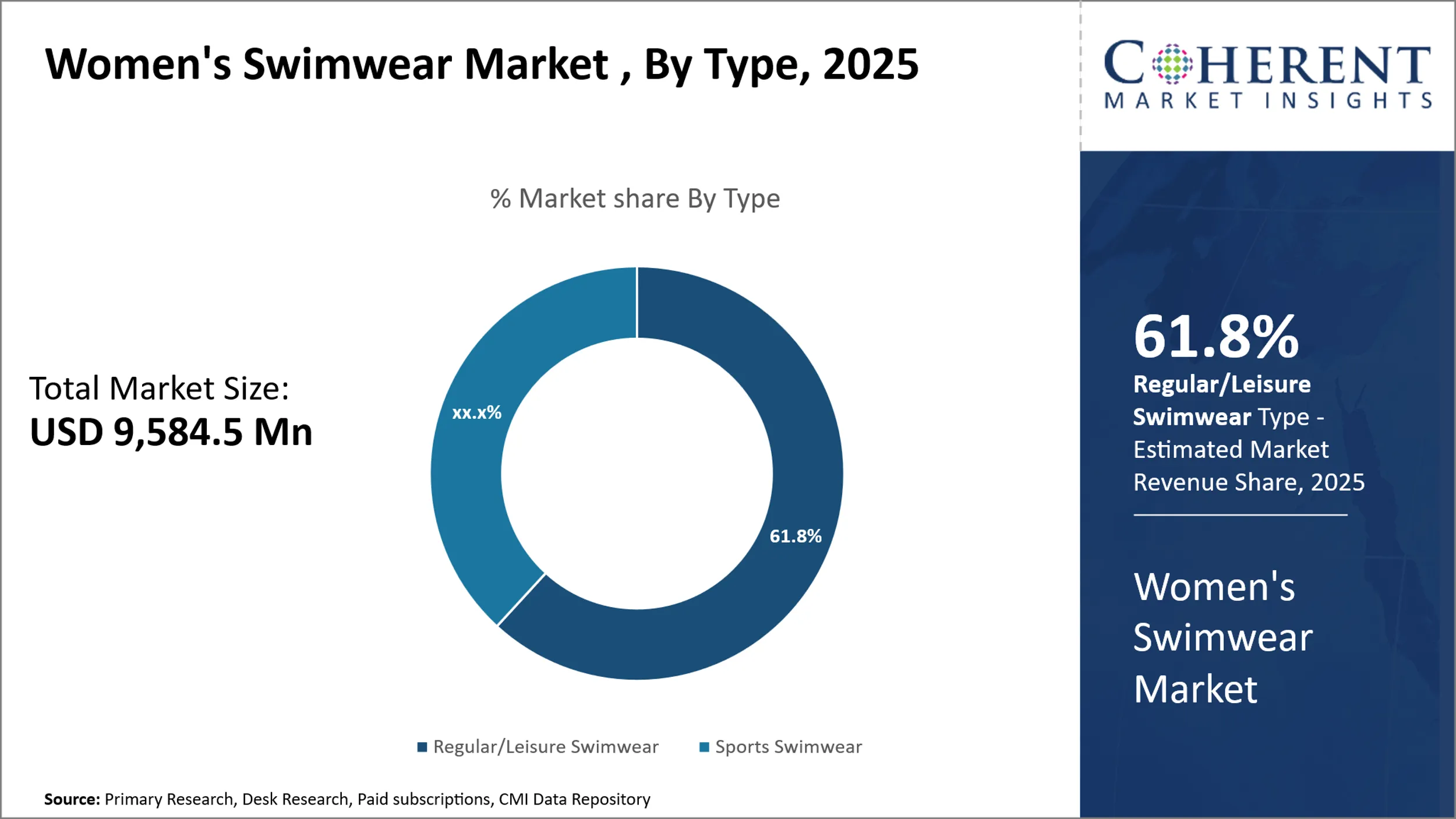
- Based on Type, Regular/Leisure Swimwear Segment is expected to dominate the global market over the forecast period with 62.8% market share in 2026.
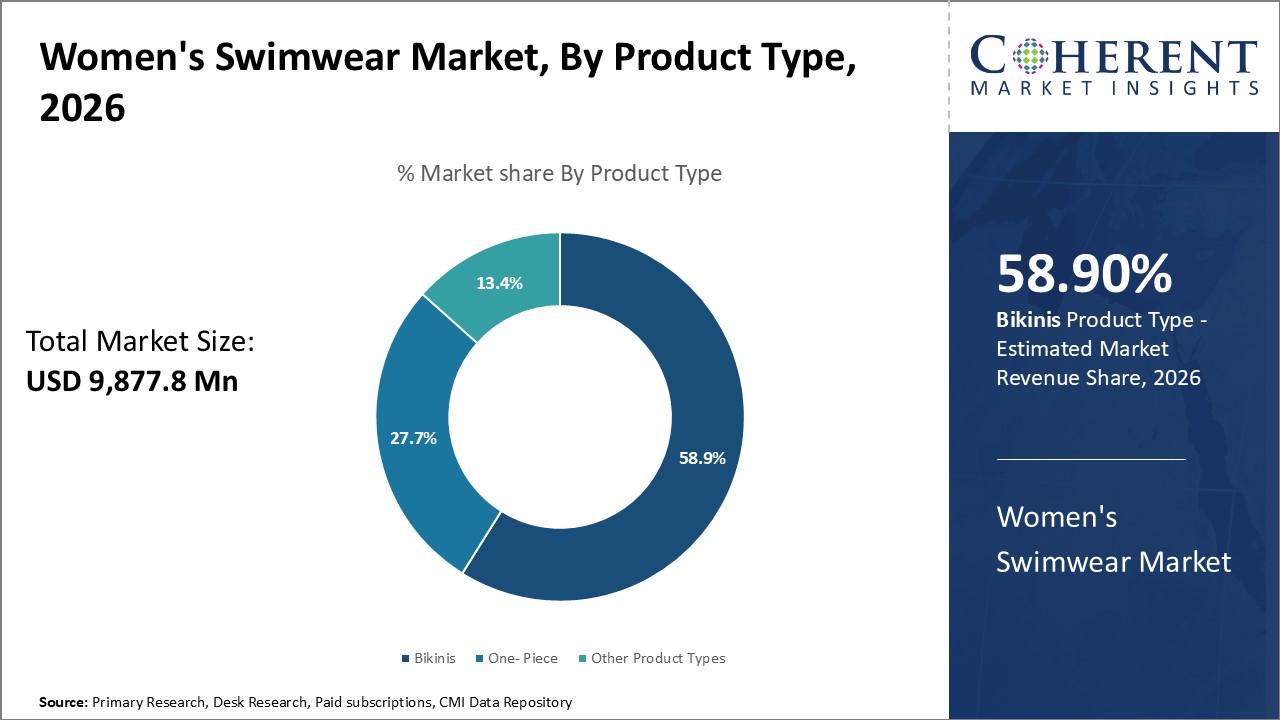
- Based on product type, Bikinis segment is expected to dominate the global market over the forecast period. This is attributed to their style and comfort features.
- Based on category, Mass segment is expected to dominate the global market over the forecast period.
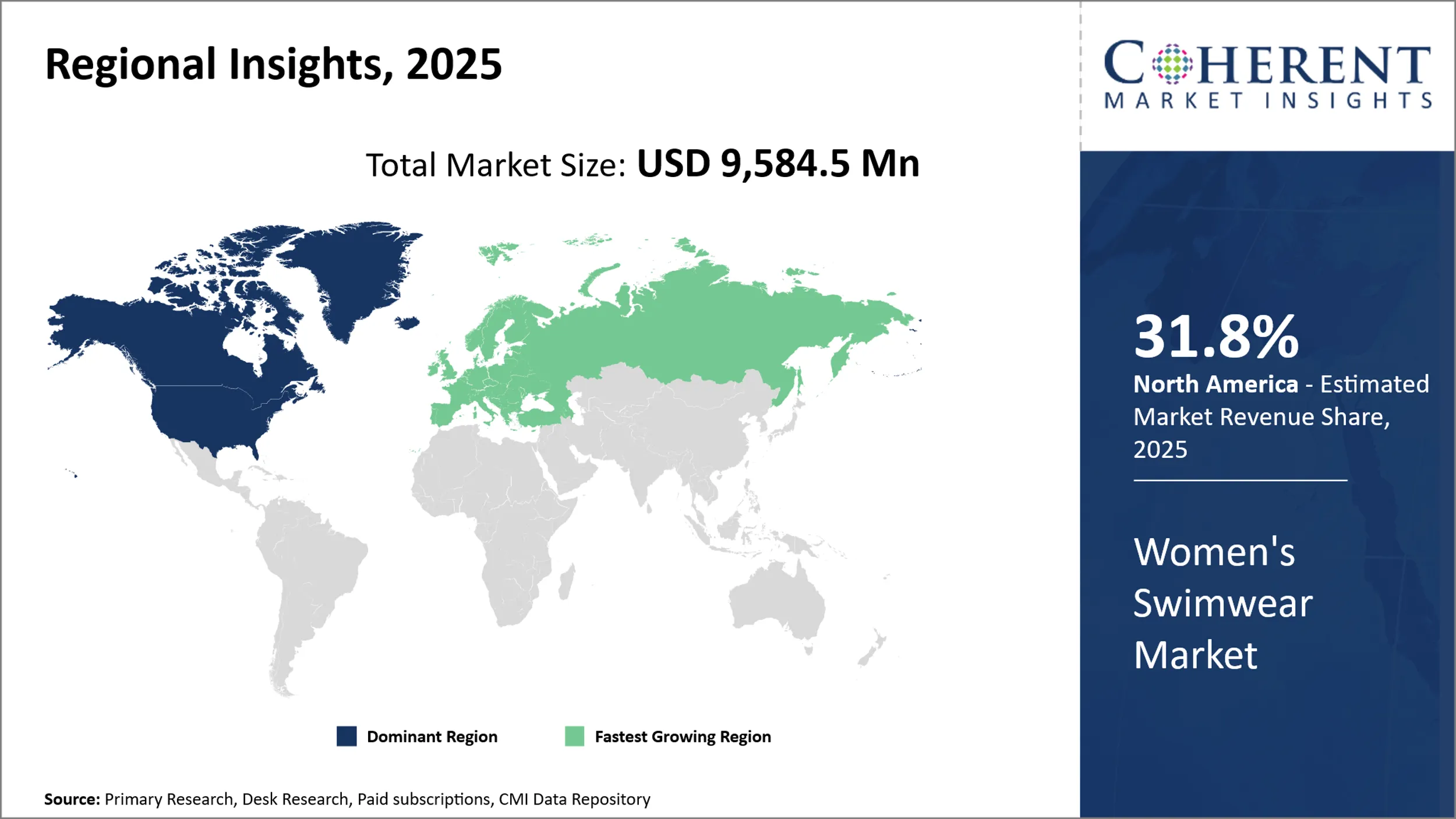
- North America dominates the market with 31.81 % Women's swimwear market share in 2026.
- The Europe region is the second-largest regional contributor to the women’s swimwear market with 29.22 % market share in 2026.
- Asia- Pacific holds 29.30% market share in the Women's swimwear market in 2026.
Market Overview
The women's swimwear industry is growing, with mounting demands for stylish, functional, and comfortable swimwear. With style, performance, and sustainability becoming the top criteria when choosing swimwear, the industry is more dynamic and diverse. The trend towards personalized swimwear, including customizable fit and inclusive sizes, is also adding to the market's growth. Fashion trends are having a significant impact on the market, with each season witnessing new designs and styles being launched, many of which are celebrity-endorsed and popularized by social media influencers.
Current Events and its Impact
Current Events | Description and its impact |
Emergence of Eco-Friendly and Sustainable Swimsuits |
|
Technological Advancements in Swimwear Fabric |
|
Pricing Analysis for the Women's Swimwear Market
Pricing strategy in the women's swimwear industry is quite different among various segments as it responds to various consumer demands and desires. Budget swimwear sells for $10 to $30 at the bottom end of the market. This category is supplied by mass-market retailers such as Walmart and Target, with simple designs made from man-made fibers. Though cheap, they may not have the sophisticated features of more expensive items, including UV protection or green credentials.
The mid-range market has prices between $30 and $80. Such brands as ASOS, H&M, and Zara offer swimwear that offers value for fashion with relatively more lasting materials and fashionable features. Such a segment tends to appeal to more consumers who are looking for fashionable yet affordable products.
Premium swimwear brands such as Lacoste, Speedo, and Seafolly position their products within the $80 to $200+ category. These brands provide swimwear constructed from high-quality materials such as Lycra, with increased comfort, fit, and performance benefits, including chlorine resistance or rapid drying technology. Environmentally friendly brands such as Summersalt and Girlfriend Collective can also position swimwear in this category, selling sustainably produced pieces.
Generally, prices for women's swimwear are dictated by aspects such as the design level, quality of material, brand name, and other aspects such as sustainability and performance. With increased demand for high-performance and sustainable products, premium pricing is increasingly becoming a trend.
- Current Industry Events of 2026
- Market Size Estimation
- Regional Breakdown
- Competitive Landscape
- Customer Intelligence
- Segmental Analysis
- Pricing Analysis
- Key Market Drivers, Challenges & Future Trends
- Customized Insights Section
Digital Trends Affecting Consumers' Purchase Decisions in the Women's Swimwear Industry
The women's swimwear industry is increasingly influenced by digital trends, with social media and e-commerce sites at the forefront of consumer decision-making. E-commerce sites have evolved as the leading source for buying swimwear, with consumers appreciating the ease of online purchase and the ease of comparison with regard to prices, styles, and reviews.
Retailers such as ASOS and Nordstrom have also improved their web-based buying experience by providing such features as virtual try-ons and 3D product images, enabling consumers to visualize more clearly how swimwear will fit on their body, thus eliminating purchase uncertainty and returns.
Social media, especially Instagram and TikTok, is a key influencer of trends and consumer participation. Celebrities, influencers, and user-generated content on these websites endorse swimwear brands and styles, which have the potential to go viral. Brands like Frankie's Bikinis and Bikinis by Tori Praver use influencer collaborations to gain further visibility and establish brand loyalty. Social media also facilitates one-on-one contact with consumers, inducing a sense of community and belonging among swimwear brands.
Also, quick e-commerce reviews and ratings influence the consumer decision-making process, with consumers increasingly making purchases based on social proof. Such an online-first strategy has thus made the swimwear industry more transparent and accessible, shaping the purchasing process and its reach to international consumers.
Consumer Preferences, Feedback, and Behaviour for Women's Swimwear
Consumer feedback for women's swimwear reflects a move towards body positivity, inclusivity, and sustainability. Consumers strongly indicate that they want swimwear that is not only well-fitted but also represents their values, including environmental friendliness and body positivity. This emphasis on more sustainable products has also grown as consumers increasingly favor eco-friendly materials, such as recycled plastic and organic textiles. Companies such as Summersalt and Girlfriend Collective have been well-received by consumers for their sustainability efforts, with consumers enjoying the openness about manufacturing processes and material sourcing.
Comfort and fit remain top of mind for consumers when it comes to swimwear. Women want swimwear that is supportive without compromising style, particularly in higher cup sizes or for athletic figures. Brands that provide extended sizing, such as Swimsuits for All and Aerie, are becoming more popular since they serve a broad size population, committing to the body-positive movement. Customers want swimwear that allows them to feel confident, and many choose brands that provide inclusive sizes and numerous styles to fit various body types.
Price sensitivity is similarly a significant aspect of consumer behaviour. While some are willing to pay for quality or environmentally friendly-made swimwear, price still matters to a large segment of the market. Consumers tend to be looking for the best value for money, trading off style, durability, and ethics.
Social media plays a significant role in shaping consumer trends, with Instagram and TikTok serving as influential platforms for the discovery of new swimwear fashion. User-generated content and influencer partnerships have emerged as leading drivers of purchasing. Consumers increasingly read online reviews before making buying decisions, appreciating feedback from other consumers regarding fit, quality, and performance. Overall, the women's swimwear market is characterized by a move toward conscious consumption, with a focus on sustainability, diversity, and an enhanced personalized shopping experience.
Global Women’s Swimwear Market Drivers:
- Changing consumer preference towards fitness and aquatic activities to promote market growth
The women's swimwear market is experiencing robust growth on the back of increased awareness towards health benefits of swimming as well as increased embracement of active lifestyle. Freestyle swimming at a light to moderate rate can burn 472 calories an hour for a 130-pound woman and 563 calories for a 155-pound woman, as indicated by the Wisconsin Department of Health. More experienced swimmers training at a more vigorous rate will burn 590 calories an hour for a 130-pound woman and 704 for a 155-pound woman.
- The impact of social media is going a long way in the overall growth of the women's swimwear market
Girlfriend Collective introduced its initial swimwear collection, "GF Swim," created from recycled products, and used TikTok challenges to promote user-generated content and build a sustainable community. Cuup, whose designs are minimalist in nature, had a vibrant presence on Instagram, interacting with its 224.9K followers in the form of frequent posts and stories, although its engagement percentage was somewhat low at 0.06%.
In 2024, swimwear companies used social media to increase consumer interaction and sales. Summersalt's "Every Body Is a Summersalt Body" campaign included plus-size models, boosting inclusivity of the body and appealing to a broad audience.
Global Women's Swimwear Market Opportunities:
Increased emphasis on making people more aware of the health benefits of swimming among consumers is likely to offer substantial growth opportunities. In 2024, the UK maintained its interest in promoting swimming for health and wellbeing through several initiatives. Among these was the increasing number of women, especially those undergoing menopause, taking up cold water swimming. University College London (UCL) conducted a study that revealed regular cold water swimming improved symptoms like anxiety, mood swings, and hot flushes in menopausal women significantly.
Growing demand for slimming swimsuits is expected to provide lucrative market opportunities. Slimming swimsuits are integrated shapewear that offer more compressive to physically smooth bulges. Therefore, there is a growing need for slimming swimsuits since women are more mindful of how they move around in swimsuits. For example, companies like Miracle cut provides numerous slimming swimsuits in colors and designs with multiple prints. The company provides slimming swimsuits in various sizes.
Global Women's Swimwear Market Trends:
- UV swimwear is a new trend
UV swimwear is also made to protect against sun and is produced using a well-rated material for its UV protection level. These swimwear blocks out UV rays that cause harm by up to 98% and also provide necessary sun protection. This swimwear provides additional protection from the sun. Companies that offer UV swimwear include Patagonia, Land's End, UV fashions, SwimZip and Cabana Life.
- Handmade swimsuits are becoming trendy.
There is an increased popularity for handmade swimsuits since people are becoming extremely conscious of the advantages of these swimsuits on an individual level, and they also do good to the environment. Swimsuits made by hand are exclusive and one-of-a-kind. They are distinct from the machine-manufactured and trendy swimsuits.
Segmental Analysis
Global Women’s Swimwear Market Insights, by type
Based on type, the market is segmented into Sports Swimwear and Regular/Leisure Swimwear. Out of which, Regular/Leisure Swimwear is expected to dominate the global market over the forecast period and this is attributed to the influence of social media on consumers purchasing behaviour.
Global Women’s Swimwear Market Insights, by product type
Based on product type, the market is segmented into One- Piece, Bikinis, and Other Product Types. Out of which, Bikinis is expected to dominate the global market over the forecast period and this is attributed to their style and comfort features. One- Piece segment is also expected to witness significant growth in the near future and this is owing to the growing demand from sports swimmers. They are low maintenance choice, offers high sun coverage, support and coverage in all the right places, hence makes it right choice for the water sports activities.
Global Women’s Swimwear Market Insights, by category
Based on category, the market is segmented into Mass and Premium. Out of which, Mass is expected to dominate the global market over the forecast period. Premium segment is also expected to witness significant growth in the near future.
Global Women’s Swimwear Market Insights, by distribution channel
Based on distribution channel, the market is segmented into Online Stores and Offline Stores. Out of which, Offline Stores is expected to dominate the global market over the forecast period and this is attributed to the advantages offer such as in-store benefits, no shipping fees, coupled with the implementation of sensory experiences. Online Stores segment is also expected to witness significant growth in the near future and this is owing to the convenience of the online platform.
Global Women’s Swimwear Market: Regional Insights
Asia Pacific Women’s Swimwear Market Trends and Analysis
Regionally, the Asia Pacific region is the largest regional contributor to the global women’s swimwear market. Countries like China, Japan, India, South Korea, Malaysia, Indonesia, Philippines, Taiwan, and Thailand are among the leading producers of women’s swimwear in the world. With the rapid urbanization in these countries, the demand for textiles and apparel by women has increased. In addition, the popularity of swimming has been on a steady rise.
Women’s Swimwear Market Dominating Countries
United States Women’s Swimwear Market Analysis and Trend
The United States is the biggest and most significant market for women's swimwear, propelled by a mix of robust retail availability, varied customer preferences, and beach lifestyle. Top swimwear companies such as Victoria's Secret, Aerie, and Speedo lead the market, featuring extensive assortments including fashion-style bikinis and activity-oriented swimsuits.
Brazil Women’s Swimwear Market Analysis and Trend
Brazil is an important market for women's swimwear, due to its legendary beach culture and a solid tradition of swimwear design. Brazil is famous for its colorful, sensual, and high-fashion swimwear and is home to some world-famous brands such as Cia Marítima and Lenny Niemeyer that serve both the domestic and foreign markets. The popularity of the country as a destination for tourists also generates demand, making it a major swimwear exporter in the world.
Italy Women’s Swimwear Market Analysis and Trend
Italy is famous for its luxury and sustainable fashion swimwear, with Calzedonia, La Perla, and Oroton representing the country's dominant influence on international swimwear trends. Reputed for their elegant designs and high-quality materials, Italian swimwear brands find an appeal with the high-end consumer, encompassing elegance and functionality. Italy's dominance of international fashion trends is not limited to their clothing, with their swimwear designs tending to set the pace for seasonal trends as well.
Market Report Scope
Women’s Swimwear Market Report Coverage
| Report Coverage | Details | ||
|---|---|---|---|
| Base Year: | 2025 | Market Size in 2026: | USD 9,877.8 Mn |
| Historical Data for: | 2020 To 2024 | Forecast Period: | 2026 To 2033 |
| Forecast Period 2026 to 2033 CAGR: | 3.1% | 2033 Value Projection: | USD 12,198.1 Mn |
| Geographies covered: |
| ||
| Segments covered: |
| ||
| Companies covered: | LVMH Moët Hennessy Louis Vuitton, Marysia LLC, Chanel Group, Missoni SpA, Swimwear Anywhere Inc., La Jolla Group, LA Perla, TJ Swim, Pentland Group PLC, Adidas AG, Wacoal Holdings Corporation, and Puma Inc. | ||
| Growth Drivers: |
| ||
| Restraints & Challenges: |
| ||
Global Women’s Swimwear Market: Key Developments
- In January 2024, Vitamin A's ReLux range, which debuted, includes swimwear constructed from 80% recycled ghost fishing nets and 20% recycled spandex, with prices ranging from $200 to $240. Likewise, ECONYL and REPREVE are becoming increasingly popular as environmentally friendly textiles within the industry.
- In 2025, Kelsey Anderson, "The Bachelor" winner, dropped a swimsuit line with Cupshe, with universally appealing designs that can be worn on any occasion. Likewise, Megan Thee Stallion dropped her swimsuit line, Hot Girl Summer, in collaboration with Walmart, with size-inclusive pieces at budget-friendly prices.
Global Women’s Swimwear Market: Key Companies Insights
The global women's swimwear market is highly competitive. This is attributed to continuous launch of new technologies due to ongoing R &D and efforts by value chain participants. Moreover, key players are adopting various business growth strategies in order to expand their presence on regional as well as global basis. Some of the key players in the global women's swimwear market are LVMH Moët Hennessy Louis Vuitton, Marysia LLC, Chanel Group, Missoni SpA, Swimwear Anywhere Inc., La Jolla Group, LA Perla, TJ Swim, Pentland Group PLC, Adidas AG, Wacoal Holdings Corporation, and Puma Inc.
Analyst View
The women's swimwear industry is influenced by changing consumer tastes, technological innovation, and local economic conditions. Key drivers are increasing health awareness, as swimming becomes an increasingly popular form of fitness activity, fuelled by government programs encouraging water sports and health. Sustainability is also a key driver, with companies focusing on recycled content and responsible production to match environmentally aware consumption patterns.
Shift towards inclusive designs—fashioning items for a variety of body types and fashion sensibilities—is increasing consumer appeal. Restraints are from economic uncertainty, since discretionary expenditure on upscale swimwear remains inflation and disposable income shift sensitive. Competition from fast-fashion sellers of low-priced competitors complicates premium brands. Supply chain complexities, especially dependence on synthetic fibre like polyester, also create risks under raw material cost fluctuations.
Chances exist in technological advancement, i.e., UV-protective and fast-drying materials, that amplify functionality and resonate with performance-driven demand. Digital platforms supporting customized designs and online fittings are redefining consumer interaction strategies. Developing markets in Asia-Pacific, fuelled by urbanization and growing involvement in recreational swimming, hold untapped potential. At the same time, luxury tourism in the Middle East is driving demand for upscale and conservative swimwear designs.
Regionally, Asia-Pacific is leading because of strong manufacturing infrastructures and increasing disposable incomes, while North America and Europe are innovation centres, tapping into brand loyalty and fitness culture. Latin America and the Middle East are becoming high-growth markets due to tourism and demographic change to younger, fashion-orientated consumer bases. Strategic partnerships between influencers and brands to tap into social media-driven fashion trends will be key to maintaining momentum.
Market Segmentation
- Global Women’s Swimwear Market, By Type (Revenue, USD Mn, 2021 - 2033)
- Sports Swimwear
- Regular/Leisure Swimwear
- Global Women’s Swimwear Market, By Product Type (Revenue, USD Mn, 2021 - 2033)
- One- Piece
- Bikinis
- Other Product Types
- Global Women’s Swimwear Market, By Category (Revenue, USD Mn, 2021 - 2033)
- Mass
- Premium
- Global Women’s Swimwear Market, By Distribution Channel (Revenue, USD Mn, 2021 - 2033)
- Online Stores
- Offline Stores
Regional Insights (Revenue, USD Mn, 2021 - 2033)
- North America
- U.S.
- Canada
- Latin America
- Brazil
- Argentina
- Mexico
- Rest of Latin America
- Europe
- Germany
- U.K.
- Spain
- France
- Italy
- Russia
- Rest of Europe
- Asia Pacific
- China
- India
- Japan
- Australia
- South Korea
- ASEAN
- Rest of Asia Pacific
- Middle East
- GCC Countries
- Israel
- Rest of Middle East
- Africa
- South Africa
- North Africa
- Central Africa
- North America
- Company Profiles
- LVMH Moët Hennessy Louis Vuitton
- Marysia LLC
- Chanel Group
- Missoni SpA
- Swimwear Anywhere Inc.
- La Jolla Group
- LA Perla
- TJ Swim
- Pentland Group PLC
- Adidas AG
- Wacoal Holdings Corporation
- Puma Inc.
Sources
Primary Research Interviews:
- Adidas AG (Key Player)
- LVMH Moët Hennessy Louis Vuitton (Key Player)
- PVH Corp (Key Player, Calvin Klein parent company)
- Pentland Group (Key Player, Speedo brand owner)
- Others
Databases:
- Others
Magazines:
- Women's Wear Daily (Fashion trends)
- Vogue Business (Market analysis)
- Swimwear & Resortwear Magazine (Industry-specific trends)
- Others
Journals’:
- Journal of Fashion Marketing and Management
- International Journal of Retail & Distribution Management
- Textile Research Journal
- Others
Newspapers:
- The Business of Fashion (Industry news)
- WWD (Market trends)
- Financial Times (Economic impacts on retail)
- Others
Associations:
- Swimwear Association of America
- International Swimwear and Activewear Market Group
- Sustainable Apparel Coalition (Eco-friendly trends)
- Others
Public Domain Sources:
- GlobeNewswire (Market valuation projections)
- GlobalGrowthInsights.com (Regional share analysis)
- ResearchAndMarkets.com (CAGR data)
- MordorIntelligence.com (Competitive landscape)
- Others
Proprietary Elements:
- CMI Data Analytics Tool
- Proprietary CMI Existing Repository of information for last 8 years
*Definition: women's swimwear includes one-piece suits, two-piece suits, and tankinis. There are many different styles available ranging from high-waisted, halter, to side-tie styles.
Get access to 250+ pages report
Every segment, forecast, competitor profile and data table behind the analysis above — available for instant download.
- ESOMAR Member
- ISO 9001:2015 Certified
- D-U-N-S Registered
- GDPR & CCPA Compliant
Missing comfort of reading report in your local language? Find your preferred language:
Transform your Strategy with Exclusive Trending Reports
Frequently Asked Questions
The Women’s Swimwear Market size is estimated to be valued at USD 9,877.8 Mn in 2026, and is expected to reach USD 12,198.1. Mn by 2033.
The CAGR of the global Market is projected to be 3.1% from 2026 to 2033.
Shifting consumer inclination towards fitness and water activities and influence of social media are fuelling the market.
The Regular/Leisure Swimwear segment is the leading component segment in the market.
Strict government regulations and presence of counterfeit products are the major factors restraining the market.
LVMH Moët Hennessy Louis Vuitton, Marysia LLC, Chanel Group, Missoni SpA, Swimwear Anywhere Inc., La Jolla Group, LA Perla, TJ Swim, Pentland Group PLC, Adidas AG, Wacoal Holdings Corporation, and Puma Inc.