Angioimmunoblastic T-Cell Lymphoma Market Analysis & Forecast: 2026-2033
Angioimmunoblastic T-Cell lymphoma market size is estimated to be valued at USD 1.28 Bn in 2026 and is expected to reach USD 2.20 Bn in 2033, exhibiting a compound annual growth rate (CAGR) of8.1% from 2026 to 2033.
Lymphomas are a type of cancer that affects lymphocytes which are further divided into two categories based on the type of cell into T-lymphocytes and B-lymphocytes. Angioimmunoblastic T-cell lymphoma (AITL) is rare form of non-Hodgkin lymphoma which effects the T-lymphocytes of lymphatic system. The AITL is characterised by transformation of T-lymphocytes into malignant cell which leads to enlargement of a specific lymph node region. The disease leads to dysfunction of the immune system, causing symptoms such as persistent fever, development of rash, weight loss, and tissue swelling among others. The major treatment for individuals suffering from AITL includes corticosteroids, single-agent chemotherapy, and multiagent chemotherapy.
|
Current Event |
Description and its Impact |
|
Regulatory and Drug Approval Developments |
|
|
Technological and Scientific Breakthroughs |
|
Uncover macros and micros vetted on 75+ parameters: Get instant access to report
|
Region |
Prevalence within PTCL |
Key Demographics |
Clinical Outcomes |
|
North America (U.S./Canada) |
~15–18% of PTCL cases |
Median age: 60–65; slight male predominance |
Median OS: ~36 months; 5‑year survival <30% |
|
Europe |
~20% of PTCL cases (highest globally) |
Median age: 62; male > female |
Median OS: ~40 months; relapse rate ~70% |
|
Asia (China, Japan, Korea) |
~10–15% of PTCL cases |
Median age: 58–62; male predominance |
Median OS: ~30–35 months; outcomes poorer than Europe |
|
Latin America |
~8–12% of PTCL cases |
Median age: ~60; limited data |
Median OS: ~30 months; survival rates lower |
|
Middle East & Africa |
~5–10% of PTCL cases |
Median age: ~55–60 |
Median OS: <30 months |
Uncover macros and micros vetted on 75+ parameters: Get instant access to report
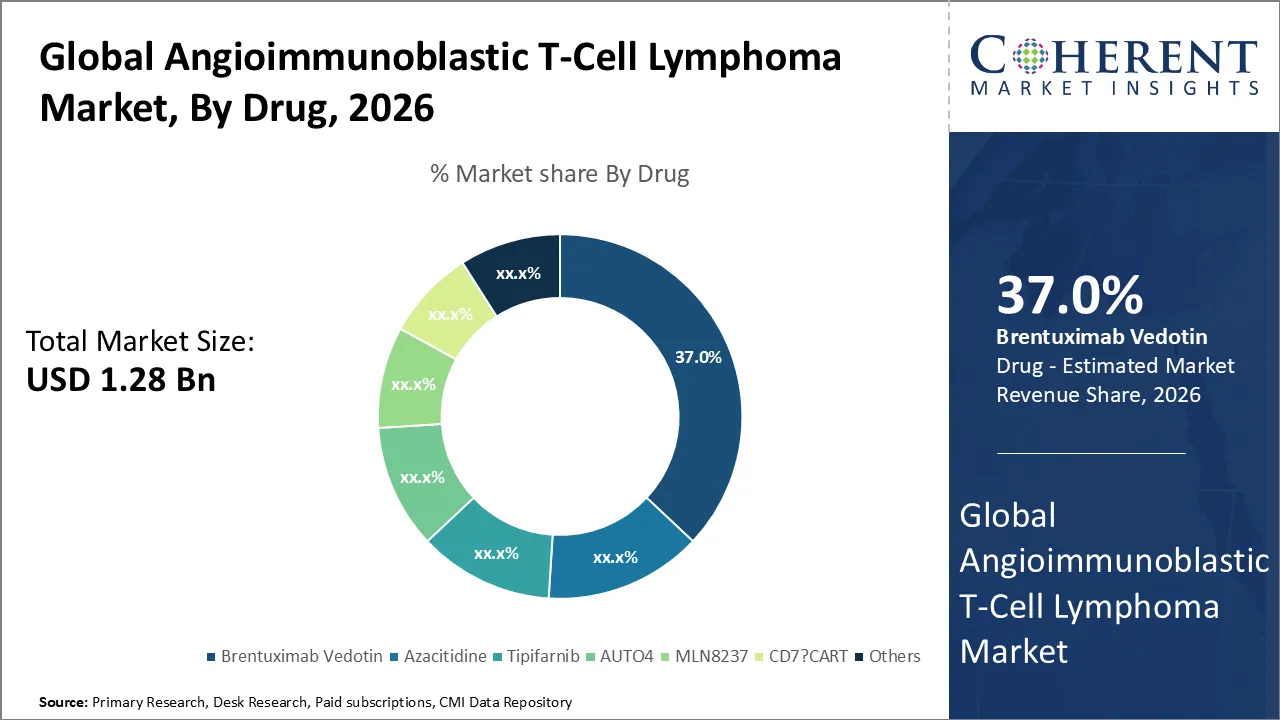
In terms of drug, the brentuximab Vedotin segment is expected to lead the market with 37% share in 2026, driven by its proven efficacy, FDA/EMA approvals, and widespread adoption in relapsed or refractory T‑cell lymphomas. Its targeted mechanism, survival benefits, and established clinical trust make it the preferred therapy over emerging pipeline drugs.
For instance, in February 2025, Pfizer confirms that the FDA has approved ADCETRIS® (Brentuximab Vedotin) to be used with lenalidomide and rituximab to treat large B-cell lymphoma that has come back or is not responding to treatment. This decision strengthens Brentuximab's broader role in oncology, showing that it works and can be used to treat more types of lymphoma, even though it is not specific to angioimmunoblastic T-cell lymphoma.
In terms of distribution channel, the hospital pharmacies segment is expected to hold 68% share in 2026, as most AITL treatments require infusion, monitoring, and specialized oncology facilities. Complex biologics like Brentuximab and CAR‑T therapies are administered in controlled hospital settings, ensuring patient safety, regulatory compliance, and effective management of adverse events during treatment delivery.
To learn more about this report, Download Free Sample
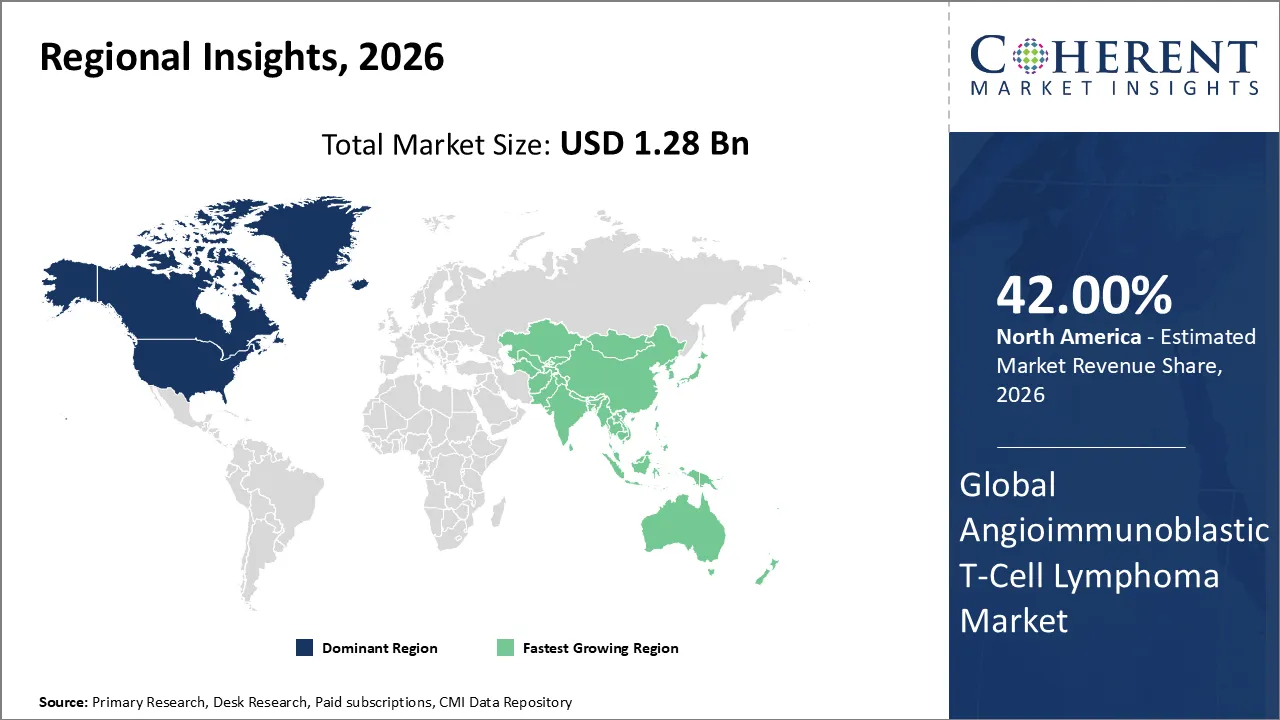
North America is expected to dominating the angioimmunoblastic T-cell lymphoma market with 42% share in 2026, due to advanced oncology infrastructure, strong FDA approvals for targeted therapies like Brentuximab Vedotin, widespread adoption of biologics, and robust biopharma presence. High diagnosis rates, reimbursement support, and ongoing clinical trials further drive regional dominance and patient treatment demand.
For instance, in August 2025, Researchers at the University of Nebraska Medical Center published a paper on Angioimmunoblastic T‑Cell Lymphomas, a rare and aggressive subtype of peripheral T‑cell lymphoma. The study advances understanding of disease biology, clinical features, and treatment strategies, reinforcing North America’s leadership in oncology research and supporting innovation in lymphoma care.
Asia Pacific is anticipated to be the fastest growing region, due to rising cancer prevalence, expanding healthcare infrastructure, and increasing access to advanced therapies. Government initiatives, growing clinical trials, and pharmaceutical investments drive adoption of biologics and CAR‑T treatments, making the region the fastest‑growing market for innovative lymphoma care.
For instance, in June 2024, Daiichi Sankyo’s EZHARMIA® (valemetostat tosilate) gained approval in Japan for relapsed or refractory Peripheral T‑Cell Lymphoma, including Angioimmunoblastic T‑Cell Lymphoma. Based on Phase 2 VALENTINE‑PTCL01 trial results, it showed strong response rates. This milestone highlights Asia‑Pacific’s leadership in advancing innovative therapies for rare, aggressive T‑cell lymphomas.
In 2026, the U.S. Angioimmunoblastic T‑Cell Lymphoma market is demanding due to advanced oncology infrastructure, FDA approvals of targeted therapies like Brentuximab Vedotin, and expanding CAR‑T trials. High diagnosis rates, strong reimbursement policies, and leading academic research centers drive innovation, ensuring North America remains the largest global market.
For instance, in December 2025, At ASH 2025, MD Anderson researchers addressed about CD40 as a possible biomarker for nodal T-cell lymphomas, such as Angioimmunoblastic T-Cell Lymphoma. This finding could make it easier to diagnose, predict, and target treatments. It demonstrates that North America is leading the way in precision oncology and coming up with new ways to treat rare, aggressive lymphoma subtypes.
In 2026, China’s Angioimmunoblastic T‑Cell Lymphoma market is demanding due to rising cancer incidence, expanding healthcare infrastructure, and government support for oncology innovation. Breakthrough Therapy Designations, strong clinical trial activity, and adoption of novel drugs like EZH2 inhibitors drive rapid growth, positioning China as a leader in Asia‑Pacific lymphoma care.
For instance, in June 2025, Evopoint Biosciences reported that Igermetostat, a selective EZH2 inhibitor, showed good results in treating Angioimmunoblastic T‑Cell Lymphoma. At ASCO 2025, the trial showed a 68.2% response rate and a median progression-free survival of 15.7 months. With China's Breakthrough Therapy Designation, Asia-Pacific is now the leader in developing new treatments for lymphoma.
| Report Coverage | Details | ||
|---|---|---|---|
| Base Year: | 2025 | Market Size in 2026: | USD 1.28 Bn |
| Historical Data for: | 2020 To 2024 | Forecast Period: | 2026 To 2033 |
| Forecast Period 2026 to 2033 CAGR: | 8.1% | 2033 Value Projection: | USD 2.20 Bn |
| Geographies covered: |
|
||
| Segments covered: |
|
||
| Companies covered: |
Bristol-Myers Squibb, Millennium Pharmaceuticals, Inc., Autolus Limited, Eisai Inc., Novartis, Kura Oncology, and PersonGen BioTherapeutics (Suzhou) Co., Ltd. |
||
| Growth Drivers: |
|
||
| Restraints & Challenges: |
|
||
Uncover macros and micros vetted on 75+ parameters: Get instant access to report
Advancements in targeted therapies and immunotherapies are transforming treatment landscapes for rare lymphomas. The development of EZH2 inhibitors such as valemetostat and igermetostat, alongside monoclonal antibodies, has broadened therapeutic options for patients. Meanwhile, CAR‑T cell therapies and checkpoint inhibitors under clinical investigation promise personalized approaches. These innovations significantly influence the angioimmunoblastic T‑cell lymphoma market share, driving growth as effective, precision‑based treatments gain adoption across major regions, reinforcing demand and reshaping competitive dynamics in global oncology markets.
The rising prevalence of lymphomas, particularly Peripheral T‑Cell Lymphomas (PTCL) such as Angioimmunoblastic T‑Cell Lymphoma, is a major growth driver. In Asia‑Pacific, especially China and Japan, increasing incidence rates are fueling treatment adoption. Enhanced awareness campaigns and improved diagnostic technologies enable earlier patient identification, ensuring timely intervention. These factors significantly boost angioimmunoblastic T‑cell lymphoma market demand, as healthcare systems prioritize advanced therapies and clinical trials, positioning the region as a critical hub for innovation and expanding global oncology care. According to Blood Cancer United, it is estimated that 192,070 people in the US are expected to be diagnosed with leukemia, lymphoma, or myeloma in 2025.
It is predicted that 9.4% of the 2,041,910 new cancer cases that are going to be diagnosed in the US in 2025 are going to be leukemia, lymphoma, or myeloma.
Biomarker research and precision medicine are reshaping rare lymphoma care. The identification of biomarkers such as CD40 enhances diagnostic accuracy and patient stratification, ensuring treatments are tailored to individual profiles. This approach enables personalized therapies, improving outcomes and survival rates. As advanced therapies gain traction, biomarker-driven strategies significantly influence the angioimmunoblastic T‑cell lymphoma market forecast, supporting growth by expanding clinical adoption, accelerating drug development, and reinforcing the role of precision oncology in shaping future treatment landscapes worldwide.
Expansion of Targeted Therapies
The expansion of targeted therapies is reshaping treatment strategies for Angioimmunoblastic T‑Cell Lymphoma. Novel EZH2 inhibitors like valemetostat and igermetostat demonstrate strong efficacy, offering new hope for patients with limited options. Additionally, combination approaches using monoclonal antibodies and checkpoint inhibitors broaden therapeutic possibilities, enhancing survival outcomes. These innovations significantly contribute to angioimmunoblastic T‑cell lymphoma market growth, as precision medicine adoption accelerates across regions, driving demand for advanced treatments and reinforcing the global oncology market’s focus on rare T‑cell lymphomas
Share
Share
Nikhilesh Ravindra Patel is a Senior Consultant with over 8 years of consulting experience. He excels in market estimations, market insights, and identifying trends and opportunities. His deep understanding of the market dynamics and ability to pinpoint growth areas make him an invaluable asset in guiding clients toward informed business decisions. He plays a instrumental role in providing market intelligence, business intelligence, and competitive intelligence services through the reports.
Joining thousands of companies around the world committed to making the Excellent Business Solutions.
View All Our Clients