Antacid Medications Market Analysis & Forecast: 2026-2033
Antacid Medications Market Size and Forecast – 2026 – 2033
The Global Antacid Medications Market size is estimated to be valued at USD 12.7 billion in 2026 and is expected to reach USD 19.3 billion by 2033, exhibiting a compound annual growth rate (CAGR) of 6.3% from 2026 to 2033.
Global Antacid Medications Market Overview
The antacid medications market focuses on products that neutralize stomach acid to relieve heartburn, indigestion, and acid reflux. Growth is driven by the rising prevalence of gastrointestinal disorders, lifestyle-related digestive issues, and increasing consumer awareness of self-care treatments. Antacids are available in tablets, chewable, liquids, and effervescent forms, catering to convenience and preferences. The market benefits from over-the-counter availability, aging populations, and increasing disposable incomes. Key players emphasize product innovation, expanding distribution channels, and entering emerging markets. Steady growth is expected due to rising health awareness, lifestyle changes, and the global increase in digestive health concerns.
Key Takeaways
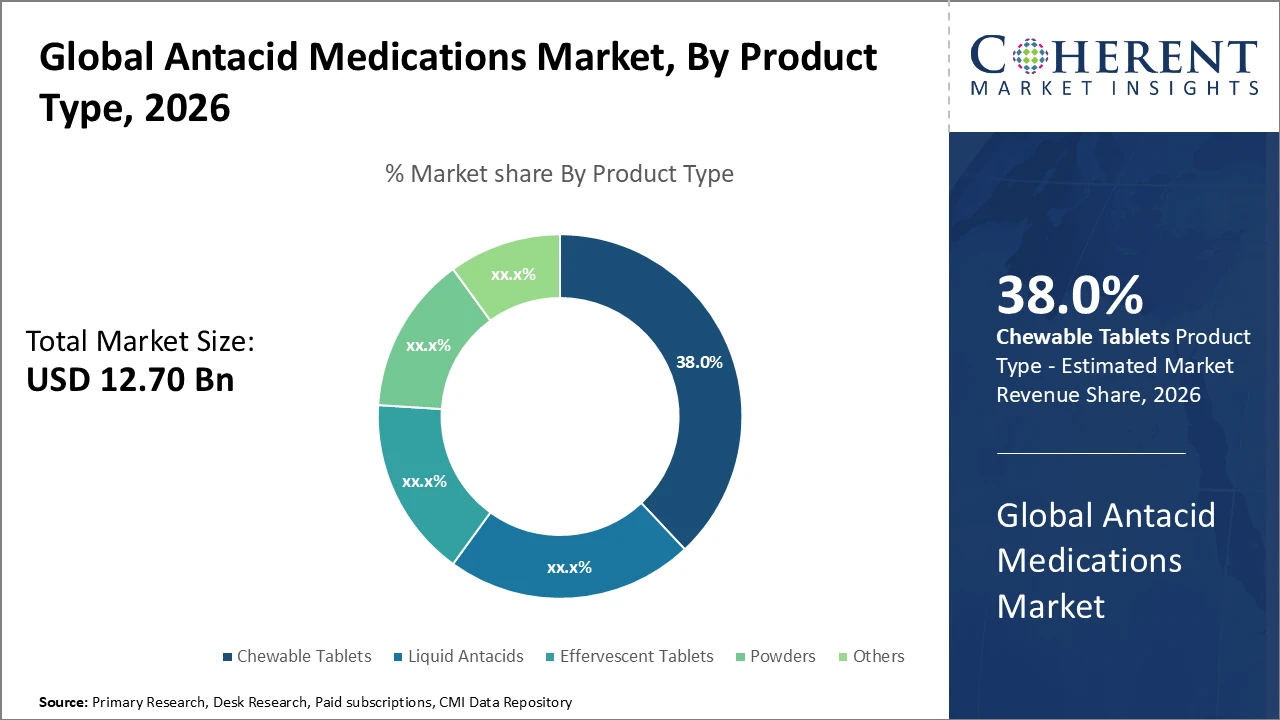
• The chewable tablets segment commands the leading market share due to convenience and rapid symptom relief, accounting for 38% of total market revenue.
• Retail pharmacies dominate distribution channels with a 46% revenue share, supported by widespread accessibility.
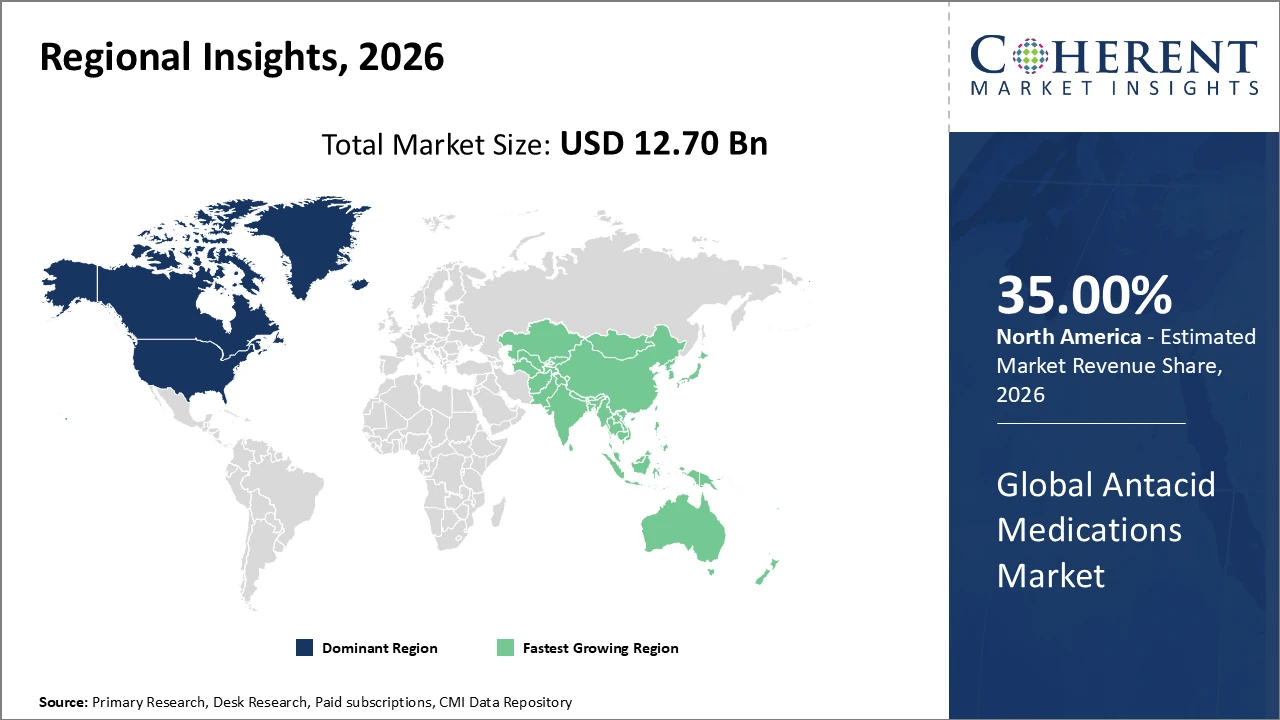
• North America holds dominance with a market share exceeding 35%, driven by high consumer awareness and established healthcare infrastructure.
• Asia Pacific registers the fastest growth with a CAGR of approximately 7.5%, fuelled by increasing healthcare penetration and rising chronic gastrointestinal disease burden.
• Latin America’s growth is driven by expanding pharmaceutical manufacturing and rising imports, presenting emerging opportunities.
Antacid Medications Market Segmentation Analysis
To learn more about this report, Request Free Sample
Antacid Medications Market Insights, By Product Type
Chewable tablets dominate the market share due to their convenience, immediate relief, and widespread availability. Their fast-dissolving nature and palatable taste make them highly preferred, with extensive use in North America and Europe reinforcing their dominance. Effervescent tablets are the fastest-growing product type, driven by improvements in formulation technology that provide quicker relief and appeal to older adults who prefer easier ingestion. Liquid antacids offer rapid action and are commonly used in pediatric and geriatric applications but face limitations due to shelf life and bulk volume. Powders hold a minor share, mainly in specific regional markets because of cost-efficiency, while the "Others" category, including dissolvable strips, is still in the early adoption phase.
Antacid Medications Market Insights, By Application
Gastroesophageal Reflux Disease dominates the market share due to its widespread prevalence and recurrent symptoms, which necessitate frequent antacid use. Increasing lifestyle disorders and obesity-related predisposition contribute to GERD’s significant market demand, particularly in developed economies. Indigestion is the fastest-growing application segment, driven by rising consumption of processed foods and stress-related gastric ailments in urban areas worldwide. Peptic ulcer remains stable, influenced by advancements in H. pylori eradication therapies that affect medication requirements. Zollinger-Ellison Syndrome is a niche segment with limited but consistent demand, while others include less common gastrointestinal disorders where antacids provide symptomatic relief.
Antacid Medications Market Insights, By End-User
Retail pharmacies dominate the market share due to their accessibility and consumer impulse buying tendencies, supported by extensive pharmacy networks, particularly in urban and suburban areas. This channel accounts for a substantial portion of market revenue, driven by over-the-counter availability. Online pharmacies are the fastest-growing channel, benefiting from digital penetration and convenience, especially post-pandemic, with sales growing over 20% annually in 2025. Hospital pharmacies contribute significantly to prescribed medication sales, though their market share remains relatively stable. Other channels, including wholesale distributors and specialized medical shops, contribute only marginally.
Antacid Medications Market Trends
Growing adoption of natural and herbal antacid formulations driven by consumer preference for organic products, with an 18% revenue increase in 2026 compared to the previous year.
Digital health integration enables personalized treatment regimens for acid-related disorders, improving treatment efficacy and patient adherence.
Regulatory relaxations in select developing markets have streamlined over-the-counter availability, supporting market expansion.
Increased investment in research on sustained-release antacid formulations is expected to shift market dynamics by improving dosing convenience and reducing side effects.
Antacid Medications Market Insights, By Geography
To learn more about this report, Request Free Sample
North America Antacid Medications Market Analysis and Trends
In North America, the antacid medications market is dominated by high disease prevalence, advanced healthcare infrastructure, and increased consumer spending on health. The region holds over 35% of the market share, supported by leading companies such as Pfizer and Johnson & Johnson, which drive product launches and distribution. Stringent regulatory frameworks, coupled with widespread health awareness, contribute to mature market dynamics. These factors together ensure steady revenue growth and reinforce North America’s position as a key market for antacid medications.
Asia Pacific Antacid Medications Market Analysis and Trends
The Asia Pacific region exhibits the fastest growth in the antacid medications market, with a CAGR of approximately 7.5%, driven by expanding healthcare access, rising incidence of digestive diseases, and government initiatives promoting healthcare modernization. Companies such as Sun Pharmaceutical Industries and Cipla have significantly expanded production and distribution networks, contributing to market growth. Increasing urbanization, changing lifestyles, and greater health awareness further fuel demand for antacid medications, positioning Asia Pacific as a rapidly emerging and high-potential market in the global landscape.
Antacid Medications Market Outlook for Key Countries
USA Antacid Medications Market Analysis and Trends
The USA’s antacid medications market is characterized by high per capita consumption, with an estimated 60 million Americans affected by acid reflux and related conditions in 2025. Companies such as Pfizer and Johnson & Johnson have launched innovative fast-acting and effervescent formulations, particularly targeting the over-the-counter segment, which accounts for nearly 50% of market revenue. The market is further supported by favorable healthcare policies that enhance accessibility and reimbursement, fostering business growth and encouraging the introduction of new products.
Germany Antacid Medications Market Analysis and Trends
The antacid medications market in Germany is poised for steady growth, supported by a strong pharmaceutical sector, robust healthcare infrastructure, and high consumer awareness of digestive health. The market benefits from wide availability of over‑the‑counter antacid products, including tablets, liquids, and effervescent forms, through retail pharmacies and online channels. Demand is driven by the rising incidence of gastrointestinal conditions such as heartburn, acid reflux and indigestion, particularly among the elderly population, encouraging self‑medication for quick relief. Germany is the leading market for antacids in Europe, with consistent consumer preference for high‑quality and effective formulations. Market forecasts suggest ongoing expansion at a modest CAGR over the coming years, underpinned by improvements in product formulations and sustained healthcare expenditure.
Analyst Opinion
• The rising incidence of acid reflux and gastroesophageal reflux disease (GERD) globally drives demand, with an estimated 25% of adults in North America experiencing weekly symptoms in 2025, boosting product adoption and consumption.
• Production capacity enhancements in emerging economies have strengthened supply-side dynamics; for example, India’s pharmaceutical manufacturers increased antacid output by 15% in 2024, supporting regional market share growth of approximately 4.8%.
• Pricing strategies are pivotal for competitiveness amid rising raw material costs. Several manufacturers adopted value-based pricing in 2026, achieving a 5–7% revenue increase despite inflationary pressures.
• Market dynamics show diverse usage across industries, from pharmaceuticals to wellness supplements. By 2026, over 40% of antacid medications revenue in Europe came from non-prescription segments addressing lifestyle-related indigestion, reflecting consumer preference shifts toward preventive care.
Antacid Medications Market Report Scope
| Report Coverage | Details | ||
|---|---|---|---|
| Base Year: | 2025 | Market Size in 2026: | USD 12.7 billion |
| Historical Data for: | 2020 To 2024 | Forecast Period: | 2026 To 2033 |
| Forecast Period 2026 to 2033 CAGR: | 6.3% | 2033 Value Projection: | USD 19.3 billion |
| Geographies covered: |
|
||
| Segments covered: |
|
||
| Companies covered: | Pfizer Inc., Sanofi S.A., Bayer AG, Johnson & Johnson, Novartis AG, Abbott Laboratories, Dr. Reddy’s Laboratories, Sun Pharmaceutical Industries Ltd., Aurobindo Pharma Ltd., Cipla Limited | ||
| Growth Drivers: |
|
||
Uncover macros and micros vetted on 75+ parameters: Get instant access to report
Antacid Medications Market Growth Factors
The rising global prevalence of gastrointestinal diseases is a primary driver of the antacid medications market, with over 500 million GERD patients projected by 2026, directly increasing demand. Advancements in drug formulations, including sugar-free and fast-acting variants, have enhanced patient compliance and expanded the consumer base. Growing focus on preventive healthcare and self-medication, particularly in developed markets, has boosted over-the-counter antacid sales, with e-commerce channels recording 20% growth in 2025. Additionally, aging populations worldwide are expanding chronic disease management needs, further sustaining antacid demand.
Antacid Medications Market Development
In mid‑2024, a major product innovation occurred when Akums Drugs & Pharmaceuticals launched an advanced anti‑reflux antacid chewable tablet combining sodium alginate and potassium bicarbonate after approval by India’s regulatory authority, addressing heartburn and GERD symptoms more effectively in a convenient format. In North America, TUMS introduced its TUMS+ Heartburn+Sleep Support chewable tablets that combine antacid relief with melatonin to also aid occasional sleeplessness, reflecting an expanded focus on multifunctional consumer needs.
Another notable development in 2024 was the expansion of manufacturing and product availability to meet growing demand. Perrigo opened a dedicated manufacturing facility in Michigan to increase over‑the‑counter antacid production capacity for the North American market. Meanwhile, Dr. Reddy’s Laboratories launched over‑the‑counter famotidine tablets in the U.S. after FDA approval, strengthening generic antacid offerings and enhancing competition in key markets.
Key Players
Leading Companies of the Market
Pfizer Inc.
Sanofi S.A.
Bayer AG
Johnson & Jhonson
Novartis AG
Abbott Laboratories
Dr. Reddy’s Laboratories
Sun Pharmaceutical Industries Ltd.
Aurobindo Pharma Ltd.
Cipla Limited
Several leading market players have pursued aggressive product portfolio expansions and regional penetration strategies. For instance, Pfizer’s launch of novel effervescent antacid tablets in 2025 resulted in a 12% increase in market share in North America. Similarly, GlaxoSmithKline’s strategic acquisition of regional distributors in the Asia Pacific region contributed to a 9% revenue growth in 2024, highlighting the impact of targeted expansion and distribution strategies on market performance.
Antacid Medications Market Future Outlook
The antacid medications market is expected to experience steady growth over the coming years, driven by the rising prevalence of gastrointestinal disorders, increasing consumer focus on self-care, and the aging global population. Innovations in formulations, such as sugar-free, fast-acting, and sustained-release variants, are likely to enhance patient compliance and expand the consumer base. Over-the-counter sales, particularly through e-commerce channels, will continue to grow, supported by convenience and accessibility. Additionally, emerging markets with improving healthcare infrastructure present significant opportunities, while preventive healthcare trends further sustain long-term demand for antacid medications worldwide.
Antacid Medications Market Historical Analysis
The antacid medications market has shown steady expansion over the past decade, driven primarily by rising gastrointestinal disorders and increasing self‑medication practices. In 2019, global diagnoses of GERD and related conditions grew significantly compared with the early 1990s, fueling antacid demand worldwide. From a market size of around USD 5.8–6.7 billion in the early 2020s, the industry experienced gradual growth into the mid‑2020s as tablet, liquid, and chewable formulations became more widely available through both retail and online channels. †As consumer awareness of digestive health increased, particularly in developed regions such as North America and Europe, over‑the‑counter antacid sales expanded, becoming a major revenue driver by 2024. †Market CAGR during the 2019–2024 period ranged from roughly low to mid-single digits, reflecting consistent market adoption amid evolving dietary habits and aging populations.
Sources
Primary Research Interviews:
Gastroenterologists
Pharmacists
Primary Care Physicians
Retail and Online Pharmacy Managers
Databases:
World Health Organization (WHO) Global Health Observatory
OECD Health Data
IMS Health / IQVIA Pharmaceutical Data
Magazines:
Pharmaceutical Technology
PharmaVoice
Medical Design & Outsourcing
HealthTech Magazine
Drug Store News
Journals:
Journal of Gastroenterology and Hepatology
Alimentary Pharmacology & Therapeutics
World Journal of Gastrointestinal Pharmacology
International Journal of Clinical Pharmacy
Newspapers:
The New York Times (Health)
The Guardian (Health)
Financial Times (Healthcare)
The Hindu (Health)
Reuters Health
Associations:
World Gastroenterology Organisation (WGO)
American Gastroenterological Association (AGA)
European Society of Gastrointestinal Endoscopy (ESGE)
International Society for Pharmacoeconomics and Outcomes Research (ISPOR)
Share
Share
Ghanshyam Shrivastava - With over 20 years of experience in the management consulting and research, Ghanshyam Shrivastava serves as a Principal Consultant, bringing extensive expertise in biologics and biosimilars. His primary expertise lies in areas such as market entry and expansion strategy, competitive intelligence, and strategic transformation across diversified portfolio of various drugs used for different therapeutic category and APIs. He excels at identifying key challenges faced by clients and providing robust solutions to enhance their strategic decision-making capabilities. His comprehensive understanding of the market ensures valuable contributions to research reports and business decisions.
Ghanshyam is a sought-after speaker at industry conferences and contributes to various publications on pharma industry.

Credibility and Certifications

860519526

9001:2015
27001:2022

Need a Custom Report?
We can customize every report - free of charge - including purchasing stand-alone sections or country-level reports
Customize NowJoining thousands of companies around the world committed to making the Excellent Business Solutions.
View All Our Clients