Candidiasis Market Analysis & Forecast: 2026-2033

Candidiasis market is estimated to be valued at USD 1,307.2 Mn in 2026 and is expected to reach USD 1,790.7 Mn in 2033, exhibiting a compound annual growth rate (CAGR) of 4.6% from 2026 to 2033.
The candidiasis market encompasses antifungal therapies used to treat superficial and invasive infections caused by Candida species, including vulvovaginal, oral, cutaneous, and systemic candidiasis. The market is experiencing steady growth, driven by the rising prevalence of fungal infections worldwide, increasing numbers of immunocompromised patients (such as those with HIV/AIDS, cancer, or organ transplants), and longer hospital stays. Additional drivers include growing awareness and diagnosis rates, expansion of healthcare access in emerging economies, and continuous development of advanced antifungal drugs, including echinocandins and novel azoles, to address drug resistance and unmet clinical needs.
|
Current Event |
Description and its Impact |
|
Rising Antifungal Drug Resistance Crisis |
|
|
Regulatory Landscape Evolution and Drug Development |
|
Uncover macros and micros vetted on 75+ parameters: Get instant access to report
|
Country |
Reimbursement Coverage |
Key Notes |
|
India |
Partial to full (hospital-based) |
Covered under Ayushman Bharat, CGHS, and private insurance for invasive candidiasis or ICU care. OTC treatments (e.g., clotrimazole) usually not reimbursed. |
|
United Kingdom (NHS) |
Full |
All antifungal treatments, including for candidiasis, are free at point of care under NHS. |
|
United States |
Partial |
Covered under Medicare, Medicaid, and private insurers. Coverage depends on drug tier, setting (inpatient vs. outpatient), and formulary status. |
|
Germany |
Full |
Antifungal drugs like echinocandins and azoles are reimbursed under statutory health insurance. |
|
Brazil |
Partial |
Public system (SUS) covers essential antifungals; newer agents may require judicial authorization. |
Uncover macros and micros vetted on 75+ parameters: Get instant access to report
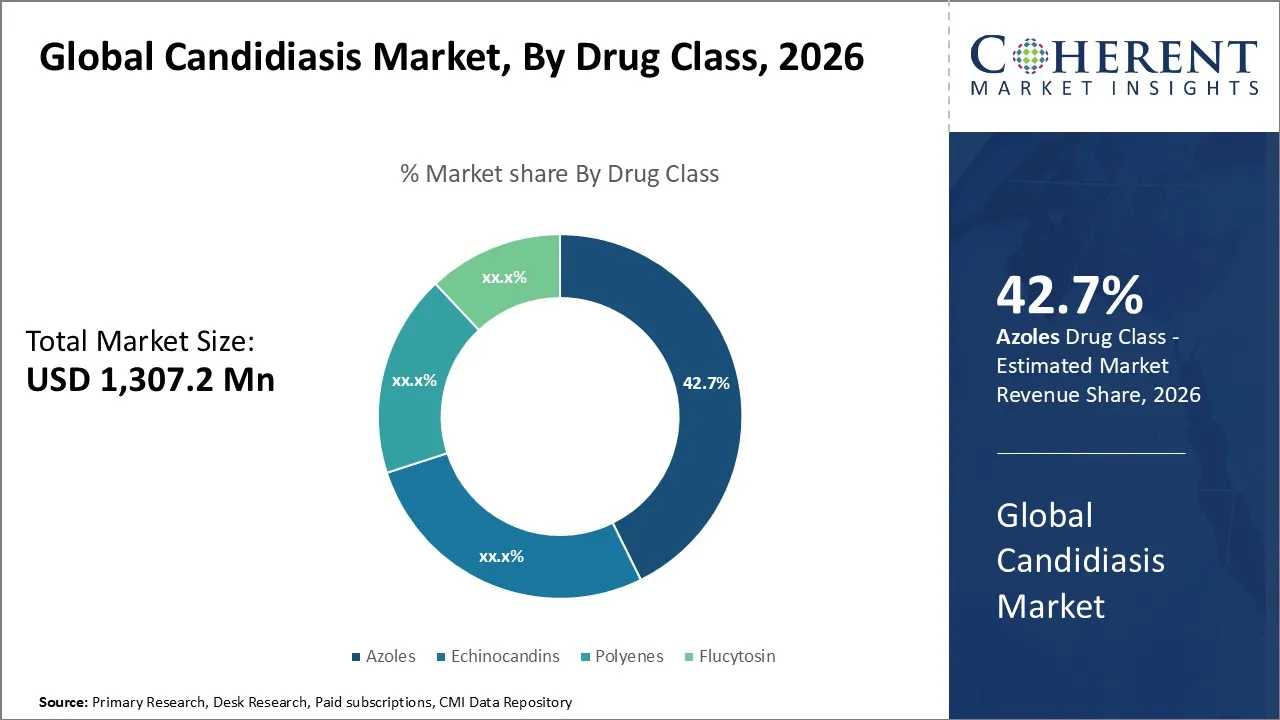
In terms of drug class, the azoles segment is expected to hold 42.7% share of the market in 2026, due to their broad-spectrum antifungal activity, affordability, and oral availability. Widely prescribed for both superficial and systemic infections, they remain the first-line therapy. Their extensive use in outpatient settings and strong clinical efficacy ensure they hold the largest market share among drug classes.
For instance, in June 2025, Voriconazole 200mg tablets (Vinocanazol‑200) from Steris Pharma highlight the role of azoles in candidiasis treatment. As a triazole antifungal, voriconazole inhibits ergosterol synthesis, disrupting fungal cell membranes. It is effective against resistant Candida species, especially systemic infections, reinforcing azoles’ dominance in antifungal therapy and hospital-based management worldwide.
In terms of type, the vaginal candidiasis segment is expected to lead the market with 36% share in 2026, driven by its high global prevalence among women and frequent recurrence. Over-the-counter azole therapies and topical formulations make treatment accessible, boosting demand. Rising awareness, self-medication trends, and strong retail pharmacy presence reinforce its dominance, ensuring this segment contributes the largest revenue share.
For instance, in December 2025, Roche’s December 2025 update announced CE Mark approval for its cobas® BV/CV PCR assay, enabling accurate detection of bacterial vaginosis and candida vaginitis. By improving diagnostic precision with a single vaginal swab, the test supports faster treatment decisions, directly addressing vaginal candidiasis and strengthening Roche’s sexual health diagnostics portfolio.
In terms of route of administration, the oral segment is projected to account for 50% share of the market in 2026, because of patient convenience, cost-effectiveness, and widespread availability of azole antifungals in tablet or capsule form. Oral formulations are preferred for both prophylaxis and treatment, especially in outpatient care. Their ease of administration and broad clinical acceptance secure the largest market share.
For instance, in September 2025, SCYNEXIS announced positive Phase 1 results for ibrexafungerp, a novel oral antifungal tablet. As the first non‑azole oral therapy for vulvovaginal candidiasis, it targets glucan synthase to disrupt fungal cell walls. This milestone highlights its potential as an effective oral option for recurrent or resistant candidiasis treatment worldwide.
In terms of distribution channel, the hospital pharmacies segment is projected to capture 45% share of the market in 2026, due to their critical role in managing invasive and systemic candidiasis cases. They dispense high-cost parenteral therapies like echinocandins and amphotericin B, ensuring controlled administration. The reliance on hospital-based treatment for severe infections makes this channel the leading contributor to overall market revenue in 2026.
For instance, in October 2025, English hospitals report rising cases of Candida auris, a multidrug‑resistant yeast causing severe bloodstream infections. Difficult to eradicate from hospital environments, it spreads via contact with patients or contaminated surfaces. Infection control measures, including strict hygiene and protective equipment, are critical as outbreaks increase antifungal demand in hospital settings.
To learn more about this report, Request Free Sample
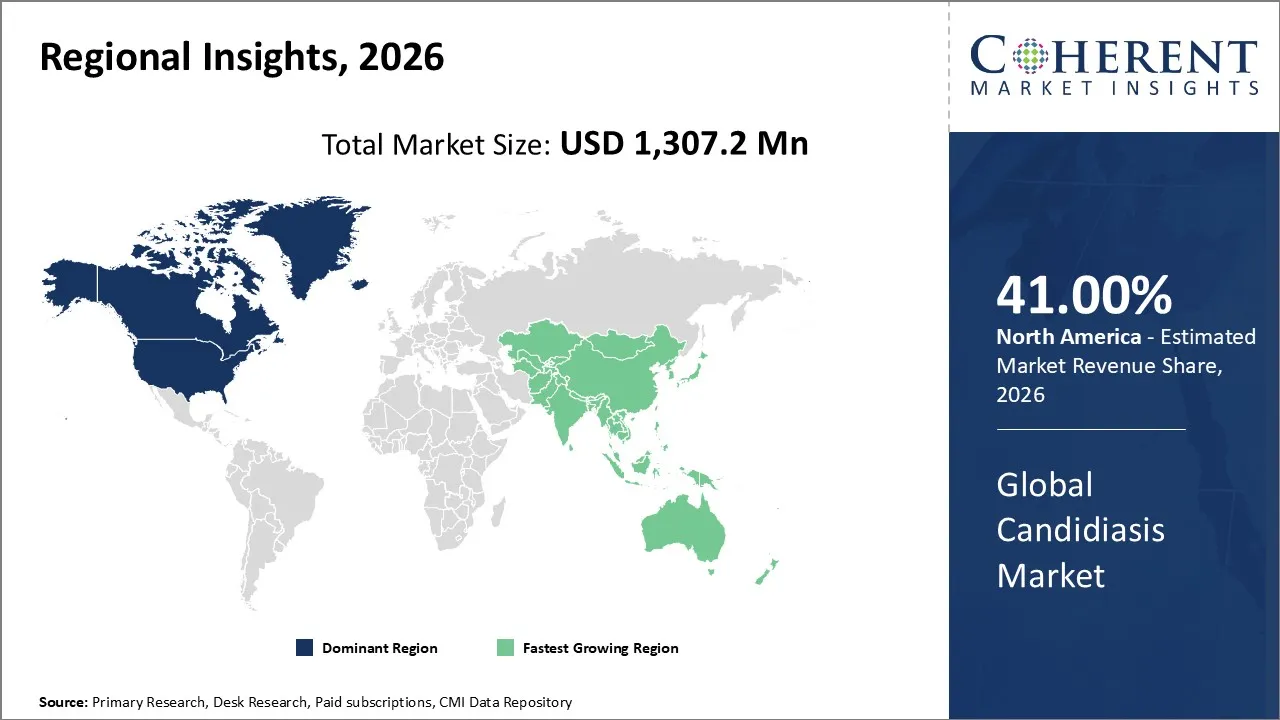
North America is expected to dominate the candidiasis market with 41% share in 2026, due to high infection prevalence among immunocompromised patients, advanced healthcare infrastructure, and strong adoption of antifungal therapies. Robust hospital networks, favorable reimbursement policies, and ongoing R&D in novel antifungals further drive demand, making the region the market leader globally.
For instance, in August 2025, Glenmark Pharma’s US arm unveiled micafungin injection in the United States. Micafungin, an echinocandin antifungal, treats candidemia and invasive candidiasis, especially in immunocompromised patients. This hospital‑based therapy strengthens antifungal options, addressing resistant Candida infections and reinforcing the importance of echinocandins in managing serious systemic fungal diseases.
Asia Pacific is expected to exhibit the fastest growth, due to rising infection prevalence, expanding healthcare infrastructure, and increasing access to affordable antifungal drugs. Growing awareness campaigns, availability of generics, and higher diagnosis rates in countries like China and India drive rapid adoption, making the region the fastest‑growing globally.
For instance, in October 2025, Mundipharma announced completion of patient enrolment in the Phase III ReSPECT trial for REZZAYO® (rezafungin). This echinocandin antifungal is being studied globally, with emphasis on Europe and Asia, to prevent invasive fungal infections including candidiasis in transplant patients. Results expected mid‑2026 could reshape hospital antifungal treatment with weekly dosing.
The candidiasis market is growing in the UK due to rising antifungal resistance, an aging population, and increasing numbers of immunocompromised patients. Hospital-acquired infections like Candida auris outbreaks and the need for advanced antifungal therapies are driving demand for both treatment and prevention options.
For instance, in July 2025, the University of Aberdeen launched Brigid Bio, a UK-based biotech company developing antibody-based therapies for invasive fungal infections, including drug-resistant candidiasis. Supported by Scottish Enterprise and Innovate UK, Brigid Bio aims to deliver safer, longer-acting treatments that enhance immune response and address the urgent global need for antifungal innovation.
India’s candidiasis market is expanding rapidly due to rising fungal infections, increasing antifungal resistance, and a growing population of immunocompromised patients. Hospital-acquired infections, poor hygiene in rural areas, and government-backed surveillance programs are further driving demand for advanced diagnostics and antifungal therapies.
For instance, in March 2025, India’s Ministry of Health announced expanded efforts to combat fungal infections, including candidiasis. Initiatives like MycoNet and AMDRCs enhance surveillance, diagnostics, and resistance tracking. With rising antifungal resistance and hospital-acquired infections, these programs aim to strengthen national preparedness and research capacity for managing invasive fungal diseases across healthcare settings.
| Report Coverage | Details | ||
|---|---|---|---|
| Base Year: | 2025 | Market Size in 2026: | USD 1,307.2 Mn |
| Historical Data for: | 2020 To 2024 | Forecast Period: | 2026 To 2033 |
| Forecast Period 2026 to 2033 CAGR: | 4.6% | 2033 Value Projection: | USD 1,790.7 Mn |
| Geographies covered: |
|
||
| Segments covered: |
|
||
| Companies covered: |
Basilea Pharmaceutica Ltd., Astellas Pharma Inc., Grupo Ferrer Internacional, S.A., Pacgen Life Science Corporation, NovaDigm Therapeutics, Inc., Cidara Therapeutics, Inc., Amplyx Pharmaceuticals Inc., and Pfizer, Inc. |
||
| Growth Drivers: |
|
||
| Restraints & Challenges: |
|
||
Uncover macros and micros vetted on 75+ parameters: Get instant access to report
The global burden of candidiasis continues to rise, with oral, vulvovaginal, and invasive forms becoming increasingly common. This surge is largely attributed to weakened immunity in patients suffering from chronic illnesses, diabetes, or those undergoing prolonged antibiotic use. As infections spread across diverse demographics, pharmaceutical companies are focusing on expanding treatment options. The growing incidence directly influences candidiasis market share, as antifungal drugs and therapies capture larger segments of the healthcare industry worldwide.
Patients with compromised immune systems, such as those living with HIV/AIDS, undergoing cancer chemotherapy, or receiving organ transplants are highly susceptible to candidiasis infections. The rising number of such patients globally has intensified the need for effective antifungal treatments. This trend fuels candidiasis market demand, as healthcare providers and pharmaceutical firms prioritize innovative therapies to address systemic and recurrent infections. The expanding patient base ensures steady growth opportunities for antifungal drug manufacturers over the next decade.
The growing resistance of Candida species to existing antifungal classes such as azoles and echinocandins has created an urgent need for innovative therapies. Pharmaceutical companies are investing heavily in next-generation antifungals with broader activity, fewer side effects, and improved patient outcomes. These advancements not only address unmet medical needs but also expand treatment options across hospitals and clinics. As innovation accelerates, the candidiasis market forecast anticipates steady growth, driven by demand for safer and more effective antifungal solutions.
Share
Share
Vipul Patil is a dynamic management consultant with 6 years of dedicated experience in the pharmaceutical industry. Known for his analytical acumen and strategic insight, Vipul has successfully partnered with pharmaceutical companies to enhance operational efficiency, cross broader expansion, and navigate the complexities of distribution in markets with high revenue potential.
Joining thousands of companies around the world committed to making the Excellent Business Solutions.
View All Our Clients