Healthcare Analytical Instrumentation And Systems Market Analysis & Forecast: 2026-2033
Healthcare Analytical Instrumentation And Systems Market Size and Forecast – 2026 – 2033
The Global Healthcare Analytical Instrumentation And Systems Market size is estimated to be valued at USD 14.3 billion in 2026 and is expected to reach USD 23.6 billion by 2033, exhibiting a compound annual growth rate (CAGR) of 7.6% from 2026 to 2033.
Global Healthcare Analytical Instrumentation And Systems Market Overview
Healthcare analytical instrumentation and systems consist of advanced laboratory and diagnostic equipment used to analyze biological samples such as blood, tissue, urine, and genetic material. These products include clinical analyzers, mass spectrometers, chromatography systems, molecular diagnostics platforms, and automated laboratory systems. They are designed to deliver accurate, reproducible, and high-throughput analytical results that support disease diagnosis, treatment monitoring, drug development, and clinical research. Integrated software and data management systems often accompany the instruments to enable result interpretation, quality control, and regulatory compliance in hospitals, diagnostic laboratories, pharmaceutical companies, and research institutions.
Key Takeaways
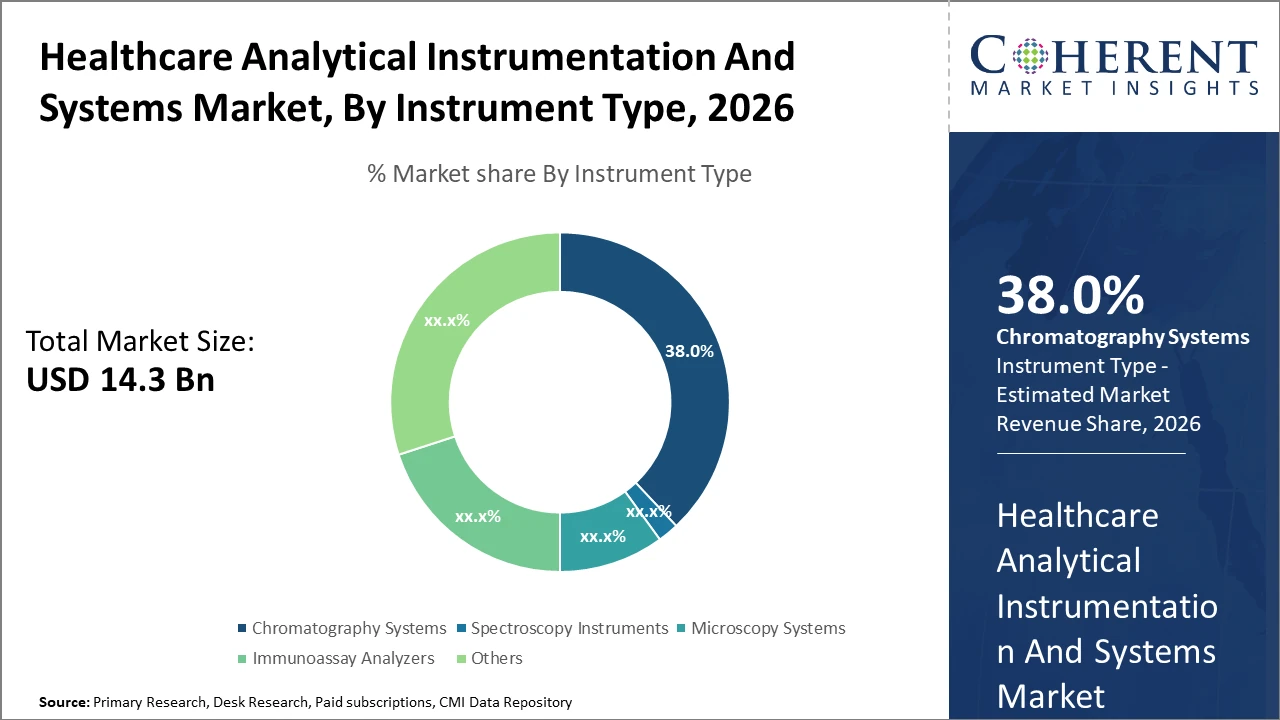
Healthcare Analytical Instrumentation And Systems segmental insights reveal that chromatography systems hold the largest industry share at 38%, driven mainly by dominance in molecular diagnostics and clinical chemistry applications.
Meanwhile, molecular diagnostics as an application segment is the fastest-growing, propelled by increased testing volumes for infectious diseases and cancer screening.
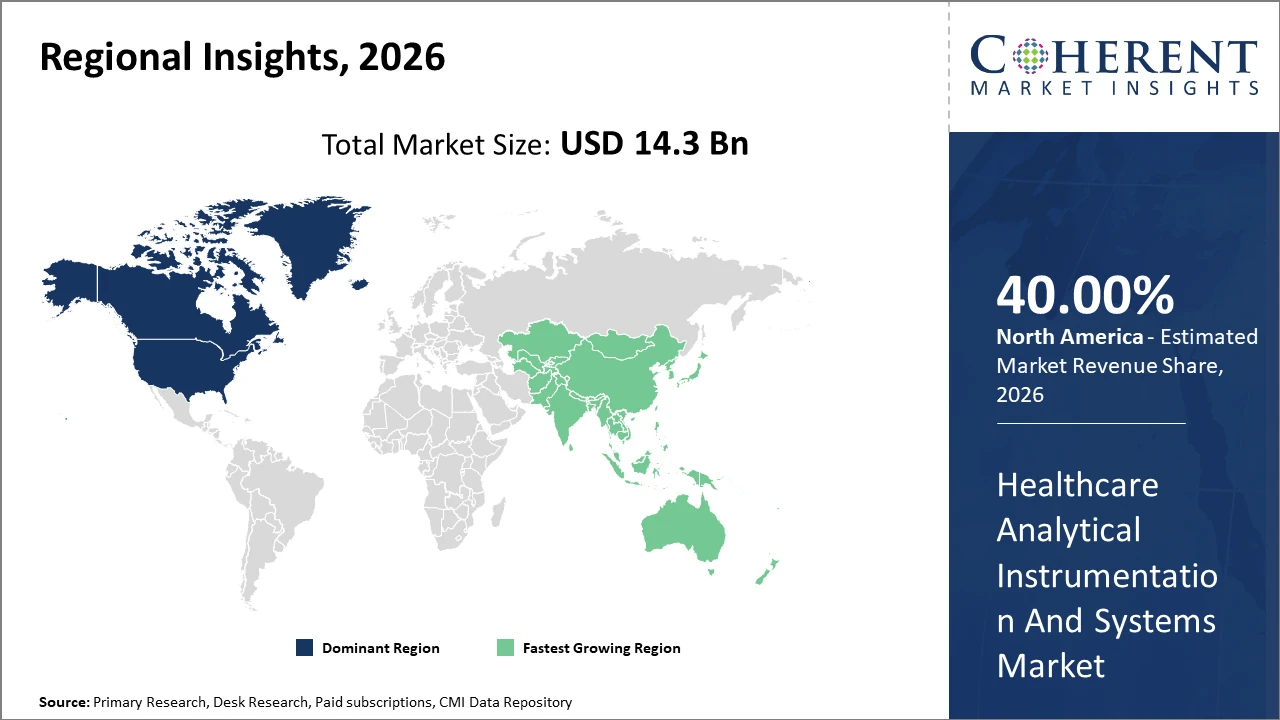
Regionally, North America continues to dominate the market share due to a mature healthcare infrastructure and significant R&D investments by prominent market companies, accounting for nearly 40% of global revenues.
On the other hand, Asia Pacific exhibits the fastest CAGR in market growth, supported by expanding healthcare access and favorable government initiatives, notably in China and India, which together represent over 55% of regional market revenue.
Healthcare Analytical Instrumentation And Systems Market Segmentation Analysis
To learn more about this report, Request Free Sample
Healthcare Analytical Instrumentation And Systems Market Insights, By Instrument Type
Chromatography Systems dominate the market share at 38%. The dominance of chromatography stems from its extensive use in analyzing biological and chemical samples with high precision, critical in molecular diagnostics and pharmaceutical R&D. The fastest growing segment is Spectroscopy Instruments, propelled by increasing adoption in clinical chemistry and pathology analysis due to their non-destructive testing capabilities and rapid results. Microscopy Systems are valuable in pathology and microbiology, providing detailed cellular imaging beneficial for complex diagnostics. Immunoassay Analyzers are crucial in detecting biomarkers but have a smaller growth footprint compared to chromatography and spectroscopy.
Healthcare Analytical Instrumentation And Systems Market Insights, By Application
Molecular Diagnostics leads as the dominating segment due to its pivotal role in personalized medicine, infectious disease diagnosis, and cancer biomarker detection. It commands a substantial market share owing to rising clinical demand and technological advancements, enabling high sensitivity and specificity. Clinical Chemistry is the fastest growing application, reflecting burgeoning demand for routine blood chemistry and metabolic profiling in hospitals and diagnostic labs. Pathology Analysis remains essential for tissue sample examinations, supported by improvements in microscopy instruments and staining technologies.
Healthcare Analytical Instrumentation And Systems Market Insights, By End-User
Hospitals & Diagnostic Centers dominate due to their direct requirement for routine and specialized testing, accounting for the largest market share. The fastest growing segment is Pharmaceutical & Biotechnology Companies, reflecting their escalating use of analytical instrumentation in drug discovery, clinical trials, and personalized therapy development. Research Institutes, while essential for innovation, show steady but slower growth compared to industrial players. CROs are pivotal in outsourced research, gaining momentum as pharma companies increase reliance on external analytical services.
Healthcare Analytical Instrumentation And Systems Market Trends
The Healthcare Analytical Instrumentation and Systems market is rapidly evolving, characterized by a shift towards automation and AI-enabled analytic capabilities.
The recent deployment of fully automated molecular diagnostic platforms in 2024 has resulted in a 25% reduction in human error and improved throughput in key hospital laboratories in North America.
Furthermore, the integration of multi-omics approaches combining genomics, proteomics, and metabolomics has diversified application portfolios for analytical instruments, exemplified by pharmaceutical companies adopting such integrative tools to reduce drug development timelines by up to 15%.
Another prominent shift involves the growing emphasis on portable and point-of-care instrumentation, with manufacturers like Mindray and JEOL pushing compact solutions, meeting rising demands in remote and resource-limited settings.
Healthcare Analytical Instrumentation And Systems Market Insights, By Geography
To learn more about this report, Request Free Sample
North America Healthcare Analytical Instrumentation And Systems Market Analysis and Trends
In North America, dominance in the Healthcare Analytical Instrumentation and Systems market is rooted in advanced healthcare IT ecosystems and government policies promoting early disease detection. The U.S. leads, driven by robust R&D capabilities and high healthcare spending, translating into early adoption of next-generation sequencing and mass spectroscopy instruments. Major entities like Danaher Corporation and Agilent Technologies contribute significantly to the market revenue through innovative product launches and strong service networks.
Asia Pacific Healthcare Analytical Instrumentation And Systems Market Analysis and Trends
Meanwhile, the Asia Pacific exhibits the fastest growth, propelled by rising healthcare investments, easing regulatory pathways, and increasing public and private sector collaborations. China and India account for the bulk of regional expansion, supported by a growing geriatric population and the expansion of molecular diagnostic labs. Companies like Mindray and Shimadzu have leveraged this ecosystem by tailoring cost-effective, scalable solutions suitable for regional needs.
Healthcare Analytical Instrumentation And Systems Market Outlook for Key Countries
USA Healthcare Analytical Instrumentation And Systems Market Analysis and Trends
The U.S. market is a significant contributor with a mature healthcare ecosystem that encourages the adoption of advanced analytical technologies. In 2024, government funding for cancer diagnostics increased by 14%, directly benefiting the instrumentation sector. Key players such as Thermo Fisher Scientific and PerkinElmer launched AI-embedded mass spectrometry systems, enhancing biomarker detection rates by over 10%. Enhanced reimbursement frameworks for molecular diagnostics also stimulated market revenue growth in clinical and research applications.
China Healthcare Analytical Instrumentation And Systems Market Analysis and Trends
China's market growth is fueled by rising government initiatives to improve healthcare access, investments in biotechnology research, and expanding diagnostic laboratory networks. Installations of chromatography and spectroscopy instruments grew by approximately 18% in 2024 due to national projects aimed at combating chronic diseases. Leading companies like Shimadzu and Mindray have capitalized on these trends by introducing affordable and innovative analytical systems customized for Chinese healthcare providers, driving significant increases in market share.
Analyst Opinion
The growing requirement for high-throughput screening and real-time analysis in molecular diagnostics has been a key demand-side indicator influencing this market. For instance, adoption of chromatography and mass spectrometry systems in genomics laboratories increased by approximately 12% in 2024, driven by heightened research on personalized therapies.
Supply-side dynamics such as expansion of production capacity for spectroscopic instruments have significantly lowered cost barriers in 2024, with manufacturers increasing output by nearly 15% year-over-year to meet surging orders from emerging economies in Asia Pacific and Latin America.
Micro-indicator analysis reveals the increasing integration of AI-powered data analytics and cloud computing with traditional instrumentation platforms, enhancing predictive diagnostics. In 2025, usage of AI-enhanced analytical systems is projected to contribute to a 9% improvement in diagnostic accuracy in oncology applications.
Pricing strategies adopted across market regions demonstrated a shift towards value-based pricing models in 2024, especially in North America and Europe, where reimbursement policies have incentivized cost-effectiveness, increasing system adoption rates by up to 8% among clinical labs.
Market Scope
| Report Coverage | Details | ||
|---|---|---|---|
| Base Year: | 2025 | Market Size in 2026: | USD 14.3 billion |
| Historical Data for: | 2020 To 2024 | Forecast Period: | 2026 To 2033 |
| Forecast Period 2026 to 2033 CAGR: | 7.6% | 2033 Value Projection: | USD 23.6 billion |
| Geographies covered: |
|
||
| Segments covered: |
|
||
| Companies covered: | JEOL Ltd., Metrohm AG, Malvern Panalytical Ltd., Mindray Medical International Limited, Sysmex Corporation, Tecan Group Ltd., Beckman Coulter Inc., GE Healthcare, Abbott Laboratories, Siemens Healthineers | ||
| Growth Drivers: |
|
||
Uncover macros and micros vetted on 75+ parameters: Get instant access to report
Healthcare Analytical Instrumentation And Systems Market Growth Factors
The growth of healthcare analytical instrumentation and systems is propelled by several critical drivers. First, escalating prevalence of chronic diseases such as cancer and diabetes necessitates advanced diagnostic tools capable of precise biomarker detection; sales of clinical chemistry analyzers rose by 11% in 2024, reflecting this trend. Secondly, increased government funding in healthcare infrastructure across Asia Pacific and Latin America has accelerated adoption, particularly in molecular diagnostic instruments, with China witnessing an 18% increase in system installations in early 2025. Third, the rising trend towards personalized medicine requires highly sensitive and reproducible instrumentation, which is pushing demand for next-generation sequencing and mass spectrometry platforms. Lastly, rapid technological advancements focusing on automation and integration of AI in systems optimize laboratory workflows, reducing testing times by 20% in accredited labs globally.
Healthcare Analytical Instrumentation And Systems Market Development
In January 2024, Roche’s Polivy (polatuzumab vedotin) received regulatory approval for the treatment of lymphoma, including diffuse large B-cell lymphoma (DLBCL) and follicular lymphoma (FL). The approval strengthened Roche’s oncology portfolio by expanding access to an antibody–drug conjugate that improves outcomes when combined with standard chemotherapy regimens in relapsed or refractory patients.
In April 2025, Amgen’s Blincyto (blinatumomab) was approved in Europe for the treatment of Philadelphia chromosome–positive (Ph+) B-cell acute lymphoblastic leukemia (ALL). This approval reinforced Blincyto’s role as a targeted immunotherapy, offering a chemotherapy-free option that enhances survival and disease control in a high-risk leukemia population.
Key Players
Leading Companies of the Market
JEOL Ltd.
Metrohm AG
Malvern Panalytical Ltd.
Mindray Medical International Limited
Sysmex Corporation
Tecan Group Ltd.
Beckman Coulter Inc.
GE Healthcare
Abbott Laboratories
Siemens Healthineers
Competitive strategies observed include Agilent’s aggressive expansion of integrated workflow solutions, which led to a 10% boost in market revenue during 2024, and Thermo Fisher Scientific’s strategic acquisitions of niche analytical startups to broaden their product portfolio. Shimadzu’s focus on miniaturization and portable analytical systems has enhanced their footprint in emerging markets, increasing overall market share by 6% in Asia Pacific in the past year.
Healthcare Analytical Instrumentation And Systems Market Future Outlook
The future outlook for healthcare analytical instrumentation and systems is expected to be driven by converging forces of personalized medicine, digital transformation, and decentralized diagnostics. Emerging technologies such as microfluidic lab-on-a-chip systems and portable mass spectrometers will enable rapid, on-site analysis with minimal sample preparation, expanding access beyond traditional laboratories. Artificial intelligence and machine learning algorithms will be increasingly embedded in analytical platforms, improving pattern recognition, predictive diagnostics, and operational efficiency. Integration with electronic health records and cloud-based data systems will support real-time decision-making and remote clinical collaboration. Regulatory frameworks will evolve to address advanced diagnostics while maintaining patient safety and data integrity. As global healthcare spending rises and chronic disease prevalence increases, demand for highly accurate, flexible, and interoperable analytical systems will grow across regions and care settings.
Healthcare Analytical Instrumentation And Systems Market Historical Analysis
The healthcare analytical instrumentation and systems market originated from the burgeoning need to accurately diagnose and monitor human disease processes, which gained significant momentum in the mid-20th century with the introduction of automated clinical chemistry analyzers and spectroscopic technologies. Early instrumentation was largely manual, reagent-intensive, and slow, serving only large teaching hospitals and research institutions. As medical science advanced, demand for faster, more reliable, and higher-throughput systems grew, prompting manufacturers to develop automated hematology analyzers, immunoassay platforms, mass spectrometers, and next-generation sequencing tools.
Sources
Primary Research Interviews:
Clinical laboratory managers
Pathologists
diagnostic equipment manufacturers
research scientists
Databases:
FDA Medical Devices Database
NIH Research Portfolio
OECD Health Statistics
ClinicalTrials.gov
Magazines:
Medical Device Network
Clinical Laboratory News
Diagnostics World
Lab Manager
Healthcare Packaging
Journals:
Clinical Chemistry
Analytical Chemistry
Journal of Clinical Laboratory Analysis
Clinical Biochemistry
Nature Biomedical Engineering
Newspapers:
Financial Times (Healthcare)
Reuters Health
The New York Times (Science)
Bloomberg Health
The Guardian (Health)
Associations:
American Association for Clinical Chemistry
Clinical and Laboratory Standards Institute
International Federation of Clinical Chemistry
Biomedical Engineering Society
Association of Diagnostic Manufacturers
Share
Share
Manisha Vibhute is a consultant with over 5 years of experience in market research and consulting. With a strong understanding of market dynamics, Manisha assists clients in developing effective market access strategies. She helps medical device companies navigate pricing, reimbursement, and regulatory pathways to ensure successful product launches.

Credibility and Certifications

860519526


9001:2015

27001:2022


Need a Custom Report?
We can customize every report - free of charge - including purchasing stand-alone sections or country-level reports
Customize NowJoining thousands of companies around the world committed to making the Excellent Business Solutions.
View All Our Clients