
all report title image

Ophthalmic Devices Market Analysis & Forecast: 2026-2033

Ophthalmic Devices Market, By Product Type (Vision Care Devices, Surgery Devices, and Diagnostic and Monitoring Devices ), By End User (Hospitals, Ophthalmic Clinics and Centers, and Ambulatory Surgical Centers), By Geography (North America, Latin America, Europe, Asia Pacific, Middle East, and Africa)

  • Published In : 02 Jun, 2026
  • Code : CMI686
  • Page number :250
  • Formats :
      Excel and PDF :
  • Industry : Medical Devices
  • Historical Range : 2020 - 2024
  • Forecast Period : 2026 - 2033

Ophthalmic Devices Market Size and Share Analysis: (2026 - 2033)

The global ophthalmic devices market size is projected to grow from USD 68,300.6 Mn in 2026 to USD 91,927.4 Mn by 2033, registering a compound annual growth rate (CAGR) of 4.3% during the forecast period (2026-2033). This growth is mainly driven by the rising prevalence of ophthalmic disorders such as cataracts, glaucoma, and refractive errors, increasing geriatric population, growing demand for advanced diagnostic and surgical ophthalmic devices, and continuous technological advancements in eye care equipment and vision correction solutions. Globally, at least 2.2 billion people live with vision impairment, of whom at least 1 billion have preventable or untreated conditions.

Key Takeaways from the Ophthalmic Devices Market Report

  • The vision care devices segment is anticipated to dominate the global market for ophthalmic devices with a 45% share in 2026. The dominance of this category will be due to several factors, such as the increasing prevalence of refractive eye disorders, the increased usage of spectacles and contact lenses, and the heightened awareness regarding vision correction. As per the WHO Blindness and Vision Impairment report, about 2.2 billion individuals have some form of near or distance vision impairment worldwide, while refractive error is a major cause of blindness.
  • The hospitals segment is expected to hold a market share of about 49% in 2026, driven by the presence of advanced infrastructure for ophthalmic surgery, high number of patients visiting, and growing instances of ophthalmic surgery conducted at hospital facilities. Growing investments in hospital ophthalmic services and rising number of cataract surgeries are adding to the growth of the segment.
  • North America is forecast to lead the ophthalmic devices market with a share of nearly 41% by 2026 due to the established presence of sophisticated healthcare facilities. As per the estimates by the National Eye Institute, millions of people in the U.S. are impacted by visual impairment as well as other age-related disorders.

Segmental Insights

Ophthalmic Devices Market By Product Type

To learn more about this report, Request Free Sample

Why are Vision Care Devices Acquiring the Largest Market Share?

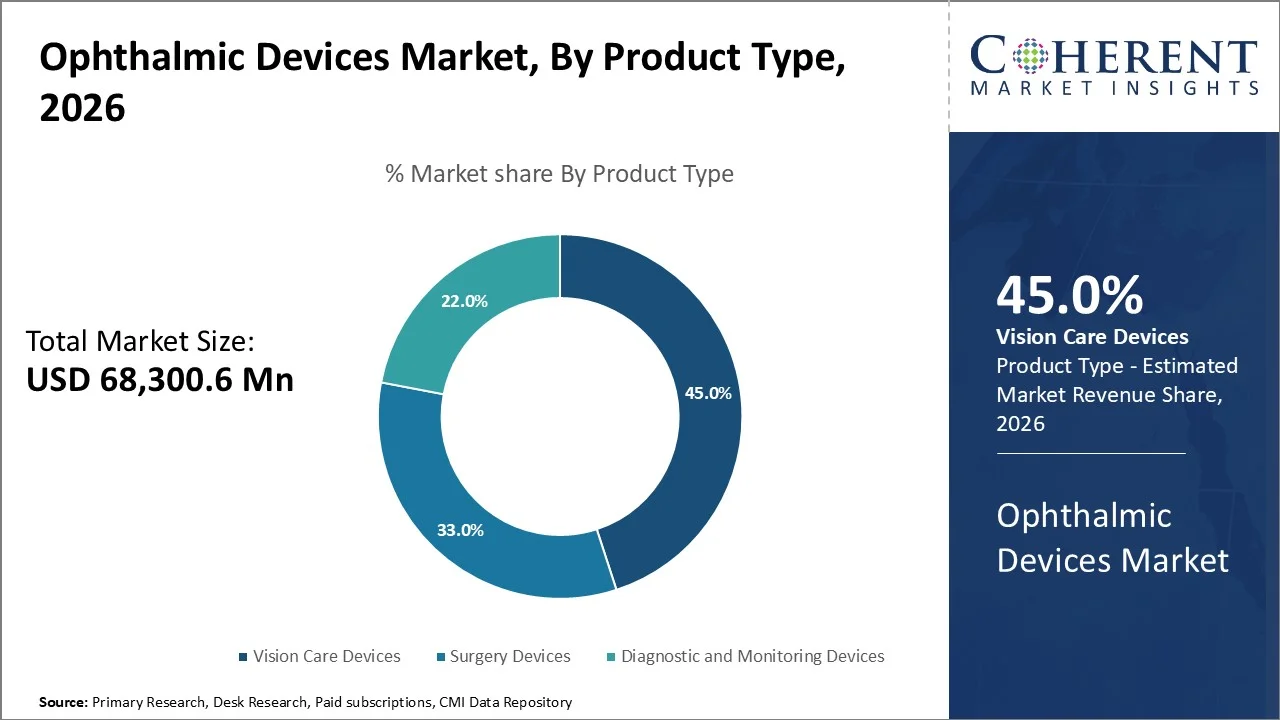
Vision care devices are forecasted to lead the global ophthalmic devices market in 2026, holding about 45% of the market revenue. The growth drivers of this segment include the rise in cases of refractive errors, growing use of glasses and contact lenses, and increased awareness related to vision correction.

Growing exposure to screens, increasing cases of myopia in both children and adults, and increased availability of low-cost vision correction wear are further fueling demand for vision care devices. Further, innovations in light-weight lenses, blue light filters, and smart lenses are driving segment growth.

In October 2025, Johnson & Johnson announced new clinical data for its ACUVUE OASYS MAX 1-Day contact lenses highlighting enhanced comfort, moisture retention, and improved visual performance during computer and digital device usage.
Which End User Segment Dominates the Market?

Ophthalmic Devices Market By End User

To learn more about this report, Request Free Sample

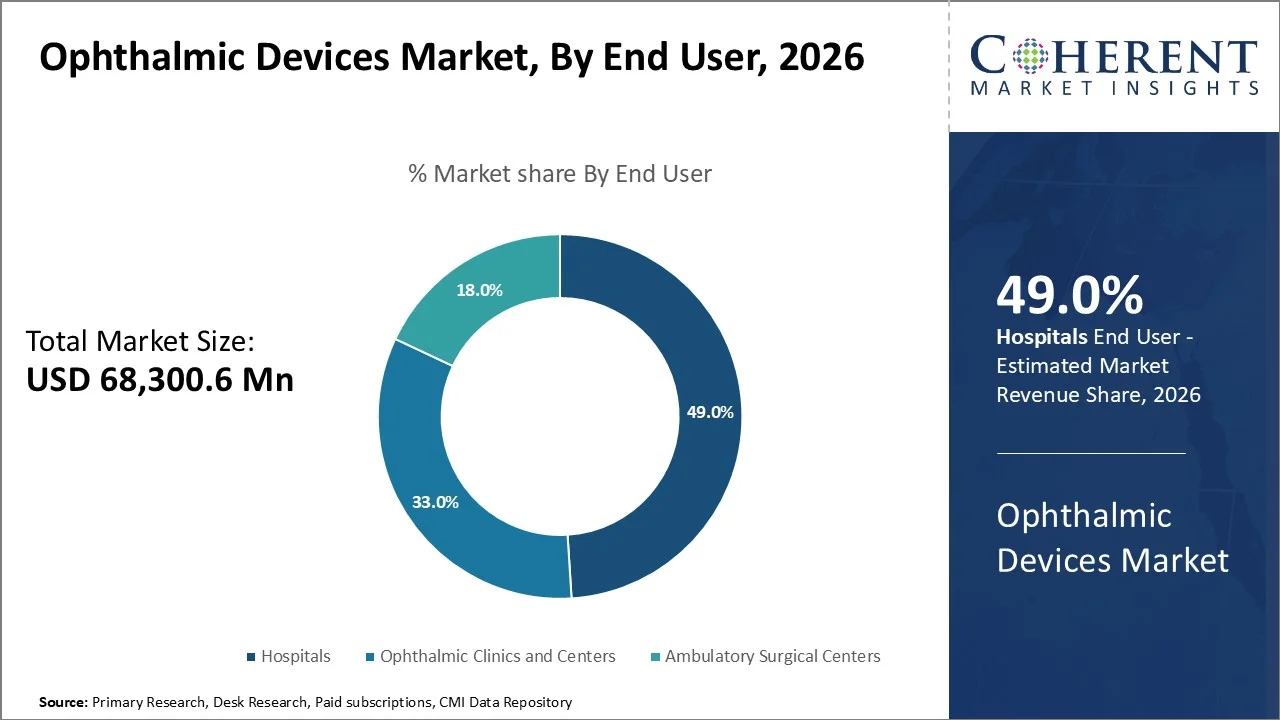
Hospitals are projected to be the leading segment, accounting for close to 49% of the market share, in the global ophthalmic devices market in 2026 owing to the advanced ophthalmic surgical facilities, availability of skilled ophthalmologists, and capacity to handle large volumes of patients. Hospitals are well-equipped with advanced ophthalmic diagnostic and surgical systems for cataract, retinal, glaucoma, and corneal procedures.

In February 2025, Carl Zeiss Meditec AG expanded its ophthalmic surgical visualization and microscopy solutions for hospitals and specialty eye centers to support growing ophthalmic surgical demand globally.

Market Drivers

Rising Prevalence of Vision Disorders is Accelerating Growth of the Ophthalmic Devices Market

The growing impact of visual impairments and ocular diseases is one of the major factors that are positively impacting the market for ophthalmic devices. An increase in the occurrence of cataract, glaucoma, diabetic retinopathy, and refractive disorders is creating the need for modern medical and surgical ophthalmic devices. Other reasons contributing to the rising incidence rate of ocular ailments include exposure to screens, lifestyle changes, and diabetes prevalence.

According to the World Health Organization (WHO), more than 2.2 billion people globally live with near or distance vision impairment, while at least 1 billion cases could have been prevented or remain untreated.

Growing Aging Population is Increasing Demand for Cataract and Retinal Surgery Devices

Rapid growth in the global geriatric population is further accelerating demand for ophthalmic diagnostic and surgical devices. Senior patients are exposed to several kinds of eye diseases related to old age, including cataracts, AMD, glaucoma, and presbyopia. This is increasing demand for advanced ophthalmic diagnostic and surgical technologies.

According to the United Nations World Population Ageing Report, the number of persons aged 65 years and older worldwide will increase over 100 percent by the year 2050.

Current Events and Their Impact on the Ophthalmic Devices Market

Current Event

Description and its Impact

Expansion of AI-Powered Ophthalmic Diagnostics and Surgical Platforms

  • Description: AI-enabled imaging systems, AI-based surgical robot, and cloud-based solutions are being launched at an accelerated pace by key ophthalmic players to enhance precision and efficiencies. Topcon Healthcare, which launched its digital ophthalmology solution range in 2025, uses AI-powered retinal imaging along with AI-based disease detection capabilities for diabetic retinopathy and glaucoma screening.
  • Impact: The growing adoption of artificial intelligence-based ophthalmic instruments has spurred the need for OCT scanners, retinal imagers, cataract surgery equipment, and diagnostic tools. Hospitals and ophthalmic centers are increasingly investing in automating their ophthalmic practice owing to better diagnostic capabilities and surgical accuracy, leading to a rise in the global ophthalmic device market.

Rising Global Cataract Surgery Volumes and Aging Population

  • Description: Growing instances of cataract cases along with other age-related eye disorders are fueling the need for ophthalmic surgery instruments worldwide. Cataracts remain one of the leading causes of blindness globally, according to the World Health Organization. The global aging population continues to expand rapidly.
  • Impact: Rising number of procedures involving eyes is causing increased demand for phacoemulsification devices, femtosecond laser, intraocular lens implantation apparatus, surgical microscope and surgical imaging devices. Healthcare institutions have been making investments in equipment for eye care to cope with rising number of patients.

Uncover macros and micros vetted on 75+ parameters: Get instant access to report
Ophthalmic Devices Market Trends

  • The rising incidence of diabetes increases the need for equipment such as retinal imaging machines.
  • The aging population leads to a higher number of cases of cataracts, glaucoma, and AMD, which increases the demand for surgical and diagnostic devices for ophthalmic disorders.
  • Growing adoption of minimally invasive and laser-assisted eye surgeries improves surgical precision and postoperative recovery outcomes.

Regional Insights

Ophthalmic Devices Market By Regional Insights

To learn more about this report, Request Free Sample

North America Ophthalmic Devices Market Trends

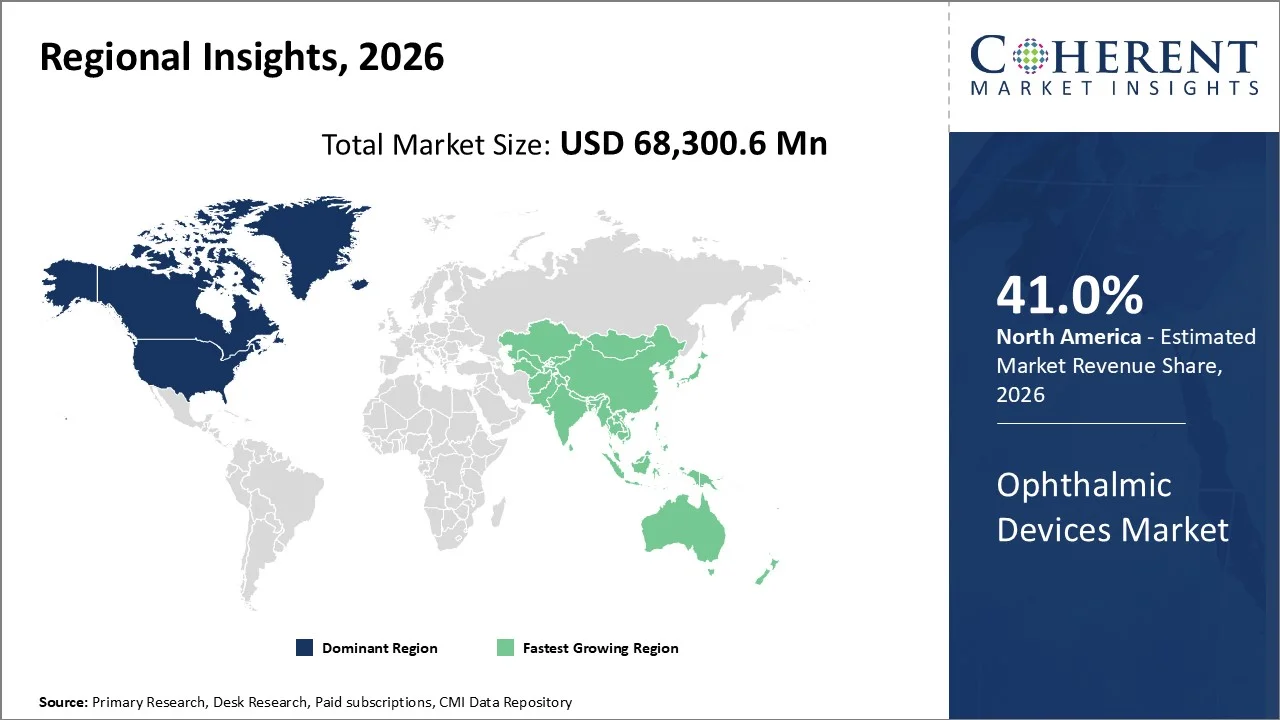
North America leads due to the availability of highly developed healthcare infrastructure, high adoption rate of technologically advanced eye care devices, and growing instances of vision disorders. The regional market is projected to represent about 41% of market shares in 2026 due to the growing need for retinal imaging devices, OCT instruments, cataract surgery devices, and AI-based ophthalmology diagnostics.

In March 2025, Topcon Healthcare introduced an AI-powered OCT and retinal imaging platform integrating automated disease detection and cloud-based ophthalmic data management.

Asia Pacific Ophthalmic Devices Market Trends

Asia-Pacific is expected to register the fastest CAGR during 2026-2033 owing to the increasing aging population, rising cases of diabetes, growing number of cataract cases, and investments in the healthcare infrastructure in emerging countries like China and India. Moreover, rising awareness about early detection of eye disorders is anticipated to boost the regional market growth.

According to the World Health Organization, at least 2.2 billion people globally have near or distance vision impairment, and in at least 1 billion of these cases, vision impairment could have been prevented or has yet to be addressed.

Growing Geriatric Population is Accelerating the Ophthalmic Devices Market Demand in United States

The United States ophthalmic devices market is experiencing significant growth due to the aging population, rise in cataracts, diabetic retinopathy, glaucoma, and the adoption of modern eye devices technology. As per statistics from the CDC, over 3.4 million Americans above 40 years of age are either legally blind or have visual impairment, whereas 20.5 million Americans above 40 years suffer from cataracts. In addition to this, millions of cataract surgeries are being conducted in the nation each year.

Japan Ophthalmic Devices Market Trends

The Japan ophthalmic devices market is expected to witness significant growth during the forecast period, driven by the fast-aging population in Japan along with an increasing prevalence of age-related eye diseases. Based on data provided by the World Bank and the government of Japan, about 30% of Japan's population consists of people over 65 years of age, indicating that Japan is one of the most aged societies in the world.

Who are the Major Companies in Ophthalmic Devices Industry

Some of the major key players in Ophthalmic Devices are Carl Zeiss Meditec Group, Escalon Medical Corp., Haag-Streit AG, Heidelberg Engineering GmbH, Heine Optotechnik GmbH & Co. KG, Essilor International S.A., NIDEK CO., LTD., Quantel Medical SAS, Luneau Technology Group, and Topcon Corporation.

Industry News

  • In September 2025, ZEISS showcased new AI-powered ophthalmic workflow and surgical solutions at ESCRS 2025, including the CIRRUS PathFinder clinical support tool and DORC EVA NEXUS surgical platform for cataract and glaucoma management.
  • In November 2025, Topcon Healthcare received FDA 510(k) clearance for OMNIA, a 4-in-1 automated ophthalmic pretesting solution integrating refraction, keratometry, tonometry, and pachymetry into a single device.

Market Report Scope

Ophthalmic Devices Market Report Coverage

Report Coverage Details
Base Year: 2025 Market Size in 2026: USD 68,300.6 Mn
Historical Data for: 2020 To 2024 Forecast Period: 2026 To 2033
Forecast Period 2026 to 2033 CAGR: 4.3% 2033 Value Projection: USD 91,927.4 Mn
Geographies covered:
  • North America: U.S. and Canada
  • Latin America: Brazil, Argentina, Mexico, and Rest of Latin America
  • Europe: Germany, U.K., Spain, France, Italy, Russia, and Rest of Europe
  • Asia Pacific: China, India, Japan, Australia, South Korea, ASEAN, and Rest of Asia Pacific
  • Middle East: GCC Countries, Israel, and Rest of Middle East
  • Africa: South Africa, North Africa, and Central Africa
Segments covered:
  • By Product Type: Vision Care Devices, Surgery Devices, and Diagnostic and Monitoring Devices
  • By End User: Hospitals, Ophthalmic Clinics and Centers, and Ambulatory Surgical Centers
Companies covered:

Carl Zeiss Meditec Group, Escalon Medical Corp., Haag-Streit AG, Heidelberg Engineering GmbH, Heine Optotechnik GmbH & Co. KG, Essilor International S.A., NIDEK CO., LTD., Quantel Medical SAS, Luneau Technology Group, and Topcon Corporation.

Growth Drivers:
  • Increasing aging population and growing demand for vision care services globally
  • Growing adoption of AI-powered ophthalmic diagnostic and retinal imaging technologies
Restraints & Challenges:
  • High cost of advanced ophthalmic diagnostic and surgical equipment
  • Limited access to eye care services in rural and low-income regions

Uncover macros and micros vetted on 75+ parameters: Get instant access to report

Analyst Opinion

  • Ophthalmic devices market growth is primarily driven by the increasing global burden of vision impairment and eye disorders.
  • Cataract surgeries remain among the most commonly performed medical procedures worldwide, significantly driving demand for ophthalmic surgical devices, intraocular lenses (IOLs), retinal imaging systems, and surgical microscopes. The growing aging population is expected to further accelerate procedure volumes globally.
  • AI-powered ophthalmic imaging, OCT systems, and cloud-connected diagnostic platforms are transforming eye care by improving early disease detection, workflow automation, and clinical decision-making. Companies are increasingly investing in advanced digital ophthalmology solutions to enhance diagnostic efficiency and patient outcomes.
  • Rising adoption of minimally invasive and laser-assisted ophthalmic surgeries is improving surgical precision, reducing recovery times, and increasing patient satisfaction, which is expected to support continued market expansion across both developed and emerging economies.
  • Expanding teleophthalmology services and increasing healthcare investments in emerging markets are anticipated to improve access to eye care services, particularly in underserved and rural populations, creating significant future growth opportunities for ophthalmic device manufacturers.

Market Segmentation

  • By Product Type (Revenue, USD Mn, 2021-2033)
    • Vision Care Devices
    • Surgery Devices
    • Diagnostic and Monitoring Devices
  • By End User (Revenue, USD Mn, 2021-2033)
    • Hospitals
    • Ophthalmic Clinics and Centers
    • Ambulatory Surgical Centers
  • By Region (Revenue, USD Mn, 2021-2033)
    • North America
      • U.S.
      • Canada
    • Latin America
      • Brazil
      • Mexico
      • Argentina
      • Rest of Latin America
    • Europe
      • Germany
      • U.K.
      • France
      • Italy
      • Spain
      • Russia
      • Rest of Europe
    • Asia Pacific
      • China
      • India
      • Japan
      • Australia
      • South Korea
      • ASEAN
      • Rest of Asia Pacific
    • Middle East
      • GCC
      • Israel
      • Rest of Middle East
    • Africa
      • South Africa
      • Central Africa
      • North Africa
  • Key Players
    • Carl Zeiss Meditec AG
    • Escalon Medical Corp.
    • Haag-Streit AG
    • Heidelberg Engineering GmbH
    • Heine Optotechnik GmbH & Co. KG
    • Essilor International S.A.
    • NIDEK CO., LTD.
    • Quantel Medical SAS
    • Luneau Technology Group
    • Topcon Corporation

Sources

Primary Research Interviews

  • Interviews with ophthalmologists, optometrists, retinal specialists, cataract surgeons, hospital procurement managers, ophthalmic clinic administrators, ophthalmic device manufacturers, distributors, and industry experts

Databases

  • World Health Organization (WHO) vision impairment databases
  • International Diabetes Federation (IDF) Diabetes Atlas database
  • National Eye Institute (NEI) databases
  • Centers for Disease Control and Prevention (CDC) vision health databases
  • Healthcare expenditure and hospital infrastructure databases
  • International trade and medical device import-export databases

Magazines

  • Ophthalmology Times
  • Review of Ophthalmology
  • EyeWorld Magazine
  • Ophthalmic Professional Magazine
  • Medical Device Network publications

Journals

  • Journal of Ophthalmology
  • American Journal of Ophthalmology
  • JAMA Ophthalmology
  • British Journal of Ophthalmology
  • Investigative Ophthalmology & Visual Science (IOVS)

Newspapers

  • Leading national and international newspapers covering healthcare technology, medical devices, ophthalmology advancements, and healthcare infrastructure developments

Associations

  • American Academy of Ophthalmology (AAO)
  • International Council of Ophthalmology (ICO)
  • Association for Research in Vision and Ophthalmology (ARVO)
  • World Health Organization (WHO)
  • International Agency for the Prevention of Blindness (IAPB)

Public Domain Sources

  • WHO blindness and vision impairment reports
  • CDC vision health reports
  • National Eye Institute (NEI) publications
  • United Nations population ageing reports
  • Government healthcare and medical device regulatory reports
  • Company annual reports, investor presentations, SEC filings, and patent databases

Proprietary Elements

  • CMI Data Analytics Tool
  • Proprietary CMI Existing Repository of information for last 10 years

Share

Share

About Author

Komal Dighe is a Management Consultant with over 8 years of experience in market research and consulting. She excels in managing and delivering high-quality insights and solutions in Health-tech Consulting reports. Her expertise encompasses conducting both primary and secondary research, effectively addressing client requirements, and excelling in market estimation and forecast. Her comprehensive approach ensures that clients receive thorough and accurate analyses, enabling them to make informed decisions and capitalize on market opportunities.

Missing comfort of reading report in your local language? Find your preferred language :

Frequently Asked Questions

The global Ophthalmic Devices Market is estimated to be valued at USD 68,300.6 Mn in 2026

The global Ophthalmic Devices Market is expected to reach USD 91,927.4 Mn by 2033.

The global Ophthalmic Devices Market is poised to exhibit a CAGR of 4.3% from 2026 to 2033.

Major growth factors include rising prevalence of ophthalmic disorders, increasing geriatric population, growing adoption of AI-powered ophthalmic diagnostic technologies, and rising demand for advanced surgical and retinal imaging devices.

The vision care devices segment dominates the market with approximately 45% share in 2026 due to the increasing prevalence of refractive disorders and growing adoption of spectacles and contact lenses.

Some major companies operating in the Ophthalmic Devices Market include Carl Zeiss Meditec AG, Escalon Medical Corp., Haag-Streit AG, Heidelberg Engineering GmbH, Heine Optotechnik GmbH & Co. KG, Essilor International S.A., NIDEK CO., LTD., Quantel Medical SAS, Luneau Technology Group, and Topcon Corporation.

Asia Pacific is projected to be the fastest-growing region during 2026–2033 due to rising aging population, increasing diabetes prevalence, and expanding healthcare infrastructure investments.

Select a License Type

EXISTING CLIENTELE

Joining thousands of companies around the world committed to making the Excellent Business Solutions.

View All Our Clients

trusted clients logo

© 2026 Coherent Market Insights Pvt Ltd. All Rights Reserved.
