Vacuum Blood Collection System Market Analysis & Forecast: 2026-2033

Vacuum Blood Collection System Market Size and Forecast – 2026 – 2033
The Global Vacuum Blood Collection System Market size is estimated to be valued at USD 2.1 billion in 2026 and is expected to reach USD 3.8 billion by 2033, exhibiting a compound annual growth rate (CAGR) of 8.5% from 2026 to 2033.
Global Vacuum Blood Collection System Market Overview
Vacuum blood collection systems are medical devices designed for safe, efficient, and standardized blood sample collection. The products typically include evacuated blood collection tubes, needles, holders, and safety-engineered components. These systems use vacuum pressure to draw precise volumes of blood directly into sealed tubes, reducing contamination and exposure risk. They are commonly used in hospitals, diagnostic laboratories, blood banks, and clinics. Key product features include sterility, sample integrity, and compatibility with automated laboratory analyzers.
Key Takeaways
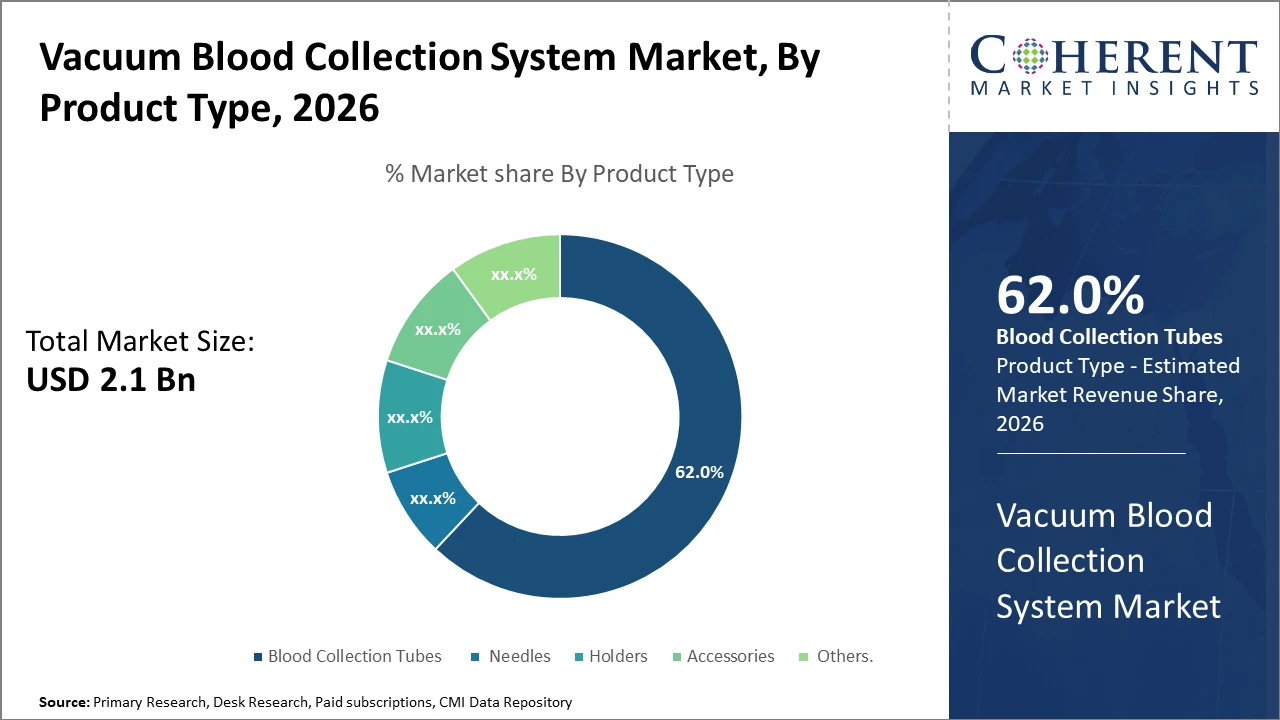
Blood Collection Tubes dominate the product segment with 62% market share, reflecting their critical role and continuous innovation such as anticoagulant variants enhancing diagnostic accuracy.
Hospitals represent the largest end-user segment, accounting for 55% of market revenue due to high volume and repeated blood testing demands in inpatient and outpatient settings.
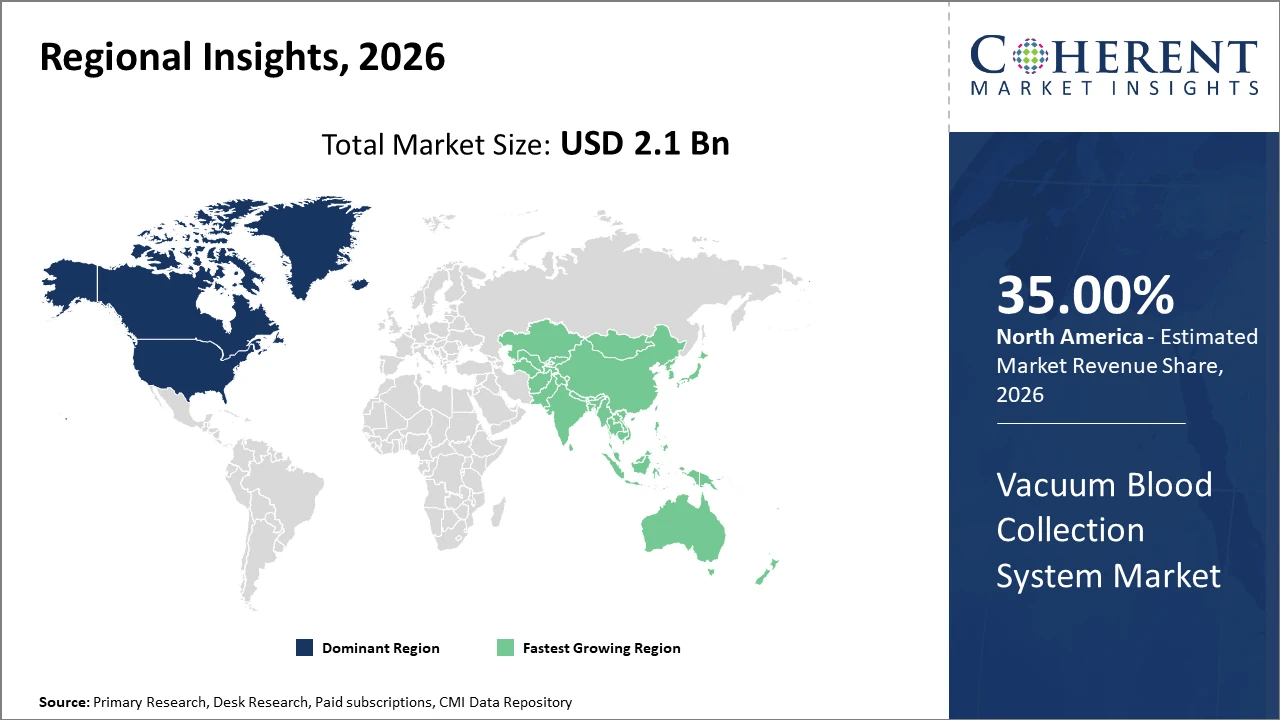
Asia Pacific emerges as the fastest growing regional market driven by expanding healthcare infrastructure and rising expenditure, showing CAGR upwards of 10% recently.
North America holds the highest industry share with over 35% due to advanced healthcare systems, high adoption of innovative products, and strict regulatory standards ensuring quality.
Vacuum Blood Collection System Market Segmentation Analysis
To learn more about this report, Request Free Sample
Vacuum Blood Collection System Market Insights, By Product Type
Blood Collection Tubes dominate the market share at 62%. Blood Collection Tubes remain the cornerstone of the market due to ongoing innovations like improved anticoagulants and additives that enhance sample stability and diagnostic accuracy. Their high utility in varied clinical settings ensures sustained demand. The fastest-growing subsegment is Holders, driven by ergonomic designs and compatibility with multiple tube sizes, facilitating improved workflow in busy laboratories and collection centers. Needles maintain steady demand due to continuous development of smaller gauge, patient-comfort-oriented designs used for diverse patient demographics. Accessories such as caps and labels supplement the functionality but account for smaller shares, while Others include ancillary disposables catering to niche applications.
Vacuum Blood Collection System Market Insights, By Application
Clinical Diagnosis accounts for 70% of the market, illustrating its primary role in routine and specialized diagnostic procedures. The stronghold of Clinical Diagnosis is maintained by a broad spectrum of tests including hematology, biochemistry, and serology, which require precision and high sample integrity. The fastest-growing application subsegment is Therapeutic Drug Monitoring, propelled by personalized medicine trends demanding regular blood sample evaluation for drug dosage optimization. Research and Development segments maintain steady growth, benefitting from increased biotech activities and clinical trials globally. Blood Donation also contributes a sizable share given the demand for sterile, efficient blood collection technologies ensuring donor safety and blood integrity.
Vacuum Blood Collection System Market Insights, By End-User
Hospitals dominate with a 55% share. The hospital segment's supremacy arises from extensive inpatient and outpatient care requiring constant blood sample collection, supported by procedure volumes and hospital-anchored chronic disease management programs. Diagnostic Laboratories represent the fastest-growing end user segment, propelled by outsourcing trends and growing private lab networks offering screening services. Ambulatory Surgical Centers and Blood Banks maintain moderate growth with specialized collection requirements. The Others category encompasses research institutes and specialty clinics, which contribute modestly but promise potential expansion aligned with research activities.
Vacuum Blood Collection System Market Trends
The Vacuum Blood Collection System market is undergoing transformative trends centered around automation and sustainability.
The integration of smart technologies like RFID and barcoding enhances the traceability of blood samples and minimizes human error, thereby increasing operational efficiency in clinical labs.
For instance, RFID adoption in several U.S. hospitals in 2025 has resulted in a 20% increase in sample processing speed.
Sustainability initiatives spearheaded by manufacturers have introduced eco-friendly blood collection tubes, satisfying growing institutional demands for reduced environmental footprints.
Vacuum Blood Collection System Market Insights, By Geography
To learn more about this report, Request Free Sample
North America Vacuum Blood Collection System Market Analysis and Trends
Regional analysis reveals North America as the dominating region, holding approximately 35% market share due to its well-established healthcare infrastructure, regulatory frameworks focusing on infection control, and high adoption of advanced blood collection technologies.
Asia Pacific Vacuum Blood Collection System Market Analysis and Trends
Meanwhile, Asia Pacific exhibits the fastest growth trajectory with a CAGR exceeding 10%, driven by rapid healthcare infrastructure development, rising government expenditure, and increasing prevalence of chronic diseases. Key players such as Terumo Corporation and Becton Dickinson have significantly expanded operations in this region, reinforcing market penetration.
Vacuum Blood Collection System Market Outlook for Key Countries
USA Vacuum Blood Collection System Market Analysis and Trends
The United States leads the Vacuum Blood Collection System market globally, attributable to stringent diagnostic protocols and extensive outpatient centers. In 2024 alone, more than 200 million blood collection procedures were reported, reflecting high demand for innovative vacuum blood collection devices. Industry leaders have leveraged advanced R&D to introduce products like low-vacuum and butterfly needles that enhance patient compliance and clinical outcomes. Furthermore, reimbursement policies supporting preventative health screenings have augmented market revenue significantly.
India Vacuum Blood Collection System Market Analysis and Trends
India's market is rapidly evolving with government initiatives aimed at expanding rural healthcare access and increasing diagnostic testing centers. The market uptake of vacuum blood collection tubes has accelerated by nearly 15% year-on-year as healthcare modernization projects intensify. Prominent market companies have formed strategic alliances with local distributors to tap into this expanding market base. Rising awareness and increasing burden of lifestyle diseases are key factors supporting sustainable business growth.
Analyst Opinion
The supply-side dynamics in the market reveal a consistent increase in production capacity across North American and Asia Pacific manufacturing hubs, with a 12% production volume growth recorded in 2024. This surge is attributed to streamlined manufacturing processes and the incorporation of automation technologies which have reduced turnaround time by an average of 15%.
On the demand side, the expansion of diagnostic laboratories and outpatient centers contributed to a notable 10% hike in vacuum blood collection device imports worldwide in 2024. The demand is particularly pronounced in emerging healthcare markets across Asia Pacific, where a rise in chronic disease prevalence has underscored the need for rapid and reliable blood sampling.
Micro-indicators such as pricing trends have demonstrated marginal declines due to competitive procurement strategies among market players, with average per-unit costs dropping by approximately 5% between 2023 and 2024. This pricing adjustment has further stimulated market uptake in cost-sensitive regions, enhancing overall market revenue streams.
Nano-scale indicators show increasing diversification in application specifics, with novel additives and coatings being integrated into blood collection tubes to improve blood preservation and reduce hemolysis rates, validated by a 7% decrease in sample rejection statistics reported by major laboratories.
Market Scope
| Report Coverage | Details | ||
|---|---|---|---|
| Base Year: | 2025 | Market Size in 2026: | USD 2.1 billion |
| Historical Data for: | 2020 To 2024 | Forecast Period: | 2026 To 2033 |
| Forecast Period 2026 to 2033 CAGR: | 8.5% | 2033 Value Projection: | USD 3.8 billion |
| Geographies covered: |
|
||
| Segments covered: |
|
||
| Companies covered: | Cardinal Health, Inc., BioIVT, Denville Scientific Inc., Macherey-Nagel GmbH & Co. KG, Nanjing Jiangning Scientific Instruments Co., Jiangxi Tianyibao Medical Technology Co., Ltd., Medline Industries, Inc., Lion Laboratories Ltd., Viva Scientific LLC, MauMedical GmbH. | ||
| Growth Drivers: |
|
||
Uncover macros and micros vetted on 75+ parameters: Get instant access to report
Vacuum Blood Collection System Market Growth Factors
The market growth is predominantly driven by rising prevalence of chronic disorders such as diabetes and cardiovascular diseases, which necessitate frequent blood sampling for monitoring and diagnosis. Increasing outpatient procedures worldwide have stressed the demand for efficient blood collection systems that reduce patient discomfort and improve workflow. The expansion of healthcare infrastructure in emerging economies, especially in Asia Pacific, supported by favorable government initiatives and reimbursement policies, has dramatically increased market outreach. Furthermore, stringent regulatory requirements focusing on infection control and blood sample integrity have led to accelerated adoption of advanced vacuum blood collection devices.
Vacuum Blood Collection System Market Development
In December 2024, BD (Becton, Dickinson and Company) launched the BD MiniDraw™ Capillary Blood Collection System, designed to deliver lab-quality diagnostic results from finger-prick samples. The system improves patient comfort while enabling accurate capillary blood collection for routine testing, supporting decentralized and patient-centric care models.
In January 2025, Terumo Corporation announced a strategic R&D partnership focused on advancing blood component collection technologies. The collaboration aims to enhance collection efficiency, product quality, and donor safety through innovation in devices and processing systems used in transfusion medicine.
Key Players
Leading Companies of the Market
Cardinal Health, Inc.
BioIVT
Denville Scientific Inc.
Macherey-Nagel GmbH & Co. KG
Nanjing Jiangning Scientific Instruments Co.
Jiangxi Tianyibao Medical Technology Co., Ltd.
Medline Industries, Inc.
Lion Laboratories Ltd.
Viva Scientific LLC
MauMedical GmbH
Leading market companies have implemented diverse growth strategies such as strategic acquisitions, e.g., Becton Dickinson’s expansion of its global footprint by acquiring local distribution channels in Asia Pacific, resulting in a 14% revenue increase in the region in 2024. Furthermore, product innovation through R&D investments has been pivotal; Terumo Corporation reported launching a novel low-vacuum tube system in mid-2025, which shortened sample collection time by nearly 20%, enhancing patient throughput in busy clinical settings.
Vacuum Blood Collection System Market Future Outlook
Future growth in the vacuum blood collection system market will be driven by increasing diagnostic testing volumes and emphasis on healthcare worker safety. Continued innovation in needle safety mechanisms and tube materials will reduce needlestick injuries and sample contamination. Expansion of preventive healthcare, chronic disease monitoring, and point-of-care diagnostics will sustain demand. Emerging markets will contribute significantly as healthcare infrastructure improves. Integration with digital sample tracking and laboratory automation will further enhance efficiency and accuracy.
Vacuum Blood Collection System Market Historical Analysis
The vacuum blood collection system market developed as healthcare providers sought safer and more standardized methods of blood sampling. Early blood collection relied on open syringes, which posed risks of contamination and inconsistent sample volumes. The introduction of evacuated tube systems revolutionized phlebotomy by improving safety, accuracy, and efficiency. Over time, advancements such as color-coded tubes, anticoagulant additives, and safety-engineered needles enhanced usability. The rise of centralized diagnostic laboratories and automated analyzers further increased adoption. These systems became standard practice in hospitals and laboratories worldwide.
Sources
Primary Research Interviews:
Phlebotomists
Clinical Pathologists
Hospital Procurement Managers
Diagnostic Lab Directors
Nurses
Databases:
WHO Blood Safety Data
CDC Laboratory Data
GlobalData Healthcare Reports
IQVIA
Magazines:
Medical Device Network
Healthcare Purchasing News
Diagnostics World
Clinical Lab Products
Medical Design Briefs
Journals:
Journal of Clinical Pathology
Clinical Chemistry
American Journal of Hematology
Laboratory Medicine
Transfusion Journal
Newspapers:
Reuters Health
The New York Times (Health)
Financial Express (Healthcare)
The Guardian (Health),
Wall Street Journal (Health)
Associations:
American Society for Clinical Pathology
International Society of Blood Transfusion
Clinical and Laboratory Standards Institute
World Health Organization
College of American Pathologists
Share
Share
Komal Dighe is a Management Consultant with over 8 years of experience in market research and consulting. She excels in managing and delivering high-quality insights and solutions in Health-tech Consulting reports. Her expertise encompasses conducting both primary and secondary research, effectively addressing client requirements, and excelling in market estimation and forecast. Her comprehensive approach ensures that clients receive thorough and accurate analyses, enabling them to make informed decisions and capitalize on market opportunities.

Credibility and Certifications

860519526


9001:2015

27001:2022


Need a Custom Report?
We can customize every report - free of charge - including purchasing stand-alone sections or country-level reports
Customize NowJoining thousands of companies around the world committed to making the Excellent Business Solutions.
View All Our Clients