

Enteral Nutrition Market Size and Share Analysis - Growth Trends and Forecast (2026 - 2033)
The global enteral nutrition market size is estimated to total USD 3.67 Bn in 2026 and is projected to grow at a compound annual growth rate (CAGR) of 5.8% during the forecast period (2026-2033), reaching USD 5.45 Bn by 2033. This can be attributed to rising prevalence of chronic diseases, growing geriatric population, increasing adoption of clinical nutrition therapies, and advancements in enteral feeding formulations and delivery systems.
Key Takeaways from the Enteral Nutrition Market Report
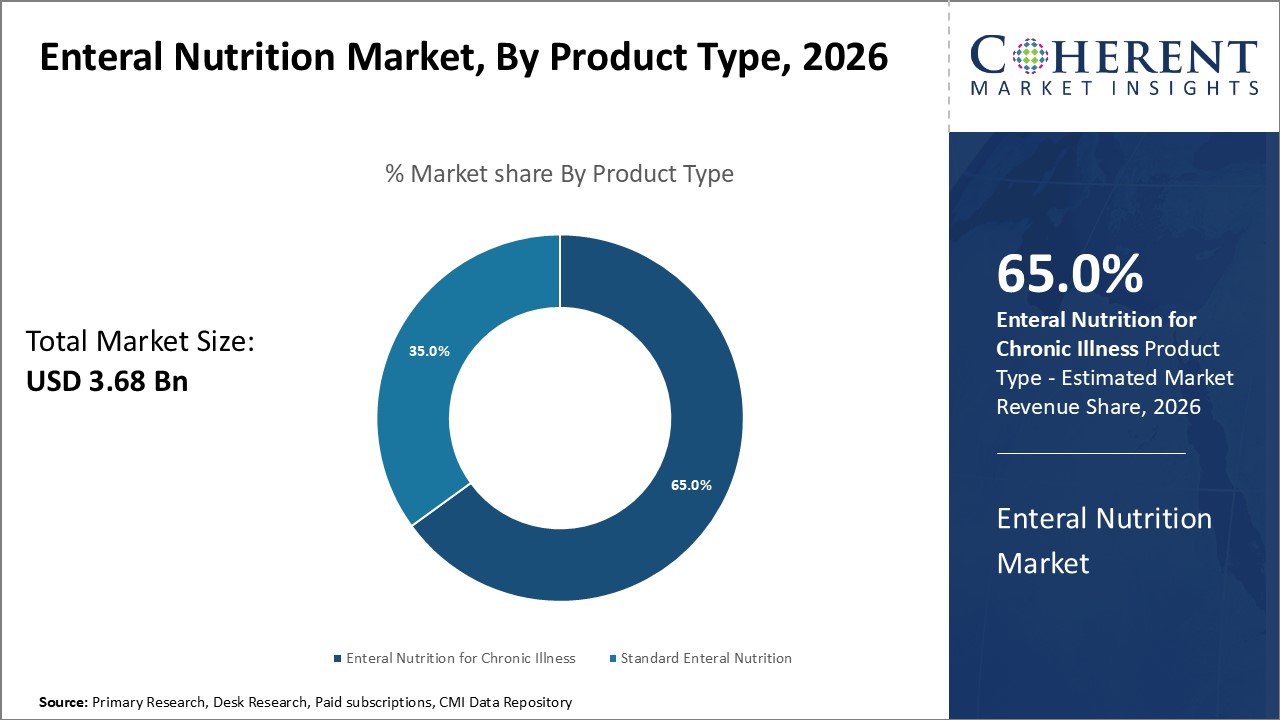
- By product type, enteral nutrition for chronic illness segment is expected to lead the market with a share of 65% in 2026, owing to rising prevalence of chronic diseases and growing adoption of disease-specific, clinically tailored nutritional formulations. Chronic diseases account for ~74% of global deaths
- Based on nutrition type, proteins segment is slated to account for 35% of the global enteral nutrition market share in 2026 due to increasing protein deficiency globally.
- In terms of formulation, liquid segment is projected to hold a market share of nearly 70% in 2026, primarily due to its widespread use in clinical settings for tube feeding and ease of administration.
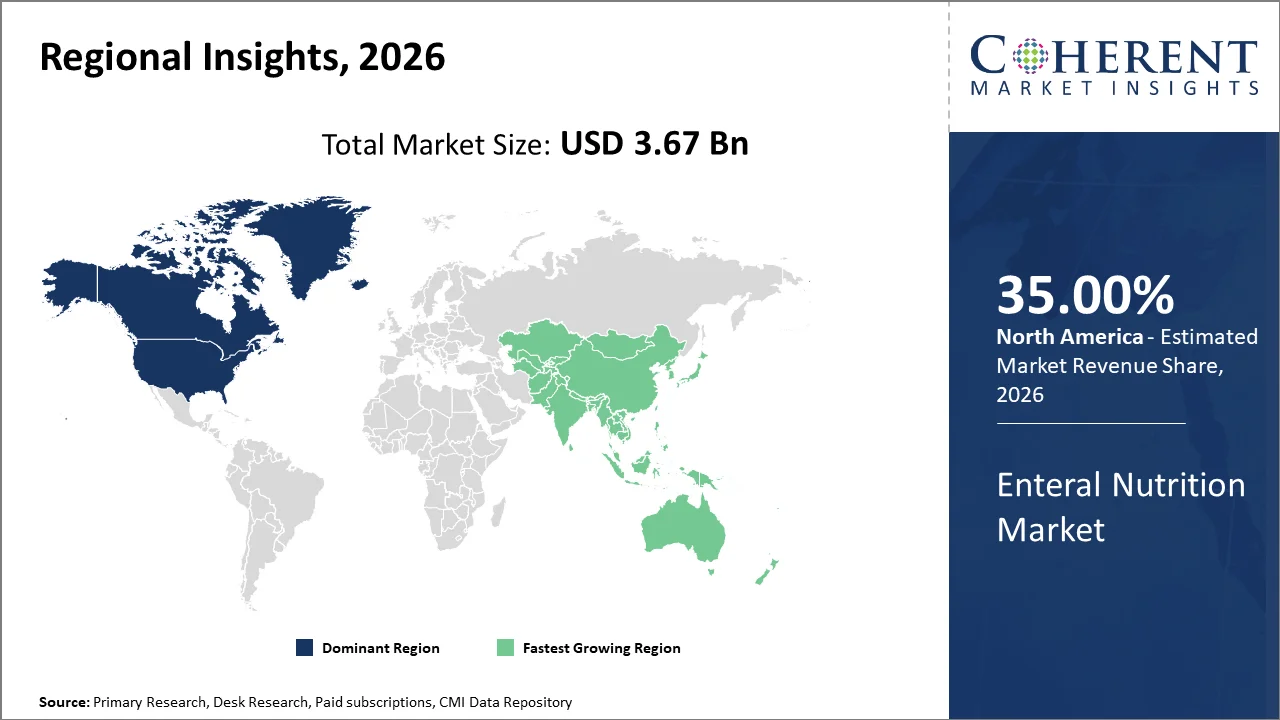
- North America is expected to lead the global enteral nutrition industry with a share of 35% in 2026, owing to high prevalence of chronic conditions and strong awareness regarding clinical nutrition. The
- Asia Pacific, holding a share of 25% in 2026, is poised to emerge as the fastest growing market for enteral nutrition products during the forecast period, driven by rising cases of chronic illnesses, expanding geriatric population, and increasing awareness regarding clinical nutrition.
Enteral Nutrition Market Overview
The global enteral nutrition market is expected to grow steadily during the forecast period. This is due to increasing prevalence of chronic diseases such as cancer, neurological disorders, and gastrointestinal conditions, along with the growing geriatric population that requires long-term nutritional support. In addition, growing awareness about clinical nutrition, advancements in enteral feeding formulations and delivery systems, and expanding number of preterm births are supporting market expansion.
Enteral nutrition, also known as tube feeding, is a method of delivering nutrients directly into the stomach or small intestine through the gastrointestinal tract. It is commonly used in patients who are unable to meet their nutritional needs orally due to conditions such as dysphagia or critical illness. The growing elderly population, which is more prone to swallowing difficulties and chronic diseases, is expected to drive enteral nutrition market growth in the coming years.
Shift from parenteral nutrition to enteral nutrition is a key growth-shaping market trend. Enteral nutrition is preferred over parenteral nutrition because of its lower risk of infection, cost-effectiveness, and ability to support natural digestive processes. This clinical preference is set to boost enteral nutrition market value during the forthcoming period.
Technological advancements in feeding systems are supporting market expansion. Companies are developing portable feeding pumps, closed-system delivery mechanisms, and smart monitoring devices. These innovations enhance safety, mobility, and convenience. For instance, in February 2025, Cardinal Health announced the international rollout of its Kangaroo OMNI™ Enteral Feeding Pump.It is a portable enteral feeding pump designed to deliver thick, homogenized, and blended formulas.
Kangaroo OMNI Enteral Feeding Pump is intended to support patients by providing more personalized enteral nutrition options throughout their feeding journey. Such innovations are expected to create growth opportunities in the enteral nutrition industry. Rising adoption of portable and ambulatory feeding devices is also fostering enteral nutrition market growth.
Segmental Insights
Which Product Type Dominates the Enteral Nutrition Market?
Enteral Nutrition for Chronic Illness Accounts for the Largest Share
Based on product type, enteral nutrition for chronic illness segment is projected to account for a market revenue share of 65% in 2026. This is attributable to rising global burden of chronic diseases such as cancer, diabetes, neurological disorders, and gastrointestinal conditions that often require long-term nutritional support. According to the World Health Organization, noncommunicable diseases account for nearly 74% of all deaths worldwide, highlighting the growing patient population in need of sustained clinical nutrition interventions.
Patients with chronic illnesses frequently experience malnutrition, reduced appetite, or impaired nutrient absorption, making enteral nutrition a critical component of disease management. Furthermore, increasing adoption of disease-specific formulations for conditions such as oncology, renal disorders, and diabetes, along with the expansion of home-based enteral nutrition and long-term care services, boosts segment growth.
- Current Industry Events of 2026
- Market Size Estimation
- Regional Breakdown
- Competitive Landscape
- Customer Intelligence
- Segmental Analysis
- Pricing Analysis
- Key Market Drivers, Challenges & Future Trends
- Customized Insights Section
Which Enteral Nutrition Formulation Has the Highest Adoption?
Ease of Administration and Clinical Convenience Drive Liquid Formulation Adoption
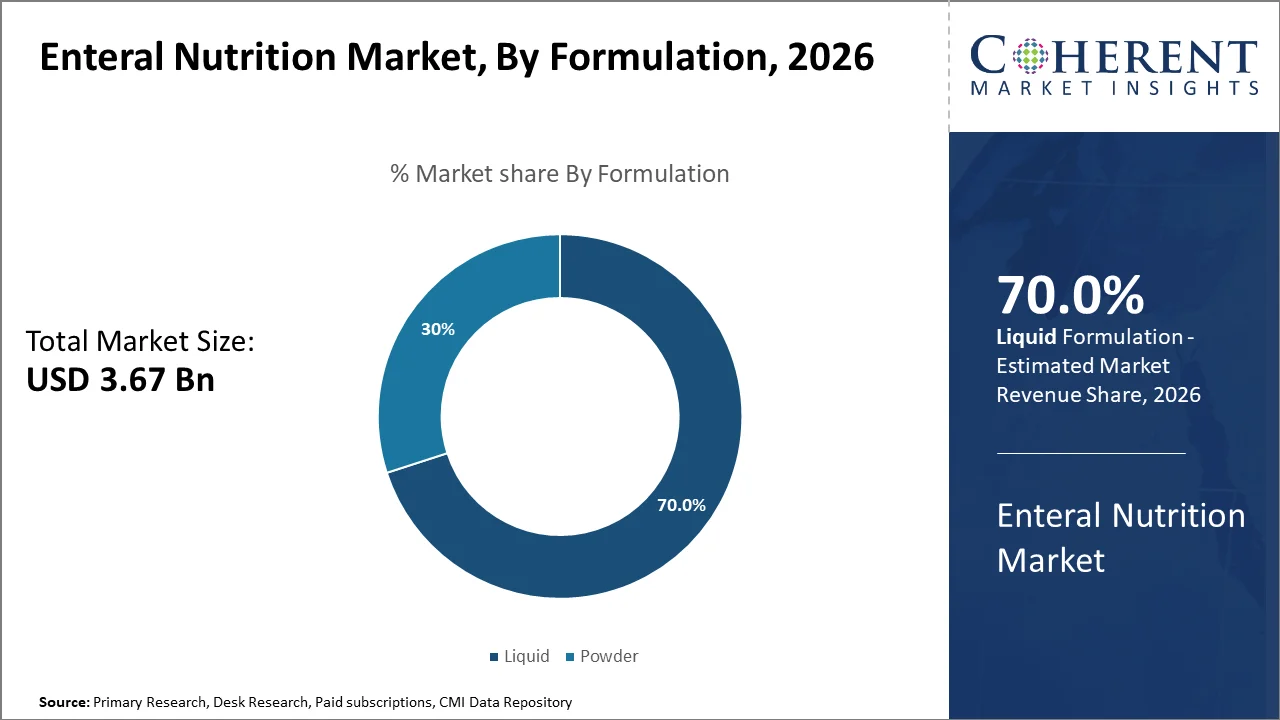
According to Coherent Market Insights’ latest enteral nutrition market analysis, liquid formulation segment is set to lead the market with a share of 70% in 2026. This can be attributed to its ease of administration, precise nutrient delivery, and widespread clinical preference in both hospital and home care settings. Liquid enteral formulations are ready-to-use, require minimal preparation, and are specifically designed for tube feeding, reducing the risk of contamination and dosing errors.
ESPEN and the American Society for Parenteral and Enteral Nutrition (ASPEN) recommend liquid enteral formulas as the standard for tube feeding. This is due to their controlled nutrient delivery, reduced risk of tube blockage, and ease of administration. In addition, these formulations enable accurate caloric and nutrient control, which is critical for managing patients with chronic diseases, critical illness, or malnutrition.
Rising adoption of home enteral nutrition (HEN) is expected to drive demand for liquid formulations during the forecast period. Similarly, increasing hospitalization rates and rising burden of chronic conditions such as cancer, gastrointestinal disorders, and neurological diseases will likely strengthen liquid formulations segment in the global enteral nutrition industry.
Enteral Nutrition Market Growth Drivers
Increasing Incidence of Cancer
There is a spike in the cases of chronic conditions like cancer, diabetes, and gastrointestinal diseases. For instance, according to the International Agency for Research on Cancer (IARC), the number of new cancer cases is projected to continue rising significantly, reaching over 35 million annually by 2050. This growing cancer burden is expected to drive demand for enteral nutrition solutions. These chronic conditions often impair oral intake, making enteral nutrition essential for maintaining patient health and nutritional support.
According to a study indexed in the National Library of Medicine (NLM), around 40–80% of cancer patients experience malnutrition during the course of their disease. This high prevalence has led to increased use of specialized oncology nutrition support and disease-specific nutritional products in clinical practice, thereby fostering the growth of the enteral nutrition market.
Enteral Nutrition Market Opportunities
Rising Number of Preterm Births
Increasing rates of preterm births are expected to drive demand for enteral nutrition products, especially sip feeds, as they help meet the nutritional requirements of newborns who are unable to feed normally. According to the World Health Organization, around 15 million babies are born preterm each year, showing the rising need for specialized neonatal nutritional support. This is expected to create lucrative growth opportunities for enteral nutrition market during the forthcoming period.
Enteral Nutrition Market Innovations
Rise of Disease-Specific and Personalized Nutrition
A key innovation in the enteral nutrition market is the growing focus on disease-specific and personalized nutrition. There is increasing demand for specialized formulas designed for conditions such as diabetes, cancer, and liver disease. Similarly, healthcare providers are moving toward personalized nutrition therapy, where feeding solutions are tailored to match each patient’s unique medical needs, helping improve treatment outcomes as well as recovery.
For example, in March 2026, Nestle introduced Compleat Paediatric Oral Blends, an oral nutritional supplement for children with special medical nutrition needs. The product is available in an on-the-go pouch and is positioned as a great-tasting option designed to support children who require specialized nutrition.
Current Events and Their Impact on the Enteral Nutrition Market
Current Event | Description and its Impact |
Medical Nutrition Reimbursement & Coverage Policies (U.S.) |
|
Shift Toward Home-Based Care Policies (OECD, 2025–2026) |
|
Regional Insights
Rising Chronic Disease Burden Driving Market Growth in North America
North America is expected to dominate the global enteral nutrition market with a 35% share in 2026, driven by rising prevalence of chronic diseases, advanced healthcare infrastructure, and strong reimbursement frameworks. Hospitals and home care providers in the region widely adopt enteral nutrition due to well-established clinical nutrition protocols and comprehensive insurance coverage, improving treatment accessibility.
Growing burden of chronic diseases requiring long-term nutritional support is providing a strong impetus for the growth of North America enteral nutrition market. For instance, the people Centers for Disease Control and Prevention reports that about 40.1 million people in the United States are living with diabetes, significantly increasing the demand for enteral feeding solutions among patients with impaired oral intake.
This expanding patient population, along with the increasing adoption of home enteral nutrition, continues to strengthen North America’s market position. In addition, presence of major manufacturers and ongoing innovation in feeding formulas and delivery devices further reinforces the region’s leadership in the global market.
Rising Aging Population and Expanding Healthcare Access Driving Asia Pacific Growth
Asia Pacific is anticipated to emerge as the most lucrative market for manufacturers of enteral nutrition products, holding a global market share of 25% in 2026. This can be attributed to its rapidly aging population and improving healthcare access. Countries like China, Japan, and India are seeing increased demand for clinical nutrition as more elderly patients require long-term care and nutritional support. India’s elderly population is expected to reach about 230 million by 2036, accounting for roughly 15% of the total. Southern states, along with Himachal Pradesh and Punjab, already have higher shares of seniors, with regional gaps likely to widen further. Likewise, expanding hospital infrastructure and rising healthcare spending are improving access to enteral feeding therapies across both urban and semi-urban areas.
Demographic transition is a key factor driving Asia Pacific enteral nutrition market growth. According to the World Bank (based on UN data), nearly 30% of Japan’s population is aged 65 and above, and this aging trend is expected to continue across major Asian economies. This is increasing the prevalence of age-related conditions such as cancer, stroke, and neurological disorders, thereby boosting demand for enteral nutrition products in the region.
Enteral Nutrition Market Outlook – Country-wise
U.S. Enteral Nutrition Market Trends
The United States remains one of the leading markets for enteral nutrition products, owing to its high prevalence of chronic diseases, a rapidly aging population, strong home healthcare adoption, and well-established clinical nutrition practices. In addition, increasing use of home enteral nutrition (HEN) and growing preference for disease-specific and ready-to-use liquid formulas are also supporting market expansion.
A key growth driver is the rising burden of chronic conditions requiring long-term nutritional support. For instance, the Centers for Disease Control and Prevention (CDC) reported that 6 in 10 adults in the U.S. live with at least one chronic disease, significantly increasing the need for enteral feeding support in hospitals and home care settings.
China Enteral Nutrition Market Forecast
China’s enteral nutrition market is poised to exhibit strong growth during the forecast period. This is attributable to rapid healthcare infrastructure development, increasing hospital admissions for chronic and critical illnesses, a growing elderly population, and rising awareness of clinical nutrition therapies. In addition, expanding access to hospital-based nutritional support and increasing adoption of standardized enteral feeding formulas are supporting market expansion.
Increasing geriatric population is expected to boost sales of enteral nutrition products in China during the forecast period. Nearly 297 million people, or about 21.1% of the population, were aged 60 and above in 2023. This growing elderly population is creating a large group of patients who need long-term nutritional support for conditions such as stroke, cancer, and neurological disorders, which is increasing the demand for enteral nutrition products.
Who are the Major Companies in the Enteral Nutrition Market?
Some of the major players in Enteral Nutrition Market are Abbott, Nestlé S.A., Danone S.A., Fresenius Kabi AG, Mead Johnson & Company, LLC, Braun Melsungen AG, Otsuka Pharmaceutical Co., Ltd, Meiji Holdings Co., Ltd., Bahrain Pharma, Bionova Lifesciences, Global Health Products Inc., Victus Inc., and Curtis Health Caps SP.
Key Strategies Adopted by Industry Players
Leading companies in the enteral nutrition market such as Abbott, Nestlé Health Science, and Danone Nutricia are adopting several strategies to strengthen their market position and improve patient care. A key focus is developing disease-specific and clinically targeted formulas for conditions like diabetes, cancer, and neurological disorders, which helps meet the needs of different patient groups more effectively.
Companies are also investing in ready-to-use liquid formulations that are easier to administer in hospitals and home care settings, improving safety and convenience. In addition, they are expanding their home healthcare and direct-to-patient distribution channels to support long-term care outside hospitals. For example,
- In January 2025, Otsuka Pharmaceutical Factory, Inc. launched ENOSOLID Semi Solid for Enteral Use. It is a semi-solid enteral nutrition formula containing major nutrients, vitamins, and trace elements designed for clinical nutritional management.
- In April 2025, Arla Foods Ingredients expanded its portfolio with new micellar casein isolate (MCI) solutions for medical nutrition. The MCI is designed to support the growing demand for high-protein, high-quality dairy ingredients used in clinical and medical nutrition applications.
- In May 2025, Otsuka Pharmaceutical Factory Inc. launched HINEX Jelly Aqua, a jelly-type oral nutrition product designed to support hydration and nutrition. It is used as a liquid diet option for people who need easy-to-consume fluids and nutrients.
Market Report Scope
Enteral Nutrition Market Report Coverage
| Report Coverage | Details | ||
|---|---|---|---|
| Base Year: | 2025 | Market Size in 2026: | USD 3.67 Bn |
| Historical Data for: | 2020 To 2024 | Forecast Period: | 2026 To 2033 |
| Forecast Period 2026 to 2033 CAGR: | 5.8% | 2033 Value Projection: | USD 5.45 Bn |
| Geographies covered: |
| ||
| Segments covered: |
| ||
| Companies covered: | Abbott, Nestle S.A., Danone S.A., Fresenius Kabi AG, Mead Johnson & Company, LLC, Braun Melsungen AG, Otsuka Pharmaceutical Co., Ltd, Meiji Holdings Co., Ltd., Bahrain Pharma, Bionova Lifesciences, Global Health Products Inc., Victus Inc., and Curtis Health Caps SP | ||
| Growth Drivers: |
| ||
| Restraints & Challenges: |
| ||
Analyst Opinion (Expert Opinion)
- Strong unmet clinical need is driving demand. Hospital malnutrition affects an estimated 30–50% of admitted patients, creating a large and consistent need for enteral nutrition support across critical care and long-term care settings.
- Critical care and ICU usage remains a key volume driver. A large share of ICU patients require enteral feeding when oral intake is not possible, supporting steady procedural demand in hospitals.
- Healthcare systems are shifting long-term feeding from hospitals to home care. Enteral nutrition is preferred over parenteral feeding when the digestive system is working properly. This change helps reduce costs as well as supports long-term treatment.
- Aging population is expanding the patient base. Around 1 in 6 people globally will be aged 60 years or older by 2030. This will increase cases of swallowing disorders, stroke-related dysphagia, and chronic illness, all major indications for enteral nutrition.
Speak to the analyst
Want personalized insights?
Take the findings above to one of our principal consultants, or have the report rebuilt around the segments, geographies and competitors you actually track.
Market Segmentation
- By Product Type Insights ( Revenue, US$ Bn, 2021 - 2033)
- Standard Enteral Nutrition
- Enteral Nutrition for Chronic Illness
- By Nutrition Type Insights ( Revenue, US$ Bn, 2021 - 2033)
- Proteins
- Carbohydrates
- Multi-vitamins and Antioxidants
- Amino Acid
- Fibers
- Minerals
- Others
- By Formulation Insights ( Revenue, US$ Bn, 2021 - 2033)
- Powder
- Liquid
- By Patient Type Insights ( Revenue, US$ Bn, 2021 - 2033)
- Adult
- Pediatrics
- Geriatrics
- By Application Insights ( Revenue, US$ Bn, 2021 - 2033)
- Cancer
- Gastrointestinal Diseases
- Diabetes
- Critical Care
- Others (Nutrition Deficiency, etc.)
- By Distribution Channel Insights ( Revenue, US$ Bn, 2021 - 2033)
- Hospital Pharmacies
- Retail Pharmacies
- Online Pharmacies
- By End User Insights ( Revenue, US$ Bn, 2021 - 2033)
- Hospitals
- Home Care Settings
- Retirement Homes
- Others
- By Region Insights ( Revenue, US$ Bn, 2021 - 2033)
- North America
- U.S.
- Canada
- Latin America
- Brazil
- Argentina
- Mexico
- Rest of Latin America
- Europe
- Germany
- U.K.
- Spain
- France
- Italy
- Russia
- Rest of Europe
- Asia Pacific
- China
- India
- Japan
- Australia
- South Korea
- ASEAN
- Rest of Asia Pacific
- Middle East & Africa
- GCC Countries
- Israel
- Rest of Middle East & Africa
- North America
Sources
Primary Research Interviews
- Healthcare professionals
- Clinical nutritionists
- Hospital dietitians
- ICU specialists
- Home healthcare providers
- Medical device distributors
Databases
- PubMed
- ScienceDirect
- National Center for Biotechnology Information (NCBI)
- ClinicalTrials.gov
- World Health Organization (WHO) Global Health Observatory
- World Bank Data
- CDC Data Repository
Magazines:
- Clinical Nutrition Insight
- Nutrition Business Journal
- Medical Device & Diagnostic Industry (MD+DI)
- Hospital & Healthcare Management Magazine
Journals
- The American Journal of Clinical Nutrition
- Clinical Nutrition (Elsevier)
- Journal of Parenteral and Enteral Nutrition (JPEN)
- The Lancet Gastroenterology & Hepatology
- Nutrients (MDPI)
Newspapers
- The New York Times (Health Section)
- The Guardian (Healthcare)
- The Hindu (Science & Health)
- Financial Times (Healthcare coverage)
- Reuters Health News
Associations
- American Society for Parenteral and Enteral Nutrition (ASPEN)
- European Society for Clinical Nutrition and Metabolism (ESPEN)
- British Dietetic Association (BDA)
- Indian Dietetic Association (IDA)
- World Gastroenterology Organisation (WGO)
Public Domain Sources
- World Health Organization (WHO) reports
- Food and Agriculture Organization (FAO) publications,
- U.S. National Institutes of Health (NIH)
- Government health ministry portals
- CDC guidelines
- Open-access medical literature
Proprietary Elements
- CMI Data Analytics Tool
- Proprietary CMI Existing Repository of information for last 8 years
Get access to 250+ pages report
Every segment, forecast, competitor profile and data table behind the analysis above — available for instant download.
- ESOMAR Member
- ISO 9001:2015 Certified
- D-U-N-S Registered
- GDPR & CCPA Compliant
Missing comfort of reading report in your local language? Find your preferred language:
Transform your Strategy with Exclusive Trending Reports
Frequently Asked Questions
The global market is estimated to be valued at USD 3.67 Bn in 2026.
The global Enteral Nutrition Market value is expected to reach USD 5.45 Bn by 2033.
The global market is poised to exhibit a CAGR of 5.8% from 2026 to 2033.
Major growth factors include rising prevalence of chronic diseases and increasing number of preterm births.
Enteral nutrition for chronic illness segment is expected to lead the market with a share of 65% in 2026.
Some major companies in the Enteral Nutrition Market include Abbott, Nestlé S.A., Danone S.A., Fresenius Kabi AG, Mead Johnson & Company, LLC, Braun Melsungen AG, Otsuka Pharmaceutical Co., Ltd, Meiji Holdings Co., Ltd., Bahrain Pharma, Bionova Lifesciences, Global Health Products Inc., Victus Inc., and Curtis Health Caps SP.
North America, with 35% share in 2026, is set to lead the market during the forecast period.