

Global 3D Printed Orthotics Market Size and Forecast – 2026 To 2033
The global 3D printed orthotics market is expected to grow from USD 5.2 Bn in 2026 to USD 6.9 Bn by 2033, registering a compound annual growth rate (CAGR) of 4.1%. The global 3D printed orthotics market is poised for significant expansion, fueled by global increase in the prevalence of diabetes, which greatly raises the need for specialized orthotics for foot health and wound prevention.
The International Diabetes Federation (IDF) reports that diabetes affects 10.5% of the world's population, or over 537 million adults, and that almost 44.7% of these adults have not yet been diagnosed. Further, it estimates that the number of diabetic adults is expected to rise to 643 million by 2030 and 783 million by 2045, which is one in eight adults, a 46% increase that is much faster than the overall population growth.
(Source: International Diabetes Federation (IDF))
Key Takeaways of the Global 3D Printed Orthotics Market
- Foot orthotics are projected to hold 49.2% of the global 3D printed orthotics market share in 2026, making it the dominant product type segment, with North America being at the forefront of the trend of dominance due to the rising levels of diabetes and obesity in the region. In turn, this leads to an increased risk of developing plantar fasciitis. For instance, according to Centers for Disease Control and Prevention, approximately 12.0% of the U.S. population has diabetes, including 29.1 million diagnosed cases, while 27.6% of diabetic adults remain undiagnosed. (Source: Centers for Disease Control and Prevention)
- Thermoplastics are projected to hold 29.4% of the global 3D printed orthotics market share in 2026, making it the dominant material segment especially in Europe. This dominance is driven by the region’s strong emphasis on sustainability, recyclability, and material efficiency, which aligns well with the reusable and reprocess able nature of thermoplastics. Additionally, the presence of stringent regulatory frameworks for medical products, such as the European Union Medical Device Regulation (EU MDR 2017/745) and In Vitro Diagnostic Regulation (EU IVDR 2017/746), has encouraged the adoption of high-quality, compliant materials. Thermoplastics meet these requirements due to their consistent performance, biocompatibility, and ease of traceability, thereby increasing their preference among manufacturers and healthcare providers in the region.
- Selective Laser Sintering (SLS) is projected to hold 40.2% of the global 3D printed orthotics market share in 2026, making it the dominant technology segment with strong leadership in North America and Europe because of the early implementation of superior 3D printing technology, a well-developed healthcare digitalization ecosystem, and presence of leading market participants (such as HP Inc., Materialise NV, Align Technology). Selective Laser Sintering (SLS)is popular among the companies operating in these geographies, as it allows to obtain high-quality and highly precise orthotics, which meets current needs of the market. For example, HP highlights the use of its Multi Jet Fusion (a powder-bed fusion technology similar to SLS) for producing patient-specific orthotics with high accuracy, repeatability, and scalability, supporting large-scale customization in healthcare applications. (Source: HP)
- North America maintains dominance with an expected share of 39.4% in 2026, driven by the early adoption of highly developed 3D printing technology, strong representation of major companies in the sector (such as 3D Systems, Stratasys Ltd., HP Inc., Materialise NV), and robust health care infrastructure. In addition, the high incidence rates of diabetes and musculoskeletal disorders, as well as favorable framework for reimbursement and digital health processes, have contributed to the use of personalized orthotics in the region. For example, the U.S. Food and Drug Administration has established clear regulatory pathways for additive manufactured medical devices, encouraging faster commercialization and adoption of 3D printed orthotics across clinical settings.
- Asia Pacific is expected to exhibit the fastest growth with an estimated contribution of 24.6% share in 2026, driven by the growth of healthcare infrastructure, increased patient awareness, and the prevalence of diabetes and orthopedic ailments in developing nations like China and India. In addition, the development of healthcare digitization and availability of affordable 3D printers and huge patient bases have resulted in the widespread use of low-cost, custom-made orthotics. For instance, India’s Ayushman Bharat initiative—the world’s largest government-funded healthcare program aims to cover over 500 million people, significantly improving access to advanced medical treatments, including personalized and technology-driven solutions like 3D printed orthotics. (Source: Government of India)
- Rising Demand for Personalized Healthcare Solutions: With greater emphasis being placed on individualized therapy, the use of orthotics manufactured through 3D printing is becoming common because they can be made according to the unique anatomy of the patient, which leads to increased comfort, efficiency, and adherence by patients to their therapies.
- Advancements in Additive Manufacturing Technologies: The constant evolution of additive manufacturing technology through increased printing speed and innovative material usage is contributing to shorter production times and lower costs. This development is helping to make 3D-printed orthotics more affordable and feasible for widespread adoption.
Segmental Insights
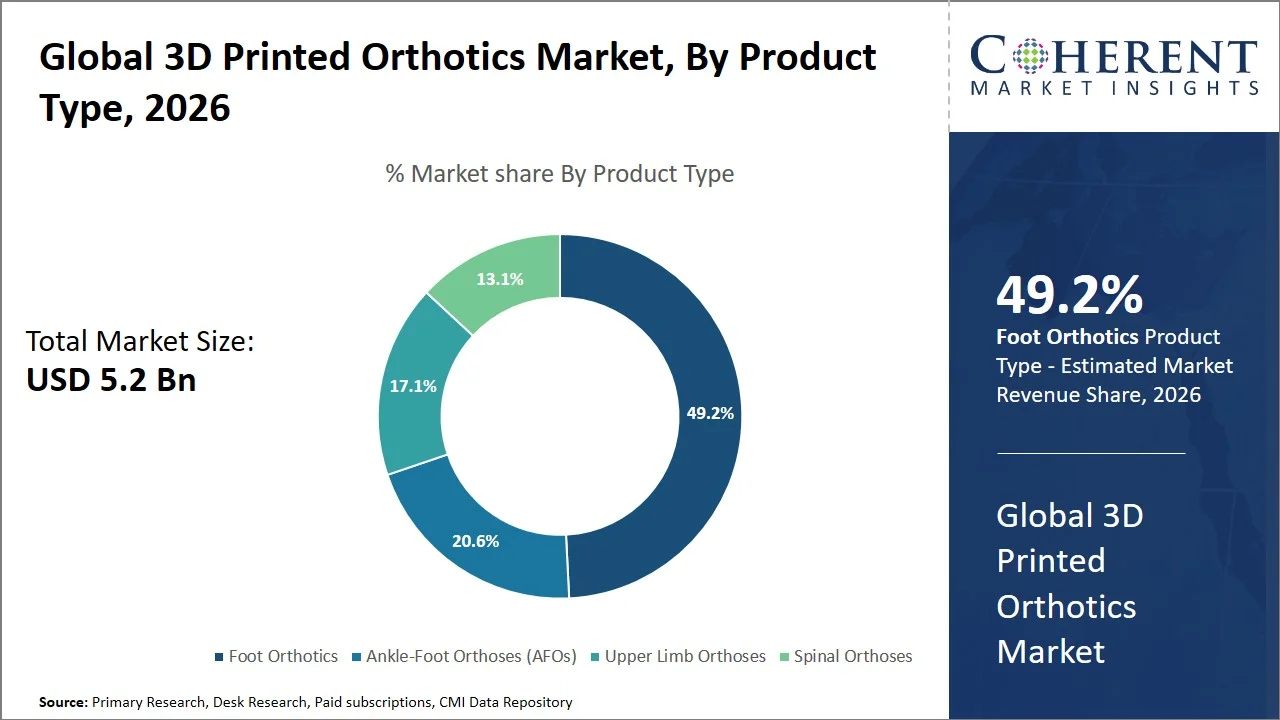
Why Does Foot Orthotics Segment Dominate the Global 3D Printed Orthotics Market?
Foot orthotics are projected to hold the market share of 49.2% in 2026, due to high clinical demand, as well as widespread compatibility with digital customizations. Conditions such as plantar fasciitis, flat feet, and gait issues require continuous treatment, thereby making foot orthotics one of the most common treatments recommended by physicians.
The segment also benefits from the ease of integrating 3D scanning and CAD-based design, which allows for precise customization based on individual foot biomechanics. Foot orthotics are also widely used in sports, diabetes care, and rehabilitation, which keeps demand high. They are also easier to make and take less time to produce than larger orthotic devices, which makes them the most commercially viable and widely used segment worldwide. For example, according to the Centers for Disease Control and Prevention (CDC), more than 40 million people in the U.S. have diabetes, a condition often associated with foot complications such as ulcers and plantar pressure issues, significantly driving the demand for customized foot orthotics. (Source: Centers for Disease Control and Prevention)
- Current Industry Events of 2026
- Market Size Estimation
- Regional Breakdown
- Competitive Landscape
- Customer Intelligence
- Segmental Analysis
- Pricing Analysis
- Key Market Drivers, Challenges & Future Trends
- Customized Insights Section
Why are Thermoplastics the Most Preferred Material?
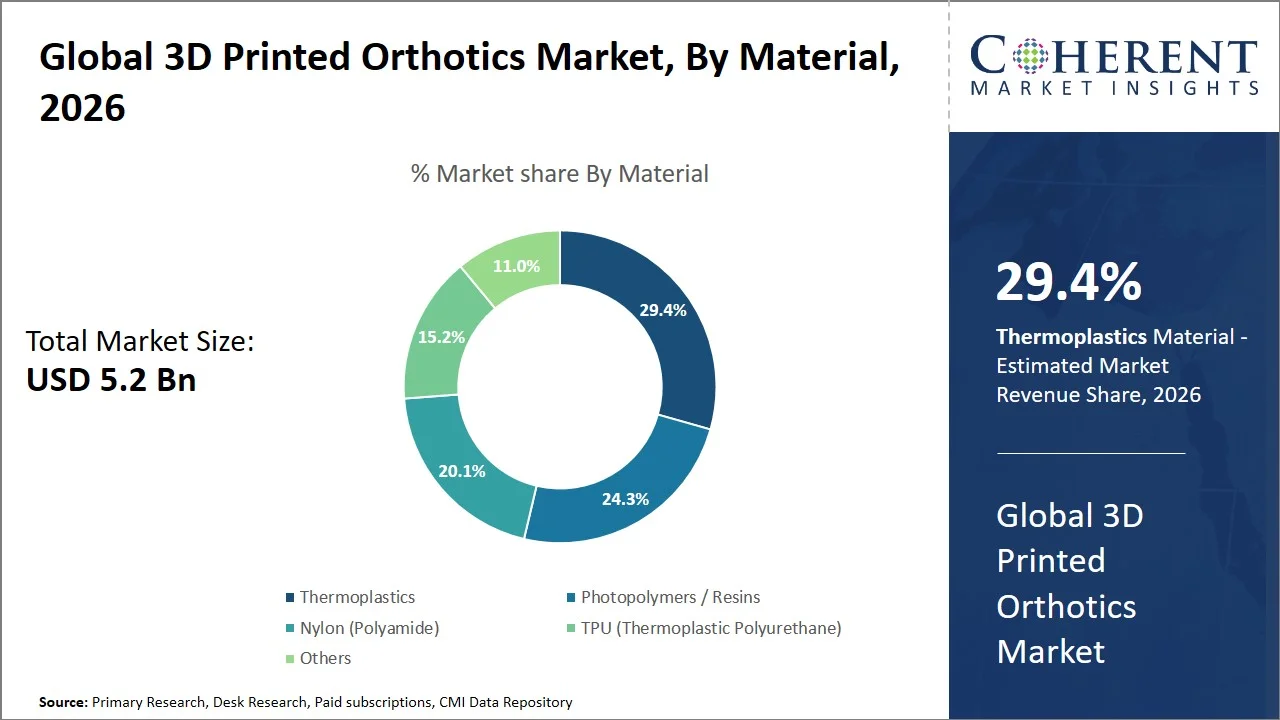
Thermoplastics are projected to hold a market share of 29.4% in 2026, owing to its favorable physical characteristics that make it suitable for use in the manufacturing of customized products. The ease of molding of these materials makes them ideal for creating customized products depending on an individual’s anatomy while ensuring they remain structurally durable enough for effective use by the patient. The weight factor of these materials are also minimal, while the wear and tear resistance level is high, ensuring that the patient is comfortable using the product. Furthermore, the material can easily be processed using selective laser sintering technology, enabling efficient, scalable production of orthotics. For example, various research studies and practical examples from industry have shown that thermoplastics like polyamide (PA 2200), used in Selective Laser Sintering (SLS) technology-based 3D printing, exhibit great strength, flexibility, and biocompatibility and can be used in orthotics and prosthetics. (Source: EDS Technologies)
Selective Laser Sintering (SLS) Segment Dominates the Global 3D Printed Orthotics Market
The Selective Laser Sintering (SLS) segment is projected to hold a market share of 40.2% in 2026, because of its capability to create durable and customized 3D printed orthotics with complex geometric shapes without the requirement of support structures. It allows mass production at economical prices, which makes it a very efficient way of creating personalized products. This type of technology is well-suited for orthotic products as it provides an option to use biocompatible materials. For example, Materialise NV produces customized orthotics and prosthetics using Selective Laser Sintering (SLS) based systems that incorporate scan to print technology.
Currents Events and their Impact
Current Events | Description and its Impact |
Increasing U.S. FDA Focus on Point-of-Care 3D Printing |
|
Standardization of Additive Manufacturing for Medical Devices |
|
(Source: U.S. Food and Drug Administration, U.S. Food and Drug Administration)
Global 3D Printed Orthotics Market Dynamics
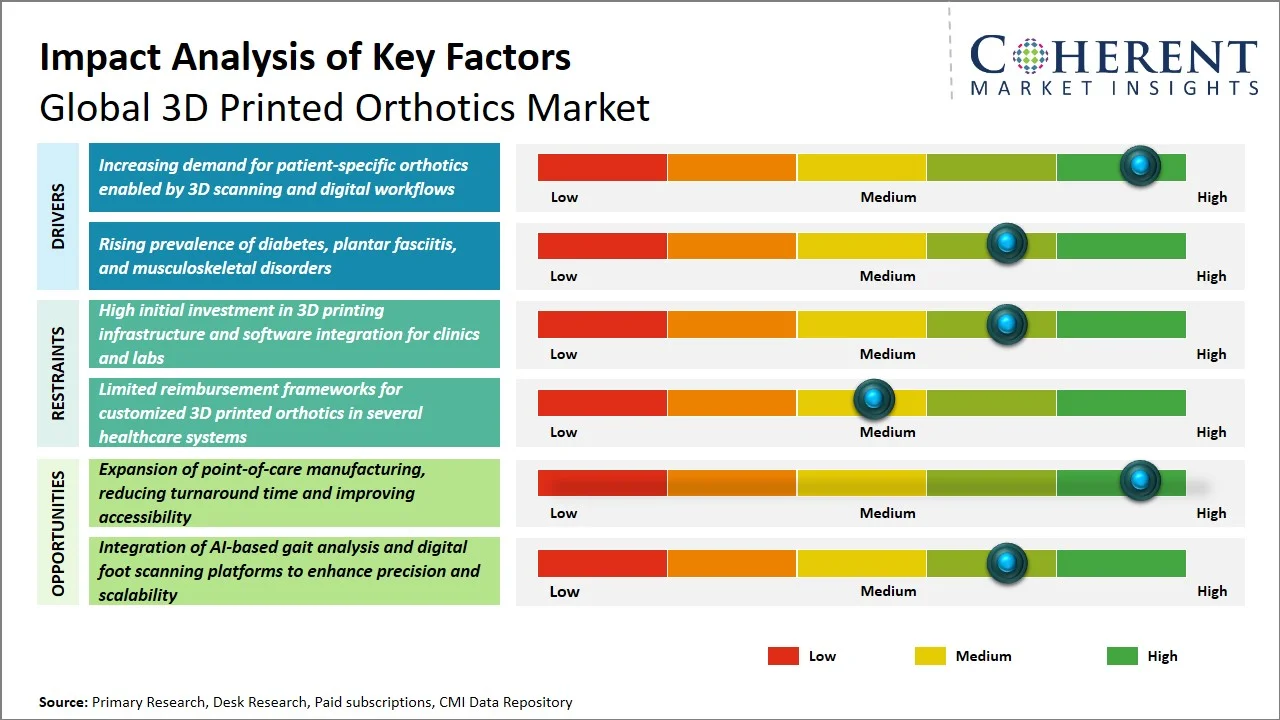
Market Drivers
- Increasing demand for patient-specific orthotics enabled by 3D scanning and digital workflows: Orthotic devices made using patient-specific methods using 3D scanning and digital processes are yet another critical element contributing to the market growth due to the degree of personalization and precision that can be achieved from such methods, thus resulting in better outcomes compared to traditional methods. The combination of digital scanning with the use of CAD designs excludes any manual work, saves time, and increases consistency in the process. For example, the U.S. Food and Drug Administration considers additive manufacturing one of the technologies that helps enable customized devices to validate digital workflows (Source: U.S. Food and Drug Administration). Furthermore, organizations such as HP Inc. and Materialise NV are actively involved in developing digital scan-to-print technologies. This shift toward digital, patient-specific manufacturing is significantly accelerating adoption across healthcare systems globally.
- Rising prevalence of diabetes, plantar fasciitis, and musculoskeletal disorders: Musculoskeletal disorders impact about 1.71 billion individuals globally, accounting for the majority of global disabilities according to the World Health Organization (Source: World Health Organization). Moreover, plantar fasciitis impacts about 10% of the world population during their lifetime and serves as one of the most prevalent reasons for heel pains and foot problems (Source: American Academy of Family Physician). Such conditions cause difficulties in movement and cause chronic pain, leading to an increased use of orthotics.
Emerging Trends
- Integration of AI and Digital Foot Scanning: Customization of orthotic devices using AI-based design software and 3D scanning technology has made the process much quicker and more accurate. This allows for greater efficiency in terms of care while ensuring that patients benefit from custom solutions.
- Expansion of Point-of-Care Manufacturing: There is an increasing trend of using 3D printers for orthotic fabrication within healthcare centers by producing the orthotics right there in the clinic, which leads to reduced time and reliance on outsourced laboratories.
Regional Insights
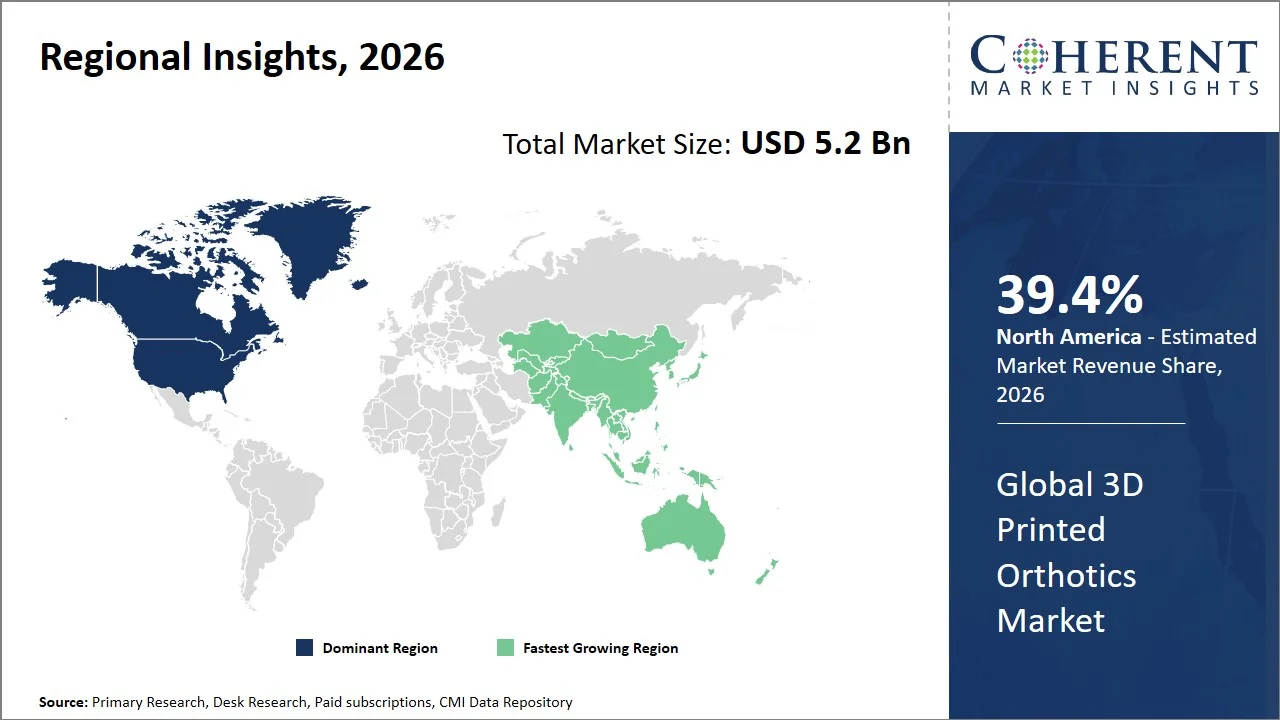
Why is North America a Strong Market for 3D Printed Orthotics?
North America leads the global 3D printed orthotics market, accounting for an estimated 39.4% share in 2026, considering the high degree of development of the region’s health care sector and widespread implementation of digital manufacturing techniques, as well as the presence of well-established additive manufacturing firms like 3D Systems, Stratasys Ltd., and HP Inc. North America is fortunate to have widespread application of 3D scanning, CAD design, and manufacturing of products at the point of care in orthopedic and podiatry clinics. As a result, the customization process of orthotics becomes much quicker and easier. Furthermore, the availability of well-defined guidelines for the commercialization of 3D printed orthotics by the U.S. Food and Drug Administration also contributes significantly to the market development. For instance, the U.S. FDA’s Quality System Regulation (21 CFR Part 820) establishes comprehensive requirements for design controls, manufacturing processes, and quality assurance for medical devices, including those produced using additive manufacturing. (Source: U.S. Food and Drug Administration)
Why Does Asia Pacific 3D Printed Orthotics Market Exhibit High Growth?
The Asia Pacific 3D printed orthotics market is expected to exhibit the fastest growth with an estimated contribution of 24.6% share to the market in 2026, due to the rapid development of health care infrastructures in the region, increasing digitization and digitization technologies, and surging demand for customized solutions. Several countries in the region, including China, India, Japan, and South Korea, are making efforts towards the promotion of manufacturing as well as innovation within the health care industry with the collaboration of various governmental agencies, including Ministry of Industry and Information Technology and Ministry of Health & Family Welfare.
Furthermore, the better availability of affordable 3D printing technology and increasing knowledge about patient-specific solutions are driving this trend. Additionally, the robust manufacturing sector and investments in local manufacturing technologies are facilitating cost-effective and scalable development of orthotics devices in Asia Pacific, making it the fastest growing region in the world.
Why are the U.S. Leading Innovation and Adoption in the 3D Printed Orthotics Market?
The U.S. is the leader in innovations and implementations within the industry of 3D printed orthotic products, due to its developed healthcare sector, presence of top players from the field of additive manufacturing (such as 3D Systems, Stratasys Ltd., HP Inc., and Carbon, Inc.), and implementation of the most advanced digital health technologies. Also, there are specific regulations in place, formulated by the U.S. FDA, providing additional possibilities for the development and fast implementation of innovative solutions for healthcare. For instance, U.S. FDA’s Technical Considerations for Additive Manufactured Medical Devices (2017 guidance) outlines design, manufacturing, and validation requirements specifically for 3D printed medical devices, facilitating safer and faster adoption of such technologies. (Source: U.S. Food and Drug Administration)
Is U.K. a Favorable Market for 3D Printed Orthotics?
U.K. represents an ideal environment for 3D printed orthotics market due to the availability of advanced health facilities in the country and the widespread use of digital health technologies in the region. National Health Service constitutes one of the most prominent factors that contribute to the growth of orthotics market in the U.K. as about 1.2 million patients access orthotic devices on a yearly basis (Source: British Healthcare Trade Association). Moreover, strict supervision by Medicines and Healthcare products Regulatory Agency includes key frameworks such as the U.K. Medical Devices Regulations 2002 (as amended), UKCA (U.K. Conformity Assessed) marking requirements, and post-market surveillance and vigilance systems for medical devices.
Is China Emerging as a Key Growth Hub for the 3D Printed Orthotics Market?
China stands out as one of the most important regions with respect to the future growth of the 3D printed orthotics market owing to developments in additive manufacturing technology and favorable policies from the government concerning the innovations in health technologies (such as the Made in China 2025, which prioritizes advanced manufacturing including medical devices and 3D printing, and the Healthy China 2030, which promotes healthcare modernization and the adoption of advanced medical technologies).
The use of 3D printing has been promoted in various ways including under initiatives such as those launched by the Ministry of Industry and Information Technology of the China government, encouraging advanced manufacturing in the field of medicine. Furthermore, the high number of patients in China together with the rise in orthopedic cases have been increasing the need for orthotics that can be customized. For instance, a study published in February 2025, by ScienceDirect indicate that musculoskeletal disorders were responsible for over 30 million cases of disability-adjusted life years (DALYs), indicating that the disease burden was very high in the country compared to others around the world, whereas the incidence of osteoarthritis alone stood at 152.85 million cases in 2021. (Source: ScienceDirect)
Why Does Germany Top the Europe 3D Printed Orthotics Market?
Germany is an industry leader in the European production of 3D-printed orthotics due to the presence of its strong industrial base, advanced additive manufacturing technologies, and advanced healthcare system. Germany is the leading hub of precision engineering and home to companies like EOS GmbH, which lead in developing 3D printing techniques for medical use. Moreover, Germany utilizes its advantages of implementing digital workflows at orthopedic and rehabilitation clinics to produce customized orthotics. In addition to regulatory harmonization within the EU Medical Device Regulation, strict quality control standards can be achieved by the considerable investments in healthcare infrastructure to guarantee the access to the newest treatment options.
Is 3D Printed Orthotics Market Developing in India?
The rise of healthcare technology and interest in personalized treatment in India has led to the development of 3D-printed orthotics. 3D printing is being utilized in hospitals and research institutes like All India Institute of Medical Sciences for customized health care needs. Furthermore, the Ministry of Health and Family Welfare, Government of India, has encouraged the development of medical devices in India. The presence of a huge patient pool in India and an increasing number of orthopedic conditions combined with the accessibility of 3D printers at affordable costs has helped promote customized orthotics in India.
Regulatory Landscape Governing the Global 3D Printed Orthotics Market
Region | Key Regulations | Regulatory Overview | Impact on Market |
North America | U.S. Food and Drug Administration – 21 CFR Part 820 (QSR), FDA Additive Manufacturing Guidance | The FDA regulates 3D printed orthotics as medical devices, requiring compliance with quality system regulations, design controls, and validation of additive manufacturing processes. | Ensures high product safety and efficacy but increases compliance costs; however, clear regulatory pathways accelerate innovation and commercialization. |
Europe | European Commission – EU MDR 2017/745 | Strict regulatory framework governing medical devices, including custom-made orthotics, with emphasis on clinical evaluation, traceability, and post-market surveillance. | Enhances product quality and patient safety but lengthens approval timelines, impacting time-to-market for new entrants. |
Asia Pacific | Central Drugs Standard Control Organization, National Medical Products Administration | Regulatory frameworks are evolving, with increasing focus on standardization of medical devices and adoption of international guidelines. | Offers faster approvals and cost advantages, encouraging market entry, though regulatory inconsistencies may pose challenges. |
Latin America | National Health Surveillance Agency | Regulations are developing, with ANVISA leading medical device approvals and gradually aligning with global standards. | Moderate regulatory barriers; improving frameworks support gradual adoption of advanced orthotic technologies. |
Middle East & Africa | Saudi Food and Drug Authority, South African Health Products Regulatory Authority | Emerging regulatory systems with increasing adoption of international standards for medical devices and healthcare technologies. | Growth potential is high due to improving regulations, but limited standardization and infrastructure may restrict rapid adoption. |
How is the expansion of point-of-care manufacturing, reducing turnaround time and improving accessibility creating new growth opportunities in the global 3D printed orthotics market?
The increase in point-of-care (POC) manufacturing will present huge growth opportunities in the 3D-printed orthotics industry through the manufacture of customized medical devices at hospitals and clinics, resulting in a reduction in the turnaround time of such devices. In addition, rather than spending several days manufacturing devices in the laboratory, the clinician is able to do the scanning and designing within hours, hence improving efficiency and increasing patient satisfaction. The U.S. Food and Drug Administration indicates that additive manufacturing helps decentralize the process of manufacturing devices that are patient-specific, making it possible to deliver these devices more rapidly in the clinics. (Source: U.S. Food and Drug Administration) Likewise, the National Health Service has embraced the technology of 3D printing to manufacture personalized prosthetics and orthotics in the clinic. For instance, clinicians working at Manchester University NHS Foundation Trust have partnered with institutions of higher learning and innovation hubs to leverage 3D printing technology in creating bespoke solutions for their patients. (Source: Manchester University NHS Foundation Trust)
Market Players, Key Development, and Competitive Intelligence
Key Developments
- In March 2026, Voxelcare launched a turnkey customized 3D printed orthotics service that combines scanning, design, and manufacturing under one umbrella process. This innovation highlights the growing trend towards a completely digital approach to orthotic manufacturing tailored to individual patients.
- In February 2025, PRIM made an investment into the company, Led3D Newfeet, which uses 3D printing techniques for making orthotic devices through its subsidiary, HERBITAS. This acquisition has strengthened PRIM’s position in the development of digitally fabricated orthotics by showing the increasing trend of integration of additive manufacturing skills in the orthotics industry chain.
Competitive Landscape
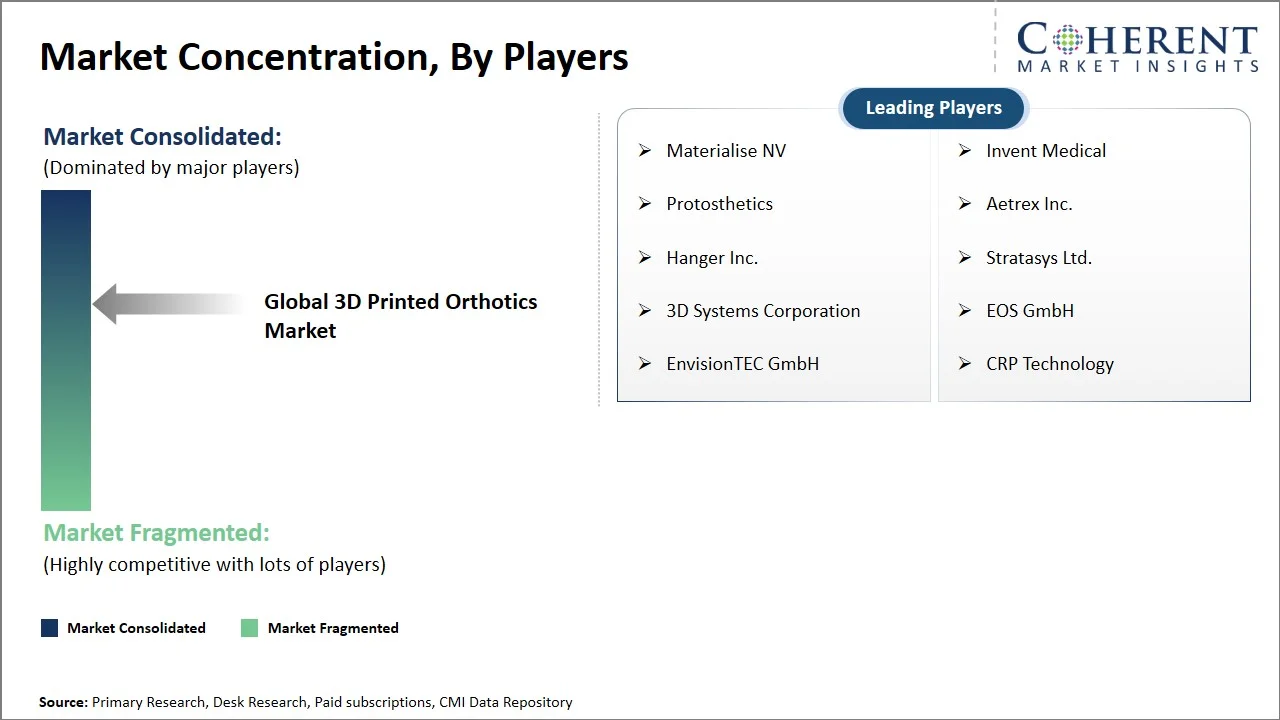
The global 3D printed orthotics market is highly competitive as additive manufacturing technologies are changing quickly, there is a growing need for personalized medical products, and digital workflows are becoming more common in the orthopedic industry. Companies that have become experts in manufacturing, creating new materials, and software-enabled design tools have been able to stay ahead of the competition by making accurate orthotic devices that are made for each patient. Key focus areas include:
- Advancement in 3D printing technologies such as Selective Laser Sintering (SLS) and Multi Jet Fusion (MJF)
- Integration of digital scanning, AI-based design, and automated manufacturing workflows
- Development of advanced materials including flexible, lightweight, and biocompatible thermoplastics
- Expansion of point-of-care manufacturing within hospitals and clinics
- Strategic partnerships with orthopedic clinics, hospitals, and sports medicine centers
Market Report Scope
3D Printed Orthotics Market Report Coverage
| Report Coverage | Details | ||
|---|---|---|---|
| Base Year: | 2025 | Market Size in 2026: | USD 5.2 Bn |
| Historical Data for: | 2020 To 2024 | Forecast Period: | 2026 To 2033 |
| Forecast Period 2026 to 2033 CAGR: | 4.1% | 2033 Value Projection: | USD 6.9 Bn |
| Geographies covered: |
| ||
| Segments covered: |
| ||
| Companies covered: | Materialise NV, Invent Medical, Protosthetics, Aetrex Inc., Hanger Inc., Stratasys Ltd., 3D Systems Corporation, EOS GmbH, EnvisionTEC GmbH, and CRP Technology | ||
| Growth Drivers: |
| ||
| Restraints & Challenges: |
| ||
Analyst Opinion (Expert Opinion)
- The evolution of the 3D printed orthotics sector is set to undergo a paradigm change towards a completely digital and personalized patient-centric approach, whereby scanning, designing, and producing the orthotics will be seamlessly incorporated into clinical workflows. With the emphasis placed on personalization, time-saving, and cost-effectiveness by health systems, 3D printing technology will transition from being a novelty to becoming an established standard in the orthotics manufacturing process. Innovations in biocompatible materials, artificial intelligence, and on-demand production technologies will contribute to the growth of this market sector.
- It will provide maximum opportunity within the Asia Pacific region in the segment of foot orthotics in countries like India and China owing to the large number of patients, preventive care awareness, and rapid development of digital health facilities. In addition, the most popular form of orthotics application continues to be that of foot orthotics, and along with the growth of affordable 3D printers in these regions, this represents an opportunity of huge proportions.
- In order to achieve competitive advantage, firms must emphasize the creation of end-to-end digital ecosystems that include 3D scanners, cloud-based design software, and automation technologies for production. It is also essential to form strategic alliances with hospitals, podiatry practices, and sports medicine clinics to widen the scope of the market. Furthermore, companies should consider developing new materials and utilizing AI for customization, which would help them stand out by offering greater comfort and performance.
Speak to the analyst
Want personalized insights?
Take the findings above to one of our principal consultants, or have the report rebuilt around the segments, geographies and competitors you actually track.
Market Segmentation
- Product Type Insights (Revenue, USD Bn, 2021 - 2033)
- Foot Orthotics
- Ankle-Foot Orthoses (AFOs)
- Upper Limb Orthoses
- Spinal Orthoses
- Material Insights (Revenue, USD Bn, 2021 - 2033)
- Thermoplastics
- Photopolymers / Resins
- Nylon (Polyamide)
- TPU (Thermoplastic Polyurethane)
- Others
- Technology Insights (Revenue, USD Bn, 2021 - 2033)
- Fused Deposition Modeling (FDM)
- Selective Laser Sintering (SLS)
- Stereolithography (SLA)
- Multi Jet Fusion (MJF)
- Application Insights (Revenue, USD Bn, 2021 - 2033)
- Sports and Athletics
- Medical / Rehabilitation
- Diabetic Foot Care
- Pediatric Care
- End User Insights (Revenue, USD Bn, 2021 - 2033)
- Hospitals
- Orthotic and Prosthetic Clinics
- Rehabilitation Centers
- Sports Institutes
- Regional Insights (Revenue, USD Bn, 2021 - 2033)
- North America
- U.S.
- Canada
- Latin America
- Brazil
- Argentina
- Mexico
- Rest of Latin America
- Europe
- Germany
- U.K.
- Spain
- France
- Italy
- Russia
- Rest of Europe
- Asia Pacific
- China
- India
- Japan
- Australia
- South Korea
- ASEAN
- Rest of Asia Pacific
- Middle East
- GCC Countries
- Israel
- Rest of Middle East
- Africa
- South Africa
- North Africa
- Central Africa
- North America
- Key Players Insights
- Materialise NV
- Invent Medical
- Protosthetics
- Aetrex Inc.
- Hanger Inc.
- Stratasys Ltd.
- 3D Systems Corporation
- EOS GmbH
- EnvisionTEC GmbH
- CRP Technology
Sources
Primary Research Interviews
- 3D printed orthotics solution providers
- Orthopedic clinics and podiatry centers
- 3D printing technology providers (hardware & materials)
- Rehabilitation centers and sports medicine specialists
Stakeholders
- 3D printed orthotics solution providers
- End-use Sectors
- Hospitals and Clinics
- Orthopedic & Podiatry Centers
- Rehabilitation Centers
- Sports Medicine Institutes
- Regulatory & Health Bodies: U.S. Food and Drug Administration, European Medicines Agency, World Health Organization
Databases
- World Bank – Healthcare expenditure database
- World Health Organization – Global Health Observatory (GHO)
- Organization for Economic Co-operation and Development – Health Statistics
- International Diabetes Federation – Diabetes Atlas
Magazines
- TCT Magazine – Healthcare additive manufacturing trends
- 3D Printing Industry – Orthotics and medical AM developments
- Medical Design & Outsourcing – Orthopedic device innovations
- Healthcare Business Today – Digital healthcare adoption
- Orthopedic Design & Technology – Custom orthotics advancements
Journals
- Additive Manufacturing – Medical 3D printing applications
- Journal of Foot and Ankle Research – Foot orthotics studies
- Journal of Orthopaedic Research – Orthotic innovations
- Biofabrication – Personalized medical devices
- Materials Science & Engineering C – Biomaterials in orthotics
Newspapers
- The Wall Street Journal – Medtech investments and innovation
- Financial Times – Global additive manufacturing trends
- Business Standard – Healthcare infrastructure growth
- The Economic Times – Medtech and startup ecosystem
Associations
- American Orthotic and Prosthetic Association (AOPA)
- International Society for Prosthetics and Orthotics (ISPO)
- Additive Manufacturing Users Group
- American Academy of Orthopaedic Surgeons
Public Domain Sources
- U.S. Food and Drug Administration – 3D printing medical device guidelines
- European Commission – MDR 2017/745 regulations
- National Institutes of Health – Orthotics & biomechanics research
- Centers for Disease Control and Prevention – Musculoskeletal disorder data
Proprietary Elements
- CMI Data Analytics Tool, Proprietary CMI Existing Repository of information for last 10 years.
Get access to 250+ pages report
Every segment, forecast, competitor profile and data table behind the analysis above — available for instant download.
- ESOMAR Member
- ISO 9001:2015 Certified
- D-U-N-S Registered
- GDPR & CCPA Compliant
Missing comfort of reading report in your local language? Find your preferred language:
Transform your Strategy with Exclusive Trending Reports
Frequently Asked Questions
The global 3D printed orthotics market is estimated to be valued at USD 5.2 Bn in 2026 and is expected to reach USD 6.9 Bn by 2033.
Foot orthotics dominate due to their widespread use in treating conditions such as plantar fasciitis, flat feet, and diabetic foot disorders, along with the high demand for customized insoles that enhance comfort, mobility, and long-term musculoskeletal support.
3D printed orthotics are custom-designed medical support devices manufactured using additive manufacturing to match an individual’s anatomical structure.
The CAGR of global 3D printed orthotics market is projected to be 4.1% from 2026 to 2033.
Increasing demand for patient-specific orthotics enabled by 3D scanning and digital workflows and rising prevalence of diabetes, plantar fasciitis, and musculoskeletal disorders are the major factors driving the growth of the global 3D printed orthotics market.
High initial investment in 3D printing infrastructure and software integration for clinics and labs and limited reimbursement frameworks for customized 3D printed orthotics in several healthcare systems are the major factors hampering the growth of the global 3D printed orthotics market.
They are commonly made using polymers such as thermoplastic polyurethane (TPU), nylon, and photopolymer resins for flexibility and durability.