

Global Acetylcysteine Market Size and Forecast – 2026 To 2033
The global acetylcysteine market is expected to grow from USD 812.4 Mn in 2026 to USD 1,164.7 Mn by 2033, registering a compound annual growth rate (CAGR) of 5.3% from 2026 to 2033. The market for acetylcysteine is poised for significant expansion, fueled by soaring burden of chronic respiratory disorders such as chronic obstructive pulmonary disease (COPD), chronic bronchitis, and cystic fibrosis.
According to the World Health Organization, chronic respiratory diseases (CRDs) are among the most common noncommunicable diseases (NCDs), and are the sixth leading cause of death in the WHO European Region, with almost 400,000 deaths every year, and nearly 80% of these deaths are caused by chronic obstructive pulmonary disease (COPD).
(Source: World Health Organization)
Key Takeaways of the Global Acetylcysteine Market
- Oral is projected to hold 44.0 % of the global acetylcysteine market share in 2026, making it the dominant dosage form segment, with considerable dominance throughout North America fueled by the proliferation of prescribers of oral formulations of acetylcysteine that are used long term for outpatient treatment of chronic obstructive pulmonary disease (COPD) and chronic bronchitis. The preference for oral formulations is increasing due to their higher patient compliance, particularly in outpatient treatment settings and the long-term management of chronic conditions at home. Furthermore, the broader use of oral acetylcysteine as a nutritional supplement and mucolytic agent through the retail pharmacy channel is also driving segment growth in the region. For instance, the Cleveland Clinic, emphasizes the use of oral acetylcysteine in treating respiratory mucus and also in applications related to chronic pulmonary care. (Source: Cleveland Clinic)
- Respiratory disorders are projected to hold 52.0 % of the global acetylcysteine market share in 2026, making it the dominant application segment, with considerable market penetration in Europe as a result of an increasing prevalence of chronic respiratory diseases in the region and increasing use of mucolytic therapy in pulmonary medicine. Acetylcysteine is used extensively in the region as a mucolytic and to relieve oxidative stress in chronic obstructive pulmonary disease (COPD), bronchitis and cystic fibrosis. Increasing clinical use of supportive respiratory therapy to reduce exacerbations and improve airway function is also occurring in the region. For instance, the European Lung Foundation is focused on promoting the management of chronic respiratory disease and the use of airway clearance therapies throughout Europe, providing a constant demand for mucolytic therapies. (Source: European Lung Foundation)
- Hospitals and clinics are projected to hold 56.0 % of the global acetylcysteine market share in 2026, making it the dominant end user segment, particularly in North America, led by high utilization of injectable and inhalation forms of acetylcysteine in hospital emergency rooms, intensive care units, and pulmonary care facilities for acetaminophen overdose, mucus exfoliation, and various acute respiratory challenges. The hospital remains the main point of administration of aerosolized formulations needing professional respiratory analysis and intensive care assistance. Growing admission of respiratory illnesses and wider reach of advanced pulmonary specialization programs are expected to substantiate the segment expansion. For instance, the University of California San Francisco is in the midst of a clinical trial testing the use of inhaled NAC therapy in the treatment of asthma and chronic obstructive pulmonary disease (COPD) patients, indicating the increasingly widespread application of acetylcysteine-based therapies to respiratory management in hospital and pulmonary practices. (Source: The Regents of the University of California)
- North America maintains its dominance with an expected share of 38.0 % in 2026, bolstered by significant consumers of acetylcysteine within hospital-based toxicology and chronic pulmonary disease therapy protocols. Clinical use of intravenous acetylcysteine for acetaminophen overdose, and inhalation therapies for secretion management, in intensive care units remains strong. Furthermore, clinical use of acetylcysteine within emergency medicine and pulmonary rehabilitation protocols, in tertiary health care networks has been growing. For instance, the U.S. Food and Drug Administration remains in favor of the clinical application of acetylcysteine preparations authorized for the treatment of acetaminophen intoxication and for the mobilization of respiratory secretions, and reflects the extensive reliance upon acetylcysteine within hospital emergency rooms and pulmonary medicine units in North America. (Source: Food and Drug Administration)
- Asia Pacific is expected to exhibit the fastest growth with an estimated contribution of 26.0 % share in 2026, owing to the fast rate of growth in respiratory care provision and the broader increased application of mucolytic therapy in high-population urban healthcare settings. As a result of the growing clinical focus on airway disease treatment and the expanding utilization of hospital-based respiratory care programs in populous China and India, the use of acetylcysteine products in pulmonary management is rising in the Asia Pacific region. Nebulized respiratory therapies are also increasingly being implemented in tertiary hospitals and special respiratory care clinics in the region. For instance, the expansion of state-of-the-art pulmonology and critical care services into the Fortis hospital network is enhancing the treatment of chronic respiratory diseases, airway management and respiratory therapy support. (Source: Fortis Healthcare)
- Increasing Use of Acetylcysteine in Critical Care Toxicology Management: More demand is emerging for acetylcysteine in emergency and intensive care applications. Hospital-based protocols using intravenous acetylcysteine to provide liver protection and support detoxification are being increasingly adopted. The critical care community is under growing pressure to intervene quickly in toxicology cases and available emergency care services are expanding, both of which are leading to increased acetylcysteine usage.
- Expanding Application of Nebulized Acetylcysteine in Airway Clearance Therapies: Over the past decade, nebulized acetylcysteine treatments have been adopted more widely in the respiratory marketplace as an effective agent for enhancing mucus clearance by decreasing mucus viscosity in a variety of chronic lung diseases. Department of pulmonology and respiratory clinics is now frequently using inhalation acetylcysteine preparations in the supportive treatment of chronic obstructive pulmonary disease (COPD), bronchiectasis and chronic bronchitis. In light of increased emphasis on pulmonary rehabilitation and non-invasive treatment, the use of inhalation acetylcysteine formulations are becoming more prevalent in hospital and outpatient respiratory care settings.
Segmental Insights
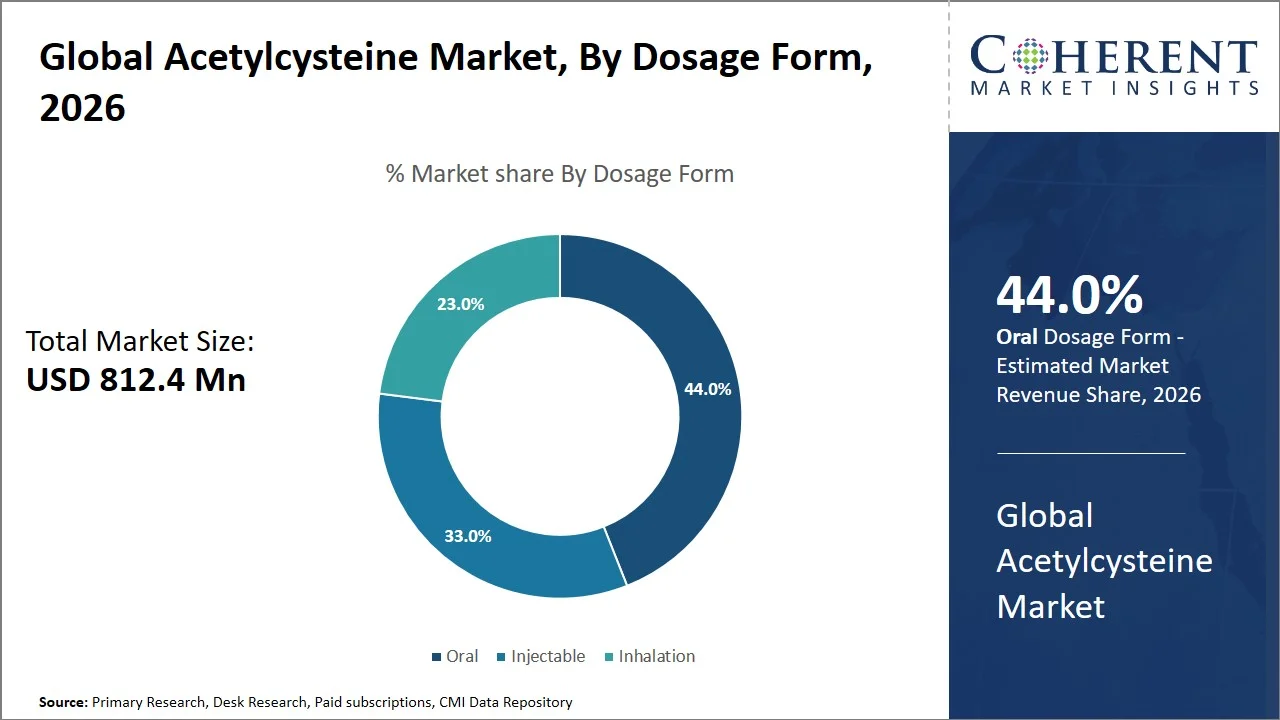
Why Does the Oral Segment Dominate the Global Acetylcysteine Market?
Oral is projected to hold a market share of 44.0% in 2026, owing to its simple route of administration, patient compliance and long-term outpatient management of chronic obstructive pulmonary disease (COPD) and cystic fibrosis that usually requires chronic therapy. Oral acetylcysteine agents are also preferred more in homecare settings for avoiding supervision of health care providers and for eliminating drug related complications associated with injectables. Additionally, convenience of storage and transportation, accessibility through retail pharmacies and availability in the emerging healthcare markets have enhanced its status in the oral segment. Innovations in taste-masking formulations and other oral delivery platforms have increased its acceptance and compliance. For instance, formulation research on taste-masked N-acetylcysteine was conducted and coated oral particles and dispersible formulations were created to lessen the sulfur taste and odor that often accompanies the ingestion of acetylcysteine, thereby enhancing palatability and long-term patient adherence for oral administration. (Source: IFI CLAIMS Patent Services)
- Current Industry Events of 2026
- Market Size Estimation
- Regional Breakdown
- Competitive Landscape
- Customer Intelligence
- Segmental Analysis
- Pricing Analysis
- Key Market Drivers, Challenges & Future Trends
- Customized Insights Section
Why Do Respiratory Disorders Represent the Largest Application Segment in the Acetylcysteine Market?
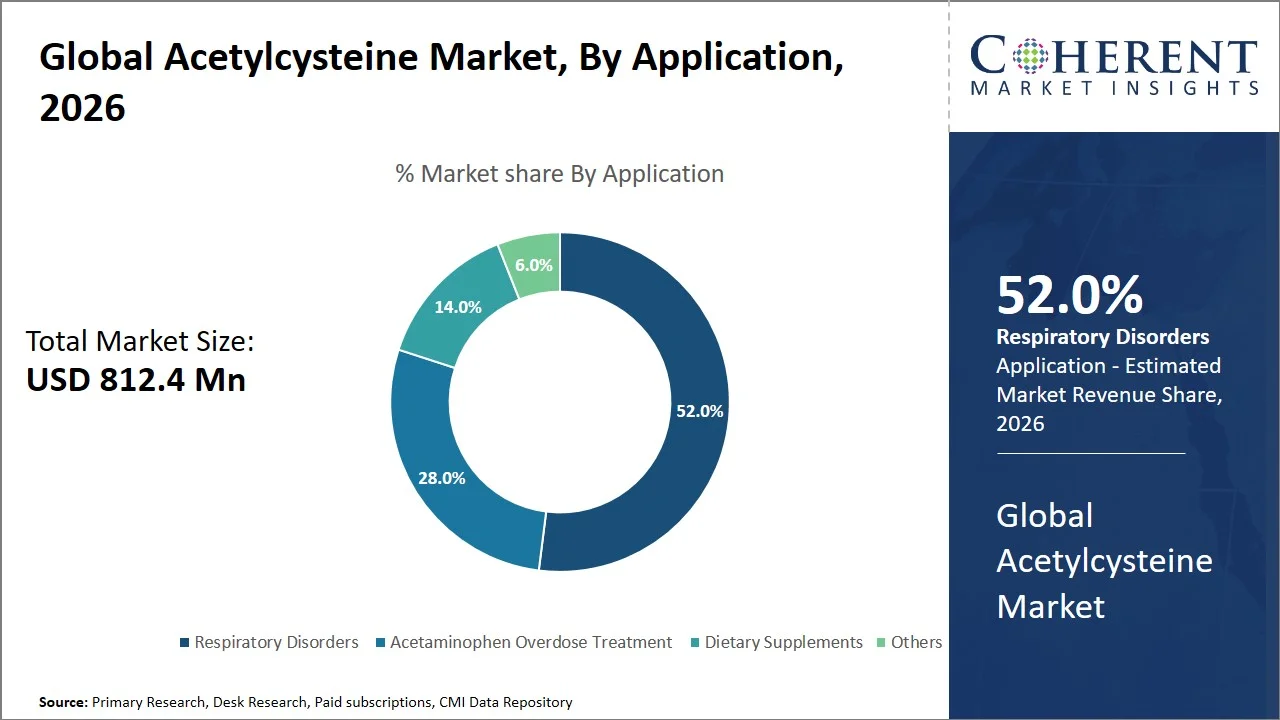
Respiratory disorders are projected to hold a market share of 52.0% in 2026, owing to the alarming rise in chronic pulmonary conditions such as chronic obstructive pulmonary disease (COPD), pneumonia, cystic fibrosis, and chronic bronchitis. The application of acetylcysteine in respiratory disorders is growing due to its mucolytic and antioxidant capacity to promote clearing of the airways along with preventing oxidative lung damage. Surging levels of pollution, tobacco consumption, and aging have been contributing factors in boosting the requirement for acetylcysteine-based respiratory products in the global market. The trend is also aided by recent research on incorporation of acetylcysteine into pulmonary rehabilitation and other therapies targeted at long-term treatment of airway diseases and post-infectious respiratory recovery. For instance, Asthma + Lung UK continues to emphasize the importance of mucus control and airway clearance therapies as part of the management of chronic respiratory disease and will promote the continued use of mucolytics in the treatment of lung disease. (Source: Asthma + Lung UK)
Hospitals and Clinics Segment Dominates the Global Acetylcysteine Market
The hospitals and clinics segment is projected to hold a market share of 56.0% in 2026, as they primarily rely on acetylcysteine for various indications related to acute respiratory problems, drug overdose and hospital-induced pulmonary treatment procedures. In general, hospital and clinic intravenous and inhalation formulations form an integral part of emergency room care, intensive care units and respiratory care centers, whereas, clinics and specialty pulmonary centers mainly provide long-term outpatient follow-up for pulmonary treatments. Moreover, rising occurrence of respiratory related admissions and bolstered pulmonary critical care practices are likely to propel the hospitals and clinics segment. For instance, according to Centers for Disease Control and Prevention, the number of visits to emergency departments with COPD as the primary diagnosis was 854,000 in 2024, highlighting the substantial burden of chronic respiratory diseases on healthcare systems. (Source: Centers for Disease Control and Prevention)
Currents Events and their Impact
Current Events | Description and its Impact |
China Strengthens GMP and API Manufacturing Compliance Framework (January 2025) |
|
U.S. FDA Approves Updated Labeling for Acetadote to Simplify Acetaminophen Overdose Treatment (December 2024) |
|
(Source: BAIPHARM, Cumberland Pharmaceuticals Inc.)
Global Acetylcysteine Market Dynamics
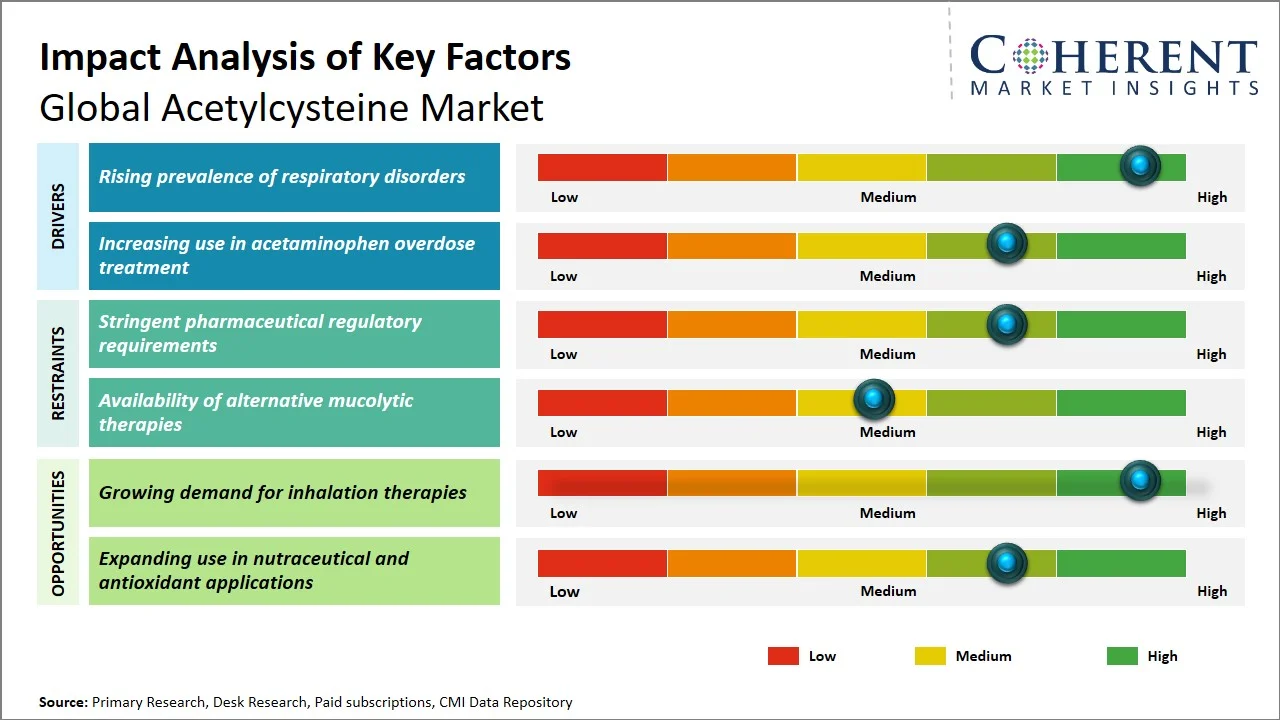
Market Drivers
- Rising prevalence of respiratory disorders: The increasing prevalence of respiratory conditions like asthma, bronchitis, chronic obstructive pulmonary disease (COPD), and cystic fibrosis is a key factor that is expected to contribute significantly to the increased demand for acetylcysteine globally. Acetylcysteine acts as a mucolytic agent and is therefore used effectively in easing the symptoms of mucus build-up by loosening the mucus in the bronchi and lungs. Continuous exposure to contaminated air and increasing prevalence of respiratory disorders such as bronchitis and chronic obstructive pulmonary disease (COPD) due to pollution and spread of the disease is also expected to enhance demand for acetylcysteine as an ongoing symptomatic treatment. There is also increasing number of aged populations that are susceptible to such disorders thereby fueling growth of the acetylcysteine market. For instance, according to Centers for Disease Control and Prevention (CDC), chronic obstructive pulmonary disease (COPD) is one of the top 10 causes of death in the U.S. Nearly 16 million U.S. adults have COPD, while many do not know they have it. (Source: Centers for Disease Control and Prevention)
- Increasing use in acetaminophen overdose treatment: Acetylcysteine is a commonly used antidote to counter the adverse effects of acetaminophen toxicity by replenishing glutathione levels and preventing lethal hepatic damage. Surging prevalence of accidental as well as intentional overdose among emergency care patients is reflecting in higher clinical acceptance of injectable and oral varieties of acetylcysteine products. For instance, as stated in the National Library of Medicine, each year in the U.S., acetaminophen poisoning accounts for almost 56,000 emergency department visits, 2,600 hospitalizations and 500 deaths, emphasizing the increasing clinical relevance of acetylcysteine in overdose treatment and hepatotoxicity. (Source: National Library of Medicine) Additionally, the rising awareness among medical practitioners about early administration of antidotes and better emergency management of cases is further accelerating acetylcysteine adoption.
Emerging Trends
- Rising Adoption of Inhalation-Based Acetylcysteine Therapies: The growing acceptance of nebulizers and other aerosol drug delivery systems in the treatment of chronic obstructive pulmonary disease (COPD), asthma and bronchitis is contributing to the demand for inhaled acetylcysteine preparations. Hospitals and home health care settings are adopting inhalation therapies more rapidly to achieve effective airway clearance and to avoid invasive breathing therapy techniques.
- Expansion of Generic API Manufacturing in Asia Pacific: Pharmaceutical manufacturers in China, India, and other countries are escalating the scale of the production of acetylcysteine APIs and respiratory formulations to absorb the surging worldwide demand. With cheap production base and upward pharmaceutical exports, the region is playing an increasingly significant role in supplying acetylcysteine.
Regional Insights
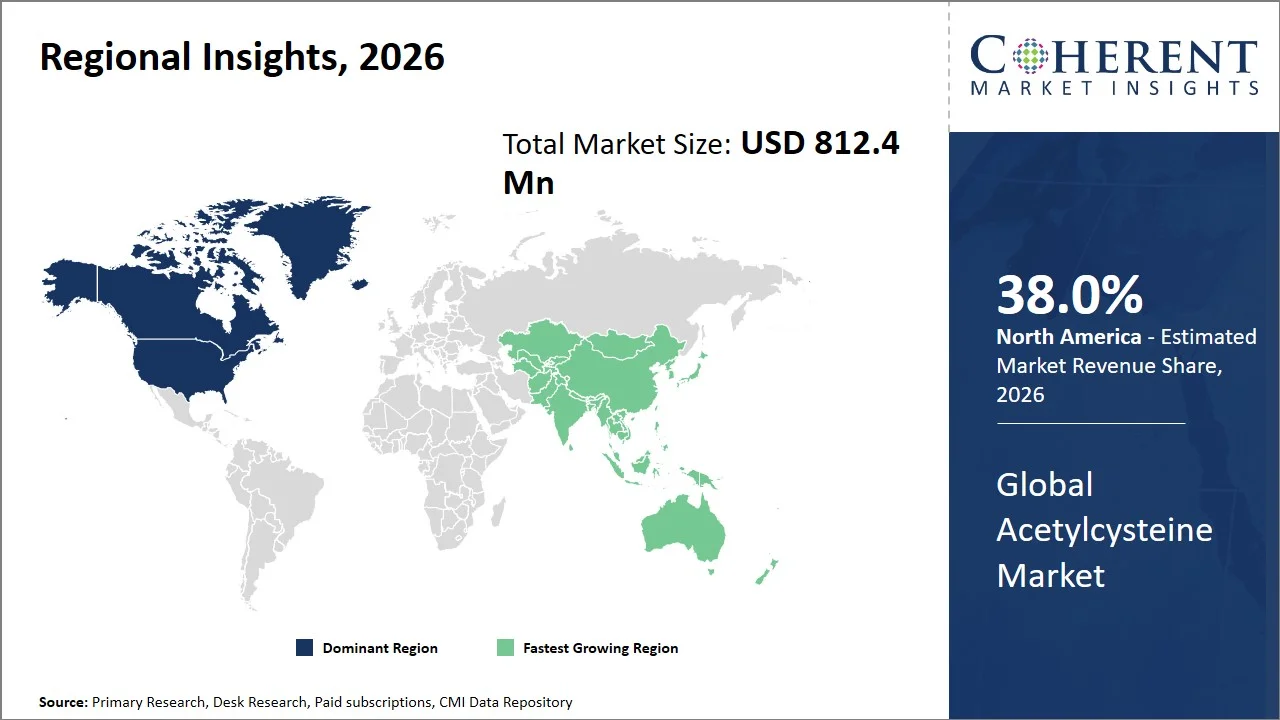
Why is North America a Strong Market for Acetylcysteine?
North America leads the global acetylcysteine market, accounting for an estimated 38.0% share in 2026, attributed to its mature healthcare infrastructure, increasing disease prevalence requiring Acetylcysteine therapy (such as COPD and paracetamol overdose) and proactive pharmaceutical industry. The presence of elaborate regulatory systems like U.S. FDA's fast-tracks reviews, make the region a favorable place for fast approval and sales of novel pharmaceuticals. Furthermore, the pharmaceutical giants operating in North America have invested heavily in R&D to manufacture newer formulations of the drug (such as Parvom, EXO-AC, Ser-Vai), thus providing competitive advantage.
Moreover, trade dynamics of North America as an importer and exporter of pharmaceutical ingredients provides comfort of supply and demand. For instance, in May 2025, pharmaceuticals imported into the U.S. accounted over USD 50 billion in March 2025 as drug manufacturers pre-emptively increased imports ahead of potential tariff amendments. This dramatic increase in trade activity in pharmaceuticals clearly demonstrates the extent of import-export activity and supply chain strength that underpins the continued availability of active pharmaceutical ingredients and respiratory therapeutics across North America. (Source: Reuters)
Why Does the Asia Pacific Acetylcysteine Market Exhibit High Growth?
The Asia Pacific acetylcysteine market is expected to exhibit the fastest growth with an estimated contribution of 26.0% share to the market in 2026, attributed to expanding healthcare access, rising awareness of respiratory diseases, and the developing regulations aimed at standards and access to the pharmaceutical industry by government initiatives. Countries such as China and India are increasingly supplying acetylcysteine owing to their strong focus on healthcare system reforms and the large-scale production of low-cost generic pharmaceuticals.
The growing and dynamic pharmaceutical industry with the rapidly expanding local manufacturers (such as Lupin and Cipla) has been an important factor to boost the market. Investments made by multinational companies into the region and cooperation with local pharmaceutical companies achieved technology transfer and widened market coverage. For instance, according to India Brand Equity Foundation (IBEF) India supplies 20% of world’s generic drugs by volume with 3,000 pharma companies and over 10,500 manufacturing units strengthening API production across Asia Pacific markets. (Source: India Brand Equity Foundation)
Global Acetylcysteine Market Outlook for Key Countries
Why is the U.S. Leading Innovation and Adoption in the Acetylcysteine Market?
The U.S. has been at the forefront of innovation and implementation of acetylcysteine owing to the wide range of clinical applications of acetylcysteine in respiratory care and emergency medicine. The U.S. acetylcysteine market has considerable demand for inhaled formulations attributed to the sizable patient base of chronic obstructive pulmonary disease (COPD) and chronic bronchitis, and the demand for nebulized therapies in hospitals and home healthcare. The advanced pharmaceutical manufacturing infrastructure and patent approvals for respiratory therapeutics also contribute to product innovation and commercialization in the U.S. For instance, according to American Lung Association, chronic obstructive pulmonary disease (COPD) affects 11.7 million adults and accounts for hundreds of thousands of emergency department visits and tens of billions in healthcare costs each year. (Source: American Lung Association)
Is Japan a Favorable Market for Acetylcysteine?
Japan is considered a lucrative market for acetylcysteine owing to a robust requirement for respiratory therapeutics through its hospitals, pulmonary care centers, and elderly health care facilities. The country witnesses a high usage of inhalation and nebulized therapy for chronic respiratory disease that needs to be treated through acetylcysteine formulations. The country has its mature pharmaceutical production facilities and the extensive pulmonary care facilities which ensures the availability of the product and its effective clinical use. The thriving long term respiratory care and elderly care further facilitates stable market growth.
Is China Emerging as a Key Growth Hub for the Acetylcysteine Market?
China is being identified as a significant growth hub for the acetylcysteine market supported by significant domestic pharmaceutical manufacturing base and high production of respiratory therapeutics. The acetylcysteine market in China is witnessing high adoption of mucolytic therapies in hospitals and pulmonology clinics resulting in high demand for acetylcysteine formulations. Further, increasing penetration of inhalation based respiratory therapeutics along with burgeoning domestic API manufacturing base is also fueling the growth of the market in China. Furthermore, robust supply chain infrastructure along with increasing pharmaceutical exports are also facilitating the growth of the acetylcysteine market in the country.
Why Does Germany Top the Europe Acetylcysteine Market?
Germany is the leader in the Europe market for acetylcysteine as the country has large number of pharmaceutical producers along with extensive use of respiratory therapeutics throughout the clinical settings. Mucolytic therapies are widely used in hospitals, pulmonology treatment centers and outpatient respiratory clinics which is driving the demand for acetylcysteine in Germany. Moreover, the country's improved pharmaceutical manufacturing infrastructure and robust focus on high quality drug manufacturing are leading the way for ongoing market growth. Also, the high use of inhalation based respiratory medicines as well as the country having a well-established reimbursement scheme is expected to enhance the acetylcysteine consumption in the country.
Is the Acetylcysteine Market Developing in India?
India’s acetylcysteine market is gradually evolving on account of an increasing base of domestic pharma companies (such as Cipla, Sun Pharmaceutical Industries, Dr. Reddy's Laboratories, and Zydus Lifesciences) and growing manufacturing capacity for respiratory therapeutics. The increasing availability of acetylcysteine in the form of tablets, injections and inhalation formulations through hospital and retail pharmacy channels is supplemented by a robust API manufacturing infrastructure in India and its large generic pharma industry. These factors combined with increasing use of respiratory care therapeutics and capacity building for pharma manufacturing are likely to enhance the acceptance and utilization of acetylcysteine products in India.
Regulatory Landscape Governing the Global Acetylcysteine Market
Region | Authority & Classification | Approval Pathway | Key Regulatory Insight |
North America | U.S. Food and Drug Administration (FDA); Health Canada; classified as prescription/OTC drug depending on formulation and indication | NDA/ANDA approval pathway in the U.S.; New Drug Submission (NDS) in Canada | Strong emphasis on cGMP compliance, API quality standards, bioequivalence studies, and pharmacovigilance for respiratory and antidote applications |
Europe | European Medicines Agency (EMA) and national competent authorities; regulated as medicinal product | Centralized, decentralized, or mutual recognition procedures under EMA framework | Strict EU GMP requirements and serialization regulations support high product safety and traceability across member states |
Asia Pacific | National Medical Products Administration (NMPA - China), CDSCO (India), PMDA (Japan), TGA (Australia) | Country-specific approval pathways with increasing harmonization to ICH guidelines | Rapid expansion of generic drug manufacturing and rising respiratory disease burden are accelerating acetylcysteine registrations across emerging economies |
Latin America | ANVISA (Brazil), COFEPRIS (Mexico), INVIMA (Colombia) | Local registration and dossier review processes with GMP certification requirements | Regulatory modernization and improved pharmaceutical import standards are enhancing market access for mucolytic and injectable formulations |
Middle East & Africa | Saudi FDA (SFDA), UAE Ministry of Health, South African Health Products Regulatory Authority (SAHPRA) | National registration procedures supported by GCC harmonization initiatives | Growing investment in healthcare infrastructure and stronger drug quality regulations are increasing demand for compliant pharmaceutical products |
How is the growing demand for inhalation therapies creating new growth opportunities in the global acetylcysteine market?
The escalating need for inhalation treatments are providing lucrative growth prospects in the acetylcysteine market on account of the surging prevalence of chronic respiratory diseases like chronic obstructive pulmonary disease (COPD), asthma, bronchitis and cystic fibrosis. The growing use of inhaled acetylcysteine solutions as mucolytic to dilate mucus and promote airway clearing is expected to expand the product demand. Growing penetration of home healthcare devices, nebulizers and aerosolized drugs delivery systems are set to propel growth of acetylcysteine inhalation formulation market. Hospital and pulmonary care centers are also showing an increase in the adoption of inhaled acetylcysteine for the management of respiratory secretions. The growing popularity of non-invasive respiratory therapy is further boosting the adoption of respiratory products worldwide. For instance, as per the U.S. National Library of Medicine (MedlinePlus), acetylcysteine inhalation is being used widely in patients with asthma, emphysema, bronchitis and cystic fibrosis to break up and remove mucus from air passages and is evidence of the growing importance and use of inhalation forms of acetylcysteine therapies in the clinical environment. (Source: Medline)
Market Players, Key Development, and Competitive Intelligence
Key Developments
- In June 2025, Zambon announced the launch and approval of the intravenous formulation of Fluimucil (N-acetylcysteine) in China. This launch bolsters Zambon’s therapeutic offerings for respiratory conditions and increases the presence of intravenous acetylcysteine therapy in the Chinese healthcare sector. It also highlights increasing drug investments in respiratory and critical care medicines in Asia Pacific countries.
- In March 2025, Glenmark Pharmaceuticals Inc. USA announced the acquisition and availability of Acetylcysteine Injection 6 gm/30 mL (200 mg/mL) single-dose vials in the U.S. The product, being therapeutically similar to Acetadote Injection, was acquired from Aspen Pharma USA Inc. The launch strengthens Glenmark’s injectable portfolio and expands access to acetylcysteine-based emergency treatment solutions.
Competitive Landscape
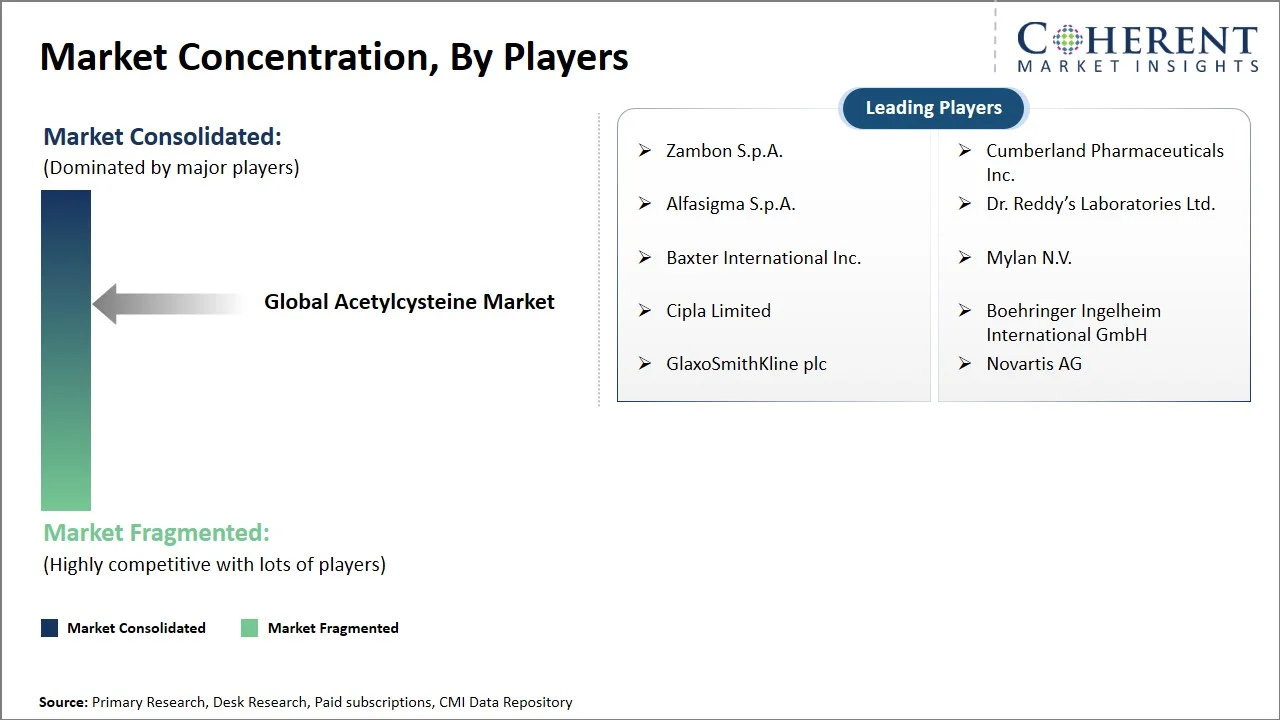
The global acetylcysteine market is moderately competitive, characterized by quality, cost, formulation and packaging efficiency, regulatory compliance and reliable supply. Manufacturers are continuously intensifying the development of inhalation, injectable and oral acetylcysteine product line to reach the hospitals, pulmonary care centers and retail pharmacies. They are also engaged in the cost optimization of API manufacturing, novel and high-speed packaging technology development and distribution network optimization. Key focus areas include:
- Expansion of inhalation and respiratory care acetylcysteine formulations
- Investment in high-purity API production and GMP-compliant manufacturing
- Development of cost-effective and patient-friendly dosage forms
- Strengthening distribution networks across hospitals, pharmacies, and respiratory care centers
- Focus on regulatory approvals and global market expansion strategies
Market Report Scope
Acetylcysteine Market Report Coverage
| Report Coverage | Details | ||
|---|---|---|---|
| Base Year: | 2025 | Market Size in 2026: | USD 812.4 Mn |
| Historical Data for: | 2020 To 2024 | Forecast Period: | 2026 To 2033 |
| Forecast Period 2026 to 2033 CAGR: | 5.3% | 2033 Value Projection: | USD 1,164.7 Mn |
| Geographies covered: |
| ||
| Segments covered: |
| ||
| Companies covered: | Zambon S.p.A., Cumberland Pharmaceuticals Inc., Alfasigma S.p.A., Dr. Reddy’s Laboratories Ltd., Baxter International Inc., Mylan N.V., Cipla Limited, Boehringer Ingelheim International GmbH, GlaxoSmithKline plc, and Novartis AG | ||
| Growth Drivers: |
| ||
| Restraints & Challenges: |
| ||
Analyst Opinion (Expert Opinion)
- In the coming years, the future outlook for the acetylcysteine market will remain extremely optimistic owing to the rising incidences of chronic respiratory diseases all over the globe. Factors like rising air pollution levels, smoking habits, aging population, respiratory infections are expected to maintain the long-term demand for mucolytic drugs and respiratory therapies. It is also expected to be encouraged by rising proportion of inhalation therapies, the penetration of home healthcare, and investments in innovative pulmonary drug delivery systems. Additionally, rising global use of acetylcysteine as antidote for acetaminophen overdose, increasing antioxidant applications are also projected to encourage wider range of applications in therapeutics.
- The maximum opportunities will probably exist in inhalation dosage form for respiratory disease management applications especially in U.S., China and India. Inhalation therapy is forecast to record strong growth because of adoption of various inhaled drug delivery devices including nebulizers, aerosol drug delivery systems and home respiratory care devices. Adoption of inhaled acetylcysteine formulations for airway clearance therapy at hospitals, pulmonary care centers and home healthcare is increasing. Emerging economies in Asia Pacific are also expected to offer lucrative opportunities, owing to improving healthcare infrastructure, increasing respiratory disease burden, accelerating healthcare expenditure and increasing penetration of generic respiratory therapeutics.
- In order to gain a competitive advantage, the market players should focus on investment in broadening inhalation/injection acetylcysteine range along with upgrading high-purity API manufacturing capacity. Maintaining the consistent pricing advantage and pharmaceutical legislations adherence is likely to become a key issue through targeted investments in good manufacturing practice and cost-effective large-scale production facilities. Establishing strategic alliances with hospital and respiratory care providers, drug distributors and home health care networks is equally vital for opening up distribution channels. Additionally, those companies with a target on novel packing technology, patient-oriented formulations and gaining approvals from emerging markets are predicted to record a more robust and longer-term market performance.
Speak to the analyst
Want personalized insights?
Take the findings above to one of our principal consultants, or have the report rebuilt around the segments, geographies and competitors you actually track.
Market Segmentation
- Dosage Form Insights (Revenue, USD Mn, 2021 - 2033)
- Oral
- Injectable
- Inhalation
- Application Insights (Revenue, USD Mn, 2021 - 2033)
- Respiratory Disorders
- Acetaminophen Overdose Treatment
- Dietary Supplements
- Others
- End User Insights (Revenue, USD Mn, 2021 - 2033)
- Hospitals and Clinics
- Homecare Settings
- Specialty Centers
- Others
- Distribution Channel Insights (Revenue, USD Mn, 2021 - 2033)
- Hospital Pharmacies
- Retail Pharmacies
- Online Pharmacies
- Regional Insights (Revenue, USD Mn, 2021 - 2033)
- North America
- U.S.
- Canada
- Latin America
- Brazil
- Argentina
- Mexico
- Rest of Latin America
- Europe
- Germany
- U.K.
- Spain
- France
- Italy
- Russia
- Rest of Europe
- Asia Pacific
- China
- India
- Japan
- Australia
- South Korea
- ASEAN
- Rest of Asia Pacific
- Middle East
- GCC Countries
- Israel
- Rest of Middle East
- Africa
- South Africa
- North Africa
- Central Africa
- North America
- Key Players Insights
- Zambon S.p.A.
- Cumberland Pharmaceuticals Inc.
- Alfasigma S.p.A.
- Reddy’s Laboratories Ltd.
- Baxter International Inc.
- Mylan N.V.
- Cipla Limited
- Boehringer Ingelheim International GmbH
- GlaxoSmithKline plc
- Novartis AG
Sources
Primary Research Interviews
- Hospital pharmacists and pulmonary care specialists utilizing acetylcysteine formulations for respiratory therapy
- Respiratory therapists and pulmonologists managing COPD, bronchitis, asthma, and cystic fibrosis patients
- Pharmaceutical distributors and healthcare procurement professionals supplying respiratory therapeutics and mucolytic drugs
- API manufacturers and pharmaceutical companies specializing in acetylcysteine production and formulation development
- Critical care physicians and emergency care professionals utilizing injectable acetylcysteine formulations
- Home healthcare providers and nebulizer therapy centers utilizing inhaled respiratory medications
Stakeholders
- Acetylcysteine API manufacturers and respiratory drug formulation companies
- End-use Sectors
- Hospitals and pulmonary care centers
- Retail and hospital pharmacies
- Ambulatory surgical and emergency care centers
- Home healthcare and respiratory therapy providers
- Specialty respiratory clinics and critical care units
- Regulatory & Health Bodies: U.S. Food and Drug Administration (FDA) – respiratory drug approval and cGMP compliance framework, European Medicines Agency (EMA) – pharmaceutical quality and pharmacovigilance regulations, National Medical Products Administration (NMPA), China – drug registration and API manufacturing standards, Pharmaceuticals and Medical Devices Agency (PMDA), Japan – respiratory therapeutic regulatory compliance, World Health Organization (WHO) – respiratory disease burden and essential medicines guidance
Databases
- WHO Global Health Observatory – respiratory disease prevalence and healthcare infrastructure data
- CDC FastStats – respiratory disease and healthcare utilization statistics
- FDA Drug Databases – pharmaceutical approvals and drug safety data
- OECD Health Statistics – respiratory care utilization and pharmaceutical expenditure data
Magazines
- Pharmaceutical Technology – respiratory drug manufacturing and formulation trends
- Drug Development & Delivery – inhalation drug delivery and mucolytic therapy developments
- Contract Pharma – API manufacturing and pharmaceutical outsourcing trends
- Pharma Manufacturing – pharmaceutical production and supply chain developments
- MedTech Dive – respiratory healthcare technology and therapeutic innovations
Journals
- International Journal of Chronic Obstructive Pulmonary Disease
- Respiratory Medicine
- European Respiratory Journal
- Journal of Aerosol Medicine and Pulmonary Drug Delivery
- Pulmonary Pharmacology & Therapeutics
Newspapers
- Financial Times – pharmaceutical manufacturing and healthcare market coverage
- The Wall Street Journal – global pharmaceutical industry and respiratory care developments
- The New York Times (Health Section) – respiratory disease and healthcare treatment trends
- The Guardian (Science & Health) – global healthcare and respiratory therapy advancements
Associations
- American Thoracic Society (ATS)
- European Respiratory Society (ERS)
- International Pharmaceutical Excipients Council (IPEC)
- Association for Accessible Medicines (AAM)
- International Society for Aerosols in Medicine (ISAM)
Public Domain Sources
- World Health Organization (WHO) – respiratory disease statistics and essential medicines data
- Centers for Disease Control and Prevention (CDC) – COPD, asthma, and respiratory healthcare statistics
- U.S. Food and Drug Administration (FDA) – acetylcysteine drug approval and regulatory framework
- European Medicines Agency (EMA) – pharmaceutical quality and respiratory therapeutic regulations
- OECD – healthcare expenditure and respiratory treatment utilization statistics
Proprietary Elements
- CMI Data Analytics Tool, Proprietary CMI Existing Repository of information for last 10 years.
Get access to 250+ pages report
Every segment, forecast, competitor profile and data table behind the analysis above — available for instant download.
- ESOMAR Member
- ISO 9001:2015 Certified
- D-U-N-S Registered
- GDPR & CCPA Compliant
Missing comfort of reading report in your local language? Find your preferred language:
Transform your Strategy with Exclusive Trending Reports
Frequently Asked Questions
The global acetylcysteine market is estimated to be valued at USD 812.4 Mn in 2026 and is expected to reach USD 1,164.7 Mn by 2033.
Oral dominates due to its wide usage in respiratory disorder management, high patient convenience, cost-effectiveness, and strong availability across retail and hospital pharmacies.
Acetylcysteine is a mucolytic drug and antioxidant primarily used to loosen mucus in respiratory diseases and as an antidote for acetaminophen overdose.
The CAGR of the global acetylcysteine market is projected to be 5.3% from 2026 to 2033.
Rising prevalence of respiratory disorders and increasing use in acetaminophen overdose treatment are the major factors driving the growth of the global acetylcysteine market.
Stringent pharmaceutical regulatory requirements and availability of alternative mucolytic therapies are the major factors hampering the growth of the global acetylcysteine market.
Inhalation and oral routes are widely used for respiratory applications due to effective mucus clearance and patient convenience.