

Acute Otitis Media Treatment Market Size and Share Analysis 2026 - 2033
The global acute otitis media treatment market size is estimated to reach USD 3,360.5 Mn in 2026 and is projected to grow at a compound annual growth rate (CAGR) of 5% during the forecast period (2026-2033), surpassing USD 4,728.6 Mn by 2033. This growth can be attributed to rising prevalence of acute otitis media, growing awareness of early diagnosis and treatment options, and improved access to antibiotics and advanced therapeutics.
Key Takeaways from the Acute Otitis Media Treatment Market Report
- Antibiotics are expected to lead the market with a share of nearly 70% in 2026 due to their role as first-line therapy in bacterial acute otitis media cases. For example, a large-scale European primary care study involving over 360,000 AOM episodes reported that antibiotics were prescribed in 73.6% of cases, reflecting strong clinical reliance on antimicrobial therapy.
- Oral segment is set to account for the largest market share of 75% in 2026 because of ease of administration, higher patient compliance, and widespread outpatient treatment. For example, latest study shows that majority of acute otitis media cases are treated with oral antibiotics such as amoxicillin.
- North America is projected to retain its dominance over the global acute otitis media treatment industry with a share of 42% in 2025, owing to high diagnosis rates, advanced healthcare infrastructure, and strong pediatric care penetration. For instance, acute otitis media is one of the most commonly diagnosed childhood illnesses and is estimated to account for tens of Mns of healthcare encounters annually in the United States.
- Asia Pacific, holding a share of 25% in 2026, is poised to emerge as the fastest growing market for acute otitis media treatments during the forecast period, thanks to a patient pool, improving healthcare access, and rising awareness of ear infection treatment.
Acute Otitis Media Treatment Market Overview
The global acute otitis media treatment market is expected to grow steadily during the forecast period. This is due to increasing prevalence of acute otitis media, rising incidence of upper respiratory tract infections, growing awareness of early diagnosis and treatment options, and high adoption of antibiotics and advanced therapeutics.
Acute otitis media (AOM) is an infection of the middle ear, the air-filled space behind the eardrum, which commonly causes ear pain, fever, irritability, and difficulty sleeping. It is one of the most common ear infections in children, largely because their Eustachian tube is shorter and more horizontal than in adults, making it easier for pathogens to reach the middle ear and for fluid to accumulate.
The most common bacterial pathogens associated with AOM include Streptococcus pneumoniae, non-typeable Haemophilus influenzae, and Moraxella catarrhalis. Viral infections also frequently contribute to AOM and may precede or coexist with bacterial infection. Rising cases of these infections are expected to create a conducive environment for the growth of acute otitis media treatment during the projection period.
Expansion of telemedicine and digital healthcare is also supporting the growth of the AOM treatment market. Telehealth adoption is enabling remote diagnosis, faster clinical consultations, and easier access to prescriptions through online platforms. This trend is improving treatment accessibility, particularly in rural and underserved regions.
Segmental Insights
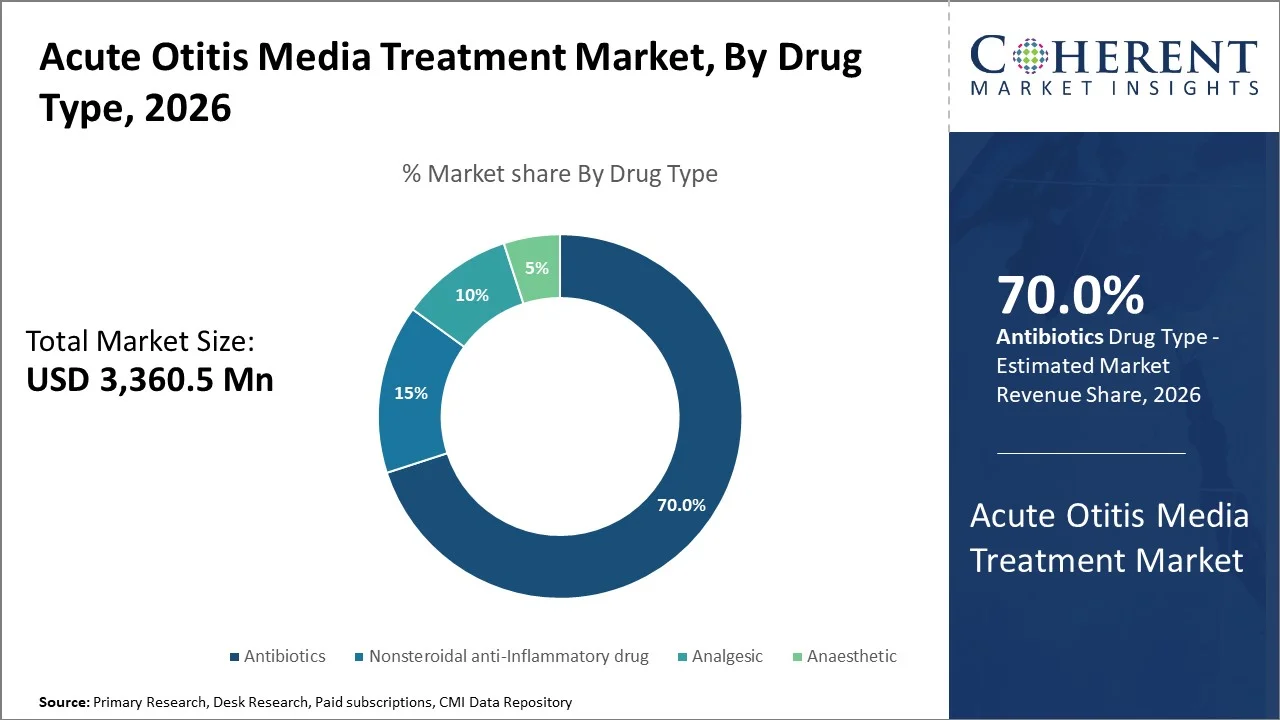
Which Drug Type Dominates the Acute Otitis Media Treatment Market?
Antibiotics Hold the Largest Share with Over 70% in 2026
According to Coherent Market Insights’ latest acute otitis media treatment market analysis, antibiotics are set to dominate the industry with a share of nearly 70% in 2026. This dominance can be attributed to antibiotics remaining the first-line treatment for most bacterial cases of acute otitis media, especially in pediatric patients.
Antibiotics are widely available and work effectively against common bacteria such as Streptococcus pneumoniae and Haemophilus influenzae. Their use is also strongly supported by standard treatment guidelines in primary care settings, which helps maintain their high utilization.
For example, a US claims-based study published in Pediatrics (American Academy of Pediatrics journal), analyzing over one million acute otitis media encounters, reported high antibiotic utilization in routine care. Amoxicillin was the most frequently prescribed antibiotic, accounting for approximately half of all prescriptions in real-world datasets.
- Current Industry Events of 2026
- Market Size Estimation
- Regional Breakdown
- Competitive Landscape
- Customer Intelligence
- Segmental Analysis
- Pricing Analysis
- Key Market Drivers, Challenges & Future Trends
- Customized Insights Section
What Makes Oral Formulations Popular in the Acute Otitis Media Treatment Market?
Convenience and Ease of Administration Drive the Dominance of Oral Formulations
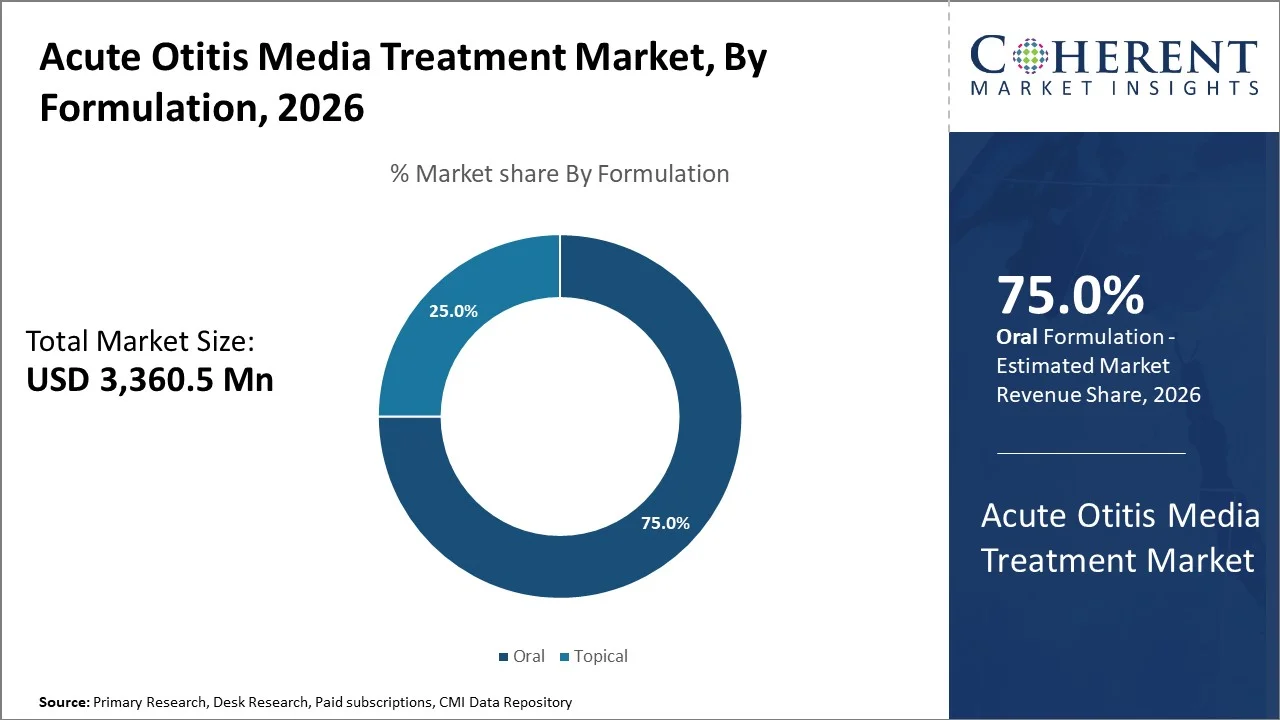
By formulation, oral segment is projected to account for a prominent market share of 75% in 2026. This is mostly due to their non-invasive nature, ease of dosing in pediatric patients, and higher caregiver preference compared to injections or other routes of administration.
Oral antibiotics also support better adherence in outpatient settings, making them the first-line choice in the majority of acute otitis media treatment protocols. As a result, the target segment is expected to lead the global acute otitis media treatment market throughout the forecast period.
Acute Otitis Media Treatment Market Growth Drivers
Rising Prevalence of Acute Otitis Media (AOM): Increasing incidence of ear infections, especially in children, is providing a strong impetus for the growth of acute otitis media treatment market. Acute otitis media remains one of the most common pediatric infections worldwide, leading to frequent doctor visits and high treatment demand.
For instance, according to studies published in the Likewise, 80% to 90% develop otitis media with effusion before reaching school age. This high AOM burden is expected to fuel demand for acute otitis media treatment drugs during the forecast period.
Acute Otitis Media Treatment Market Opportunities
Increasing Awareness and Early Diagnosis: People across the world are increasingly becoming aware of ear infections, their symptoms, and the availability of treatments. This is leading to earlier diagnosis, faster initiation of treatment, and reduced complications such as hearing loss and mastoiditis. Thus, growing health awareness is expected to create lucrative growth opportunities in the acute otitis media treatment market during the assessment period.
Acute Otitis Media Treatment Market Trends
Shift Towards Combination Therapies: Rising adoption of combination and supportive therapies is a key growth-shaping trend in the acute otitis media treatment market. There is a growing shift toward antibiotic and anti-inflammatory combinations, increased use of analgesics for pain management, and symptomatic relief therapies. This transition toward a more holistic treatment approach is expected to boost the acute otitis media treatment market value and growth during the forecast period.
Acute Otitis Media Treatment Market Innovations
Advancements in Diagnostics and Treatment Options
New technologies are improving how acute otitis media (AOM) is diagnosed. Digital otoscopes and AI-based diagnostic tools are helping clinicians assess the eardrum more clearly and support faster diagnosis, especially in telehealth and primary care settings. This enables quicker clinical decisions and improves access to care in regions with limited ENT specialist availability.
A recent example is TytoCare, which received FDA De Novo classification in 2026 for its Tyto Insights™ for ENT Suite. The system uses AI to analyze otoscopy video recordings and detect eardrum bulging, a key clinical sign associated with acute otitis media. This marks a regulatory milestone for AI-powered ENT image analysis and supports more accurate remote ear examinations in virtual care settings. These advancements are expected to improve early diagnosis and support timely treatment decisions, thereby increasing demand for acute otitis media therapeutics.
Current Events and Their Impact on the Acute Otitis Media Treatment Market
Current Event | Description and its Impact |
High lifetime prevalence of ear infections in children (NIDCD data) |
|
Expansion of pediatric pneumococcal vaccination (PCV20 recommendations) |
|
Regional Insights
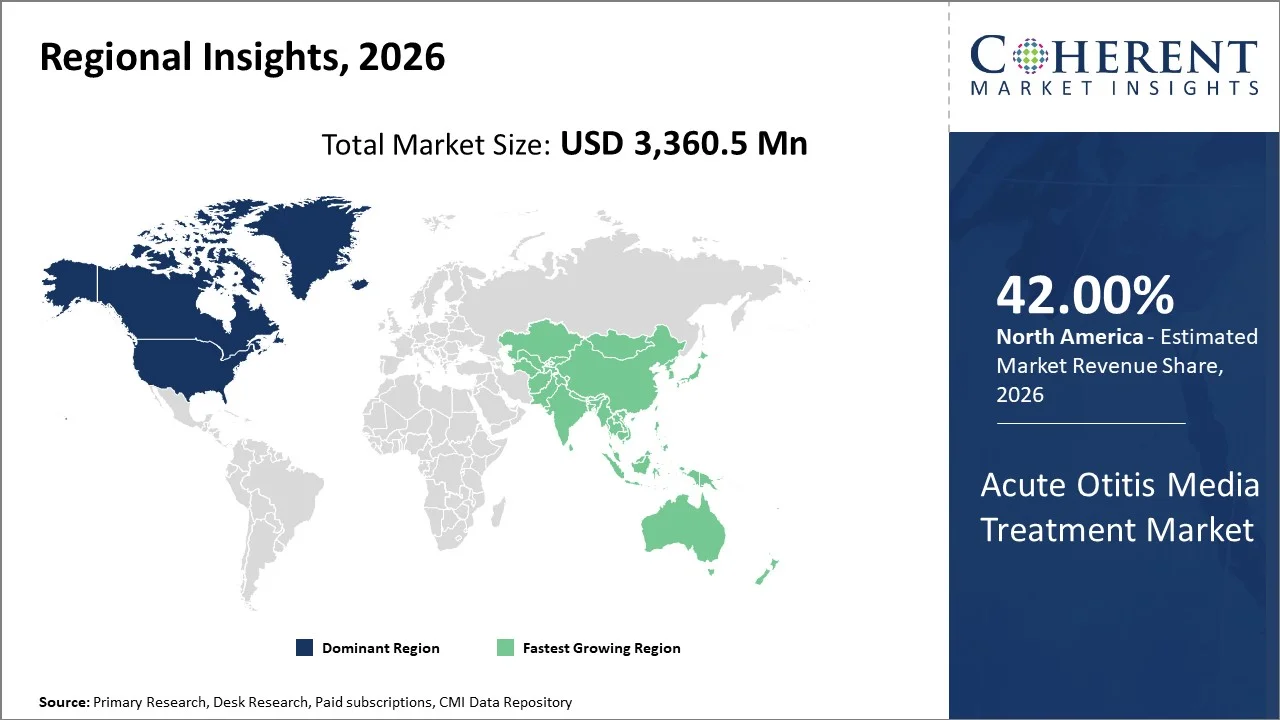
High Hygiene Awareness Driving Facial Tissue Demand in North America
North America is expected to dominate the global acute otitis media treatment market during the forecast period, capturing a share of 42% in 2026. This can be attributed to high disease awareness, strong healthcare access, early diagnosis in children, and presence of leading pharmaceutical companies.
Rising prevalence of AOM in young children is playing a key role in boosting North America acute otitis media treatment market growth. Acute otitis media (OM) is quite common in the United States. Around 60% of children experience it by the age of 3 years. In addition, more than 2.2 million cases of otitis media with effusion (fluid buildup in the middle ear) are diagnosed every year. This is driving demand for acute otitis media treatment drugs, especially antibiotics.
Asia Pacific to Emerge as a Hotbed for Facial Tissue Manufacturers
Asia Pacific is emerging as a fast-growing region in the acute otitis media (AOM) treatment market, holding a share of 25% in 2026. This is mostly due to improving healthcare access, rising pediatric population, increasing awareness of ear infections, and increasing demand for antibiotics.
High burden of upper respiratory infections, which often trigger AOM in children, especially in densely populated countries, is positively impacting sales of acute otitis media treatments in the region. Research shows AOM is strongly linked with viral infections like RSV and influenza, which remain common in the region and contribute to recurrent ear infections.
Acute Otitis Media Treatment Market Outlook – Country-wise
U.S. Acute Otitis Media Treatment Market Trends
The United States is expected to remain a leading market for acute otitis media (AOM) treatments during the forecast period. This is mostly due to strong healthcare infrastructure, high awareness of ear infections, and frequent diagnosis in pediatric populations. Similarly, the presence of advanced ENT specialists and strong healthcare reimbursement systems also reinforces the country’s position as a mature and highly structured market for acute otitis media treatment.
China Acute Otitis Media Treatment Market Forecast
The acute otitis media treatment market in China is expected to grow rapidly during the assessment period. This can be attributed to rising burden of respiratory tract infections in children, growing health awareness, and rising adoption of antibiotics for acute otitis media. Likewise, improving access to healthcare services, expanding pediatric care infrastructure, and rising healthcare expenditure are further supporting market expansion.
Who are the Major Companies in the Acute Otitis Media Treatment Market?
Some of the major players in Acute Otitis Media Treatment Market are Pfizer, Inc., Eli Lilly and Company, Abbott Laboratories, GlaxoSmithKline plc., Bayer AG, Novartis AG, Pediapharm Inc., Sanofi S.A., and Bristol Myers Squibb Company.
Key Strategies Adopted by Industry Players
Leading acute otitis media treatment companies are adopting various strategies to boost their revenue as well as gain a competitive edge over the industry. These include new product launches and approvals, increasing investments in R&D for novel antibiotics and improved formulations, development of child-friendly dosage forms, collaborations, mergers, and acquisitions.
- In March 2024, the U.S. FDA approved Amneal Pharmaceuticals’ generic version of Ciprodex (ciprofloxacin and dexamethasone otic suspension). It is used to treat ear infections, including acute otitis media in children with ear tubes and acute otitis externa.
- In March 2024, the European Commission approved Pfizer’s Prevnar 20 for use in infants and children. It helps protect against pneumococcal disease, including conditions such as pneumonia and acute otitis media.
Market Report Scope
Acute Otitis Media Treatment Market Report Coverage
| Report Coverage | Details | ||
|---|---|---|---|
| Base Year: | 2025 | Market Size in 2026: | USD 3,360.5 Mn |
| Historical Data for: | 2020 To 2024 | Forecast Period: | 2026 To 2033 |
| Forecast Period 2026 to 2033 CAGR: | 5% | 2033 Value Projection: | USD 4,728.6 Mn |
| Geographies covered: |
| ||
| Segments covered: |
| ||
| Companies covered: | Pfizer, Inc., Eli Lilly and Company, Abbott Laboratories, GlaxoSmithKline plc., Bayer AG, Novartis AG, Pediapharm Inc., Sanofi S.A., and Bristol Myers Squibb Company. | ||
| Growth Drivers: |
| ||
| Restraints & Challenges: |
| ||
Analyst Opinion (Expert Opinion)
- Acute otitis media treatment demand is strongly driven by high disease burden, as AOM is one of the most common childhood infections, affecting a large share of children worldwide and leading to frequent healthcare visits.
- Antibiotics remain the mainstay of treatment because bacterial pathogens like Streptococcus pneumoniae and Haemophilus influenzae are commonly involved, making early pharmacological intervention a standard clinical practice.
- Clinical practice patterns show that antibiotics are prescribed in a large proportion of cases; for example, a U.S. claims-based study found that about 77.8% of AOM episodes were treated with antibiotics, highlighting their dominant role in management.
- Growing emphasis on antibiotic stewardship and watchful waiting in mild cases is gradually shaping treatment approaches, with clinicians balancing symptom severity, age, and risk of complications before prescribing antibiotics.
Speak to the analyst
Want personalized insights?
Take the findings above to one of our principal consultants, or have the report rebuilt around the segments, geographies and competitors you actually track.
Market Segmentation
- By Drug Type Insights ( Revenue, USD Mn, 2021 - 2033)
- Antibiotics
- Nonsteroidal anti-Inflammatory drug
- Analgesic
- Anaesthetic
- By Formulation Insights ( Revenue, USD Mn, 2021 - 2033)
- Oral
- Topical
- By Distribution Channel Insights ( Revenue, USD Mn, 2021 - 2033)
- Hospitals
- Retail pharmacies
- Online pharmacies
- By Region Insights ( Revenue, USD Mn, 2021 - 2033)
- North America
- U.S.
- Canada
- Latin America
- Brazil
- Argentina
- Mexico
- Rest of Latin America
- Europe
- Germany
- U.K.
- Spain
- France
- Italy
- Russia
- Rest of Europe
- Asia Pacific
- China
- India
- Japan
- Australia
- South Korea
- ASEAN
- Rest of Asia Pacific
- Middle East
- GCC Countries
- Israel
- Rest of Middle East
- Africa
- South Africa
- North Africa
- Central Africa
- North America
- Key Players
- Pfizer, Inc.
- Eli Lilly and Company
- Abbott Laboratories
- GlaxoSmithKline plc.
- Bayer AG
- Novartis AG
- Pediapharm Inc.
- Sanofi S.A.
- Bristol Myers Squibb Company
Sources
Primary Research interviews
- Interviews with pediatricians, ENT specialists, clinical pharmacists, hospital procurement managers, and healthcare professionals involved in the diagnosis and treatment of acute otitis media
Databases
- PubMed
- ClinicalTrials.gov
- WHO Global Health Observatory
- NIH databases
- CDC data repository
- OECD Health Statistics
- National health ministry databases
Magazines
- Medical and healthcare-focused publications such as The Lancet Infectious Diseases Magazine section, BMJ Clinical Review updates, Medscape Newsletters, and Medical News Today
Journals
- The Lancet Infectious Diseases
- Pediatrics (American Academy of Pediatrics)
- Journal of Pediatric Infectious Diseases
- Clinical Infectious Diseases
- International Journal of Pediatric Otorhinolaryngology
Newspapers
- The Guardian (Health section)
- The New York Times (Health)
- The Washington Post (Science & Health)
- The Hindu (Science)
- The Times of India (Health)
Associations
- American Academy of Pediatrics (AAP)
- American Academy of Otolaryngology–Head and Neck Surgery (AAO-HNS)
- World Health Organization (WHO)
- Centers for Disease Control and Prevention (CDC)
- European Society of Clinical Microbiology and Infectious Diseases (ESCMID)
Public Domain sources
- Government health portals
- WHO reports
- CDC surveillance data
- NIH publications
- FDA drug labeling information
- National immunization program data
Proprietary Elements
- CMI Data Analytics Tool
- Proprietary CMI Existing Repository of information for last 10 years.
Get access to 250+ pages report
Every segment, forecast, competitor profile and data table behind the analysis above — available for instant download.
- ESOMAR Member
- ISO 9001:2015 Certified
- D-U-N-S Registered
- GDPR & CCPA Compliant
Missing comfort of reading report in your local language? Find your preferred language:
Transform your Strategy with Exclusive Trending Reports
Frequently Asked Questions
The global Acute Otitis Media Treatment Market is estimated to be valued at USD 3,360.5 Mn in 2026.
The global Acute Otitis Media Treatment Market value is expected to reach US$ 4,728.6 Mn by 2033.
The global market is poised to exhibit a CAGR of 5.0% from 2026 to 2033
Major growth factors include rising prevalence of acute otitis media treatment, growing health awareness, and rising demand for antibiotics.
Some major companies in the Acute Otitis Media Treatment Market include Pfizer, Inc., Eli Lilly and Company, Abbott Laboratories, GlaxoSmithKline plc., Bayer AG, Novartis AG, Pediapharm Inc., Sanofi S.A., and Bristol Myers Squibb Company.
North America, with 42% share in 2026, is expected to lead the market during the forecast period.