

Global Aseptic Packaging Market Size and Forecast – 2026-2033
The global aseptic packaging market is estimated to be valued at USD 65.28 Bn in 2026 and is expected to reach USD 95.60 Bn by 2033, exhibiting a compound annual growth rate (CAGR) of 5.6% from 2026 to 2033.
Key Takeaways of the Aseptic Packaging Market
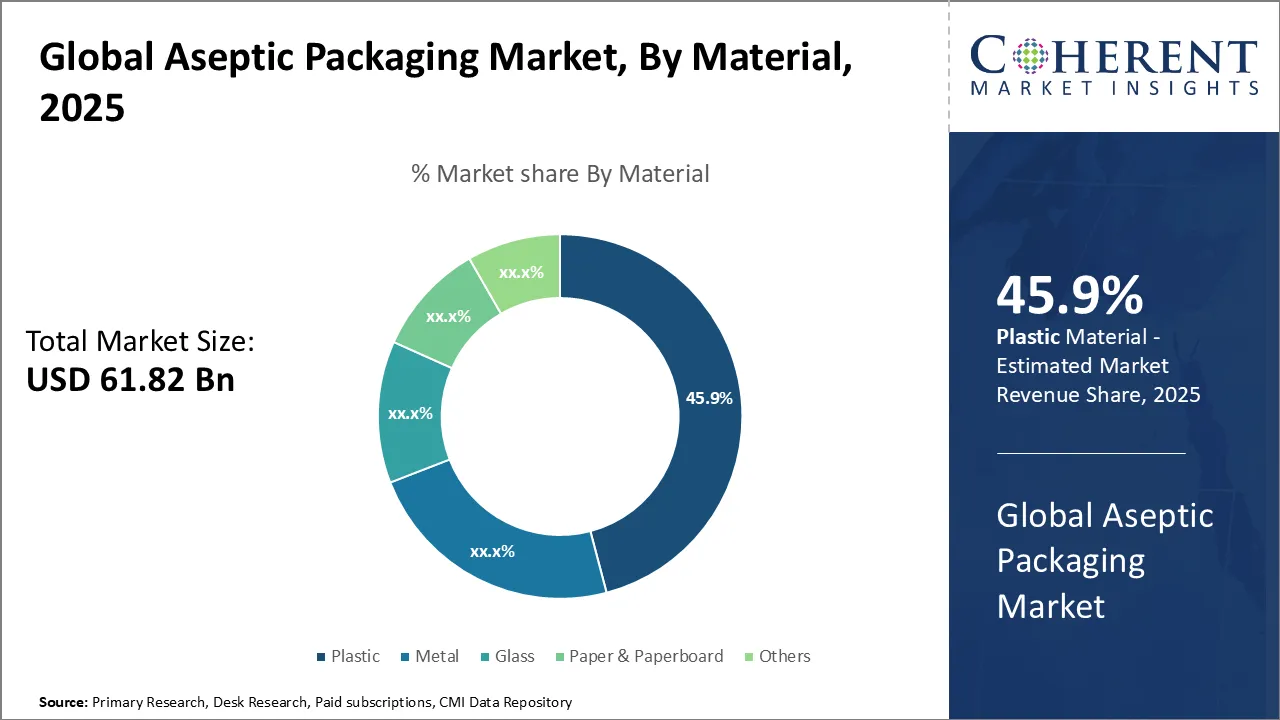
- The plastic segment is projected to capture 46.9 % share in 2026.
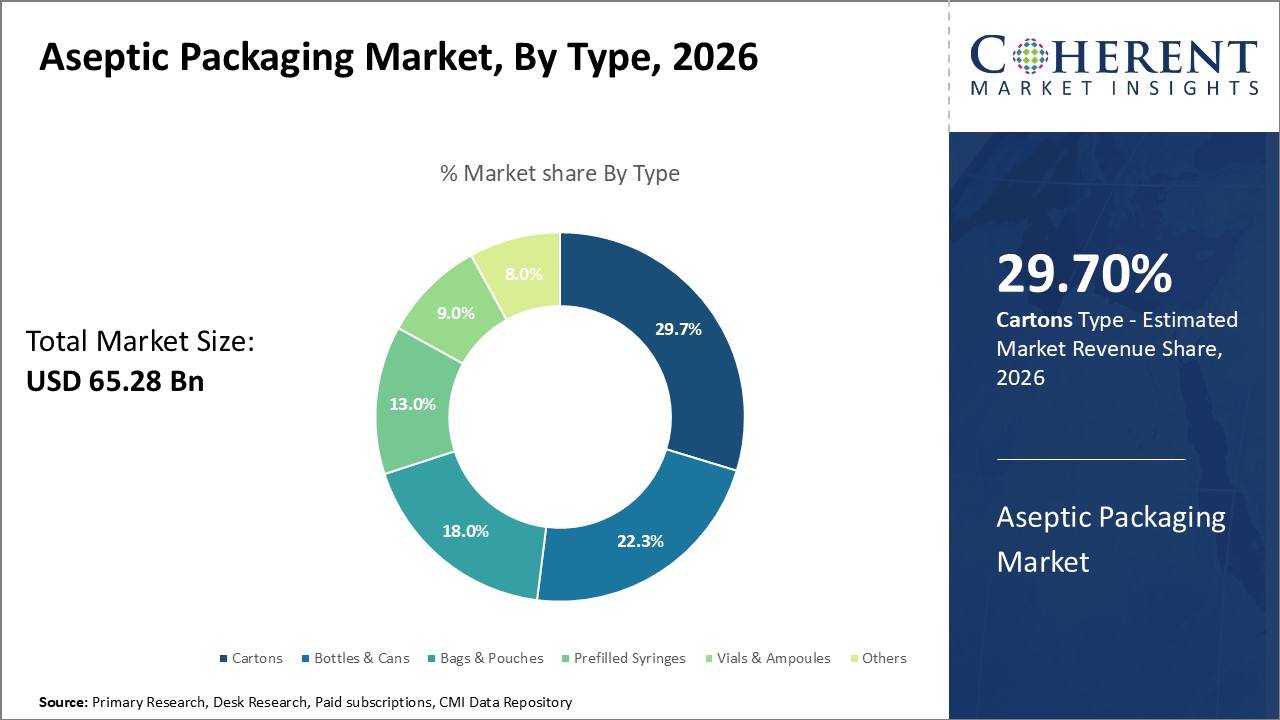
- The cartons segment is projected to account for 29.7 % share in 2026.
- The beverages segment is expected to capture 50.6 % share in 2026.
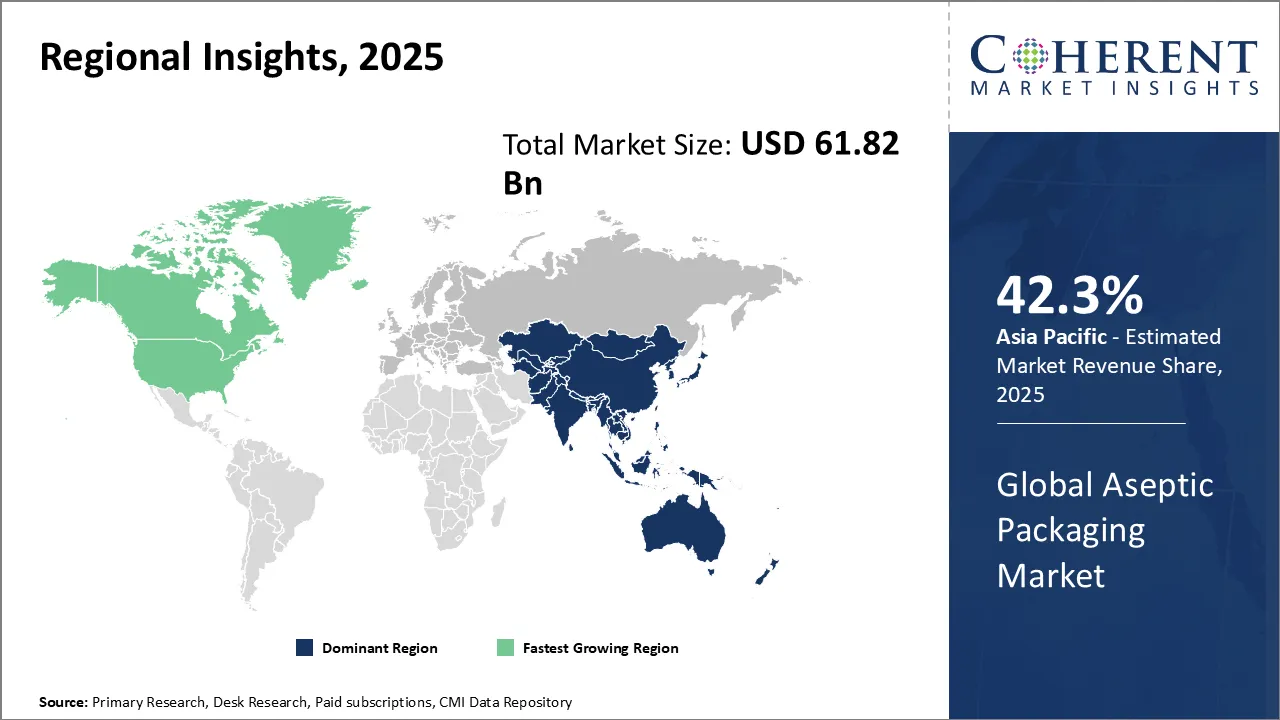
- Asia Pacific is expected to lead the global aseptic packaging market in 2026 with a 42.3 % share. North America, with an estimated share of 29.5% in 2026, is expected to be the fastest-growing region.
Market Overview
Aseptic packaging trends highlight a significant shift towards sustainable and eco-friendly materials, with manufacturers investing in recyclable and biodegradable packaging solutions. Additionally, advancements in packaging technology, such as improved barrier properties and automation in production, are enhancing efficiency and product safety. The rise in health-conscious consumers, the expansion of the dairy and pharmaceutical sectors, and the growing popularity of canned alcoholic beverages further propel the adoption of aseptic packaging solutions globally, ensuring consistent market growth and innovation.
Current Events and Its Impact
Current Events | Description and its Impact |
EU Packaging & Packaging Waste Regulation (PPWR) Entered into Force on February 11, 2025 |
|
SIG to Expand Aseptic Carton Plant in Querétaro, Mexico (announced July 2025) |
|
Segmental Insights
- Current Industry Events of 2026
- Market Size Estimation
- Regional Breakdown
- Competitive Landscape
- Customer Intelligence
- Segmental Analysis
- Pricing Analysis
- Key Market Drivers, Challenges & Future Trends
- Customized Insights Section
Aseptic Packaging Market Insights, by Material – Plastic Segment Dominates the Market due to its Versatility and Cost-Efficiency
Plastic segment is projected to account for 46.9% share in 2026, driven by its versatility and economic advantages. Plastics offer lightweight, durable, and highly adaptable solutions suitable for various aseptic packaging requirements. These attributes make plastic the preferred material in sectors demanding protection from contamination while maintaining product integrity over extended shelf lives. Unlike heavier materials such as glass or metal, plastic materials like Polyethylene (PE), Polypropylene (PP), and Polyethylene Terephthalate (PET) enable manufacturers to optimize transport and logistics costs due to their impact on reducing overall package weight.
In March 2024, Tetra Pak launched its next-generation aseptic PET bottles designed for dairy and plant-based beverages. These PET bottles provide enhanced barrier properties against light and oxygen, ensuring extended shelf life while being fully recyclable. The initiative reflects how plastic remains the go-to material for companies looking to balance cost-efficiency, lightweight transport, and sustainability goals.
Aseptic Packaging Market Insights, by Type – Cartons Segment Dominates the Market due to their Convenience and Sustainable Packaging Advantages
Cartons segment is expected to hold 29.7% share in 2026, because they hit a sweet spot between product protection, consumer convenience, and environmental considerations. Aseptic cartons, particularly tetra pak-style packages, are favored extensively for liquid food and beverages due to their ability to maintain sterility without refrigeration, extending product shelf life significantly. Their layered construction, typically combining paperboard with thin plastic and aluminum layers, forms an effective barrier against oxygen and light, crucial for preserving sensitive products like juice and dairy beverages.
One key factor driving carton popularity is their lightweight nature, which reduces transportation costs and carbon footprint compared to heavier packaging such as glass bottles or metal cans. Moreover, cartons offer efficient stacking and storage advantages, optimizing shelf space for retailers and consumers alike. This functional design aspect supports the widespread adoption of cartons in quick-service environments and large retail distribution networks where space efficiency is critical.
Aseptic Packaging Market Insights, by Application – Beverage Segment Dominates the Market due to Increasing Demand for Convenience and Product Safety
The beverages segment is projected to hold 50.6% share in 2026, propelled by growing consumer demand for safe, long-lasting, and convenient drink options. Aseptic packaging technology is instrumental in fulfilling these needs by enabling beverages—ranging from juices and Ready-to-Drink (RTD) teas to dairy-based drinks—to stay fresh for extended periods without refrigeration or preservatives. This capability suits the expanding on-the-go lifestyles of modern consumers who seek nutritious and convenient hydration anytime, anywhere.
The rise in health consciousness globally has also influenced beverage formulations and packaging. Consumers prefer fresh-tasting, natural beverages free of additives or preservatives, achievable through aseptic technology that preserves flavor, nutritional value, and safety. Consequently, aseptic packaging is favored in juice and dairy-based beverage categories, where product freshness is paramount.
Regional Insights
Asia Pacific Aseptic Packaging Market Analysis and Trends
The Asia Pacific region is projected to lead the market with a 42.3% share in 2026, due to rapidly rising urbanization, increasing disposable incomes, and a burgeoning demand for processed and packaged foods. Government initiatives encouraging modernization in food processing and packaging technologies, alongside growing exports of perishable products, stimulate aseptic packaging adoption.
Countries like China, India, and Southeast Asia are witnessing expansions in food and beverage manufacturing facilities fueled by local and multinational investments. Key companies such as Amcor, Huhtamaki, and Jindal Poly Films have ramped up production capacities and localized operations to cater to the diverse and expanding consumer base, supported by evolving trade policies that encourage cross-border commerce of aseptically packaged products.
North America Aseptic Packaging Market Analysis and Trends
The North America region is expected to exhibit the fastest growth in the market contributing 29.5% share in 2026,. This growth stems from a well-established ecosystem comprising advanced manufacturing infrastructure, stringent food safety regulations, and high consumer demand for convenience foods and beverages. The region benefits from strong government policies promoting sustainable packaging and food safety standards, which drive innovation in aseptic technology.
Major industry players, such as Tetra Pak, WestRock, and SIG Combibloc, have a significant presence here, constantly investing in R&D to improve shelf life and packaging efficiency. Furthermore, North America's expansive cold chain and distribution networks facilitate quick adoption of aseptic packaging, enhancing product shelf stability and reducing wastage across the food and pharmaceutical sectors.
Global Aseptic Packaging Market Outlook for Key Countries
U.S. Aseptic Packaging Market Analysis and Trends
The U.S. aseptic packaging market is characterized by innovation-driven growth, supported by robust R&D infrastructure and widespread adoption across food, beverage, and pharmaceutical sectors. Leading companies such as WestRock and Tetra Pak have introduced cutting-edge aseptic packaging solutions targeting sustainability and convenience. Regulatory encouragement from the U.S. FDA and consumer preference for minimally processed, preservative-free products further boost market penetration.
Germany Aseptic Packaging Market Analysis and Trends
Germany holds a strategic position with strong industrial backing from packaging giants like SIG Combibloc and MULTIVAC, known for their technology-driven aseptic solutions. The country benefits from stringent EU food safety norms and sustainability mandates, prompting manufacturers to invest in efficient and environmentally friendly aseptic packaging systems. Germany’s export-oriented economy also fuels the growth in aseptic packaging for perishable goods destined for aseptic packaging markets.
China Aseptic Packaging Market Analysis and Trends
China continues to lead the Asia Pacific aseptic packaging market, driven by rapid urbanization and expanding modern retail chains demanding high-quality hygienic packaging. Companies such as Huhtamaki and Jindal Poly Films have established significant manufacturing hubs to serve domestic and international demands. Government policies promoting food safety and infrastructure development, including cold chain logistics, facilitate widespread adoption and innovation in aseptic technology.
India Aseptic Packaging Market Analysis and Trends
India aseptic packaging market is marked by increasing penetration of aseptic packaging in dairy, beverages, and pharmaceuticals, propelled by a growing middle class and improvements in packaging technology. Key players like Amcor and local firms are expanding their footprint in the country, supported by favorable government reforms aimed at food processing sector modernization. Additionally, rising exports and domestic food consumption patterns contribute significantly to the market expansion.
Brazil Aseptic Packaging Market Analysis and Trends
Brazil aseptic packaging market benefits from the country's role as a major food exporter, especially in pulp, juices, and dairy. Global companies such as Tetra Pak have longstanding operations here, developing region-specific packaging solutions to preserve product integrity in tropical climates. Government incentives supporting agribusiness modernization and increasing consumer awareness about packaging safety drive further adoption of aseptic technologies.
Macro and Micro Economic Factors Impacting the Aseptic Packaging Market Growth
Macroeconomic Factors
- Urbanization and Income Growth: Rising urban populations and increased disposable incomes, especially in Asia Pacific and Latin America, drive demand for packaged and ready-to-consume products.
- Expansion of Food, Beverage & Pharma Sectors: Growth in pharmaceutical markets and evolving dietary habits globally boosts demand for sterile packaging, directly benefiting the aseptic packaging sector.
- Regulatory Initiatives: Governments and industry bodies focus on food safety, shelf-life enhancement, and sustainability, fostering market growth via stricter standards and incentives for aseptic processes.
- Globalization & Supply Chain Needs: Distribution across long distances and diverse climates, especially with the rise of e-commerce, increases reliance on packaging that preserves product integrity.
Microeconomic Factors
- Technological Advancements: Automation, high-speed filling, improved sterilization, lightweight and recyclable plastics, and smart monitoring systems are central to cost containment and efficiency.
- Material Costs & Availability: Volatility in prices of paperboard, polymers, aluminum, and bio-material inputs is a direct challenge for manufacturers, impacting margins and pricing strategies.
- Competitive Landscape: Leading suppliers (e.g., Tetra Pak, SIG, Elopak) focus on speed, cost, and eco-friendly credentials. Local producers in emerging markets add pressure through cost competition.
- Consumer Preferences: Increased demand for single-serve packs, eco-labels, and minimally processed foods steers brand strategy. The push for environmental responsibility is driving investment in recyclable, aluminum-free, and bio-based materials.
- Barriers to Entry: High sunk costs for aseptic filling systems, regulatory compliance complexities, and supply chain challenges are significant hurdles for new entrants.
Market Players, Key Development, and Competitive Intelligence
Key Developments
- In October 2024, UFlex announced plans to expand its aseptic packaging operations in Egypt through its wholly owned subsidiary, Flex Asepto (Egypt) SAE. The company committed to setting up a new facility with an annual capacity of 12 Bn packs, aimed at strengthening its market presence in Egypt and meeting the region’s rising the demand for aseptic packaging solutions.
- In June 2024, Syntegon Technology Group revealed the acquisition of Telstar, a move designed to enhance its expertise in pharmaceutical processing and packaging, with a particular focus on lyophilized vial filling technologies.
- In April 2024, Baldwin Richardson Foods (BRF) bolstered its aseptic beverage manufacturing capabilities by acquiring Pennsauken Packing Company, a New Jersey–based facility. The acquisition adds a state-of-the-art site equipped with advanced aseptic processing lines, expanding BRF’s production footprint.
Top Strategies Followed by Global Aseptic Packaging Market Players
- Established market leaders invest heavily in research and development (R&D) to drive innovation and produce high-performance aseptic packaging solutions that meet the evolving demands of food, beverage, and pharmaceutical sectors. These companies prioritize developing packaging that not only ensures superior product preservation but also enhances sustainability and user convenience. Such collaborations enable streamlined supply chains, advanced technology integration, and expanded product portfolios.
- For instance, Tetra Pak International S.A. recently launched its Tetra Brik Aseptic 1000 Edge with Bio-based Cap, designed to reduce carbon footprint while offering user convenience. These companies prioritize packaging solutions that not only ensure superior product preservation for dairy, juices, and pharmaceuticals but also align with sustainability goals.
- Mid-level companies in the aseptic packaging market adopt a more focused approach by targeting price-sensitive consumers who seek a balance between product quality and affordability. To strengthen their market position and enhance production efficiency, mid-level firms frequently engage in collaborations and joint ventures to access advanced manufacturing technologies and expertise. By leveraging partnerships with technology providers and regional distributors, they are able to streamline operations, reduce costs, and increase their geographic reach.
- For example, Greatview’s cost-efficient carton solutions have gained traction among local dairy producers in China and Africa who need reliable but affordable aseptic options.
- Small-scale players operating in the aseptic packaging market often carve out their competitive niches by specializing in innovative products or unique packaging features that distinguish them from larger competitors. These firms focus on leveraging cutting-edge technologies such as biodegradable materials, smart packaging, or customized shapes and sizes to attract attention within specific market segments. Recognizing the challenges of limited resources, small-scale manufacturers frequently establish local alliances with startups, regional suppliers, or niche manufacturers to facilitate market entry and enhance their supply chains.
- For instance, companies like ELOPAK and several regional startups in Europe are experimenting with biodegradable coatings and smart QR-enabled packaging for traceability.
Market Report Scope
Aseptic Packaging Market Report Coverage
| Report Coverage | Details | ||
|---|---|---|---|
| Base Year: | 2025 | Market Size in 2026: | USD 65.28 Bn |
| Historical Data for: | 2020 To 2024 | Forecast Period: | 2026 To 2033 |
| Forecast Period 2026 to 2033 CAGR: | 5.6% | 2033 Value Projection: | USD 95.60 Bn |
| Geographies covered: |
| ||
| Segments covered: |
| ||
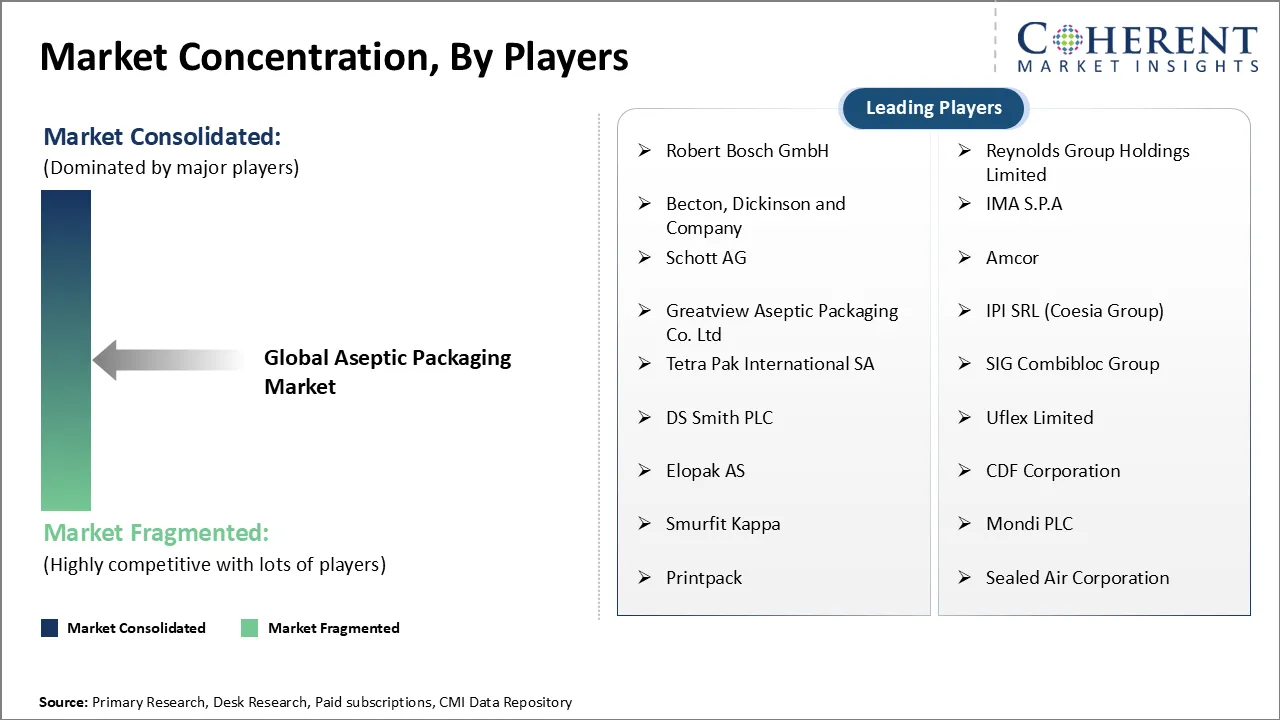
| Companies covered: | Robert Bosch GmbH, Reynolds Group Holdings Limited, Becton, Dickinson and Company, IMA S.P.A, Schott AG, Amcor, Greatview Aseptic Packaging Co. Ltd, IPI SRL (Coesia Group), Tetra Pak International SA, SIG Combibloc Group, DS Smith PLC, Uflex Limited, Elopak AS, CDF Corporation, Smurfit Kappa, Mondi PLC, Printpack, and Sealed Air Corporation | ||
| Growth Drivers: |
| ||
| Restraints & Challenges: |
| ||
Aseptic Packaging Market Dynamics
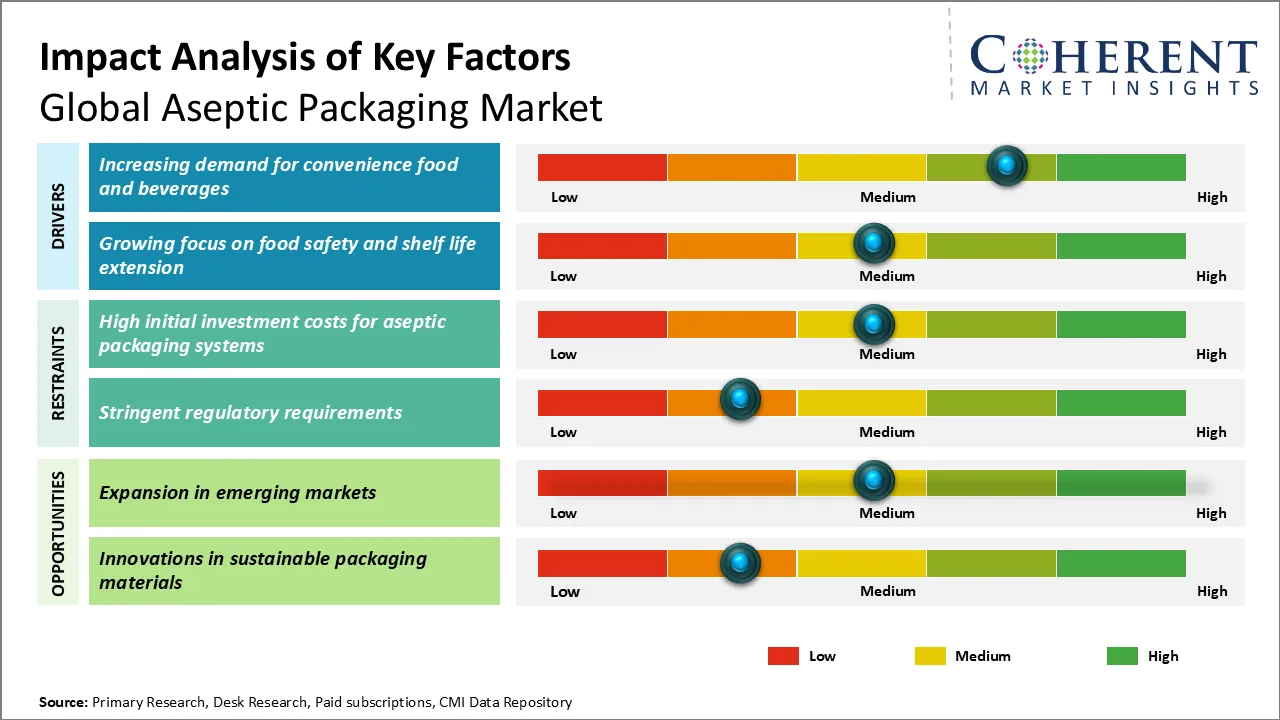
Aseptic Packaging Market Driver - Increasing Demand for Convenience Food and Beverages
The increasing consumer preference for convenience foods and ready-to-drink beverages is significantly driving the adoption of aseptic packaging solutions globally. Busy lifestyles, urbanization, and the growing workforce have fueled the demand for products that offer longer shelf life without refrigeration, ensuring freshness and safety while enabling on-the-go consumption. Aseptic packaging supports these trends by allowing manufacturers to deliver a variety of perishable food and beverage items, such as dairy products, juices, soups, and sauces, in lightweight, portable, and easy-to-use formats.
For example, in April 2024, Coca-Cola India launched its ready-to-drink cold coffee range “Fuzetea Café Style” in aseptic cartons, specifically designed to cater to the rising youth and working professional segment seeking portable, shelf-stable beverages.
Aseptic Packaging Market Opportunity - Expansion in Emerging Markets
The global aseptic packaging market presents significant growth opportunities through expansion in emerging markets across Asia Pacific, Latin America, and Africa. Rapid urbanization, increasing disposable incomes, and rising health awareness in these regions are driving the demand for packaged food and beverages that ensure extended shelf life without refrigeration. Countries such as India, China, Brazil, and South Africa are witnessing heightened consumption of dairy products, juices, and ready-to-drink beverages, all of which benefit from aseptic packaging technologies.
In October 2024, UFlex Ltd. expanded its aseptic packaging operations in Egypt with a new facility capable of producing 12 billion packs annually, targeting Africa and the Middle East to meet rising the demand for long-shelf-life beverages.
Analyst Opinion (Expert Opinion)
- The global aseptic packaging market is undergoing a transformative phase, shaped by industry-led initiatives and knowledge-sharing platforms that are fast-tracking adoption across diverse sectors. For example, the AIPIA World Congress 2024 in Amsterdam featured multiple sessions where packaging leaders showcased innovations in aseptic carton technology for ready-to-drink dairy and plant-based beverages, emphasizing how smart packaging integration is converging with sterile processing.
- Similarly, the International Dairy Federation (IDF) World Dairy Summit 2024 in Chicago highlighted case studies from Nestlé and Danone, where aseptic pouches and portion packs are being scaled to improve product shelf life in emerging markets. At the PACK EXPO Las Vegas 2024, technology providers like Syntegon and Tetra Pak demonstrated next-gen aseptic filling lines, drawing attention to automation-driven efficiencies that are lowering operating costs for manufacturers.
- Analysts also note growing discourse at Asia Pacific Food Safety Conferences, where regulators and producers are aligning to establish region-specific aseptic standards, particularly in India and China. Collectively, these developments reflect an industry moving beyond conventional applications and embracing aseptic packaging as a strategic lever for innovation, sustainability, and market expansion.
Speak to the analyst
Want personalized insights?
Take the findings above to one of our principal consultants, or have the report rebuilt around the segments, geographies and competitors you actually track.
Market Segmentation
- Material Insights (Revenue, USD Bn, 2021 - 2033)
- Plastic
- Metal
- Glass
- Paper & Paperboard
- Others
- Type Insights (Revenue, USD Bn, 2021 - 2033)
- Cartons
- Bottles & Cans
- Bags & Pouches
- Prefilled Syringes
- Vials & Ampoules
- Others
- Application Insights (Revenue, USD Bn, 2021 - 2033)
- Beverages
- Ready-to-drink Beverages
- Dairy Based Beverages
- Food
- Processed Food
- Dairy Food
- Fruits and Vegetables
- Pharmaceuticals
- Others
- Regional Insights (Revenue, USD Bn, 2021 - 2033)
- North America
- U.S.
- Canada
- Latin America
- Brazil
- Argentina
- Mexico
- Rest of Latin America
- Europe
- Germany
- U.K.
- Spain
- France
- Italy
- Russia
- Rest of Europe
- Asia Pacific
- China
- India
- Japan
- Australia
- South Korea
- ASEAN
- Rest of Asia Pacific
- Middle East
- GCC Countries
- Israel
- Rest of Middle East
- Africa
- South Africa
- North Africa
- Central Africa
- North America
- Key Players Insights
- Robert Bosch GmbH
- Reynolds Group Holdings Limited
- Becton, Dickinson and Company
- IMA S.P.A
- Schott AG
- Amcor
- Greatview Aseptic Packaging Co. Ltd
- IPI SRL (Coesia Group)
- Tetra Pak International SA
- SIG Combibloc Group
- DS Smith PLC
- Uflex Limited
- Elopak AS
- CDF Corporation
- Smurfit Kappa
- Mondi PLC
- Printpack
- Sealed Air Corporation
Sources
Primary Research Interviews
- Packaging Development Director – Leading Aseptic Carton Manufacturer
- Procurement Head – Global Dairy & Beverage Company (using aseptic packaging)
- R&D Head – Pharmaceutical Packaging Firm (aseptic vials & prefilled syringes)
- Sustainability Manager – Food & Beverage Brand with focus on aseptic packaging
- Operations Manager – Logistics & Cold Chain Supplier for aseptic packaged goods
Stakeholders
- Manufacturers (cartons, bottles, bags, pouches, vials, syringes, etc.)
- End Use Sectors:
- Food & Beverages (Dairy, Juices, RTD Beverages, Plant-based Drinks)
- Pharmaceuticals & Biotechnology (Injectables, Vaccines, Biologics)
- Personal Care & Cosmetics (liquid formulations, creams)
- Regulatory & Certification Bodies
- E-commerce Platforms and Retailers (growing demand for shelf-stable products)
- Technology Providers (aseptic filling & sealing machinery manufacturers)
Databases
- UN Comtrade Database – Trade flows of aseptic packaging materials
- India Import Export (EXIM) Database – Regional trade analysis
Magazines
- Packaging Europe – Innovations in aseptic and sustainable packaging
- Food & Beverage Packaging Magazine – Global trends in aseptic formats
- Pharmaceutical Packaging News – Sterile packaging for medical use
- Packaging Digest – Technology advancements in filling lines
- Beverage Industry Magazine – Adoption of aseptic cartons & PET bottles
Journals
- Journal of Food Engineering – Shelf-life and processing impact of aseptic packaging
- Packaging Technology and Science – Material science and barrier properties
- Journal of Pharmaceutical Sciences – Aseptic packaging for biologics and injectables
- Food Control Journal – Safety, hygiene, and contamination prevention
Newspapers
- The Financial Times – Investments and market growth in aseptic packaging
- The Guardian – Sustainability and consumer packaging preferences
- Asia Packaging News – Growth of aseptic packaging in Asia-Pacific markets
- European Food News – Regulations impacting packaging innovations
Associations
- Institute of Packaging Professionals (IoPP)
- European Federation of Bottled Waters (EFBW) – Packaging compliance
- International Society for Pharmaceutical Engineering (ISPE)
- Food and Drug Administration (FDA) – Packaging compliance in pharma & F&B
- World Packaging Organization (WPO)
- Sustainable Packaging Coalition
Public Domain Sources
- U.S. FDA – Guidelines for aseptic packaging in food and pharma
- European Commission – Regulations on food contact packaging & safety
- World Health Organization – Guidelines on sterile packaging for vaccines
- OECD – Packaging waste management and trade statistics
Proprietary Elements
- CMI Data Analytics Tool, Proprietary CMI Existing Repository of information for last 8 years.
Get access to 250+ pages report
Every segment, forecast, competitor profile and data table behind the analysis above — available for instant download.
- ESOMAR Member
- ISO 9001:2015 Certified
- D-U-N-S Registered
- GDPR & CCPA Compliant
Missing comfort of reading report in your local language? Find your preferred language:
Transform your Strategy with Exclusive Trending Reports
Frequently Asked Questions
The global aseptic packaging market is estimated to be valued at USD 65.28 Bn in 2026 and is expected to reach USD 95.60 Bn by 2033.
The CAGR of the global aseptic packaging market is projected to be 5.6% from 2026 to 2033.
Increasing demand for convenience food and beverages and growing focus on food safety and shelf-life extension are the major factors driving the growth of the global aseptic packaging market.
High initial investment costs for aseptic packaging systems and stringent regulatory requirements are the major factors hampering the growth of the global aseptic packaging market.
In terms of material, the plastic segment is estimated to dominate the market revenue share in 2026.
Robert Bosch GmbH, Reynolds Group Holdings Limited, Becton, Dickinson and Company, IMA S.P.A, Schott AG, Amcor, Greatview Aseptic Packaging Co. Ltd, IPI SRL (Coesia Group), Tetra Pak International SA, SIG Combibloc Group, DS Smith PLC, Uflex Limited, Elopak AS, CDF Corporation, Smurfit Kappa, Mondi PLC, Printpack, and Sealed Air Corporation are the major players.
Asia Pacific is expected to lead the global aseptic packaging market in 2026.