

Global Caspofungin Market Size and Forecast – 2026 to 2033
The global caspofungin market is estimated to be valued at USD 700.1 Mn in 2026 and is expected to reach USD 940.0 Mn by 2033, exhibiting a compound annual growth rate (CAGR) of 4.3% from 2026 to 2033. This steady growth is driven by the increasing prevalence of invasive fungal infections and the rising adoption of advanced antifungal therapies across healthcare settings worldwide.
Key Takeaways of the Global Caspofungin Market
- Candidemia segment remains the leading indication in the global caspofungin market, accounting for an estimated 39.2 % share in 2026.
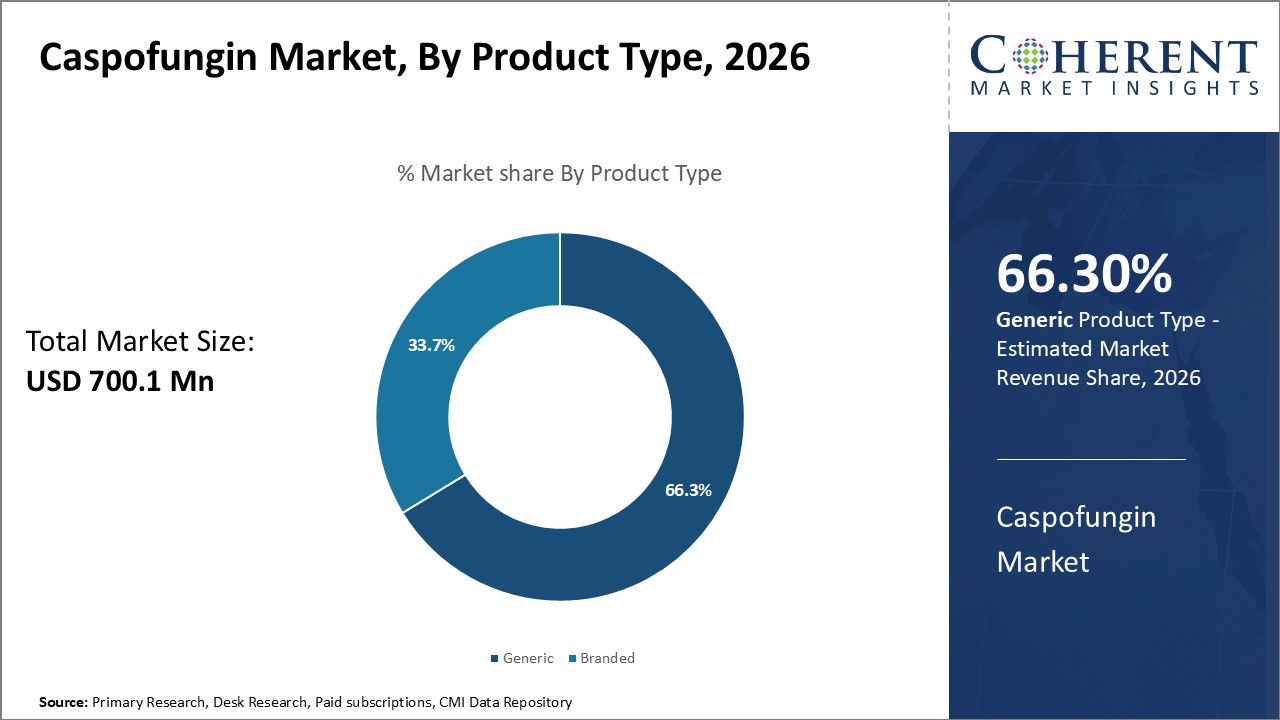
- The generic segment is expected to dominate with a 66.3 % share in 2026.
- The 50 mg strength of caspofungin continues to be the most widely used formulation, holding an estimated share of 35.3 % in 2026.
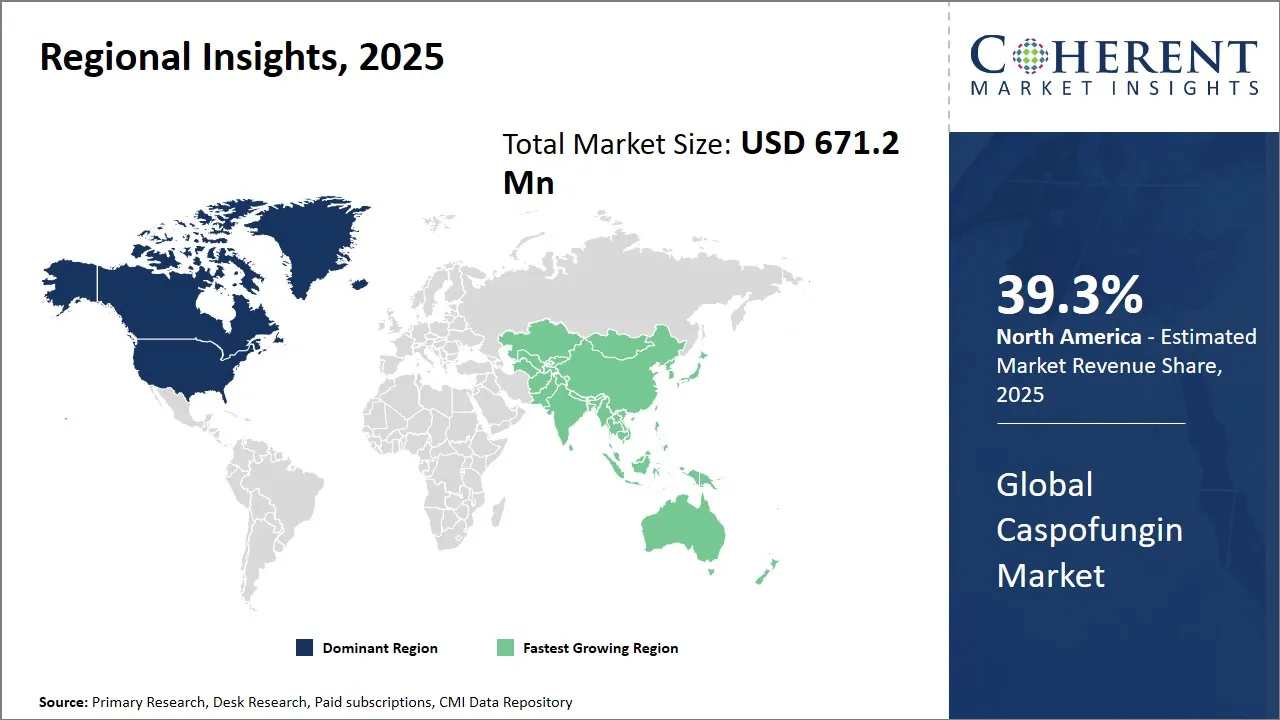
- North America is expected to lead the market, holding a projected share of 39.3 % in 2026. Asia Pacific is anticipated to be the fastest-growing region, with a market share of 23.3% in 2026.
Market Overview
A notable market trend is the increasing emphasis on drug innovation and improved formulations of Caspofungin, enhancing its efficacy and patient compliance. Additionally, expanded hospital usage and growing awareness about fungal infections in immunocompromised patients are fueling demand. Technological advancements and ongoing research to reduce side effects further contribute to the market expansion, supported by government initiatives promoting better fungal infection management in both developed and emerging economies.
Current Events and Its Impact
Current Events | Description and its impact |
Expansion of generic caspofungin post-patent expiry |
|
Rise of drug-resistant fungal species in healthcare settings |
|
Segmental Insights
- Current Industry Events of 2026
- Market Size Estimation
- Regional Breakdown
- Competitive Landscape
- Customer Intelligence
- Segmental Analysis
- Pricing Analysis
- Key Market Drivers, Challenges & Future Trends
- Customized Insights Section
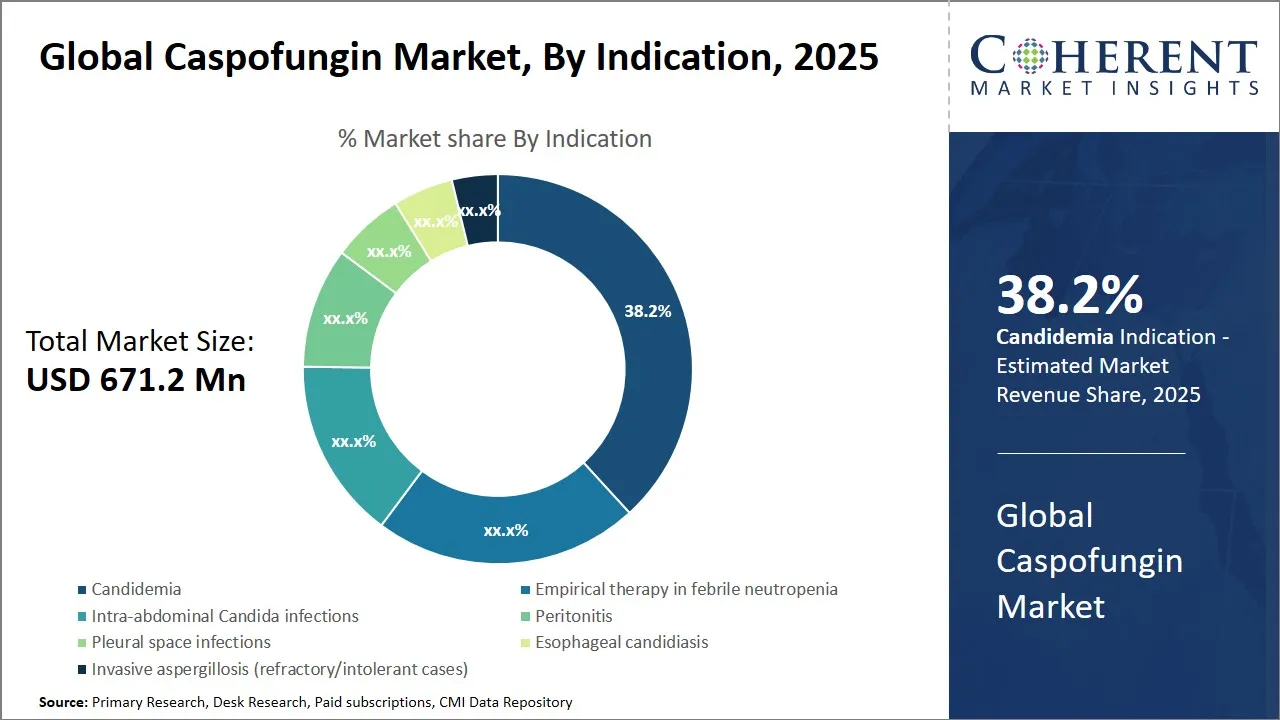
Caspofungin Market Insights, by Indication - Candidemia Segment Leads Owing to its Rising Prevalence and Critical Need for Effective Antifungal Therapy
Candidemia stands out as the leading indication within the global caspofungin market due to its significant clinical burden across healthcare settings worldwide with a projected share of 39.2% in 2026. This bloodstream infection, caused by Candida species, frequently affects immunocompromised patients, those undergoing invasive medical procedures, or individuals in intensive care units. The increasing number of such vulnerable patient populations has escalated the demand for efficacious antifungal treatments, directly driving the prominence of caspofungin in this segment.
One primary growth driver within candidemia is the enhanced diagnostic capabilities that enable earlier detection and treatment initiation. Early diagnosis paired with the aggressive nature of candidemia necessitates potent and rapid antifungal agents, which caspofungin effectively provides. Its mechanism targeting fungal cell wall synthesis ensures superior efficacy against various Candida species, including strains resistant to other antifungals.
In April 2024, according to the Centers for Disease Control and Prevention, Candidemia, a bloodstream infection caused by Candida, is one of the most common and deadly bloodstream infections in the U.S., with an estimated 25,000 cases reported annually. It primarily affects very ill hospitalized patients, often linked to invasive devices such as catheters, central lines, or surgical procedures.
Caspofungin Market Insights, by Product Type - Generic Caspofungin Leads Owing to Cost-Effectiveness and Widespread Accessibility
In the global caspofungin market, the generic segment is expected to hold a commanding position with 66.3% in 2026, largely driven by economic factors and healthcare policy trends encouraging cost containment. Generic caspofungin offers a more affordable alternative to branded counterparts without compromising clinical efficacy, making it highly attractive for both hospital formularies and end consumers, particularly in emerging markets.
One of the foremost enablers driving the growth of generics is the expiry of patents on original branded formulations. This has increased manufacturing competition, allowing multiple pharmaceutical companies to enter the market with generic versions. The resultant price reductions have made caspofungin accessible to a broader patient pool, especially in regions where healthcare budgets are constrained or where patients bear out-of-pocket costs.
Caspofungin Market Insights, by Strength - 50 mg Caspofungin Commands the Market due to Optimal Dosing and Broad Clinical Applicability
The 50 mg strength of caspofungin predominates within the market segment due to its established status as the standard dose in most clinical protocols with an estimated share of 35.3% in 2026. This dosage offers a balance between efficacy and safety for a wide range of fungal infections, making it the preferred choice for physicians around the globe.
Clinically, the 50 mg caspofungin dosage is typically employed after an initial loading dose and is suitable for step-down therapy in many invasive candidiasis cases. Its usage covers a broad spectrum of indications, including candidemia and empirical therapy during febrile neutropenia, which necessitate sustained antifungal activity at manageable dose levels. The 50 mg strength’s dosing convenience and proven therapeutic outcomes have secured its widespread adoption in hospital formularies.
Regional Insights
North America Caspofungin Market Analysis and Trends
North America caspofungin market is expected to dominate globally, accounting for 39.3% share in 2026, supported by the region’s strong healthcare infrastructure and high demand for antifungal treatments, ecosystem that includes advanced healthcare infrastructure, extensive R&D capabilities, and strong market penetration by key pharmaceutical companies. The presence of established regulatory frameworks such as the U.S. FDA ensures fast-track approvals and maintains high safety and efficacy standards, boosting confidence in novel antifungal therapies like caspofungin.
Furthermore, the high prevalence of fungal infections among immunocompromised patients, including those with cancer and HIV/AIDS, sustains consistent demand. Key companies such as Merck & Co., Pfizer Inc., and Astellas Pharma leverage their extensive distribution networks and innovative pipelines within North America, advancing drug accessibility and awareness.
Asia Pacific Caspofungin Market Analysis and Trends
The Asia Pacific region is projected to record the fastest growth, capturing a 23.3% share in 2026. This growth is driven by the rising demand for advanced antifungal agents, supported by increasing cases of invasive fungal infections and improved healthcare access in densely populated countries. Government initiatives aimed at improving healthcare infrastructure, alongside favorable policies supporting pharmaceutical innovation and foreign investments, have created a conducive environment for market expansion.
In March 2026, the Indian Council of Medical Research (ICMR), India’s apex body for biomedical research, announced new initiatives to strengthen research on fungal infections and antifungal resistance. Through its MycoNet program, launched in 2020, ICMR has developed eight Advanced Mycology Diagnostic and Research Centers (AMDRCs) across India to track invasive fungal infections and provide training support. It has also created a clinical registry in 2023 to document invasive fungal infections and rare fungal diseases, alongside a fungal mapping system that generates antifungal susceptibility testing data.
Global Caspofungin Market Outlook for Key Countries
U.S. Caspofungin Market Analysis and Trends
The U.S. market for caspofungin remains the most mature and innovation-driven globally. Robust healthcare spending and strong support for pharmaceutical R&D underpin continuous advancements in antifungal drug development. Furthermore, extensive insurance coverage and health awareness programs contribute to high medication adoption rates.
Apotex Inc. has a strong presence in North America and exports to over 100 countries. In the caspofungin market, Apotex manufactures generic formulations of caspofungin acetate injection, strengthening its hospital-focused injectable segment.
Germany Caspofungin Market Analysis and Trends
Germany drives the Europe caspofungin market with its advanced healthcare system and well-established pharmaceutical industry. The country’s stringent regulatory environment encourages adherence to high manufacturing and clinical standards. Key players such as Astellas Pharma and Bayer AG operate extensively here, focusing on innovation and expanding antifungal portfolios. Germany’s strong hospital network and widespread reimbursement policies are pivotal in ensuring patient access to advanced treatments.
Fresenius Kabi AG., a Germany-based global healthcare company with strong operations in Europe, North America, and Asia Pacific, specializes in injectables and infusion therapies. The company offers caspofungin acetate injection as part of its anti-infective portfolio, mainly targeting hospital and intensive care markets.
Japan Caspofungin Market Analysis and Trends
Japan continues to lead in the Asia Pacific region supported by an aging population with increased susceptibility to fungal infections. The government’s proactive healthcare reforms and support for pharmaceutical R&D encourage innovation in antifungal therapies. Companies like Astellas Pharma, headquartered in Japan, have a strong influence on market dynamics through their extensive research efforts and early product introductions. Japan’s efficient healthcare delivery and higher patient awareness fuel caspofungin utilization.
India Caspofungin Market Analysis and Trends
India’s Caspofungin market is characterized by rapid growth due to rising healthcare expenditure and expanding public and private healthcare facilities. Local companies such as Sun Pharma and Cipla increasingly collaborate with multinational firms to enhance product availability and affordability. Government initiatives aimed at strengthening healthcare infrastructure and improving affordable access to essential medicines also support market expansion. The growing burden of infectious diseases and improving diagnostic capabilities elevate the demand for effective antifungal agents like caspofungin.
Sun Pharmaceutical Industries Ltd., headquartered in India, is among the world’s largest generic pharmaceutical companies, with a strong presence across North America, Europe, Asia, and Latin America. Sun Pharmaceutical Industries Ltd. manufactures caspofungin acetate injections, supplying antifungal treatments widely to hospitals as part of its critical care portfolio.
End User Feedback and Unmet Needs
- End users across hospitals, clinics, and public health institutions have highlighted both the strengths and challenges associated with caspofungin. On the positive side, clinicians frequently emphasize the reliability of caspofungin in treating invasive fungal infections that are resistant to other antifungals, particularly in immunocompromised patients. For example, oncology centers report that caspofungin provides consistent clinical outcomes in patients undergoing chemotherapy who develop invasive candidiasis, where rapid therapeutic response is critical. Physicians often note its favorable safety profile compared to older antifungals, with reduced renal toxicity being a key advantage in patients already burdened with multiple medications. This has made it a trusted choice in high-risk settings, with healthcare providers expressing strong satisfaction regarding its clinical dependability.
- At the same time, recurring concerns have surfaced that point to unmet needs in the market. Infectious disease specialists and hospital administrators often cite affordability as a major barrier, with high treatment costs limiting access in resource-constrained settings. Some practitioners also note operational challenges such as limited flexibility in formulations, which can complicate dosing adjustments in pediatric or critically ill patients. Beyond cost and formulation issues, healthcare institutions emphasize the need for antifungals with broader activity and easier integration into existing treatment protocols. Addressing these gaps by developing cost-effective alternatives, introducing more tailored formulations, and enhancing accessibility could open significant growth opportunities for manufacturers. It would not only improve patient outcomes but also strengthen trust among healthcare providers, ensuring broader adoption and longer-term loyalty in a market where therapeutic effectiveness and affordability must go hand in hand.
Market Players, Key Developments, and Competitive Intelligence
Company Insights
- Merck & Co Inc., based in the U.S., is one of the world’s largest pharmaceutical companies with a global presence across North America, Europe, Asia Pacific, and Latin America. Merck was the original developer of caspofungin, introduced under the brand name Cancidas, which became the first echinocandin antifungal approved for clinical use. Although the drug’s patent has expired and generic competition has grown, Merck’s legacy product still plays a benchmark role in antifungal therapies.
- Teva Pharmaceutical Industries Ltd., headquartered in Israel, is among the world’s largest suppliers of generics and specialty medicines, operating in over 60 countries. The company manufactures generic caspofungin acetate injections, making the drug more affordable and widely accessible in both regulated and developing markets.
- Mylan NV (Viatris), now operating under Viatris following the merger with Upjohn (Pfizer’s off-patent division), the company is U.S.-based but has a footprint in more than 165 countries. Mylan produces generic injectable caspofungin, strengthening hospital treatment offerings in critical care settings worldwide.
Top Strategies Followed by Caspofungin Market Players
- The global caspofungin market is characterized by a competitive landscape where established players, mid-level companies, and small-scale firms employ distinct strategies to secure and enhance their market positions. Leading industry giants invest heavily in research and development (R&D) as a cornerstone of their growth strategy, constantly innovating to create high-performance Caspofungin formulations that meet stringent regulatory standards and evolving clinical needs.
- For example, Aurobindo Pharma Ltd., one of India’s largest pharmaceutical companies, has extensive operations across the U.S., Europe, and Asia Pacific. The company manufactures generic caspofungin injections and exports them to global markets, serving both regulated regions like the U.S. and cost-sensitive emerging economies.
- Mid-level players in the caspofungin market are increasingly focusing on cost-effective strategies to expand their footprint, especially in price-sensitive regions. These companies aim to deliver antifungal solutions that balance affordability with clinical effectiveness, a priority for hospitals and healthcare providers in developing markets. To strengthen their presence, many mid-tier firms are entering collaborations with Contract Manufacturing Organizations (CMOs) and technology partners, ensuring wider production capabilities and reliable supply chains.
- For instance, Sandoz (a Novartis Division), headquartered in Switzerland and a recognized global leader in generics and biosimilars, has been actively expanding its antifungal offerings. By manufacturing generic caspofungin injections and distributing them across more than 100 countries, Sandoz is enabling hospitals and institutional buyers worldwide to access affordable antifungal treatments.
- Small-scale players in the global caspofungin market distinguish themselves by focusing on specialized product features or unique innovations that address unmet needs in particular clinical contexts. They often adopt cutting-edge technologies such as novel drug delivery mechanisms or advanced formulation techniques to differentiate their offerings. Due to limited resources for large-scale commercialization, small players tend to build market presence by forging local alliances with startups, regional pharmaceutical manufacturers, or healthcare providers.
- For example, SteriMax Inc. (Canada) is a specialty pharmaceutical company focusing on niche hospital injectables. It offers caspofungin acetate for injection in select markets, targeting hospital buyers through regional partnerships rather than global commercialization.
Market Report Scope
Caspofungin Market Report Coverage
| Report Coverage | Details | ||
|---|---|---|---|
| Base Year: | 2025 | Market Size in 2026: | USD 700.1 Mn |
| Historical Data for: | 2020 To 2024 | Forecast Period: | 2026 To 2033 |
| Forecast Period 2026 to 2033 CAGR: | 4.3% | 2033 Value Projection: | USD 940.0 Mn |
| Geographies covered: |
| ||
| Segments covered: |
| ||
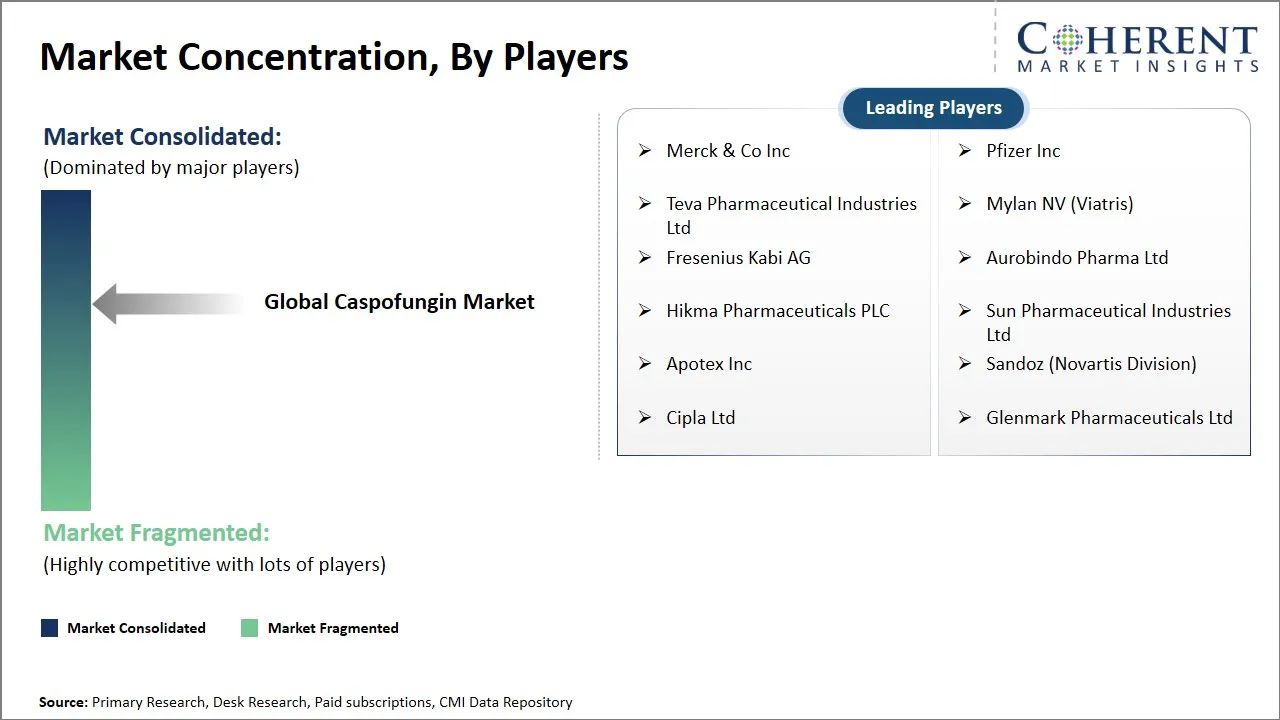
| Companies covered: | Merck & Co Inc, Pfizer Inc, Teva Pharmaceutical Industries Ltd, Mylan NV (Viatris), Fresenius Kabi AG, Aurobindo Pharma Ltd, Hikma Pharmaceuticals PLC, Sun Pharmaceutical Industries Ltd, Apotex Inc, Sandoz (Novartis Division), Cipla Ltd, and Glenmark Pharmaceuticals Ltd | ||
| Growth Drivers: |
| ||
| Restraints & Challenges: |
| ||
Caspofungin Market Dynamics
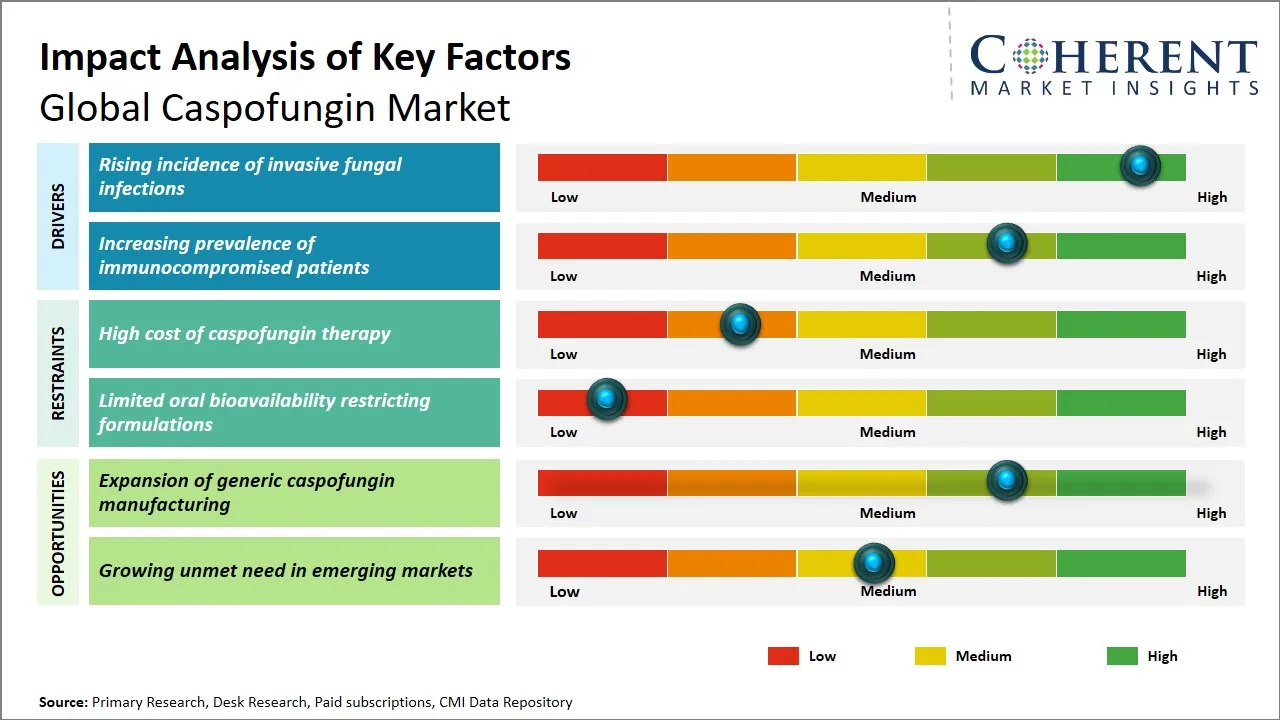
Caspofungin Market Driver - Rising Incidence of Invasive Fungal Infections
The increasing prevalence of invasive fungal infections across the globe is a significant driver propelling the demand for caspofungin in the pharmaceutical market. Immunocompromised patients, including those undergoing chemotherapy, organ transplant recipients, and individuals with HIV/AIDS, are particularly vulnerable to severe fungal infections, such as candidiasis and aspergillosis, which require effective antifungal treatments.
The growing number of these high-risk patient populations, coupled with the widespread use of broad-spectrum antibiotics and immunosuppressants, has contributed to the surge in invasive fungal infections. Caspofungin, belonging to the echinocandin class of antifungal agents, is preferred due to its efficacy against resistant fungal strains and favorable safety profile.
In March 2023, the Centers for Disease Control and Prevention (CDC), a U.S. federal public health agency under the Department of Health and Human Services, reported that Candida auris (C. auris) an emerging fungus deemed an urgent antimicrobial resistance threat spread rapidly in U.S. healthcare facilities during 2020–2021. Clinical cases rose from 476 in 2019 to 1,471 in 2021, while echinocandin-resistant cases tripled in 2021. Overall, 3,270 clinical cases and 7,413 screening cases were recorded through 2021, with spread worsening during the COVID-19 pandemic. CDC emphasized the urgent need for stronger surveillance, faster diagnostics, and strict infection prevention to curb this life-threatening fungus, which poses the highest risk to critically ill patients in hospitals.
Caspofungin Market Opportunity - Expansion of Generic Caspofungin Manufacturing
The global caspofungin market presents a significant growth opportunity through the expansion of generic caspofungin manufacturing. As caspofungin, an echinocandin antifungal agent, is a critical treatment for invasive fungal infections, increasing demand in emerging and developed markets fuels the need for more affordable alternatives. The patent expiration of branded caspofungin products has opened avenues for pharmaceutical companies to invest in generic versions, which can drastically reduce treatment costs and improve accessibility.
This shift is especially relevant in cost-sensitive regions such as Asia Pacific and Latin America, where the prevalence of fungal infections is high and healthcare budgets are constrained. Additionally, expanding generic manufacturing capabilities enables quicker market entry and greater competition, driving prices down and enhancing patient access. Regulatory relaxations and streamlined approval processes in various countries further facilitate generic drug production, making it more viable for manufacturers to scale operations.
In June 2021, Sihuan Pharmaceutical Holdings Group Ltd., a leading Chinese pharmaceutical company specializing in innovative drug development, announced that it had obtained drug registration approval from China’s National Medical Products Administration (NMPA) for its generic Caspofungin Acetate for Injection (50mg).
Analyst Opinion (Expert Opinion)
- The global caspofungin market is experiencing steady momentum, supported by rising incidences of invasive fungal infections, increasing awareness among healthcare providers, and regulatory encouragement for effective antifungal therapies. Advances in diagnostic tools are enabling quicker identification of fungal infections, which in turn boosts timely adoption of caspofungin. At the same time, challenges such as high treatment costs and limited availability in low- and middle-income countries remain significant hurdles. On the opportunity side, growing investment in antifungal drug development and the push for combination therapies are creating space for innovation. Recent international medical congresses such as the European Congress of Clinical Microbiology and Infectious Diseases (ECCMID) and the Interscience Conference on Antimicrobial Agents and Chemotherapy (ICAAC) have been instrumental in fostering dialogue among researchers, clinicians, and policymakers, shaping strategies for better infection management and strengthening the role of antifungal treatments in global healthcare.
- Several recent initiatives have further influenced the market outlook. For instance, the U.S. Centers for Disease Control and Prevention (CDC) has intensified efforts to monitor drug-resistant Candida species, creating awareness around the urgent need for reliable treatments like caspofungin. Pharmaceutical companies have also been expanding clinical research on broader-spectrum antifungals, while collaborations between academic institutions and biotech firms are accelerating new formulations that could enhance patient outcomes. These developments underline both the progress made and the gaps that still need attention, suggesting that the market will continue to evolve with a balanced mix of innovation, regulatory oversight, and practical healthcare demand.
Speak to the analyst
Want personalized insights?
Take the findings above to one of our principal consultants, or have the report rebuilt around the segments, geographies and competitors you actually track.
Market Segmentation
- Indication Insights (Revenue, USD Mn, 2021 - 2033)
- Candidemia
- Empirical therapy in febrile neutropenia
- Intra-abdominal Candida infections
- Peritonitis
- Pleural space infections
- Esophageal candidiasis
- Invasive aspergillosis (refractory/intolerant cases)
- Product Type Insights (Revenue, USD Mn, 2021 - 2033)
- Generic
- Branded
- Strength Insights (Revenue, USD Mn, 2021 - 2033)
- 50 mg
- 70 mg
- Patient Type Insights (Revenue, USD Mn, 2021 - 2033)
- Adult
- Pediatric
- Geriatric
- Distribution Channel Insights (Revenue, USD Mn, 2021 - 2033)
- Hospital Pharmacies
- Retail Pharmacies
- Online Pharmacies
- End User Insights (Revenue, USD Mn, 2021 - 2033)
- Hospitals
- Specialty Clinics
- Ambulatory Surgical Centers (ASCs)
- Research and Academic Institutes
- Regional Insights (Revenue, USD Mn, 2021 - 2033)
- North America
- U.S.
- Canada
- Latin America
- Brazil
- Argentina
- Mexico
- Rest of Latin America
- Europe
- Germany
- U.K.
- Spain
- France
- Italy
- Russia
- Rest of Europe
- Asia Pacific
- China
- India
- Japan
- Australia
- South Korea
- ASEAN
- Rest of Asia Pacific
- Middle East
- GCC Countries
- Israel
- Rest of Middle East
- Africa
- South Africa
- North Africa
- Central Africa
- North America
- Key Players Insights
- Merck & Co Inc
- Pfizer Inc
- Teva Pharmaceutical Industries Ltd
- Mylan NV (Viatris)
- Fresenius Kabi AG
- Aurobindo Pharma Ltd
- Hikma Pharmaceuticals PLC
- Sun Pharmaceutical Industries Ltd
- Apotex Inc
- Sandoz (Novartis Division)
- Cipla Ltd
- Glenmark Pharmaceuticals Ltd
Sources
Primary Research Interviews
- Industry Stakeholders List
- Hospital Procurement Managers
- Pharmaceutical Manufacturing Executives
- End Users List
- Infectious Disease Specialists
- Clinical Pharmacists
Government and International Databases
- World Health Organization (WHO)
- U.S. Food and Drug Administration (FDA)
- European Medicines Agency (EMA)
- China National Medical Products Administration (NMPA)
- Central Drugs Standard Control Organization (CDSCO), India
- Centers for Disease Control and Prevention (CDC)
- National Health Service (NHS), U.K.
Trade Publications
- PharmaTimes
- The Pharma Letter
- InPharm
Academic Journals
- The Lancet Infectious Diseases
- Clinical Infectious Diseases (CID)
- Antimicrobial Agents and Chemotherapy (AAC)
- Journal of Antimicrobial Chemotherapy
Reputable Newspapers
- The New York Times (Health Section)
- The Guardian (Global Health)
- Financial Times (Healthcare & Pharma)
Industry Associations
- Infectious Diseases Society of America (IDSA)
- European Society of Clinical Microbiology and Infectious Diseases (ESCMID)
- International Society for Human and Animal Mycology (ISHAM)
Public Domain Resources
- U.S. National Library of Medicine
- World Bank Health Statistics
- OECD Health Data
Proprietary Elements
- CMI Data Analytics Tool: Proprietary analytics tool to analyze real-time market trends, consumer behavior, and technology adoption in market
- Proprietary CMI Existing Repository of Information for Last 8 Years
Get access to 250+ pages report
Every segment, forecast, competitor profile and data table behind the analysis above — available for instant download.
- ESOMAR Member
- ISO 9001:2015 Certified
- D-U-N-S Registered
- GDPR & CCPA Compliant
Missing comfort of reading report in your local language? Find your preferred language:
Transform your Strategy with Exclusive Trending Reports
Frequently Asked Questions
The global caspofungin market is estimated to be valued at USD 700.1 Mn in 2026 and is expected to reach USD 940.0 Mn by 2033.
The CAGR of global caspofungin market is projected to be 4.3% from 2026 to 2033.
Rising incidence of invasive fungal infections and increasing prevalence of immunocompromised patients are the major factors driving the growth of the global caspofungin market.
High cost of caspofungin therapy and limited oral bioavailability restricting formulations are the major factors hampering the growth of the global caspofungin market.
In terms of indication, the candidemia segment is estimated to dominate the market revenue share in 2026.
It is primarily prescribed for invasive candidiasis, esophageal candidiasis, and as salvage therapy for invasive aspergillosis.
Broader use of combination antifungal therapies, increased generic production, and stronger demand from Asia Pacific are likely to shape the next phase of growth.