

Global Canine Influenza Vaccine Market Size and Share Analysis – (2026-2033)
The global canine influenza vaccine market is estimated to be valued at USD 2,006.2 Mn in 2026, and is expected to reach USD 2,918.4 Mn by 2033, exhibiting a compound annual growth rate (CAGR) of 5.5% from 2026 to 2033.
Key Takeaways
- Based on Vaccine Type, The Recombinant Vaccines Segment is expected to hold 48.6% of the market share in 2026.
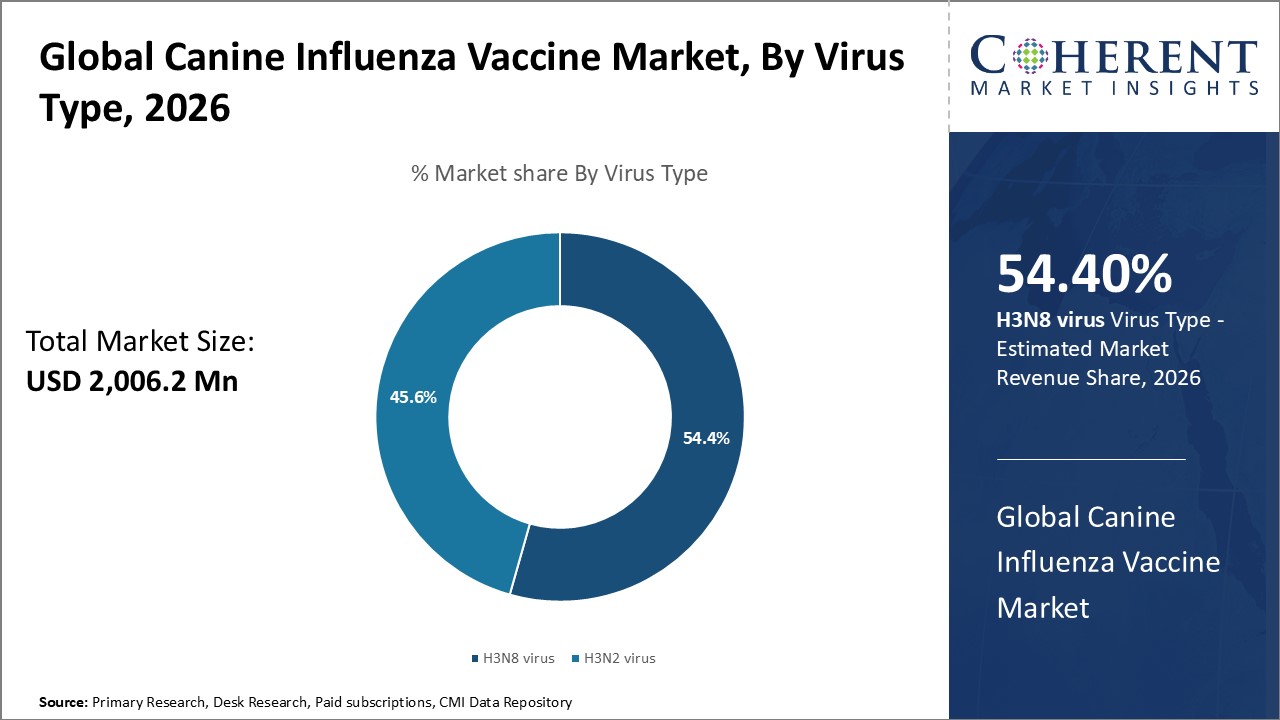
- Based on Virus Type, The H3N8 Virus Segment is expected to hold 54.4% of the market share in 2026. This is due to its high prevalence globally.
- Based on Distribution Channel, Public Segment is expected to hold 65.8% of the market share in 2026.
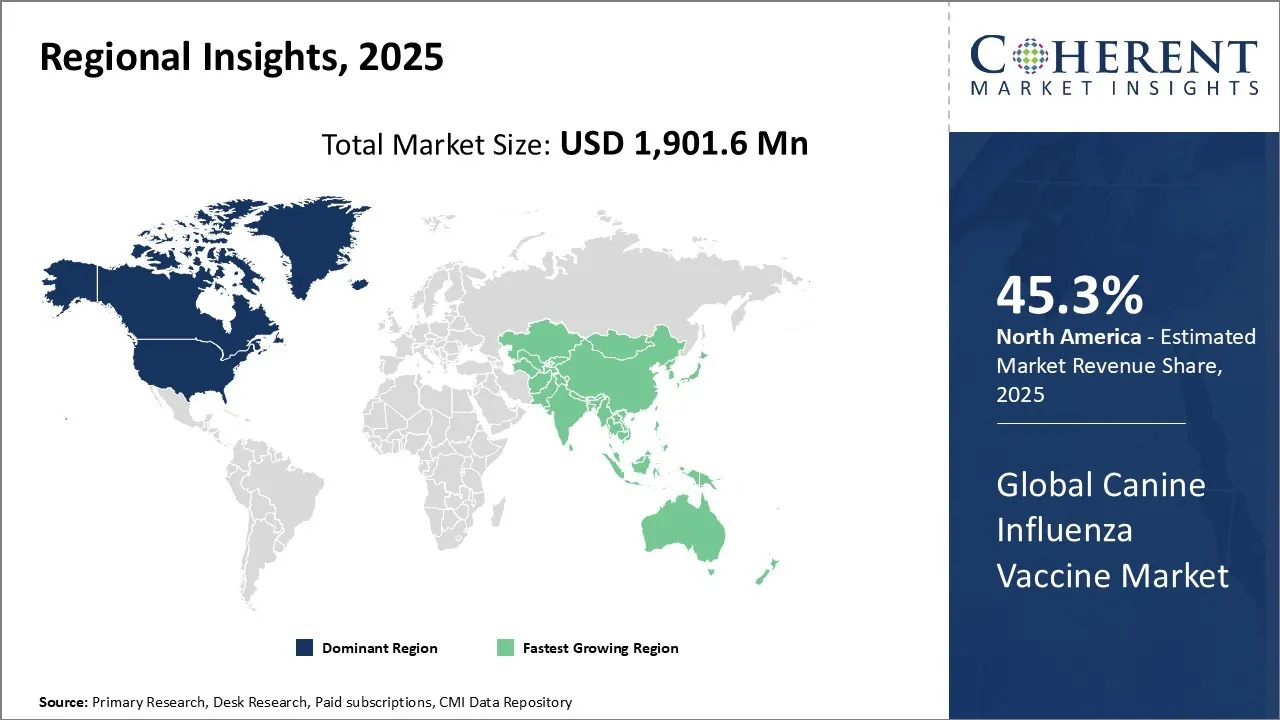
- North America remains the dominant region in the global canine influenza vaccine market and is anticipated to hold 45.3% of the market share in 2026.
Market Overview
The global canine influenza vaccines market is experiencing consistent growth as a result of heightened awareness of zoonotic diseases, a growing number of pet owners, and frequent outbreaks of canine influenza viruses like H3N8 and H3N2. The market is being driven by the increasing requirement for preventive animal healthcare, particularly in urbanized areas where dogs are housed near each other, i.e., kennels, dog parks, and shelters—increasing the risk of transmission. Governments, veterinary communities, and pet healthcare professionals are propagating yearly vaccination timetables to reduce the risk of transmission, thus increasing vaccine consumption.
Current Events and Its Impact on the Global Canine Influenza Vaccines Market
Current Events | Description and its impact |
Advancements in mRNA and Recombinant Canine Influenza Vaccines |
|
Expansion of Canine Influenza Vaccine Distribution and Awareness Campaigns |
|
Role Of Emerging Technologies
New technologies are having a revolutionary impact on the manufacturing, production, and supply of canine influenza vaccines, enhancing efficacy, safety, and access. A key development is the application of recombinant DNA technology, which enables the construction of more specific and stable vaccines.
In contrast to conventional inactivated vaccines, recombinant vaccines are developed to replicate the antigens of the virus without employing the entire virus, with less risk of side effects and improved immune response. This is particularly beneficial to fight multi-strains such as H3N8 and H3N2, enabling dual-strain vaccines that offer wider protection.
Adjuvant technology has also progressed, enabling the improvement of vaccine efficacy with reduced antigen amounts. These new formulations enable faster immunization regimens and enhanced immunity in populations at increased risk, such as shelter and daycare dogs. In addition, disease modelling and diagnosis by AI are utilized for outbreak prediction and geographical optimization of vaccination campaigns so that veterinary services can target higher-risk infection areas.
On the production side, automation and bioprocessing advances have simplified the production process and eliminated contamination threats, making scalable vaccine manufacturing possible. Internet of things -enabled cold-chain monitoring systems are keeping temperature-sensitive vaccines fresh throughout distribution, especially vital in remote or underserved regions.
In addition, digital health platforms and mobile veterinary apps are enhancing pet owner interaction, offering timely reminders for vaccinations as well as improved compliance with preventive care schedules. These synergistic advancements are rendering canine influenza vaccines more efficient, accessible, and responsive to new health challenges, setting the stage for consistent growth in a tech-savvy veterinary healthcare market.
- Current Industry Events of 2026
- Market Size Estimation
- Regional Breakdown
- Competitive Landscape
- Customer Intelligence
- Segmental Analysis
- Pricing Analysis
- Key Market Drivers, Challenges & Future Trends
- Customized Insights Section
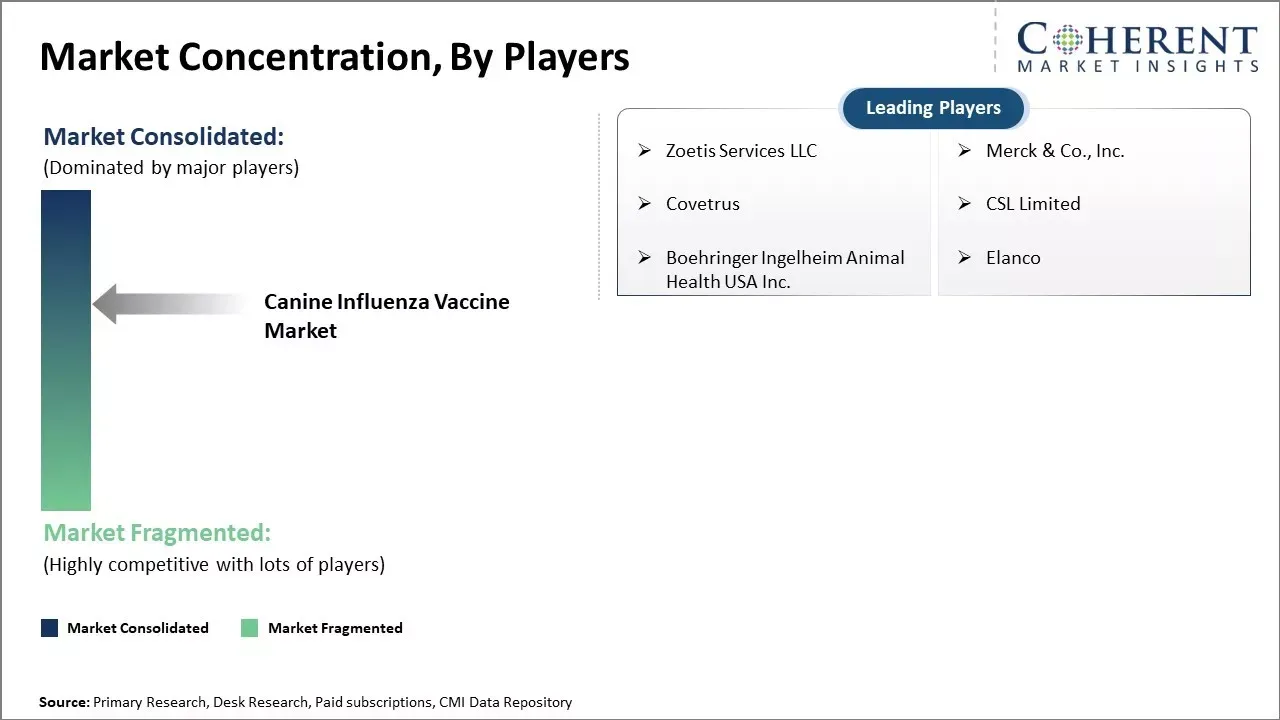
Market Concentration and Competitive Landscape
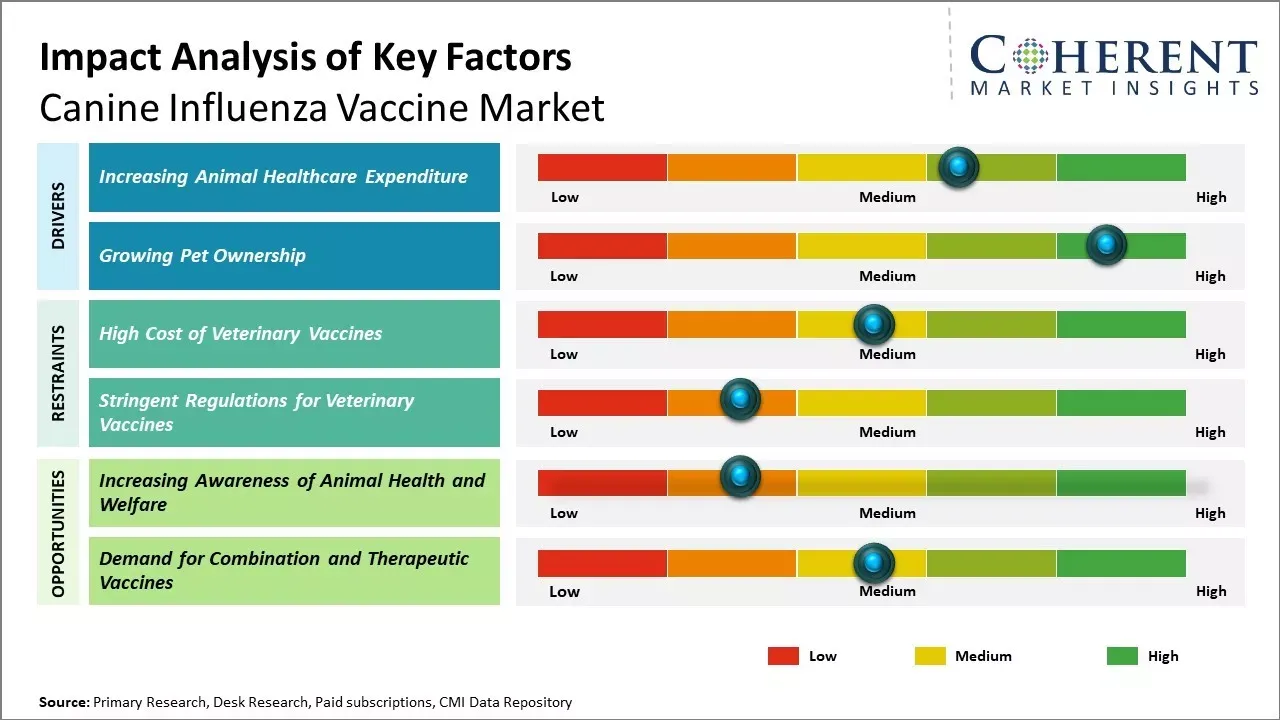
Market Driver
- Increasing Animal Healthcare Expenditure
Increasing animal healthcare expenditure is expected to drive the global canine influenza vaccine market growth over the forecast period. For instance, In January, 2024, Nationwide Pet Insurance and Petco Health and Wellness Company expanded their partnership to offer integrated pet health plans. These plans cover veterinary care, wellness services, and emergency treatments, helping pet owners better manage rising healthcare costs.
- Growing Pet Ownership
Pet ownership has been steadily increasing, with more people considering their pets as family members and seeking quality healthcare for them. This trend has led to a rise in the demand for veterinary services and treatments, including for canine influenza vaccine. Pet owners are increasingly willing to spend on their pets' healthcare, driving the market for effective treatment.
According to American Pet Products Association statistics, in April 2023, over the past three decades, pet ownership in the U.S. has experienced a notable surge. As of 2023, approximately 66% of households (equivalent to 86.9 million homes) are pet owners, compared to 56% in 1988, as indicated by pet ownership statistics. Pets hold a crucial role in their owners' lives, providing companionship and emotional support. Remarkably, 85% of dog owners and 76% of cat owners consider their pets to be integral members of their families.
Market Opportunities – Increasing Awareness of Animal Health and Welfare
Increasing awareness of animal health and welfare and shifts in demographics and lifestyles leading to increased spending on pet healthcare. Various awareness programs are being organized in different regions to educate pet owners about animal disease diagnosis, treatment, and aftercare of canine atopic dermatitis which impacts the market positively.
For instance, in 2024, the American Pet Products Association (APPA) launched the “Pet Feels” campaign as part of its Pets Add Life (PAL) initiative. This campaign aims to highlight the emotional and mental health benefits of pet ownership, particularly focusing on how pets help their owners cope with stress and provide support during challenging times.
Segmental Insights
Global Canine Influenza Vaccine Market Insights, By Vaccine Type
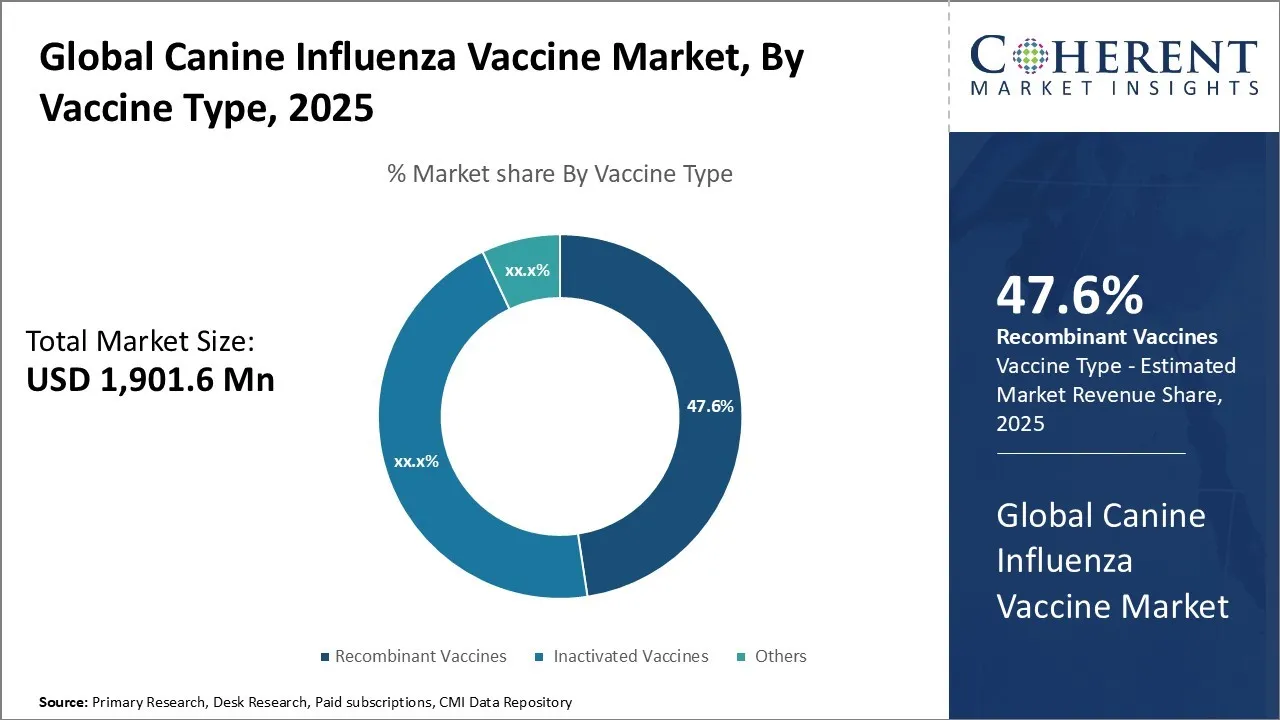
The vaccine type segment is sub-segmented into recombinant vaccines, inactivated vaccines, and others. The recombinant vaccines segment is expected to hold 48.6% of the market share in 2026. Recombinant vaccines are produced by using genetic engineering techniques to synthesize specific surface antigens of the virus in a host cell rather than by growing the live virus itself. This eliminates any risk of infecting dogs with a live virus.
The fact that recombinant vaccines contain only the antigens needed to trigger an immune response against the virus makes them much safer than inactivated vaccines. They have a superior safety profile for puppies, elderly and immunocompromised dogs. Furthermore, recombinant vaccines produce strong protective immunity comparable to inactivated vaccines while avoiding any risks of reversion of live strains to a virulent form. Their consistent production process also ensures batch-to-batch consistency and quality which boosts owner and veterinarian confidence in these vaccines. Overall, the superior safety and efficacy of recombinant vaccines have enabled them to dominate the canine influenza vaccine market over the past decade.
Global Canine Influenza Vaccine Market Insights, by Virus Type
Virus type segment is sub-segmented into H3N8 virus and H3N2 virus. The H3N8 virus segment is expected to hold 54.4% of the market share in 2026, due to its high prevalence globally. Canine influenza was first identified in 2004 in the U.S. caused by an influenza A H3N8 virus of equine origin. Since then, the H3N8 virus has caused epidemics among dogs across North America and has also spread to Asia and Europe.
According to epidemiological studies, the H3N8 virus is now established in the canine population worldwide and is responsible for the majority of canine influenza cases. Its ability to spread rapidly among dogs coupled with lack of prior immunity has made repeated H3N8 outbreaks common. This sustained threat posed by the H3N8 strain to canine health and welfare has driven strong demand for H3N8 specific vaccines. These vaccines have played a pivotal role in controlling and preventing H3N8 epidemics, thus maintaining the dominant market share of the H3N8 virus segment.
Global Canine Influenza Vaccine Market Insights, by Distribution Channel
Distribution channel segment is sub-segmented into public and private. The public segment is expected to hold 65.8% of the market share in 2026, owing to the rising prioritization of canine influenza as a public health issue. Canine influenza viruses pose a zoonotic risk of interspecies transmission from dogs to humans. While human-to-human transmission has not been reported yet, the potential of the H3N8 virus to mutate and gain ability of efficient human transmission cannot be undertaken. This has pushed public health agencies to recognize canine influenza vaccination as a crucial aspect of pandemic preparedness planning.
Consequently, many national and local governments now provide subsidized H3N8 vaccines through public veterinary clinics and mass vaccination drives. Community-wide vaccination programs target wide population coverage within a short time to curtail outbreaks. This strong public health emphasis has enabled greater accessibility and affordability of vaccines in public channels compared to private practices. The public health dimensions of canine influenza are thus a key market driver augmenting the distribution share of public channels.
Regional Insights
North America Canine Influenza Vaccine Market Analysis and Trends
North America remains the dominant region in the global canine influenza vaccine market and is anticipated to hold 45.3% of the market share in 2026. The U.S. accounts for the bulk of the demand due to high pet adoption and awareness about canine health. Pet owners in the US are highly inclined towards vaccinating their dogs regularly due to ease of availability and recommendation by veterinarians.
Major players, such as Zoetis, Merck, and Boehringer Ingelheim, have established robust distribution networks across veterinary clinics and pharmacies in the country to cater to the needs of dog owners. This widespread supply chain coupled with new product introductions at regular intervals has helped sustain the leadership position of North America in the global market.
Asia Pacific Canine Influenza Vaccine Market Analysis and Trends
The Asia Pacific region has emerged as the fastest growing market for canine influenza vaccines in recent years. Rising pet ownership in China and India due to changing socio-economic demographics is significantly driving the demand. With a growing middle class, more people are able to afford pet healthcare expenses. This provides avenues for vaccine companies to increase penetration in Asia Pacific through effective marketing strategies and tie-ups with local retail chains.
However, lack of adequate veterinary infrastructure in rural areas acts as a barrier. But expanding veterinary clinics and hospitals in Tier I and Tier II cities are expected to boost the future sales potential. Further, regional vaccine manufacturers improving their R&D capabilities and production capacities will help Asia Pacific consolidate its status as a hotspot for high growth in the canine influenza vaccine market over the coming decade.
Canine Influenza Vaccine Market Dominating Countries
United States Canine Influenza Vaccine Market Analysis and Trend
The United States dominates the world canine influenza vaccine market, fueled by high pet ownership rates, developed veterinary infrastructure, and strong pet health awareness. Both H3N8 and H3N2 strains affect the country regularly, which leads to widespread immunization. Large players such as Zoetis and Merck Animal Health have headquarters located here, leading to innovation, access, and market dominance.
Canada Canine Influenza Vaccine Market Analysis and Trend
Canada is the second-largest market due to rising pet adoption levels and growing demand for preventive veterinary services. Veterinary associations in Canada have been at the forefront of endorsing yearly influenza shots, particularly in urban areas where dog-to-dog contact is common.
Market Report Scope
Global Canine Influenza Vaccine Market Report Coverage
| Report Coverage | Details | ||
|---|---|---|---|
| Base Year: | 2025 | Market Size in 2026: | USD 2,006.2 Mn |
| Historical Data for: | 2020 To 2024 | Forecast Period: | 2026 To 2033 |
| Forecast Period 2026 to 2033 CAGR: | 5.5% | 2033 Value Projection: | USD 2,918.4 Mn |
| Geographies covered: |
| ||
| Segments covered: |
| ||
| Companies covered: | Zoetis Services LLC, Merck & Co., Inc., Covetrus, CSL Limited, Boehringer Ingelheim Animal Health USA Inc., and Elanco | ||
| Growth Drivers: |
| ||
| Restraints & Challenges: |
| ||
Global Canine Influenza Vaccine Industry News
- In June 2024, Merck Animal Health was approved by the USDA for NOBIVAC® NXT Canine Flu H3N2, the first canine flu vaccine with RNA-particle technology. The low-volume 0.5 mL nonadjuvanted dose vaccine provides targeted immune protection against the H3N2 strain with a focus on improving efficacy and safety in dogs 8 weeks of age and older.
Analyst View
- The Canine Influenza Vaccine Market is dominated mainly by increasing pet ownership and increased awareness of the risk of zoonotic diseases, most importantly in urban areas. There is increased focus on preventive care in veterinary medicine and increased coverage of health insurance for pets, which is propelling vaccine usage, with North America leading based on strong veterinary infrastructure and high expenditures on companion animals by pet owners.
- Market penetration, nonetheless, is constrained by unpredictable vaccination requirements and price sensitivity of pet owners in the emergent markets, where cash spending on pet care continues to be out of reach for most households. The Asia-Pacific is the fastest-growing, driven by infectious urbanization, increasing middle-class disposable incomes, and government efforts to halt respiratory disease surges in high-density city centers.
- Strategic opportunities include the creation of combination vaccines that defend against a variety of canine respiratory pathogens, minimizing frequency of administration, and maximizing compliance through owners. Collaboration among veterinary clinics and pharmaceutical firms to deliver vaccination programs within high-risk settings such as shelters and breeding establishments can also promote adoption.
- The market competition is rising as companies make an investment in adjuvanted vaccines that offer long-term immunity, although generic competitors' price threats pose a risk to premium product positioning. Ongoing focus on education campaigns highlighting the economic burden of canine influenza epidemics will be critical in order to convert pent-up demand into steady market growth.
Market Segmentation
- By Vaccine Type (Revenue, USD Mn, 2021 - 2033)
- Recombinant Vaccines
- Inactivated Vaccines
- Others
- By Virus Type (Revenue, USD Mn, 2021 - 2033)
- H3N8 virus
- H3N2 virus
- By Distribution Channel (Revenue, USD Mn, 2021 - 2033)
- Public
- Private
- By Region (Revenue, USD Mn, 2021 - 2033)
- North America
- U.S.
- Canada
- Latin America
- Brazil
- Argentina
- Mexico
- Rest of Latin America
- Europe
- Germany
- U.K.
- Spain
- France
- Italy
- Russia
- Rest of Europe
- Asia Pacific
- China
- India
- Japan
- Australia
- South Korea
- ASEAN
- Rest of Asia Pacific
- Middle East
- GCC Countries
- Israel
- Rest of Middle East
- Africa
- South Africa
- North Africa
- Central Africa
- Company Profiles
- Zoetis Services LLC
- Merck & Co., Inc.
- Covetrus
- CSL Limited
- Boehringer Ingelheim Animal Health USA Inc.
- Elanco
Sources
Primary Research Interviews
- Senior Veterinarians from leading animal health clinics
- R&D Directors at veterinary vaccine manufacturers (e.g., Zoetis, Merck Animal Health)
- Procurement Heads at veterinary hospital chains
- Policy Advisors from the American Veterinary Medical Association (AVMA)
- Others
Databases
- AVMA Veterinary Industry Tracker
- IBISWorld Veterinary Services Report
- Veterinary Science Database (CABI)
- Brakke Consulting Animal Health Market Research
- Others
Magazines
- Veterinary Practice News
- DVM360 Magazine
- Journal of the American Veterinary Medical Association (JAVMA)
- Others
Journals’
- Vaccine: Veterinary Immunology and Immunopathology
- Journal of Veterinary Pharmacology and Therapeutics
- Preventive Veterinary Medicine
- Others
Newspaper
- The Wall Street Journal (Healthcare & Pharma sections)
- The New York Times (Science & Animal Health coverage)
- Others
Associations
- American Veterinary Medical Association (AVMA) [1]
- World Small Animal Veterinary Association (WSAVA)
- Animal Health Institute (AHI)
- Others
Public Domain Sources
- USDA Animal and Plant Health Inspection Service (APHIS)
- CDC Canine Influenza Surveillance Data
- FDA Animal Veterinary Product Approvals
- Others
Proprietary Elements
- CMI Data Analytics Tool
- Proprietary CMI Existing Repository of Information (Last 8 Years)
*Definition: Canine Influenza Vaccine helps to protect dogs from canine influenza virus infection. Canine influenza, also known as dog flu, is a contagious respiratory disease caused by an influenza virus that infects dogs. The vaccines available in this market help prevent dogs from contracting the H3N8 and H3N2 subtypes of canine influenza virus. The vaccines provide immunity and protection to dogs who are at risk of getting exposed to the influenza
Get access to 250+ pages report
Every segment, forecast, competitor profile and data table behind the analysis above — available for instant download.
- ESOMAR Member
- ISO 9001:2015 Certified
- D-U-N-S Registered
- GDPR & CCPA Compliant
Missing comfort of reading report in your local language? Find your preferred language:
Transform your Strategy with Exclusive Trending Reports
Frequently Asked Questions
The Global Canine Influenza Vaccine Market size is estimated to be valued at USD 2,006.2 Mn in 2026, and is expected to reach USD 2,918.4 Mn by 2033.
The CAGR of the Global Market is projected to be 5.5% from 2026 to 2033.
Increasing animal healthcare expenditure and growing pet ownership are the major factors driving the growth of the market.
High cost of veterinary vaccines and stringent regulations for veterinary vaccines are the major factors hampering the growth of the market.
In terms of vaccine type, recombinant vaccines are estimated to dominate the market revenue share in 2026.
Zoetis Services LLC, Merck & Co., Inc., Covetrus, CSL Limited, Boehringer Ingelheim Animal Health USA Inc., Elanco are the major players.
North America is expected to lead the market.