

Global Manuka Honey Market Size and Forecast – 2026-2033
The global manuka honey market is estimated to be valued at USD 453.3 Mn in 2026 and is expected to reach USD 600.5 Mn by 2033, exhibiting a compound annual growth rate (CAGR) of 4.1% from 2026 to 2033.
Key Takeaways of the Manuka Honey Market
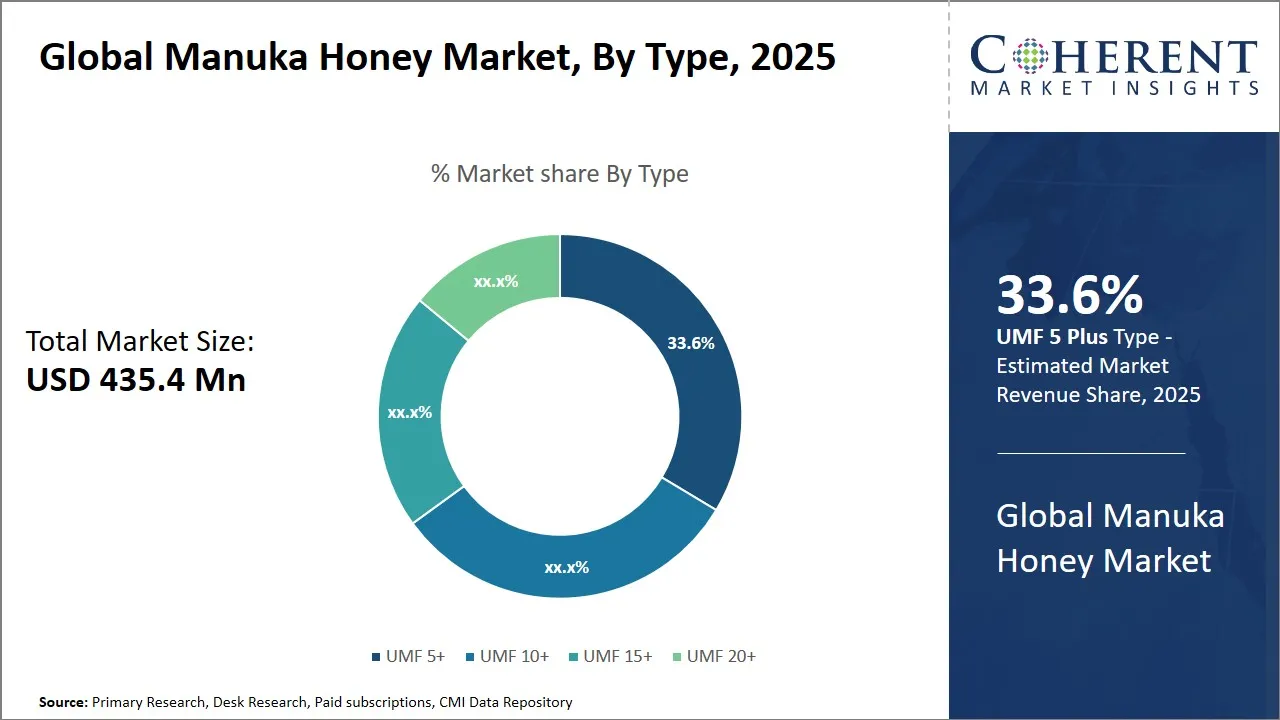
- The UMF 5+ segment is expected to capture 34.6 % of the market share in 2026.
- The liquid segment is projected to hold 41.5% share in 2026.
- The supermarket/hypermarket segment is projected to account for 24.7% share in 2026.
- Europe is set to lead the global manuka honey market in 2026 with a 37. 5% share. Asia Pacific, with an estimated share of 23.5% in 2026, it is projected to be the fastest-growing region.
Market Overview
A key trend shaping the manuka honey market is the consumer shift towards wellness and natural healthcare alternatives, driving higher adoption rates. Additionally, advancements in beekeeping technology and stringent quality standards are enhancing product authenticity and traceability, further boosting consumer confidence. Sustainable sourcing and eco-friendly packaging are also gaining traction, as environmentally conscious consumers seek ethically produced honey products. These factors collectively influence the market’s sustained growth trajectory over the forecast period.
Current Events and Its Impact
Current Events | Description and its impact |
Widespread Honey Adulteration and Fraud Scrutiny |
|
Rising Demand for Natural / Organic / Functional Health Products |
|
Segmental Insights
- Current Industry Events of 2026
- Market Size Estimation
- Regional Breakdown
- Competitive Landscape
- Customer Intelligence
- Segmental Analysis
- Pricing Analysis
- Key Market Drivers, Challenges & Future Trends
- Customized Insights Section
Manuka Honey Market Insights, by Type - UMF 5 + Segment Dominates the Market Due to its Widespread Accessibility and Balance Between Efficacy and Affordability
The UMF + segment is expected to capture 34.6% of the market share in 2026. The different UMF grades include UMF 5 + which is the entry level grading indicating that it is a foundational level of desirable properties but is more widely appealing. This market segment can take this position because it is affordable as compared to the higher UMF grades like UMF 10 +, 15 + and 20 +; this is because it is affordable and reach a greater number of customers. A large number of customers perceive UMF 5 + as a good medicine to be used daily, particularly in terms of the overall well-being but not in any specific medicinal effects.
Large American and Europe grocery stores like Whole Foods Market and Tesco always have jars of UMF 5 + in their health and wellness section. These products have a retail value of USD 25 to35 depending on the size of the jar, 250g jar, as compared to UMF 15 + or UMF 20 + variants that have USD 80 to 120.
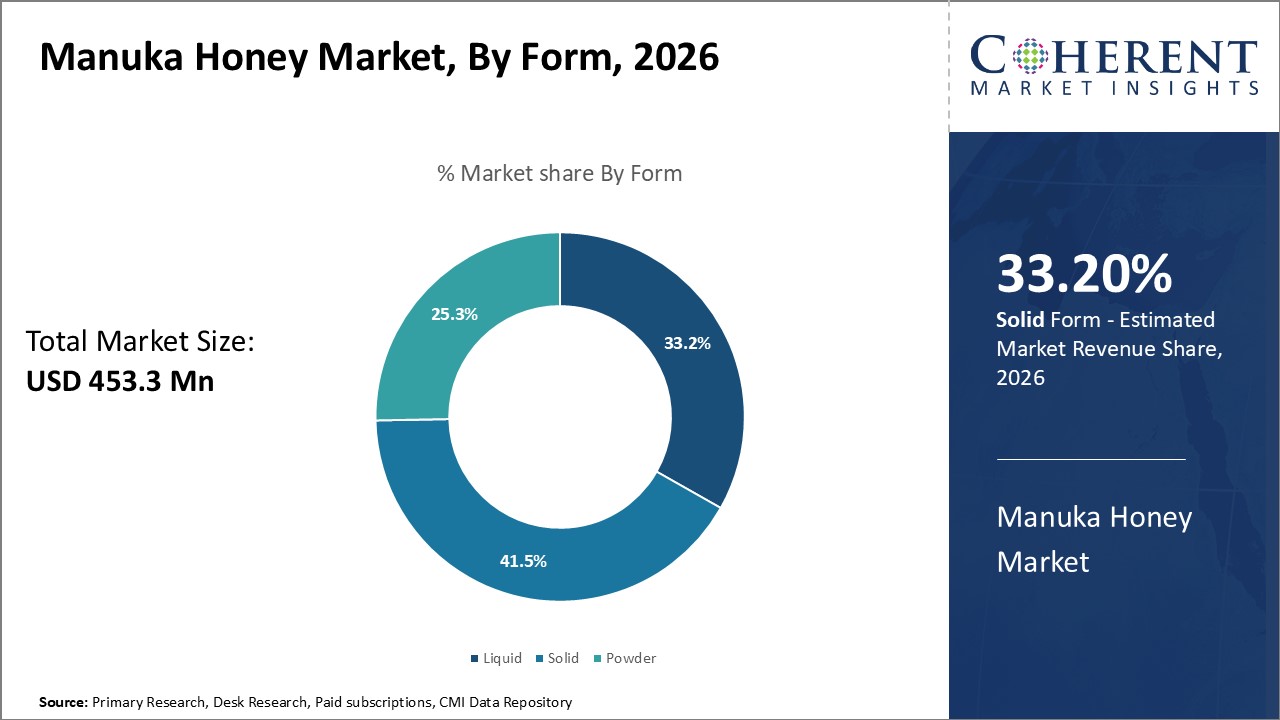
Manuka Honey Market Insights, by Form – Liquid Segment Dominates the Market Due to its Convenience, Versatility, and Stronger Consumer Preference for Ready-to-Use Honey
The liquid segment is projected to account for 41.5% share in 2026, due to its convenience and naturalness. The liquid form can be either taken straight or used readily in the food and drinks, making it easy to use it without having to prepare it further. This convenience will serve all its customers including the common people and cooking experts who consume manuka honey as a sweetener, a flavor-additive, or a health promoter.
The natural viscosity and texture of liquid manuka honey is also an important attractant to the consumer since it can be easily applied to tea or toast or even as a medicine with easy and easy controlled application. The preservation of natural enzymes and volatile compounds in liquid honeys is another guarantee to buyers regarding the authenticity and effectiveness of the products. Liquid manuka honey has a higher sensory newness than powdered or solid, and it is more likely to maintain consumer loyalty and preference.
Manuka Honey Market Insights, by Distribution Channel - Supermarkets/Hypermarkets Segment Dominates the Market Due to their Extensive Reach, Consumer Trust, and Convenience-Driven Shopping Experience
The supermarkets/hypermarkets segment is projected to hold 24.7% share in 2026, as it has unparalleled accessibility and trusted by consumers. Big box retail stores tend to be the main destination of acquisition by a large number of consumers who are inclined to individuals who require low prices and confidence in product quality. Their capability in carrying different grades of UMF and various forms of the product under one roof enables the consumer to make a wise decision with reference to the price and the purpose of usage.
Hypermarkets and supermarkets enjoy high levels of foot traffic, which are maximized in the view of maximizing visibility and impulsive purchasing. Manuka honey areas are well positioned close by other related products like natural health products, supplements or breakfast enabling cross category purchases to impact extra volume. Promotional activities, loyalty programs and sampling events are also provided by these retailers to create a stimulating trial and repeat purchase which may not be as well-replicated by smaller specialty stores or online channels.
Regional Insights
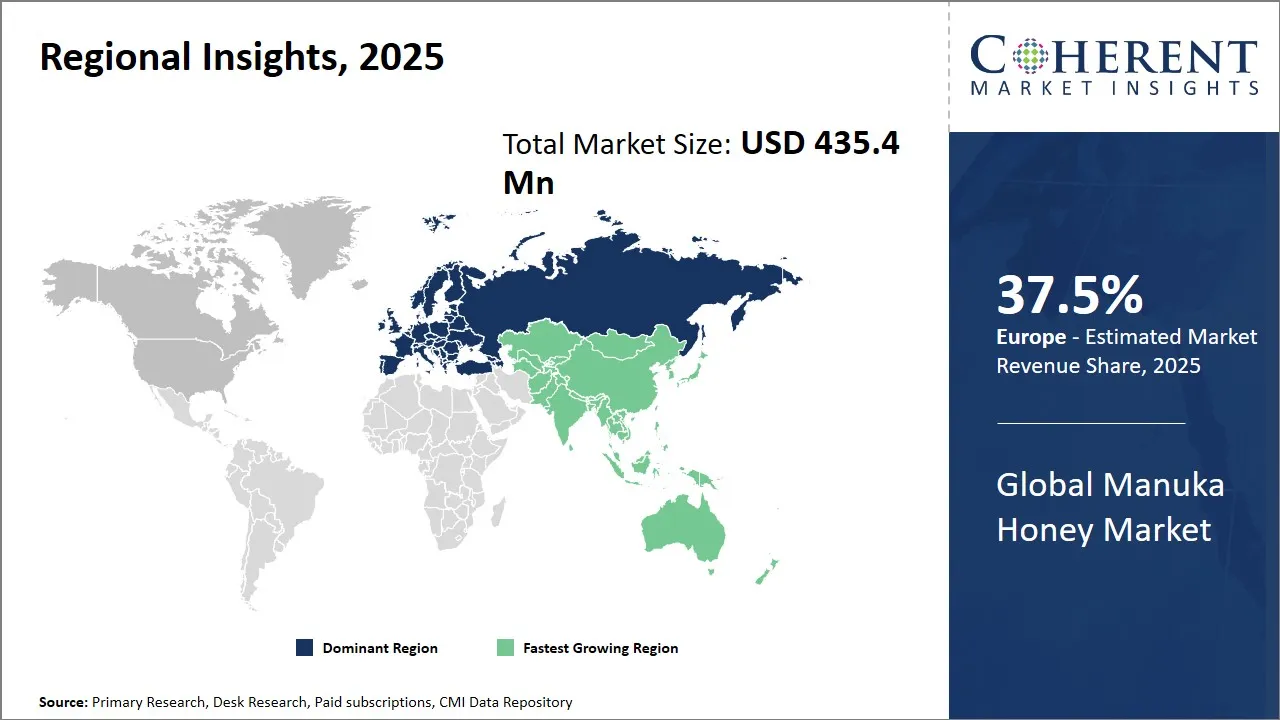
Europe Manuka Honey Market Analysis and Trends
The Europe region is projected to lead the market with a 37.5% share in 2026, due to increase in consumption of natural and high-end health products in the U.K, Germany and France. Growing health awareness and interest in the antibacterial and therapeutic effects of manuka honeys are creating the need to use it as a functional food and a natural remedy. Increased disposable earnings and an established retailing system, as well as the sudden growth of the e-commerce channels, are also contributing to the ease and the market penetration.
Asia Pacific Manuka Honey Market Analysis and Trends
The Asia Pacific region is expected to exhibit the fastest growth in the market contributing 23.5% share in 2026, due to the growing awareness of health issues, rising disposable incomes, and the growing retailing infrastructures among nations, such as China, Japan and South Korea. The market expansion is driven by the increasing demand of natural health supplement and high-quality food products. Market has been expanded by trade agreements that allow imports and distribution and e-commerce platforms. The production in New Zealand is also growing to be associated with local firms to secure the supply and suit the local needs in the region. In addition, regulatory systems are slowly being introduced by governments to control quality certifications to further foster consumer confidence.
Global Manuka Honey Market Outlook for Key Countries
New Zealand Manuka Honey Market Analysis and Trends
New Zealand manuka honey market is foundational to the global manuka honey industry, with its well-established honey producers dominating both domestic and export markets. Companies like Comvita and Manuka Health lead innovations in product quality and certification standards, securing global trust. The country’s strict biosecurity measures and UMF grading system ensure authenticity, strengthening its international reputation. Continuous governmental support for research in beekeeping practices sustains product quality, while export-focused trade policies open new international markets.
China Manuka Honey Market Analysis and Trends
China’s growing appetite for health and wellness products has positioned it as a dynamic market for manuka honey imports. The expanding middle class seeks premium, natural supplements, and driving demand. E-commerce platforms and wellness retail chains have broadened accessibility, while partnerships with New Zealand suppliers have ensured authenticity and supply reliability. Regulatory focus on import quality—although still developing—aims to curb counterfeit products, further supporting the market growth. Key distributors and importers actively educate consumers on manuka honey benefits, aiding the market penetration.
Japan Manuka Honey Market Analysis and Trends
Japan remains a mature and sophisticated market for manuka honey, characterized by consumers’ high expectations for product purity and efficacy. The widespread adoption of Manuka honey for medicinal and cosmetic purposes underpins consistent demand. Japanese companies often collaborate with New Zealand harvesters to maintain product authenticity and meet stringent quality controls. Government health agencies enforce strict import standards, assuring consumers of product integrity. Major retailers and pharmaceutical companies play crucial roles in distributing manuka honey-based offerings to a health-conscious population.
U.S. Manuka Honey Market Analysis and Trends
The U.S. exhibits a growing interest in manuka honey driven by the organic and natural foods movement. Consumers increasingly prefer products with health benefits, boosting imports. The presence of niche health food retailers and online marketplaces facilitates market access. Regulatory agencies have heightened scrutiny concerning honey authenticity and labeling, which encourages suppliers to maintain high-quality standards. Prominent companies, including U.S.-based distributors connected to New Zealand producers, are expanding product ranges and marketing efforts focused on manuka honey’s medicinal properties.
Australia Manuka Honey Market Analysis and Trends
Australia manuka honey market shares similarities with New Zealand’s but has recently expanded its domestic manuka honey production, leveraging native Leptospermum species. Government initiatives support research in sustainable production and quality assurance. Australian companies contribute to diversifying the supply base, although New Zealand honey still dominates premium segments. Trade relations and consumer education in Australia promote awareness of genuine manuka honey, with several local brands gaining recognition. Collaboration between producers across the Tasman Sea ensures standards are aligned, bolstering the Australia’s rising market presence.
Macro and Micro Economic Factors Impacting on Manuka Honey Market Growth
Macroeconomic Factors
- Global Economic Climate: Changes in GDP growth, inflation, consumer spending, and currency fluctuations in key markets such as the U.S., Europe, and Asia Pacific can directly influence demand for premium products like Manuka honey, especially as it remains a high-priced, discretionary purchase.
- Trade and Tariff Policies: Tariff changes under new administrations, Brexit-related trade deadlines, and shifting trade agreements impact supply chains, pricing, and cross-border trade volumes for manuka honey.
- Regulation and Standards: Stringent labeling and authenticity standards set by governments (e.g., UMF and MGO certification in New Zealand) are crucial for market access and consumer trust, further affecting export potential.
Microeconomic Factors
- Health-Conscious Consumer Behavior: Around 68% of the market demand is driven by health-conscious buyers, while 72% of consumption ties to antibacterial and therapeutic use.
- Product Differentiation and Certification: The market’s premiumization is sustained by official grading (UMF, MGO), with about 57% of market share attached to labeled/certified products.
- Technological Innovations: Digitalization of procurement, AI in processing, blockchain for traceability, and sustainable packaging solutions are key to efficiency and future market growth.
Market Players, Company Insights, and Competitive Intelligence
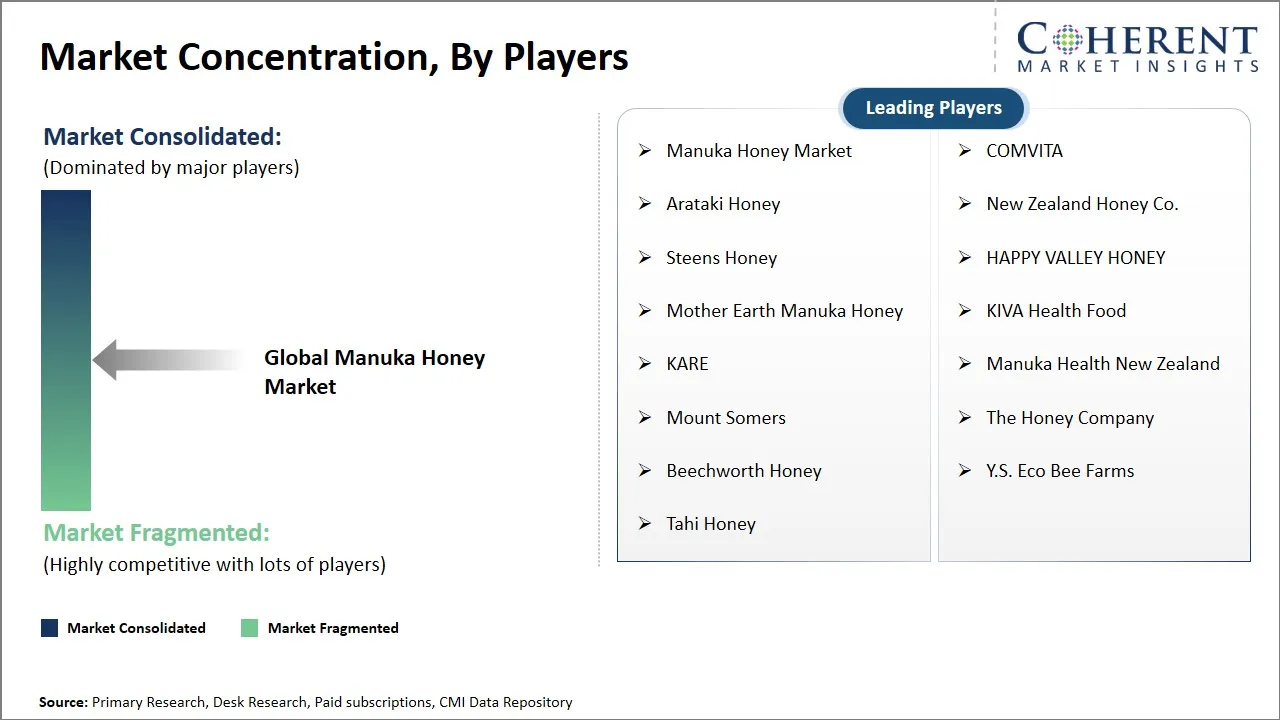
Company Insights
- Comvita is a New Zealand–based global leader in manuka honey that offers a broad portfolio spanning UMF-certified monofloral honeys (typically UMF 5+ to 20+ and higher, with select SKUs up to UMF 25+), plus multifloral mānuka, delivered with “hive-to-home” traceability and more than 34 quality tests run in its own lab; Comvita is a licensed member of the UMF Honey Association (license #1019).
Top Strategies Followed by Global Manuka Honey Market Players
- The established market leaders spend a lot of money in research and development (R&D) to produce high-performance Manuka honey products that fulfill the consumer needs towards quality, purity, and therapeutic values. Such companies are oriented to the increase in product efficacy through the increase in Methylglyoxal (MGO) content, the creation of exclusive combinations, and the strict quality certification including UMF (Unique Manuka Factor).
- As an example, Comvita, innovated high-level MGOs in their products and has the UMF certification that implies its authenticity and strength. Likewise, Manuka Health also has expanded its range of products to include lozenges, skincare, and nutraceuticals expanding the use of Manuka honey in therapeutics.
- The mid-level companies in the manuka honey market have yet another strategic approach but this time round they are mainly concerned with offering affordable solutions that are neither too expensive nor too cheap. These players serve a very large segment of consumers who are price sensitive in both developed and emerging economies, as they are looking to receive the health benefits of manuka honey at a lower price than is charged by leading brands.
- To illustrate, Egmont Honey, partnered with beekeepers and technology partners that will simplify supply chains and provide a steady amount of quality without the premium markup. Kiva Health Food is a well-known product in the U.S. and Europe that focuses on value-based products and uses online retailing methods such as iHerb and Amazon to draw in consumers that are price-sensitive yet have health concerns.
- Smaller players in the manuka honey industry in the world resort to the use of niche strategies as a way of standing out in the face of larger players. They differentiate themselves by specialized product attributes, including organic certification, raw and unprocessed honey products, unique sources of flowers or novel packaging designs based on consumer lifestyle. Numerous small players also use the most recent technologies such as blockchain to trace their products or use sophisticated filtration methods that do not change natural enzymes to win the trust and prove to be transparent.
Market Report Scope
Manuka Honey Market Report Coverage
| Report Coverage | Details | ||
|---|---|---|---|
| Base Year: | 2025 | Market Size in 2026: | USD 453.3 Mn |
| Historical Data for: | 2020 To 2024 | Forecast Period: | 2026 To 2033 |
| Forecast Period 2026 to 2033 CAGR: | 4.1% | 2033 Value Projection: | USD 600.5 Mn |
| Geographies covered: |
| ||
| Segments covered: |
| ||
| Companies covered: | Manuka Honey Market, COMVITA, Arataki Honey, New Zealand Honey Co., Steens Honey, HAPPY VALLEY HONEY, Mother Earth Manuka Honey, KIVA Health Food, KARE, Manuka Health New Zealand, Mount Somers, The Honey Company, Beechworth Honey, Y.S. Eco Bee Farms, and Tahi Honey | ||
| Growth Drivers: |
| ||
| Restraints & Challenges: |
| ||
Manuka Honey Market Dynamics
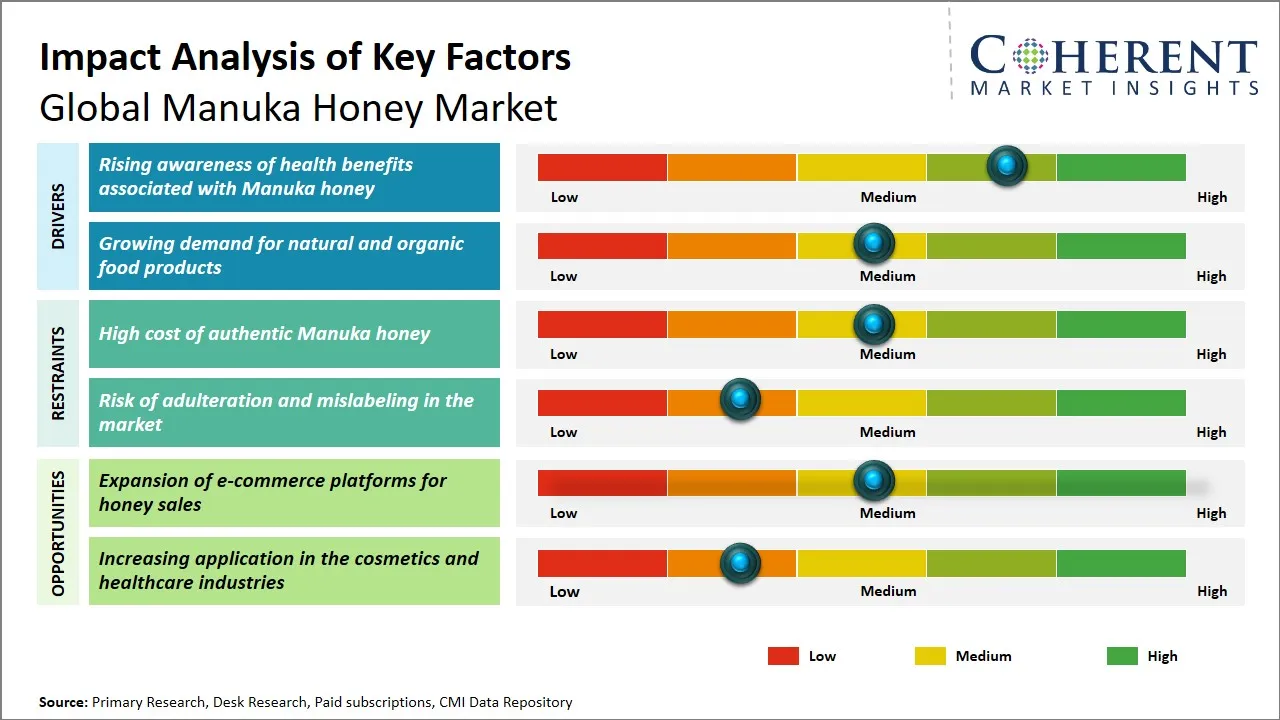
Manuka Honey Market Driver - Rising Awareness of Health Benefits Associated with Manuka Honey
The rising consumer awareness of the health benefits of manuka honey is a major factor that is propelling the demand of the product in the international markets. Being popular due to its exclusive antibacterial action, elevated methylglyoxal level and natural antioxidants, manuka honey is commonly known as the functional food that helps to maintain immune health, boosting digestion and wound-healing. Manuka honeys reputation as a superfood has been established with a range of clinical trials and recommendations of health care professionals as health-conscious people actively pursue natural and organic versions of conventional medicinal and dietary products.
As an illustration, manuka honeys have been shown by clinical studies published by the University of Waikato in New Zealand to help treat bacterial infections and improve the wound-healing rates, prompting its use in hospital wound-care preparations.
Manuka Honey Market Opportunity - Expansion of E-commerce Platforms for Honey Sales
The increase in pace of e-commerce sites is a major chance that the world manuka honey market may leverage on to expand its market and increase sales. E commerce systems are used to ensure that the manufacturers and distributors of Manuka honey have an access to a wider and multiethnic customer base across geographic boundaries, which is specifically helpful as the product is a niche and premium one.
Indicatively, the major online retailers like Amazon, Alibaba, and Walmart.com have opened specific sections within their online stores specifically in premium honey and health super foods, where manuka honey has a high presence as with other functional foods. Some brands such as Comvita, or Manuka Doctor have also exploited direct-to-consumer (D2C) distribution via their own websites, where they can be found, allowing them to gain brand loyalty, provide authenticity assurances, and fight fakes.
Analyst Opinion (Expert Opinion)
- The manuka honey market is experiencing a huge momentum due to the growing awareness of the health benefits of this product and the growing demand of natural and high quality products amongst consumers. The international honey summit (2023) and the Natural Products Expo (2022) gave some insights into the major trends in the industry, as well as brands such as Comvita and Manuka Health were on the forefront in terms of quality assurance and product innovation.
- The recent move by Comvitas to introduce traceability technology so that customers can check the authenticity of their Manuka honey is a strategic move in relation to the increasing issues that surround product integrity. Conferences in these areas pointed out the issue of regulatory compliance and the increasing interest in sustainable beekeeping practices, which are key to consumer confidence. Nevertheless, the problems like shortages of supplies and the change of prices because of environmental factors were also often mentioned as possible hindrances.
- Both the companies, which will be able to organize their supply chains properly and inform consumers about the peculiarities of the genuine manuka honey, are likely to acquire a competitive advantage. In addition, effective marketing plans that emphasize the health value, provenance of products will play a significant role. Finally, the development of the international market of manuka honey will also depend on their capacity to be innovative and meet consumer demands and sustainability issues.
Speak to the analyst
Want personalized insights?
Take the findings above to one of our principal consultants, or have the report rebuilt around the segments, geographies and competitors you actually track.
Market Segmentation
- Type Insights (Revenue, USD Mn, 2021 - 2033)
- UMF 5 +
- UMF 10 +
- UMF 15 +
- UMF 20 +
- Form Insights (Revenue, USD Mn, 2021 - 2033)
- Liquid
- Solid
- Powder
- Distribution Channel Insights (Revenue, USD Mn, 2021 - 2033)
- Supermarkets/Hypermarkets
- Specialty Stores
- Online Stores
- Convenience Stores
- Regional Insights (Revenue, USD Mn, 2021 - 2033)
- North America
- U.S.
- Canada
- Latin America
- Brazil
- Argentina
- Mexico
- Rest of Latin America
- Europe
- Germany
- U.K.
- Spain
- France
- Italy
- Russia
- Rest of Europe
- Asia Pacific
- China
- India
- Japan
- Australia
- South Korea
- ASEAN
- Rest of Asia Pacific
- Middle East
- GCC Countries
- Israel
- Rest of Middle East
- Africa
- South Africa
- North Africa
- Central Africa
- North America
- Key Players Insights
- Manuka Honey Market
- COMVITA
- Arataki Honey
- New Zealand Honey Co.
- Steens Honey
- HAPPY VALLEY HONEY
- Mother Earth Manuka Honey
- KIVA Health Food
- KARE
- Manuka Health New Zealand
- Mount Somers
- The Honey Company
- Beechworth Honey
- Y.S. Eco Bee Farms
- Tahi Honey
Sources
Primary Research Interviews
- R&D Director – Leading Manuka Honey Processor
- Procurement Manager – Major Natural Food Retailer
- Product Development Head – Well-Known Honey Brand
- Sustainability Manager – Apiculture Certification Body
Stakeholders
- Manufacturers (Manuka Honey Producers in New Zealand, Australia)
- End Use Sectors:
- Food & Beverage (Functional Foods, Nutritional Ingredients)
- Health & Wellness Brands focusing on honey-based nutraceuticals
- Regulatory & Certification Bodies (UMF Honey Association, Mānuka Honey Appellation Society)
- E-commerce Platforms and Retailers (Global and regional online and offline channels)
- Technology Integration Players: Traceability, Authenticity, and Quality Analytics providers
Databases
- UN Comtrade Database
- India Import Export (EXIM) Database
- New Zealand Trade & Enterprise Honey Export Database
Magazines
- Nutrition & Wellness Magazine – Trends in natural sweeteners and manuka honey
- Food & Beverage International – Innovations in manuka honey products
- Global Health Insights – Consumer health trends in honey consumption
Journals
- International Journal of Apiculture – Studies on manuka honey production and composition
- Journal of Food Science & Technology – Functional food innovations using manuka honey
- Journal of Dietary Supplements – Effects of manuka honey on health
- Journal of Applied Nutrition – Nutritional benefits of manuka honey
- Food Research International – Honey quality, adulteration, and global honey market trends
Newspapers
- The Financial Times – Market growth and global trade of manuka honey
- The Guardian – Consumer trends and authenticity challenges in manuka honey
- Asia Health Journal – Growth of manuka honey consumption in Asia-Pacific
- New Zealand Herald – Honey production news, exports, and regulatory issues
Associations
- UMF Honey Association
- Apiculture New Zealand
- International Honey Commission (IHC)
- American Honey Producers Association
- European Food Safety Authority (EFSA)
Public Domain Sources
- U.S. FDA – Import guidelines and health claims for honey products
- European Commission – Food Supplements Regulation and Honey Guidelines
- World Health Organization – Safety standards, health impacts, and market studies on honey
Proprietary Elements
- CMI Data Analytics Tool, Proprietary CMI Existing Repository of information for last 8 years.
Get access to 250+ pages report
Every segment, forecast, competitor profile and data table behind the analysis above — available for instant download.
- ESOMAR Member
- ISO 9001:2015 Certified
- D-U-N-S Registered
- GDPR & CCPA Compliant
Missing comfort of reading report in your local language? Find your preferred language:
Transform your Strategy with Exclusive Trending Reports
Frequently Asked Questions
The CAGR of the global manuka honey market is projected to be 4.1% from 2026 to 2033.
Rising awareness of health benefits associated with Manuka honey and growing demand for natural and organic food products are the major factors driving the growth of the global manuka honey market.
High cost of authentic Manuka honey and risk of adulteration and mislabeling in the market are the major factors hampering the growth of the global manuka honey market.
In terms of type, the UMF 5 + segment is estimated to dominate the market revenue share in 2026.
Manuka Honey Market, COMVITA, Arataki Honey, New Zealand Honey Co., Steens Honey, HAPPY VALLEY HONEY, Mother Earth Manuka Honey, KIVA Health Food, KARE, Manuka Health New Zealand, Mount Somers, The Honey Company, Beechworth Honey, Y.S. Eco Bee Farms, and Tahi Honey are the major players.
Europe is expected to lead the global manuka honey market in 2026.