

Global Medical Waste Container Market Size and Forecast – 2026 to 2033
The global medical waste container market is estimated to be valued at USD 2.44 Bn in 2026 and is expected to reach USD 4.26 Bn by 2033, exhibiting a compound annual growth rate (CAGR) of 8.3% from 2026 to 2033. The market growth is driven by increasing healthcare waste generation and stringent regulations for medical waste management, prompting the demand for safe and efficient containment solutions across hospitals, clinics, and laboratories worldwide.
Key Takeaways of the Global Medical Waste Container Market
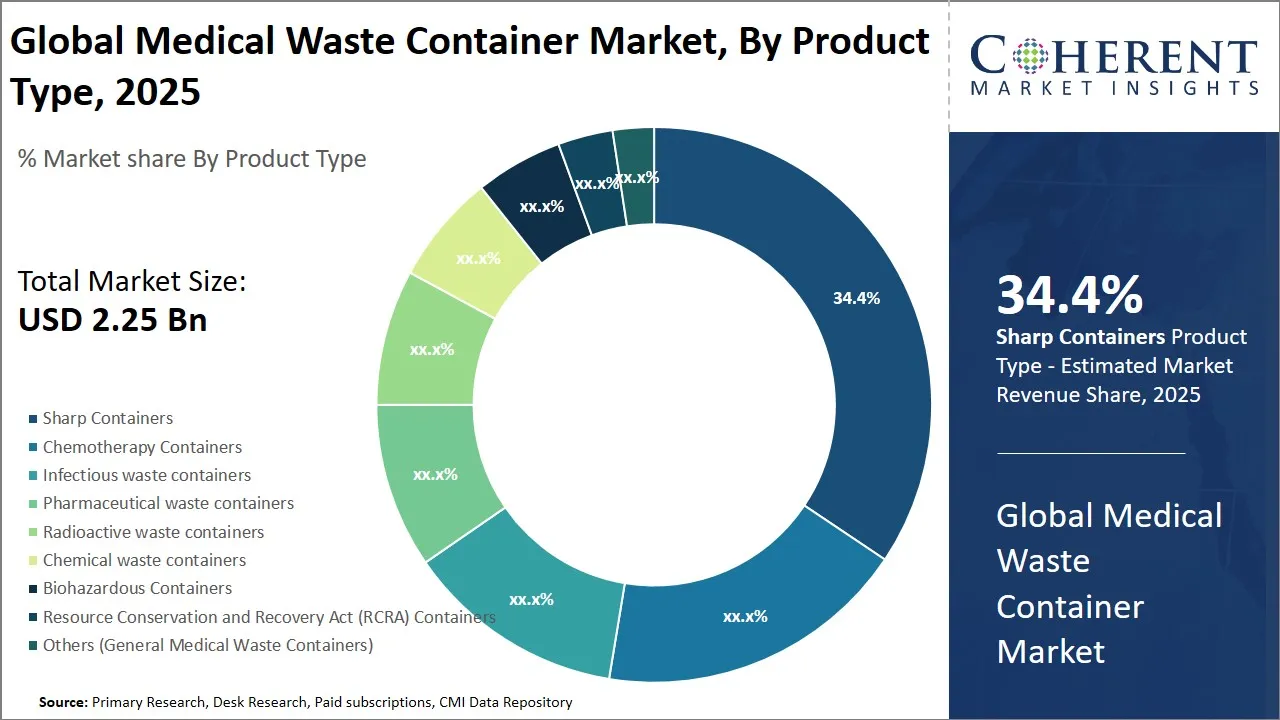
- In the global medical waste container market, the sharp containers segment is projected to account for the largest market share in terms of product type, accounting for 35.4 % in 2026.
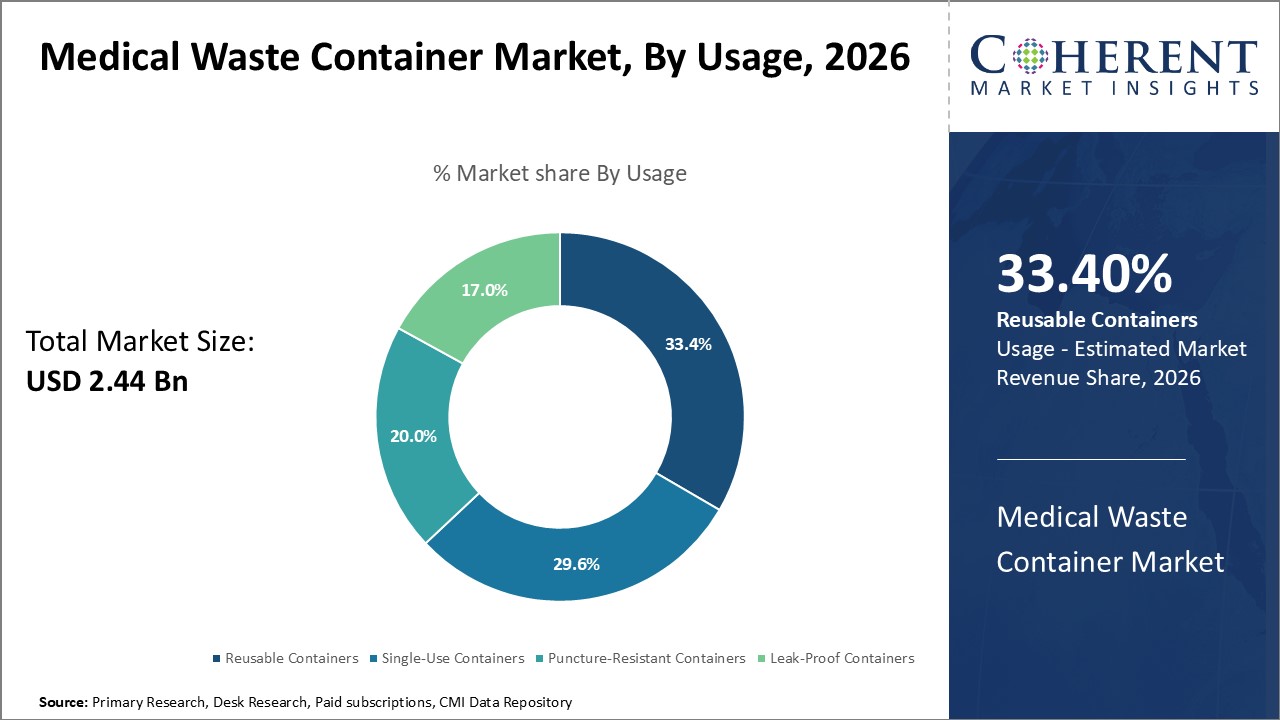
- By usage, the reusable containers segment is expected to dominate the market, contributing 33.4 % share in 2026.
- Among end user, the hospitals and clinics segment is estimated to lead the segment with a 25.5 % share in 2026.
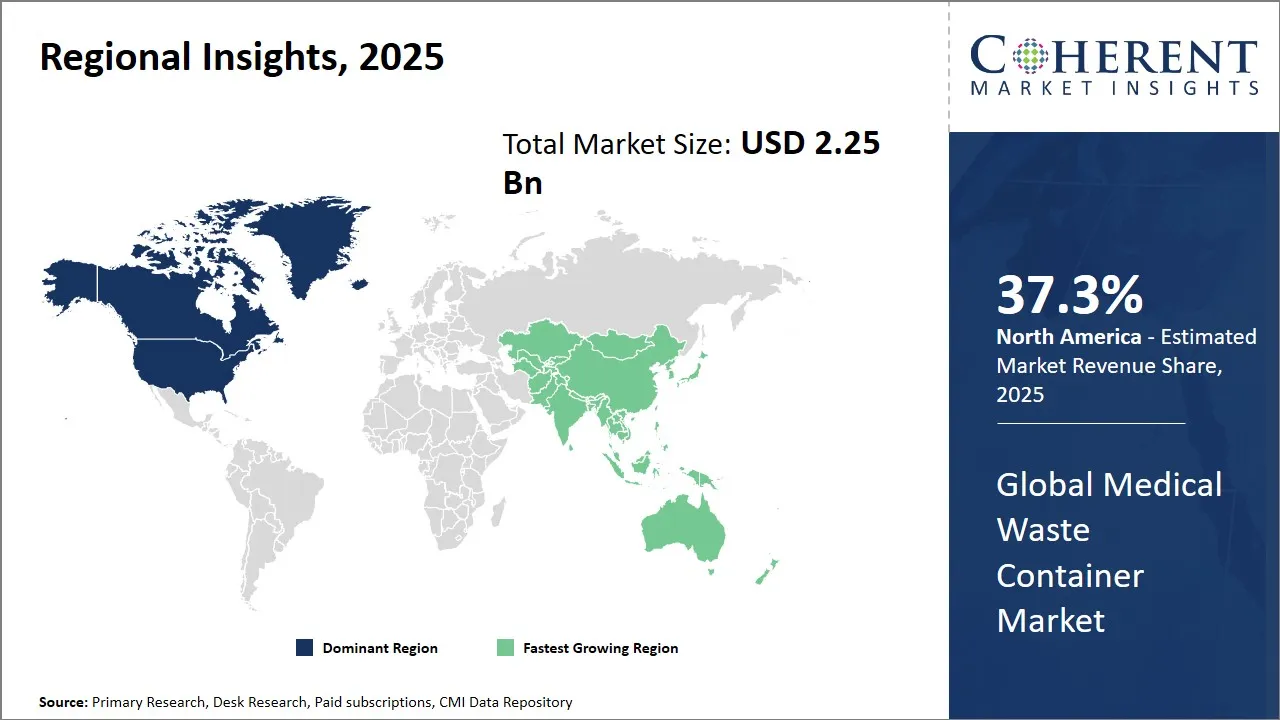
- North America is expected to lead the market, holding a share of 37.3 % in 2026. Asia Pacific is anticipated to be the fastest-growing region, with a market share of 24.4% in 2026.
Market Overview
A notable trend in the medical waste container market is the growing adoption of eco-friendly and reusable containers designed to minimize environmental impact. Additionally, advancements in materials technology have enhanced container durability and safety features, aligning with stricter government policies and healthcare provider initiatives for sustainable waste management. These trends are expected to boost product innovation and expand market opportunities through 2032.
Current Events and Its Impact
Current Events | Description and Its Impact |
Growing Adoption of Smart Waste Tracking Technologies |
|
Rising Infectious Waste Volumes in Asia Pacific due to Post-Pandemic Healthcare Expansion |
|
Segmental Insights
- Current Industry Events of 2026
- Market Size Estimation
- Regional Breakdown
- Competitive Landscape
- Customer Intelligence
- Segmental Analysis
- Pricing Analysis
- Key Market Drivers, Challenges & Future Trends
- Customized Insights Section
Medical Waste Container Market Insights, by Product Type - Sharps Containers Segment Lead Due to Critical Safety and Regulatory Requirements
In the global medical waste container market, the sharp containers segment is projected to account for the largest market share at 35.4% in 2026, driven by the critical need for safe disposal of sharp medical instruments such as needles, scalpels, and lancets. The rising incidence of Healthcare-Associated Infections (HAIs) and occupational hazards among healthcare workers significantly fuels the demand for these containers. Sharps containers are specifically designed to prevent needlestick injuries, which pose serious risks including transmission of bloodborne pathogens like HIV, hepatitis B, and hepatitis C.
Moreover, the growing volume of injections, immunizations, and surgical procedures contributes to the increased generation of sharps waste, further intensifying the requirement for reliable containment solutions. The containers’ design facilitates safe handling, storage, and transportation of sharps waste, ensuring compliance with environmental and occupational health standards.
In April 2023, Health Products Stewardship Association (HPSA), a Canadian not-for-profit organization managing collection and safe disposal programs for pharmaceuticals and sharps, launched new sharp containers. Now available at many pharmacies across the province, the containers feature a sustainable recycled plastic design and an updated instruction label to support safe community use.
Medical Waste Container Market Insights, by Usage - Reusable Containers Dominate By Usage Owing to Environmental and Cost Efficiency
The reusable containers segment is expected to dominate the market, contributing 33.4% share in 2026, driven by increasing environmental awareness and economic considerations within the healthcare sector. Hospitals and medical facilities are under mounting pressure to adopt sustainable waste management practices, aiming to minimize the environmental footprint associated with single-use plastic waste. Reusable containers offer a viable solution by reducing the volume of medical waste sent for disposal and lowering dependence on disposable products, which aligns with broader institutional efforts toward green healthcare initiatives.
Cost efficiency is another critical driver for reusable containers. Though initial investment may be higher, these containers can be sanitized and reused multiple times, significantly decreasing recurring expenses related to waste management supplies. This factor is especially pertinent for large-scale healthcare setups with high volumes of medical waste generation, where operational costs are scrutinized closely.
Medical Waste Container Market Insights, by End User - Hospitals and Clinics Drive the Market Growth by Volume and Regulatory Compliance
The hospitals and clinics segment is estimated to lead the end user segment with a 25.5% share in 2026, due to their vast generation of diverse medical wastes and stringent regulatory compliance requirements. These healthcare facilities perform a multitude of invasive procedures such as surgeries, diagnostics, and treatments, leading to the generation of large quantities of hazardous waste, including sharps, infectious materials, and chemical residues.
The stringent regulatory landscape governing hospital waste management further contributes to this segment’s prominence. Healthcare institutions are compelled to adhere to local and international health and safety standards to prevent contamination and reduce public health risks. This drives continuous investment in compliant, high-quality medical waste containers that ensure containment integrity and facilitate efficient waste segregation.
Regional Insights
North America Medical Waste Container Market Analysis and Trends
North America is expected to lead the market, holding a share of 37.3% in 2026, due to stringent regulatory frameworks, and strong government initiatives on medical waste management. The U.S. and Canada have well-established policies enforced by agencies such as the Environmental Protection Agency (EPA) and the Occupational Safety and Health Administration (OSHA), which mandate safe disposal of medical waste, elevating demand for compliant medical waste containers.
The presence of a large number of hospitals, diagnostic centers, and research facilities further bolsters market demand. Moreover, leading industry players such as Stericycle, Inc., Daniels Health, and Stryker Corporation contribute significantly by offering innovative, compliant, and sustainable container solutions tailored to market needs.
Asia Pacific Medical Waste Container Market Analysis and Trends
The Asia Pacific region is expected to exhibit the fastest growth in the global medical waste container market with 24.5% in 2026, due to increasing healthcare expenditures, expanding hospital infrastructure, and rising awareness about biomedical waste management. Rapid urbanization, growing populations, and government-driven environmental regulations are encouraging investments in medical waste treatment and disposal solutions.
Countries like China, India, Japan, and Australia have increasingly adopted regulatory frameworks inspired by international standards, promoting safe containment practices.
In June 2024, the Karnataka government in India, in coordination with the Karnataka Pollution Control Board (KPCB), proposed drafting a new policy to strengthen medical waste management across the state. At a recent review meeting, Environment Minister Eshwar Khandre directed officials to work with experts on creating a comprehensive framework after reports of non-compliance in the hospitals and nursing homes.
Global Medical Waste Container Market Outlook for Key Countries
U.S. Medical Waste Container Market Analysis and Trends
The U.S. medical waste container market is characterized by highly regulated waste management practices, with strict oversight ensuring safe and compliant disposal of medical waste. Major players like Stericycle, Inc. and Daniels Health provide extensive container solutions that integrate with waste processing and tracking services, enhancing operational efficiency for healthcare providers. Innovations in sustainable, puncture-resistant container design and customized waste segregation solutions are prevalent. The U.S. also leads in adopting reusable and autoclave-compatible containers, responding to increasing sustainability concerns in the healthcare ecosystem.
In March 2023, Veolia North America, a global leader in optimized resource management, and GreenLabs, a startup focused on sustainable lab solutions, jointly launched an innovative recycling initiative for plastic lab containers. Using Veolia’s medical waste processing center in Massachusetts, U.S plastics are aggregated and sent to GreenLabs’ recycling facility in Concord, where they are separated, granulated, and remolded into new lab products such as tips transfer bins.
U.K. Medical Waste Container Market Analysis and Trends
The U.K. medical waste container market is witnessing strong momentum, driven by rising healthcare activities, stricter regulations on biomedical waste handling, and the growing emphasis on infection control. Hospitals, clinics, and diagnostic centers are increasingly adopting advanced, leak-proof, and puncture-resistant containers to ensure safe disposal of sharps, hazardous, and pharmaceutical waste. Sustainability is also shaping market trends, with a shift toward reusable and eco-friendly container solutions to reduce the environmental impact.
In June 2024, Grundon Waste Management, a U.K.-based environmental and clinical waste services provider, in partnership with Inpress Precision, a specialist healthcare manufacturer, launched a carbon-saving reusable sharps container service using Sharpak Zero containers. The initiative, trialed at Hammersmith Hospital under Imperial College Healthcare NHS Trust, achieved a saving of 1.26 tons of CO₂ in just eight weeks by replacing single-use containers.
China Medical Waste Container Market Analysis and Trends
China medical waste container market is rapidly scaling, supported by expanding healthcare infrastructure and evolving governmental policies aligned with international biomedical waste standards. The government’s emphasis on environmental safety and waste segregation drives demand for efficient waste containers. Key domestic firms such as Shandong Huazhi Laboratory & Medical Device Co., Ltd., alongside multinational companies like Becton Dickinson (BD), contribute to technological advancements and enriched product offerings. The country’s focus on modernizing healthcare facilities, combined with increasing private sector participation, fosters competitive pricing and wide distribution channels.
In December 2023, researchers from the University of Chinese Academy of Sciences, led by Mr. Guo Jianbo, published a review on advancing medical waste management in China. The study, in Chemical Engineering and Process Technology Journal highlights the need for improved disposal technologies, upgraded facilities, and stricter protocols for handling medical waste containers.
Germany Medical Waste Container Market Analysis and Trends
Germany continues to lead the Europe medical waste container market due to its stringent European Union regulations and a strong biomedical waste management culture. The Germany medical waste container market benefits from a robust presence of both multinational corporations and specialized local manufacturers such as Veolia Umweltservice GmbH and SteriPack GmbH. The country’s well-developed healthcare infrastructure and extensive hospital networks create steady demand for specialized medical waste containers designed for various medical segments, including hazardous and pharmaceutical wastes.
In December 2023, University Hospital Bonn (UKB) and Resourcify teamed up to make hospitals more sustainable by rethinking waste management. UKB, one of Germany’s leading university hospitals, has been working with Resourcify, a digital waste management platform provider since 2019, to track and manage complex hospital waste streams more efficiently.
India Medical Waste Container Market Analysis and Trends
India medical waste container market is expanding rapidly due to increasing healthcare awareness and government regulatory reforms aimed at better waste segregation and disposal. The Biomedical Waste Management Rules and campaigns promoting healthcare hygiene establish a conducive environment for market growth. Indian manufacturers like HMI Group and local SMEs actively supply cost-effective and regulatory-compliant containers, while international players like Medline Industries also maintain a growing presence.
In September 2024, the Bengal government, through the West Bengal Pollution Control Board (WBPCB), launched a bar-coded tracking system for biomedical waste in all state-run hospitals. The initiative aims to curb illegal handling and improve accountability by digitally monitoring waste from its source to final disposal. Hospitals will use bar-coded labels on color-coded bags and containers, in line with India’s Plastic Waste Management Rules, 2016.
End User Feedback and Unmet Needs in Medical Waste Container Market
- End users in the medical waste container market consistently highlight reliability, safety, and compliance as their top priorities, and many share positive experiences with products that align with these needs. For instance, several hospital groups in Europe have expressed satisfaction with reusable container systems that feature clear closure indicators and leak-proof designs. They report that such solutions not only reduce the risk of contamination but also streamline staff training, as visual cues make it easier for workers to follow proper disposal protocols. Government bodies and regulatory inspectors have also noted that products meeting international compliance standards, such as UN-approved containers, simplify audits and reduce liability for healthcare providers. These examples demonstrate that when functionality and compliance come together, adoption rates improve significantly, reinforcing confidence in both the product and the brand behind it.
- At the same time, recurring concerns reveal areas where the market has yet to meet user expectations. Smaller clinics and resource-constrained facilities frequently point to the high cost of premium waste containers and the lack of tailored options for their limited storage spaces. Industrial users also cite frustrations with the absence of integration features that could connect waste management containers with digital tracking systems to improve oversight. These unmet needs reflect clear opportunities: affordable solutions can expand penetration in emerging economies, while customizable and digitally enabled containers can help advanced healthcare systems achieve sustainability and efficiency goals. By addressing these gaps, manufacturers and policymakers can not only improve customer satisfaction but also set the stage for innovation that drives long-term market growth.
Market Players, Key Developments, and Competitive Intelligence
Key Developments
- In October 2024, Mun Australia, a healthcare solutions provider committed to safety and sustainability, launched new sharps containers with bases made from 100% recycled materials. The containers are designed to help hospitals and clinics maintain strict infection control standards while lowering their carbon footprint. Built with high durability, puncture resistance, and secure locking systems, they meet international compliance requirements and support safer, greener healthcare waste management.
- In October 2024, Urbaser, a global leader in environmental services, confirmed its acquisition of Stericycle’s assets in Spain and Portugal to expand its biomedical waste services, while the pending Canadian antitrust review delayed WM (Waste Management Inc., a major North American waste management company) from completing its acquisition of Stericycle.
- In June 2024, Thermo Fisher Scientific, a leading provider of scientific research services and laboratory products, introduced innovative bio-based films for bioprocessing containers, promoting sustainability by reducing carbon emissions from plastic resin and earning International Sustainability and Carbon Certification (ISCC) PLUS certification for circular products.
- In March 2024, Becton, Dickinson and Company (BD), a global medical technology company, partnered with a Danish healthcare consortium to develop a recycling method for used blood collection tubes. The initiative, linked to the broader medical waste container market, diverts 33 tons of plastic from incineration annually while maintaining hygiene and quality standards, highlighting sustainable innovation in healthcare waste management.
Top Strategies Followed by Global Medical Waste Container Market Players
- Established market leaders primarily invest heavily in research and development (R&D) to innovate and bring high-performance, compliant, and user-friendly medical waste containers to fruition. These companies focus on developing products with advanced features such as improved safety mechanisms, eco-friendly materials, and regulatory compliance to meet stringent healthcare industry standard. Furthermore, these established players are aggressively expanding their global footprint by broadening distribution networks, enabling deeper penetration into emerging markets like Asia Pacific and Latin America where rising healthcare infrastructure investments are fueling demand.
- In August 2023, Stericycle, Inc., a leading provider of medical waste management and secure information destruction solutions, launched re-engineered one-gallon SafeDrop Sharps Mail Back and CsRx Controlled Substance Wastage containers. The updated line features a modern design, easier handling with tethered lids, and greater sustainability, using 40% less plastic to cut CO₂ emissions.
- Mid-level players in the medical waste container market pursue a balanced approach emphasizing cost-efficiency without compromising quality. Their core strategy involves offering affordable yet reliable products that appeal to price-sensitive segments such as small hospitals, clinics, and diagnostic centers, particularly in developing regions. By focusing on streamlined manufacturing processes and moderate innovation, these companies deliver containers that meet essential safety and disposal standards while keeping production costs lower than top-tier competitors.
- For example, Dynarex Corporation, a U.S.-based medical supplies manufacturer, along with Oakridge Products, a U.S. firm specializing in U.S. FDA-approved sharps containers, exemplify this strategy by offering affordable, compliant products. Similarly, AP Medical, an Italian producer of medical and sharps containers, and Aptaca, an Italy-based laboratory and clinical consumables manufacturer, balance affordability with quality by streamlining production and delivering standardized solutions.
- Small-scale players maneuver through the competitive medical waste container landscape by carving out niches based on specialized features or innovative product designs tailored to specific clinical needs. These companies frequently leverage cutting-edge technologies such as biodegradable materials, smart tracking systems, or modular container designs that differentiate them from bulk producers. Focused innovation allows them to address gaps in the market, including customizable solutions for unique waste management challenges faced by local healthcare providers.
- For example, Zero Waste, an India-based sustainability-driven waste management company, and Inpress Precision, a U.K. manufacturer specializing in healthcare plastics, focus on eco-friendly and reusable sharps containers. Likewise, Bin2Being, an Indian enterprise working on biodegradable material innovations, and Gomti Incinco, an India-based biomedical waste treatment solutions provider, address local healthcare needs with specialized container systems.
Market Report Scope
Medical Waste Container Market Report Coverage
| Report Coverage | Details | ||
|---|---|---|---|
| Base Year: | 2025 | Market Size in 2026: | USD 2.44 Bn |
| Historical Data for: | 2020 To 2024 | Forecast Period: | 2026 To 2033 |
| Forecast Period 2026 to 2033 CAGR: | 8.3% | 2033 Value Projection: | USD 4.26 Bn |
| Geographies covered: |
| ||
| Segments covered: |
| ||
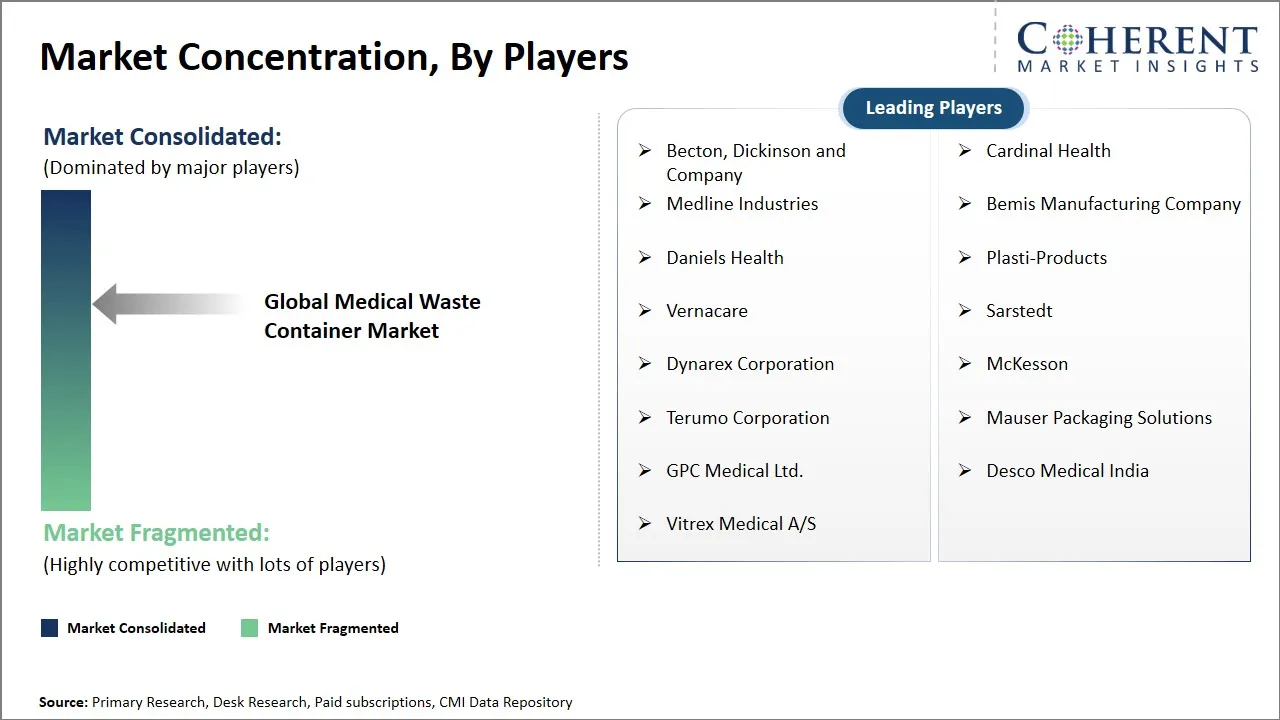
| Companies covered: | Becton, Dickinson and Company, Cardinal Health, Medline Industries, Bemis Manufacturing Company, Daniels Health, Plasti-Products, Vernacare, Sarstedt, Dynarex Corporation, McKesson, Terumo Corporation, Mauser Packaging Solutions, GPC Medical Ltd., Desco Medical India, and Vitrex Medical A/S | ||
| Growth Drivers: |
| ||
| Restraints & Challenges: |
| ||
Medical Waste Container Market Dynamics
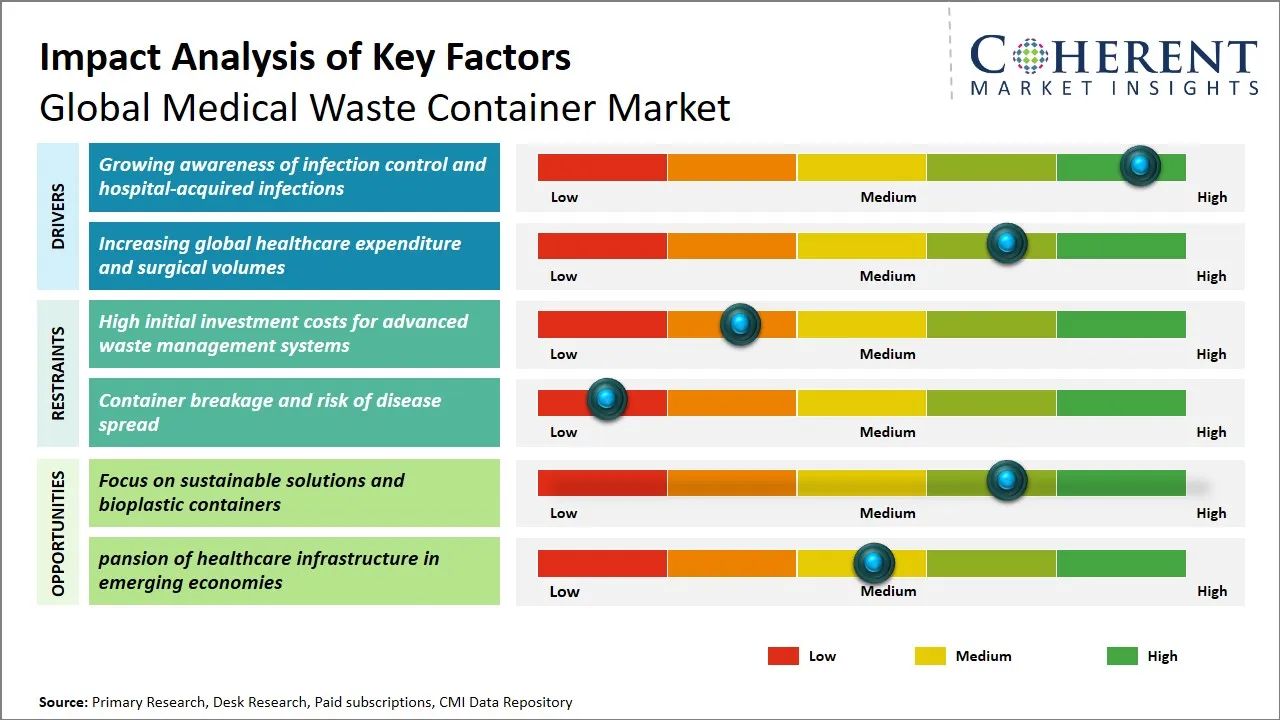
Medical Waste Container Market Driver - Growing Awareness of Infection Control and Hospital-Acquired Infections
The increasing emphasis on stringent infection control measures within healthcare facilities is significantly driving the demand for medical waste containers globally. Hospitals and clinics are progressively recognizing the critical role proper segregation and disposal of medical waste play in preventing the spread of Hospital-Acquired Infections (HAIs), which remain a major concern for patient safety and public health. Enhanced regulatory frameworks and guidelines issued by health authorities worldwide are encouraging healthcare providers to adopt more reliable, leak-proof, and tamper-resistant containers specifically designed to safely handle biohazardous and sharps waste. Additionally, rising awareness among healthcare professionals about cross-contamination risks has heightened the focus on maintaining sterile environments, further pushing the need for specialized medical waste management solutions.
In March 2025, the World Health Organization (WHO), a United Nations agency focused on global health, released its Global Report on Infection Prevention and Control 2024, calling for urgent action to strengthen Infection Prevention and Control (IPC) in all healthcare facilities. The report warns that weak IPC measures lead to longer hospital stays, higher treatment costs, and the spread of dangerous infections.
Medical Waste Container Market Opportunity - Focus on sustainable solutions and bioplastic containers
The global medical waste container market presents a significant growth opportunity through the rising demand for sustainable and eco-friendly waste management solutions. With increasing environmental concerns and stricter regulations surrounding medical waste disposal, healthcare providers and waste management companies are actively seeking alternatives to conventional plastic containers that contribute to pollution and landfill burden. Bioplastic containers, made from renewable biomass sources such as cornstarch and sugarcane, offer a biodegradable and compostable option that aligns well with global sustainability initiatives. These bioplastics reduce dependency on fossil fuels and lower the carbon footprint associated with medical waste management. Furthermore, governments across regions, particularly in North America and Europe, are incentivizing green technologies and imposing stringent mandates to phase out single-use, non-degradable medical waste containers.
In February 2024, Daniels Healthcare, a U.K.-based leader in clinical/medical waste management solutions, introduced SANIBOX, a new sustainable cardboard container designed to expand its range of clinical waste containment products. The launch strengthens Daniels Healthcare’s mission to offer safe, compliant, and eco-friendly solutions for healthcare providers.
Analyst Opinion (Expert Opinion)
- The medical waste container market is shaped by a mix of regulatory pressure, technological upgrades, and the growing volume of healthcare activities worldwide. Stricter government policies on biomedical waste segregation and disposal are pushing hospitals and clinics to adopt compliant, durable, and eco-friendly containers. At the same time, sustainability goals are opening opportunities for biodegradable and reusable container solutions, while digital tools like smart tracking systems are helping healthcare providers monitor waste more efficiently. The sector still faces challenges around high disposal costs, inconsistent regulations across regions, and gaps in waste management infrastructure in developing economies. Industry discussions at events such as the Healthcare Waste World Conference 2023 in Amsterdam, the Medica Trade Fair 2022 in Düsseldorf, and regional expos on infection control have played a key role in knowledge-sharing, showcasing greener technologies, and shaping policies that directly impact waste handling practices.
- Real-world initiatives are also steering the market forward. For instance, the University Hospital Bonn in Germany, working with Resourcify, recently launched digitalized pilot projects to recycle operating theatre waste, setting an example of how technology can reduce incineration dependency. In the U.K., Daniels Healthcare’s rollout of SANIBOX, a cardboard clinical waste container made from FSC-certified material, highlights industry innovation toward circularity. Similarly, government programmes in India and Southeast Asia focused on strengthening biomedical waste rules and training healthcare workers are expanding the adoption of safe disposal containers. Together, these efforts reflect the market that is not only compliance-driven but also evolving toward sustainability and smarter waste management.
Speak to the analyst
Want personalized insights?
Take the findings above to one of our principal consultants, or have the report rebuilt around the segments, geographies and competitors you actually track.
Market Segmentation
- Product Type Insights (Revenue, USD Bn, 2021 - 2033)
- Sharp Containers
- Chemotherapy Containers
- Infectious waste containers
- Pharmaceutical waste containers
- Radioactive waste containers
- Chemical waste containers
- Biohazardous Containers
- Resource Conservation and Recovery Act (RCRA) Containers
- Others (General Medical Waste Containers)
- Usage Insights (Revenue, USD Bn, 2021 - 2033)
- Reusable Containers
- Single-Use Containers
- Puncture-Resistant Containers
- Leak-Proof Containers
- End User Insights (Revenue, USD Bn, 2021 - 2033)
- Hospitals and Clinics
- Diagnostic Laboratories
- Pharmaceutical and Biotechnology Companies
- Home Healthcare Settings
- Long-term Care Centers
- Others (Research and Academic Institutes)
- Sales Channel Insights (Revenue, USD Bn, 2021 - 2033)
- Offline
- Online
- Material Insights (Revenue, USD Bn, 2021 - 2033)
- Plastic
- Metal
- Cardboard/Paperboard
- Size Insights (Revenue, USD Bn, 2021 - 2033)
- Small
- Medium
- Large
- Regional Insights (Revenue, USD Bn, 2021 - 2033)
- North America
- U.S.
- Canada
- Latin America
- Brazil
- Argentina
- Mexico
- Rest of Latin America
- Europe
- Germany
- U.K.
- Spain
- France
- Italy
- Russia
- Rest of Europe
- Asia Pacific
- China
- India
- Japan
- Australia
- South Korea
- ASEAN
- Rest of Asia Pacific
- Middle East
- GCC Countries
- Israel
- Rest of Middle East
- Africa
- South Africa
- North Africa
- Central Africa
- North America
- Key Players Insights
- Becton, Dickinson and Company
- Cardinal Health
- Medline Industries
- Bemis Manufacturing Company
- Daniels Health
- Plasti-Products
- Vernacare
- Sarstedt
- Dynarex Corporation
- McKesson
- Terumo Corporation
- Mauser Packaging Solutions
- GPC Medical Ltd.
- Desco Medical India
- Vitrex Medical A/S
Sources
Primary Research Interviews
- Industry Stakeholders list
- Hospital Procurement Managers
- Medical Waste Management Companies
- End Users list
- Physicians & Surgeons
- Nurses & Infection Control Officers
Government and International Databases
- World Health Organization (WHO)
- U.S. Food and Drug Administration (FDA)
- Centers for Disease Control and Prevention (CDC)
- European Medicines Agency (EMA)
- United Nations Environment Programme (UNEP)
- Indian Ministry of Health & Family Welfare
Trade Publications
- Waste360
- Healthcare Purchasing News
- Infection Control Today
- BioCycle Magazine
- Modern Healthcare
- Medical Device & Diagnostic Industry (MD+DI)
Academic Journals
- Journal of Hospital Infection
- Waste Management (Elsevier)
- Journal of Environmental Management
- International Journal of Environmental Research and Public Health
- American Journal of Infection Control
- Journal of Hazardous Materials
Reputable Newspapers
- The New York Times
- The Guardian
- The Washington Post
- Financial Times
- The Hindu
- The Wall Street Journal
Industry Associations
- Healthcare Waste Management Association (HWMA)
- Association for Professionals in Infection Control and Epidemiology (APIC)
- International Solid Waste Association (ISWA)
- Healthcare Plastics Recycling Council (HPRC)
- British Medical Association (BMA)
- American Hospital Association (AHA)
Public Domain Resources
- National Center for Biotechnology Information (NCBI)
- World Bank Data
- U.S. Environmental Protection Agency (EPA)
- Eurostat
- OpenGrey Repository
Proprietary Elements
- CMI Data Analytics Tool: Proprietary analytics tool to analyze real-time market trends, consumer behavior, and technology adoption in market
- Proprietary CMI Existing Repository of Information for Last 8 Years
Get access to 250+ pages report
Every segment, forecast, competitor profile and data table behind the analysis above — available for instant download.
- ESOMAR Member
- ISO 9001:2015 Certified
- D-U-N-S Registered
- GDPR & CCPA Compliant
Missing comfort of reading report in your local language? Find your preferred language:
Transform your Strategy with Exclusive Trending Reports
Frequently Asked Questions
The global medical waste container market is estimated to be valued at USD 2.44 Bn in 2026 and is expected to reach USD 4.26 Bn by 2033.
The CAGR of the global medical waste container market is projected to be 8.3% from 2026 to 2033.
Growing awareness of infection control and hospital-acquired infections and increasing global healthcare expenditure and surgical volumes are the major factors driving the growth of the global medical waste container market.
High initial investment costs for advanced waste management systems and container breakage and risk of disease spread are the major factors hampering the growth of the global medical waste container market.
In terms of product type, the sharp containers segment is estimated to dominate the market revenue share in 2026.
The market is likely to see further penetration of smart waste management systems, expansion of reusable container adoption, and wider customization for specific waste streams. Emerging markets will see rapid adoption as governments enforce stronger medical waste management policies.
In emerging economies across Asia Pacific, Latin America, and Africa, rapid hospital expansion, rising patient volumes, and government-led infection control initiatives are creating significant opportunities. Growing awareness of safe disposal methods and international funding support also drive container adoption.