

Global Oat Protein Market Size and Forecast: 2026-2033
The global oat protein market is expected to grow from USD 184.7 Mn in 2026 to USD 402.9 Mn by 2033, registering a compound annual growth rate (CAGR) of 11.8% from 2026 to 2033. The global market for oat protein is poised for significant expansion, fueled by increasing consumer preference for plant-based and sustainable protein ingredients in functional food and beverage applications.
According to the Government of Canada, in 2023, the plant-based protein ingredients (non-animal derived) market in Canada registered sales of 43.6 thousand tons (total proteins share: 74.8%), equivalent to an historical volume sales CAGR of 2.4% (2018 to 2023) and a forecast CAGR of 1.8% (2023 to 2028) set to reach 47.7 thousand tons by 2028.
(Source: Government of Canada)
Additionally, the Ministry of Food Processing Industries, Government of India reported that the global plant-based protein market size reached USD 16.9 billion in 2024. The market is expected to reach USD 29.9 billion by 2033, exhibiting a growth rate (CAGR) of 6.55% during 2025-2033.
(Source: Ministry of Food Processing Industries)
Key Takeaways of the Global Oat Protein Market
- Oat protein concentrates are projected to hold 48.7 % of the global oat protein market share in 2026, making it the dominant product type segment, particularly in North America because of the rising need for high-protein, gluten-free oat ingredients to use in plant-based drinks, nutrition products, and functional foods. U.S and Canadian food manufacturers are upgrading their facilities and processing capabilities on oat ingredients to respond to the demand in clean-label protein usage. For instance, Avena Foods commissioned the building of a new purity protocol oat mill in Saskatchewan to more than double capacity for gluten free oat ingredients used for food and beverage purposes. (Source: Avena Foods)
- Dry is projected to hold 72.4 % of the global oat protein market share in 2026, making it the dominant form segment, particularly in Europe as dry oat protein powders gain application in bakery products, nutritional powders, breakfast mixes, and vegan formulations. Dry oat protein ingredients have extended shelf life and provide better flexibility in formulations and ease of transport for industrial food manufacturers. Consumption is also trending towards incorporation into industrial bakery products and packaged food manufacturing on a large scale as developed by Nordic grains and food processing firms. For instance, on May 12, 2026, Lantmnnen opened a new grain terminal in Uddevalla, Sweden. The opening of the terminal is one of Sweden's biggest grain investments in decades and is intended to contribute to a greater capacity of oat and grain processing in food industry processes. (Source: Lantmnnen)
- Food and beverages are projected to hold 38.9 % of the global oat protein market share in 2026, making it the dominant application segment, especially in Asia Pacific, as the consumption of high-protein breakfast products, functional beverages, and plant-based nutrition is rising swiftly. Across India as well as in other parts of Asian markets, food producers are starting to highlight oat products based on its protein & fiber contents, driven by consumer trends. For instance, responding to growing appetite for healthy breakfast and functional foods, PepsiCo India underwent a massive nutrition-led refreshing of the Quaker products that highlighted protein and fiber benefits. (Source: PepsiCo India)
- North America maintains dominance with an expected share of 39.1 % in 2026, attributed to region's robust household and institutional penetration for oat nutrition in mainstream retail, foodservice, and private label health food sectors. Oat protein is being increasingly featured by food companies in the U.S. and Canada as a versatile ingredient in meal replacements, fiber-rich snacks, and health-focused pack foods because of its nutritional benefits and formulation potential. The region is experiencing a growing trend of investment in value-added oat processing and branded oat nutrition product portfolios aimed at health-conscious consumers. For instance, in December 2024, Richardson International began constructing a large granola packaging facility addition to its South Sioux City oat plant, in anticipation of the increase in consumer food products derived from oats that will be demanded in North America. (Source: Richardson International)
- Europe is expected to exhibit the fastest growth with 27.4 % share in 2026, strengthened by rising regional investment into sustainable cereal ingredients production and growing use of oat protein in plant-based dairy, bakery, and nutritional applications. European producers are investing in capabilities for domestic oat ingredient sourcing in response to demands for sustainable local protein options. The commercial development of oat-based propositions targeting nutritional and climate related food innovation is also rising. For instance, in March 2026, Oatly made a declaration on a USD 16 million investment in Landskrona, Sweden, to support a further extension of their manufacturing plant in Landskrona. With increasing demand for plant based and dairy free foods and beverages in European countries, production is anticipated to be boosted by a third of capacity. The plant investment will reinforce and improve regional oat processing and aid the commercial development of sustainable plant-based nutrition products in Europe. (Source: Oatly)
- Rising Utilization of Oat Protein in High-Protein Breakfast and Convenience Foods: As food manufacturers began adding oat protein to breakfast cereals, granola bars, ready-to-eat food items, instant nutritional food products, etc. due to its desirable nutrient profile and clean label appeal the demand for the ingredients grows. The ingredients are becoming more popular in products for brands emphasizing satiety and high fiber content food formulations for health-conscious food consumers. The increasing demand for ready-to-eat and on-the-go nutrition foods (plant-based, convenient) are carving a market niche for oat protein ingredients.
- Expansion of Oat Protein Applications in Dairy Alternative Formulations: The rise in the use of oat protein in plant-based yogurts, ice-creams, creamers, and formulated functional drinks, is attributable to the palatable smooth texture, neutral taste profile, and its stability in the dairy-free system. It is being employed by manufacturers to achieve better fortification and formulate stability of novel dairy-substitutes. Growing consumer demand for allergen free and soy free plant proteins is another factor, supporting niche application development within high-value dairy substitute segments.
Segmental Insights
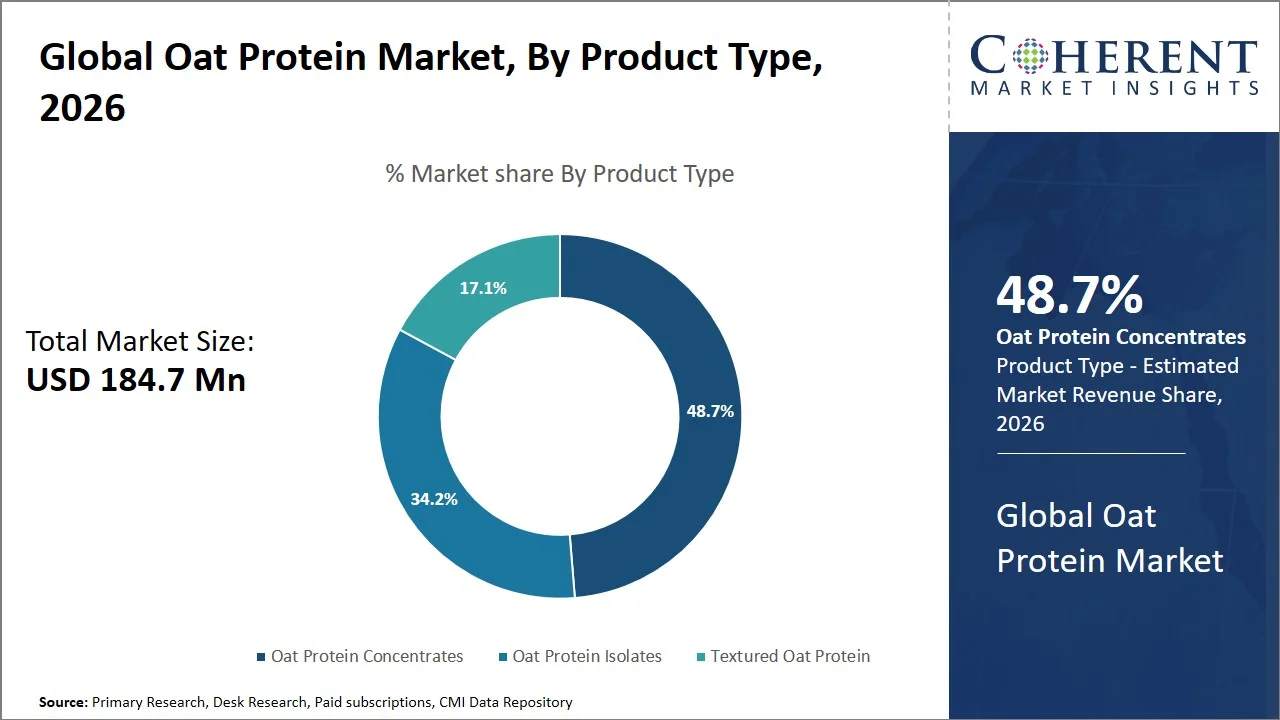
Why Does Oat Protein Concentrates Segment Dominate the Global Oat Protein Market?
Oat protein concentrates are projected to hold the market share of 48.7% in 2026, as they offer a balanced mix of protein amount, natural oat benefits and formulation functionality, as well as providing them cost effectively for large scale food production. Unlike oat protein isolate, oat protein concentrate retains functional dietary fibers and micronutrients that can promote clean label and whole grain positioning in nutrient food, therefore ideal for general health related food applications.
Oat protein concentrate’s favorable characteristics such as emulsification, water binding capacity, texture enhancement and ability to blend seamlessly into food items without affecting the taste significantly made them widely used in bakery products, breakfast cereals, snack products and dairy-free drinks. In addition, the preference of plant-based and allergen-free ingredients as well as the demand for sustainable food products has promoted a rapid increase in the demand for oat protein concentrate in the food industry. For instance, Lantmnnen Biorefineries emphasized the growing use of its PrOatein oat protein concentrate for an array of food and beverage applications-plant-based drinks, sports nutrition, bakery products, meat substitutes, and dairy alternatives. These growing commercial uses of a multifunctional oat protein concentrate ingredient indicate that the broader food industry is more actively embracing these types of ingredients. (Source: Lantmnnen Biorefineries)
- Current Industry Events of 2026
- Market Size Estimation
- Regional Breakdown
- Competitive Landscape
- Customer Intelligence
- Segmental Analysis
- Pricing Analysis
- Key Market Drivers, Challenges & Future Trends
- Customized Insights Section
Why Does Dry Represent the Largest Form Segment in the Global Oat Protein Market?
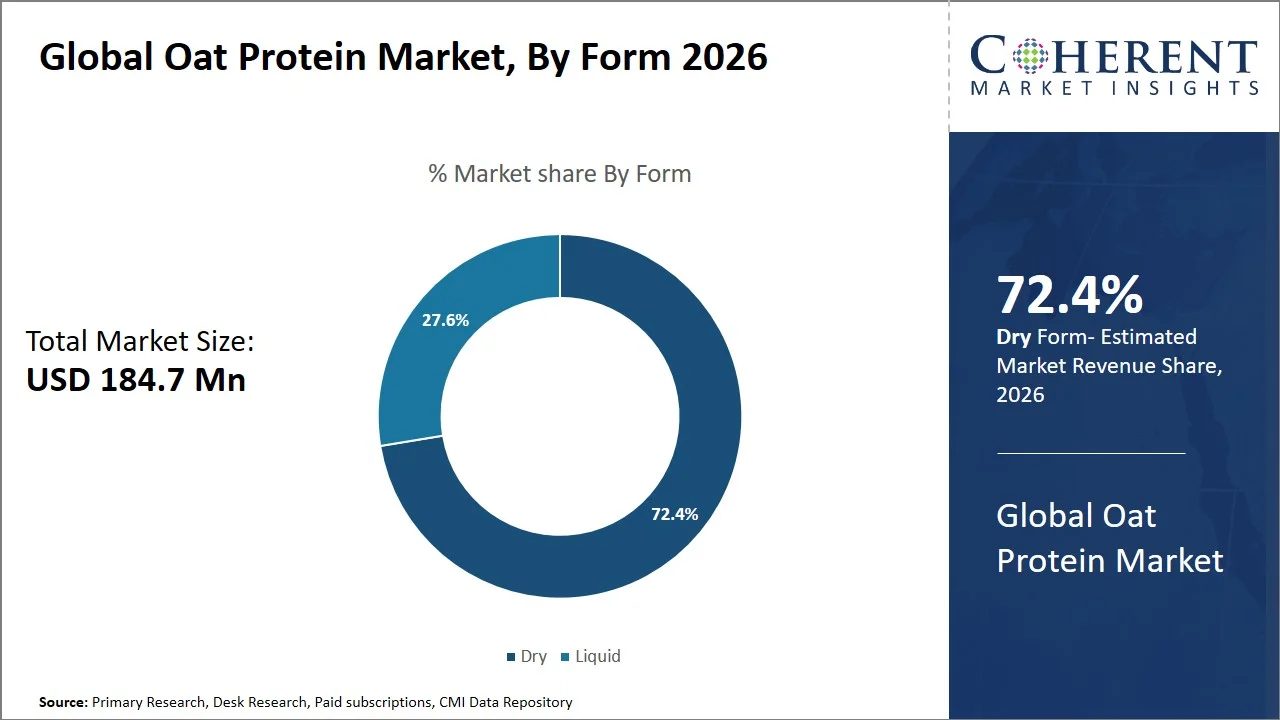
Dry is projected to hold a market share of 72.4% in 2026, attributed to greater storage stability, formability, and functionality during manufacturing in large-scale food products. Dry oat protein powder possesses the characteristics of higher shelf life, higher stability from microbial proliferation, and minimal need for refrigeration. This form consequently lowers costs for transportation, supply chain, and inventory. Incorporation in bakery pre-mixes, powdered drinks, protein mixes, snack products, and dietary supplements make this a format ideally suitable for large-scale food processing facilities that demand stringent quality control for texture and nutrient composition.
Furthermore, dry oat protein form provides benefits relating to transport and packaging due to their light weight and low volume compared to liquids; distribution to various markets globally is more efficient and convenient. Moreover, it can be easily incorporated into traditional food processing systems with minimal requirements for handling expertise when compared to liquids. For instance, in April 2025, the researchers from the University of Manitoba brought to attention the health benefits of oat protein, it was proposed to be a beneficial ingredient that could improve the nutritional value of functional food formulations. Studies like this have paved the way for the increased utilization of dry oat protein powders in protein blends, food supplements, and fortification applications. This is primarily attributed to the formulation ease, shelf stability, and processability. (Source: Medical Xpress)
Food and Beverages Segment Dominates the Global Oat Protein Market
The food and beverages segment is projected to hold a market share of 38.9% in 2026, attributed to increasing consumer demand for plant-based, clean-label, and nutritious food products. The versatility of oat protein, which gives a good texture without overpowering the taste of a product, allows for its addition to a wide range of food and beverage products such as dairy substitutes, protein enhanced snacks, cereals, nutrition bars, and functional drinks. This increase is attributed to the growing awareness on the health aspects of lactose intolerance, gluten sensitivity and the requirement for allergen-friendly ingredients as the oat protein is naturally free from gluten and is considered as a sustainable alternative to animal-derived proteins.
The food companies also are using oat proteins for developing high-protein products with focus on wellness, that also benefit on gut health and are helpful for cardiovascular diseases as well as product innovations has enhanced digestibility and mouthfeel and thus widely accepted in the mainstream food sector. For instance, in February 2026, Oatly reported a steady growth in its oat-drink portfolio, driven by the growing demand in plant-based drinks and functional nutrition. Through flavors, RTDs and special formulations, Oatly is constantly investing in innovation to achieve the broad foodservice and retail markets, which has supported the trend of oat protein ingredients usage in the world of food and beverage. (Source: Oatly)
Currents Events and their Impact
Current Events | Description and its Impact |
FDA Draft Guidance on Labeling of Plant-Based Foods (January 2025) |
|
FDA Updated “Healthy” Food Label Rule Accelerates Functional Protein Innovation (January 2025) |
|
(Source: Food and Drug Administration, Food and Drug Administration)
Global Oat Protein Market Dynamics
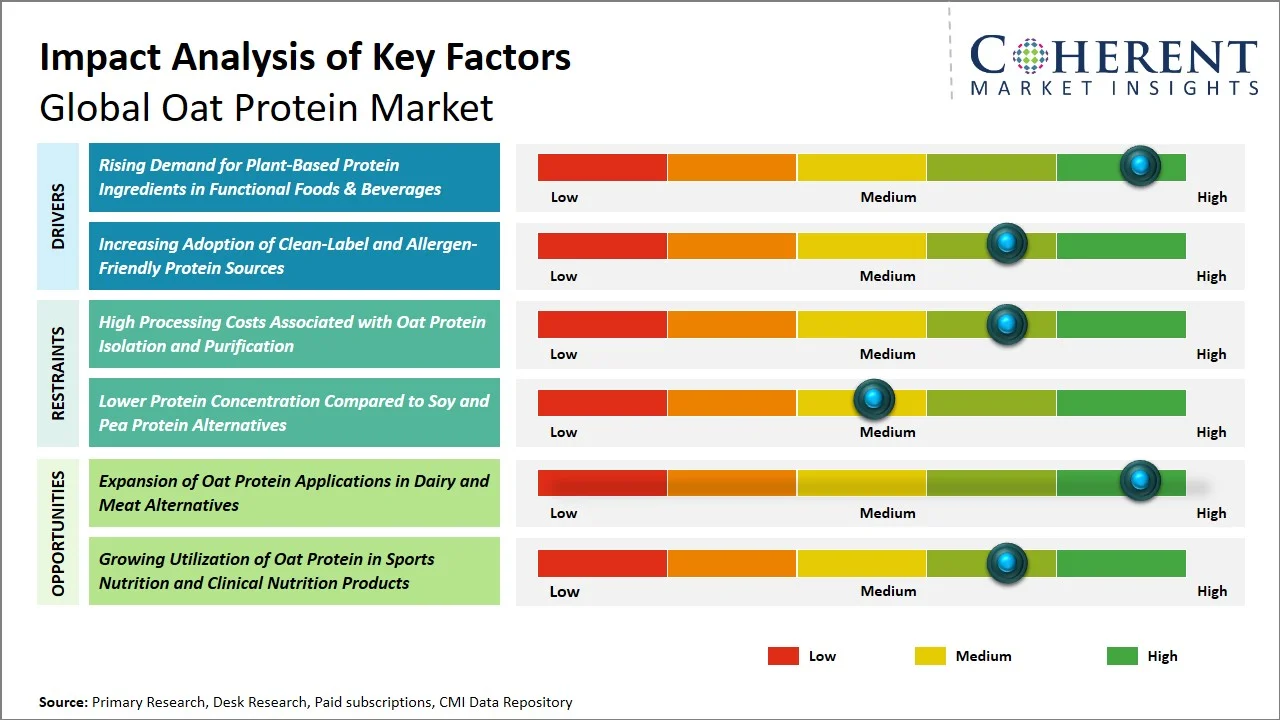
Market Drivers
- Rising Demand for Plant-Based Protein Ingredients in Functional Foods & Beverages: In terms of applications, health-conscious and clean-label trends among consumers are encouraging the increased use of plant-based protein ingredients like oat protein in the functional foods and drinks market. Since the environmental impact associated with consumption of animal proteins are becoming increasingly prominent among the consumers, people are actively looking for sustainable as well as nutritional product options with similar health benefits to that of animal-based proteins. Nutritional aspects like presence of required amino acids and fiber as well as the allergenic-friendly profile of oat protein make it popular among the consumers who opt for dietary regimes that are either vegan, gluten-free, or lactose-intolerant. Other functional products that increasingly utilize the use of oat protein are fitness foods, snacks, food and beverage alternatives to traditional dairy-based products, and beverages intended to boost the nutritional profile of diet that are sought by the athletes and athletes concerned about their health. For instance, in March 2024, a study published by the National Library of Medicine showed that oat protein helped to improve cholesterol metabolism and augmented cardiac systolic function in animal models, indicating the health benefits of oat protein when used in functional foods. (Source: National Library of Medicine)
- Increasing Adoption of Clean-Label and Allergen-Friendly Protein Sources: Consumers' demands for clean-label and allergen-friendly food products, primarily, are contributing to the growth in the demand for oat protein throughout the food and beverage industry worldwide. As plant-derived, minimum processed and a dairy-free, soy-free and lactose-free nutritious source, oat protein is gaining popularity and is the ingredient which food manufacturers are incorporating into various food items such as functional beverages, baked goods, sports nutrition and dairy alternatives. Consumers today require simple ingredient labels and are demanding food products with transparency in food labeling. Furthermore, the natural presence of fiber in oat protein and its amino acid balance favor its increased use in wellness and digestive-health foods. For instance, according to a recent Glanbia Nutritionals, 5 Plant Based Protein Trends 2025 report, concerns over ultra-processed foods among more than half (54%) of all U.S. consumers have driven a demand for clean-label plant-based protein products and functional food innovation. (Source: Glanbia Nutritionals)
Emerging Trends
- Increasing Integration of Oat Protein in Clinical and Elderly Nutrition Products: Oat protein usage is increasing within medical nutrition drinks, elderly nutrition supplements and in formulations designed for digestive health, due to its lower allergy potential and ease of digestion. Manufacturers are also focusing on new protein-rich formulations for an older population and products to support heart health and healthy cholesterol levels.
- Advancements in Enzymatic Processing and Texture Enhancement Technologies for Oat Protein: The suppliers of ingredients are increasing their investment in sophisticated extraction and enzymatic modification processes to boost performance of oat protein (solubility, flavor, emulsification, and texture) for use in food products. These new processing techniques enhance its applicability to high-protein drinks, bakery products, and clean-label processed foods where smoothness and neutral flavor are purchase drivers.
Regional Insights
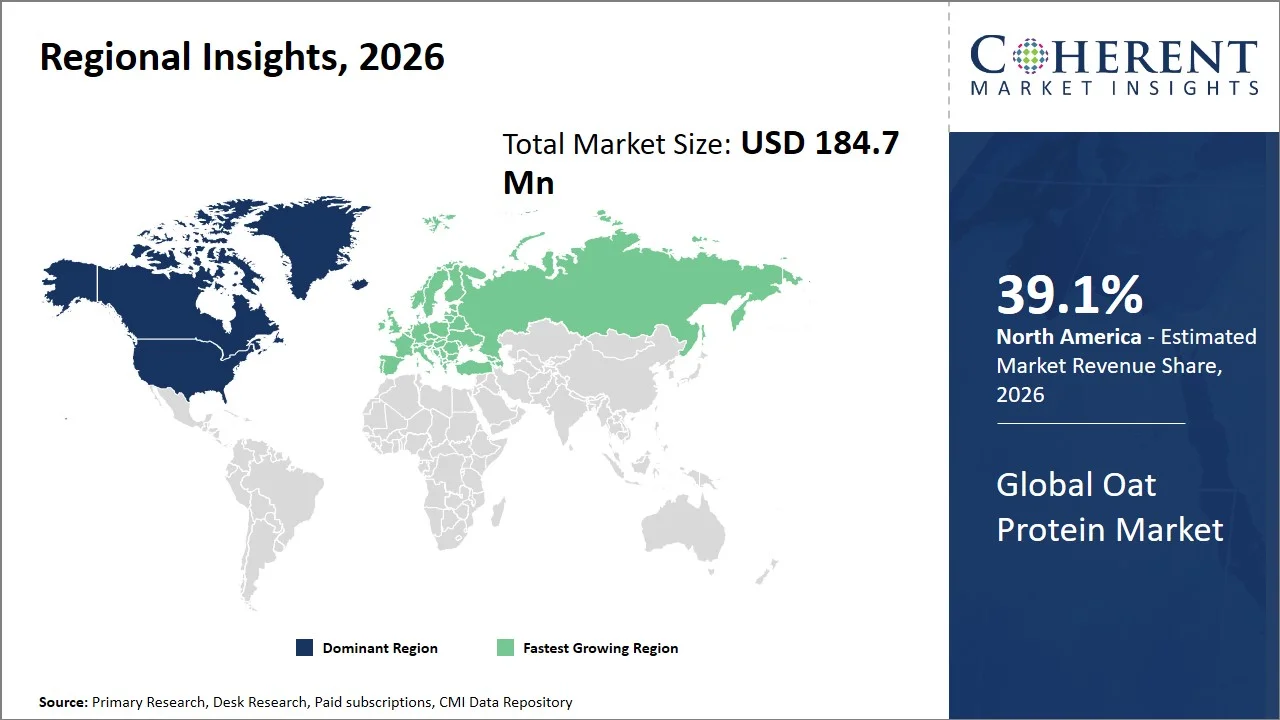
Why is North America a Strong Market for Oat Protein?
North America leads the global oat protein market, accounting for an estimated 39.1% share in 2026, attributed to an efficient market system driven by increasing acceptance of plant-based food and advanced food processing technologies. The rising consumer awareness on health and sustainability along with various applications of oat protein in beverages, meat substitute, supplements is pushing demand in this region. Moreover, the government policies for organic farming (such as the USDA National Organic Program (NOP), USDA Organic Transition Initiative, FDA Healthy Labeling Rule updates, and USDA Climate-Smart Commodities initiatives). creating a conducive environment in this market.
Additionally, key manufacturers such as Ingredion Incorporated, Glanbia Nutritionals are investing on R&D, product innovation which further boost the dominance of North America in the oat protein market. For instance, in February 2024, Ingredion Incorporated launched new pulse and plant protein formulation capabilities to achieve enhanced texturization, solubility and sensory characteristics of both dairy alternative beverages and high protein food application. This innovation is also an indication of greater investment from North American ingredient producers in the development of high-tech plant protein products in response to growing demand for functional and clean label foods. (Source: Ingredion Incorporated)
Why Does Europe Oat Protein Market Exhibit High Growth?
The Europe oat protein market is expected to exhibit the fastest growth with an estimated contribution of 27.4% share to the market in 2026, as many European companies are integrating oat ingredients into their plant-based beverages, protein fortified baked goods, and alternative dairy products. Food companies within the European region are incorporating oat protein into food formulations to act as a texturizer, emulsifier and for nutrient fortification, especially within premium, clean-label products. The region has a strong oat cultivation base and infrastructure particularly across Nordic and Western European nations, allowing ingredient companies consistent access to the raw material, which has assisted growth within the sector.
Moreover, an increasing amount of investment into next generation protein extraction processes and oat processing techniques is improving functionality and scale of oat protein ingredients within the market. European food companies are increasing their use of hybrid plant-protein ingredients blending pea and faba with oat protein to enhance their performance in alternative food applications. For instance, a European Innovation Investment Agenda report of plant-based food innovation revealed that innovation of oat-based food and drink based in EU countries became one of the main drivers for plant-based category growth supported by innovation in oat genomics, AI powered process optimization and sustainable food system initiatives. (Source: European Innovation Investment Agenda)
Global Oat Protein Market Outlook for Key Countries
Why is the U.S. Leading Innovation and Adoption in the Oat Protein Market?
The U.S. is emerging as an innovation leader in the market for the oat protein owing to its well-established ingredient processing environment and advanced capacity to commercially launch niche plant-based proteins. The U.S. food manufacturers have extensively incorporated oat protein to ready-to drink nutrition, high protein breakfast items, and hybrid plant-based formulations needing superior texture and emulsification. The country also has mature technologies to produce oat protein concentrates tailored to specific applications through extrusion and protein fractionation methods. The growing existence of health food specialist retail chains, premium wellness brands is a key reason behind faster launch of new oat protein based functional foods targeting the health-conscious and lifestyle segment. Partnership between ingredient companies and food-tech enterprises is a vital factor assisting the acceleration of the formulation of advanced alternative dairy products and nutrition products in the U.S.
Is Canada a Favorable Market for Oat Protein?
Canada represents an ideal environment for oat protein market possesses an ability for large scale oat production and possesses a well-established integration between producers and ingredient suppliers. Canada's well-developed infrastructure is already geared toward oat milling, fractionation and added-value grain processing. Thus, there is existing production infrastructure in place to manufacture oat derived protein ingredients for Canadian and international markets. Canadian manufacturers' focus on manufacturing highly functionalized high protein ingredients suitable for beverage stabilization, bakery enhancement and powders also adds to a market for oat protein.
Additionally, the presence of high protein varieties of oats also offers food manufacturers increased consistency in formulations. Canada is also in close proximity to the significant number of North America plant-based food manufacturers. This closeness is advantageous for supply chain management and speed to the market for oat protein ingredients.
Is China Emerging as a Key Growth Hub for the Oat Protein Market?
China stands out as one of the most prominent countries with respect to the future growth of the oat protein market attributed to local food and beverage producers including oat-based ingredients in their localized beverage and convenience foods formulas. Oat protein can be found in grain-based drinks, instant nutritious powders, and protein enriched fast breakfast products developed by domestic food manufactures to match modern urban lifestyles. Domestic oat processing capabilities for oaten supplied from Inner Mongolia and agricultural areas of northern China also contributes to market growth and helps ensure the stability of the supply chain. Chinese product developers are also aiming to enhance the performance of oat protein such as flavor masking and dispersal properties in beverage and powder products which are to have a longer shelf life. The market is also gaining a boost from the expansion of modern retail chains and online-driven food supply systems, enabling the introduction of oaten-based products to consumers in tier-1 and tier-2 cities.
Why Does Germany Top the Europe Oat Protein Market?
Germany is the leading Europe market for oat protein, attributed to the country's technologically sophisticated cereal-processing industry and the widespread use of oat-based ingredients in regular packaged food categories. High protein bakery goods, oat-based sweets, meat substitute applications and fortified convenience products are increasingly made with oat protein by German manufacturers to target upscale retailers. There is a large number of German private-label food manufacturers currently developing oat-protein enriched products for both supermarkets and hyper-discount retailers. Ingredient companies are also using formulation technology to optimize oat protein functionality for emulsified and shelf-stable food applications. Robust capacity at industrial-level food manufacturing combined with diverse product development in functional nutrition category categories contribute to the country's lead in the Europe oat protein market.
Is Oat Protein Market Developing in U.K.?
The growth of the U.K. oat protein market is gradual but steadily increasing, driven by the growth of oat-derived ingredients use in dairy alternatives, fortified cereals, baked goods and nutritional drinks. Food manufacturers in the U.K. are looking to grow oat protein formulation for use in 'clean label' and 'free from' branding that often required for U.K. food retailers. Plus, the market is also seeing strong consumer support for oat-based food products in U.K. particularly for breakfast and beverage categories where oat has established popularity. Ingredient providers in the U.K. are particularly emphasizing the usage of locally grown oats and short supply chain for premium product differentiation. Growing segment of chilled plant-based beverage, on-the-go nutrition and protein-enriched snack categories are also driving growth for oat protein ingredients' applications in U.K.
Regulatory Landscape Governing the Global Oat Protein Market
Region
| Authority & Classification | Approval Pathway | Key Regulatory Insight |
North America | U.S. Food and Drug Administration (FDA), Health Canada – oat protein regulated as a food ingredient and plant-based protein component | Compliance with food ingredient safety, labeling, allergen declaration, and GRAS requirements for functional food and beverage applications | Regulatory focus is increasing on clean-label claims, plant-based food labeling transparency, and substantiation of nutritional and protein-content claims in functional food products |
Europe | European Food Safety Authority (EFSA), European Commission – governed under novel food, food safety, and nutrition claim regulations | Ingredient safety assessments, nutrition and health claim approvals, and compliance with EU food labeling regulations | Europe maintains stringent regulations for sustainability, allergen labeling, and protein-content claims, encouraging development of minimally processed and traceable oat protein ingredients |
Asia Pacific | Food Standards Australia New Zealand (FSANZ), China National Health Commission (NHC), Food Safety and Standards Authority of India (FSSAI) | Product registration, ingredient safety validation, and food labeling compliance for plant-based protein products | Regulatory authorities are increasingly supporting functional and plant-based nutrition products while strengthening quality control and food safety standards for imported protein ingredients |
Latin America | Brazil Health Regulatory Agency (ANVISA), COFEPRIS Mexico – food ingredient and nutritional product regulatory oversight | Approval through food ingredient registration, nutritional labeling compliance, and import certification pathways | Rising demand for functional nutrition products is encouraging clearer regulatory frameworks for plant-based proteins and fortified food formulations across regional markets |
Middle East & Africa | Saudi Food and Drug Authority (SFDA), South African Health Products Regulatory Authority (SAHPRA) and regional food safety bodies | Food product registration, halal compliance assessments, and labeling approvals for plant-based nutritional products | Governments are increasingly emphasizing food quality, clean-label imports, and nutritional transparency standards to support expansion of plant-based and functional food sectors |
How is the expansion of oat protein applications in dairy and meat alternatives creating new growth opportunities in the global oat protein market?
The growth of the oat protein market is fueled by the expanding adoption of oat protein in dairy alternatives and meat alternatives categories. Higher demand for oat protein in the preparation of high-protein drinks, dairy alternative yogurts and creamers, plant-based ice creams, and meat alternatives formulation is stimulating demand for oat protein. Food producers' adoption of oat protein is due to the ingredients' clean label aspect, emulsifying functionality, neutral taste, vegan and allergen-free product development attributes.
Oat protein is also adopted in meat alternative product development owing to the ingredient's effect in texture, moisture retention and protein fortification of blended plant protein formulations. Increasing consumer preference for cholesterol-free and sustainable eating practices further propel new product developments in those categories. For instance, Ingredion Incorporated reported growing consumer and industrial demand for plant-based protein solutions for dairy and meat alternative applications and outlined its innovations targeted at optimizing texturization, enhancing clean-label claims and functional nutrition for next-generation alternative proteins. (Source: Ingredion Incorporated)
Market Players, Key Development, and Competitive Intelligence
Key Developments
- On May 5, 2026, Too Yumm! marked the entrance into the ready-to-cook breakfast category with the launch of their High Protein Super Oats range. Protein Masala, containing 22 gm of protein, and Masala Magic, which contains 11 g of protein, are two items that form this range. This development is an outcome of the trend prevailing within the Indian breakfast industry of producing healthy and high-protein breakfast foods.
- In September 2024, Lantmnnen reported an investment of USD 129.6 million (SEK 1.2 billion) to build a new plant protein production plant in Sweden. This plant will help boost Sweden's processing capacity of plant-based raw materials such as oat-based proteins and alternative proteins. The investment is to meet with demand for sustainable ingredients and the Northern region in the plant protein supply chain.
Competitive Landscape
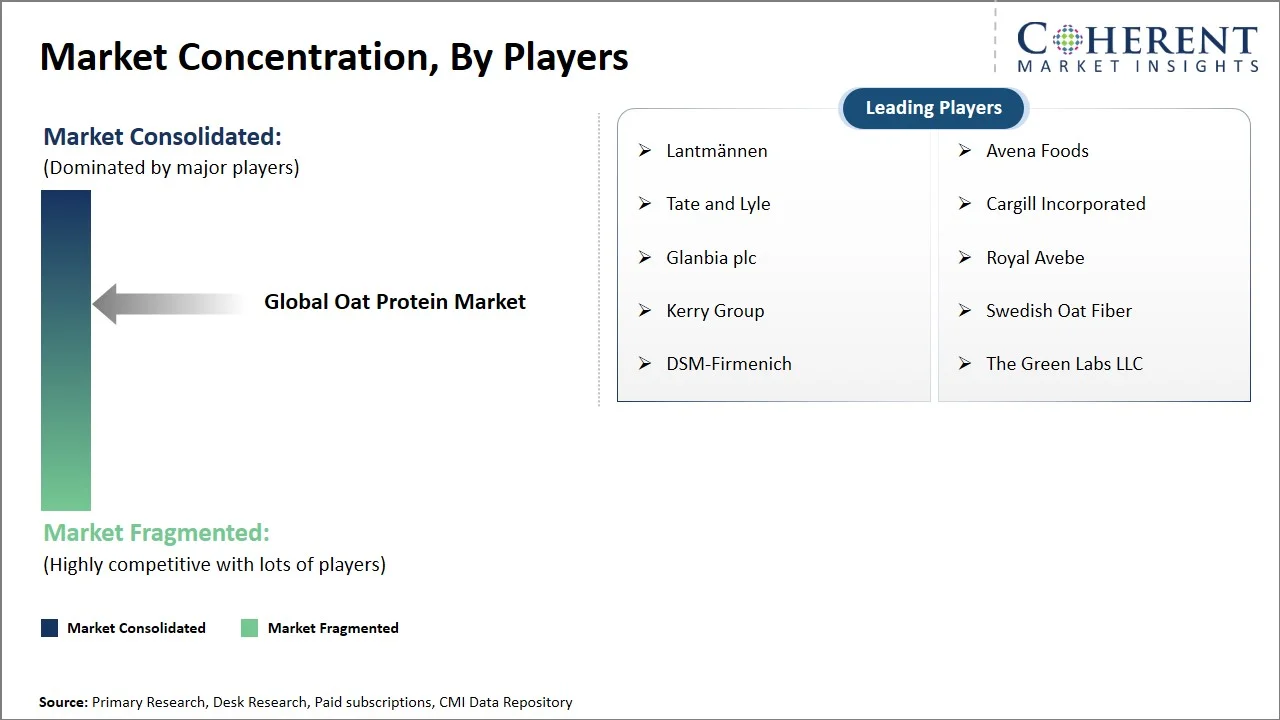
The global oat protein market is moderately competitive and competitive factors include purity of protein, performance on solubility, clean-label attributes and the range of applications in functional food and beverage. The global market participants are investing in improved extraction technology, optimized flavor and better formulation of oat protein ingredient for improved nutritional value and sensory attributes. Furthermore, companies are reinforcing their alliance with food manufacturers and plant-based companies for a better reach in sports nutrition, alternative dairy, bakery and supplements application sectors. Investments in sustainable sourcing, hypoallergenic formulations, and development of high protein food products. Key focus areas include:
- Development of high-purity and highly soluble oat protein concentrates and isolates
- Expansion of oat protein applications across sports nutrition and functional beverages
- Innovation in clean-label, allergen-friendly, and minimally processed protein ingredients
- Strategic collaborations with plant-based food and dairy alternative manufacturers
- Investments in sustainable oat processing and scalable protein extraction technologies
Market Report Scope
Oat Protein Market Report Coverage
| Report Coverage | Details | ||
|---|---|---|---|
| Base Year: | 2025 | Market Size in 2026: | USD 184.7 Mn |
| Historical Data for: | 2020 To 2024 | Forecast Period: | 2026 To 2033 |
| Forecast Period 2026 to 2033 CAGR: | 11.8% | 2033 Value Projection: | USD 402.9 Mn |
| Geographies covered: |
| ||
| Segments covered: |
| ||
| Companies covered: | Lantmännen, Avena Foods, Tate and Lyle, Cargill Incorporated, Glanbia plc, Royal Avebe, Kerry Group, Swedish Oat Fiber, DSM-Firmenich, and The Green Labs LLC | ||
| Growth Drivers: |
| ||
| Restraints & Challenges: |
| ||
Analyst Opinion (Expert Opinion)
- The future of the oat protein industry is expected to experience significant growth over the coming years, largely due to continuing trend toward plant-based eating and toward 'clean labels' and sustainable eating habits. From niche plant-based food ingredient oat protein will transform into one of the key mainstream protein sources with manufacturers adding it in common food products and drinks. Increasing consumers' demand toward allergen-free, low processed, protein-rich products will continuously boost the use in dairy alternatives, sports nutrition and functional food segments. Technological advancements increasing the protein extraction rate, improving protein texture, solubility will further enable the use of oat protein in higher end food applications such as ready-to drink protein beverages, clinical nutrition products.
- It is anticipated that, food and beverages will have maximum opportunity for growth, especially plant-based dairy alternatives and functional beverages in the U.S. and Western Europe as the market is aware about the nutrition sustainability and accepts plant-based products along with higher penetration of clean label functional foods in retail stores. Furthermore, the high growth opportunity for Asia Pacific mainly China and South Korea will be driven by faster urbanization, increase disposable income and demand of protein fortification convenience foods and beverages.
- In order to secure a competitive advantage, the market players must focus on new product development with enhanced taste, texture, and digestibility under the clean label umbrella. With investment in innovative extraction processes and the cooperation of food manufacturers, companies can produce tailored oat protein products designed for applications ranging from ready-to-drink beverages, protein snacks, and infant foods. Firms must also reinforce their responsible sourcing programs and ingredient transparency, since environmental impact and traceability are high on many consumers' list of buying criteria. A focus on developing regional production capabilities and seeking out co-branding with the food service sector could also enable brands to obtain a sustainable position in a growing, competitive plant-protein marketplace.
Speak to the analyst
Want personalized insights?
Take the findings above to one of our principal consultants, or have the report rebuilt around the segments, geographies and competitors you actually track.
Market Segmentation
- Product Type Insights (Revenue, USD Mn, 2021 - 2033)
- Oat Protein Concentrates
- Oat Protein Isolates
- Textured Oat Protein
- Form Insights (Revenue, USD Mn, 2021 - 2033)
- Dry
- Liquid
- Application Insights (Revenue, USD Mn, 2021 - 2033)
- Food and Beverages
- Sports Nutrition and Dietary Supplements
- Bakery and Confectionery
- Dairy Alternatives
- Meat Alternatives
- Animal Nutrition
- Personal Care and Cosmetics
- Distribution Channel Insights (Revenue, USD Mn, 2021 - 2033)
- Business-to-Business (B2B)
- Business-to-Consumer (B2C)
- Regional Insights (Revenue, USD Mn, 2021 - 2033)
- North America
- U.S.
- Canada
- Latin America
- Brazil
- Argentina
- Mexico
- Rest of Latin America
- Europe
- Germany
- U.K.
- Spain
- France
- Italy
- Russia
- Rest of Europe
- Asia Pacific
- China
- India
- Japan
- Australia
- South Korea
- ASEAN
- Rest of Asia Pacific
- Middle East
- GCC Countries
- Israel
- Rest of Middle East
- Africa
- South Africa
- North Africa
- Central Africa
- North America
- Key Players Insights
- Lantmännen
- Avena Foods
- Tate and Lyle
- Cargill Incorporated
- Glanbia plc
- Royal Avebe
- Kerry Group
- Swedish Oat Fiber
- DSM-Firmenich
- The Green Labs LLC
Sources
Primary Research Interviews
- Oat protein ingredient manufacturers and plant-based nutrition product developers involved in protein extraction and formulation technologies
- Food scientists and functional ingredient specialists working on oat protein solubility, emulsification, and texture optimization
- Sports nutrition and functional beverage manufacturers utilizing oat protein in high-protein product formulations
- Bakery and dairy alternative product developers incorporating oat protein into clean-label food applications
- Academic researchers involved in cereal protein functionality, plant-based nutrition, and oat ingredient innovation studies
Stakeholders
- Oat protein ingredient manufacturers and plant-based food technology providers
- End-use Sectors:
- Functional food and beverage manufacturers
- Sports nutrition and dietary supplement companies
- Dairy alternative and plant-based beverage producers
- Bakery, snack, and convenience food manufacturers
- Regulatory & Health Bodies: U.S. Food and Drug Administration (FDA) – food labeling and plant-based ingredient regulations, European Food Safety Authority (EFSA) – nutritional and food safety framework, Health Canada – plant protein and functional food guidance, Food Standards Australia New Zealand (FSANZ) – food ingredient compliance and labeling standards
Databases
- USDA Food Data Central – oat nutritional composition and protein ingredient data
- FAOSTAT – global oat production and agricultural trade statistics
- ClinicalTrials.gov – studies related to plant-based nutrition and functional food ingredients
- FDA Food Ingredient and Labeling Databases – plant-based ingredient and food labeling regulations
- OECD Agricultural Statistics – cereal crop production and food ingredient market indicators
- WHO Global Health Observatory – nutrition and dietary health trend statistics
Magazines
- Food Business News – plant-based protein and food ingredient innovation trends
- Nutraceuticals World – functional nutrition and protein ingredient developments
- Food Technology Magazine (IFT) – food processing and protein formulation advancements
Journals
- Journal of Cereal Science
- Food Hydrocolloids
- Foods
- Journal of Food Science
- Plant Foods for Human Nutrition
Newspapers
- Financial Times – plant-based food investment and sustainable protein market developments
- The Wall Street Journal – food innovation and consumer nutrition industry coverage
- The New York Times (Health Section) – health-conscious dietary and plant-based nutrition trends
- The Guardian (Environment & Food Section) – sustainable food and alternative protein developments
Associations
- Plant Based Foods Association (PBFA)
- Institute of Food Technologists (IFT)
- Protein Industries Canada
- European Plant-based Foods Association (ENSA)
Public Domain Sources
- National Institutes of Health (NIH) – plant protein and nutritional health research
- U.S. Food and Drug Administration (FDA) – food ingredient and labeling regulatory framework
- European Commission – sustainable food systems and plant protein initiatives
- Food and Agriculture Organization (FAO) – global oat production and food security statistics
Proprietary Elements
- CMI Data Analytics Tool
- Proprietary CMI Existing Repository of information for last 10 years.
Get access to 250+ pages report
Every segment, forecast, competitor profile and data table behind the analysis above — available for instant download.
- ESOMAR Member
- ISO 9001:2015 Certified
- D-U-N-S Registered
- GDPR & CCPA Compliant
Missing comfort of reading report in your local language? Find your preferred language:
Transform your Strategy with Exclusive Trending Reports
Frequently Asked Questions
The global oat protein market is estimated to be valued at USD 184.7 Mn in 2026 and is expected to reach USD 402.9 Mn by 2033.
Oat protein concentrates dominate due to their balanced protein content, cost-effectiveness, functional versatility, and widespread utilization in bakery products, nutritional beverages, dairy alternatives, and sports nutrition formulations.
The CAGR of global oat protein market is projected to be 11.8% from 2026 to 2033.
Rising demand for plant-based protein ingredients in functional foods & beverages and increasing adoption of clean-label and allergen-friendly protein sources are the major factors driving the growth of the global oat protein market.
High processing costs associated with oat protein isolation and purification and lower protein concentration compared to soy and pea protein alternatives are the major factors hampering the growth of the global oat protein market.
Lantmännen, Avena Foods, Tate and Lyle, Cargill Incorporated, Glanbia plc, Royal Avebe, Kerry Group, Swedish Oat Fiber, DSM-Firmenich, and The Green Labs LLC are the major players.
North America is expected to lead the global oat protein market in 2026.