

Global Patient Lifting Equipment Market Size and Forecast – 2026 to 2033
According to Coherent Market Insights, the global patient lifting equipment market is estimated to be valued at USD 7.21 Bn in 2026 and is expected to reach USD 9.94 Bn by 2033, exhibiting a compound annual growth rate (CAGR) of 4.7% from 2026 to 2033. This steady growth reflects increasing demand driven by the rising geriatric population and growing incidences of mobility impairments across healthcare settings. Investments in advanced lifting technologies and expanding healthcare infrastructure further support market expansion during this period.
Key Takeaways of the Patient Lifting Equipment Market
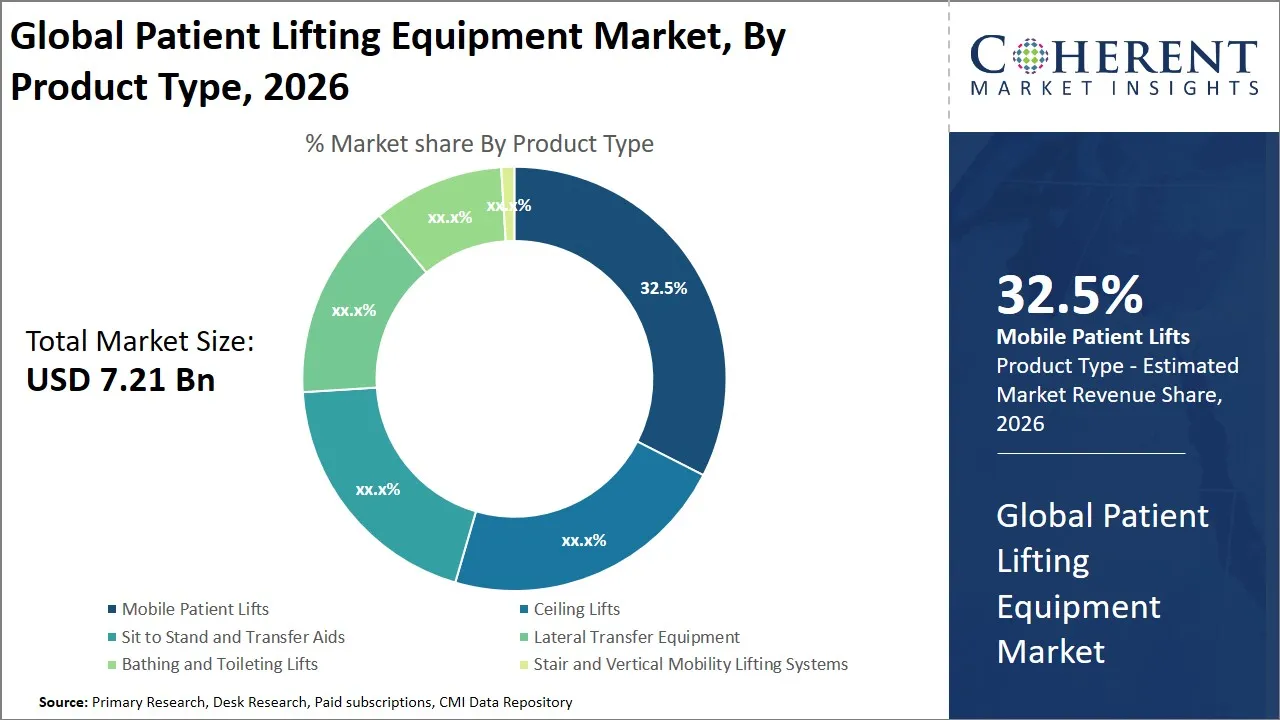
- Mobile patient lifts lead the global patient lifting equipment market with an estimated 32. 5% share in 2026.
- Fully dependent patients dominate the mobility-level segment, accounting for an estimated 46.7 % share in 2026.
- Bed to chair transfers remain the most frequent application, holding an estimated 23.5 % share in 2026.
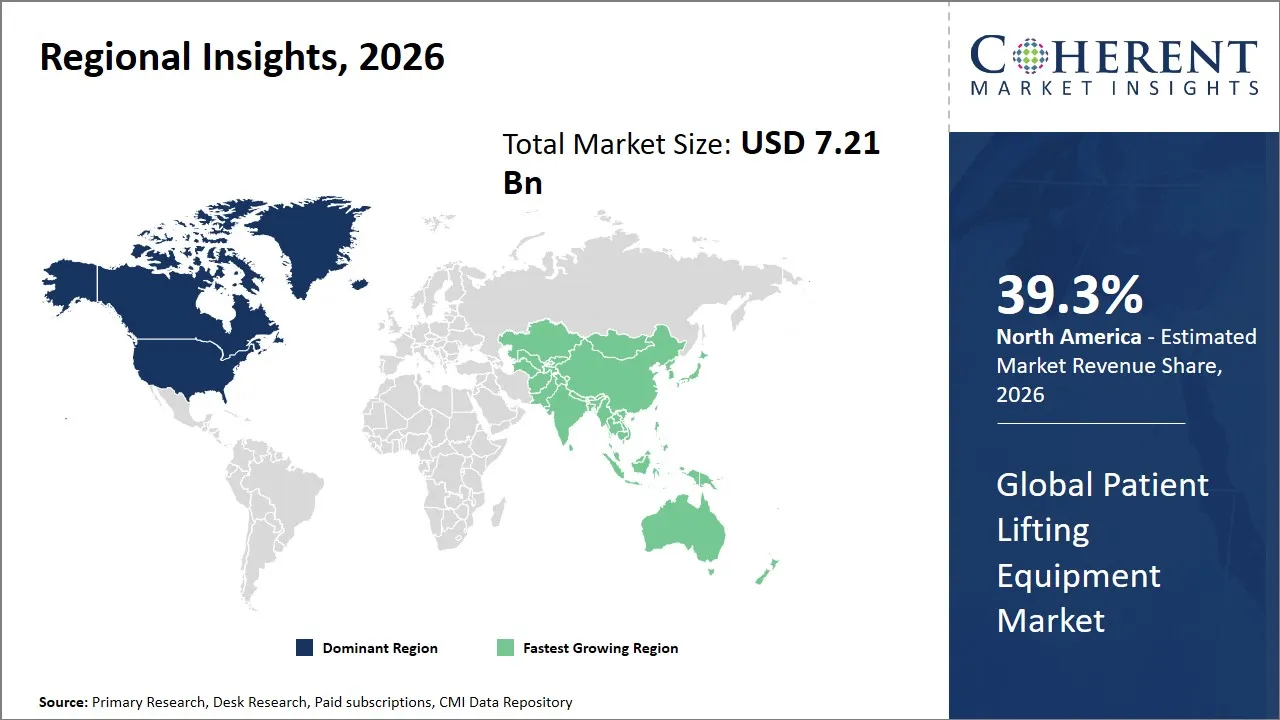
- North America is expected to lead the market, holding a share of 39.3% in 2026. Asia Pacific is anticipated to be the fastest-growing region, with 23.4% share in 2026.
Current Events and Its Impact
Current Events | Description and its Impact |
Hospitals accelerating “Safe Patient Handling & Mobility (SPHM)” adoption |
|
Healthcare workforce shortages pushing “mechanization” of patient transfers |
|
Segmental Insights
- Current Industry Events of 2026
- Market Size Estimation
- Regional Breakdown
- Competitive Landscape
- Customer Intelligence
- Segmental Analysis
- Pricing Analysis
- Key Market Drivers, Challenges & Future Trends
- Customized Insights Section
What Makes Mobile Patient Lifts the Most Widely Adopted Product Type Across Different Healthcare Environments?
Mobile patient lifts have ensued to become the most prevalent product category in the global patient lifting equipment market with an estimated market share of 32.5% in 2026, owing to its ability to be mobile and flexible to suit the mobility needs of both patients and caregivers. Unlike the fixed ceiling lifts or special systems, mobile lifts have the advantage of moving patients around with efficiency in different environments even without the need to be installed permanently. This elasticity can be very beneficial in hospitals, rehabilitation facilities, nursing homes, and at home care settings where layout can vary or where patients have to move between different rooms.
For instance, Baxter International, a global medtech leader in hospital and critical care products, highlighted its Hillrom portfolio for patient lifting equipment. Baxter showcased mobile patient lifts like Golvo, Viking, Liko M220/M230, and Uno for safer patient transfers. The range supports rooms without ceiling lifts and reduces staff strain during handling.
(Source: https://www.hillrom.com/en/products/sph-mobile-lifts/)
Why Do fully Dependent Patients Dominate the Market?
The most important segment of the patient mobility level is the fully dependent patients segment in the patient lifting equipment market with an estimated share of 46.7% in 2026. This population consists of people who possess minimal to no voluntary motor activity and can move solely with the help of caregivers or mechanical support. As a result, their requirements are specialized and necessitate lifting solutions that are safe, comfortable, and do not risk the health of caregivers.
The growing number of chronic and age-related diseases with severe cases of mobility impairment, including spinal cord injuries, stroke, multiple sclerosis, and severe forms of neuromuscular diseases, is one of the main factors driving growth in this segment.
What is the largest application segment in the Patient Lifting Equipment Market?
Bed to chair transfers are the most important and frequent use of the patient lifting equipment market in 2026 with an estimated share of 23.5% which is the highest one among all application segments This process of safely moving patients out of bed and into a chair is crucial in both clinical and rehabilitative settings, as well as home care environments. It helps facilitate mobility, prevents the onset of complications, and promotes patient independence.
The number of transfers that patients with different levels of mobility impairment need per day is an important factor that contributes to the development of this application segment. These transfers are handled several times in a day to help in hygiene, feeding, physiotherapy, and socialization. Safe and efficient bed-to-chair transfers serve as prevention measures against falls, skin damages, and muscle deconditioning that are typical risks related to improper manual handling.
Smart Bed & Mobility Ecosystem Integration for Efficient Patient Transfers - Patient Lifting Equipment Market
- Integration with beds and mobility systems is becoming a core differentiation in the patient lifting equipment market, because hospitals and long-term care facilities want fewer transfers, less manual handling, and faster workflows. Modern lifts are increasingly designed to work seamlessly with electric beds, wheelchairs, stretchers, and transfer aids, enabling smoother “bed-to-chair” and “chair-to-toilet” movements. This reduces caregiver strain and injury risk, improves patient comfort, and supports safer handling of heavier or high-dependency patients especially in bariatric and post-surgical care.
- This integration is also being pushed by demand for connected care environments, where mobility devices align with room layouts and standardized mounting/charging points. Facilities prefer ecosystems where ceiling lifts, mobile lifts, slings, and bed accessories are compatible across wards, lowering training time, and spare-part complexity. Over the next few years, vendors that offer interoperable systems with quick-attach accessories, modular rails, and compatibility across bed frames and mobility aids will win more institutional contracts.
Regional Insights
North America Patient Lifting Equipment Market Analysis and Trends
North America is expected to lead the global patient lifting equipment market, with an estimated share of 39.3% in 2026. This dominance is driven by a well-developed healthcare infrastructure, widespread use of advanced medical equipment, and strong state support for patient safety and caregiver ergonomics. The high population of geriatrics and prevalence of chronic diseases create the need to have lifting equipment aimed at enhancing patient mobility and minimizing the amount of injuries sustained by health practitioners.
The headquarters and the major R&D centers of well-known companies such as Hill-Rom Holdings Inc., Stryker Corporation, and Invacare Corporation are located in this region, which results in the constant product development and the large distribution networks.
For example, Invacare Corporation, a global non-acute medical equipment manufacturer, launched Birdie Evo XPLUS in the U.S. patient lifting equipment market. The lift targets post-acute care transfers between bed, chair, and floor. It adds Slow’R Integrated Dampener to reduce rocking for safer, smoother lifting. It also features an ergonomic sling hook to prevent strap slippage and injury. Invacare positioned the launch as a scale-up after strong European reception.
Asia Pacific Patient Lifting Equipment Market Analysis and Trends
The Asia Pacific patient lifting equipment market has the most aggressive growth outlook with an estimated share of 23.4% in 2026 due to the high rate of urbanization, growing awareness about patient care standards, ageing population, and growing healthcare facilities in emerging economies. In China, India, Japan, and South Korea, among others, governments are increasingly carrying out healthcare reform and increasing their investments in modernization and rehabilitation centers and this increases their demand of solutions to address patient handling.
The industry presence in the region is growing, and several local firms as well as foreign investors are joining partnerships or putting up production hubs to serve low-end markets. The growth is also reinforced by the trade dynamics since Asia Pacific is not only another big consumer but also a big manufacturing center of the patient lifting equipment.
Global Patient Lifting Equipment Market Outlook for Key Countries:
How is the U.S. Aging Population Increasing the Demand for Patient Lifting Equipment in Hospitals, Nursing Homes, and Homecare?
The patient lifting equipment market in the U.S. has remained at the forefront of the world due to high healthcare expenditure and rigid regulations that are implemented by different agencies like the U.S. FDA. The market is advantaged by the constant investment in ergonomic solutions of patient handling that focus on decreasing the number of injuries of healthcare workers and their ability to increase patient comfort and safety.
Vendors such as Hill-Rom and Stryker have played key roles in implementing robotics-guided and intelligent lifting technologies, which help to promote improved clinical outcomes. The U.S. is also at the forefront in innovation with relationships between universities and medical gadget producers which guarantees the state of the art products to be affordable and reachable.
Why are Staffing Shortages in Germany Pushing Facilities to Adopt Powered Lifting Systems to Reduce Manual Handling?
The patient lifting equipment market in Germany is very healthy and it is supported by the well-developed healthcare system and powerful governmental measures aimed at patient safety and workplace health. The strict European Union medical equipment laws governing the country impose on the quality of their products, which force the manufacturing companies to be innovative and to ensure the reliability of their products.
German manufacturers, Stiegelmeyer and Arjo specialize in customized and very durable equipment, designed to meet the requirements of hospital and long-term care units. The availability of a developed distribution structure and incorporation of IoT-devices also increase the power of the Germany patient lifting equipment market.
Japan Patient Lifting Equipment Market Trends
The Japan patient lifting equipment market is a large and influential one influenced by one of the oldest populations in the world and high priorities on eldercare technologies. Policies by the government to encourage automated solutions to the labor shortages within the healthcare system have increased the use of sophisticated patient lifting systems.
Firms such as Panasonic Healthcare and Fuji Medical concentrate on easy and convenient gadgets suitable in hospitals and homes. The powerful healthcare ecosystem in Japan promotes a partnership between technology companies and healthcare organizations, which has enabled the innovation and implementation of products in a short time.
China Patient Lifting Equipment Market Trends
The market of patient lifting equipment in China is growing fast due to the construction of the healthcare infrastructure and the rise in interest of people towards patient safety. The healthcare reform policies in the form of government investments focus on the enhancement of hospital facilities and rehabilitation services, facilitating the demand for patient lifting equipment.
Domestic and international firms like Joerns Healthcare and Arjo are both rapidly increasing their operations to utilize the large population base and manufacturing potential of China. The changing regulatory environment facilitates compliance with quality, which facilitates market confidence and adoption.
End User Feedback and Unmet Needs - Patient Lifting Equipment Market
- Hospitals, nursing homes, and home-care providers value patient lifting equipment that improves safety and saves time during daily transfers. The most repeated feedback is about stability, ease of use, and comfort for both caregiver and patient. Ceiling lifts are often praised in long-term care because transfers feel smoother, staff strain drops, and patients feel more secure and dignified. On the other hand, mobile floor lifts are commonly criticized in crowded rooms since they can be bulky to position, harder to steer, and slower when space is tight or the patient needs frequent repositioning.
- Unmet needs are mostly practical and operational. End users want more compact designs, faster sling attachment, better sling comfort for long wearing time, and stronger compatibility with beds, wheelchairs, and accessories across brands. In home care, affordability and weak after-sales support remain major barriers, including setup, servicing, and caregiver training. Solving these gaps opens clear growth opportunities, because facilities will prioritize equipment that reduces injury risk, improves workflow speed, and lowers the total cost of ownership over time.
Market Players, Key Developments, and Competitive Intelligence
Key Developments
- On January 13, 2026, Baxter International Inc., a U.S.-based medical technology company, introduced the Dynamo Series smart stretcher for patient lifting equipment needs. The stretcher supports in-stretcher procedures, reducing patient transfers and staff strain. It includes connected safety tools like fall-risk visual cues and bed-exit alarms.
- In June 2025, Winncare, a medical device manufacturer, launched the Luna X5 ceiling lift for patient lifting equipment in home settings. It works portable and lifts 150kg, 200kg, or 275kg. The system supports complex installs with a 2,500mm lifting height and fewer building changes. Its sleek Danish design helps hoists blend into domestic interiors for better acceptance.
- In April 2025, Arjo, a global medical device technology company, launched the Maxi Move 5 for patient lifting equipment and safer transfers. This mobile floor lift targets fewer caregiver injuries and smoother workflows in hospitals. It introduces Arjo Motion Assist for easier push, pull, and pivot transfers. It also adds powered dynamic positioning for more accurate seated repositioning.
- In May 2025, Crown Equipment, a U.S.-based forklift and warehouse equipment manufacturer, launched its ProximityAssist System for safer material handling operations. The LiDAR-based operator assist system detects objects in the forklift’s travel path. It automatically slows the truck while keeping full operator control. The system gives visual and audible alerts via Crown displays.
Top Strategies Followed by Global Patient Lifting Equipment Market Players
Player Type | Strategic Focus | Examples |
Established Market Leaders | Heavy R&D investments to launch high-performance lifting systems with stronger safety, usability, and durability. Scale through OEM tie-ups, hospital partnerships, and wider distribution to strengthen global coverage and penetrate emerging markets. | Players such as Arjo, Hillrom (Baxter), and Handicare focus on product innovation, safer patient transfers, large institutional tie-ups, and expanding distribution networks across high-growth regions. |
Mid-Level Players | Compete on value by offering cost-effective equipment without sacrificing reliability. Drive growth through manufacturing efficiency, supply chain strengthening, and partnerships with technology providers or local distributors to expand reach at lower cost. | Companies such as Invacare, Joerns Healthcare, and Guldmann focus on dependable mid-priced solutions for nursing homes, clinics, and homecare, supported by distributor-driven regional expansion. |
Small-Scale Players | Build niche advantage through specialized designs and newer features like ergonomic improvements, smart sensors, and IoT-enabled monitoring. Enter markets through local alliances with startups, regional manufacturers, and healthcare providers for faster adoption. | Smaller innovators and regional brands often launch targeted products for rehab centers and homecare settings, using local partnerships to adapt quickly to facility needs and procurement cycles. |
Market Report Scope
Patient Lifting Equipment Market Report Coverage
| Report Coverage | Details | ||
|---|---|---|---|
| Base Year: | 2025 | Market Size in 2026: | USD 7.21 Bn |
| Historical Data for: | 2020 To 2024 | Forecast Period: | 2026 To 2033 |
| Forecast Period 2026 to 2033 CAGR: | 4.7% | 2033 Value Projection: | USD 9.94 Bn |
| Geographies covered: |
| ||
| Segments covered: |
| ||
| Companies covered: | Baxter International Inc., ICU Medical, Inc., B. Braun Melsungen AG, Fresenius Kabi AG, Grifols S.A., Otsuka Pharmaceutical Co., Ltd., Technoflex SAS, PolyCine GmbH, JW Life Science Corp., Renolit SE, Nipro Corporation, Sippex IV Bag Solutions, SSY Group Limited, Terumo Corporation, and Mitra Industries | ||
| Growth Drivers: |
| ||
| Restraints & Challenges: |
| ||
Patient Lifting Equipment Market Dynamics
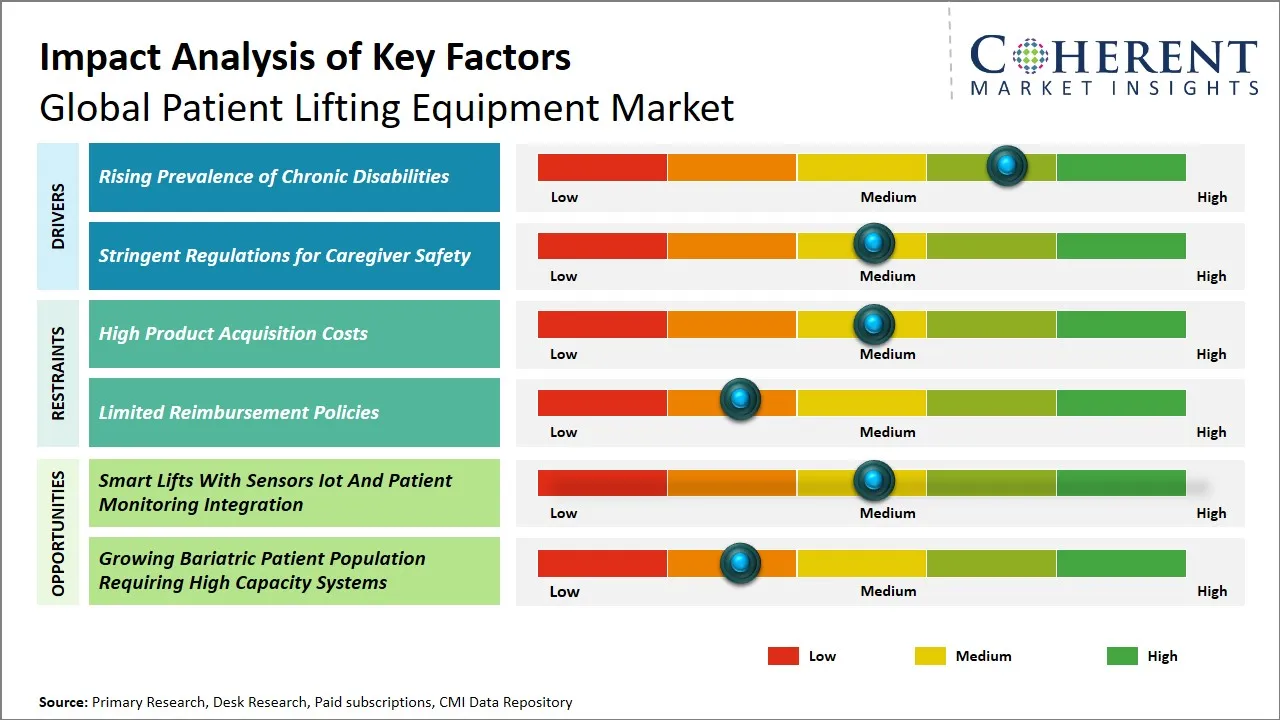
Patient Lifting Equipment Market Driver - Rising Prevalence of Chronic Disabilities
The rising case of people with chronic disability greatly drives the demand for patient lifting equipment in the health care environment. Conditions like stroke, multiple sclerosis, injuries to the spinal cord, age related mobility impairments usually lead to long term physical limitations, which require special equipment to help in the safe handling and transfer of patients. With the aging of the world population and the spread of chronic illnesses, healthcare professionals are becoming more concerned with reducing the burden on the caregivers and keeping the patients safe and comfortable during the mobility support.
All these reasons encourage the implementation of new lifting systems with ergonomic advantages, minimized chances of injuries among healthcare providers, and enhanced patient outcomes. Moreover, the increased awareness of the significance of rehabilitative assistance and the transition to the home-based care settings also only increase the necessity of effective lifting equipment, which leads to the continuous growth and development in this industry.
In March 2023, WHO, a global public health agency, highlighted disability care gaps driving Patient Lifting Equipment demand. WHO stated 1.3 billion people live with significant disability worldwide today. Many face inaccessible healthcare, transport barriers, and higher chronic disease risks. Hospitals and care homes are strengthening safe patient handling to reduce injuries. This is accelerating the adoption of ceiling lifts, mobile lifts, and sit-to-stand devices. The push also supports inclusive healthcare access and safer mobility for patients.
(Source: https://www.who.int/news-room/fact-sheets/detail/disability-and-health)
Patient Lifting Equipment Market Opportunity - Integration of Smart Lifts with IoT and Patient Monitoring Systems
The introduction of smart lifts with superior sensors, Internet of Things (IoT) connectivity, and patient monitoring capabilities is likely to put the global patient lifting equipment market on the right path to success. This technological advancement responds to the increasing need to have greater safety levels, efficiency of operations, and real-time data tracking of the health condition in both hospital and home care settings. Sensors can also be integrated into smart patient lifts which can dynamically measure the load weight, incorrect lifting postures, and avoid accidents by automatically changing movement parameters and therefore the chances of harming the patients and the caregivers are minimized.
The integration of internet of things connectivity also facilitates remote monitoring and data gathering where health practitioners are able to monitor usage pattern, maintenance requirements, and patient vital information in real time. It is a predictive maintenance based on this data-driven method and reduces the downtimes and maximizes the equipment lifespan.
In November 2025, Philips, a global health technology company, received U.S. FDA 510(k) clearance for Cardiovascular Workspace. The update adds cloud and SaaS access to speed reporting and support advanced AI analysis. Amazon Web Services, a cloud infrastructure leader, supports deployment through Philips HealthSuite collaboration. Hospitals can access patient imaging remotely with secure, scalable workflows and lower IT burden.
Analyst Opinion (Expert Opinion)
- The patient lifting equipment market is growing because hospitals and care facilities can’t keep relying on manual handling anymore. Staff injuries, patient fall risk, aging populations, obesity-linked mobility needs, and chronic caregiver shortages are forcing faster adoption of ceiling lifts, mobile lifts, sit-to-stand devices, and smarter sling systems. Safety expectations are also tightening, with workplace health bodies pushing safe patient handling practices to reduce musculoskeletal injuries and improve patient safety. The biggest opportunity sits in home care and long-term care, where patient volumes are rising but budgets are tighter. The toughest challenges remain high upfront costs, inconsistent staff training, installation constraints, and sling compatibility issues across brands.
- On the ecosystem side, adoption is being accelerated through major healthcare exhibitions such as MEDICA (Germany), Medical Expo India where mobility and lifting tech is showcased to hospital buyers alongside broader care delivery solutions. Recent market-moving instances include Invacare’s Robin EVO ceiling hoist launch (March 2025) and Winncare’s new-generation ceiling lift launch (June 2025), both positioned around safer transfers and lower caregiver strain. These developments show where the market is heading: quieter, easier-to-use systems that fit modern care settings, enable faster transfers, and make safe handling a routine workflow standard rather than optional equipment.
Speak to the analyst
Want personalized insights?
Take the findings above to one of our principal consultants, or have the report rebuilt around the segments, geographies and competitors you actually track.
Market Segmentation
- Product Type Insights (Revenue, USD Bn, 2021 - 2033)
- Mobile Patient Lifts
- Ceiling Lifts
- Sit to Stand and Transfer Aids
- Lateral Transfer Equipment
- Bathing and Toileting Lifts
- Stair and Vertical Mobility Lifting Systems
- Patient Mobility Level Insights (Revenue, USD Bn, 2021 - 2033)
- Fully Dependent Patients
- Partially Weight Bearing Patients
- Ambulatory High Fall Risk Patients
- Application Insights (Revenue, USD Bn, 2021 - 2033)
- Bed to Chair Transfers
- Chair to Toilet Transfers
- Repositioning in Bed
- Lateral Transfers
- Bathing and Hygiene Transfers
- Emergency and Bariatric Transfers
- Weight Capacity Insights (Revenue, USD Bn, 2021 - 2033)
- Standard Duty
- High Capacity Duty
- Bariatric Duty
- Power Source Insights (Revenue, USD Bn, 2021 - 2033)
- Manual
- Electric
- Hybrid
- End User Insights (Revenue, USD Bn, 2021 - 2033)
- Hospitals
- Long Term Care Facilities
- Home Healthcare
- Rehabilitation Centers
- Ambulatory Care and Clinics
- Distribution Channel Insights (Revenue, USD Bn, 2021 - 2033)
- Online
- Offline
- Regional Insights (Revenue, USD Bn, 2021 - 2033)
- North America
- U.S.
- Canada
- Latin America
- Brazil
- Argentina
- Mexico
- Rest of Latin America
- Europe
- Germany
- U.K.
- Spain
- France
- Italy
- Russia
- Rest of Europe
- Asia Pacific
- China
- India
- Japan
- Australia
- South Korea
- ASEAN
- Rest of Asia Pacific
- Middle East
- GCC Countries
- Israel
- Rest of Middle East
- Africa
- South Africa
- North Africa
- Central Africa
- North America
- Key Players Insights
- Baxter International Inc.
- ICU Medical, Inc.
- Braun Melsungen AG
- Fresenius Kabi AG
- Grifols S.A.
- Otsuka Pharmaceutical Co., Ltd.
- Technoflex SAS
- PolyCine GmbH
- JW Life Science Corp.
- Renolit SE
- Nipro Corporation
- Sippex IV Bag Solutions
- SSY Group Limited
- Terumo Corporation
- Mitra Industries
Sources
Primary Research Interviews
Industry Stakeholders List
- Healthcare Providers
- Equipment Manufacturers
End Users List
- Hospitals and Healthcare Facilities
- Home Care Providers
Government and International Databases
- World Health Organization (WHO)
- U.S. Centers for Disease Control and Prevention (CDC)
- National Institute on Aging (NIA)
- European Commission
- U.S. Department of Health & Human Services (HHS)
- National Institutes of Health (NIH)
Trade Publications
- Healthcare Business News
- The Journal of Patient Safety
- Health Affairs
- Hospital Equipment & Supplies Magazine
- Healthcare Technology News
- Healthcare Purchasing News
Academic Journals
- Journal of Medical Systems
- Journal of Rehabilitation Research and Development
- Ergonomics Journal
- The Journal of Patient Safety and Risk Management
- Journal of Clinical Nursing
- The Lancet
Reputable Newspapers
- The New York Times
- The Guardian
- The Wall Street Journal
- The Washington Post
- BBC News
- Reuters
Industry Associations
- American Medical Association (AMA)
- National Association for Home Care & Hospice (NAHC)
- International Ergonomics Association (IEA)
- American Physical Therapy Association (APTA)
- American Nurses Association (ANA)
- Health and Safety Executive (HSE)
Public Domain Resources
- U.S. Food and Drug Administration (FDA)
- Centers for Medicare & Medicaid Services (CMS)
- Public Health Agency of Canada (PHAC)
- European Medicines Agency (EMA)
- National Institutes for Health and Care Excellence (NICE)
- World Health Organization Global Health Observatory
Proprietary Elements
- CMI Data Analytics Tool: Proprietary analytics tool to analyze real-time market trends, consumer behavior, and technology adoption in market
- Proprietary CMI Existing Repository of Information for Last 8 Years
Get access to 250+ pages report
Every segment, forecast, competitor profile and data table behind the analysis above — available for instant download.
- ESOMAR Member
- ISO 9001:2015 Certified
- D-U-N-S Registered
- GDPR & CCPA Compliant
Missing comfort of reading report in your local language? Find your preferred language:
Transform your Strategy with Exclusive Trending Reports
Frequently Asked Questions
The global patient lifting equipment market is estimated to be valued at USD 7.21 Bn in 2026 and is expected to reach USD 9.94 Bn by 2033.
The CAGR of the global patient lifting equipment market is projected to be 4.7% from 2026 to 2033.
Rising prevalence of chronic disabilities and stringent regulations for caregiver safety are the major factors driving the growth of the global patient lifting equipment market.
High product acquisition costs and limited reimbursement policies are the major factors hampering the growth of the global patient lifting equipment market.
In terms of product type, mobile patient lifts are estimated to dominate the market revenue share in 2026.
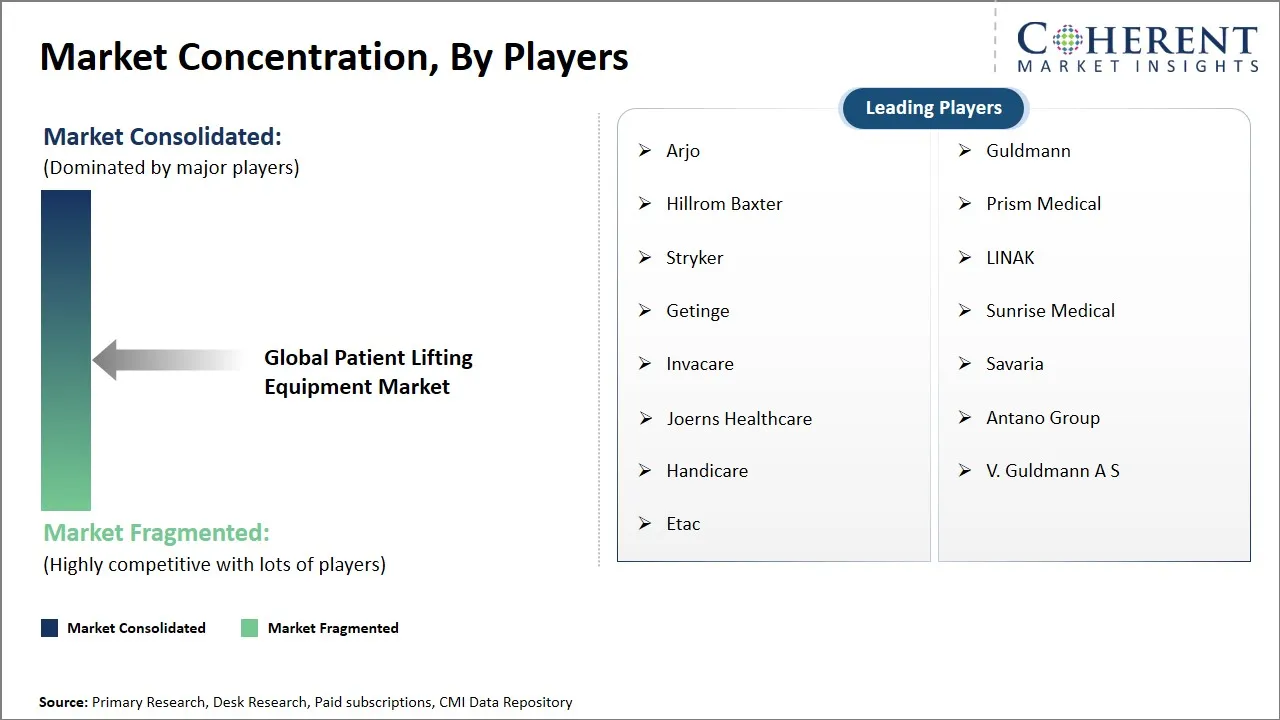
Arjo, Hillrom Baxter, Stryker, Getinge, Invacare, Joerns Healthcare, Handicare, Etac, Guldmann, Prism Medical, LINAK, Sunrise Medical, Savaria, Antano Group, V. Guldmann A S Industries are the major players.
They improve patient safety, reduce caregiver injury risk, and enhance care quality.