

Global Salmon Feed Market Size and Forecast – (2026-2033)
The Global Salmon Feed Market is estimated to be valued at USD 8.40 Bn in 2026 and is expected to reach USD 12.62 Bn by 2033, reflecting a compound annual growth rate (CAGR) of 6.0% from 2026 to 2033.
Key Takeaways of the Salmon Feed Market
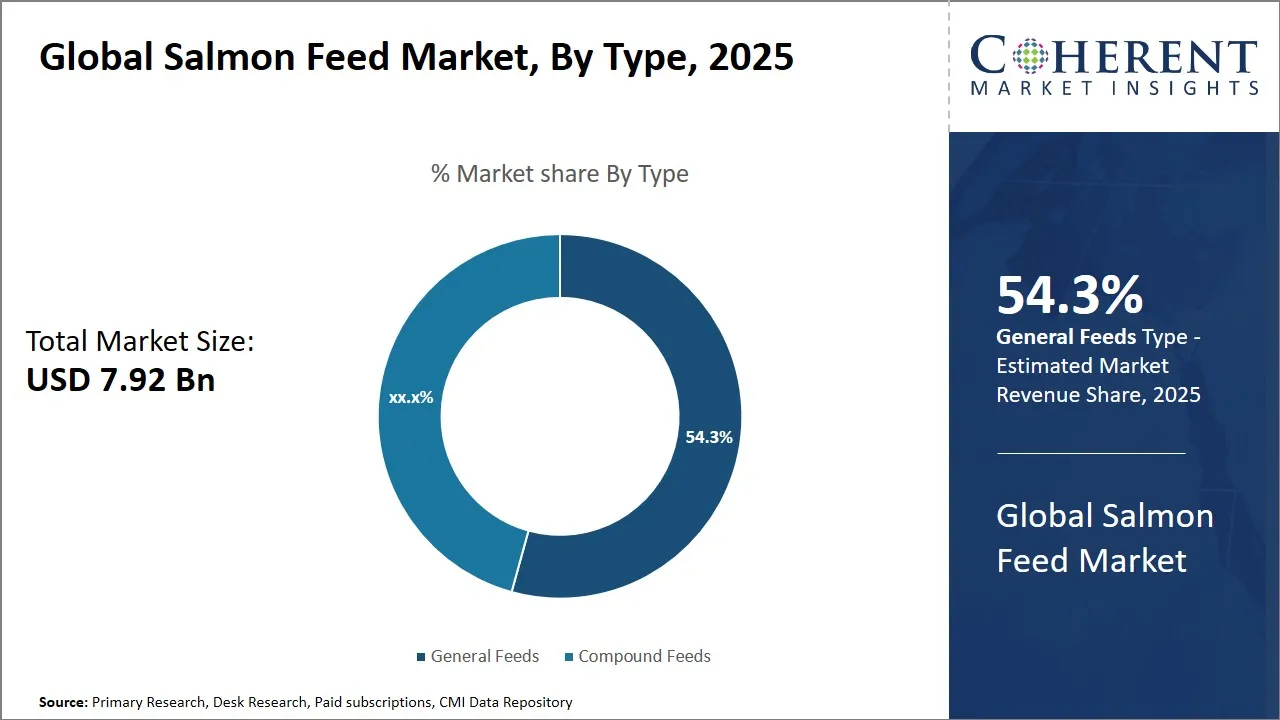
- General feeds segment is expected to hold 55.3% of the salmon feed market share in 2026.
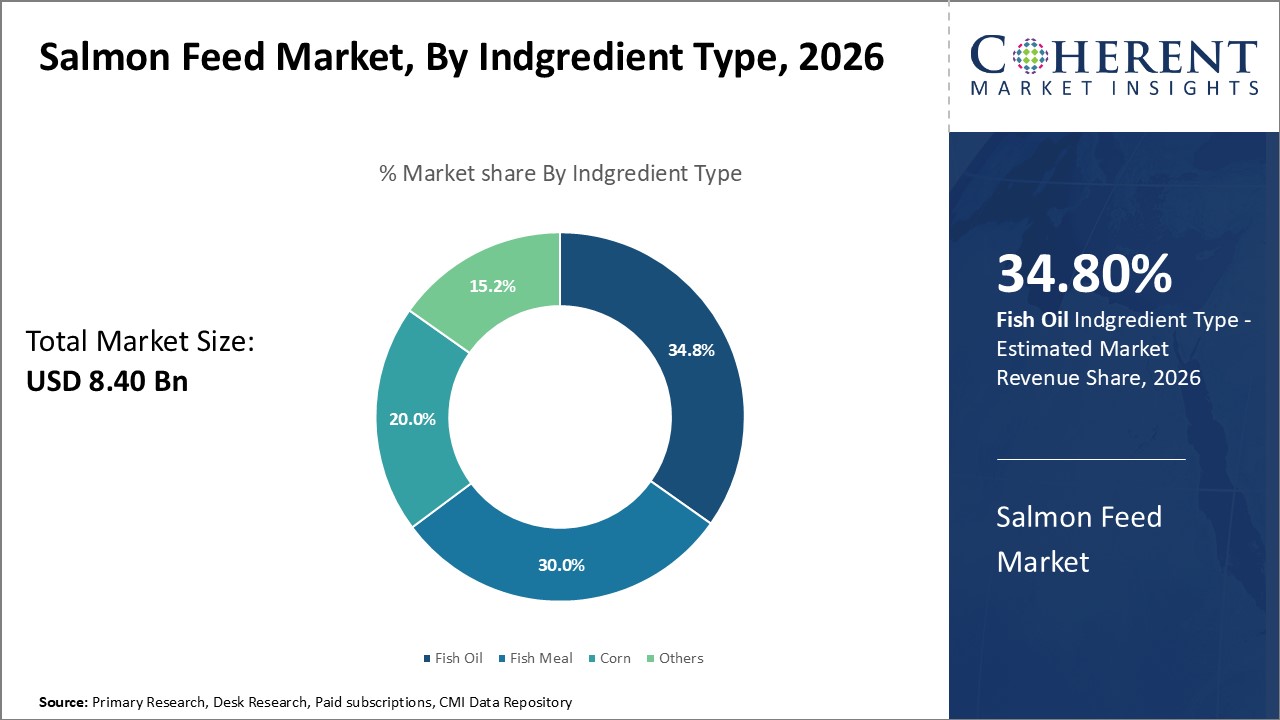
- The fish oil segment is estimated to account for 34.8% of the market share in 2026.
- Indirect sales segment is projected to hold 67.8% of the global salmon feed market share in 2026.
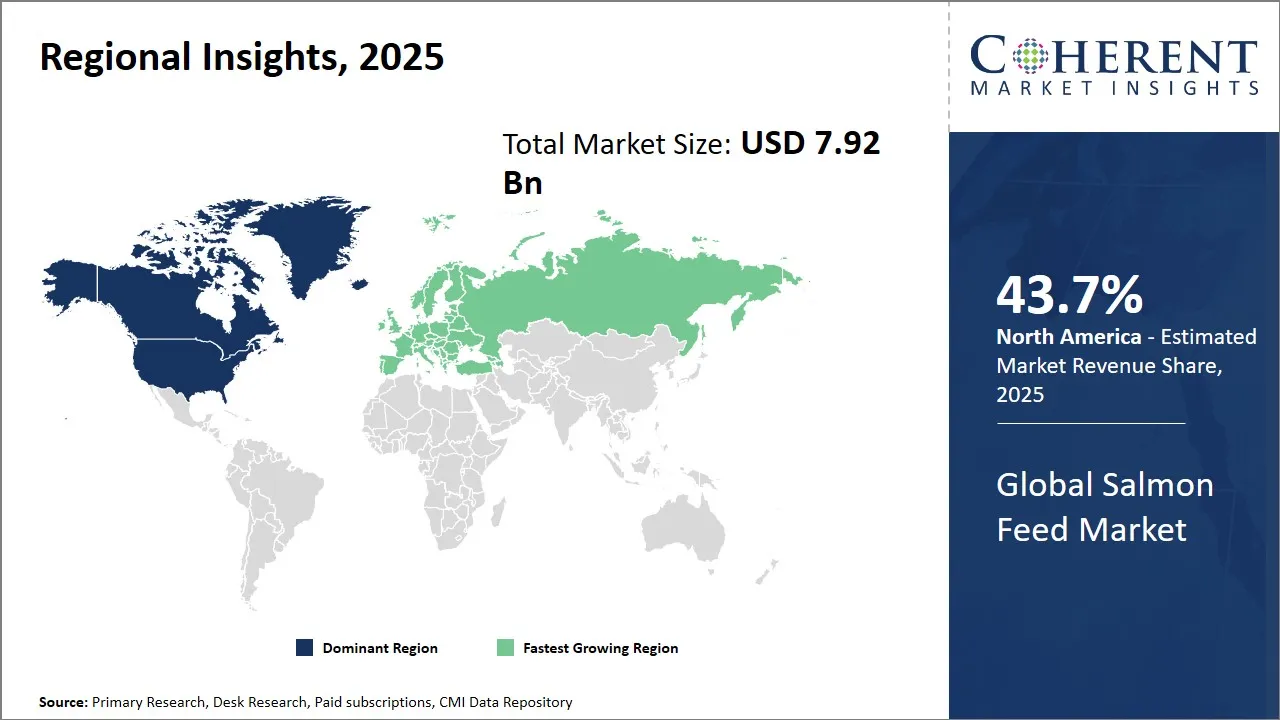
- North America will dominate the salmon feed market in 2026 with an estimated 43.7% share.
- Europe will hold 20.3% share in 2026 and record the fastest growth.
Market Overview
- A key trend shaping the salmon feed market is the growing emphasis on sustainable and eco-friendly feed ingredients.
- Manufacturers are increasingly incorporating alternative protein sources such as insect meal, algae, and plant-based proteins to reduce reliance on traditional fishmeal and fish oil, omega 3 ingredients, minimizing environmental impact.
- Additionally, innovations in feed additives that enhance fish health, growth rates, and disease resistance are gaining traction.
- Digital technologies and precision feeding are also being adopted to optimize feed usage, reduce waste, and improve overall operational efficiency in salmon farming.
Currents Events and Its Impact
Current Events | Description and its Impact |
Climate‑Driven Feed Ingredient Volatility |
|
Inflation and Input Cost Inflation |
|
Segmental Insights
- Current Industry Events of 2026
- Market Size Estimation
- Regional Breakdown
- Competitive Landscape
- Customer Intelligence
- Segmental Analysis
- Pricing Analysis
- Key Market Drivers, Challenges & Future Trends
- Customized Insights Section
Why Does General Feeds Dominate the Salmon Feed Market in 2026?
General feeds are expected to hold 55.3% of the salmon feed market share in 2026. This is enabled mostly by the flexibility and affordability of general feeds that fulfil the general nutritional requirements of farmed salmon without the specialization and complexity of compound feeds. General feeds provide a balanced composition of the important nutrients that include proteins, lipids, vitamins and minerals and these are very important in the healthy growth and development of salmon in various aquaculture environment.
As an example, in the initial development phases of salmon farming when the fish are small and more active, the general feeds are usually used because they are cheap and able to support the fish in the quest to attain their fundamental energy requirements and growth needs. Since the fish grows, the producers only need to make minor changes on the nutrient content of the feed according to the growth needs as they do not need to switch to more specialized compound feeds. This flexibility compels general feed to be a viable option among cost-effective and large scale salmon farming enterprises.
Fish Oil as a Crucial Ingredient Driving Market Leadership
Fish oil segment is projected to hold 34.8% of the global salmon feed market share in 2026, which highlights its crucial position in the salmon nutrition. The availability of fish oil owes most of its popularity to excellent content of omega-3 fatty acids, specifically EPA (eicosapentaenoic acid) and DHA (docosahexaenoic acid), which have been shown to be essential in ensuring optimum health, growth and quality of flesh in farmed salmon. These fatty acids are also known to not only benefit the physiological health of the fish but also increase the nutritional value of the end product to human consumption and fish oil is therefore a vital ingredient in salmon feeds.
Fish oil is not only nutritionally good but it is also a major enhancer of the palatability and digestibility of feeds. Farmers and feed formulators are aware of increasing feed consumption with inclusion of fish oil, that results in improved feed to feed ratio and faster growth rates in salmon, which is a key performance indicator in aquaculture. Additionally, the effect that fish oil has on maintaining immune systems makes the oil lower mortality and disease outbreak issues that are central in overcrowded salmon farming facility.
Indirect Sales Segment Dominate the Global Salmon Feed Market
Indirect sales are expected to dominate with 67.8% share in 2026. The advantage of using indirect sales channels lies in the fact that they offer good logistical opportunities, such as timely supply of feed products, in areas with the salmon farming industry rapidly growing, but the manufacturers have no direct access.
The large network that distributors have built assists in overcoming geographical and infrastructural hurdles especially in remote or new markets. Distributors usually have warehouses near to aquaculture centers which in addition to cutting down on the delivery time they also enable farmers to buy feed in small bundles that will meet their immediate demands thus making the process more flexible.
Regional Insights
North America Salmon Feed Market Analysis and Trends
The North America region is projected to lead the market with a 43.7% share in 2026, due to rising demand for sustainable seafood and increasing aquaculture production. The efforts of the government to encourage eco-friendly behavior and feed innovations are the driving forces. The large feed suppliers such as Cargill, Skretting and BioMar have been developed locally, enhancing the availability and affordability of feeds. Market dynamics are also improved with the well-established regulatory framework of the region and the increasing import-export activities.
Europe Salmon Feed Market Analysis and Trends
The Europe region is expected to exhibit the fastest growth in the market contributing 20.3% share in 2026, due to its existing aquaculture infrastructure especially in Norway, Scotland and Ireland countries. The area is also enjoying a well-developed regulatory system based on the sustainable practice in aquaculture that promotes the introduction of innovative feeds to minimize environmental harm. The industry boasts to the Europeans of salmon a great deal of research institutions and technology suppliers, which help to promote efficient production and development of high-quality feeds.
The government subsidies and the strict quality norms guarantee the producers of feed to have sustainable and healthy lines of products. The dominance of European regions in the market is reinforced by the dominance of leading companies like Skretting (part of Nutreco), Biomar and EWOS that spearhead provision of high-performance feeds in the salmon, which optimum growth rates and health of Atlantic salmon. Its competitive advantage is also added by the fact that the regions engage in trade, and their export networks are very strong, both in Asia Pacific and America.
Global Salmon Feed Market Outlook for Key Countries
Norway Salmon Feed Market Trends
The salmon feed market in Norway is the backbone of the global salmon feed ecosystem by its extensive coastline and good environmental practices that support salmon production. The robust regulatory control of the country allows the development of food to be sustainable and aims at minimizing the consumption of marine ingredients at the expense of expanding the use of alternative sources of protein such as insect and algae-based feeds. Skretting and BioMar are the main players in the technological innovations in feed mixing to suit aquaculture requirements in Norway, which significantly shapes the world feed standards and practice.
Chile Salmon Feed Market Trends
Chile salmon feed market is growing at a very rapid rate due to its status as one of the best salmon producers in the world. The government facilitates the use of modern feed solutions to disease control and growth productivity through development programs and sustainability certifications on aquaculture. Large market participants such as Cargill and Camanchaca invested heavily in local feed mills, facilitating feed innovation to meet the local farming conditions and export requirements in Chiles diverse farming environment.
Scotland Salmon Feed Market Trends
Quality aquaculture feed remains a key area of expertise in Scotland whereby; there is a high level of sustainability and traceability that satisfies the rigorous demands of the European market. There is continuous involvement of the Scottish government and industry organizations in the area of R&D in feed technology that is leading to advancement in environmentally friendly ingredients and feed additives to enhance fish health and welfare. Firms like Biomar and EWOS are long-established companies, which is in line with the Scotlands reputation as a high-quality salmon producer.
Is China the Key Driver for the Growth of the Salmon Feed Market in Asia Pacific?
The market of salmon feed in China is dynamic based on the growth of domestic salmon feed and strict government control in the guarantee of food safety and protecting the environment. Investments in the country are increasing with international companies such as Alltech and Inve Aquaculture, which combine superior feed technologies and local ingredient sources. The vast aquaculture sector and rising demand of consumers in the region of quality seafood is strengthening feed markets development, which contributes to making Chinas a critical participant in the Asia Pacific region.
Is Japan's Focus on Premium Seafood Driving Growth in the Salmon Feed Market?
Japan’s salmon feed market focuses heavily on high-quality salmon products, supported by stringent regulatory standards and consumer preferences for premium seafood. The local feed industry, although smaller compared to production hubs, emphasizes innovation in feed efficiency and health-promoting additives. Companies like Nichimo and Nisshin Feed have been instrumental in supplying specialized feeds suited to Japanese aquaculture operations, aligning with the country’s commitment to sustainability and product safety.
Raw Material Sourcing — Salmon Feed Components
Ingredient | Primary Sources | Supply Constraints & Notes | Sourcing Risk Factors |
Fishmeal | Anchovy, sardine, menhaden fisheries (Peru, Chile, USA) | Limited volume; quotas tightly regulated; essential for marine protein fraction | Stock depletion, environmental regulation, climate effects |
Corn/Grain By‑Products | USA, Brazil, Argentina | Used for carbohydrate/energy balance in feed | Price linked to broader grain markets; competition with livestock feed |
Feed Conversion Ratio (FCR) vs Feed Formulation Benchmarking
Feed Type | Key Ingredients | FCR Target | Impact on Salmon Growth | Market Adoption Rate |
General Feeds | Fish meal, plant protein, grains | 1.2–1.4 | Standard growth rate, suitable for various life stages | High |
Compound Feeds | Fish meal, soy protein, oils | 1.1–1.3 | More efficient growth with specialized nutrition | Medium |
Functional Feeds | Fish meal, micro-ingredients, essential fatty acids | 1.0–1.2 | Optimal growth with tailored formulations to enhance immunity and disease resistance | Low |
Market Players, Key Development, and Competitive Intelligence
Key Developments
- In September 2024, the salmon harvesting company Mowi Scotland from U.K. manufacturer the Gael Force Group (GFG) launched its new feed barge at the facilities of GFG affiliate shipyard Nauplius Workboats in the Netherlands.
- In March 2024, ASC provided single-site Feed Standard Certification to the Thai Union for its Samut Sakhon, Thailand-based Mahachai Plant. Mahachai Plant produces feed for seabass, seabream, meager, tilapia, and shrimp.
- In March 2024, the Global Salmon Initiative (GSI) collaborated with the World Wildlife Fund (WWF) for the launching of a joint environmental, social, and governance (ESG) risk assessment tool designed for feed ingredients. The tool takes three years to develop and offers a framework for farming organizations to collaborate with feed suppliers alongside properly assessing potential risks in the feed supply chain.
Top Strategies Followed by Global Salmon Feed Market Players
Player Type | Strategic Focus | Example |
Established Market Leaders | Heavy investment in R&D and innovation | For example, Skretting, a global leader in aquafeed, which is heavy investor in R&D in order to produce eco-friendly and high efficiency feed solutions. The future of sustainable aquaculture is being propelled by the sustainable sourcing and alternative sources that are pushed up by the companies like insect protein. |
Mid-Level Players | Cost-effective solutions with balanced quality | BioMar, the large player in the mid-segment segment, which develops a product range that is quality-based, high in nutritional value and balance between cost and value in order to stay value conscious. |
Small-Scale Players | Niche specialization & innovative variants | InnovaProvides the industry, sustainable alternatives to feed, insect protein and other innovative ingredients in an attempt to enhance the nutritional quality and sustainability of the salmon farming industry. |
Market Report Scope
Global Salmon Feed Market Report Coverage
| Report Coverage | Details | ||
|---|---|---|---|
| Base Year: | 2025 | Market Size in 2026: | USD 8.40 Bn |
| Historical Data for: | 2020 To 2024 | Forecast Period: | 2026 To 2033 |
| Forecast Period 2026 to 2033 CAGR: | 6.0% | 2033 Value Projection: | USD 12.62 Bn |
| Geographies covered: |
| ||
| Segments covered: |
| ||
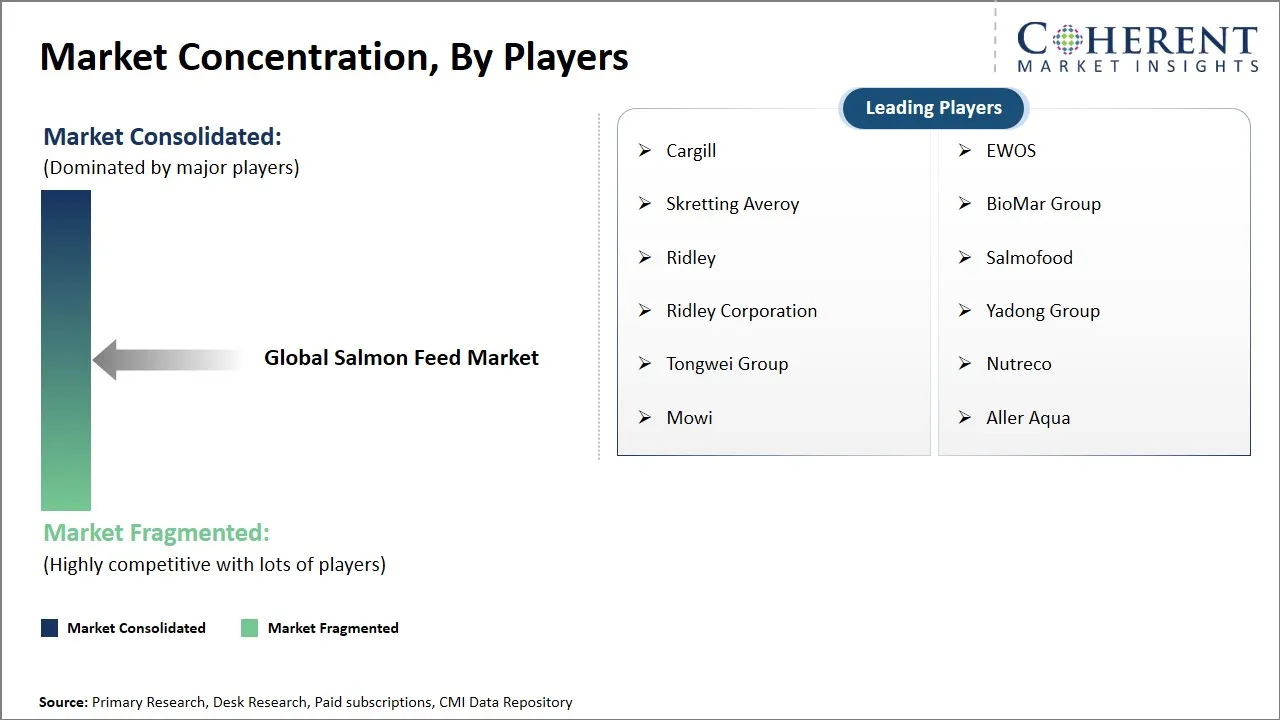
| Companies covered: | Cargill, EWOS, Skretting Averoy, BioMar Group, Ridley, Salmofood, Ridley Corporation, Yadong Group, Tongwei Group, Nutreco, Mowi, and Aller Aqua | ||
| Growth Drivers: |
| ||
| Restraints & Challenges: |
| ||
Salmon Feed Market Dynamics
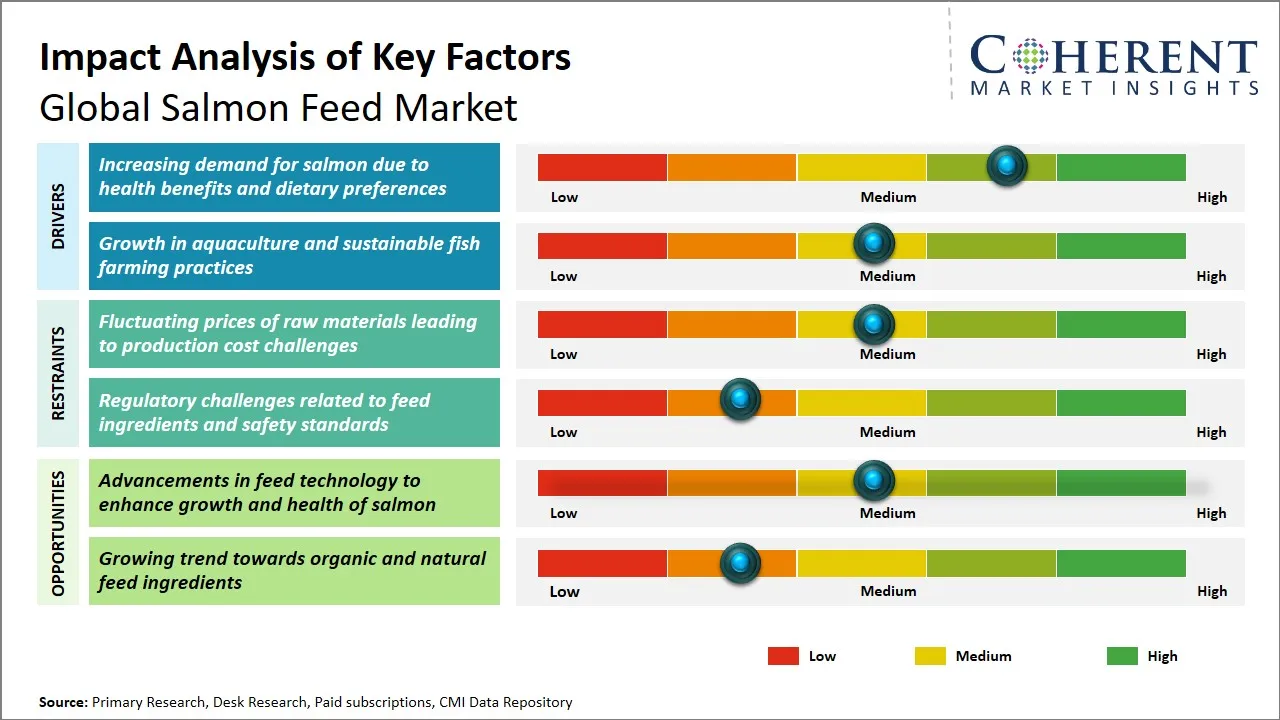
Salmon Feed Market Driver - Increasing Demand for Salmon due to Health Benefits and Dietary Preferences
The growing consumer focus on health and wellness is contributing greatly in driving the demand on salmon, which is largely known to be a good source of nutrition, in terms of its rich content of omega-3 fatty acids, essential proteins, and vitamins. With the increased awareness of the benefits of a balanced diet worldwide, salmon has become a favorite among health-conscious individuals who want to consume heart hearty foods that are also good at boosting the brain. Also, changing food preferences, including the increase in flexitarians and pescatarianism, have also contributed to the growth of salmon as a healthy and eco-friendly protein source.
An example is that the U.S. Department of Agriculture (USDA) has continuously maintained dietary guidelines that recommend salmon as an important source of omega-3 fatty acids, which has been associated with increased cardiovascular health. Moreover, the dietary trends such as the Mediterranean Diet, which is based on fish eating, have increased the level of salmon consumption across the world.
Salmon Feed Market Opportunity - Advancements in Feed Technology to Enhance Growth and Health of Salmon
The global salmon feed market is experiencing immense potential due to the current developments in feed technology that are being pursued to enhance growth of salmon as well as their general health. Nutritional formulations, such as the addition of functional ingredients, are being used to facilitate easier nutrient absorption and disease resistance in farmed salmon, including the addition of probiotics, prebiotics, and essential fatty acids. The solutions of these developments contain such important issues as optimization of the growth rate, immune system development, and minimization of the environmental impact linked with the waste of feed.
As an example, Skrettings SalmoStarter feed, incorporates a particular strain of probiotic to improve the gut health of young salmon to increase growth, and improve feed conversion ratios.
Analyst Opinion (Expert Opinion)
- The salmon feed market is rapidly expanding, mainly due to the constant global need for nutritious seafood and the uplift of sustainable aquaculture practices. The Aquaculture Europe Conference (2023) and the Global Seafood Expo (2022) have given a glimpse into the future and highlighted the innovations, among which those from Skretting and Cargill are the most noteworthy as they are the ones that are forming the new generation of feed that can give a high yield while still being eco-friendly.
- The release of Skretting's plant-based feed alternative is an attempt to completely do away with fishmeal, and thus it is an indication of the industry that is very much into sustainability and even more so into doing right by the consumers. The conferences did touch upon the issue of feeding the salmon over the years of changing climate and emerging diseases, through specially designed nutrition that can be very effective at these times, but on the other hand, not going on with regulatory limitations in the region meant always changing composition of feed.
- Companies that put emphasis on R&D to create sustainable feed solutions and maintain a good relationship with fish farmers for specific advice will gain a significant advantage in the market. The future of the salmon feed market will depend on its capacity to keep innovating while being in line with the global sustainability principles and the consumers' demand for seafood from responsible sources.
Speak to the analyst
Want personalized insights?
Take the findings above to one of our principal consultants, or have the report rebuilt around the segments, geographies and competitors you actually track.
Market Segmentation
- Type Insights (Revenue, USD Bn, 2021 - 2033)
- General Feeds
- Compound Feeds
- Ingredient Types Insights (Revenue, USD Bn, 2021 - 2033)
- Fish Oil
- Fish Meal
- Corn
- Others
- Application Insights (Revenue, USD Bn, 2021 - 2033)
- Indirect Sales
- Direct Sales
- Regional Insights (Revenue, USD Bn, 2021 - 2033)
- North America
- U.S.
- Canada
- Latin America
- Brazil
- Argentina
- Mexico
- Rest of Latin America
- Europe
- Germany
- U.K.
- Spain
- France
- Italy
- Russia
- Rest of Europe
- Asia Pacific
- China
- India
- Japan
- Australia
- South Korea
- ASEAN
- Rest of Asia Pacific
- Middle East
- GCC Countries
- Israel
- Rest of Middle East
- Africa
- South Africa
- North Africa
- Central Africa
- North America
- Key Players Insights
- Cargill
- EWOS
- Skretting Averoy
- BioMar Group
- Ridley
- Salmofood
- Ridley Corporation
- Yadong Group
- Tongwei Group
- Nutreco
- Mowi
- Aller Aqua
Sources
Primary Research Interviews
- CEO – Leading Salmon Feed Producer (e.g., BioMar or Cargill Aqua Nutrition equivalent)
- Supply Chain Director – Major Aquaculture Feed Distributor
- Production Lead – Specialty Salmon Feed Manufacturer
- Sustainability Officer – Salmon Feed Certification Authority (e.g., Aquaculture Stewardship Council)
Stakeholders
- Manufacturers
- End-use Sectors:
- Salmon Farming Companies (Norway, Chile, Canada)
- Aquaculture Grow-Out Facilities
- Seafood Processors (Feed Integration for By-Products)
- Regulatory & Certification Bodies (e.g., ASC for salmon feed standards, EU Feed Regulations)
- E-commerce Platforms and Retailers (Aquaculture Suppliers, Alibaba Industrial)
- Technology Integration Players: Alternative Protein Feed Developers (Insect Meal, Novel Ingredients)
Databases
- UN Comtrade Database (Aquafeed Trade Flows)
- FAO Fisheries & Aquaculture Statistics (Salmon Feed Inputs)
- India EXIM Database (Aquafeed Imports)
- USGS (Indirect Mineral Inputs in Feeds)
- Eurostat Trade Statistics for Aquafeed and Fishmeal
Magazines
- Aquafeed.com – Trends in Salmon Nutrition
- Global Seafood Alliance Magazine – Sustainable Feed Innovations
- Feed International – Aquafeed Market Dynamics
- Aquaculture North America – Salmon Feed Supply
- International Aquafeed – Ingredient Sourcing Strategies
Journals
- Aquaculture – Salmon Feed Efficiency Studies
- Fish & Shellfish Immunology – Nutritional Impacts
- Journal of the World Aquaculture Society – Feed Sustainability
- Resources, Conservation & Recycling – Circular Feed Economies
- Marine Policy – Global Aquafeed Supply Chain Analysis
Newspapers
- Reuters – Aquafeed Price Volatility and Supply Disruptions
- The Fish Site – Salmon Feed Market Updates
- IntraFish – Norwegian/Chilean Feed Demand
- Business Standard (India) – Asia Aquafeed Growth
- Wall Street Journal – Global Protein Feed Shifts
Associations
- Global Salmon Initiative
- Aquaculture Stewardship Council (ASC)
- International Feed Industry Federation
- Norwegian Seafood Council (Feed Working Groups)
- World Aquaculture Society
Public Domain Sources
- FAO – Guidelines for Aquafeed Sustainability
- European Commission – Aquafeed Regulations (Feed Hygiene)
- World Health Organization – Safety Standards for Aquaculture Feeds
- U.S. FDA – Imported Fishmeal and Feed Additives
- OECD – Aquafeed Trade and Sustainability Reports
Proprietary Elements
- CMI Data Analytics Tool
- Proprietary CMI Existing Repository of information for last 8 years.
Get access to 250+ pages report
Every segment, forecast, competitor profile and data table behind the analysis above — available for instant download.
- ESOMAR Member
- ISO 9001:2015 Certified
- D-U-N-S Registered
- GDPR & CCPA Compliant
Missing comfort of reading report in your local language? Find your preferred language:
Transform your Strategy with Exclusive Trending Reports
Frequently Asked Questions
The global salmon feed market is estimated to be valued at USD 8.40 Bn in 2026 and is expected to reach USD 12.62 Bn by 2033.
The CAGR of global salmon feed market is projected to be 6.0% from 2026 to 2033.
Increasing demand for salmon due to health benefits and dietary preferences and growth in aquaculture and sustainable fish farming practices are the major factors driving the growth of the global salmon feed market.
Fluctuating prices of raw materials leading to production cost challenges and regulatory challenges related to feed ingredients and safety standards are the major factors hampering the growth of the global salmon feed market.
In terms of type, general feeds are estimated to dominate the market revenue share in 2026.
Cargill, EWOS, Skretting Averoy, BioMar Group, Ridley, Salmofood, Ridley Corporation, Yadong Group, Tongwei Group, Nutreco, Mowi, and Aller Aqua are the major players.
North America is expected to lead the global salmon feed market in 2026.