

Global Squash Drink Market Size and Forecast – 2026-2033
According to Coherent Market Insights, the global squash drink market is estimated to be valued at USD 1.56 Bn in 2026 and is expected to reach USD 2.12 Bn by 2033, exhibiting a compound annual growth rate (CAGR) of 4.5% from 2026 to 2033.
Key Takeaways of the Squash Drink Market
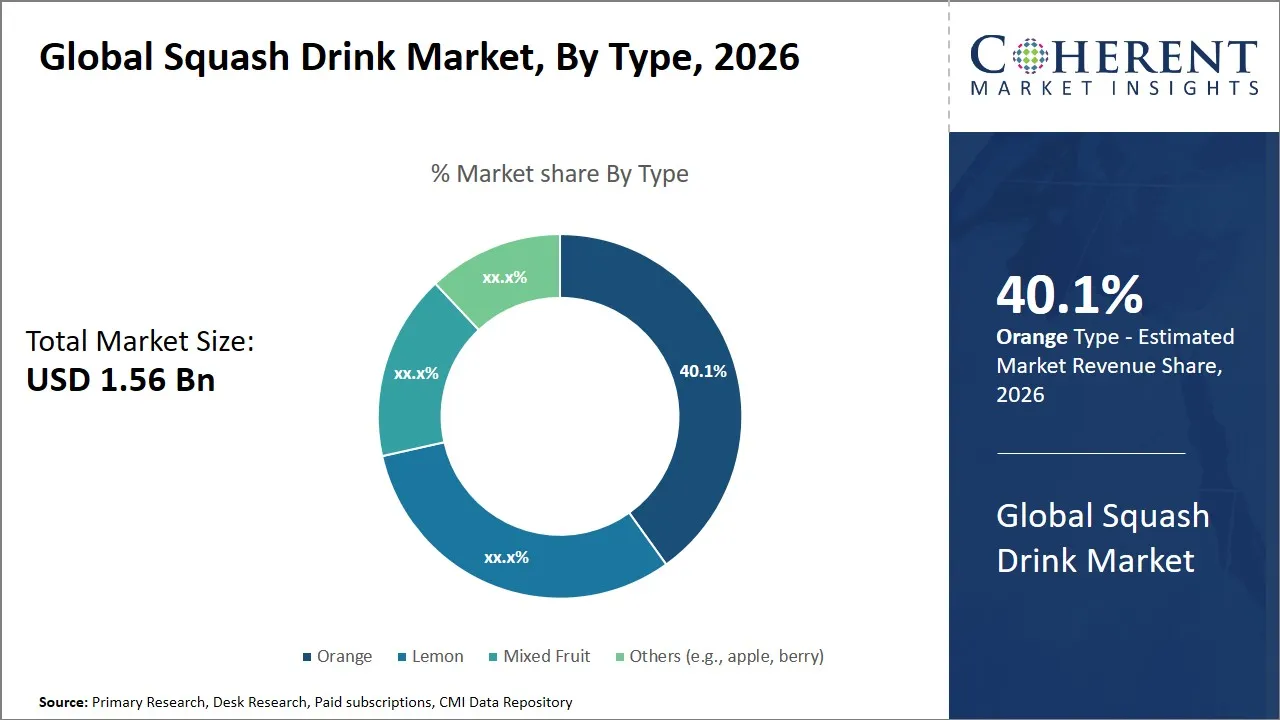
- The orange segment is projected to account for 40.1% of the global squash drink market share in 2026.
- The bottles segment is expected to capture 35.7% of the squash drink market share in 2026.
- Online retail is set to dominate the global squash drink market with a 56.9% share in 2026.
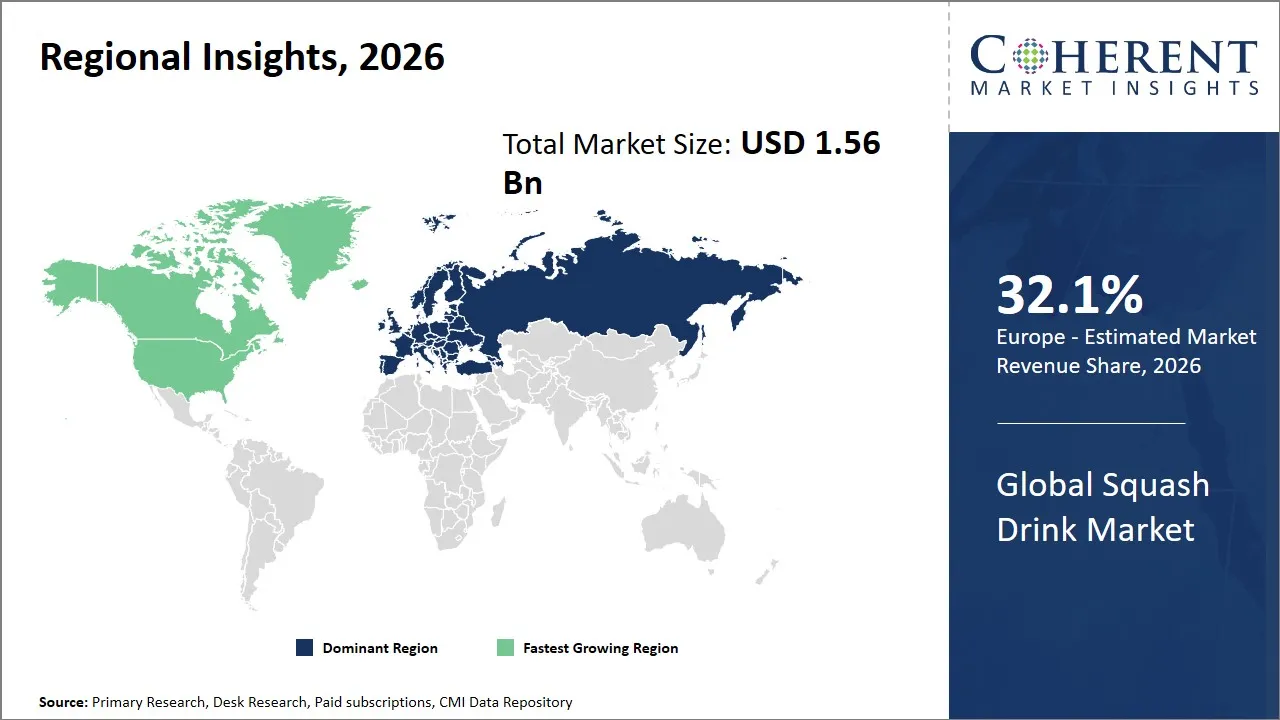
- The Europe region is expected to lead the market with a 32.1% share in 2026.
- The North America region is expected to show the fastest growth, capturing a 15.3% share in 2026.
Market Overview
- Market trends indicate a growing demand for healthier and functional squash drink variants fortified with vitamins, electrolytes, and natural plant extracts.
- Additionally, sustainability practices such as eco-friendly packaging and organic sourcing are becoming significant purchasing factors. The increasing adoption of online retail channels is enabling easy accessibility and variety, further boosting market penetration.
- Companies are investing in R&D to introduce innovative flavors and organic product lines to cater to evolving consumer tastes and dietary preferences, shaping the future trajectory of the squash drink industry.
Current Events and Its Impact
Current Events | Description and its Impact |
Tiered Sugar Tax Implementation (e.g., U.A.E. & Global Precedent) |
|
Packaging Sustainability & Consumption Patterns |
|
Segmental Insights
- Current Industry Events of 2026
- Market Size Estimation
- Regional Breakdown
- Competitive Landscape
- Customer Intelligence
- Segmental Analysis
- Pricing Analysis
- Key Market Drivers, Challenges & Future Trends
- Customized Insights Section
Why is Orange Dominating the Global Squash Drink Market in 2026?
Orange segment is expected to hold 40.1% of the global squash drink market share in 2026, due to the fruit's universal popularity and familiarity. The natural sweetness and the tangy flavor combination of an orange make it very palatable in the various age group and regions. Orange-based drinks are also refreshing and revitalizing to consumers and are positioned well against other fruits. Besides, nutritional implications of oranges especially vitamin C content and antioxidant effects assist in reinforcing consumer preference. This perception creates a demand because the consumers in the modern world are becoming more aware of the need to add functional and nutritious products to their meals.
A leading brand in the UK launched a new range of orange squash drinks enriched with vitamin C and antioxidants, positioning them as a natural energy boost. The campaign highlighted the health benefits of orange juice, which resonated well with the growing demand for functional beverages, driving an increase in sales by 15% in the first quarter.
Bottles Dominate due to Convenience, Reusability, and Consumer Preference for Portability
Bottles segment is set to hold 35.7% of the squash drink market share in 2026. The bottles which are usually of plastic or glass offer a good protection against contamination and oxidation thereby preserving the flavor and shelf life of the squash. Consumers like the convenience of measuring and pouring out bottles without any additional steps or equipment as the process would with alternative formats such as pouches or cans. This capability helps in frequent use as squash drinks are mostly diluted at home and therefore resealable bottles are a good solution. Additionally, bottles are convenient to carry and store which makes them convenient to use on the go or in the home without interfering with the freshness of the product.
Online Retail Dominates the Global Squash Drink Market
The online retail is expected to hold 56.9% of the global squash drink market share in 2026. The convenience becomes an important factor, which more and more customers like the opportunity to shop, compare and order goods without taking into consideration geographical boundaries and at the comfort of their place. The coverage of a wide range of products and the accessibility of niche or specialty squash beverages that may not be broadly offered in the physical outlets lie in E-commerce platforms. Moreover, the emergence of subscription business, direct-to-consumer sales, and personalized recommendations make online shopping experience more exciting and promote the repeat purchasing behavior. Besides that, advertising campaigns, such as flash sales, discounts, and a package deal, are more common with online stores which appeal to money-saving consumers.
Regional Insights
Europe Squash Drink Market Analysis and Trends
The Europe region is projected to lead the market with a 32.1% share in 2026, by a mature beverage consumption culture and well-established supply chains. The area has good regulatory regimes that favor healthy and functional drinks, which has enhanced the increase in the use of squash drinks as ready and customizable beverages in the quest to maintain hydration.
The product innovation and widespread distribution on the retail and HORECA channels are boosted by the established industry presence of the companies like Coca-Cola European Partners and Britvic. The policies of the government promoting sugar reduction in beverages also compel the manufacturing companies to produce taste variants of squash drinks which have a better health value, further cementing the position of Europa in this market. In addition, a well-linked network of trade in the European Union ensures an uninterrupted supply of ingredients and distribution of products.
North America Squash Drink Market Analysis and Trends
The North America region is expected to exhibit the fastest growth in the market contributing 15.3% share in 2026, driven by rapid urbanization, rising disposable incomes, and expanding middle-class populations. The demand of squash drinks is stimulated by the rise in health consciousness and shift to low- calorie flavored drinks. The availability of local manufacturing giants like Dabur (India) and Universal Robina Corporation (Philippines) force market penetration by the aggressive marketing and product localization.
This growth is facilitated by government programs to encourage healthier lifestyles, as well as the fast-growing cold chain facilities. Moreover, the trade dynamics in the regions such as the freer trade agreements and advantages in sourcing the raw materials such as fruits and sweeteners enhance the domestic production and the export opportunities.
Squash Drink Market Outlook for Key Countries
U.K. Squash Drink Market Trends
The squash drink market in the U.K. has the advantage of a high consumer demand for refreshing and healthy drink substitutes. Large competitors such as Britvic with its famous brand Robinsons considerably affect the market trends with its reduced-sugar and vitamin-enriched versions. The active commitment of the U.K. governments to sugar taxation and nutritional labelling provokes innovation that makes the brands reformulating and diversifying their products to meet the requirements of the wellness-conscious customers.
The large-scale retail channels and the extensive level of consumer knowledge concerning the necessity of hydration and the consumption of fruits support the market ecosystem and make the U.K. a trendsetter as far as the product development is concerned in Europe.
What Are the Key Trends Driving Growth in the India Squash Drink Market?
The Indian squash drink market is growing very fast due to the growing popularity of calorie-driven diet as well as the longstanding cultural habit of consuming flavored beverages. Domestic giant Dabur is the first to innovate in the fruit-based squash products, where Ayurveda inspired ingredients are incorporated in an effort to appeal to health-conscious groups. The appearance of food processing industry with its back of the government and changing food safety standards contribute to the increase of the market reliability and quality of the products. Moreover, the large agricultural foundation of Indias gives the country cost benefits in sourcing fruits, and the emerging urban centers drive spot demand using the modern retail format and online stores, which makes the market very dynamic and competitive.
Germany Squash Drink Market Trends
Germany is still leading in the health-based beverage market of Europe where consumers are highly appreciating natural and organic products. Strong brand equity and sustainability are used by market leaders like Eckes-Granini who use organic fruit extracts in squash beverages. There are tight regulatory systems that require open platforms of nutritional information, which give comfort to consumers. Germanys good logistics and cold storage network is an advantage of the availability of the products all year round, and trade relations inside of the EU help to acquire the ingredients efficiently. Germany is a strategic market in terms of product innovation and premiumization due to the increased need to decrease sugar content and functional drinks.
Why is Brazil a Competitive Player in the Squash Drink Market?
The Brazilian market for squash drinks is well-developed due to the high production of fruits in the tropics and the preference of Brazilian people to sweetened fruit drinks. Major competitors such as Ambev take advantage of national loyalty towards brands, mass distribution using supermarkets and local stores. The efforts of the governments to aid the agricultural supply chain and advertise beverages with fewer artificial additives provoke producers to develop natural variants of flavors. Additionally, the Free trade agreements with other countries in Latin America are helping Brazilian manufacturers to scale exports in the region, and the consumption of younger demographics that demand cheap but tasting hydration solutions is triggered by urbanization.
U.S. Squash Drink Market Trends
The U.S. presents a diverse squash drink market, driven largely by health and wellness trends alongside consumer demand for variety and convenience. While squash drinks are less mainstream compared to other beverage types, companies such as Nestlé and private-label brands in supermarket chains are expanding presence by introducing zero-calorie and natural ingredient variants. Strict FDA guidelines about labeling and ingredients spur transparency and product quality improvements. Additionally, increasing investments in cold chain logistics and innovative packaging formats like single-serve concentrates help attract busy, health-conscious consumers, gradually expanding market penetration.
Flavor Innovation Impact on Repeat Purchase (Sales and Loyalty Impact of Exotic, Seasonal, and Regional Flavors)
Flavor Type | Sales Impact | Loyalty Impact |
Exotic Flavors | Boost in sales due to novelty factor Increased consumer curiosity and willingness to try new products Seasonal promotional campaigns drive interest | High potential for repeat purchases due to unique experiences Strong emotional connection when consumers are introduced to culturally diverse flavors |
Seasonal Flavors | Surge in sales during peak seasons (e.g., summer or holidays) Limited edition launches create urgency and exclusivity | Increases brand recall and emotional appeal |
Regional Flavors | Appeals to local tastes, increasing market penetration | Builds a community connection, increasing long-term loyalty Repeat purchase driven by local pride and nostalgia for regional flavors |
Market Players, Key Development, and Competitive Intelligence
Key Developments
- In April 2025, Capri-Sun expanded its beverage portfolio with the launch of a new Squash product range, which includes an enhanced formulation of its traditional Orange Squash alongside two innovative flavor additions to the lineup: Monster Alarm and Jungle Drink.
- In March 2025, Nichols introduced Vimto Wonderfuel, a functional squash variant of its Vimto brand, targeting the breakfast segment. The product contains high levels of vitamins B, C, and D, along with iron and zinc supplements.
- In October 2024, Britvic Limited beverage brand Robinsons strengthened its market presence by introducing two new squash drink variants inspired by the musical Wicked.
Top Strategies Followed by Global Squash Drink Market Players
Player Type | Strategic Focus | Example |
Established Market Leaders | Heavy investment in R&D and innovation | For instance, PepsiCo, an example of this type of market leader, introduced new product, Aquafina Flavorsplash, which focuses on fresh flavors and low-calorie formula to cope with the rising demand among consumers of healthier ways to drink water. Even established players are involved in strategic partnership with the aim of maximizing their production and go wider into the market. |
Mid-Level Players | Cost-effective solutions with balanced quality | As an example, a range of squash drinks sold at the price-effective parts of the market under the Robinsons brand by Britvic would suit the health-conscious but low paying consumer. |
Small-Scale Players | Niche specialization & innovative variants | For instance, ROAR Organic has drinks with electrolytes and organic components that are attractive to athletes and health-conscious people. As the primary source of differentiation, these small-scale businesses make use of unconventional flavors or ingredients in mainstream squash drinks, including CBD-infused beverages or superfood additives. |
Market Report Scope
Squash Drink Market Report Coverage
| Report Coverage | Details | ||
|---|---|---|---|
| Base Year: | 2025 | Market Size in 2026: | USD 1.56 Bn |
| Historical Data for: | 2020 To 2024 | Forecast Period: | 2026 To 2033 |
| Forecast Period 2026 to 2033 CAGR: | 4.5% | 2033 Value Projection: | USD 2.12 Bn |
| Geographies covered: |
| ||
| Segments covered: |
| ||
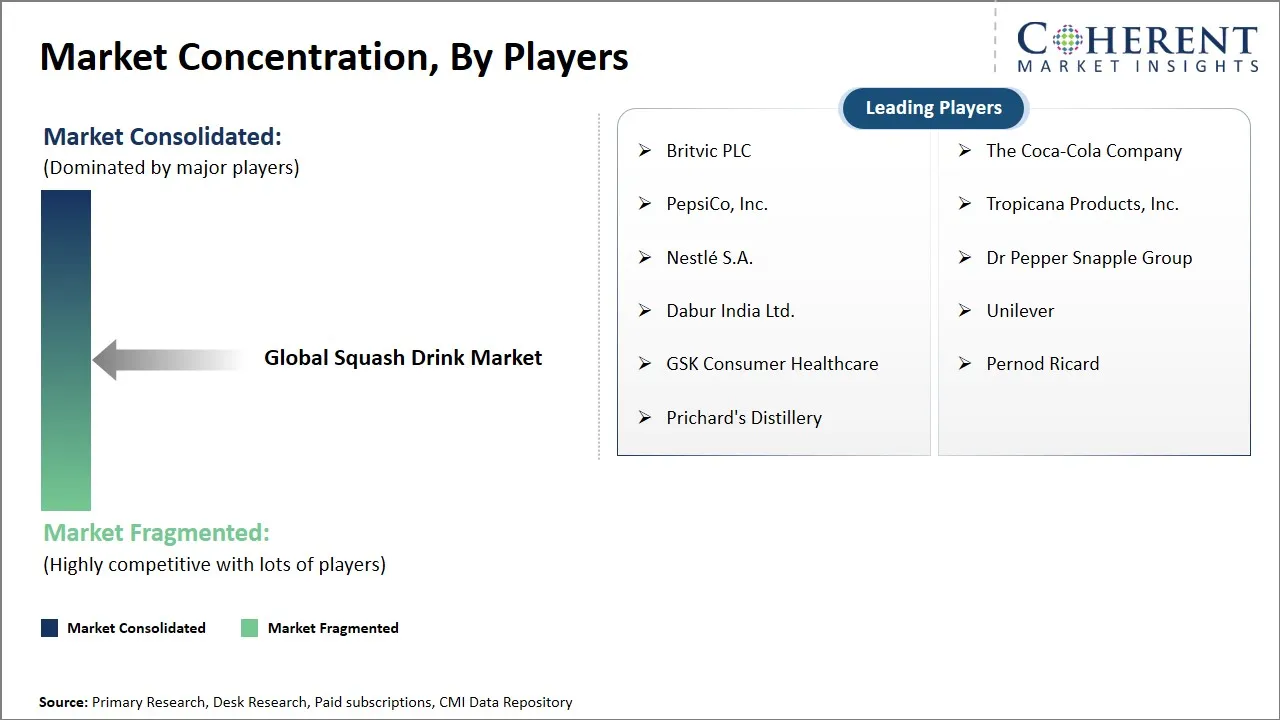
| Companies covered: | Britvic PLC, The Coca-Cola Company, PepsiCo, Inc., Tropicana Products, Inc., Nestlé S.A., Dr Pepper Snapple Group, Dabur India Ltd., Unilever, GSK Consumer Healthcare, Pernod Ricard, and Prichard's Distillery | ||
| Growth Drivers: |
| ||
| Restraints & Challenges: |
| ||
Squash Drink Market Dynamics
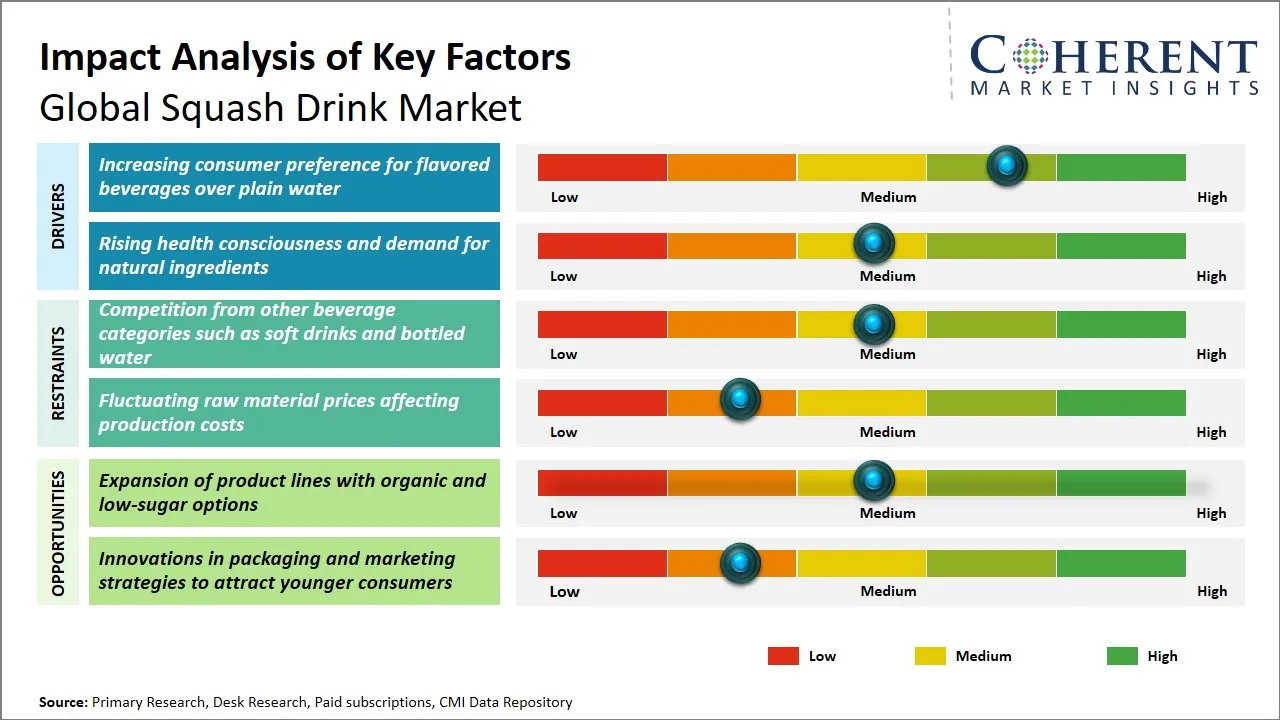
Squash Drink Market Driver - Increasing Consumer Preference for Flavored Beverages Over Plain Water
The increasing global demand for squash drink is largely due to an increase in the consumption of flavored water in preference to pure water. With the increase in health-consciousness, most consumers are moving away of sugary sodas and artificial sweeteners beverages towards the products of flavored water which would provide refreshing flavor with apparent natural or low-calorie advantages. The need to add flavors to otherwise plain water and the ability to dilute squash drinks to preferred degrees makes them a perfect fit into this trend, as they add convenience in a form of enhancing hydration.
An example includes Britvics Fruit Shoot and Squash by Robinsons. These brands have been able to take advantage of the growing consumer preference to flavored drinks by providing portable beverages in the form of concentrated squash drinks that can be mixed with water.
Squash Drink Market Opportunity - Expansion of Product Lines with Organic and Low-Sugar Options
The global squash drink market presents a significant opportunity for growth through the expansion of product lines incorporating organic and low-sugar options. Increasing consumer awareness regarding health and wellness, coupled with rising concerns over sugar consumption and artificial additives, has shifted demand towards healthier beverage alternatives. Organic squash drinks, made from naturally sourced ingredients without synthetic pesticides or fertilizers, cater to a growing segment of health-conscious consumers who prioritize clean-label products. Moreover, the introduction of low-sugar and sugar-free variants aligns with the global initiative to reduce sugar intake, addressing concerns linked to obesity, diabetes, and other lifestyle-related illnesses. Manufacturers that innovate in this direction can attract both existing squash drink consumers seeking healthier choices and new customers from adjacent beverage categories, such as natural juices and flavored waters. This trend is further supported by government policies and public health campaigns promoting reduced sugar consumption, creating a favorable regulatory environment for reformulated products.
Analyst Opinion (Expert Opinion)
- The market for squash drink has a high potential to growth due to the growing number of consumers who want to drink beverages with flavor without high energy content. The message of the International Beverage Expo (2023) and the Global Drinks Innovation Conference (2022) have illuminated new vital developments, including brands such as Robinsons and Tropicana that have significantly progressed in the creation of creative squash drink formulations that can meet the needs of a wide range of tastes.
- The new products that Robinsons has launched as of late incorporating the use of natural fruit extracts are an indicator of a future movement to healthier and more natural taste profiles that would appeal with health-conscious consumers. These conferences also highlighted the increasing focus on the utilization of environmentally-friendly packaging, as the environmentally-conscious customers are interested in sustainable beverages.
- The, issues like stiff competition in the prices and necessity to use effective marketing plans to make the products stand out were often indicated as possible obstacles. Those companies that have strategic alliances with retailers, and those that focus on their research and development to improve the flavor, the degree of sweetness and source of ingredients will probably secure a large market share. Finally, the expansion of the squash drink will be determined by its capability to be innovative over time, and the response to the changing preferences of consumers over the taste, health, and sustainability in their beverage preferences.
Speak to the analyst
Want personalized insights?
Take the findings above to one of our principal consultants, or have the report rebuilt around the segments, geographies and competitors you actually track.
Market Segmentation
- Type Insights (Revenue, USD Bn, 2021 - 2033)
- Orange
- Lemon
- Mixed Fruit
- Others (e.g., apple, berry)
- Packaging Type Insights (Revenue, USD Bn, 2021 - 2033)
- Bottles
- Tetra Packs
- Cans
- Pouches
- Distribution Channel Insights (Revenue, USD Bn, 2021 - 2033)
- Online Retail
- Offline Retail
- Supermarkets/Hypermarkets
- Convenience Stores
- Specialty Stores
- Regional Insights (Revenue, USD Bn, 2021 - 2033)
- North America
- U.S.
- Canada
- Latin America
- Brazil
- Argentina
- Mexico
- Rest of Latin America
- Europe
- Germany
- U.K.
- Spain
- France
- Italy
- Russia
- Rest of Europe
- Asia Pacific
- China
- India
- Japan
- Australia
- South Korea
- ASEAN
- Rest of Asia Pacific
- Middle East
- GCC Countries
- Israel
- Rest of Middle East
- Africa
- South Africa
- North Africa
- Central Africa
- North America
- Key Players Insights
- Britvic PLC
- The Coca-Cola Company
- PepsiCo, Inc.
- Tropicana Products, Inc.
- Nestlé S.A.
- Dr Pepper Snapple Group
- Dabur India Ltd.
- Unilever
- GSK Consumer Healthcare
- Pernod Ricard
- Prichard's Distillery
Sources:
Primary Research Interviews
- CEO – Leading Squash Drink Producer (e.g., Britvic PLC or Suntory equivalent)
- Supply Chain Director – Major Non-Alcoholic Beverage Distributor
- Production Lead – Fruit Concentrate and Squash Manufacturer
- Sustainability Officer – Beverage Industry Certification Authority
Stakeholders
- Manufacturers
- End-use Sectors
- Retail and Household Consumers (Concentrated Beverages)
- Health and Wellness Segments (Low-Sugar Variants)
- Non-Alcoholic Drink Categories (Cordials and Dilutables)
- Regulatory & Certification Bodies (e.g., FDA for food additives, EU food safety standards)
- E-commerce Platforms and Retailers (Amazon, Walmart, Tesco, Alibaba)
- Technology Integration Players: Low-sugar formulation and packaging innovators
Databases
- UN Comtrade Database (HS Code 2009 for fruit juices and concentrates)
- India Import Export (EXIM) Database (High Juice Squash)
- USITC Trade Data (Beverage Imports/Exports)
- Eurostat Trade Statistics for Non-Alcoholic Beverages
Magazines
- Beverage Industry Magazine – Trends in non-alcoholic concentrates
- Food & Drink International – Squash and cordial innovations
- The Grocer – UK squash drink market dynamics
- Just Drinks – Global cordial and squash sales
Journals
- Journal of Food Science – Fruit squash formulation and stability
- Appetite – Consumer preferences for low-alcohol alternatives including squash
- International Journal of Beverage Technology – Dilutable drink processing
Newspapers
- The Wall Street Journal – Non-alcoholic beverage demand growth
- The Guardian – Health trends in cordials and squashes
- Business Standard (India) – Squash imports and market expansion
- Reuters – Price volatility in fruit concentrate beverages
Associations
- British Soft Drinks Association (BSDA)
- International Council of Beverage Associations (ICBA)
- Non-Alcoholic Beverages Council
- American Beverage Association
- European Federation of Soft Drinks Industries (UNESDA)
Public Domain Sources
- FDA – Guidelines for fruit concentrates and squashes
- European Commission – Food labeling regulations for beverages
- World Health Organization – Sugar intake guidelines impacting squash formulations
- FAO – Fruit juice and concentrate statistics
Proprietary Elements
- CMI Data Analytics Tool, Proprietary CMI Existing Repository of information for last 8 years.
Get access to 250+ pages report
Every segment, forecast, competitor profile and data table behind the analysis above — available for instant download.
- ESOMAR Member
- ISO 9001:2015 Certified
- D-U-N-S Registered
- GDPR & CCPA Compliant
Missing comfort of reading report in your local language? Find your preferred language:
Transform your Strategy with Exclusive Trending Reports
Frequently Asked Questions
The global squash drink market is estimated to be valued at USD 1.56 Bn in 2026 and is expected to reach USD 2.12 Bn by 2033.
A squash drink is a concentrated liquid (fruit‑flavored syrup) that is diluted with water before consumption. It’s non‑carbonated and often sweetened.
The CAGR of global squash drink market is projected to be 4.5% from 2026 to 2033.
Increasing consumer preference for flavored beverages over plain water and rising health consciousness and demand for natural ingredients are the major factors driving the growth of the global squash drink market.
Competition from other beverage categories such as soft drinks and bottled water and fluctuating raw material prices affecting production costs are the major factors hampering the growth of the global squash drink market.
In terms of type, orange is estimated to dominate the market revenue share in 2026.
Britvic PLC, The Coca-Cola Company, PepsiCo, Inc., Tropicana Products, Inc., Nestlé S.A., Dr Pepper Snapple Group, Dabur India Ltd., Unilever, GSK Consumer Healthcare, Pernod Ricard, and Prichard's Distillery are the major players.