

U.S. and Europe In-vivo Pharmacology Market Size and Forecast – 2026 To 2033
The U.S. and Europe in-vivo pharmacology market is expected to grow from USD 21,793.6 Mn in 2026 to USD 35,688.4 Mn by 2033, registering a compound annual growth rate (CAGR) of 7.3% from 2026 to 2033. The U.S. and Europe in-vivo pharmacology market is poised for significant expansion, fueled by the increasing biopharmaceutical and pharmaceutical R&D investments across both regions.
According to the International Federation of Pharmaceutical Manufacturers & Associations (IFPMA), the top 50 pharmaceutical companies invested approximately USD 167 billion in R&D in 2022, while the pharmaceutical industry maintained an R&D intensity of 30%, significantly higher than other R&D-intensive industries in Organisation for Economic Co-operation and Development (OECD) countries. This sustained investment continues to drive the demand for in-vivo pharmacology studies that support preclinical drug development.
Key Takeaways of the U.S. and Europe In-vivo Pharmacology Market
- Toxicology studies are projected to hold a market share of 34.8 % in the U.S. and Europe in-vivo pharmacology market in 2026, making it the dominant service type segment, driven by stringent regulatory requirements for preclinical safety evaluation. For instance, the U.S. Food and Drug Administration (FDA) and the European Medicines Agency (EMA) require comprehensive nonclinical toxicology data to support Investigational New Drug (IND) and Clinical Trial Application (CTA) submissions, reinforcing sustained demand for toxicology services.
- Oncology is projected to hold 34.1 % of the U.S. and Europe in-vivo pharmacology market share in 2026, making it the dominant application segment, owing to the expanding pipeline of oncology therapeutics and immunotherapies. For instance, the American Cancer Society estimates approximately 2.04 million new cancer cases will be diagnosed in the U.S. in 2025, while cancer remains one of the leading health priorities across Europe, driving extensive investment in preclinical oncology pharmacology studies.
- Biotechnology and pharmaceutical companies are projected to hold 47.2 % of the U.S. and Europe in-vivo pharmacology market share in 2026, making it the dominant end user segment, supported by increasing biologics and advanced therapy development. For instance, the European Federation of Pharmaceutical Industries and Associations (EFPIA) reported that the European pharmaceutical industry invested USD 62.9 billion (approximately €55 billion) in R&D in 2023, reflecting sustained innovation and continued demand for outsourced preclinical in-vivo pharmacology services.
- Increasing Adoption of Humanized and Patient-Derived Xenograft (PDX) Models: The growing use of humanized mouse models and patient-derived xenograft (PDX) models is significantly enhancing the predictive accuracy of preclinical drug evaluation, particularly in oncology, immunology, and rare diseases. These advanced in-vivo models better replicate human disease biology than conventional animal models, enabling more reliable assessment of therapeutic efficacy and safety. Consequently, pharmaceutical and biotechnology companies across the U.S. and Europe are increasingly incorporating these models into preclinical development, driving demand for specialized in-vivo pharmacology services.
- Expansion of In-vivo Pharmacology for Radiopharmaceutical and Targeted Radioligand Therapies: The rapid advancement of radiopharmaceuticals and targeted radioligand therapies presents a significant growth opportunity for the in-vivo pharmacology industry. These therapies require specialized animal models, biodistribution studies, dosimetry assessments, and pharmacokinetic evaluations to establish efficacy and safety before clinical testing. With increasing investments in precision oncology and targeted therapeutics across the U.S. and Europe, demand for advanced in-vivo pharmacology expertise in radiopharmaceutical development is expected to rise substantially.
Segmental Insights
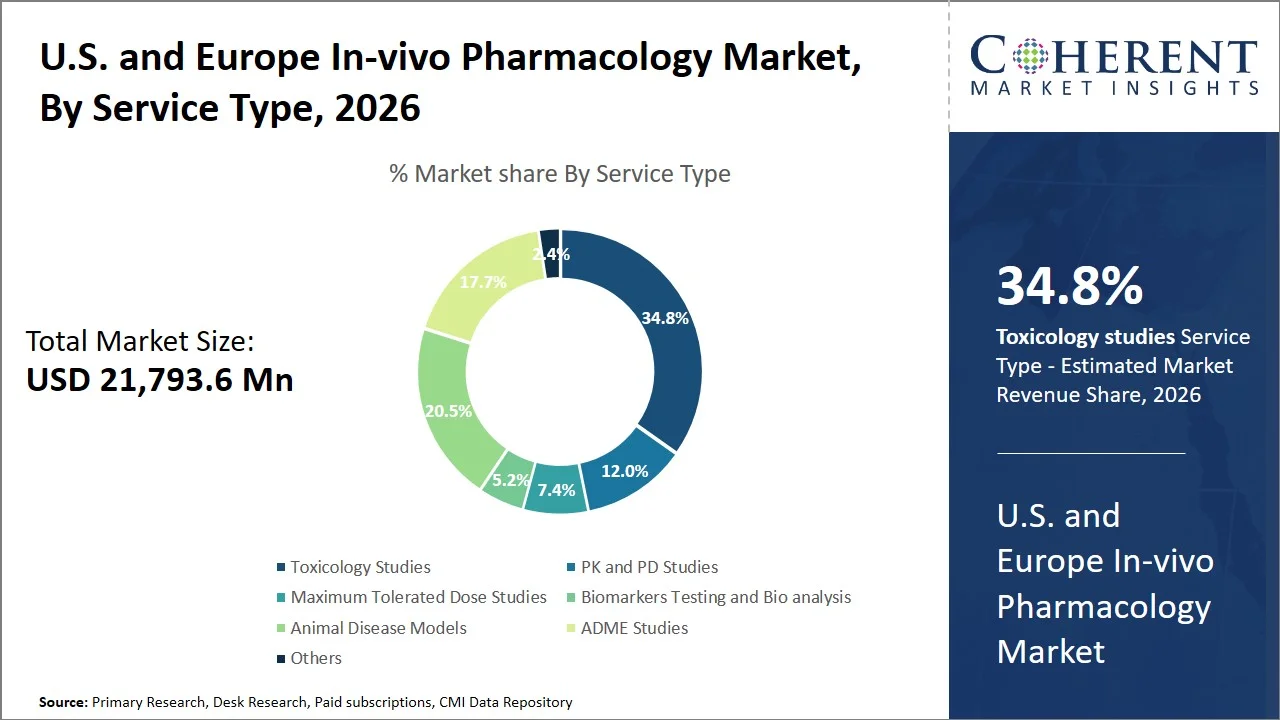
Why Do Toxicology Studies Dominate the U.S. and Europe In-vivo Pharmacology Market?
Toxicology studies are projected to hold a market share of 34.8% in 2026, due to their essential role in assessing safety of drug candidates prior to their usage in clinical studies and to comply with strict guidelines set forth by regulatory bodies. Increased pipeline of biological therapeutics like cell therapy, gene therapy, other sophisticated therapeutic options upsurge the requirements for an inclusive in-vivo evaluation in toxicology study to identify potential adverse effects and support regulatory submissions. For instance, in January 2025, Charles River Laboratories introduced the Apollo ecosystem for CRADL, offering a secure cloud-based platform that enables streamlined access to vivarium services, study management and research tools to increase operational efficiencies in the execution of in-vivo preclinical studies such as toxicology programs.
- Current Industry Events of 2026
- Market Size Estimation
- Regional Breakdown
- Competitive Landscape
- Customer Intelligence
- Segmental Analysis
- Pricing Analysis
- Key Market Drivers, Challenges & Future Trends
- Customized Insights Section
Why is Oncology Most Preferred Application in the U.S. and Europe In-vivo Pharmacology Market?
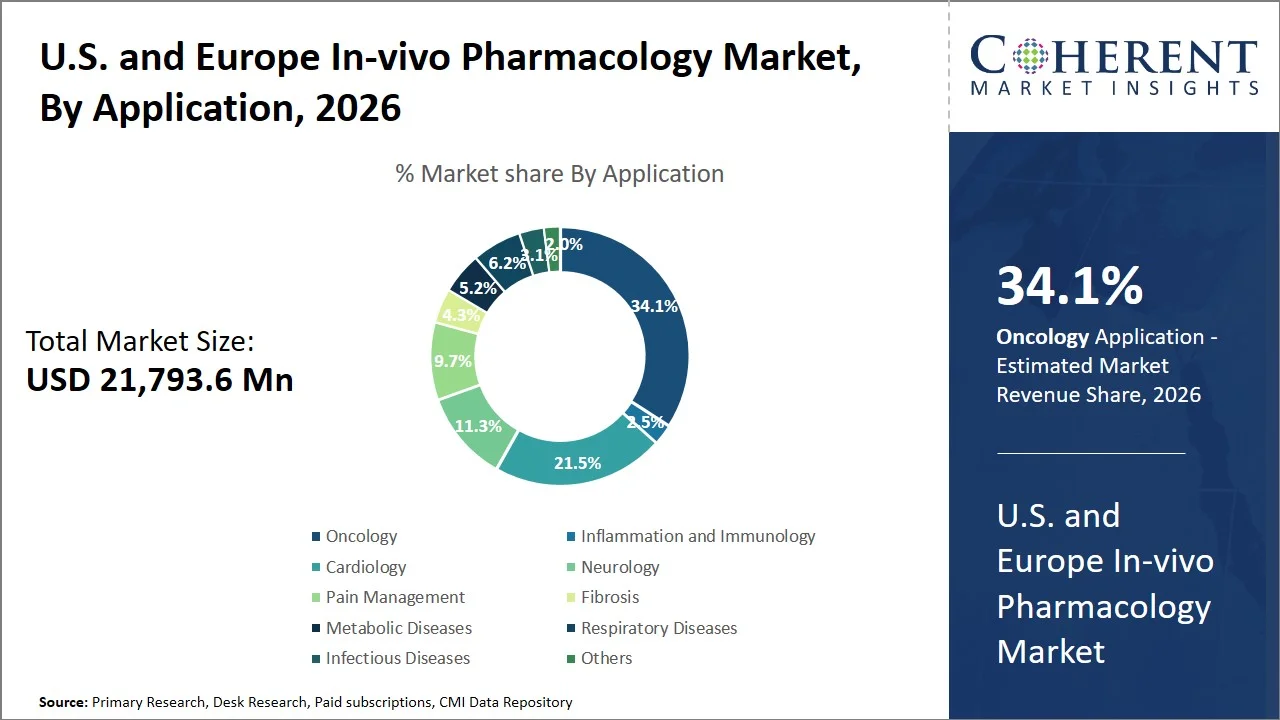
Oncology is projected to hold 34.1% of the market share in 2026, owing to the high burden of cancer, rising adoption of target-based therapeutics, increasing development of antibody-drug conjugates (ADCs), and precision oncology drugs. In-vivo pharmacology helps assess drug candidates’ antitumor efficacy, pharmacokinetics/pharmacodynamics (PK/PD), safety profile and biomarker responses prior advancing drug candidates into clinical trials. For instance, in October 2023, Merck KGaA and Jiangsu Hengrui Pharmaceuticals signed a strategic agreement to develop a novel selective PARP1 inhibitor of next-generation, and a Claudin18.2 antibody drug conjugate (ADC), further reinforcing the ongoing industry investment in new oncology treatments requiring in-vivo preclinical pharmacology assessments
Biotechnology and Pharmaceutical Companies Segment Dominates the U.S. and Europe In-vivo Pharmacology Market
Biotechnology and pharmaceutical companies segment is expected to hold 47.2% of the U.S. and Europe in-vivo pharmacology market share in 2026, due to growing drug pipeline and ongoing investment in the development of novel therapies. In addition, increasing interest in biologic drug therapies, gene therapies, RNA therapeutics, and precision medicines has boosted the demand for advanced in-vivo pharmacology research to study the efficacy, pharmacokinetics and safety prior to clinical trials. For instance, in April 2025, F. Hoffmann-La Roche Ltd announced an investment of USD 50 billion in the U.S. over the next five years for building-up additional capacity in its pharmaceutical and diagnostic R&D and manufacturing sites, supporting the growing demand for comprehensive preclinical pharmacology services.
Currents Events and their Impact
Current Events | Description and its Impact |
U.S. FDA Announces Roadmap to Phase Out Animal Testing for Monoclonal Antibodies and Other Drugs (April 2025) |
|
U.S. FDA Issues Draft Guidance on New Approach Methodologies (NAMs) for Drug Development (March 2026) |
|
U.S. and Europe In-vivo Pharmacology Market Dynamics
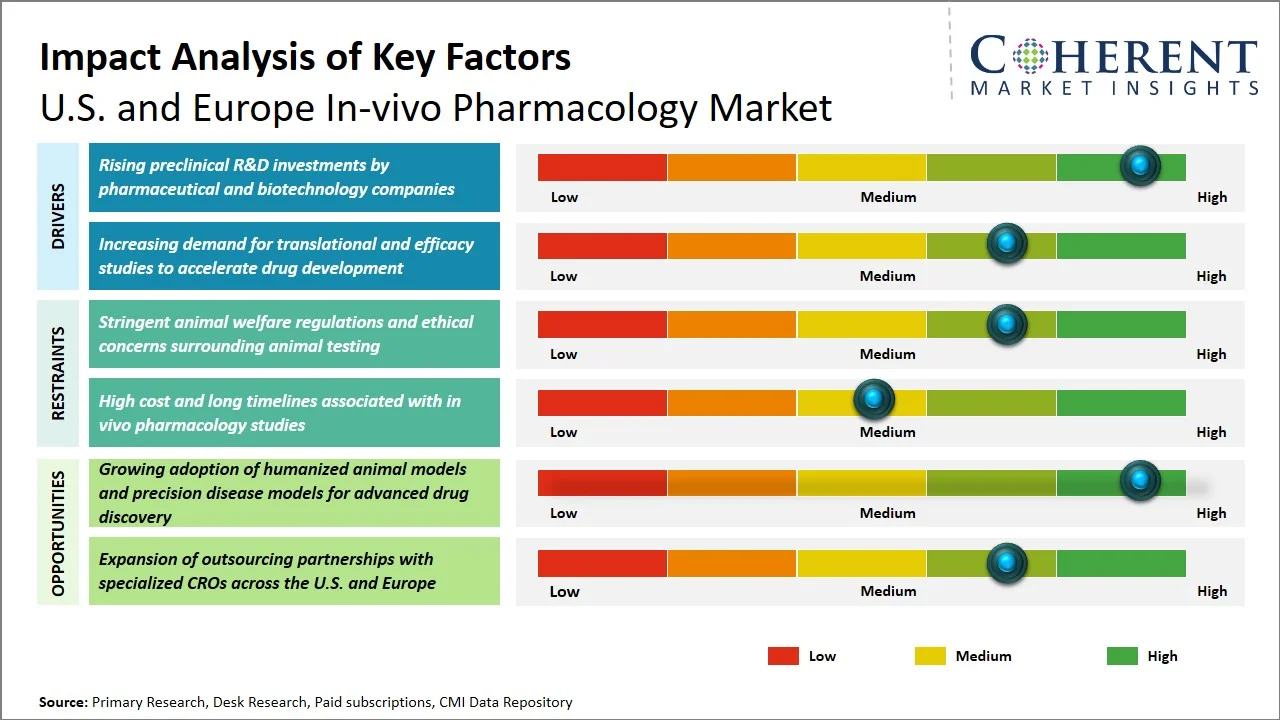
Market Drivers
- Rising preclinical R&D investments by pharmaceutical and biotechnology companies The U.S. and Europe in-vivo pharmacology market is driven by increasing investments in preclinical R&D as pharmaceutical and biotechnology companies accelerate the development of innovative therapeutics. Expanding pipelines in oncology, immunology, and neurological disorders are boosting demand for robust in-vivo efficacy, pharmacokinetic, and safety studies before clinical evaluation. For instance, according to the U.S. Food and Drug Administration (FDA), 65 novel drugs were approved by the Center for Drug Evaluation and Research (CDER) in 2025, reflecting sustained innovation that continues to increase demand for comprehensive preclinical in-vivo pharmacology studies.
- Increasing demand for translational and efficacy studies to accelerate drug development: The U.S. and Europe in-vivo pharmacology market is driven by the growing need for translational and efficacy studies that improve candidate selection and reduce late-stage clinical failures. As drug pipelines become increasingly complex, pharmaceutical and biotechnology companies are relying on advanced in-vivo models to validate therapeutic efficacy before clinical trials. For instance, ClinicalTrials.gov listed more than 540,000 studies globally as of 2025, reflecting the expanding clinical development pipeline and the corresponding need for robust preclinical efficacy evaluation.
Emerging Trends
- Growing Integration of AI and Digital Pathology in In-vivo Pharmacology: Artificial intelligence (AI) and digital pathology are increasingly being integrated into in-vivo pharmacology workflows to automate image analysis, quantify treatment responses, and improve data interpretation. These technologies enhance study efficiency, reduce manual variability, and enable faster, data-driven decision-making during preclinical drug evaluation.
- Rising Demand for In-vivo Pharmacology Support for RNA-Based Therapeutics: The rapid expansion of mRNA, siRNA, antisense oligonucleotides (ASOs), and gene-silencing therapies is driving demand for specialized in-vivo pharmacology studies. These therapies require comprehensive biodistribution, target engagement, and pharmacokinetic/pharmacodynamic (PK/PD) evaluations, prompting CROs to expand capabilities tailored to nucleic acid-based drug development.
Preferred In-vivo Pharmacology Models by Therapeutic Area in the U.S. and Europe In-vivo Pharmacology Market
Therapeutic Area | Common In-vivo Model | Primary Study Objective | Key Endpoints |
Oncology | Xenograft/PDX Models | Anti-tumor efficacy | Tumor growth inhibition, survival |
Neurology | Transgenic Rodent Models | Disease progression | Behavioral response, neuroprotection |
Immunology | Humanized Mouse Models | Immune response | Cytokine profiling, immune activation |
Metabolic Disorders | Diet-Induced Obesity Models | Metabolic efficacy | Blood glucose, insulin sensitivity |
Cardiovascular | Hypertension/Heart Failure Models | Cardiovascular safety & efficacy | Blood pressure, cardiac function |
How is the growing adoption of humanized animal models and precision disease models for advanced drug discovery creating new growth opportunities in the U.S. and Europe in-vivo pharmacology market?
The humanized animal models and precision disease models development in the U.S. and Europe In-vivo pharmacology market have offered abundant opportunities for market growth due to better physiological representation and better prediction of clinical outcomes. These enhanced models are largely explored in research in the field of oncology, immunology, and orphan disease to facilitate the development of personalized medicines, as well as decrease late-stage failures of drug development. For instance, in April 2025, Charles River Laboratories broadened its oncology drug discovery capabilities to support preclinical drug screening and more effectively advance oncology programs with leading translational and fully human technology integrations. These advances are expected to stimulate the demand for in-vivo pharmacology specialty services across the U.S. and Europe.
Market Players, Key Development, and Competitive Landscape
Key Developments
- In May 2026, Valerio Therapeutics launched InVimmune, a dedicated company focused on developing differentiated in vivo cell therapy approaches. InVimmune leverages Valerio's proprietary single-domain antibody and targeted delivery platforms to advance therapies for oncology, fibrosis, and autoimmune diseases, with its first program targeting oncology. The launch reinforces innovation in in vivo therapeutic platforms and is expected to increase demand for advanced preclinical in vivo pharmacology and translational research services.
- In May 2026, CREATE Medicines secured USD 122 million in Series A financing to advance it’s in vivo CAR-T pipeline and expand its proprietary gene delivery platform. The funding will support the development of off-the-shelf in vivo cell therapies and accelerate preclinical research and early-stage clinical development. The investment underscores increasing industry focus on next-generation in vivo therapeutic platforms.
- In April 2026, Eli Lilly and Company announced its acquisition of Kelonia Therapeutics to strengthen its capabilities in in vivo CAR-T cell therapies. The acquisition brings Kelonia's targeted lentiviral gene delivery platform into Lilly's portfolio, accelerating the development of next-generation in vivo cell therapies for oncology and immune-mediated diseases. The deal is expected to boost demand for advanced preclinical in vivo pharmacology and translational research.
Competitive Landscape
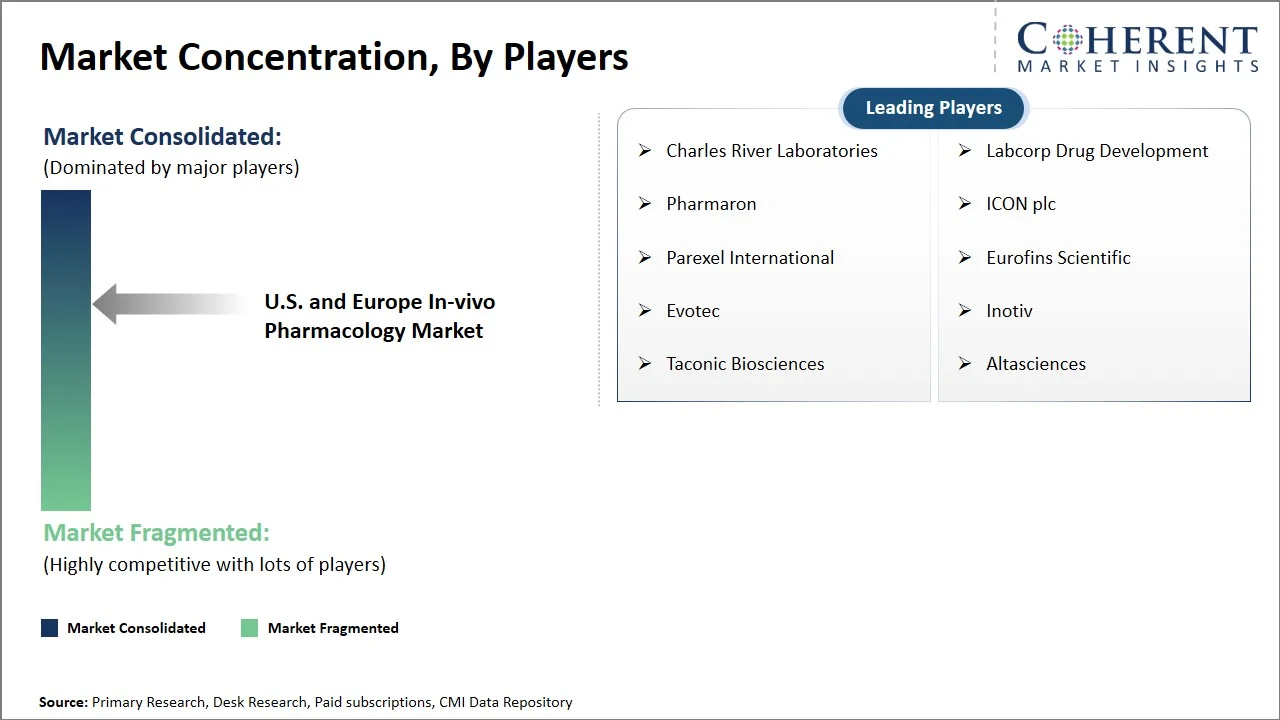
The U.S. and Europe in-vivo pharmacology market is moderately consolidated, with leading contract research organizations (CROs) and preclinical service providers competing through expanded therapeutic expertise, advanced disease models, and integrated drug discovery capabilities. Companies are strengthening their market position by investing in humanized animal models, AI-enabled data analytics, translational pharmacology platforms, and strategic collaborations with pharmaceutical and biotechnology companies to accelerate preclinical drug development. Key focus areas include:
- Advanced Humanized & Patient-Derived Disease Models
- Integrated Translational Pharmacology and Biomarker Services
- AI-Driven Preclinical Data Analytics & Digital Pathology
- Strategic CRO Partnerships and End-to-End Drug Discovery Solutions
Market Report Scope
U.S. and Europe In-vivo Pharmacology Market Report Coverage
| Report Coverage | Details | ||
|---|---|---|---|
| Base Year: | 2025 | Market Size in 2026: | USD 21,793.6 Mn |
| Historical Data for: | 2020 To 2024 | Forecast Period: | 2026 To 2033 |
| Forecast Period 2026 to 2033 CAGR: | 7.3% | 2033 Value Projection: | USD 35,688.4 Mn |
| Segments covered: |
| ||
| Companies covered: | Charles River Laboratories, Labcorp Drug Development, Pharmaron, ICON plc, Parexel International, Eurofins Scientific, Evotec, Inotiv, Taconic Biosciences, and Altasciences | ||
| Growth Drivers: |
| ||
| Restraints & Challenges: |
| ||
Analyst Opinion (Expert Opinion)
- In the coming years, the U.S. and Europe in-vivo pharmacology market is expected to evolve beyond conventional preclinical testing toward highly translational, disease-specific pharmacology platforms that integrate advanced animal models, biomarker-driven assessments, and AI-enabled data analytics. As biologics, cell and gene therapies, RNA therapeutics, and precision medicines continue to expand, demand will increasingly shift toward specialized in-vivo pharmacology capabilities that improve clinical predictability and reduce late-stage development failures.
- Most opportunities can be foreseen within oncology applications in the U.S., where the robust pipeline of immunotherapies, antibody-drug conjugates (ADCs), cell and gene therapies, and radiopharmaceuticals is driving demand for sophisticated efficacy, pharmacokinetic/pharmacodynamic (PK/PD), and translational in-vivo studies. Europe also presents strong opportunities, particularly in rare diseases and advanced biologics, supported by a well-established pharmaceutical R&D ecosystem and collaborative research initiatives.
- To strengthen their competitive position, market players should expand humanized and patient-derived disease model portfolios, integrate AI-powered digital pathology and biomarker analytics into preclinical workflows, and establish strategic partnerships with pharmaceutical and biotechnology companies for end-to-end drug discovery support. Investing in regulatory-ready translational platforms and advanced therapeutic expertise will be critical for differentiating services and capturing long-term growth.
Speak to the analyst
Want personalized insights?
Take the findings above to one of our principal consultants, or have the report rebuilt around the segments, geographies and competitors you actually track.
Market Segmentation
- Service Type Insights (Revenue, USD Mn, 2021 - 2033)
- Toxicology studies
- PK and PD Studies
- Maximum Tolerated Dose Studies
- Biomarkers Testing and Bio analysis
- Animal Disease Models
- ADME studies
- Others
- Application Insights (Revenue, USD Mn, 2021 - 2033)
- Oncology
- Inflammation and Immunology
- Cardiology
- Neurology
- Pain Management
- Fibrosis
- Metabolic Diseases
- Respiratory Diseases
- Infectious Diseases
- Others
- End User Insights (Revenue, USD Mn, 2021 - 2033)
- Biotechnology and Pharmaceutical Companies
- Contract Research Organizations (CROs)
- Others
- Key Players Insights
- Charles River Laboratories
- Labcorp Drug Development
- Pharmaron
- ICON plc
- Parexel International
- Eurofins Scientific
- Evotec
- Inotiv
- Taconic Biosciences
- Altasciences
Sources
Primary Research Interviews
- Preclinical pharmacology scientists from pharmaceutical and biotechnology companies
- In-vivo pharmacology and toxicology experts from leading CROs
- Drug discovery and translational research scientists from academic and research institutes
- Preclinical program directors and R&D heads from biopharmaceutical companies
- Laboratory animal science and comparative medicine specialists
- Pharmacokinetic/Pharmacodynamic (PK/PD) and safety pharmacology experts
- Regulatory affairs professionals specializing in nonclinical drug development (U.S. & Europe)
Stakeholders
- Pharmaceutical and biotechnology companies
- Contract Research Organizations (CROs)
- Academic and translational research institutes
- Preclinical testing laboratories and animal research facilities
- Biopharmaceutical startups and emerging therapy developers
- Drug discovery technology providers and bioanalytical service companies
- Venture capital and life science investors
- End-use Sectors
- Pharmaceutical companies
- Biotechnology companies
- Contract Research Organizations (CROs)
- Academic & government research institutes
- Cell & gene therapy developers
- Medical research hospitals and translational medicine centers
- Regulatory & Health Bodies
- U.S. Food and Drug Administration (FDA)
- European Medicines Agency (EMA)
- National Institutes of Health (NIH), U.S.
- National Centre for the Replacement, Refinement and Reduction of Animals in Research (NC3Rs), UK
- European Commission – Directorate-General for Health and Food Safety (DG SANTE)
- Organisation for Economic Co-operation and Development (OECD)
- International Council for Harmonisation of Technical Requirements for Pharmaceuticals for Human Use (ICH)
- Federation of European Laboratory Animal Science Associations (FELASA)
Databases
- ClinicalTrials.gov – Clinical trials involving preclinical pharmacology, oncology, immunology, and translational drug development
- U.S. FDA Investigational New Drug (IND) & Drug Approval Databases – Nonclinical pharmacology, toxicology, and novel drug approvals
- European Medicines Agency (EMA) Medicines Database – Marketing authorizations and regulatory information for human medicines in Europe
- OECD eChemPortal – Chemical safety, toxicology, and nonclinical study data supporting regulatory submissions
- National Center for Biotechnology Information (NCBI) – PubMed – Peer-reviewed publications on in-vivo pharmacology, pharmacokinetics/pharmacodynamics (PK/PD), and preclinical drug discovery
- European Bioinformatics Institute (EMBL-EBI) – Biological and genomic datasets supporting translational pharmacology research
- The Jackson Laboratory (JAX) Mouse Genome Informatics (MGI) – Humanized mouse models and disease-specific animal model resources
- NC3Rs Experimental Design Assistant (EDA) – Resources supporting ethical and scientifically robust in-vivo study design
Magazines
- Drug Discovery & Development Magazine
- Pharmaceutical Technology Magazine
- Lab Animal Magazine
- Contract Pharma Magazine
Journals
- Journal of Pharmacology and Experimental Therapeutics
- European Journal of Pharmacology
- Drug Metabolism and Disposition
Associations
- American Society for Pharmacology and Experimental Therapeutics (ASPET)
- European Federation of Pharmaceutical Sciences (EUFEPS)
- Association of Contract Research Organizations (ACRO)
- National Association for Biomedical Research (NABR)
Public Domain Sources
- U.S. Food and Drug Administration (FDA)
- European Medicines Agency (EMA)
- National Institutes of Health (NIH)
- U.S. National Library of Medicine (NLM)
Proprietary Elements
- CMI Data Analytics Tool, Proprietary CMI Existing Repository of information for last 10 years.
Get access to 250+ pages report
Every segment, forecast, competitor profile and data table behind the analysis above — available for instant download.
- ESOMAR Member
- ISO 9001:2015 Certified
- D-U-N-S Registered
- GDPR & CCPA Compliant
Missing comfort of reading report in your local language? Find your preferred language:
Transform your Strategy with Exclusive Trending Reports
Frequently Asked Questions
The U.S. and Europe in-vivo pharmacology market is estimated to be valued at USD 21,793.6 Mn in 2026 and is expected to reach USD 35,688.4 Mn by 2033.
Toxicology studies dominate due to stringent regulatory requirements for preclinical safety assessment before clinical trial approval.
In-vivo pharmacology is the study of a drug's efficacy, safety, pharmacokinetics, and pharmacodynamics in living organisms.
The CAGR of the U.S. and Europe in-vivo pharmacology market is projected to be 7.3% from 2026 to 2033.
Humanized animal models better replicate human physiology and immune responses, improving the translational accuracy of preclinical drug evaluation.
PK/PD studies evaluate drug exposure and biological response to optimize dose selection and predict therapeutic efficacy.
Stringent animal welfare regulations and ethical concerns surrounding animal testing, and high cost and long timelines associated with in vivo pharmacology studies are the major factors hampering the growth of the U.S. and Europe in-vivo pharmacology market.