

Global Vegan Dips Market Size and Forecast – 2026-2033
The global vegan dips market is estimated to be valued at USD 239.5 Mn in 2026 and is expected to reach USD 402.6 Mn by 2033, exhibiting a compound annual growth rate (CAGR) of 7.7% from 2026 to 2033.
Key Takeaways of the Vegan Dips Market
- The hummus segment is projected to accounts for 32.7 % share in 2026.
- The classic segment is expected to capture 46.7 % share in 2026.
- the bottled segment is projected to hold 27.8 % share in 2026.
- Europe is projected to lead the global vegan dips market in 2026 with a 34.5% share. Asia Pacific, hold an estimated share of 22.5% in 2026, and it is expected to be the fastest-growing region.
Market Overview
Market trends indicate a significant shift towards innovative, nutritious, and clean-labeAl vegan dips incorporating natural ingredients and superfoods. Consumers are seeking diverse flavors and convenient packaging, prompting manufacturers to invest in product development and expand distribution channels. Additionally, rising vegan populations and environmentally conscious lifestyles are fueling market expansion, with a growing emphasis on ethically sourced and allergen-free options shaping the competitive landscape. The broader adoption of vegan food across global diets is reinforcing this shift, while the parallel rise of vegan fashion highlights the expanding influence of plant-based and cruelty-free choices across industries.
Current Events and Its Impact
Current Events | Description and its Impact |
Rising Consumer Demand for Plant-Based Diets |
|
Innovation in Product Flavors and Packaging |
|
Segmental Insights
- Current Industry Events of 2026
- Market Size Estimation
- Regional Breakdown
- Competitive Landscape
- Customer Intelligence
- Segmental Analysis
- Pricing Analysis
- Key Market Drivers, Challenges & Future Trends
- Customized Insights Section
Vegan Dips Market Insights, by Type – Hummus Segment Dominates the Market due to Versatile and Nutritious Choice
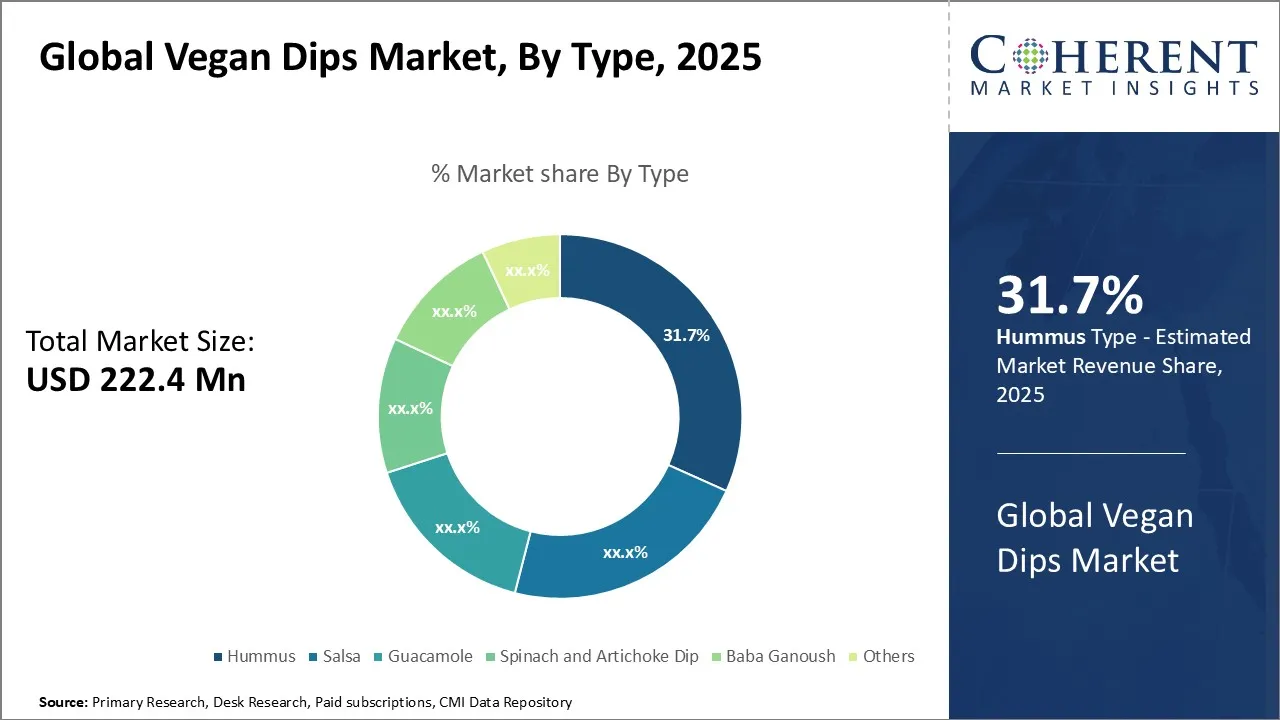
The hummus segment is expected to hold 32.7% share of the market in 2026, and it is available in various dip types like salsa, guacamole, spinach and artichoke dip, baba ganoush, and others. The driver behind hummus’s dominant position is its versatility and rich nutritional profile, which strongly resonate with health-conscious and vegan consumers alike. Hummus, traditionally made from chickpeas, tahini, olive oil, lemon juice, and garlic, provides a naturally plant-based source of protein, fiber, and essential minerals. This makes it appealing not only to vegans but also to flexitarians and those seeking healthier snack alternatives. As an easily accessible dip option, it fits well into diverse dietary lifestyles including gluten-free and clean eating trends.
Vegan Dips Market Insights, by Flavors – Classic Segment Dominates the Market due to its Through Familiarity and Broad Appeal
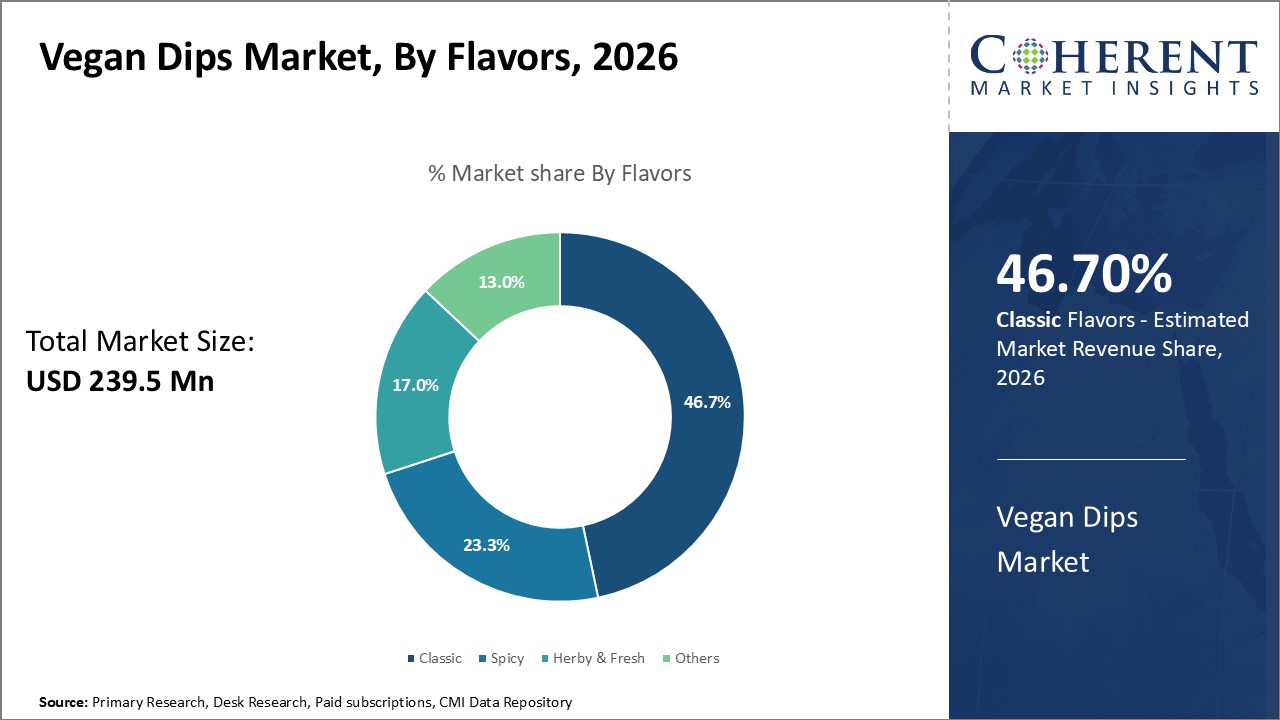
The classic segment is projected to account for 46.7% share in 2026, compared to spicy, herby & fresh, and other flavor categories. Classic flavors are typically characterized by smooth, mild profiles that highlight the natural taste of the base ingredients, such as traditional hummus with lemon and garlic or standard salsa blends emphasizing ripe tomatoes and mild spices. This flavor dominance can be attributed to a wide consumer acceptance and comfort with established tastes that do not overwhelm the palate.
Classic flavors appeal not only to core vegan consumers but also to mainstream shoppers, including families and individuals experimenting with plant-based diets for the first time. The familiarity of classic flavors reduces the barrier to trial, reassuring consumers that the product will meet their expectations without unexpected or intense flavor profiles. Moreover, classic tapenades and dips complement a broad range of food pairings, making them kitchen staples for everyday use from snacks to meal accompaniments.
Vegan Dips Market Insights, by Packaging – Bottled Segment Dominates the Market due to Balancing Convenience and Preservation
The bottled segment is expected to capture 27.8% share in 2026, compared to sachets/pouches, containers/tubs, and other packaging formats. The predominance of bottled packaging is driven by its ability to maintain freshness, extend shelf life, and offer ease of use, which are critical factors for dips that are sensitive to exposure and oxidation.
Bottled packaging offers superior sealing and protection against contamination, preserving the texture and taste of vegan dips such as hummus and salsa. The rigid structure of bottles minimizes the risk of damage during transportation and storage, contributing to the product’s reliability from production to consumption. Additionally, bottles are designed with user convenience in mind; many feature resealable caps that allow consumers to maintain product quality through multiple uses, addressing the common concern of spoilage once opened.
Regional Insights
Europe Vegan Dips Market Analysis and Trends
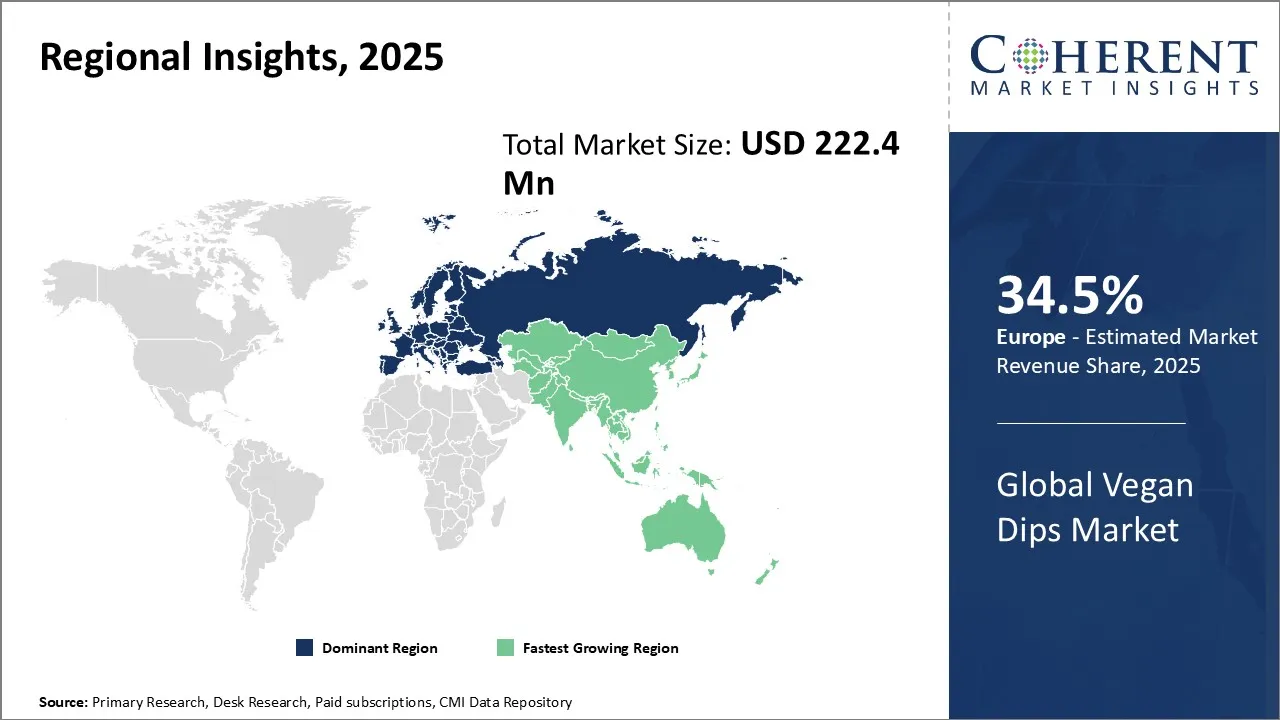
The Europe region is projected to lead the market with a 34.5% share in 2026, supported by the continent’s strong cultural and policy-driven commitment to sustainability, organic farming, and ethical consumption. The region benefits from the European Union’s stringent food labeling and clean-label regulations, which enhance consumer trust and transparency in plant-based products. Growing health consciousness and widespread adoption of flexitarian and vegan diets, particularly in countries such as Germany, the U.K., and the Netherlands, are fueling the demand for vegan dips.
Additionally, Europe’s well-integrated supply chain and robust trade networks support the import of raw ingredients like chickpeas, soy, and plant oils, ensuring product diversity and innovation. Sustainability-driven consumer behavior, combined with high per capita spending on health and wellness products, positions Europe as a leading growth hub for the vegan dips globally.
Asia Pacific Vegan Dips Market Analysis and Trends
The Asia Pacific region is expected to exhibit the fastest growth in the market contributing 22.5% share in 2026, driven by shifting dietary patterns, rising urbanization, and increasing awareness about health and environmental concerns. Governments across countries such as China, India, and Australia are increasingly encouraging plant-based diets through public health campaigns and sustainability initiatives. The growth is further propelled by a burgeoning middle class with higher disposable incomes and a strong inclination towards Western dietary trends, including veganism.
Asia Pacific also benefits from a vibrant local food industry, with companies like Otsuka Foods (Japan), Veginno (China), and VegeCrafters (India) innovating region-specific vegan dip flavors by leveraging local ingredients, thereby appealing to diverse palates. Additionally, trade agreements within the region support the smooth flow of raw materials and finished products, enhancing market accessibility.
Global Vegan Dips Market Outlook for Key Countries
U.S. Vegan Dips Analysis and Market
The U.S. vegan dips market is a major hub for innovation and consumer demand in vegan dips. Key players such as Sabra, followed by startups like Good Foods Group, contribute significantly by offering a broad portfolio of plant-based dips catering to varied tastes and dietary needs. Consumer trends lean heavily toward organic, allergen-free, and sustainably sourced products, supported by regulatory frameworks that encourage clean labeling and ingredient transparency. Retail dominance of supermarkets and online platforms ensures extensive distribution channels, allowing these products to penetrate urban as well as suburban markets effectively.
Germany Vegan Dips Analysis and Market
Germany remains one of the most mature markets in Europe for vegan dips, with a strong consumer base committed to plant-based lifestyles. Companies like Alnatura and Veganz drive the market by introducing innovative, high-quality vegan dips that resonate with eco-conscious consumers. The German government’s supportive stance on sustainable food production and waste reduction feeds into consumer confidence and market expansion. Additionally, the country’s central location within Europe makes it a logistical hub, facilitating imports and exports that benefit the supply chain and product diversity in the market.
China Vegan Dips Analysis and Market
China vegan dips market is rapidly evolving, fueled by growing health consciousness and increased exposure to global vegan trends. Local players such as Veginno are tailoring vegan dip offerings to suit regional flavors, combining traditional Chinese ingredients with plant-based innovation. The government’s promotion of "green" food and reduction of meat consumption as part of environmental policies further accelerates adoption. However, the market faces challenges in consumer education and supply chain consistency, which companies are actively addressing through marketing, collaborations, and investments in local ingredient sourcing.
India Vegan Dips Analysis and Market
India presents a unique market scenario with its large vegetarian population and cultural affinity toward plant-based diets, serving as fertile ground for the vegan dips market. Brands like VegeCrafters and Urban Platter are leading innovation with products that blend traditional Indian spices and ingredients with modern vegan concepts. Government initiatives focusing on sustainable agriculture and nutrition awareness programs complement the market growth. However, affordability and accessibility remain focal points for companies strategizing expansion into tier 2 and tier 3 cities.
Australia Vegan Dips Analysis and Market
Australia vegan dips market is characterized by a high consumer inclination towards health and wellness trends, supported by government frameworks promoting environmental sustainability. Notable players such as Only Good and The Vegan Dairy offer an expanding range of vegan dips that meet diverse dietary needs, including gluten-free and allergen-conscious options. The well-developed retail and e-commerce infrastructure enhances product availability nationwide. Furthermore, Australia's strong export connections position it as both a consumer and producer hub in the Asia Pacific vegan food segment.
Macroeconomic Factors Impacting Global Vegan Dips Market Growth
- Shifting Consumer Preferences: Increasing global health consciousness and rising adoption of plant-based diets are making consumers opt for nutritious, cruelty-free, and environmentally sustainable food products, which fuels the demand for vegan dips.
- Environmental Awareness: Concerns about the environmental effects of traditional animal agriculture—including deforestation, water consumption, and greenhouse gas emissions—are promoting plant-based alternatives as more sustainable options, positively influencing market growth.
- Government Policies and Regulatory Support: Global initiatives and regulatory frameworks supporting sustainable agriculture and clean-label certifications build consumer trust and catalyze market expansion.
- Economic Growth and Rising Middle-Class Affluence: Especially in regions like Asia Pacific, growing middle-class incomes and urbanization contribute to increased purchasing power and demand for vegan products, including dips.
- Market Innovations and Technological Advancements: Innovations in product formulations, flavors, and packaging that focus on clean-label, natural, and functional ingredients enhance consumer appeal and support scalability.
Microeconomic Factors Affecting the Vegan Dips Market
- Health Awareness at the Consumer Level: Individual health consciousness—such as preference for low-fat, cholesterol-free, and fiber-rich foods—drives the demand for vegan dips as convenient, tasty, and healthy snack options.
- Taste and Flavor Innovations: Developing appealing taste profiles with herbs, spices, umami, and dairy-free flavor innovations addresses consumers' taste expectations, a key challenge and opportunity for market players.
- Distribution and Accessibility: Expansion of vegan dips in supermarkets, restaurants, fast-food chains, and online retail channels improves accessibility and convenience for consumers, boosting sales.
- Marketing and Social Influence: Celebrity endorsements, vegan festivals, social media influencers, and documentaries play a crucial role in promoting vegan diets and increasing consumer interest in vegan dips.
- Consumer Willingness to Pay a Premium: A segment of consumers pursues premium, functional products fortified with probiotics, superfoods, and protein, creating opportunities for higher-value product lines.
Market Players, Key Development, and Competitive Intelligence
Key Developments
- In August 2025, London-based vegan cheese maker, Nuts for Cheese, celebrated its 10th anniversary by launching a new line of vegan dips and expanding U.S. distribution, now selling in 3,000 U.S. stores and 2,000 in Canada. The company reported a 35% year-over-year sales increase, according to founder and CEO Margaret Coons.
Top Strategies Followed by the Global Vegan Dips Market Players
- Established companies dominate the sector by investing substantially in research and development (R&D) to innovate high-performance, health-oriented products that meet evolving consumer preferences. These players prioritize creating unique formulations that combine taste, nutrition, and clean-label ingredients to appeal to a broad audience. Such alliances not only strengthen their supply chains but also enable them to rapidly adapt to the market trends.
- For example, Sabra Dipping Company (joint venture between PepsiCo and Strauss Group), continuously expanded its hummus-based product line by introducing clean-label, reduced-fat, and flavor-infused options such as roasted red pepper hummus to cater to health-conscious buyers.
- Mid-level players in the vegan dips market adopt a different strategic approach that centers around offering cost-effective solutions that maintain a balance between quality and affordability. These companies primarily target price-sensitive consumers who seek healthy yet budget-friendly alternatives. By focusing on streamlined production processes and ingredient sourcing, they manage to keep operating costs low without compromising product standards. To strengthen their market presence, mid-level firms often pursue collaborations with technology providers and regional manufacturers, enabling access to advanced processing facilities and innovations.
- For example, Lantana Foods has differentiated itself by offering hummus made with alternative bases such as white beans, black beans, and edamame, providing variety while keeping production efficient and affordable.
- Small-scale players occupy a vital space within the global vegan dips industry by specializing in niche segments and pioneering innovative products that cater to specific consumer needs. These companies often emphasize unique features such as organic certification, allergen-free formulations, or novel flavor profiles to differentiate themselves from larger competitors. By adopting cutting-edge technologies like automation, data-driven production techniques, and eco-friendly packaging, small players maintain competitiveness despite limited resources.
- For example, Nuts for Cheese, a Canadian brand, focuses on organic, allergen-free cashew-based dips and cheeses, gaining traction in both Canada and the U.S. with artisanal positioning. Their new vegan dips line, launched in 2025, marks their expansion into flavored spreads for a broader market.
Market Report Scope
Vegan Dips Market Report Coverage
| Report Coverage | Details | ||
|---|---|---|---|
| Base Year: | 2025 | Market Size in 2026: | USD 239.5 Mn |
| Historical Data for: | 2020 To 2024 | Forecast Period: | 2026 To 2033 |
| Forecast Period 2026 to 2033 CAGR: | 7.7% | 2033 Value Projection: | USD 402.6 Mn |
| Geographies covered: |
| ||
| Segments covered: |
| ||
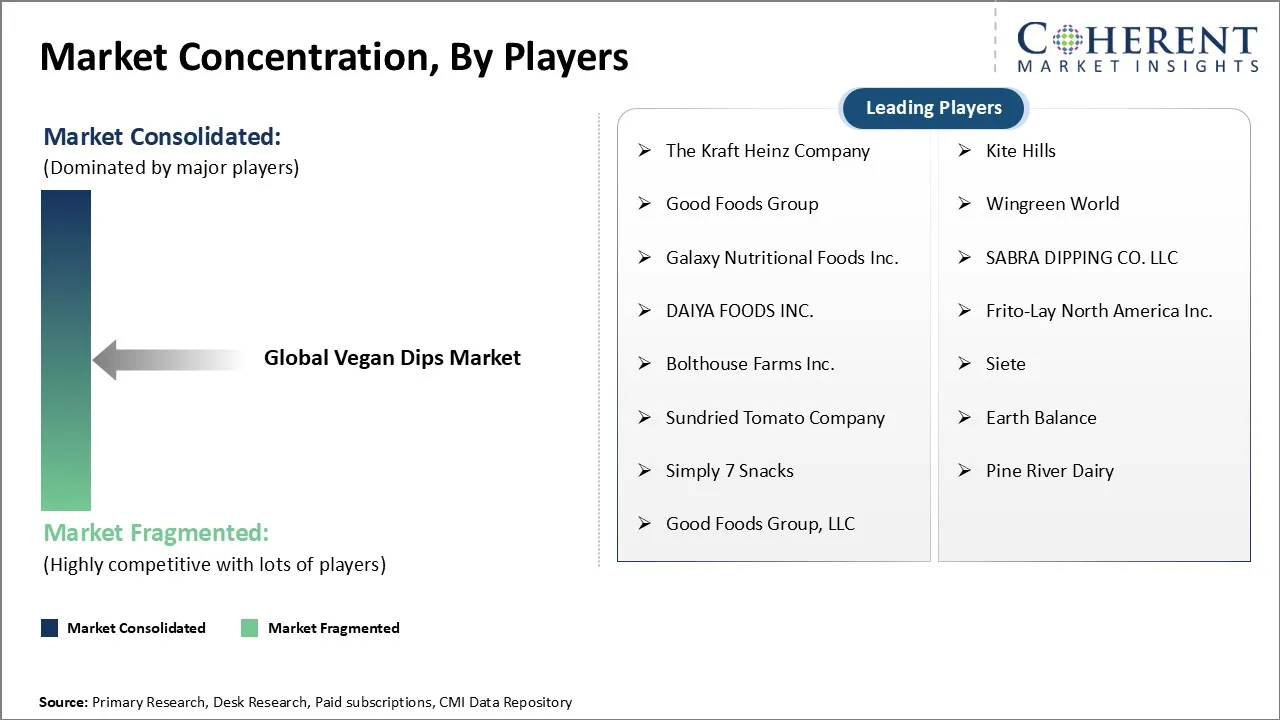
| Companies covered: | The Kraft Heinz Company, Kite Hills, Good Foods Group, Wingreen World, Galaxy Nutritional Foods Inc., SABRA DIPPING CO. LLC, DAIYA FOODS INC., Frito-Lay North America Inc., Bolthouse Farms Inc., Siete, Sundried Tomato Company, Earth Balance, Simply 7 Snacks, Pine River Dairy, and Good Foods Group, LLC | ||
| Growth Drivers: |
| ||
| Restraints & Challenges: |
| ||
Vegan Dips Market Dynamics
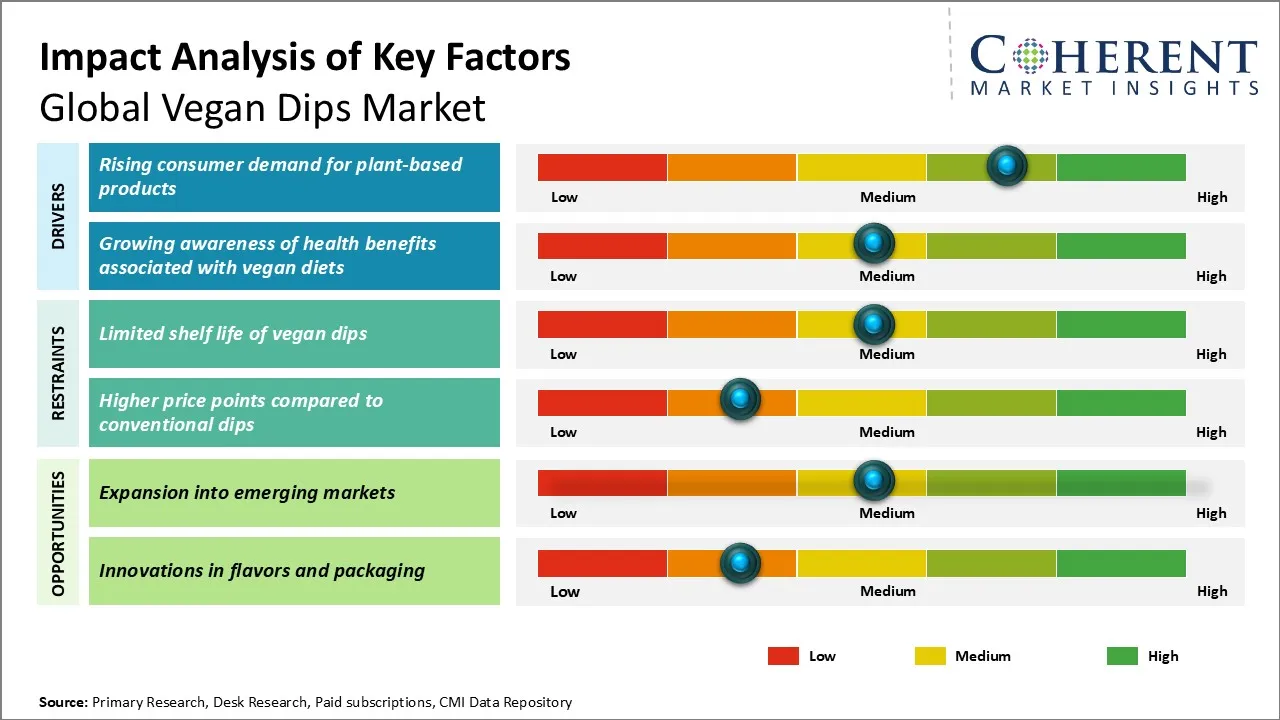
Vegan Dips Market Driver - Rising Consumer Demand for Plant-Based Products
The growing consumer awareness surrounding health, environmental sustainability, and ethical concerns is significantly driving the demand for plant-based products, which in turn fuels the growth of the global vegan dips market. More individuals are adopting vegan and flexitarian lifestyles or simply incorporating more plant-based foods into their diets, motivated by the desire to reduce animal product consumption. This shift is enhanced by increasing knowledge of the benefits associated with plant-based diets, such as lower cholesterol levels, improved digestion, and reduced risk of chronic diseases. Additionally, the environmental impact of livestock farming—including greenhouse gas emissions and water usage—has become a compelling factor encouraging consumers to opt for plant-derived alternatives.
For instance, in 2024, Sabra Dipping Company reported a surge in sales of its classic hummus and guacamole dips in the U.S. and Europe, directly attributed to increased demand from vegan and flexitarian consumers seeking healthier snack options.
Vegan Dips Market Opportunity - Expansion into Emerging Markets
The global vegan dips market presents a significant opportunity for expansion into emerging markets, driven by evolving consumer preferences toward healthier and plant-based food options. Emerging economies in Asia Pacific, Latin America, and Africa are witnessing rapid urbanization, rising disposable incomes, and increasing awareness about sustainable and ethical consumption, all of which are propelling the demand for vegan and natural food products. Additionally, younger demographics in these regions exhibit a growing inclination toward veganism and flexitarian diets, creating a fertile environment for the adoption of vegan dips.
In India, global and local plant-based brands such as Goodmylk and Urban Platter have recently expanded their vegan product offerings, including dips and spreads, to tap into the rising urban middle-class demand. Similarly, in Brazil, companies like NotCo are leveraging their AI-powered food innovation to introduce plant-based alternatives tailored to local tastes. These expansions demonstrate how emerging markets with large young populations and growing health awareness provide strong growth potential for vegan dip manufacturers.
Analyst Opinion (Expert Opinion)
- The global vegan dips market is experiencing dynamic growth, fueled by the rising consumer demand for plant-based alternatives and healthier snacking options. Insights from the Plant-Based Foods Industry Conference (2023) and the Natural Products Expo (2022) highlighted significant innovations, with companies like Hummus & Pita Co. and Miyoko's Creamery leading the way in creating diverse and flavorful vegan dip options.
- Hummus & Pita Co.'s recent expansion into spicy and global flavor profiles exemplifies the market's shift towards catering to adventurous palates. Discussions at these conferences emphasized the importance of clean labels and natural ingredients, which resonate with health-conscious consumers. However, challenges such as competition from traditional dairy dips and the need for consistent product quality were noted as potential barriers.
- Companies that focus on R&D to enhance flavor profiles and improve shelf stability will likely gain a competitive edge. Additionally, strategic partnerships with retailers and foodservice providers can enhance market reach. Ultimately, the vegan dips market future will depend on its ability to innovate while addressing consumer preferences for taste, health, and sustainability effectively.
Speak to the analyst
Want personalized insights?
Take the findings above to one of our principal consultants, or have the report rebuilt around the segments, geographies and competitors you actually track.
Market Segmentation
- Type Insights (Revenue, USD Mn, 2021 - 2033)
- Hummus
- Salsa
- Guacamole
- Spinach and Artichoke Dip
- Baba Ganoush
- Others
- Flavors Insights (Revenue, USD Mn, 2021 - 2033)
- Classic
- Spicy
- Herby & Fresh
- Others
- Packaging Insights (Revenue, USD Mn, 2021 - 2033)
- Bottles
- Sachets/Pouches
- Containers/Tubs
- Others
- Distribution Channel Insights (Revenue, USD Mn, 2021 - 2033)
- Supermarkets & Hypermarkets
- Convenience Stores
- Online
- Others
- Regional Insights (Revenue, USD Mn, 2021 - 2033)
- North America
- U.S.
- Canada
- Latin America
- Brazil
- Argentina
- Mexico
- Rest of Latin America
- Europe
- Germany
- U.K.
- Spain
- France
- Italy
- Russia
- Rest of Europe
- Asia Pacific
- China
- India
- Japan
- Australia
- South Korea
- ASEAN
- Rest of Asia Pacific
- Middle East
- GCC Countries
- Israel
- Rest of Middle East
- Africa
- South Africa
- North Africa
- Central Africa
- North America
- Key Players Insights
- The Kraft Heinz Company
- Kite Hills
- Good Foods Group
- Wingreen World
- Galaxy Nutritional Foods Inc.
- SABRA DIPPING CO. LLC
- DAIYA FOODS INC.
- Frito-Lay North America Inc.
- Bolthouse Farms Inc.
- Siete
- Sundried Tomato Company
- Earth Balance
- Simply 7 Snacks
- Pine River Dairy
- Good Foods Group, LLC
Sources
Primary Research Interviews
- R&D Director – Leading Plant-Based Food Manufacturer
- Procurement Manager – Major Vegan Food Retailer
- Product Development Head – Vegan Nutritional Brand
- Sustainability Manager – Plant-Based Food Certification Body
Stakeholders
- Manufacturers of plant-based dips
- End-use Sectors:
- Vegan Food & Beverage Brands
- Retail and Grocery Chains specializing in vegan products
- Regulatory & Certification Bodies for plant-based foods
- E-commerce Platforms and Retailers focusing on vegan products
- Technology Integration Players: AI-driven personalization in vegan food products
Databases
- UN Comtrade Database for food trade statistics
- Global Plant-Based Food Industry Databases
Magazines
- Nutrition & Wellness Magazine – Trends in plant-based foods and vegan dips
- Health & Nutrition Business – Innovations in vegan food products
- Global Health Insights – Consumer trends in plant-based diets
- Vegan Food Journal – Market updates and growth opportunities in vegan dips
- The Plant-Based Food Guide – Industry updates on vegan formulations
Journals
- International Journal of Nutrition – Nutritional benefits and compositions of vegan dips
- Journal of Food Science & Technology – Formulation trends in plant-based dips
- Journal of Dietary Supplements – Effects of plant-based supplementation on health
- Journal of Applied Nutrition – Benefits of vegan diets and dips
- Food Research International – Bioavailability and sensory studies in vegan dips
Newspapers
- The Financial Times – Market growth of vegan and plant-based dips
- The Guardian – Consumer trends in vegan and sustainable foods
- Asia Health Journal – Growth of vegan dip consumption in Asia-Pacific region
- European Nutrition News – Vegan dips regulation and health policies
Associations
- Plant-Based Foods Association (PBFA)
- International Society of Nutraceuticals and Functional Foods (ISNFF)
- American Herbal Products Association (AHPA)
- Natural Products Association
- European Food Safety Authority (EFSA) – plant-based foods
- Clean Label Project
Public Domain Sources
- U.S. FDA – Guidelines for dietary supplements and plant-based food products
- European Commission – Food Supplements Regulation and Vegan Food Guidelines
- World Health Organization – Safety standards for plant-based foods
Proprietary Elements:
- CMI Data Analytics Tool, Proprietary CMI Existing Repository of information for last 8 years.
Get access to 250+ pages report
Every segment, forecast, competitor profile and data table behind the analysis above — available for instant download.
- ESOMAR Member
- ISO 9001:2015 Certified
- D-U-N-S Registered
- GDPR & CCPA Compliant
Missing comfort of reading report in your local language? Find your preferred language:
Transform your Strategy with Exclusive Trending Reports
Frequently Asked Questions
The global vegan dips market is estimated to be valued at USD 239.5 Mn in 2026 and is expected to reach USD 402.6 Mn by 2033.
The CAGR of the global vegan dips market is projected to be 7.7% from 2026 to 2033.
Rising consumer demand for plant-based products and growing awareness of health benefits associated with vegan diets are the major factors driving the growth of the global vegan dips market.
Limited shelf life of vegan dips and higher price points compared to conventional dips are the major factors hampering the growth of the global vegan dips market.
In 2026, the leading services in the Vegan Dips Market include product innovation, contract manufacturing, private labeling, and omnichannel distribution support.
The leading raw materials in the Vegan Dips Market are chickpeas, avocado, plant-based oils, nuts, and seeds.
In terms of type, the hummus segment is estimated to dominate the market revenue share in 2026.