

Global Vitamin B Complex Ingredients Market Size and Forecast – 2026 to 2033
According to Coherent Market Insights, the global vitamin B complex ingredients market is estimated to be valued at USD 4.10 Bn in 2026 and is expected to reach USD 5.58 Bn by 2033, exhibiting a compound annual growth rate (CAGR) of 4.5% from 2026 to 2033. This steady growth reflects increasing consumer awareness about the health benefits of vitamin B complexes and rising demand for dietary supplements across various demographics worldwide.
Key Takeaways of the Vitamin B Complex Ingredients Market
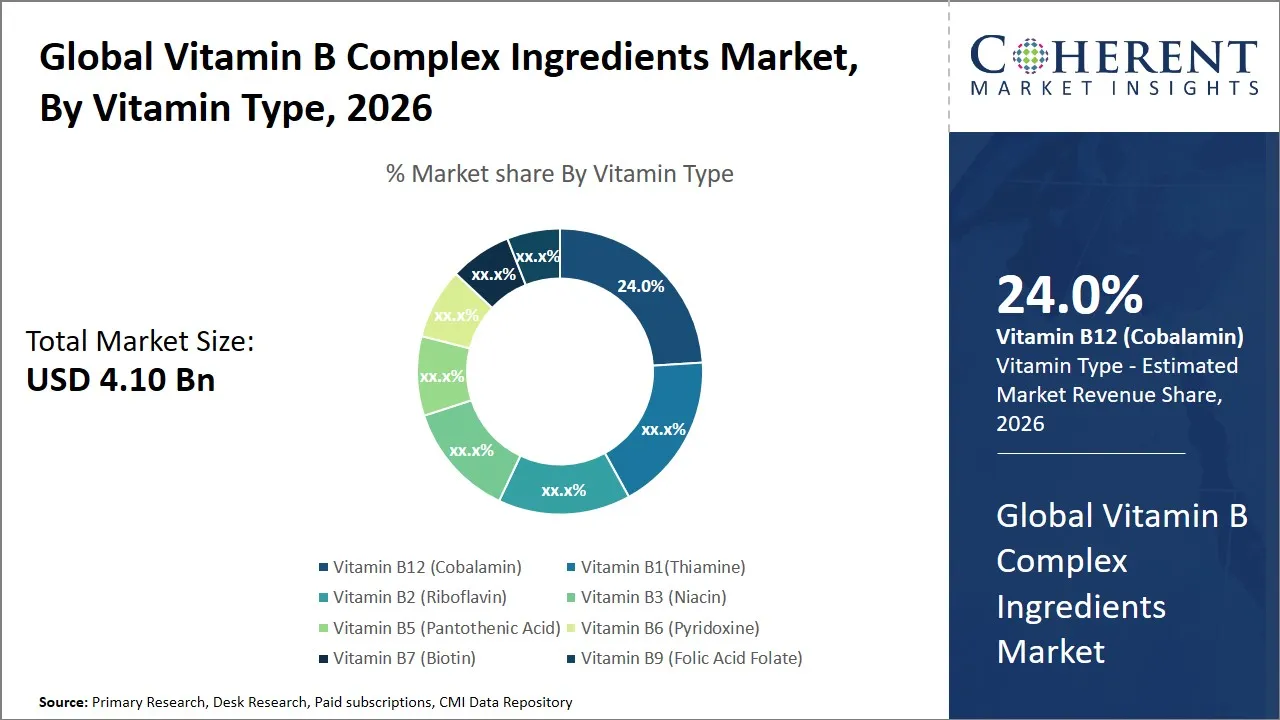
- Vitamin B12 (cobalamin) segment is expected to lead the global vitamin B complex ingredients market, capturing 24% share in 2026.
- Synthetic segment is estimated to represent 48% of the global vitamin B complex ingredients market share in 2026.
- Powder segment is projected to dominate with 34% of the market share in 2026.
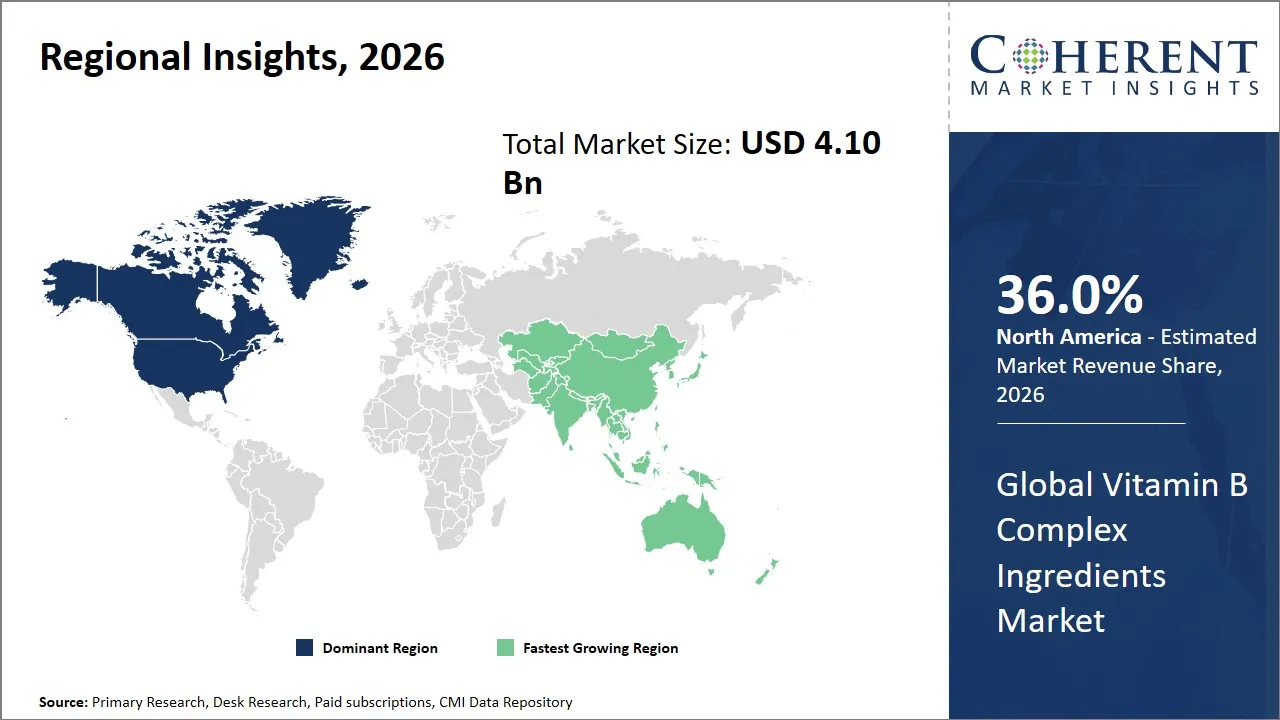
- North America is expected to lead the market, holding a share of 36% in 2026. Asia Pacific is anticipated to be the fastest-growing region, with 29% share in 2026.
Market Overview
- The market serves as a core component of global nutrition and healthcare, supplying essential micronutrients for energy metabolism, neurological health, red blood cell formation, and prenatal nutrition.
- Demand is driven by rising micronutrient deficiencies, increasing preventive healthcare adoption, and strong growth in dietary supplements and functional food and beverage consumption.
- The expanding applications of vitamin B complexes in functional foods, beverages, and pharmaceuticals are propelling the market growth. Technological advancements in ingredient formulation and increasing investments in research and development are also contributing to product innovation, enhancing bioavailability and efficacy, which further fuels market expansion during the forecast period.
- The market is shifting toward higher value activated and bioavailable forms such as methylcobalamin and bioactive folates driven by clinical and premium nutraceutical applications.
Current Events and Its Impact
Current Events | Description and its Impact |
Expansion of food fortification programs in emerging economies |
|
Rising demand for activated and bioavailable vitamin forms |
|
Segmental Insights
- Current Industry Events of 2026
- Market Size Estimation
- Regional Breakdown
- Competitive Landscape
- Customer Intelligence
- Segmental Analysis
- Pricing Analysis
- Key Market Drivers, Challenges & Future Trends
- Customized Insights Section
Why Does the Vitamin B12 (Cobalamin) Segment Dominate the Global Vitamin B Complex Ingredients Market in 2026?
The vitamin B12 (cobalamin) segment is expected to hold the largest share of 24% in 2026, driven by its essential role in various physiological functions and rising consumer awareness regarding its health benefits. Vitamin B12 is crucial for neurological function, DNA synthesis, and red blood cell formation, making it indispensable across diverse age groups, especially the elderly and vegetarians who are more prone to deficiencies. Increased demand in the B12 supplementation in the whole world has been fueled by the increasing prevalence of Vitamin B12 deficiency due to the dietary limitations of veganism and vegetarianism and medical conditions leading to impaired absorption.
Besides, the role of Vitamin B12 in alleviating anemia and promoting cognitive functions has prompted healthcare practitioners to prescribe Vitamin B12 supplements more often. Along with this, the growth in chronic illnesses and health issues has seen consumers embrace preventative health practices, and hence, the growth of dependence on Vitamin B12-enriched products. This is also backed by the fact that there has been more clinical research on its possible relevance in energy metabolism, mood stabilization and cardiovascular health, which is also boosting the consumer confidence in B12 supplements.
For instance, the Indian Council of Medical Research (ICMR) has mentioned vitamin B12 deficiency as an important, yet largely unidentified, population health issue in India, which is mostly due to popular vegetarianism. Addressing B12 in nutrition rules has been taken into account by ICMR in response. This has directly boosted the demand of pharmacological grade Vitamin B12 especially methylcobalamin in oral supplements and injectable products of vitamin B12 in India and Asia Pacific.
(Source- https://viziottpharma.net/top-methylcobalamin-injection-manufacturers-in-india)
The Synthetic Segment Dominates the Global Vitamin B Complex Ingredients Market
The synthetic segment is expected to hold the largest share of 48% in 2026, owing to their cost-effectiveness, consistent purity, and scalability in production. Synthetic vitamins enable manufacturers to make large amounts of highly standardized products that have predictable activity and this is needed to achieve the high-quality standards of pharmaceutical and nutraceutical use. This is very important to the formulators who need to design products that have precise nutrient profiles and this has led to the preference of synthetic forms over fermentation-produced or bioidentical activated forms.
The advantages of the synthetic production process have been a developed technology, which makes it easy to control costs and thus be able to offer reasonably competitive prices that are so important in sensitive price segments such as dietary supplements and fortified foods. In addition, the synthetic Vitamin B components are popular due to their durability and stability that facilitate global distribution and retail marketing without affecting the effectiveness of the products. Their use is also supported by extensive data regarding safety and effectiveness, which are now widely accepted by regulatory authorities in different areas of the world, which further contributes to their popularity in the market.
Powder Segment Dominates the Vitamin B Complex Ingredients Market
The powder segment is expected to capture the highest share of 34% in 2026, driven by their versatility and ease of incorporation across a wide array of applications. The benefit of powdered vitamins is that they provide the formulators with the flexibility in product development, enabling it to incorporate specific dosages into the various delivery systems available like pills, capsules, reconstitution powder, and functional food stuff. This flexibility has endowed the powder form to be very appealing in pharmaceutical, dietary supplement and food and beverage markets.
Their popularity can be explained by the inherent stability and extended shelf life of powder forms. Powders generally exhibit a higher resistance to degradation due to moisture and temperature variations than liquid solutions which must be stored in special packages and under special conditions. Such stability is important in terms of increased shelf life of products and less wastage, which is a critical factor to manufacturers and retailers.
Dosage Sensitivity and Over-fortification Risk
Aspect | Description | Impact |
Dosage Sensitivity | Certain individuals are sensitive to high doses of Vitamin B (e.g., B6, B12) leading to potential side effects like nerve damage or skin reactions. | Increases the need for regulated, scientifically-backed dosage guidelines and consumer education on safe intake levels. |
Over-fortification Risk | Over-fortification of foods or supplements with Vitamin B complex can lead to unintended excessive intake, especially in fortified processed foods. | Risks public health concerns and potential regulatory push for stricter fortification limits, particularly in products like breakfast cereals, drinks, and snacks. |
Vulnerable Populations | Certain groups, such as pregnant women, infants, and elderly individuals, may be more susceptible to the adverse effects of excess B vitamins. | Highlights the need for tailored fortification approaches and careful monitoring of intake levels in vulnerable populations to avoid health complications. |
Regulatory Guidelines | Regulatory bodies are working on clearer guidelines for vitamin fortification limits in foods and supplements to prevent excessive consumption. | Drives market compliance efforts and encourages manufacturers to stay within the established limits, ensuring safe product offerings while maintaining consumer trust. |
Regional Insights
North America Vitamin B Complex Ingredients Market Analysis and Trends
The North America region is projected to lead the market with a 36% share in 2026, owing to its well-established healthcare infrastructure, strong consumer awareness regarding nutritional supplements, and extensive research and development activities. The existence of large pharmaceutical and nutraceutical corporations and a strict regulatory system that supports the work of organizations like the USFDA guarantee the high quality and safety of products that increase consumer trust.
Also, the well-developed distribution channels and the development of e-commerce in the region enables an easy market penetration. The main competitors such as Amway, DSM Nutritional Products, and BASF are operating in North America on a large scale and invest significantly in innovation and product diversification. The government policy of advertising healthy eating and the preventive healthcare to the masses further entrenches the market here.
For instance, in January 2025, Wellful, based in the U.S. completed the acquisition of Ancient Nutrition, strengthening its omnichannel presence and expanding its footprint in vitamin, mineral, and supplement categories that include B vitamin‑related products.
(Source - https://www.nutritionaloutlook.com/view/wellful-announces-acquisition-of-ancient-nutrition)
Asia Pacific Vitamin B Complex Ingredients Market Analysis and Trends
The Asia Pacific region is expected to exhibit the fastest growth in the market contributing 29% share in 2026, driven by rising disposable incomes, increasing urbanization, and greater health consciousness among the population. The practices of promoting dietary supplements and nutritional regulations by governments are on a rise, especially in such nations as China and India, where great numbers of the population are moving towards preventive methods of medical care.
The region has enjoyed the increasing capacity to manufacture products, good trade policies and relatively cheap production cost, which is enticing both local and global firms. Inner Mongolia Fofine Biotech Group and Zhucheng Tonghua Vitaming Pharmaceutical are critical to the growth of supply chains and innovation in this region. Also, the increase in retail channels (both offline and online retailing) will facilitate the mass reach to consumers.
Global Vitamin B Complex Ingredients Market Outlook for Key Countries
What are the Current Trends Shaping the U.S. Vitamin B Complex Ingredients Market?
The vitamin B complex ingredients market of the U.S. is highly developed by a complex environment of strict regulatory control and consumer desire to purchase high-quality vitamin supplements of high quality and aimed to a scientific ground. Such companies as Amway and DSM Nutritional Products are leading because of innovation in the formulation of vitamin B which is designed to meet different health requirements. Frequent introduction of new products is encouraged by the existence of research-intensive universities and industry-academia development. The national healthcare is extensive, and the trend of lifestyle and wellness-focused contributes to the expansion of the market.
How is China Helping in the Growth of the Vitamin B Complex Ingredients Market?
The vitamin B complex ingredients market in China is growing at a very high rate basing on the rising health awareness and the rising middle-income population that is most likely to drink supplements. The emphasis of the government in encouraging nutritional health coupled with the liberalization of the importation laws on quality health supplements facilitates the environment. Local firms like Inner Mongolia Fofine Biotech Group are increasing their production standards and compete in the world market and serve the local market. Also, the e-commerce sites such as Alibaba enable unprecedented reach of the market, assisting small regional producers as well as international brands to seize many segments of the consumer market.
Key Drivers for the Growth of the Germany Vitamin B Complex Ingredients Market
With its strong regulatory regime and standards that govern supplement manufacturing in the country, Germany remains at the forefront of vitamin B complex ingredients market in Europe. The pharmaceutical and biotechnological industries are well-developed in the country encouraging innovations and the creation of products of high quality. Major European industry players such as BASF have large scale plants in Germany that end up contributing both domestically and in the export industry. The development of the products is influenced by consumer demands in terms of natural and sustainably sourced vitamins, which are supported by governmental policies and the necessity to live a healthy lifestyle and ageing.
India Vitamin B Complex Ingredients Market Trends
India’s vitamin B complex ingredients market is witnessing dynamic growth driven by an expanding urban population, increasing awareness around dietary deficiencies, and rising healthcare expenditures. Government initiatives aimed at improving national nutrition and supplement usage strengthen consumer uptake. Companies such as Dabur and Cipla leverage extensive distribution networks and affordable product offerings to attain wide market coverage. Additionally, India’s role as a global pharmaceutical manufacturing hub supports import substitution and export opportunities for vitamin B complex ingredients.
Supply Chain and Fermentation Capacity Constraints in the Vitamin B Complex Ingredients Market
Aspect | Description | Impact |
Supply Chain Disruptions | Global supply chain disruptions, such as logistics challenges, raw material shortages, and labor shortages, affect the timely availability of vitamin B ingredients. | Leads to delays in production and increased ingredient costs, potentially disrupting product availability and affecting overall market growth. |
Raw Material Sourcing | Sourcing of quality raw materials like microbial strains for fermentation is critical for the production of certain B vitamins (e.g., B12). | Dependence on limited suppliers can create bottlenecks, leading to volatility in pricing and availability, especially in regions with strong demand. |
Fermentation Technology | Fermentation-based production of vitamins B1, B2, B12, and others requires highly specialized infrastructure and microbial cultures | Limited fermentation capacity can strain production capabilities, resulting in higher costs, longer lead times, and inability to scale production quickly in response to rising demand. |
Capacity Expansion Challenges | Expanding fermentation facilities to meet growing demand requires significant investment in infrastructure, R&D, and regulatory approvals. | Delays in capacity expansion can lead to supply gaps, especially as demand for bioavailable forms of B vitamins continues to grow. |
Cost Fluctuations in Fermentation | The costs of raw materials and microbial strains for fermentation can fluctuate due to external factors such as weather events, economic shifts, and raw material shortages. | Rising fermentation costs lead to higher production expenses, which could result in increased prices for end-products or reduced profitability for manufacturers. |
Concentration and Competitive Landscape
Key Developments
- In September 2025, BASF and Louis Dreyfus Company (LDC) proclaimed a successful sale of the Food and Health Performance Ingredients business of BASF, which used to be under the Nutrition and Health segment of the firm, to LDC after it was approved by the respective regulatory authorities.
- In February 2025, campaign about vitamin B deficiency and symptoms associated with it, Neurobion Forte came up with a Sabse Bada B campaign. The Neurobion Sabse Bada B campaign has a television advertisement and outreach strategy to create awareness on the importance of Vitamin B to the well-being of nerves and symptoms.
- In February 2025, LUCOFAST launched an innovative hydration drink design to support energy levels, recovery with strong immune support, which includes essential electrolytes and vitamin B complex. LUCOFAST addresses this growing demand with a fast-absorbing formula that replenishes essential nutrients lost due to sweat, stress, and physical exertion.
Top Strategies Followed by Global Vitamin B Complex Ingredients Market Players
Player Type | Strategic Focus | Examples |
Established Market Leaders | Leading players in the vitamin B complex ingredients market focus on R&D to develop high-performance, bioavailable, clean-label, and multifunctional formulations. They engage in strategic partnerships with OEMs and industry stakeholders to strengthen their market presence and expand globally, especially in emerging markets like Asia Pacific and Latin America, where health awareness and income growth drive demand. | DSM, a global leader in vitamin production, has expanded its B-vitamin portfolio by partnering with regional players in Asia Pacific to cater to the growing demand for functional nutrition products in these emerging markets. |
Mid-Level Players | Mid-level competitors in the vitamin B complex ingredients market focus on providing cost-effective, high-quality solutions to price-sensitive segments like nutraceutical manufacturers and dietary supplement brands. They often pursue joint manufacturing or technology-sharing partnerships to scale production, enhance efficiency, and improve product offerings, helping them compete in both existing and new markets. | Vertellus, a mid-tier supplier of vitamin ingredients, partners with local manufacturers in emerging markets to increase supply chain efficiency and reduce costs, allowing them to offer affordable, high-quality B vitamins to nutraceutical brands in Latin America and Asia Pacific. |
Small-Scale Players | Small-scale players in the vitamin B complex ingredients market focus on innovation and differentiation, offering specialty products with unique delivery systems or organic certifications. They use technologies like fermentation and microencapsulation to stay agile and form local partnerships to build strong regional brand recognition. | Resonance Specialties, a niche player, focuses on producing organic B vitamins through fermentation and microencapsulation, catering to eco-conscious brands in Europe and North America. Their partnerships with regional distributors help them expand their presence in targeted markets. |
Market Report Scope
Vitamin B Complex Ingredients Market Report Coverage
| Report Coverage | Details | ||
|---|---|---|---|
| Base Year: | 2025 | Market Size in 2026: | USD 4.10 Bn |
| Historical Data for: | 2020 To 2024 | Forecast Period: | 2026 To 2033 |
| Forecast Period 2026 to 2033 CAGR: | 4.5% | 2033 Value Projection: | USD 5.58 Bn |
| Geographies covered: |
| ||
| Segments covered: |
| ||
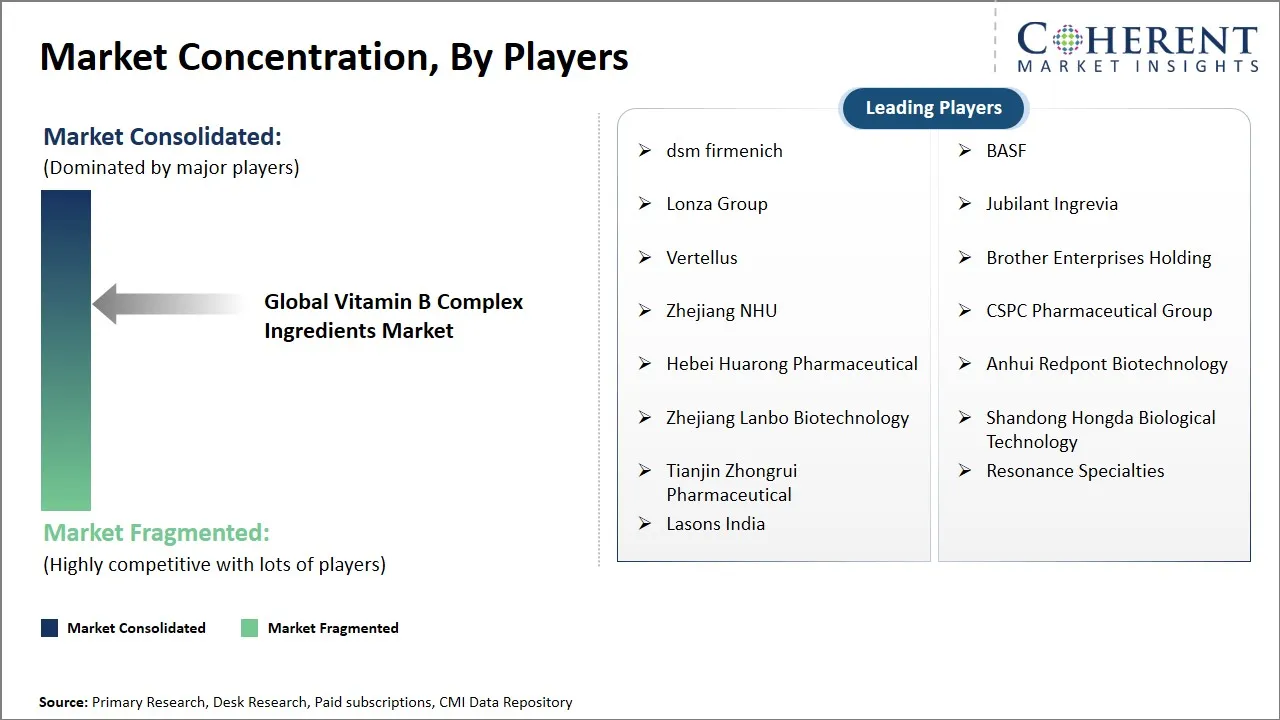
| Companies covered: | dsm firmenich, BASF, Lonza Group, Jubilant Ingrevia, Vertellus, Brother Enterprises Holding, Zhejiang NHU, CSPC Pharmaceutical Group, Hebei Huarong Pharmaceutical, Anhui Redpont Biotechnology, Zhejiang Lanbo Biotechnology, Shandong Hongda Biological Technology, Tianjin Zhongrui Pharmaceutical, Resonance Specialties, and Lasons India | ||
| Growth Drivers: |
| ||
| Restraints & Challenges: |
| ||
Market Dynamics
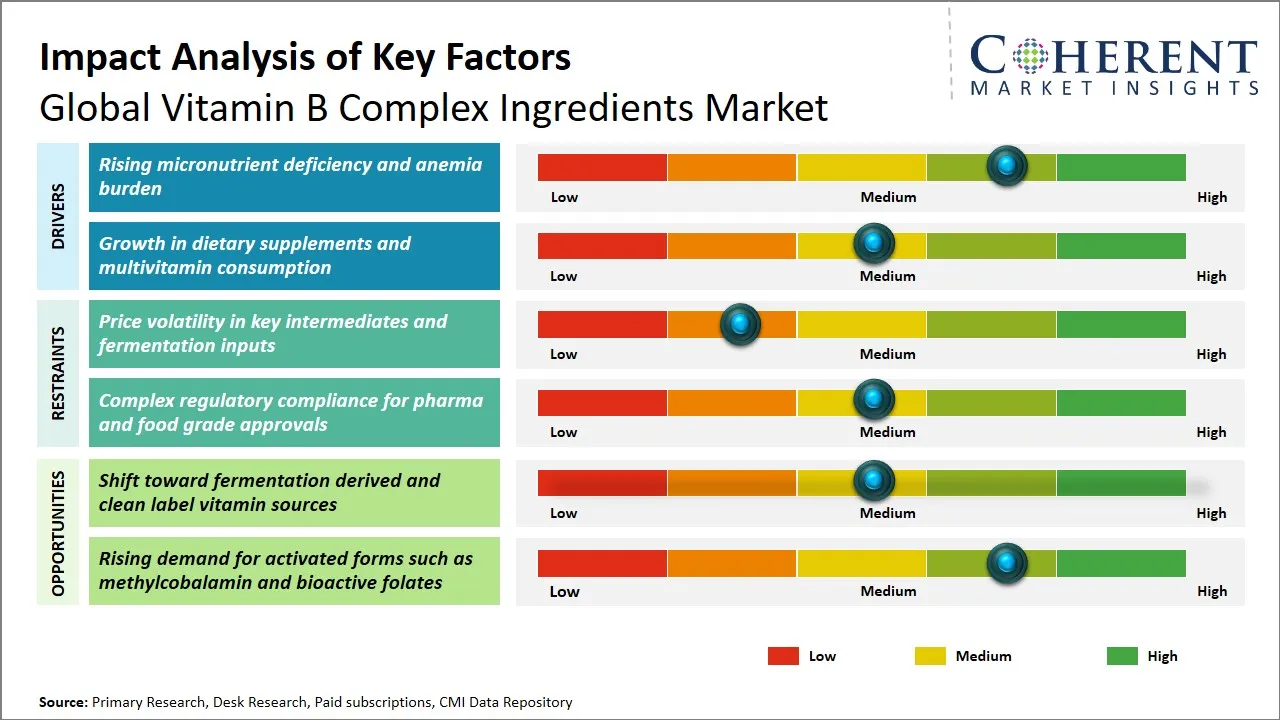
Vitamin B Complex Ingredients Market Driver - Rising Micronutrient Deficiency and Anemia Burden
The rising rate of micronutrient deficiencies and in particular vitamin B are a major force in the push factor into the demand of the vitamin B complex ingredients market internationally. Vitamin B complex is essential in energy metabolism, nerve, and production of red blood cells hence it is important in the treatment of disorders such as anemia and other disorders associated with deficiency. The lack of proper dietary intake of necessary B vitamins like B12, B6 and folate affects the population of different age groups, including developing countries and worsens the health conditions, such as fatigue, cognitive disorders, and immune system deficiency.
Also, with the increasing levels of anemia, which are mostly due to the nutritional deficits and the high physiological requirements that are present during pregnancy or disease, the issue of specific supplementation is increasing. With the increasing awareness about the significance of micronutrient malnutrition prevention, medical professionals and consumers are pursuing useful answers, thus pushing the trend of adding Vitamin B complex components to dietary supplements, fortified foods, and clinical nutrition products to counter these prevalent deficiencies.
For instance, India is getting burdened with a serious, increasing anemia and micronutrient deficient situation especially in women and children. This crisis is being solved via an increased and technology-oriented public health efforts, as per the latest Ministry of Health and Family Welfare, Press Information Bureau (PIB) notices.
(Source - https://www.mohfw.gov.in/?q=en/press-info)
Vitamin B Complex Ingredients Market Opportunity - Shift Toward Fermentation-Derived and Clean Label Vitamin Sources
The vitamin B complex ingredients market around the globe is experiencing a tremendous opportunity due to the increase in the consumption of fermentation-derived and clean label sources of vitamins. The rising awareness of the health benefits of naturally derived ingredients, together with the rising worries about synthetic additives and chemical residues, is driving the demand towards vitamins manufactured in a way that is sustainable and transparent.
Ingredient vitamin B complexes obtained through fermentation provide a more natural, environmentally friendly option to standard synthetic vitamins, which are of interest to the health-conscious consumer segment and manufacturers aiming to create clean label preparations. This change is not in isolation and is part of the larger movement of clean eating and increased product labeling transparency, which is already fairly prevalent in the high-end markets of North America and Europe and it is quickly spreading to the emerging markets.
For instance, the food, beverage and nutraceutical sectors are undergoing a big transformation to fermentation-based and clean label vitamins, as a result of market conditions to demand natural, sustainable and clear labeling of ingredients. This direction uses the accuracy fermentation to manufacture high-purity vitamins, proteins, and micronutrients without the ecological footprint or synthetic chemicals required in conventional manufacture.
(Source - https://www.nutritionaloutlook.com/view)
Analyst Opinion (Expert Opinion)
- The vitamin B complex ingredients market is showing good growth owing to the heightened health awareness, a heightened concern of micronutrient deficiency and the growing functional foods, supplements and pharmaceutical products demand. The growing effectiveness of the product and market penetration through improved technological advancement in the production of fermentation-based products and the growing use of bioavailable forms such as methylcobalamin are improving the efficacy of products and broadening the market coverage. Also, regulatory endorsements on food fortification initiatives as well as the increased attention on preventive health is driving the demand of the needed B vitamins such as B12, B9 (folic acid), and B6. But there are issues to be faced in regards to the volatility of raw materials, the consistency of quality and supply chain interference that may affect the growth of the market, especially in the emerging economies.
- Bioactive vitamin formulations and customized nutrition. To satisfy the need of the pharmaceutical and nutraceutical industries, market players are concentrating on producing high quality products in the form of ingredients. Industry efforts are also significant, like the U.S. dietary guidelines on the benefits of B vitamins on health, and the National Iron Plus Initiative (NIPI) in India to improve iron and folic acid deficiencies, are creating a future market opportunity. International activities such as the International Symposium on Vitamin B12 and Global Nutrition Summit have also played a significant role in promoting cooperation and innovation in the industry as it brings industry stakeholders together on the best practices and to adjust to the emerging trends in the market.
Speak to the analyst
Want personalized insights?
Take the findings above to one of our principal consultants, or have the report rebuilt around the segments, geographies and competitors you actually track.
Market Segmentation
- Vitamin Type Insights (Revenue, USD Bn, 2021 - 2033)
- Vitamin B12 (Cobalamin)
- Vitamin B1(Thiamine)
- Vitamin B2 (Riboflavin)
- Vitamin B3 (Niacin)
- Vitamin B5 (Pantothenic Acid)
- Vitamin B6 (Pyridoxine)
- Vitamin B7 (Biotin)
- Vitamin B9 (Folic Acid Folate)
- Chemical Form Insights (Revenue, USD Bn, 2021 - 2033)
- Synthetic
- Fermentation Derived
- Bioidentical Activated Forms
- Product Form Insights (Revenue, USD Bn, 2021 - 2033)
- Powder
- Granules
- Liquid Solution
- Encapsulated Coated Ingredients
- Grade Insights (Revenue, USD Bn, 2021 - 2033)
- Food Grade
- Pharmaceutical Grade
- Feed Grade
- Cosmetic Grade
- Application Insights (Revenue, USD Bn, 2021 - 2033)
- Dietary Supplements
- Functional Food and Beverages
- Pharmaceuticals
- Infant Nutrition
- Animal Feed and Pet Nutrition
- Cosmetics and Personal Care
- Dosage Format Insights (Revenue, USD Bn, 2021 - 2033)
- Tablets
- Capsules
- Softgels
- Powders and Sachets
- Liquid Syrups and Drops
- Injectable Formulations
- Regional Insights (Revenue, USD Bn, 2021 - 2033)
- North America
- U.S.
- Canada
- Latin America
- Brazil
- Argentina
- Mexico
- Rest of Latin America
- Europe
- Germany
- U.K.
- Spain
- France
- Italy
- Russia
- Rest of Europe
- Asia Pacific
- China
- India
- Japan
- Australia
- South Korea
- ASEAN
- Rest of Asia Pacific
- Middle East
- GCC Countries
- Israel
- Rest of Middle East
- Africa
- South Africa
- North Africa
- Central Africa
- North America
- Key Players Insights
- dsm firmenich
- BASF
- Lonza Group
- Jubilant Ingrevia
- Vertellus
- Brother Enterprises Holding
- Zhejiang NHU
- CSPC Pharmaceutical Group
- Hebei Huarong Pharmaceutical
- Anhui Redpont Biotechnology
- Zhejiang Lanbo Biotechnology
- Shandong Hongda Biological Technology
- Tianjin Zhongrui Pharmaceutical
- Resonance Specialties
- Lasons India
Sources
Primary Research Interviews
Industry Stakeholders list
- Nutraceutical manufacturers
- Pharmaceutical companies
- Ingredient suppliers
- Vitamin B complex producers
- Health supplement brands
- Contract manufacturers
End Users list
- Supplement consumers
- Pharmaceutical product users
- Functional food buyers
- Healthcare professionals
- Nutritionists
- Dieticians
Government and International Databases
- World Health Organization (WHO)
- U.S. Food and Drug Administration (FDA)
- European Medicines Agency (EMA)
- Centers for Disease Control and Prevention (CDC)
- U.S. National Institutes of Health (NIH)
- FAO (Food and Agriculture Organization)
Trade Publications
- Nutraceuticals World
- Functional Ingredients Magazine
- Journal of Dietary Supplements
- Cosmetics & Toiletries
- Food Technology Magazine
- Pharma Times
Academic Journals
- Journal of Nutritional Biochemistry
- American Journal of Clinical Nutrition
- Journal of Food Science
- British Journal of Nutrition
- International Journal of Food Sciences and Nutrition
- Journal of Clinical Nutrition
Reputable Newspapers
- The New York Times
- The Guardian
- BBC News
- Financial Times
- The Wall Street Journal
- Reuters
Industry Associations
- American Society for Nutrition (ASN)
- European Food Information Council (EUFIC)
- National Institutes of Health (NIH)
- International Society of Nutraceuticals and Functional Foods (ISNFF)
- Global Organization for Vitamin B Research
- International Food Information Council (IFIC)
Public Domain Resources
- ClinicalTrials.gov
- US National Library of Medicine
- WHO Global Health Observatory
- EU Open Data Portal
- FAOSTAT
Proprietary Elements
- CMI Data Analytics Tool: Proprietary analytics tool to analyze real-time market trends, consumer behavior, and technology adoption in market
- Proprietary CMI Existing Repository of Information for Last 8 Years
Get access to 250+ pages report
Every segment, forecast, competitor profile and data table behind the analysis above — available for instant download.
- ESOMAR Member
- ISO 9001:2015 Certified
- D-U-N-S Registered
- GDPR & CCPA Compliant
Missing comfort of reading report in your local language? Find your preferred language:
Transform your Strategy with Exclusive Trending Reports
Frequently Asked Questions
The global vitamin B complex ingredients market is estimated to be valued at USD 4.10 billion in 2026 and is expected to reach USD 5.58 billion by 2033.
The CAGR of global vitamin B complex ingredients market is projected to be 4.5% from 2026 to 2033.
Rising micronutrient deficiency and anemia burden and growth in dietary supplements and multivitamin consumption are the major factors driving the growth of the global vitamin B complex ingredients market.
Price volatility in key intermediates and fermentation inputs and complex regulatory compliance for pharma and food grade approvals are the major factors hampering the growth of the global vitamin B complex ingredients market.
Manufacturers face challenges including regulatory compliance quality consistency in multi‑formulation environments and cost volatility for precursor chemicals and fermentation inputs.
Technologies such as microbial fermentation clean‑label production and advanced encapsulation for stability and controlled release are expanding applications and enabling higher value ingredient segments.
In terms of vitamin type, vitamin B12 (cobalamin) is estimated to dominate the market revenue share in 2026.