

Bulimia Nervosa Treatment Market Size and Share Analysis - Growth Trends and Forecast (2026 - 2033)
The Bulimia Nervosa Treatment Market is anticipated to grow at a CAGR of 5.2% with a market value of approximately USD 644.8 Mn in 2026 and is expected to reach around USD 964.6 Mn in 2033. The growth is driven by rising prevalence of eating disorders, increasing mental health awareness, improved diagnosis rates, expansion of behavioral therapy and pharmacological treatment options, and growing healthcare access and support infrastructure for psychiatric conditions globally.
Key Takeaways from the Bulimia Nervosa Treatment Market Report
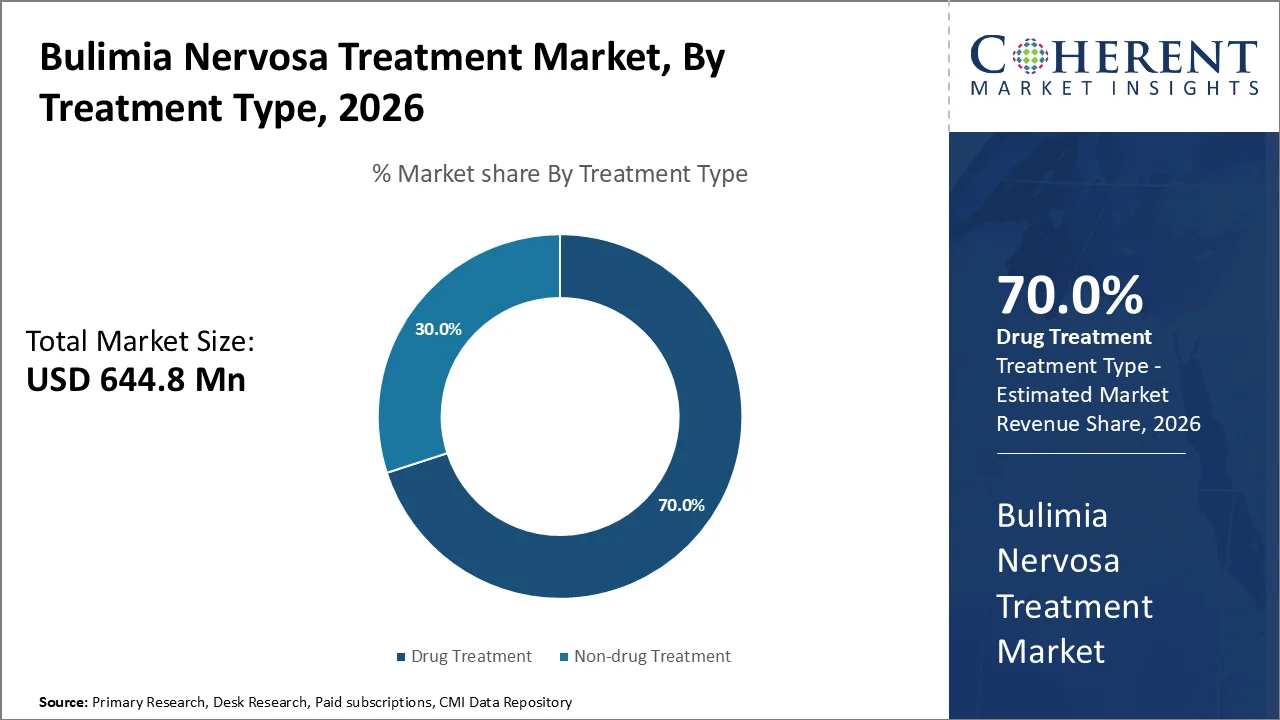
- Based on treatment type, Drug Treatment segment is expected to lead the market with a share of around 70% in 2026, driven by the widespread clinical use of antidepressants (especially SSRIs such as fluoxetine) as first-line pharmacotherapy for bulimia nervosa. According to clinical guidelines and systematic reviews, SSRIs (particularly fluoxetine) show consistent superiority over placebo in reducing binge–purge frequency, making pharmacotherapy the most widely adopted treatment approach globally.
- Oral medications are anticipated to dominate the market share with an estimate of around 85% by 2026 since most of the pharmacologic interventions employed in the treatment of bulimia nervosa (SSRIs, SNRIs, TCAs) are administered orally on an outpatient basis.
- According to the distribution channel, the Retail Pharmacies are likely to hold the highest market share, projected to account for 50% of the market share by 2026 due to the high refill rate and chronic nature of the treatment. As per the IQVIA Institute for Human Data Science, retail pharmacies remain dominant when it comes to outpatient prescription fills on a global basis because of their convenience and accessibility.
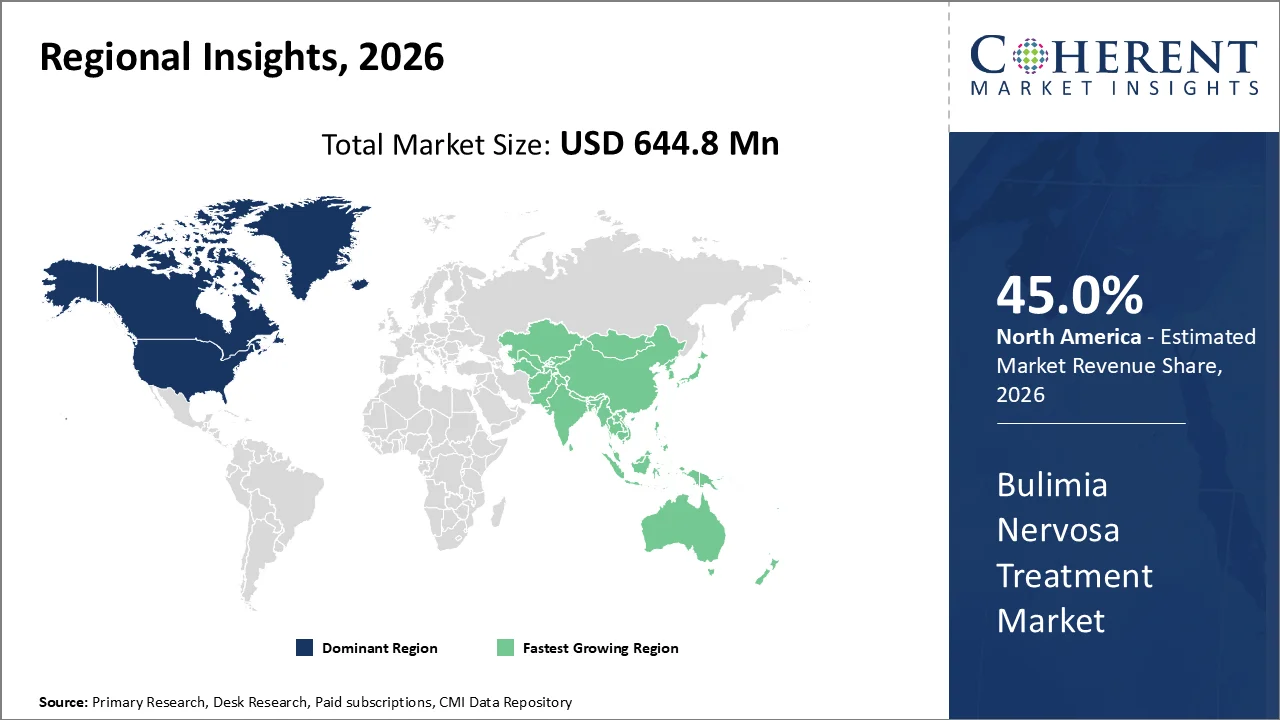
- The North America region will emerge as the leading region in terms of market share and revenue with a market share of approximately 45% in 2026 due to increased awareness regarding eating disorders, well-developed psychiatric health care services, and increased penetration of treatments. As per the National Institute of Mental Health (NIMH), there are millions of people suffering from eating disorders in the United States, and effective treatments, including SSRIs and Cognitive Behavioral Therapy (CBT), are being used extensively in clinical settings.
Rising Clinical Advancements in Pharmacotherapy and Digital Mental Health is Transforming the Bulimia Nervosa Treatment Market
Increasing preference for pharmacotherapy and psychotherapy that are backed by scientific research is one of the key factors propelling the market for bulimia nervosa treatments, specifically the usage of SSRI (like fluoxetine) as the primary medication.
Advances in drug treatments for depression, particularly SSRI medication, have proven highly effective, evidenced by research that indicates up to a 50% to 60% reduction in binge-purging behaviors in patients taking fluoxetine versus those on placebo treatment.
Increasing Awareness and Diagnosis Rates of Eating Disorders is a Key Market Growth Catalyst
Growing awareness and improved diagnosis diagnoses of eating disorders are rapidly increasing the market size for treatment solutions, especially in North America and Europe. As per the WHO, about 9% of the world’s population suffers from eating disorders during their lifetime, indicating an immense potential for untreated patients who can benefit from either drug-based or behavior-based treatment.
Furthermore, increased screening initiatives and mental health awareness campaigns have led to earlier diagnosis, improving treatment initiation rates and supporting long-term pharmaceutical and therapy-based revenue growth.
- Current Industry Events of 2026
- Market Size Estimation
- Regional Breakdown
- Competitive Landscape
- Customer Intelligence
- Segmental Analysis
- Pricing Analysis
- Key Market Drivers, Challenges & Future Trends
- Customized Insights Section
Current Events and Their Impact
Current Event | Description and its Impact |
Rising U.S. Mental Health Coverage Expansion and Insurance Parity Enforcement (2025–2026) |
|
Growing FDA Approvals and Generic Drug Expansion in SSRIs (2025–2026) |
|
Segmental Insights
Why is Drug Treatment Acquiring the Largest Market Share in the Bulimia Nervosa Treatment Market ?
Drug Treatment is forecasted to hold the highest market share among all bulimia nervosa treatments in 2026, estimated at around 70%. The predominance of drug treatments in the bulimia nervosa treatment market is attributed to the high clinical dependence on antidepressants, primarily selective serotonin reuptake inhibitors like fluoxetine.
Furthermore, studies conducted under clinical trials within the National Library of Medicine (PubMed Central) show that fluoxetine is able to lower binge–purge behaviors by 50%–60% relative to placebo, proving its powerful clinical effects and broad use in the medical field.
In March 2024, the National Institute for Health and Care Excellence (NICE) updated clinical guidance reinforcing the use of Selective Serotonin Reuptake Inhibitors (SSRIs), particularly fluoxetine, as a key pharmacological option for bulimia nervosa management in adults.
Which Route of Administration Segment Leads the Bulimia Nervosa Treatment?
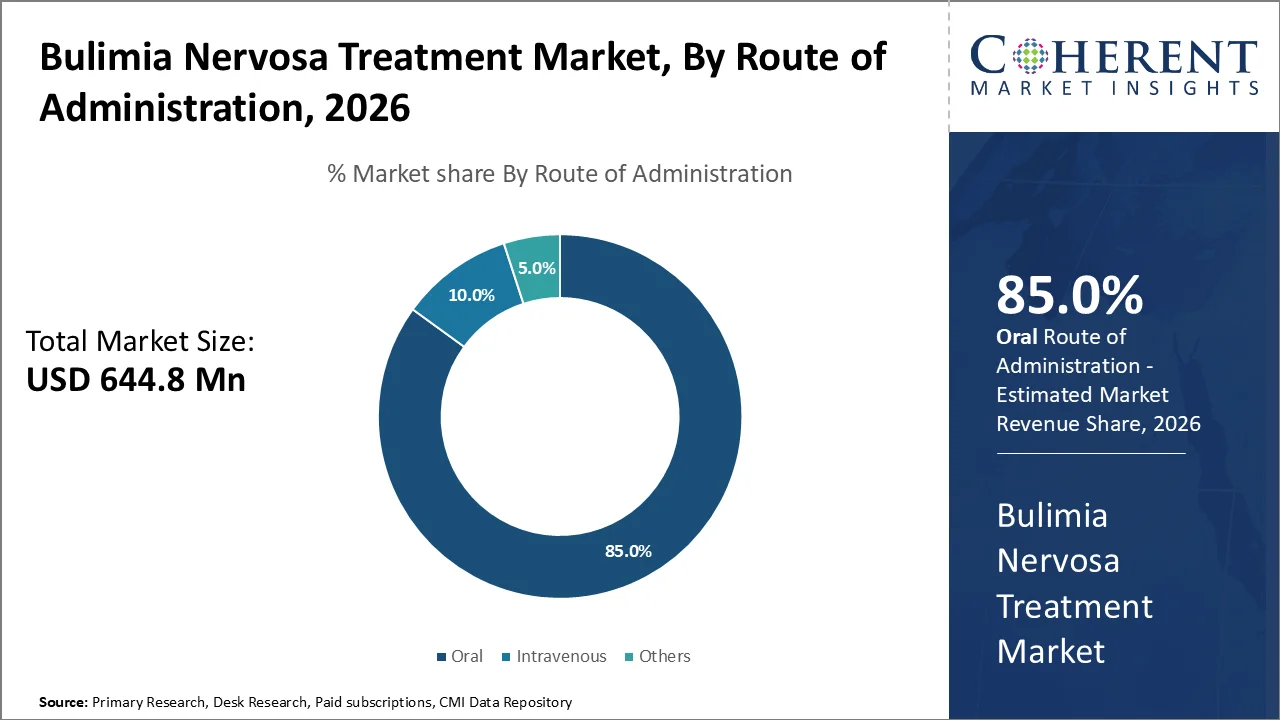
Oral medication forms will lead to maximum revenue shares, accounting for an estimated 85% of the overall administration route segment by 2026. This is due to high utilization of oral medicines including SSRI, SNRI, and tricyclic antidepressant classes that are considered as the main drugs used for treating bulimia nervosa disorders.
This is highly emphasized by the World Health Organization (WHO), pointing out that disorders in mental health are mostly handled through outpatient management programs, and oral medications stand out as the most convenient mode of treatment because of their accessibility and cost-effectiveness among other reasons.
Why is Retail Pharmacies Segment Acquiring the Largest Market Share?
The retail pharmacies distribution channel is expected to occupy the maximum market share in the bulimia nervosa treatment market in 2026, contributing about 50% to the total distribution channel category. The reason behind such high contribution lies in the high repeat filling rate of prescriptions along with the chronicity of the disease which demands lifelong pharmacotherapy with antidepressants including SSRIs.
In May 2025, CVS Health announced further network restructuring and store optimization, including the closure of select underperforming pharmacy locations while expanding pharmacy service models in high-demand areas.
Bulimia Nervosa Treatment Market Trends
- The increasing role of pharmacotherapy (SSRIs) contributes to market development, since fluoxetine is currently the only drug that is approved by the FDA for treating bulimia nervosa. The clinical data shows a decrease in binge-purge behavior by about 50%–60% on SSRIs. (Source: NIMH)
- Growing popularity of Cognitive Behavioral Therapy (CBT) as the standard of psychotherapy increases awareness regarding non-medication therapies; studies demonstrate that the improvement rate in terms of symptom reduction is as high as 50%-70%.
- The rising number of people suffering from eating disorders and better rates of diagnosis are widening the patient base. According to the WHO, about 9% of the world’s population suffers from eating disorders during their lifetime. (Source: WHO)
Regional Insights
North America dominates owing to High treatment penetration and strong mental healthcare infrastructure
North America is anticipated to hold 45% market share by 2026 due to high awareness levels regarding eating disorders, developed psychiatric care facilities, and improved diagnosis rates. North America is well-developed in terms of behavioral healthcare facilities, and its insurance coverage for all types of mental disorders allows for better access to both medication-based therapy and psychotherapy.
Digital mental health expansion is also accelerating growth, with the U.S. Department of Health & Human Services reporting a more than 150% rise in telehealth-based mental health consultations post-pandemic, improving access to CBT and psychiatric care across urban and rural populations.
In October 2025, CVS Health released its annual pharmacy outlook report highlighting continued dominance of retail pharmacies in the U.S. prescription ecosystem, with strong growth in chronic disease medication dispensing, including mental health drugs such as antidepressants.
Asia Pacific Bulimia Nervosa Treatment Market Trends
Asia-Pacific is estimated to be the fastest growing market during the forecast period of 2026–2033 owing to higher prevalence of mental disorder conditions, growing infrastructure for healthcare services, and growing cases of eating disorders among developing countries including China, India, Japan, and South Korea. This region is experiencing a fast transformation from under-diagnosis to treatment acceptance.
Based on statistics, India alone reports more than 1.5 million cases of eating disorders, whereas Japan and China are witnessing an increase in prevalence rates because of shifts in lifestyle and psychological stress among the youth population.
In September 2025, the University of Oxford introduced “Digital CBTe,” a structured digital cognitive behavioral therapy program for eating disorders, including bulimia nervosa, aimed at improving treatment accessibility in Asia-Pacific and other underserved regions.
U.S. Bulimia Nervosa Treatment Market Trends
The U.S. bulimia nervosa treatment market is projected to continue being the biggest and most developed market over the forecast period. The growth of this market will be attributed mainly to awareness, well-developed facilities for psychiatric care, prevalence of the diagnosis, and wide availability of insurance coverages.
In March 2025, the U.S. Food and Drug Administration (FDA) reaffirmed fluoxetine (Prozac) as the only approved medication specifically indicated for bulimi nervosa, maintaining its status as the standard pharmacological therapy in the United States.
China Bulimia Nervosa Treatment Market Forecast
China will become one of the fastest-growing markets in the Asia-Pacific region, attributed to increased mental wellness awareness, elevated levels of stress in cities, improved healthcare facilities, and the growing adoption of telehealth practices.
In September 2025, Xi’an Jiaotong-Liverpool University (China collaboration forum) highlighted that eating disorder prevalence in China is rising rapidly, with a strong increase among adolescents and young adults, particularly in urban regions.
Who are the Major Companies in Bulimia Nervosa Treatment Industry
Some of the major key players in Bulimia Nervosa Treatment are Allergan, Inc., Eli Lilly and Company, AstraZeneca plc, Alembic Pharmaceuticals Ltd, Bristol-Myers Squibb Company, GlaxoSmithKline plc, Pfizer Inc., Johnson & Johnson Services, Inc., Dr. Reddy’s Laboratories Limited, Lupin Pharmaceuticals, Inc., Aurobindo Pharma, Zydus Cadila, Apotex Inc., Teva Pharmaceutical Industries Ltd, and Sun Pharmaceutical Industries Ltd.
Key Strategies Adopted by Industry Players
- In September 2024, Lupin Limited received U.S. FDA approval for Fluoxetine Tablets USP (10 mg, 20 mg, 60 mg), expanding its generic SSRI portfolio used in the treatment of bulimia nervosa. Fluoxetine remains the only FDA-approved medication for bulimia nervosa in the U.S. market.
- In October 2025, Teva Pharmaceutical Industries Ltd received FDA approval for expanded use of UZEDY (risperidone long-acting injection) for bipolar I disorder, strengthening its CNS portfolio supporting psychiatric treatment infrastructure in the U.S.
Market Report Scope
Bulimia Nervosa Treatment Market Report Coverage
| Report Coverage | Details | ||
|---|---|---|---|
| Base Year: | 2025 | Market Size in 2026: | USD 644.8 Mn |
| Historical Data for: | 2020 To 2024 | Forecast Period: | 2026 To 2033 |
| Forecast Period 2026 to 2033 CAGR: | 5.2% | 2033 Value Projection: | USD 964.6 Mn |
| Geographies covered: |
| ||
| Segments covered: |
| ||
| Companies covered: | Allergan, Inc., Eli Lilly and Company, AstraZeneca plc, Alembic Pharmaceuticals Ltd, Bristol-Myers Squibb Company, GlaxoSmithKline plc, Pfizer Inc., Johnson & Johnson Services, Inc., Dr. Reddy’s Laboratories Limited, Lupin Pharmaceuticals, Inc., Aurobindo Pharma, Zydus Cadila, Apotex Inc., Teva Pharmaceutical Industries Ltd, and Sun Pharmaceutical Industries Ltd | ||
| Growth Drivers: |
| ||
| Restraints & Challenges: |
| ||
Analyst Opinion
- Demand for bulimia nervosa treatment will be underpinned by an increasing prevalence of undiagnosed cases of eating disorders across the world, reflecting high unmet clinical needs instead of the dynamics of the market.
- Treatment with a combination therapy of antidepressant drugs orally administered alongside CBT therapy is likely to become more prevalent going forward.
- Lack of innovation in drug approvals means that the market relies primarily on existing oral SSRIs, which ensures that drug treatment remains dominant in the years ahead.
- Meanwhile, rising awareness, effective screening, and mental health services are increasing the incidence of early diagnosis and, consequently, the number of people receiving treatment.
Speak to the analyst
Want personalized insights?
Take the findings above to one of our principal consultants, or have the report rebuilt around the segments, geographies and competitors you actually track.
Market Segmentation
- By Treatment Type (Revenue, USD Mn, 2021-2033)
- Drug Treatment
- Selective Serotonin Reuptake Inhibitor (SSRI)
- Serotonin-Norepinephrine Reuptake Inhibitor (SNRI)
- Benzodiazepines
- Tricyclic Antidepressants
- Others
- Non-drug Treatment
- Nutritional Therapy
- Behavioral Therapy
- Others
- Drug Treatment
- By Route of Administration (Revenue, USD Mn, 2021-2033)
- Oral
- Intravenous
- Others
- By Distribution Channel (Revenue, USD Mn, 2021-2033)
- Hospital Pharmacies
- Retail Pharmacies
- Online Pharmacies
- Global Bulimia Nervosa Treatment Market, By Region: (Revenue, USD Mn, 2021-2033)
- North America
- U.S.
- Canada
- Latin America
- Brazil
- Mexico
- Argentina
- Rest of Latin America
- Europe
- Germany
- U.K.
- France
- Italy
- Spain
- Russia
- Rest of Europe
- Asia Pacific
- China
- India
- Japan
- Australia
- South Korea
- ASEAN
- Rest of Asia Pacific
- Middle East
- GCC
- Israel
- Rest of Middle East
- Africa
- South Africa
- Central Africa
- North Africa
- North America
- Key Players
- Allergan, Inc.
- Eli Lilly and Company
- AstraZeneca plc
- Alembic Pharmaceuticals Ltd
- Bristol-Myers Squibb Company
- GlaxoSmithKline plc
- Pfizer Inc.
- Johnson & Johnson Services, Inc.
- Reddy’s Laboratories Limited
- Lupin Pharmaceuticals, Inc.
- Aurobindo Pharma
- Zydus Cadila
- Apotex Inc.
- Teva Pharmaceutical Industries Ltd
- Sun Pharmaceutical Industries Ltd
Sources
Primary Research interviews
Interviews with psychiatrists, clinical psychologists, psychiatric nurses, eating disorder specialists, hospital pharmacy managers, and mental health researchers involved in bulimia nervosa treatment and care delivery systems
Databases
- World Health Organization (WHO) Global Health Observatory
- National Institute of Mental Health (NIMH) epidemiology databases
- U.S. FDA drug approval and Orange Book database
- PubMed / National Library of Medicine (NLM) clinical research database
- IQVIA Institute for Human Data Science prescription and outpatient treatment databases
- OECD health statistics and mental health indicators database
Magazines
- Psychiatric Times
- The Lancet Psychiatry publications and updates
- Nature Mental Health reports
- Health Affairs mental health policy coverage
- Medical News Today (evidence-based clinical summaries)
Journals
- Journal of Eating Disorders
- International Journal of Eating Disorders
- JAMA Psychiatry (Journal of the American Medical Association Psychiatry)
- Lancet Psychiatry peer-reviewed research articles
- American Journal of Psychiatry
Newspapers
- The New York Times (health and mental health coverage)
- The Guardian (global mental health reporting)
- The Washington Post (health policy and mental health coverage)
- Financial Times (healthcare and pharmaceutical market insights)
- Reuters Health News
Associations
- National Eating Disorders Association (NEDA)
- American Psychiatric Association (APA)
- World Psychiatric Association (WPA)
- National Institute for Health and Care Excellence (NICE)
- World Health Organization (WHO) mental health division
Public Domain sources
- WHO mental health fact sheets and global burden of disease reports
- U.S. FDA drug labels and approval documentation
- National health ministry reports (U.S., U.K., EU, Asia-Pacific countries)
- Clinical trial registries (ClinicalTrials.gov)
- Government healthcare policy and insurance parity legislation documents
Proprietary Elements
- CMI Data Analytics Tool
- CMI Mental Health Market Intelligence Repository (last 8 years of historical data)
Get access to 250+ pages report
Every segment, forecast, competitor profile and data table behind the analysis above — available for instant download.
- ESOMAR Member
- ISO 9001:2015 Certified
- D-U-N-S Registered
- GDPR & CCPA Compliant
Missing comfort of reading report in your local language? Find your preferred language:
Transform your Strategy with Exclusive Trending Reports
Frequently Asked Questions
The global market is estimated to be valued at approximately USD 644.8 Mn in 2026.
The global Bulimia Nervosa Treatment Market value is expected to reach around USD 964.6 Mn by 2033.
The global market is projected to grow at a CAGR of 5.2% from 2026 to 2033.
Major growth factors include rising prevalence of bulimia nervosa and eating disorders, increasing adoption of SSRIs such as fluoxetine as first-line therapy, growing awareness and diagnosis rates, expansion of CBT-based psychotherapy, and rising penetration of telehealth and digital mental health services.
The drug treatment segment dominates the market, accounting for around 70% share in 2026, driven by the widespread clinical use of SSRIs such as fluoxetine.
The oral segment dominates the market with around 85% share in 2026, as most antidepressants used in bulimia nervosa treatment are administered orally in outpatient care settings.
North America is expected to lead the market with around 45% share in 2026, driven by strong healthcare infrastructure, high awareness, and better access to psychiatric treatment services.