

Global And U.S. Medical Disposables Market Analysis & Forecast: 2026-2033
The global and U.S. medical disposables market is anticipated to grow at a CAGR of 4.8% with USD 72.3 Mn in 2026 and is expected to reach USD 98.3 Mn in 2033. Increased focus on hygiene, safety, growing incidence of chronic diseases, growing aging population and rising surgical procedures has estimated to drive the market growth over the forecast period. In 2026, medical disposables are crucial for infection prevention as about 1 in 10 patients globally acquires a healthcare‑associated infection (HAI) in healthcare settings, with higher rates in low/middle‑income countries. WHO estimates millions of antibiotic‑resistant infections annually worldwide linked to healthcare. In the U.S., 1 in 31 hospital patients has an HAI on any given day, highlighting sustained demand for disposable infection‑control products.
Source: WHO
Key Takeaways
- Nonwoven Medical Disposables is expected to account the largest share of 40.0% in 2026, driven by cost-effective hygiene, increasing chronic diseases, high hospitalization and as it provides superior infection control. WHO reports that over 300 million surgical procedures are performed globally each year, while 7 in every 100 hospitalized patients in high-income countries acquire a healthcare-associated infection, supporting strong demand for nonwoven gowns, drapes, caps, and masks.
- Based on end user, hospitals will dominate with 55.0% in 2026, supported by the high volume of medical procedures, surgeries, and patient care activities that require disposable products such as syringes, gloves, bandages, and surgical drapes. Hospitals are also central to infection control protocols, contributing to the increased demand for disposable products to reduce hospital-acquired infections (HAIs). In January 2026, according to the U.S. Centers for Disease Control and Prevention, 1 in 31 U.S. hospital patients has at least one healthcare-associated infection on any given day, further emphasizing the critical need for disposables in hospital settings.
- North America is expected to acquire the dominant share of 35.5% in 2026, attributed to high healthcare spending, advanced healthcare infrastructure and regulatory standards and infection control. North America boasts a highly developed healthcare system with extensive hospital networks, making it a major consumer of medical disposables. In 2026, American Hospital Association (AHA) reported 6,100 hospitals in the U.S. alone, contributing to substantial disposable product usage in surgical and procedural care.
Segmental Insights
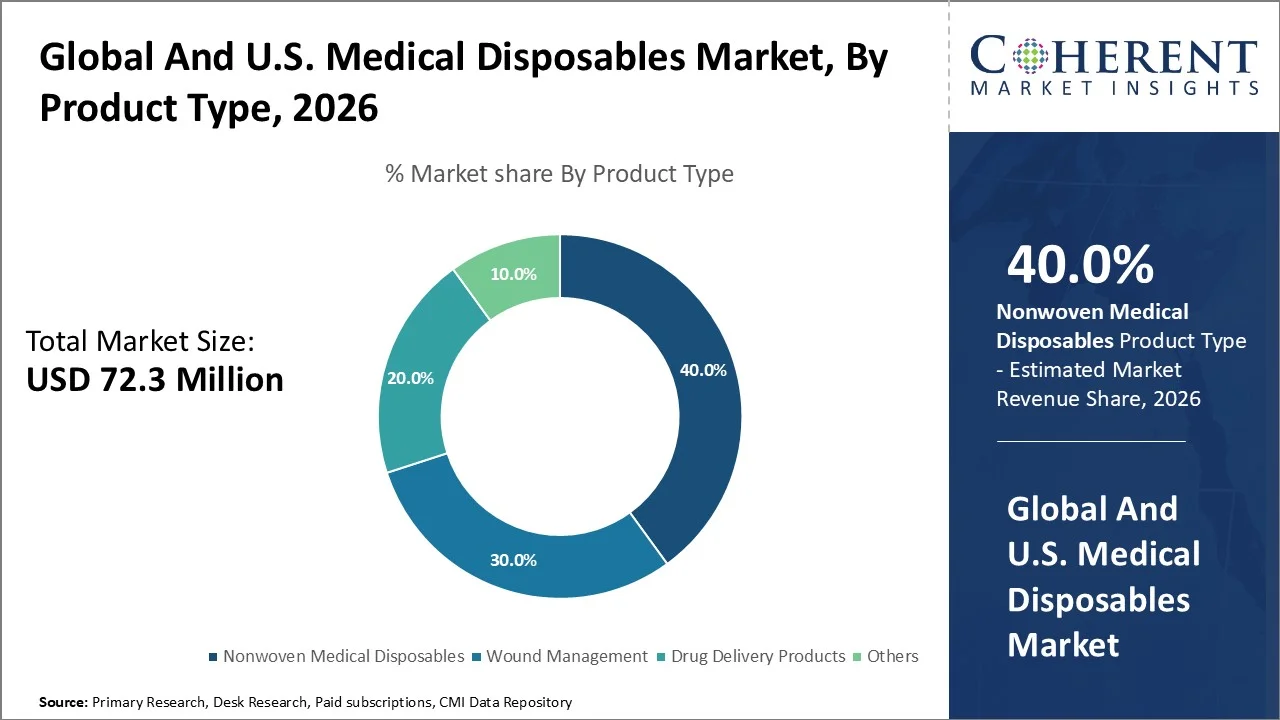
Why is Nonwoven Medical Disposables Acquiring the Largest Market Share?
Nonwoven Medical Disposables is projected to account for the largest share of medical disposables in 2026, representing approximately 40.0% of the total volume. Nonwoven medical disposables lead the market due to their critical role in infection control and procedural safety across healthcare settings. These products such as surgical gowns, masks, drapes, and protective apparel are essential for preventing pathogen transmission during surgeries and patient care. The U.S. Centers for Disease Control and Prevention (CDC) reports that proper use of PPE, including non‑woven items, significantly reduces healthcare‑associated infections (HAIs), which affect approximately 1 in 31 hospitalized patients on any given day, driving sustained demand. Similarly, the World Health Organization (WHO) highlights those safe surgical practices, including barrier protection, are key to reducing postoperative infections globally. The widespread adoption of strict infection prevention protocols in hospitals worldwide continues to underpin the dominant share of non‑woven disposables.
- Current Industry Events of 2026
- Market Size Estimation
- Regional Breakdown
- Competitive Landscape
- Customer Intelligence
- Segmental Analysis
- Pricing Analysis
- Key Market Drivers, Challenges & Future Trends
- Customized Insights Section
Hospitals hold the Largest Market Share
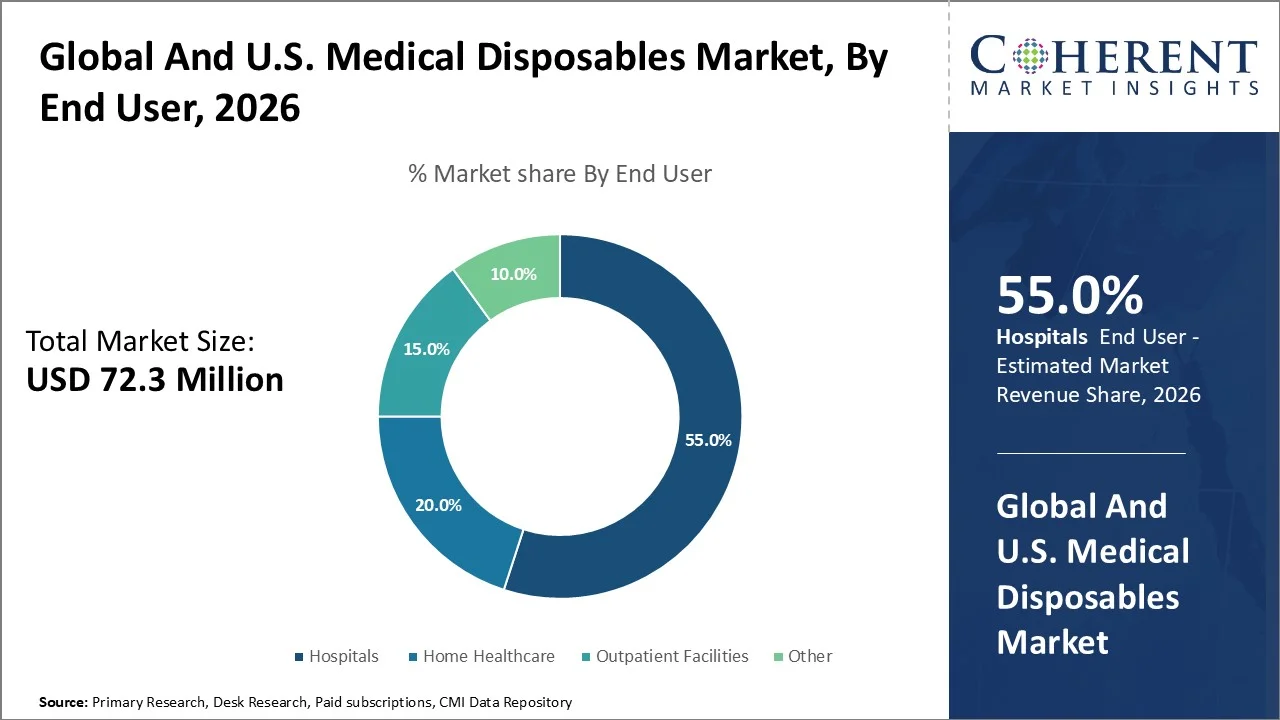
Based on end user, hospitals dominate the market, accounting for a significant 55.0% share in 2026, as hospitals perform highest volume of procedures that require single‑use items for infection control, surgery, diagnostics, and patient care. In October 2024, according to the World Health Organization, approximately 85 % of all healthcare waste is non‑hazardous and largely composed of plastic single‑use disposables, indicating extensive disposable use in clinical settings. U.S. hospitals generate around 14,000 tons of waste per day, with 20‑25 % plastic disposables, highlighting their central role in consumables demand.
Furthermore, according to the World Health Organization (WHO), healthcare waste globally generates 16 million tons annually, of which a significant proportion is non-hazardous medical disposables such as gloves, syringes, and catheters. In the U.S., the CDC reports that hospitals handle about 36% of the total healthcare-associated infection cases, further driving the demand for disposables to maintain hygiene and safety in clinical settings.
Market Drivers
High prevalence of diseases
High prevalence of chronic and communicable diseases significantly drives growth in the global and U.S. medical disposables market because ongoing care, diagnostics, injections, wound management, and infection control require single‑use products. In the U.S., CDC data show that in 2023 about 76.4% of adults (≈194 million people) had at least one chronic condition and 51.4% had multiple chronic conditions, escalating healthcare utilization across hospitals and outpatient settings. Chronic disease care accounts for the majority of U.S. healthcare costs and services, underpinning sustained demand for syringes, IV sets, gloves, catheters, and dressings. Globally, WHO continues to report that noncommunicable diseases remain the leading cause of death and disability, representing a major long‑term care burden that supports disposables usage in both routine and critical care settings.
In 2025, according to the data published by the World Health Organization, globally, over 10 million cancer diagnoses were recorded in 2025 escalating the need for diagnostic disposables like biopsy kits and treatment consumables such as chemotherapy administration sets. With more patients requiring routine care, diagnostics, and surgical support, these medical disposables are critical in ensuring hygiene, safety, and efficiency in healthcare delivery.
Increasing hospitalization
Rising hospitalization rates directly increase demand for medical disposables because each inpatient stay and acute care episode requires consumables such as gloves, masks, syringes, and wound care supplies. According to the data published by the Centers for Disease Control and Prevention (CDC) in the U.S., emergency departments report 17.8 million hospital admissions and 3.1 million critical care admissions, underscoring extensive inpatient care utilization requiring disposables. Additionally, according to the data published by the Centers for Disease Control and Prevention respiratory disease burdens such as influenza, and RSV continue to contribute to hospital strain; in the 2025‑26 respiratory season, peak combined hospitalization rates reached 16.6 per 100,000 people (lower, but within 20% of prior seasonal peaks). Globally, ongoing infectious disease hospitalizations highlight continual clinical care needs, reinforcing sustained medical disposable usage.
Expansion of Healthcare Infrastructure is transforming the global and U.S. medical disposables market
Rising hospital/clinic setups in emerging markets and increased healthcare spending boost overall disposables demand has driven the global and U.S. medical disposables market growth over the forecast period. Expansion of healthcare infrastructure remains a key growth driver for the global medical disposables market because more facilities and capacity translate into higher consumption of single‑use products in patient care, surgery, and infection prevention. For instance, in February 2026, according to the American Hospital Association (AHA) Fast Facts on U.S. Hospitals, the United States has approximately 6,100 hospitals with 907,216 staffed beds, serving tens of millions of patients annually, which drives consistent demand for syringes, gloves, catheters, IV sets, and dressings. Additionally, Organisation for Economic Co-operation and Development (OECD) data show that OECD countries allocated around 9.3% of GDP to health in 2024, and public sources financed an average 72% of healthcare spending, reflecting rising investment in facilities, equipment, and services. This sustained expansion of physical infrastructure and funding underpins increased utilization of disposables across inpatient, outpatient, and emergency care settings.
As countries invest in expanding service capacity and upgrading existing facilities including new hospitals in underserved regions and renovation of older units the throughput of patients and complexity of procedures increases, directly driving higher utilization of medical disposables critical for safety, efficiency, and infection prevention.
Current Events and Their Impact on the global and U.S. medical disposables market
Current Event | Description and its Impact |
IMDRF Regulatory Harmonization Initiatives |
|
WHO World Hand Hygiene & Infection Prevention Campaigns |
|
U.S. National Quality Strategy Emphasis on Safety |
|
FDA REdI Annual Conference 2026 – Focus on Innovative Regulation |
|
Global and U.S. medical disposables Market Trends
- Rising healthcare‑associated infection awareness is the major factor driving the global and U.S. medical disposables market expansion. According to the data published by the Centers for Disease Control and Prevention (CDC) 2026 HAI Data, on any given day about 1 in 31 hospitalized patients has at least one healthcare‑associated infection, driving use of gloves, sterile drapes, and single‑use devices to prevent spread.
- High volume of medical waste indicates disposable use. Large amounts of healthcare waste signal heavy reliance on single‑use products in clinical care. According to the data published by the World Health Organization reports that nearly 85% of all healthcare waste is non‑hazardous, largely composed of plastic‑based single‑use disposables such as syringes, tubing, and specimen containers.
- Global focus on hygiene & safety in healthcare settings has driven the growth of the market over the forecast period. Continued global emphasis on hygiene drives adoption of disposable products worldwide. WHO’s healthcare waste management facts highlight ongoing dependence on disposable supplies to meet safety and sterility requirements in diverse care environments.
- Expanding hospital admissions increase consumables demand and drive the growth of the market over the forecast period. More hospital admissions mean more procedures requiring disposables. For instance, in 2026, according to the data published by the American Hospital Association data shows U.S. hospitals recorded about 35.7 million admissions, underscoring high usage of syringes, IV sets, catheters, and wound care disposables.
- Infection prevention protocols reinforced by guidelines drives the market growth. Government health authorities are maintaining strict infection control recommendations that encourage disposable use. CDC core infection prevention guidelines consistently promote single‑use items as part of standard precautions to minimize contamination and HAIs.
Source: CDC
- Adoption of sustainable and eco‑friendly materials is one of the major trends in the medical disposables market. Healthcare systems and regulators are increasingly emphasizing sustainable medical disposables made from biodegradable, recyclable, or reduced‑carbon materials to reduce environmental impact without compromising safety. Traditional single‑use plastics generate significant waste; WHO has highlighted the environmental burden of healthcare waste and encouraged safer, greener alternatives. According to the World Health Organization’s 2026 Health Care Waste Factsheet, an estimated 16 million tons of healthcare waste are generated yearly worldwide, with a large proportion coming from single‑use disposables. WHO continues to promote strategies for waste reduction, segregation, and sustainable product selection in healthcare facilities.
Regional Insights
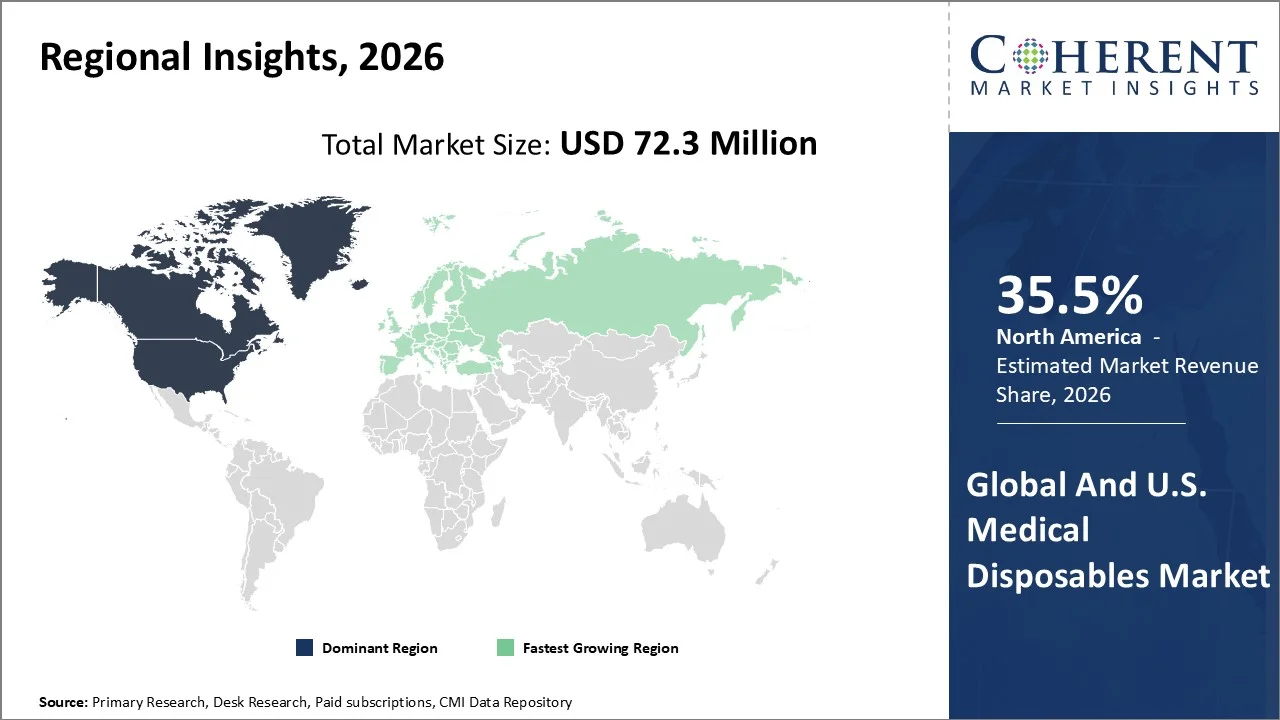
North America dominates owing to Strong Technological Infrastructure
North America account 35.5% market share in 2026, supported by large healthcare expenditure and extensive clinical infrastructure. According to the data published by the U.S. Centers for Medicare & Medicaid Services, in the United States, national health spending reached US$5.3 trillion in 2024, accounting for 18 % of GDP, with hospital care expenditure at US$1.63 trillion, highlighting heavy utilization of medical supplies. In 2026, according to the data published by the American Hospital Association, the region also has a substantial hospital system, with 6,100 hospitals nationwide, supporting consistent demand for disposable products in surgical and procedural care. High healthcare service usage, regulatory emphasis on infection control, and advanced medical supply chains further reinforce North America’s dominance.
Asia Pacific global and U.S. medical disposables market Trends
The Asia-Pacific region is poised to be as the fastest-growing region through 2026-2033, owing to rapidly expanding healthcare demand due to demographic shifts and rising chronic disease burden. The region accounts for nearly 60 % of the global ageing population, with ageing driving increased utilization of medical services and disposables for both acute and long‑term care. By 2050, one in four people in Asia and the Pacific will be over 60 years old, intensifying medical care needs and consumables usage. Additionally, medical infrastructure growth evidenced by multinational firms expanding in the region, such as Create Medic’s new India sales and planned ₹100 crore manufacturing investment reflects industry confidence in Asia‑Pacific demand.
Growing Investment and Strong Regulatory Emphasis is Accelerating the global and U.S. medical disposables market Demand in United States
The U.S. medical disposables market dominates North America given its due to its large and advanced healthcare infrastructure, high procedure volumes, strong regulatory emphasis on infection control, significant chronic disease burden, and substantial public health spending. The U.S. has the highest number of hospitals and outpatient facilities in the region, performing millions of surgeries, injections, and diagnostic procedures annually, all of which drive demand for single‑use items like syringes, gloves, IV sets, and catheters. According to the CDC, approximately 1 in 31 hospitalized patients in the U.S. has a healthcare‑associated infection on any given day, which reinforces reliance on disposables for safety and infection prevention. Additionally, the CDC’s ongoing infection control and waste management guidelines promote use of single‑use devices to reduce cross‑contamination risks, further strengthening disposables demand. These structural, clinical, and regulatory factors make the U.S. the dominant country in the North American medical disposables market.
China global and U.S. medical disposables market Trends
China has become the biggest player in the Asia Pacific medical disposables market in 2026. China has large and aging population, rising healthcare utilization, and expansion of healthcare infrastructure which collectively make it the dominant region in the Asia Pacific region. China has one of the world’s largest populations and a rapidly ageing demographic. According to the UN and Chinese government data, over 190 million people in China were aged 65 or above by the end of 2025, increasing demand for healthcare services and related consumables like medical disposables. Government initiatives such as China’s Healthy China 2030 plan aim to expand health facilities nationwide, particularly in secondary and tertiary hospitals, creating substantial demand for single‑use medical products. After COVID‑19 pandemic, China strengthened infection control standards, increasing utilization of single‑use disposables in both hospital and community settings, aligning with WHO guidelines for clinical safety.
Who are the Major Companies in global and U.S. medical disposables market
Some of the major key players in Cognitive Systems Spending Marker are Abbott laboratories, Johnson & Johnson, Ansell Limited, Becton and Dickinson Company (BD), Boston Scientific Corporation, Medtronic Incorporated, Derma Sciences Incorporated, Kinetic Concepts, Medline Industries Inc., Cardinal Health Incorporated, Minnesota Mining and Manufacturing Company (3M Company), Young Innovations, Transcodent GmbH & Co. KG, Itamar Medical, Baxter International, and SynergEyes, Inc.
Key News
- In January 2026, Zibo Qichuang Medical Products Co., Ltd., a company focused on research and producing disposable medical products, revealed that by offering reliable, compliant, and application-focused medical products, the company keeps growing its market share in the worldwide healthcare supply industry. The demand for dependable disposable medical consumables has steadily increased as healthcare systems around the world place a greater focus on infection control, treatment effectiveness, and patient safety. This has put manufacturers with strong quality management and supply capabilities at the forefront of the industry.
- In January 2026, BD (Becton, Dickinson and Company), a global medical technology company, revealed that the company showcased BD Physioject Disposable Autoinjector and BD Vystra Disposable Pen for biologics, including GLP-1 therapies, its most recent drug delivery technologies at Pharmapack 2026, Europe's premier drug delivery event, which will take place at Paris Expo on January 21–22, 2026. The company is
Source: BD (Becton, Dickinson and Company)
- In March 2026, Cook Medical, manufacturing company, unveiled the commercial introduction of two products from its Urology specialty. The 7.5 Fr Ascend Single-Use Flexible Ureteroscope and Syfonix Suction Ureteral Access Sheath and are available in the U.S. and Canada. Syfonix is intended to provide doctors with fingertip control over suction during ureteroscopic kidney stone treatment operations. The sheath creates a working channel to make it easier for endoscopes and other tools to enter the urinary tract. Its inner diameter ranges from 9 Fr to 12 Fr. It is a one-time usage gadget.
Market Report Scope
Global And U.S. Medical Disposables Market Report Coverage
| Report Coverage | Details | ||
|---|---|---|---|
| Base Year: | 2025 | Market Size in 2026: | USD 72.3 Mn |
| Historical Data for: | 2020 To 2024 | Forecast Period: | 2026 To 2033 |
| Forecast Period 2026 to 2033 CAGR: | 4.8% | 2033 Value Projection: | USD 98.3 Mn |
| Geographies covered: |
| ||
| Segments covered: |
| ||
| Companies covered: | Abbott laboratories, Johnson & Johnson, Ansell Limited, Becton and Dickinson Company (BD), Boston Scientific Corporation, Medtronic Incorporated, Derma Sciences Incorporated, Kinetic Concepts, Medline Industries Inc., Cardinal Health Incorporated, Minnesota Mining and Manufacturing Company (3M Company), Young Innovations, Transcodent GmbH & Co. KG, Itamar Medical, Baxter International, and SynergEyes, Inc. | ||
Analyst Opinion
- The global and U.S. medical disposables market continues to see robust growth driven by increasing hospitalizations, chronic disease management, and a greater focus on infection prevention. As healthcare systems expand globally, medical disposables are being adopted more widely to ensure safety, especially in light of the the ongoing challenges of hospital-acquired infections (HAIs). By 2026, the U.S. alone is expected to continue leading the demand, bolstered by its highly advanced healthcare infrastructure and rising patient volumes. According to the Centers for Disease Control and Prevention, 1 in 31 U.S. hospital patients has at least one HAI on any given day, which underscores the growing reliance on disposable products for infection control. This trend is expected to fuel continued demand for single-use products like surgical gloves, syringes, and wound care dressings in hospitals and outpatient settings.
- The Asia-Pacific region, particularly China and India, is emerging as a key growth engine for the medical disposables market. With the rising healthcare access and a rapidly ageing population, the need for medical disposables in hospitals, home care, and long-term care settings is accelerating. China’s aging population is projected to exceed 300 million by 2026, intensifying the demand for healthcare services and consumables. Meanwhile, India’s healthcare sector is expanding, and recent government initiatives to increase hospital capacity and invest in healthcare infrastructure are creating substantial demand for medical disposables. Companies like Create Medic Co. are capitalizing on this trend, expanding their manufacturing operations to support local demand.
- In North America, despite its dominance, the medical disposables market is experiencing a shift towards sustainable and eco-friendly solutions. Manufacturers are increasingly investing in biodegradable materials and eco-friendly packaging due to growing environmental concerns and regulatory pressures. A significant number of companies are responding to this demand by introducing new innovations in nonwoven medical disposables that prioritize both performance and environmental responsibility. Leading players are focusing on providing sustainable alternatives to traditional disposables while maintaining product safety and effectiveness.
Source: FDA, Environmental Protection Agency
Speak to the analyst
Want personalized insights?
Take the findings above to one of our principal consultants, or have the report rebuilt around the segments, geographies and competitors you actually track.
Global and U.S. Medical Disposables Market Segmentation
- By Product Type
- Wound Management
- Nonwoven Medical Disposables
- Drug Delivery Products
- Others
- By End User
- Hospitals
- Home Healthcare
- Outpatient Facilities
- Other
- Global and U.S. Medical Disposables Market, By Region
- North America
- U.S.
- Canada
- Latin America
- Brazil
- Mexico
- Argentina
- Rest of Latin America
- Europe
- Germany
- U.K.
- France
- Italy
- Spain
- Russia
- Rest of Europe
- Asia Pacific
- China
- India
- Japan
- Australia
- South Korea
- ASEAN
- Rest of Asia Pacific
- Middle East
- GCC
- Israel
- Rest of Middle East
- Africa
- South Africa
- Central Africa
- North Africa
- North America
Sources
Primary Research Interviews
- Interviews with industry leaders and product managers to understand market trends, growth drivers, and regulatory impacts on medical disposables.
- Insights from manufacturers and logistics managers on supply chain challenges, automation, and production scalability in the medical disposables sector.
- Discussions with sustainability experts to assess the adoption of eco-friendly materials and the future of biodegradable disposables.
- Conversations with healthcare providers and procurement managers to evaluate demand trends and the importance of medical disposables in healthcare settings.
Databases
- Statista
- IBISWorld
- Frost & Sullivan
Magazines
- Healthcare Packaging
- MedTech Outlook
- GlobalData’s Medical Market Insights
- Medical Device & Diagnostic Industry (MD+DI)
Journals
- International Journal of Health Services
- American Journal of Infection Control
- Journal of Medical Devices (ASME)
- Journal of Hospital Infection
Newspapers
- The New York Times (Health Section)
- The Wall Street Journal (Healthcare Section)
- Reuters (Healthcare News)
- Bloomberg (Healthcare & Life Sciences)
Associations
- American Medical Device and Diagnostic Association (AdvaMed)
- Medical Device Manufacturers Association (MDMA)
- International Association of Medical Device Manufacturers (IAMDI)
- Healthcare Packaging Association (HPA)
Public Domain Sources
- U.S. Food and Drug Administration (FDA)
- European Medicines Agency (EMA)
- World Health Organization (WHO)
- Centers for Disease Control and Prevention (CDC)
- National Institutes of Health (NIH)
Proprietary Elements
- CMI Data Analytics Tool
- Proprietary CMI Existing Repository of information for last 10 years
Get access to 250+ pages report
Every segment, forecast, competitor profile and data table behind the analysis above — available for instant download.
- ESOMAR Member
- ISO 9001:2015 Certified
- D-U-N-S Registered
- GDPR & CCPA Compliant
Missing comfort of reading report in your local language? Find your preferred language:
Transform your Strategy with Exclusive Trending Reports
Frequently Asked Questions
The global and U.S. medical disposables market is expected to reach USD 98.3 Mn in 2033.
Major players operating in the global and U.S. medical disposables market include Abbott laboratories, Johnson & Johnson, Ansell Limited, Becton and Dickinson Company (BD), Boston Scientific Corporation, Medtronic Incorporated, Derma Sciences Incorporated, Kinetic Concepts, Medline Industries Inc., Cardinal Health Incorporated, Minnesota Mining and Manufacturing Company (3M Company), Young Innovations, Transcodent GmbH & Co. KG, Itamar Medical, Baxter International, and SynergEyes, Inc.
Product recalls and counterfeit products are the major factors hampering the growth of the global and U.S. medical disposables market.
High prevalence of diseases and increasing hospitalization are the factors driving the growth of the global and U.S. medical disposables market
The global and U.S. medical disposables market is anticipated to grow at a CAGR of 4.8% between 2026 and 2033.
Among regions, North America is expected to account for a largest market share in the global and U.S. medical disposables market over the forecast period.