

Methadone Hydrochloride Market Size and Share Analysis - 2026 To 2033
The global methadone hydrochloride market size is estimated to be valued at USD 136.8 Mn in 2026 and is projected to reach USD 186.3 Mn by 2033, exhibiting a compound annual growth rate (CAGR) of 4.5% during the forecast period (2026-2033). This growth can be attributed to rising prevalence of opioid dependence and increasing adoption of medication-assisted treatment (MAT) programs.
Key Takeaways from the Methadone Hydrochloride Market Report
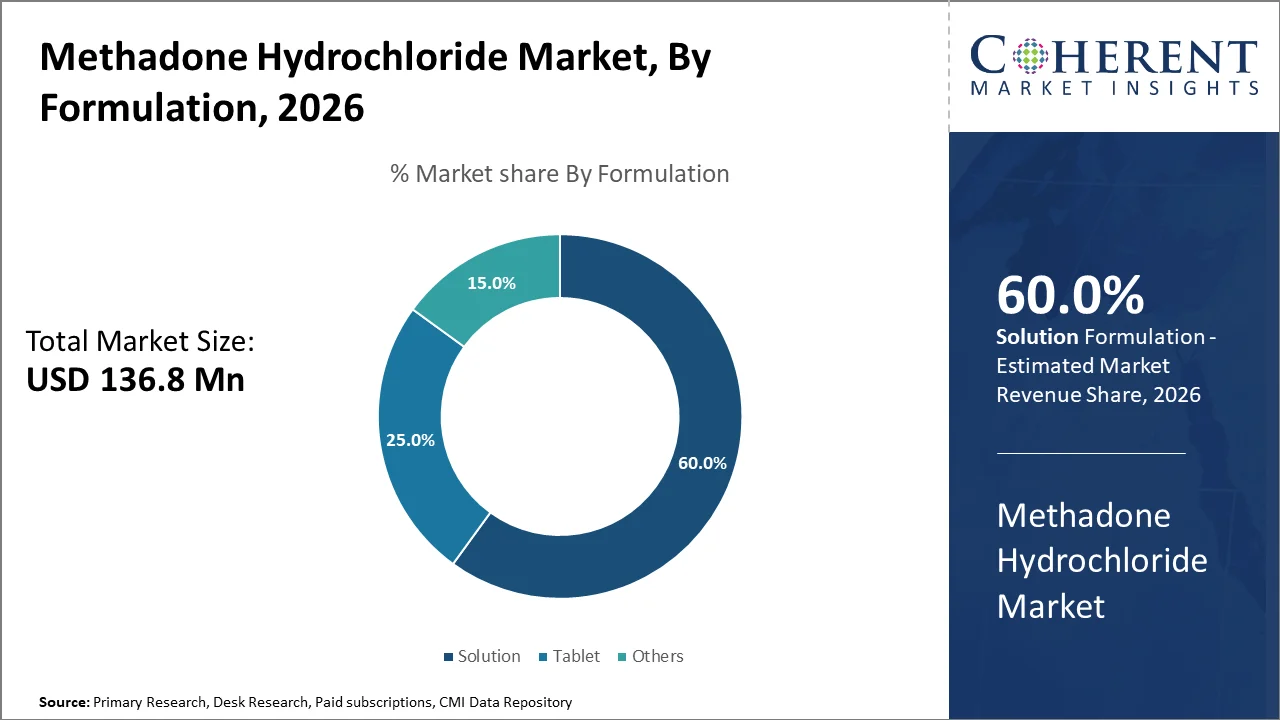
- Solution segment is expected to lead the market with a share of more than 60% in 2026 due to ease of dosing and widespread use in opioid substitution therapy programs.
- Opiate withdrawal segment is likely to account for a share of 65% in 2026, thanks to the high prevalence of opioid addiction and increased use of MAT programs. In 2023, approximately 105,000 deaths were attributed to drug overdoses, of which nearly 80,000 (around 76%) involved opioids.
- Oral segment is projected to hold a market share of over 85% in 2026 on account of its convenience, high patient compliance, and widespread use in long-term opioid dependence treatment programs. A meta-analysis published in Systematic Reviews shows that oral opioid agonist therapies (methadone, buprenorphine) are first-line treatments for opioid use disorder.
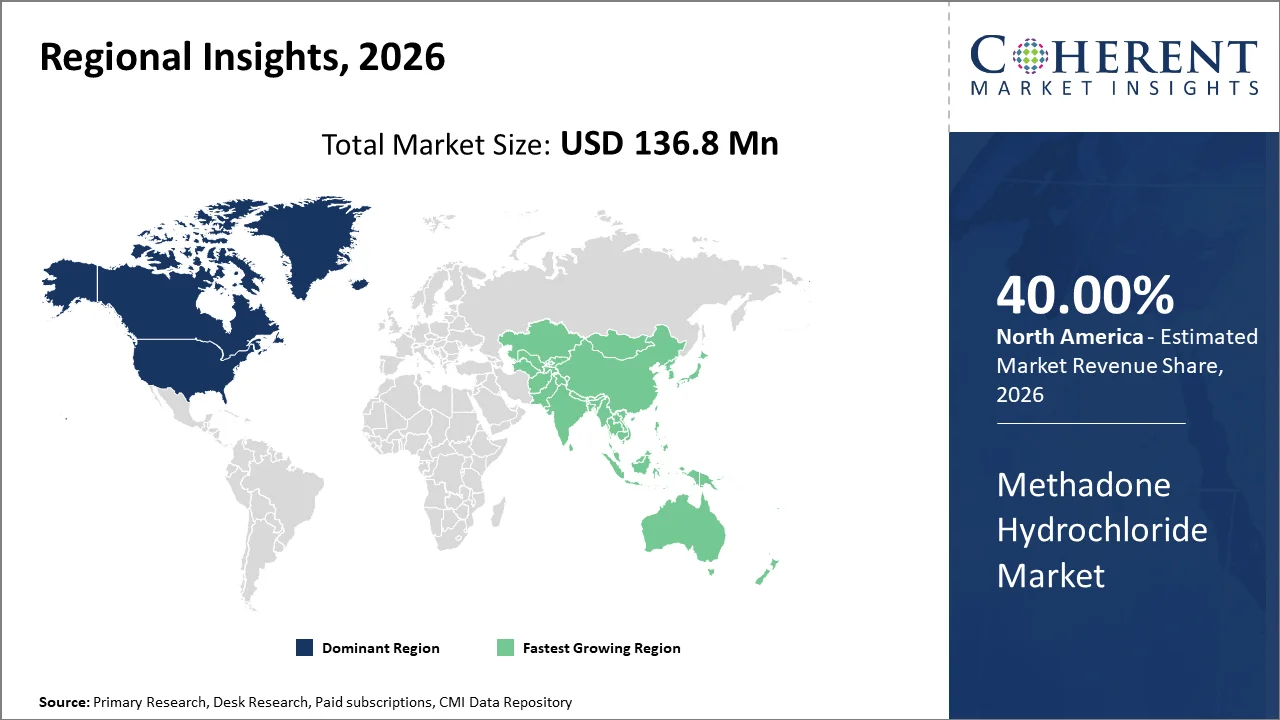
- North America is expected to retain its dominance over the global methadone hydrochloride industry with a share of 40% in 2026, primarily due to the high prevalence of opioid use disorder and well-established treatment programs. For example, the Centers for Disease Control and Prevention reports over 80,000 annual opioid overdose deaths in the U.S. This highlights the severity of opioid use disorder (OUD) and drives demand for methadone hydrochloride in the region.
- Asia Pacific, registering a CAGR of over 5%, is poised to emerge as the fastest-growing market for methadone hydrochloride because of rising opioid addiction cases, expanding healthcare infrastructure, and growing adoption of opioid substitution therapy (OST)
Methadone Hydrochloride Market Overview
The global methadone hydrochloride market is projected to witness steady growth over the forecast period. This is due to rising prevalence of opioid dependence and increasing incidence of chronic pain conditions. Growing adoption of medication-assisted treatment (MAT) programs and supportive government initiatives aimed at addressing opioid addiction are also boosting market growth.
Methadone hydrochloride is the hydrochloride salt of methadone, a synthetic opioid with analgesic activity. Methadone hydrochloride is similar to morphine and other morphine-like agents and exhibits effects such as analgesia, euphoria, sedation, respiratory depression, miosis, bradycardia, and physical dependence.
Methadone hydrochloride has a prolonged half-life compared to other opioids such as heroin; the onset of opioid withdrawal symptoms is slower, the duration of withdrawal is prolonged, and the symptoms are generally less severe. Increasing adoption of methadone hydrochloride-based medications is supporting market growth.
Methadone is a key component of Medication-Assisted Treatment (MAT) and has been shown to reduce overdose risk, improve survival rates, and lower illicit opioid use. As a result, healthcare systems are increasingly incorporating methadone as a standard treatment option, which is supporting demand for methadone hydrochloride.
Methadone Hydrochloride Market Growth Drivers
Rising Global Opioid Addiction Crisis
Opioid use disorder (OUD) remains a major global public health challenge, with about 61 million people engaging in opioid use worldwide. According to the This high disease burden is expected to drive demand for methadone, as it is widely used in medication-assisted treatment (MAT) to manage withdrawal symptoms and reduce relapse risk.
Methadone Hydrochloride Market Opportunities
Expansion of Opioid Substitution Therapy (OST) Programs
Government-backed OST programs are expanding globally as part of efforts to address opioid use disorder. This is leading to increasing adoption of methadone in treatment protocols. The growing establishment and expansion of treatment centers and clinics in several regions is improving access to methadone therapy and supporting higher patient enrollment in OST programs. This, in turn, is propelling demand for methadone and creating lucrative growth opportunities for the methadone hydrochloride market.
Rising Methadone Hydrochloride Use in Chronic Pain Management
Methadone is also being used in severe chronic pain cases, palliative and end-of-life care, and in patients with opioid tolerance who require long-acting analgesics. This expanding application base beyond addiction treatment is expected to open revenue streams for methadone hydrochloride manufacturers during the projection period.
Methadone Hydrochloride Market Trends
Shift Towards Integrated Addiction Care Models
Rising adoption of integrated addiction care models is a key growth-shaping trend in the methadone hydrochloride market. Methadone is being increasingly combined with behavioral therapy, psychological counselling, and social support systems for improved results and better treatment retention, reduced relapse rates, and enhanced long-term recovery outcomes in patients with opioid use disorder. This transition is expected to foster growth of the methadone hydrochloride market during the forecast period.
Current Events and Their Impact on the Methadone Hydrochloride Market
Current Event | Description and its Impact |
Expansion of Methadone Take-Home Policies (2025–2026) |
|
Rising Opioid Crisis Driving Treatment Demand |
|
- Current Industry Events of 2026
- Market Size Estimation
- Regional Breakdown
- Competitive Landscape
- Customer Intelligence
- Segmental Analysis
- Pricing Analysis
- Key Market Drivers, Challenges & Future Trends
- Customized Insights Section
Segmental Insights
Which Formulation Segment Leads the Methadone Hydrochloride Market?
Methadone Hydrochloride Solution Leads Due to Widespread Use
By formulation, solution segment is projected to lead the methadone hydrochloride industry with a share of 60% in 2026. This dominance is primarily attributed to its widespread use in opioid substitution therapy (OST) programs, where liquid formulations enable precise dose titration and supervised administration.
Methadone hydrochloride solution is preferred in clinical settings because of its ease of ingestion, rapid absorption, and reduced risk of misuse compared to solid forms. In addition, regulatory frameworks in several nations favor liquid methadone for controlled dispensing, thereby boosting growth of the target segment.
What Drives the Dominance of Oral Methadone Hydrochloride?
Convenient Dosing and Strong Treatment Adherence Support Market Leadership
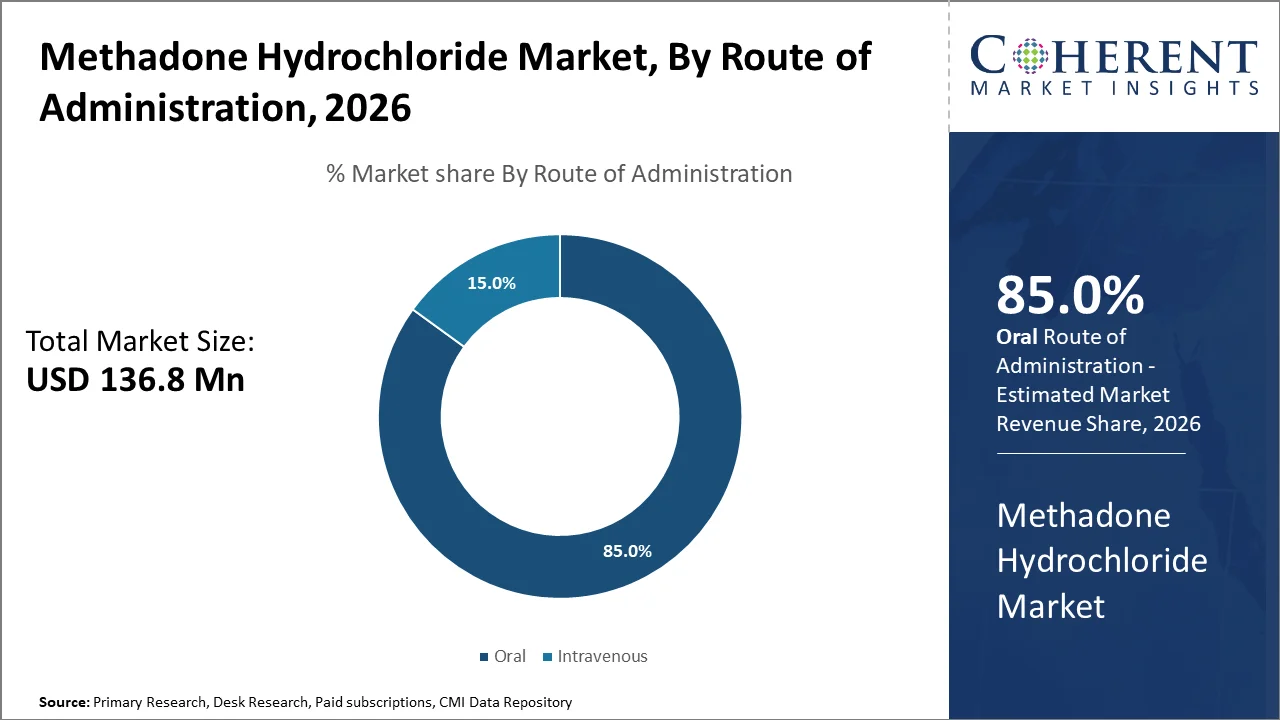
According to Coherent Market Insights’ latest methadone hydrochloride market analysis, oral segment is slated to account for over 85% of the market share in 2026. This is mostly due to its ease of administration, cost-effectiveness, and high patient compliance in long-term treatment programs.
Oral methadone is widely used in opioid substitution therapy (OST) because it allows for precise dose titration, flexible dosing schedules, and supervised consumption when required. Healthcare providers prefer oral formulations due to their non-invasive nature and lower risk of complications compared to injectable alternatives.
The availability of oral methadone in both liquid and tablet forms makes it easier to use in clinics and outpatient settings. Increasing government programs and treatment efforts for opioid dependence are also helping to boost the use of oral methadone, strengthening its leading position in the global market.
Regional Insights
High Opioid Burden and Treatment Programs Drive North America’s Lead
North America is expected to dominate the global methadone hydrochloride market with a 40% share in 2026. This can be high prevalence of opioid use disorder (OUD), increasing adoption of medication-assisted treatment (MAT), and well-established opioid treatment programs (OTPs). Expanding policy support and clinical recommendations for evidence-based therapies are also fueling methadone hydrochloride demand in the region.
According to the Centers for Disease Control and Prevention, the U.S. recorded over 54,000 opioid-involved overdose deaths in 2024. This highlights the scale of the crisis and the urgent need for effective therapies like methadone hydrochloride. In addition, medications for OUD, including methadone, are clinically proven to reduce overdose risk as well as lower mortality rates, reinforcing their importance in treatment protocols.
Asia Pacific to Become a Hotbed for Methadone Hydrochloride Manufacturers
Asia Pacific is forecast to emerge as the fastest-growing methadone hydrochloride market, registering a CAGR of about 5% during the forecast period. This is mainly due to increasing opioid misuse, improving healthcare infrastructure, and expanding government-led harm reduction programs.
Nations like India and China are increasingly expanding OST programs and access to essential medicines. This is expected to significantly boost sales of methadone hydrochloride in the region during the projection period. Rising awareness of addiction as a treatable medical condition and gradual integration of opioid substitution therapy (OST) into public health systems are key regional trends.
Methadone Hydrochloride Market Outlook – Country-wise
U.S. Methadone Hydrochloride Market Trends
The United States remains a leading market for methadone hydrochloride-based treatments. This is mostly due to rising prevalence of opioid use disorder (OUD) and increasing federal support for opioid treatment programs. The country has a well-established network of certified opioid treatment programs regulated by the Substance Abuse and Mental Health Services Administration, ensuring structured access to methadone therapy. In addition, recent policy shifts allowing expanded take-home doses are improving treatment adherence and accessibility.
China Methadone Hydrochloride Market Forecast
China’s methadone hydrochloride market is expected to grow steadily during the assessment period. This can be attributed to increasing government-led harm reduction initiatives, expanding methadone maintenance treatment (MMT) clinics, and rising awareness of opioid dependence as a public health issue. The country has implemented structured MMT programs as part of its national drug control strategy, significantly improving access to treatment.
Who are the Major Companies in the Methadone Hydrochloride Market?
Some of the major players in Methadone Hydrochloride Market are Eli Lilly and Company, Sanofi S.A, Hikma Pharmaceuticals PLC, Mallinckrodt Pharmaceuticals, Siegfried Holding AG, Johnson Matthey, Tianjin Central Pharmaceutical Co., Ltd, Temad Co, Embio LTD, Harman Finochem Ltd, and Rusan Pharma Ltd.
Key Strategies Adopted by Industry Players
Leading manufacturers of methadone hydrochloride are adopting various strategies to strengthen their position as well as improve patient outcomes. For example, they are increasingly investing in generic product launches and regulatory approvals to expand access and compete on pricing, as seen with new FDA-approved formulations entering the market. For instance,
- In April 2026, Elite Pharmaceuticals announced the commercial launch of generic methadone hydrochloride tablets (5 mg and 10 mg). The medicine is used to treat severe pain that requires opioid pain relief when other treatments are not enough.
- In January 2026, Siegfried announced acquisition of the drug substance (API) business of the Noramco Group. It also signed an agreement to acquire Extract Biosciences to expand its manufacturing capabilities.
- In December 2024, the U.S. FDA approved Breckenridge Pharmaceutical’s methadone hydrochloride injection in a multi-dose vial. The approved product is used as a generic injectable form of methadone for medical use.
Market Report Scope
Methadone Hydrochloride Market Report Coverage
| Report Coverage | Details | ||
|---|---|---|---|
| Base Year: | 2025 | Market Size in 2026: | USD 136.8 Mn |
| Historical Data for: | 2020 To 2024 | Forecast Period: | 2026 To 2033 |
| Forecast Period 2026 to 2033 CAGR: | 4.5% | 2033 Value Projection: | USD 186.3 Mn |
| Geographies covered: |
| ||
| Segments covered: |
| ||
| Companies covered: | Eli Lilly and Company, Sanofi S.A, Hikma Pharmaceuticals PLC, Mallinckrodt Pharmaceuticals, Siegfried Holding AG, Johnson Matthey, Tianjin Central Pharmaceutical Co., Ltd, Temad Co, Embio LTD, Harman Finochem Ltd, and Rusan Pharma Ltd. | ||
| Growth Drivers: |
| ||
| Restraints & Challenges: |
| ||
Analyst Opinion (Expert Opinion)
- Rising opioid use disorder (OUD) burden drives core demand. Global studies show a significant and growing prevalence of OUD, with millions affected worldwide, reinforcing sustained demand for opioid substitution therapies like methadone.
- Methadone remains a gold-standard therapy in opioid substitution treatment (OST). Clinical evidence consistently identifies methadone as one of the most effective treatments for opioid dependence, widely adopted across 40+ countries in structured treatment programs.
- High treatment retention supports long-term drug utilization. Studies indicate ~57% patient retention at 12 months in OST programs, with methadone generally showing higher retention than alternatives like buprenorphine, ensuring recurring demand.
Speak to the analyst
Want personalized insights?
Take the findings above to one of our principal consultants, or have the report rebuilt around the segments, geographies and competitors you actually track.
Market Segmentation
- By Formulation Insights (Revenue, USD Mn, 2021 - 2033)
- Tablet
- Solution
- Others
- By Application Insights (Revenue, USD Mn, 2021 - 2033)
- Opiate Withdrawal
- Chronic Pain
- Others
- By Route of Administration Insights (Revenue, USD Mn, 2021 - 2033)
- Oral
- Intravenous
- By Distribution Channel Insights (Revenue, USD Mn, 2021 - 2033)
- Hospital Pharmacies
- Retail Pharmacies
- Online Pharmacies
- By Region Insights (Revenue, USD Mn, 2021 - 2033)
- North America
- U.S.
- Canada
- Latin America
- Brazil
- Argentina
- Mexico
- Rest of Latin America
- Europe
- Germany
- U.K.
- Spain
- France
- Italy
- Russia
- Rest of Europe
- Asia Pacific
- China
- India
- Japan
- Australia
- South Korea
- ASEAN
- Rest of Asia Pacific
- Middle East & Africa
- GCC Countries
- Israel
- Rest of Middle East & Africa
- North America
Sources
Primary Research Interviews
- Interviews with addiction treatment specialists, pain management physicians, hospital pharmacists, regulatory experts, and key opinion leaders (KOLs) in opioid substitution therapy (OST) programs.
Databases
- U.S. Food and Drug Administration (FDA) Drug Database
- European Medicines Agency (EMA)
- PubChem
- ClinicalTrials.gov
- World Health Organization (WHO) Global Health Observatory
- Centers for Medicare & Medicaid Services (CMS)
Magazines
- Pharmaceutical Technology
- Drug Discovery & Development
- Managed Healthcare Executive
Journals
- The Lancet Psychiatry
- Journal of Substance Abuse Treatment
- Addiction
- The New England Journal of Medicine
Newspapers
- The New York Times
- The Guardian
- The Washington Post
Associations
- Substance Abuse and Mental Health Services Administration
- American Society of Addiction Medicine
- International Narcotics Control Board
- World Health Organization
Public Domain Sources
- Government health department publications
- Regulatory guidelines
- Annual reports
- White papers
- Clinical trial results
- International health statistics
- Policy documents on opioid dependence treatment and harm reduction programs
Proprietary Elements
- CMI Data Analytics Tool
- Proprietary CMI Existing Repository of information for last 8 years
Get access to 250+ pages report
Every segment, forecast, competitor profile and data table behind the analysis above — available for instant download.
- ESOMAR Member
- ISO 9001:2015 Certified
- D-U-N-S Registered
- GDPR & CCPA Compliant
Missing comfort of reading report in your local language? Find your preferred language:
Transform your Strategy with Exclusive Trending Reports
Frequently Asked Questions
The global methadone hydrochloride market is estimated to be valued at USD 136.8 Mn in 2026.
The global Methadone Hydrochloride Market value is expected to reach USD 186.3 Mn by 2033.
The global market is poised to exhibit a CAGR of 4.5% from 2026 to 2033
Major growth factors include rising increasing drug abuse globally and rising prevalence of pain associated with therapeutic and post-surgical treatment.
Which formulation segment dominates the Methadone Hydrochloride Market
Some major companies in the Methadone Hydrochloride Market include Eli Lilly and Company, Sanofi S.A, Hikma Pharmaceuticals PLC, Mallinckrodt Pharmaceuticals, Siegfried Holding AG, Johnson Matthey, Tianjin Central Pharmaceutical Co., Ltd, Temad Co, Embio LTD, Harman Finochem Ltd, and Rusan Pharma Ltd.
North America, with 40% share in 2026, is set to lead the market during the forecast period.