

Soy And Milk Protein Ingredients Market Size and Trends Forecast: 2026 - 2033
The soy and milk protein ingredients market is estimated to be valued at USD 39.74 Bn in 2026 and is expected to reach USD 54.08 Bn by 2033, exhibiting a compound annual growth rate (CAGR) of 4.5% from 2026 to 2033.
Key Takeaways of the Soy and Milk Protein Ingredients Market
- By soy protein types, the soy protein concentrates segment is expected to account for the highest share of 35% of the soy and milk protein ingredients market in 2026.
- Europe is expected to be the dominant region in the soy and milk protein ingredients market and hold 46. 3% of the market share in 2026.
Market Overview
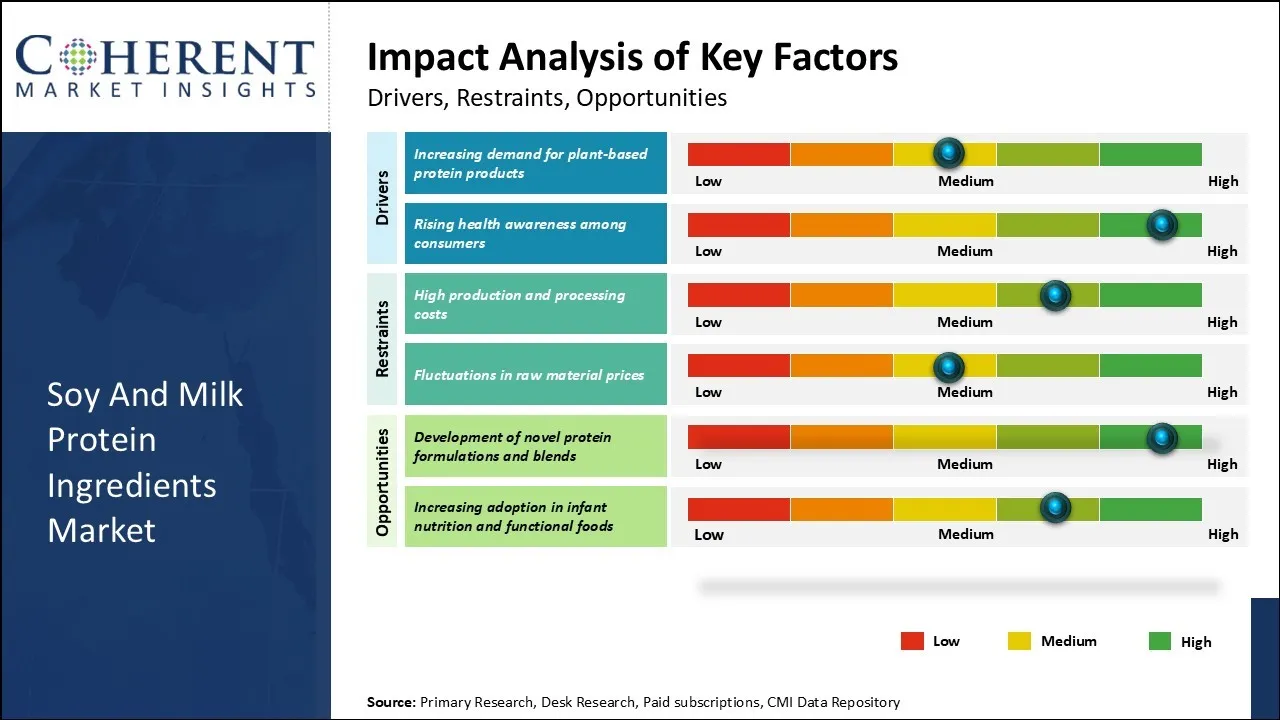
The rise in demand for soy and milk protein ingredients is substantially driving the expansion of the global soy and milk protein ingredients market by addressing evolving consumer preferences and technological advancements in food production. Consumers are increasingly seeking plant-based protein sources like soy due to their health benefits, sustainability, and suitability for lactose-intolerant or vegan populations. Milk protein, on the other hand, remains a preferred ingredient in various food and beverage formulations for its superior functional properties such as emulsification, gelation, and water-binding. Furthermore, the increasing use of protein-based components in beverages, such as sports drinks, is likely to provide significant market opportunities in the near future.
However, a lack of clarity in ingredient definitions and labeling regulations by the government is one of the key factors hampering market growth.
Market Concentration and Competitive Landscape
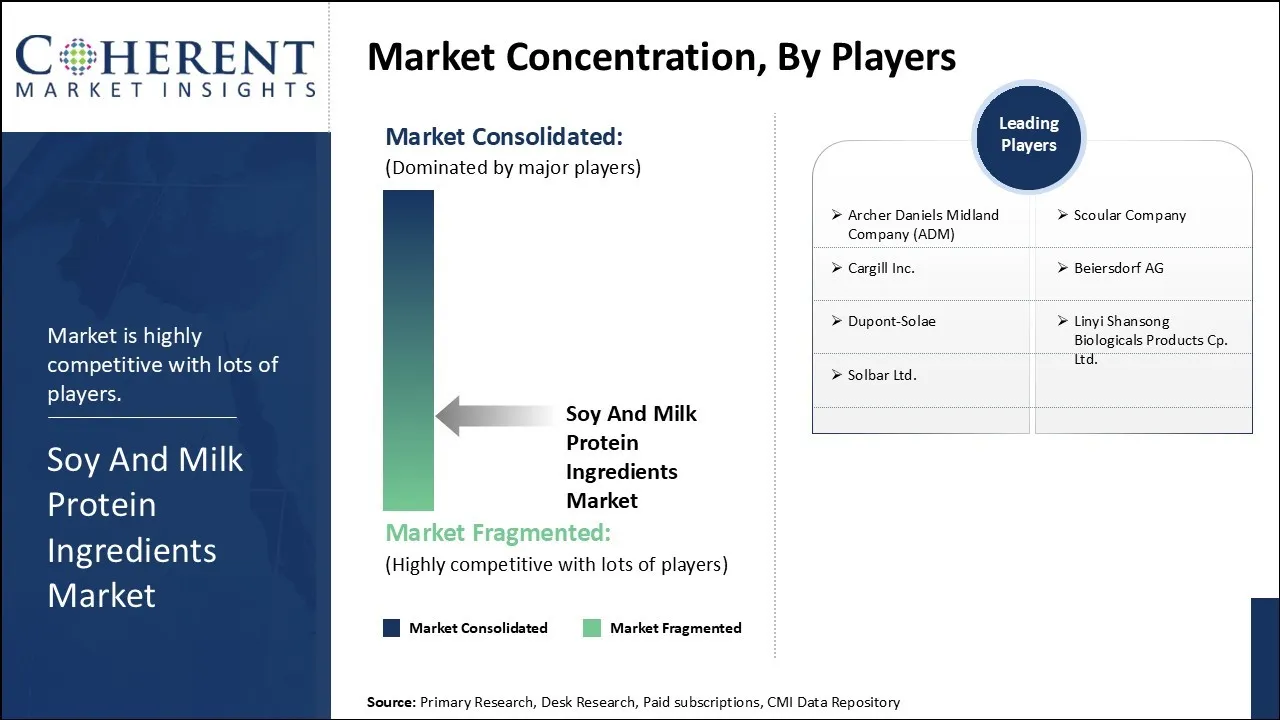
Current Events and their Impact on the Soy and Milk Protein Ingredients Market
Current Events | Description and its impact |
Geopolitical and Trade Events |
|
Economic and Market Dynamics |
|
- Current Industry Events of 2026
- Market Size Estimation
- Regional Breakdown
- Competitive Landscape
- Customer Intelligence
- Segmental Analysis
- Pricing Analysis
- Key Market Drivers, Challenges & Future Trends
- Customized Insights Section
Market Trends
- Increasing Demand for Plant-Based and Dairy Protein in Food and Beverages
The increasing demand for plant-based and dairy protein in food and beverages is significantly propelling the growth of the soy and milk protein ingredients market. This surge is largely driven by evolving consumer preferences toward healthier and sustainable dietary options. Consumers are increasingly seeking protein sources that not only provide nutritional benefits but also align with environmental and ethical concerns. Plant-based proteins, such as soy, have gained traction due to their lower environmental footprint compared to animal-based proteins.
For instance, a report published by the Vegan Society in January 2025, collaborative research by YouGov and Veganuary calculated that approximately 25.8 million people globally tried veganism in 2025.
Segmental Insights
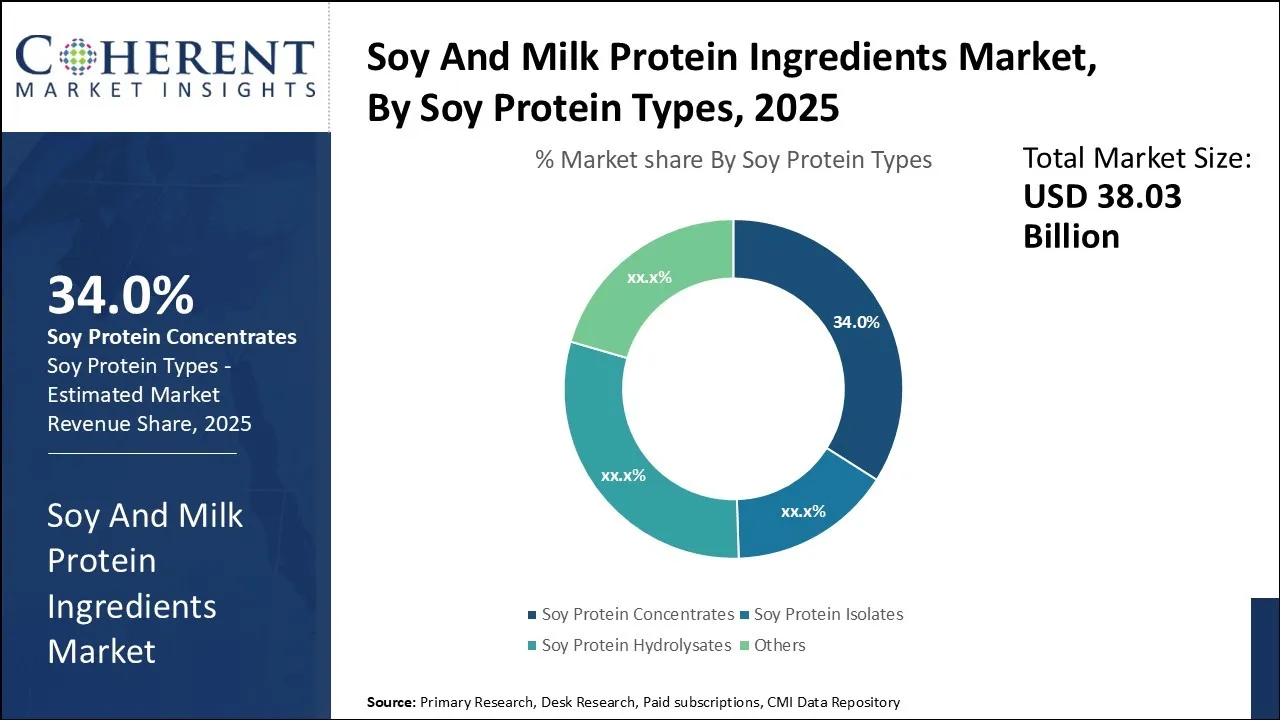
Soy and Milk Protein Ingredients Market Insights, By Soy Protein Types: Soy Protein Concentrates Lead the Market Segment Due to their Nutrient-Rich Composition and Economical Production Advantages
In terms of soy protein types, the soy protein concentrates segment is estimated to contribute the highest market share of 35.0% in 2026, owing to its broad applicability across diverse food and beverage products.
Soy protein concentrates are derived by removing a significant portion of carbohydrates and fats from soybeans, resulting in a concentrated protein source that typically contains around 65-70% protein content. This elevated protein level appeals strongly to manufacturers aiming to enhance the nutritional value of their products, especially in markets emphasizing plant-based nutrition and protein enrichment.
Emerging Innovations in the Soy and Milk Protein Ingredients Market
- Enhanced Extraction and Purification Techniques
- Modern extraction technologies have made it possible to improve the functional and nutritional qualities of soy and milk protein ingredients. For soy protein, innovations in aqueous extraction and membrane filtration techniques such as ultrafiltration and microfiltration enable the production of high-purity soybean protein isolates and concentrates without the use of harsh chemicals, thus preserving protein integrity. Similarly, in dairy proteins, advancements in membrane filtration have optimized the fractionation of whey and casein, allowing for tailored ingredient profiles targeting specific applications.
- Enzymatic Hydrolysis and Protein Modification
- Enzymatic hydrolysis is gaining traction in modifying soy and milk proteins to improve their digestibility and functional properties. Controlled hydrolysis breaks down protein molecules into bioactive peptides and smaller protein fragments, enhancing absorption and offering additional physiological benefits such as antihypertensive or antioxidant effects.
Regional Insights
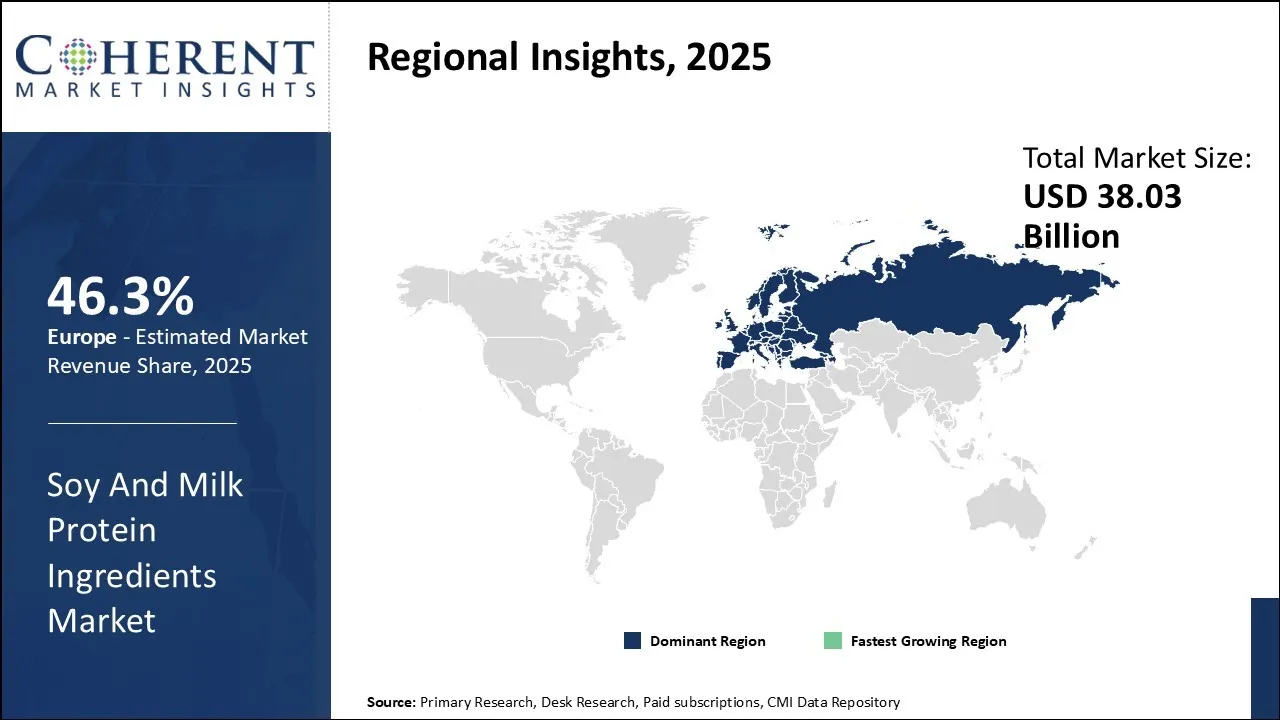
Europe Soy and Milk Protein Ingredients Market Analysis and Trends
Europe region is expected to dominate the soy and milk protein ingredients market in 2026, accounting a market share of 46.3% in 2026. The market is propelling due to a strong shift in consumer preferences towards plant-based and functional proteins, as well as the established dairy industry’s continuous innovation in milk protein formulations. Europe’s leading edge in this segment is driven by the region’s advanced food processing infrastructure and heightened consumer interest in health and wellness.
For instance, according to the Good Food Institute Europe (GFI Europe), in 2024, 46% of European households purchased plant-based milk, and 22% bought plant-based meat at least once—reflecting the region's growing shift toward plant-based dietary choices and supporting the rising demand for soy and milk protein ingredients.
Soy and Milk Protein Ingredients Market Outlook for Key Countries
Germany Soy and Milk Protein Ingredients Market Analysis and Trends
Germany leads the soy and milk protein ingredients market in Europe, driven by strong consumer demand for clean-label, plant-based, and high-protein foods. The country has seen a sharp rise in vegan and flexitarian diets, supported by government-backed nutrition awareness campaigns and a mature organic food sector. Germany’s advanced food processing industry and retail readiness for alternative proteins make it a central hub for innovation and product launches in both soy-based and dairy protein ingredients.
For instance, according to the German Federal Statistical Office, the range of plant-based alternatives is steadily increasing, with German companies producing almost 39% more vegetarian food in 2020 than in 2019.
U.S. Soy and Milk Protein Ingredients Market Analysis and Trends
The U.S. remains one of the largest markets for soy and milk protein ingredients, fueled by high consumer awareness about protein-rich diets, sports nutrition, and health-focused snacking. Growing lactose intolerance concerns and a strong demand for plant-based alternatives have supported soy-based beverages, bars, and supplements. Additionally, ongoing innovation in whey and casein-based products—backed by a well-established dairy industry—continues to drive the dairy protein segment.
According to a report by the Glanbia brand nutritional ingredients, in 2026 over half (54%) of U.S. consumers are concerned about ultra-processed foods (UPF) in their diets, and expect plant-based protein products to become more appealing to mainstream consumers—provided they feature natural, familiar, and minimally processed ingredients.
China Soy and Milk Protein Ingredients Market Analysis and Trends
China represents a rapidly growing market for soy and milk protein ingredients, supported by rising disposable incomes and increasing health consciousness among urban consumers. Soy products are already culturally embedded in traditional diets, but modern applications in beverages, meat alternatives, and infant nutrition are expanding. The government’s efforts to promote nutrition and reduce reliance on animal proteins have further accelerated market growth, especially for soy protein isolates and concentrates.
France Soy and Milk Protein Ingredients Market Analysis and Trends
France is emerging as a key player in the Europe soy and milk protein ingredients market, due to its progressive stance on plant-based innovation and consumer demand for high-quality, traceable protein sources. The French food industry is leveraging both soy and milk proteins in sports nutrition, bakery, and functional food sectors. With growing retail penetration of plant-based dairy alternatives and continued research into sustainable nutrition, France is shaping up to be a major market influencer in this space.
Pricing Analysis of the Soy and Milk Protein Ingredients Market
Region | Price Range (USD) |
North America (U.S. and Canada) | USD 2.30 – USD 4.50 |
Europe | USD 2.50 – USD 4.80 |
Asia Pacific (China and India) | USD 1.20 – USD 3.80 |
Latin America (Brazil and Argentina) | USD 1.00 – USD 2.50 |
Middle East & Africa | USD 2.50 – USD 4.50 |
Macro & Micro- Economic Factors Impacting the Growth of the Soy and Milk Protein Ingredients Market
Macro-Economic Factors | Micro-Economic Factors |
Consumer Health Awareness and Protein Trends: Growing global awareness of protein-rich diets has become a primary driver, particularly in regions like Asia Pacific where vegetarian populations are prevalent. This trend aligns with broader health movements, such as rising vegetarianism and lactose-intolerant populations seeking alternatives. | Regulatory Challenges and Compliance Costs: Ambiguity in ingredient labeling and safety standards complicates market entry for new players. For example, producers face hurdles in documenting allergens (e.g., soy allergies) and estrogenic concerns linked to soy consumption. Example: Strict labeling laws in the EU and North America force manufacturers to invest in compliance, increasing operational costs |
Government Policies and Economic Investment: Government support for food and beverage (F&B) industries has catalyzed growth. For instance, increased consumer and government spending in F&B has broadened opportunities for protein ingredients. Brands like Sun Nutra Food introduced soy protein isolates during health-focused marketing campaigns (e.g., post-pandemic), leveraging policy support for nutrition. | Competition from Plant-Based Alternatives: Rising competitors like pea, hemp, and canola proteins are fragmenting market share. These alternatives target similar niches (e.g., sports nutrition, vegan products), pressuring soy and milk protein providers to innovate. |
Market Report Scope
Soy And Milk Protein Ingredients Market Report Coverage
| Report Coverage | Details | ||
|---|---|---|---|
| Base Year: | 2025 | Market Size in 2026: | USD 39.74 Bn |
| Historical Data for: | 2020 To 2024 | Forecast Period: | 2026 To 2033 |
| Forecast Period 2026 to 2033 CAGR: | 4.5% | 2033 Value Projection: | USD 54.08 Bn |
| Geographies covered: |
| ||
| Segments covered: |
| ||
| Companies covered: | Archer Daniels Midland Company (ADM), Scoular Company, Cargill Inc., Dupont-Solae, Linyi Shansong Biologicals Products Cp. Ltd., and Solbar Ltd. | ||
| Growth Drivers: |
| ||
| Restraints & Challenges: |
| ||
Soy and Milk Protein Ingredients Industry News
- In July 2025, Soy Nutrition Institute Global (SNI Global) with support from U.S. Soy announced its participation in the 23rd International Congress of Nutrition (ICN), taking place in Paris, France. At this prestigious event, SNI Global will help elevate the global conversation around soy’s role in both human and planetary health.
- In June 2025, Bunge invested approximately USD 550 million in a fully integrated soy protein concentrate (SPC) and textured soy protein concentrate (TSPC) facility in the United States.
- In March 2025, Protealis, announced the launch of three new soybean varieties, following five new registrations obtained in Belgium and Germany. One of the newly registered soybean varieties that received registration both in Belgium and Germany is PRO Denali, the first variety launched by Protealis in the 00-maturity group.
- In December 2024, Louis Dreyfus Company (LDC) signed an agreement for the acquisition of BASF’s Food and Health Performance Ingredients business, including a production site and state-of-the-art research & development (R&D) center in Illertissen, Germany, and three application labs outside of Germany.
Analyst View
- The soy and milk protein ingredients market is experiencing significant transformation driven by evolving consumer preferences towards plant-based and clean-label products. Increasing demand for high-quality protein ingredients in dietary supplements, functional foods, and beverages is a key market driver.
- Soy protein, known for its complete amino acid profile and cost-effectiveness, remains highly popular, especially among vegetarian and vegan Simultaneously, milk protein continues to appeal due to its excellent nutritional profile and wide application in sports nutrition and infant formula sectors.
- However, the market faces challenges such as allergen concerns related to soy and lactose intolerance associated with milk proteins, which may restrain broader adoption. Additionally, fluctuations in raw material availability and prices can impact supply chains and profitability for manufacturers.
- Opportunities lie in innovative product development, including protein blends and specialized isolates that cater to specific dietary needs like keto, paleo, and gluten-free. Technological advancements in protein extraction and processing also enhance functional attributes, expanding usage across diverse food categories.
- In conclusion, the soy and milk protein ingredients market is poised for steady growth fueled by health-driven consumer trends and product innovation. Companies that invest in R&D to overcome allergenic and supply challenges will be best positioned to capitalize on emerging opportunities globally.
Market Segmentation
- By Soy Protein Type Insights (Revenue, USD Bn, 2021 - 2033)
- Soy Protein Isolates
- Soy Protein Concentrates
- Soy Protein Hydrolysates
- Others
- By Milk Protein Types Insights (Revenue, USD Bn, 2021 - 2033)
- Milk Protein Concentrates
- Casein/Caseinates
- Whey Protein Concentrates
- Whey Protein Isolates
- Whey Protein Hydrolysates
- By Application Insights (Revenue, USD Bn, 2021 - 2033)
- Food & Beverage
- Infant Formulations
- Personal Care
- Cosmetics
- Animal Feed
- Regional Insights (Revenue, USD Bn, 2021 - 2033)
- North America
- U.S.
- Canada
- Latin America
- Brazil
- Argentina
- Mexico
- Rest of Latin America
- Europe
- Germany
- U.K.
- Spain
- France
- Italy
- Russia
- Rest of Europe
- Asia Pacific
- China
- India
- Japan
- Australia
- South Korea
- ASEAN
- Rest of Asia Pacific
- Middle East
- GCC Countries
- Israel
- Rest of Middle East
- Africa
- South Africa
- North Africa
- Central Africa
- Key Players Insights
- Archer Daniels Midland Company (ADM)
- Scoular Company
- Cargill Inc.
- Dupont-Solae
- Linyi Shansong Biologicals Products Cp. Ltd.
- Solbar Ltd.
Sources
Primary Research Interviews
- Soy Protein Ingredient Manufacturers
- Dairy Protein Producers
- Food & Beverage Product Developers
- Nutraceutical Companies
- Others
Magazines
- Food Ingredients First
- Dairy Foods Magazine
- Plant Based News
- Food Navigator
- Others
Journals
- Journal of Food Science and Technology
- International Journal of Dairy Technology
- Food Chemistry
- Others
Newspapers
- The Financial Times (Food & Beverage Section)
- The Wall Street Journal (Market & Industry News)
- Reuters (Agriculture & Food Sector)
- Bloomberg (Commodities & Consumer Goods)
- Others
Associations
- International Dairy Federation (IDF)
- Soyfoods Association of North America (SANA)
- Institute of Food Technologists (IFT)
- Plant Protein Alliance
- Others
Public Domain Sources
- United States Department of Agriculture (USDA)
- Food and Agriculture Organization (FAO)
- European Food Safety Authority (EFSA)
- United Nations Comtrade Database
- Others
Proprietary Elements
- CMI Data Analytics Tool – Soy and Milk Protein Ingredients Market
- CMI Existing Repository of Information for the Last 8 Years
*Definition: Protein ingredients are essential for cell functioning that promote the repairing and healing of the human body. Proteins such as amino acids are essential for repairing and healing the body where the human body is incapable of producing amino acids. Hence, such proteins become of utmost importance to consume via diet. Protein can be extracted through plant or animal sources, such as soy and milk.
Get access to 250+ pages report
Every segment, forecast, competitor profile and data table behind the analysis above — available for instant download.
- ESOMAR Member
- ISO 9001:2015 Certified
- D-U-N-S Registered
- GDPR & CCPA Compliant
Missing comfort of reading report in your local language? Find your preferred language:
Transform your Strategy with Exclusive Trending Reports
Frequently Asked Questions
The soy and milk protein ingredients market is estimated to be valued at USD 39.74 Bn in 2026, and is expected to reach USD 54.08 Bn by 2033.
The CAGR of the soy and milk protein ingredients market is projected to be 4.5% from 2026 to 2033.
Growth in the food and beverage industry and health consciousness among people are projected to foster the market growth of soy and milk proteins ingredient.
Excessive consumption of protein ingredients leads to various side effects such as constipation, nausea, and skin allergy is expected to restrict the adoption of protein ingredients. This is expected to hamper the market growth of soy and milk proteins ingredient.
In terms of soy protein types, soy protein concentrates segment is estimated to dominate the market in 2026.
Major players operating in the market include Archer Daniels Midland Company (ADM), Scoular Company, Cargill Inc., Dupont-Solae, Linyi Shansong Biologicals Products Cp. Ltd., and Solbar Ltd.
Europe is expected to lead the soy and milk protein ingredients market in 2026.