

Vertebral Compression Fracture Devices Market Size and Forecast — 2026-2033
Overview
The micro-breaks in the building blocks of vertebra mainly caused by bone-thinning are termed as vertebral compression fractures (VCFs). Vertebral compression fracture occurs due to compression of a single bone due to trauma. The surgical approach for VCF treatment comprises injecting bone cement through a small hole in the fractured vertebra to provide immediate pain relief and stabilization to the patient. The cementing material provides a scaffold for the spine bone for added support. Thinning of corticles, reduction in bone mineral density, and osteoporosis are the major factors causing vertebral compression fractures. Postmenopausal women are more prone to vertebral fractures. The ultimate goal of the vertebral compression fracture devices is to eliminate back pain, fuse and repair fractures, restore posture, and provide ease of movement.
Kyphoplasty and vertebroplasty are the evolved techniques of osteoporotic compression. Kyphoplasty is done on patients with severe pain even after weeks of non-operative or drug-related treatment. The technique involves expansion for cavity formation and cement injection that can be done with less pressure. Vertebroplasty is not generally recommended by American Academy of Orthopaedic Surgeons (AAOS), owing to the higher rates of extravasation and increased complications with no beneficial effects.
Vertebral Compression Fracture Devices Market Size and Forecast – 2026 – 2033
The Vertebral Compression Fracture Devices Market size is estimated to be valued at USD 1.93 billion in 2026 and is expected to reach USD 3.89 billion by 2033, exhibiting a compound annual growth rate (CAGR) of 10.5% from 2026 to 2033.
Key Takeaways
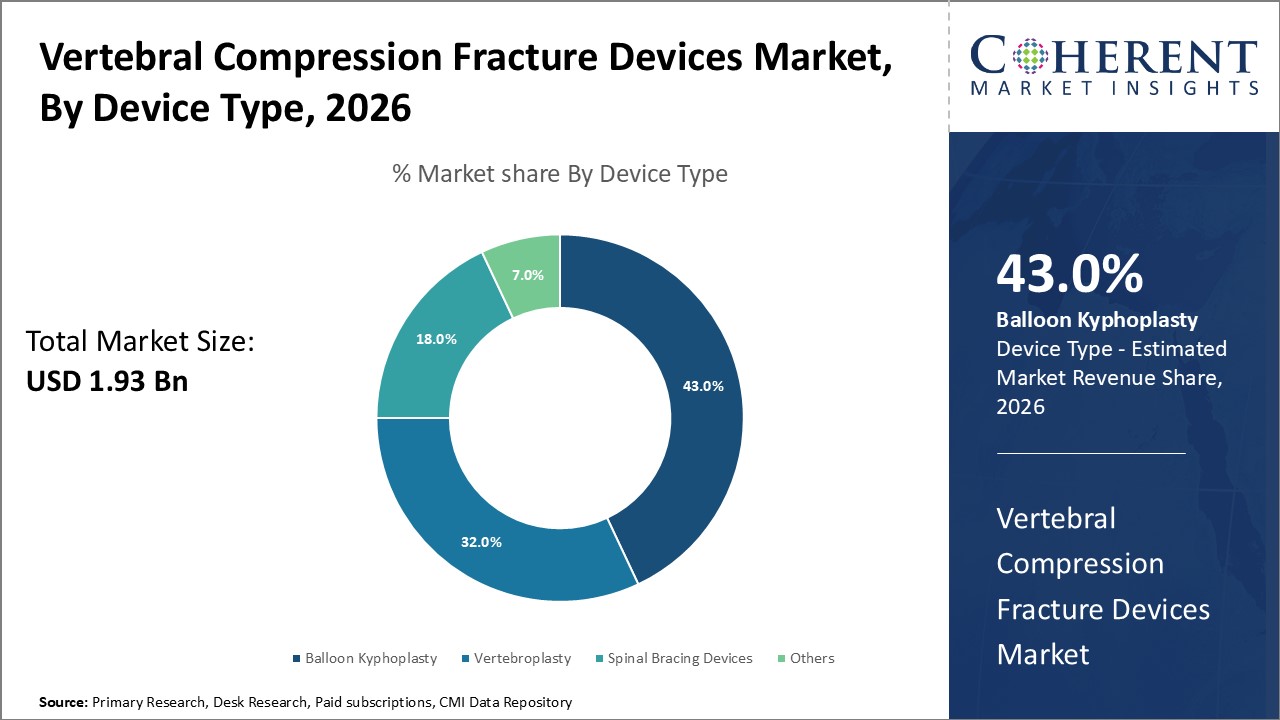
The Vertebral Compression Fracture Devices market's dominant device segment is balloon kyphoplasty, commanding 43% industry share driven by continuous technological innovation.
Hospitals remain the leading end user, accounting for over 56% of revenue, given the critical infrastructure required for complex procedures.
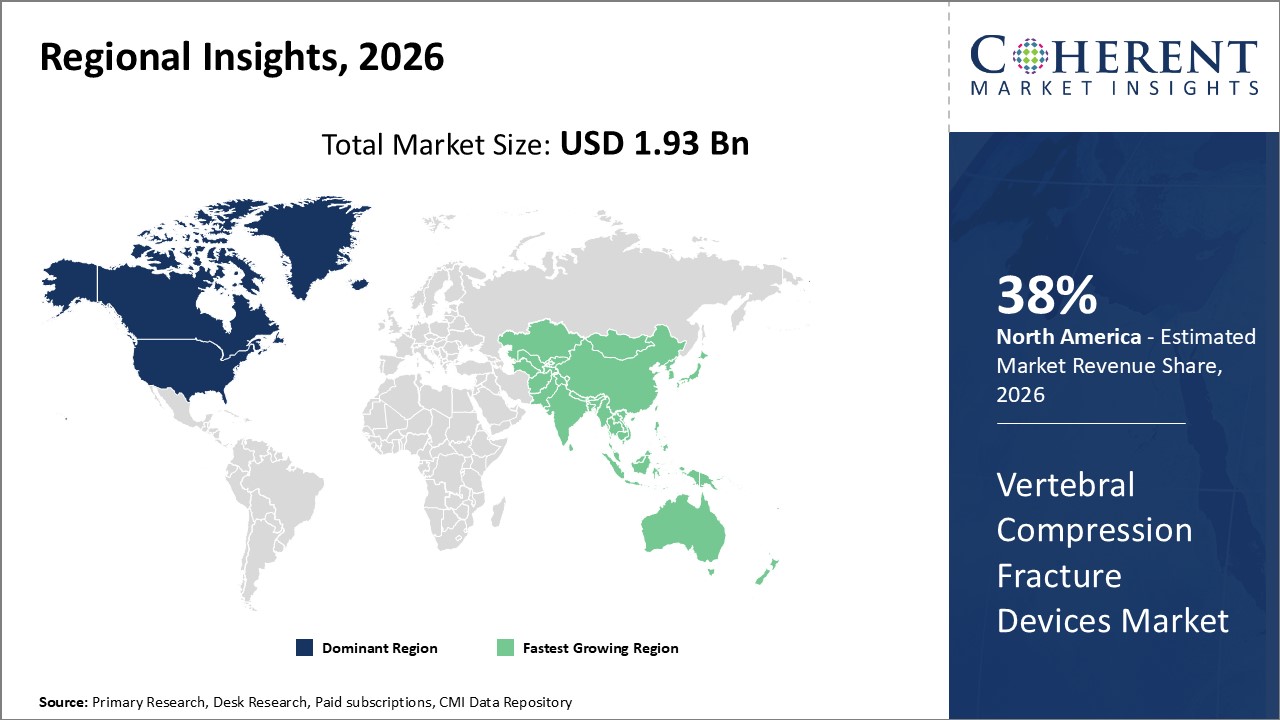
North America leads with nearly 38% market share because of established healthcare ecosystems and reimbursement policies.
Asia Pacific emerges as the fastest-growing region with a CAGR surpassing 11%, attributable to increasing osteoporosis awareness and government health initiatives.
Vertebral Compression Fracture Devices Market – Segmentation Analysis
Vertebral Compression Fracture Devices Market Insights, By Device Type
The market is divided into four segments based on the kind of device: balloon kyphoplasty, vertebroplasty, spinal bracing devices, and others. Balloon kyphoplasty holds the largest market share of 43%, because they are less intrusive and can restore spinal height, balloon kyphoplasty devices are the best option for improving clinical results. Continuous product advancements, such improved balloon catheters that allow for precise cavity construction and high-viscosity cement delivery systems, greatly help this market.
Vertebral Compression Fracture Devices Market Insights, By Material
PMMA (polymethylmethacrylate), titanium alloy, bone cement composites, and others represent the market's material segments, with titanium alloy holding a dominant market share. Because of their superior strength-to-weight ratio, resistance to corrosion, and biocompatibility, titanium alloy devices are preferred for load-bearing spinal implants. Porous titanium coatings are one example of an innovation that enhances osseointegration and advances segment leadership.
Vertebral Compression Fracture Devices Market Insights, By End User
Hospitals, ambulatory surgical centers, specialized spine clinics, and others make up the market categorized by end user, with hospitals holding a dominant market share. The major portion of market revenue is generated by hospitals, who benefit from the significant infrastructure and interdisciplinary teams required for extensive vertebral fracture therapy.
Vertebral Compression Fracture Devices Market Insights, By Geography
North America Vertebral Compression Fracture Devices Market Analysis and Trends
Strong reimbursement regulations and advanced healthcare infrastructure are the main reasons for North America's market dominance in vertebral compression fracture devices, where the region holds 38% of market share. Sustained demand is influenced by elements including high rates of osteoporosis diagnosis and surgeon experience with minimally invasive techniques. This market is served by well-known firms like Medtronic and Stryker, who have vast distribution networks and ongoing innovation pipelines.
Asia Pacific Vertebral Compression Fracture Devices Market Analysis and Trends
From 2026 to 2033, the Asia Pacific region grows at the fastest rate, with a compound annual growth rate (CAGR) of more than 11%. Increasing senior populations, the prevalence of osteoporosis, growing hospital networks, and proactive government healthcare initiatives are some of the factors driving growth. In important areas like China and India, awareness of spine care is rising quickly. Market revenue is further accelerated by investments made by both domestic and international businesses in production capabilities and focused marketing techniques.
Vertebral Compression Fracture Devices Market Outlook for Key Countries
United States Vertebral Compression Fracture Devices Market Analysis and Trends
A strong healthcare system that supports early diagnosis and treatment of fractures associated to osteoporosis is the main factor driving the market for vertebral compression fracture devices in the United States. Adoption of cutting-edge vertebral augmentation devices is facilitated by the large per capita healthcare spending. The implementation of technology like expandable titanium implants and AR-assisted gadgets is made possible by regulatory regimes that promote innovation. Prominent firms are well-represented, and procedure volumes rose by almost 15% in 2025, suggesting substantial company expansion in this established market.
China Vertebral Compression Fracture Devices Market Analysis and Trends
The market in China is growing quickly as a result of more public health campaigns aimed at raising awareness of bone diseases and easier access to spinal care services. The number of specialized spine facilities handling vertebral fractures has increased as a result of government investments in healthcare infrastructure. In order to satisfy cost-sensitive expectations, businesses have established localized production hubs, which allows for greater device penetration. In 2025, China's procedural growth rates surpassed 12%, driven by aging populations and increased middle-class healthcare spending.
Analyst Opinion
Increasing procedure volume for minimally invasive vertebral augmentation is a critical supply-side indicator driving market growth. Hospitals and specialty clinics reported over 120,000 vertebral augmentation procedures in the U.S. alone in 2025, marking a 16% year-over-year increase, indicative of rising treatment adoption.
Pricing dynamics continue to be favorable amid implant innovation and efficiency-focused healthcare policies. Average procedural device pricing stabilized in North America during 2025 but saw a 7% increment in Asia Pacific due to enhanced reimbursement policies supporting vertebral fracture treatments.
Demand from geriatric populations and expanding indications foster growth opportunities. The demographic aged 65 and above, which currently represents 18% of the global population, is projected to reach 21% by 2030, correlating with an uptick in vertebral compression fractures and subsequent device demand. Clinical data from the National Osteoporosis Foundation showed a 13% increase in osteoporosis-related fractures between 2023 and 2025, bolstering market forecasts.
Technology adoption such as balloon kyphoplasty and vertebroplasty devices boosts market penetration. Use of bioresorbable materials increased by approximately 19% globally in 2025, reflecting the trend towards patient-centric innovations influencing market dynamics and revenue streams.
- Current Industry Events of 2026
- Market Size Estimation
- Regional Breakdown
- Competitive Landscape
- Customer Intelligence
- Segmental Analysis
- Pricing Analysis
- Key Market Drivers, Challenges & Future Trends
- Customized Insights Section
Market Scope
| Report Coverage | Details | ||
|---|---|---|---|
| Base Year: | 2025 | Market Size in 2026: | USD 1.93 billion |
| Historical Data for: | 2020 To 2024 | Forecast Period: | 2026 To 2033 |
| Forecast Period 2026 to 2033 CAGR: | 10.5% | 2033 Value Projection: | USD 3.89 billion |
| Geographies covered: |
| ||
| Segments covered: |
| ||
| Companies covered: | Medtronic plc, Stryker Corporation, Globus Medical, Inc., Zimmer Biomet Holdings, Inc., NuVasive, Inc., RTI Surgical, Inc., Benvenue Medical, Inc., K2M Group Holdings, Inc., and Alphatec Holdings, Inc. | ||
| Growth Drivers: |
| ||
Growth factors
The rising prevalence of osteoporosis, noted to affect over 200 million individuals globally, constitutes the primary demand driver for vertebral compression fracture devices. Enhanced diagnostic capabilities and growing awareness have increased patient pool identification.
Developments in minimally invasive surgical technologies facilitating faster recovery attract both physicians and patients, leading to higher procedural adoption rates across hospitals and specialty clinics.
Market growth is also propelled by favorable reimbursement policies in developed nations such as the U.S., where insurer support for vertebral augmentation procedures increased by 10% in 2025.
The expansion of geriatric care infrastructures in Asia Pacific further stimulates market growth, with countries like China and India witnessing a surge in osteoporosis diagnosis and treatment.
Additionally, the rising research and development expenditure by market players for bioresorbable and composite implant devices accelerates innovation-led growth in the vertebral compression fracture devices landscape.
Vertebral Compression Fracture Devices Market Development
- In May 2026, Amber Implants, a cutting-edge medical technology business creating next-generation implants for spinal injuries, reports that all patients involved in its first-in-human clinical study of the VCFix Spinal System have completed their one-year follow-up. This accomplishment is a major step toward proving that VCFix is safe to use in treating vertebral compression fractures. Significantly, at the one-year follow-up, no patient experienced any device-related adverse events, highlighting VCFix's excellent safety record and encouraging clinical promise.
Market Trends
The market is experiencing a notable shift towards enhanced vertebroplasty systems integrated with imaging-guidance software, improving procedural accuracy and patient outcomes. In 2025, adoption of augmented reality-assisted surgeries increased by nearly 21%, demonstrating clinical acceptance of innovative technologies.
Concurrently, bioresorbable device materials are gaining traction due to benefits of reduced long-term complications, with reported usage doubling in select European countries.
Moreover, outpatient procedures are increasingly common as healthcare providers emphasize cost containment and patient convenience, which has resulted in a 14% rise in ambulatory surgical centre adoption worldwide.
These trends indicate a move towards patient-centred, tech-enabled interventions that redefine the vertebral compression fracture treatment paradigm.
Key Players
Medtronic plc
Stryker Corporation
Globus Medical, Inc.
NuVasive, Inc.
RTI Surgical, Inc.
Benvenue Medical, Inc.
K2M Group Holdings, Inc.
Alphatec Holdings, Inc.
Several leading companies have adopted strategic partnerships to accelerate product innovation and expand geographic outreach. For example, Medtronic’s collaboration with Asia-Pacific hospitals enhanced clinical trials for advanced kyphoplasty systems in 2025, driving 14% revenue growth in the region. Similarly, Stryker’s acquisition of specialized vertebral device start-ups in late 2023 increased its product portfolio, yielding a 10% increase in market penetration in Europe.
Future Prospects for the Vertebral Compression Fracture Devices Market
The market for vertebral compression fracture devices is expected to increase steadily in the future due to a number of important considerations.
Demand is anticipated to be driven by the aging population's rising frequency of osteoporosis and other spinal ailments.
It is expected that technological developments in device design and materials, such as patient-specific implants and smart balloon kyphoplasty systems, would improve procedure outcomes, lower complications, and increase adoption.
The growing preference for minimally invasive surgical techniques will continue to influence market expansion by offering benefits like reduced recovery times and lower risks.
Additionally, rising healthcare expenditure in emerging markets and improved healthcare infrastructure globally are expected to broaden market penetration. Increasing awareness about vertebral compression fractures and expanding reimbursement policies in developed regions also contribute to market growth.
The integration of advanced technologies such as robotics, AI-powered navigation, and biocompatible materials into treatment methods promises to further enhance the efficiency and safety of procedures, supporting the market’s positive trajectory. Overall, these elements collectively position the market for significant growth and innovation in the coming years.
Historical Analysis
The Vertebral Compression Fracture Devices market had shown significant growth historically, driven by the increasing prevalence of osteoporosis and spinal disorders, especially in aging populations worldwide. In 2020, the market size grew steadily due to rising awareness of minimally invasive spine surgeries such as vertebroplasty and kyphoplasty. North America contributing over 41% of the revenue share due to high healthcare expenditure and adoption of advanced treatment technologies. Growth in emerging markets like Asia Pacific was notable, driven by rising healthcare infrastructure and an expanding elderly population.
Leading companies such as Medtronic, Stryker, DePuy Synthes (Johnson & Johnson), and Zimmer Biomet were significant contributors, invested heavily in R&D to enhance device efficacy and patient outcomes. The market’s expansion was supported by government health reforms and rising reimbursement policies in developed markets.
Sources
Primary Research interviews:
Spine specialists
Radiologists
Interventional pain physicians
Databases:
ClinicalTrials.gov
WHO Global Health Observatory
OECD Health Statistics
Magazines:
Medical Device Network Magazine
Orthopedics Today
Spine Universe Magazine
Journals:
The Spine Journal
Journal of Bone and Mineral Research
European Spine Journal
Newspapers:
The New York Times (Health section)
The Guardian (Health section)
The Times of India (Healthcare/Medical section)
Associations:
American Academy of Orthopaedic Surgeons (AAOS)
International Osteoporosis Foundation (IOF)
Scoliosis Research Society (SRS)
Get access to 250+ pages report
Every segment, forecast, competitor profile and data table behind the analysis above — available for instant download.
- ESOMAR Member
- ISO 9001:2015 Certified
- D-U-N-S Registered
- GDPR & CCPA Compliant
Missing comfort of reading report in your local language? Find your preferred language:
Transform your Strategy with Exclusive Trending Reports
Frequently Asked Questions
The market is dominated by leading companies such as Medtronic plc, Stryker Corporation, and DePuy Synthes with significant market shares due to their innovation capabilities and global reach.
The market is projected to reach USD 3.89 billion by 2033, with a steady CAGR of 10.5% from 2026, driven by rising procedure volumes and technological advancements.
Hospitals represent the largest end-user segment owing to their capability to handle complex surgical interventions, but ambulatory surgical centers are rapidly gaining adoption due to outpatient procedure trends.
Market trends indicate increased adoption of bioresorbable materials, AR-guided surgeries, and outpatient treatment models enhancing efficiency and patient satisfaction.
Competition is intense with players focusing on strategic partnerships and innovative technologies; challenges include high device costs and regulatory hurdles in emerging regions.
Companies leverage acquisitions, collaborations, and regional market expansions, coupled with investments in R&D and clinical validation to strengthen market presence.