Diclofenac Patches Market Analysis & Forecast: 2026-2033

Diclofenac Patches Market Size and Forecast – 2026 – 2033
The Global Diclofenac Patches Market size is estimated to be valued at USD 1.1 billion in 2026 and is expected to reach USD 1.9 billion by 2033, exhibiting a compound annual growth rate (CAGR) of 8.1% from 2026 to 2033.
Global Diclofenac Patches Market Overview
Diclofenac patches are topical pain relief products formulated with the nonsteroidal anti-inflammatory drug (NSAID) diclofenac, designed to treat localized pain, inflammation, and musculoskeletal conditions. These patches provide controlled drug release through the skin, reducing systemic side effects compared to oral medications. Common products include medicated transdermal patches for arthritis pain, sports injuries, back pain, sprains, and post-operative discomfort. Available in varying strengths and sizes, diclofenac patches are widely used in hospitals, clinics, and homecare settings. Growing demand for non-invasive pain management solutions and increasing cases of chronic musculoskeletal disorders are driving product innovation and market expansion globally.
Key Takeaways
The Musculoskeletal Disorders segment is projected to dominate the Diclofenac Patches Market, capturing 55% of total industry share due to its extensive use in treating chronic joint, back, and muscle pain.
Hospitals represent the leading end-user segment, supported by strong clinical adoption, established treatment protocols, and favorable reimbursement systems across developed economies.
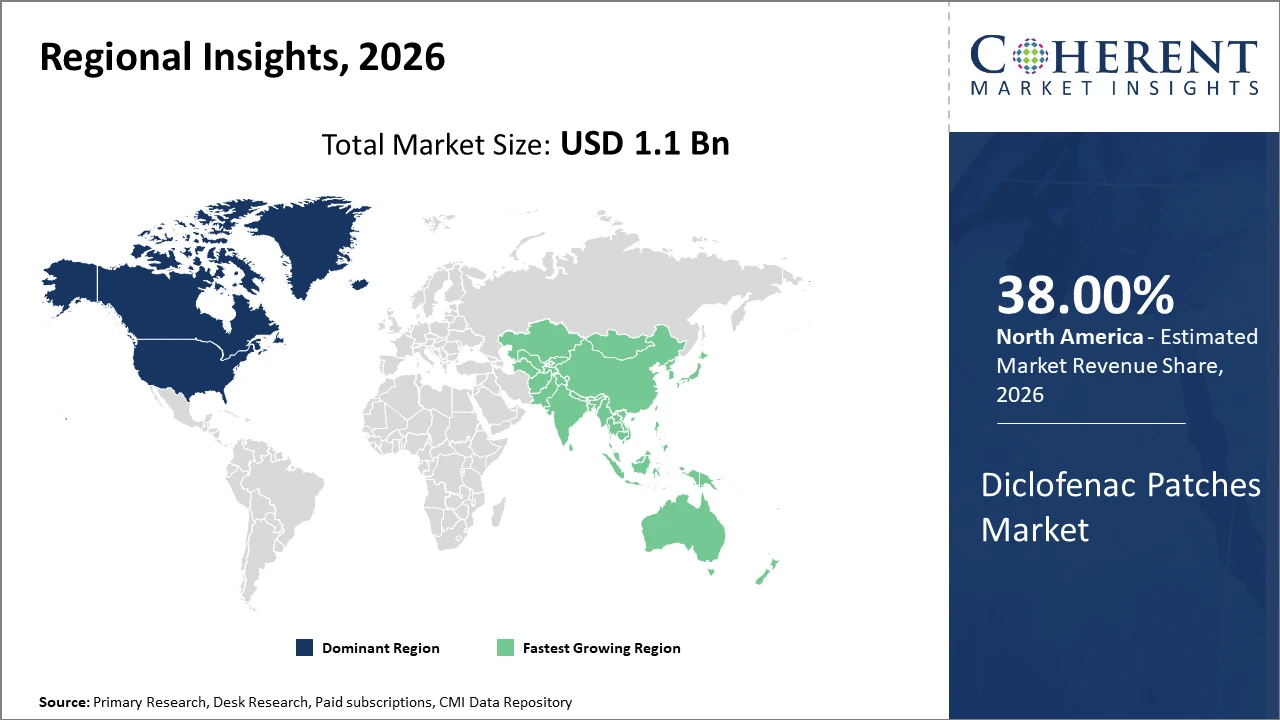
North America holds the largest market share, accounting for approximately 38% of the global market, driven by high healthcare spending and advanced pain management infrastructure.
Asia Pacific is expected to be the fastest-growing regional market, registering a CAGR above 9% due to expanding healthcare access, rising disposable incomes, and increasing demand for pain management therapies in countries such as China and India.
Diclofenac Patches Market Segmentation Analysis
To learn more about this report, Request Free Sample
Diclofenac Patches Market Insights, By Formulation
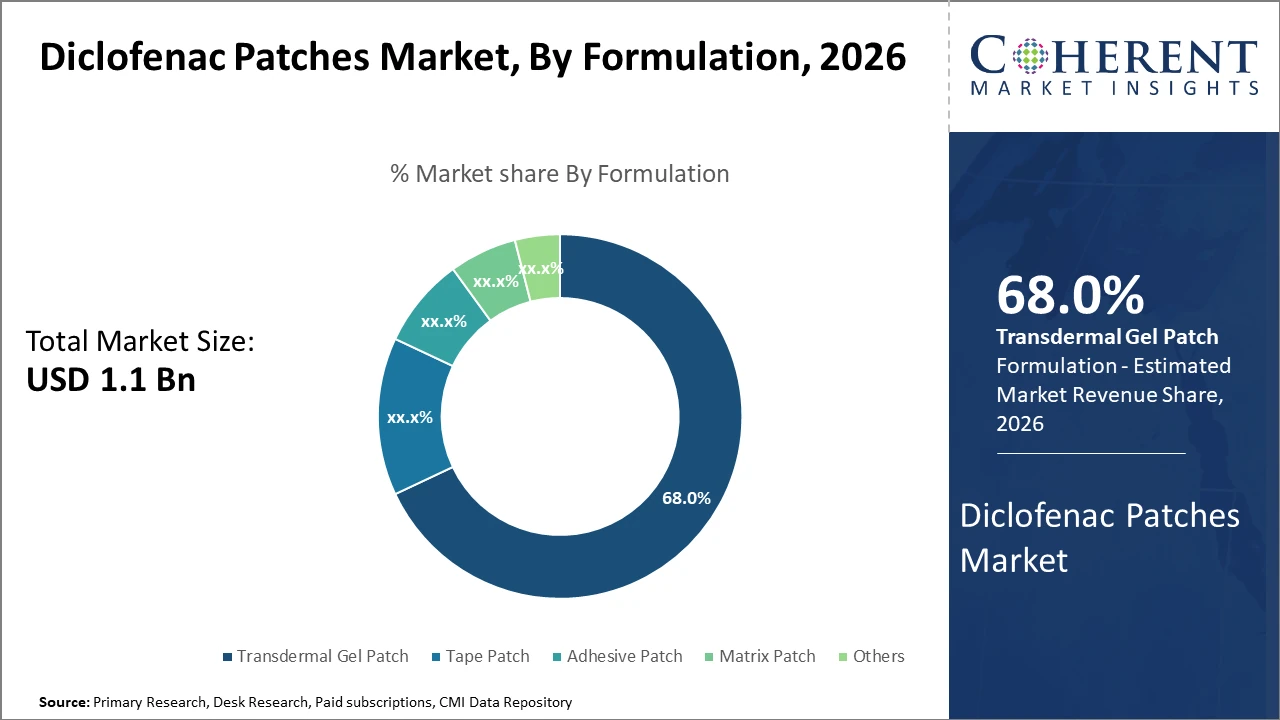
The Transdermal Gel Patch segment dominates the diclofenac patches market with approximately 68% share, primarily due to its superior drug release performance, enhanced patient comfort, and effective pain management capabilities. Its gel-based matrix enables improved diclofenac absorption through the skin while minimizing irritation, making it highly preferred for chronic musculoskeletal conditions. The Tape Patch segment is emerging as the fastest-growing category, supported by advancements in adhesive technologies that improve flexibility, skin adherence, and longer wear duration, particularly in sports medicine applications. Adhesive and Matrix Patches continue to expand the product landscape by providing alternative drug delivery solutions, while experimental polymer-based and combination patches address specialized therapeutic requirements.
Diclofenac Patches Market Insights, By Application
Musculoskeletal disorders account for nearly 55% of the diclofenac patches market share, driven by the growing global population suffering from chronic joint, muscle, and lower back pain requiring localized and long-term pain relief solutions. Sports injuries represent the fastest-growing application segment due to increasing participation in athletic activities and rising cases of sprains, strains, and muscle injuries. Adoption of diclofenac patches in sports rehabilitation and recovery programs is also accelerating growth. Post-surgical pain management continues to generate stable demand as patches offer a non-invasive alternative to oral analgesics. Rheumatoid arthritis applications are expanding, while niche uses in veterinary and dental pain management support gradual market diversification.
Diclofenac Patches Market Insights, By End User
Hospitals account for approximately 45% of the diclofenac patches market share, supported by strong prescription practices, reimbursement availability, and access to trained healthcare professionals for effective pain management and patient monitoring. The home healthcare segment is emerging as the fastest-growing category due to increasing preference for self-managed chronic pain treatment and the expansion of remote healthcare services. Growth in digital health support and home-based rehabilitation programs in 2025 further accelerated adoption of topical pain therapies. Clinics and ambulatory surgical centers continue to maintain stable demand because of their important role in rehabilitation and outpatient pain care. Pharmacies and long-term care facilities also contribute steadily to market expansion.
Diclofenac Patches Market Trends
The diclofenac patches market is witnessing growing integration of wearable digital technologies, including smart patches with embedded sensors designed for real-time pain monitoring and improved patient adherence. In 2026, several sensor-enabled patch technologies entered clinical evaluation stages, supporting the evolution of advanced pain management solutions.
Sustainability has become a major market trend, with manufacturers increasingly focusing on biodegradable and eco-friendly patch materials. European regulatory initiatives promoting environmentally responsible healthcare products contributed to a significant rise in sustainable patch launches during the past year.
Rapid expansion of digital healthcare distribution channels, particularly e-pharmacies across the Asia Pacific region, is reshaping market accessibility and consumer purchasing behavior by improving convenience, product availability, and remote healthcare support.
Diclofenac Patches Market Insights, By Geography
To learn more about this report, Request Free Sample
North America Diclofenac Patches Market Analysis and Trends
North America dominates the diclofenac patches market with a share of 38% due to its advanced healthcare infrastructure, high medical spending, and early adoption of innovative pain management therapies. The United States leads the regional market with more than 25% of the global share, supported by strong demand from hospitals, outpatient clinics, and rehabilitation centers. Favorable regulatory pathways have accelerated approvals for advanced transdermal pain relief products, encouraging wider commercialization. Major pharmaceutical companies such as Johnson & Johnson and Mylan have significantly increased research and development investments in topical pain therapies, strengthening innovation and market expansion across the North American healthcare sector.
Asia Pacific Diclofenac Patches Market Analysis and Trends
The Asia Pacific diclofenac patches market is experiencing the fastest growth globally due to rising cases of chronic musculoskeletal disorders, expanding elderly populations, and increasing healthcare awareness. Countries such as China and India are recording growth rates above 9%, supported by government initiatives aimed at improving healthcare accessibility and affordability. Expanding middle-class populations and growing demand for non-invasive pain management solutions are further strengthening market expansion. In addition, regional manufacturing hubs are increasingly producing cost-effective diclofenac patches, while multinational pharmaceutical companies continue expanding distribution networks and retail pharmacy partnerships across emerging Asia Pacific economies.
Diclofenac Patches Market Outlook for Key Countries
USA Diclofenac Patches Market Analysis and Trends
The United States diclofenac patches market continues to lead globally due to advanced clinical treatment standards and healthcare expenditure exceeding USD 4 trillion annually. The country has a large patient population, with more than 35 million adults affected by arthritis and chronic musculoskeletal disorders, driving strong demand for topical pain management therapies. Major pharmaceutical companies including Johnson & Johnson and Teva Pharmaceuticals have expanded clinical education initiatives and product innovation strategies, contributing to significant sales growth through hospital and outpatient care channels during 2025 while strengthening market penetration across the United States healthcare system.
Germany Diclofenac Patches Market Analysis and Trends
The Germany diclofenac patches market is witnessing stable growth due to the rising prevalence of arthritis, sports injuries, and chronic musculoskeletal disorders among the aging population. Increasing preference for topical pain management solutions over oral NSAIDs is supporting higher adoption of diclofenac patches because of their lower gastrointestinal side effects and convenient usage. German healthcare providers are increasingly recommending transdermal therapies for localized pain treatment in orthopedic and rehabilitation care. Market trends also show growing demand for prescription-free pain relief products and advanced drug-delivery formulations. In addition, strong pharmaceutical manufacturing capabilities and supportive healthcare infrastructure continue to strengthen Germany’s position within the European diclofenac patches market.
Analyst Opinion
Supply-side dynamics indicate significant manufacturing capacity expansions, particularly across the Asia Pacific region, where production output increased by more than 15% in 2025. Recent facility expansions in China contributed to an estimated 11% rise in regional market share, improving supply chain stability and supporting more competitive pricing structures.
On the demand side, clinical preference for non-oral NSAID delivery systems among orthopedic and chronic pain patients continues to rise. Prescription rates for diclofenac patches increased by nearly 20% across healthcare systems in the United States during 2024, while expanding off-label use in pain management clinics is creating additional growth opportunities.
Pricing trends show gradual reductions in average unit costs due to economies of scale, process optimization, and advancements in polymer-based transdermal patch technologies. In 2026, average product prices declined by approximately 7% compared to the previous year, encouraging broader adoption across both developed and emerging healthcare markets.
Micro-market indicators highlight increasing collaboration between pharmaceutical manufacturers and healthcare providers, accelerating investment in advanced targeted patch technologies. Co-development initiatives launched in 2025 resulted in innovative formulations with improved bioavailability and clinical studies demonstrating nearly 15% faster pain relief performance compared to conventional topical therapies.
Market Scope
| Report Coverage | Details | ||
|---|---|---|---|
| Base Year: | 2025 | Market Size in 2026: | USD 1.1 billion |
| Historical Data for: | 2020 To 2024 | Forecast Period: | 2026 To 2033 |
| Forecast Period 2026 to 2033 CAGR: | 8.1% | 2033 Value Projection: | USD 1.9 billion |
| Geographies covered: |
|
||
| Segments covered: |
|
||
| Companies covered: | Mylan N.V., Johnson & Johnson, ZYDUS CADILA, Cipla Limited, Lupin Limited, Bayer AG, Abbott Laboratories, Ajanta Pharma Ltd. | ||
| Growth Drivers: |
|
||
Uncover macros and micros vetted on 75+ parameters: Get instant access to report
Diclofenac Patches Market Growth Factors
The diclofenac patches market is primarily driven by the rising prevalence of chronic conditions such as arthritis and musculoskeletal disorders, increasing demand for effective localized pain relief therapies. In 2025, more than 350 million people worldwide were affected by osteoarthritis, creating a substantial patient base for topical NSAID treatments. Technological advancements in nanotechnology and material science have significantly improved transdermal drug delivery efficiency, with studies in 2024 showing nearly 30% higher drug permeation rates. Updated regulatory guidelines from agencies including the FDA and EMA in 2026 strengthened physician confidence in safer patch formulations. Additionally, growing healthcare awareness and preference for non-oral therapies continue supporting market expansion globally.
Diclofenac Patches Market Development
In March 2025, researchers from the University of Pécs developed a next-generation silicon-based diclofenac and capsaicin transdermal patch designed to provide prolonged analgesic effects for acute and chronic pain management.
Key Players
Leading Companies of the Market
Mylan N.V.
Johnson & Johnson
ZYDUS CADILA
Cipla Limited
Lupin Limited
Bayer AG
Abbott Laboratories
Ajanta Pharma Ltd.
Companies operating in the diclofenac patches market are increasingly focusing on innovative formulations, strategic collaborations, and supply chain optimization to strengthen competitive positioning. In 2025, a leading pharmaceutical company partnered with a healthcare provider in the United States to expand patient awareness and improve adoption of topical pain management therapies, contributing to a notable increase in market penetration through co-branded initiatives. Additionally, another major market participant enhanced its European distribution network in 2024 by streamlining supply chain operations and reducing delivery timelines by nearly 20%, improving product accessibility and supporting stronger regional sales growth across hospitals, pharmacies, and outpatient healthcare channels.
Diclofenac Patches Market Future Outlook
The future outlook for the diclofenac patches market remains positive due to rising demand for non-invasive pain management therapies and increasing prevalence of musculoskeletal disorders, arthritis, and sports injuries worldwide. Growing preference for topical drug delivery systems with reduced gastrointestinal side effects compared to oral NSAIDs is expected to support market expansion. Advancements in transdermal patch technologies, including controlled-release formulations and enhanced skin absorption, will further improve treatment effectiveness and patient compliance. Increasing availability of over-the-counter pain relief patches and expanding geriatric populations are also contributing to growth. In addition, pharmaceutical companies are investing in innovative formulations and combination therapies to strengthen market competitiveness.
Diclofenac Patches Market Historical Analysis
The diclofenac patches market has developed steadily over the past decade due to increasing demand for localized pain management and safer alternatives to oral nonsteroidal anti-inflammatory drugs (NSAIDs). Initially, adoption was concentrated in hospitals and orthopedic clinics for treating arthritis, muscle pain, and sports injuries. Over time, advancements in transdermal drug delivery systems improved patch adhesion, controlled drug release, and patient convenience, expanding usage in homecare settings. Rising awareness of gastrointestinal side effects linked to oral pain medications further accelerated demand for topical diclofenac products. Regulatory approvals for over-the-counter formulations and growing aging populations also contributed significantly to the market’s historical growth trajectory.
Sources
Primary Research Interviews:
Pharmaceutical manufacturers, transdermal patch developers, hospital procurement managers, dermatology specialists, orthopedic physicians, pain management experts, retail pharmacy chains, and distributors involved in topical NSAID product commercialization and healthcare delivery.
Clinical researchers, formulation scientists, regulatory consultants, rehabilitation specialists, sports medicine professionals, and R&D directors specializing in transdermal drug delivery systems, nonsteroidal anti-inflammatory drugs (NSAIDs), chronic pain therapies, and advanced pharmaceutical patch technologies.
Magazines:
Pharmaceutical Technology – Insights into transdermal drug delivery innovations, pharmaceutical manufacturing, and topical pain management products.
Drug Store News – Coverage of OTC healthcare products, pain relief therapies, and pharmacy retail trends.
MedTech Outlook – Updates on healthcare technologies, wearable therapeutics, and advanced drug delivery systems.
Journals:
Journal of Pain Research – Studies on pain management therapies, topical NSAIDs, and chronic musculoskeletal disorder treatments.
International Journal of Pharmaceutics – Research on transdermal patch formulation technologies, drug permeability, and controlled-release systems.
European Journal of Pharmaceutical Sciences – Research related to topical drug delivery, bioavailability enhancement, and pharmaceutical innovation.
Newspapers:
Financial Times – Coverage of pharmaceutical investments, healthcare innovations, and global drug market developments.
Reuters – Reporting on pharmaceutical product launches, regulatory approvals, and healthcare industry updates.
Bloomberg – Insights into mergers, acquisitions, and strategic collaborations among pharmaceutical and healthcare companies.
Associations:
International Pharmaceutical Federation (FIP) – Information on pharmaceutical research, healthcare regulations, and drug delivery innovations.
American Chronic Pain Association – Insights into pain management trends, patient treatment preferences, and chronic pain therapies.
European Federation of Pharmaceutical Industries and Associations (EFPIA) – Updates on pharmaceutical policies, clinical advancements, and European healthcare market developments.
Share
Share
Ghanshyam Shrivastava - With over 20 years of experience in the management consulting and research, Ghanshyam Shrivastava serves as a Principal Consultant, bringing extensive expertise in biologics and biosimilars. His primary expertise lies in areas such as market entry and expansion strategy, competitive intelligence, and strategic transformation across diversified portfolio of various drugs used for different therapeutic category and APIs. He excels at identifying key challenges faced by clients and providing robust solutions to enhance their strategic decision-making capabilities. His comprehensive understanding of the market ensures valuable contributions to research reports and business decisions.
Ghanshyam is a sought-after speaker at industry conferences and contributes to various publications on pharma industry.

Credibility and Certifications

860519526


9001:2015

27001:2022


Need a Custom Report?
We can customize every report - free of charge - including purchasing stand-alone sections or country-level reports
Customize NowJoining thousands of companies around the world committed to making the Excellent Business Solutions.
View All Our Clients