Global Portable Diagnostic Device Market Analysis & Forecast: 2026-2033

Global Portable Diagnostic Device Market Size and Forecast – 2026 – 2033
The Global Portable Diagnostic Device Market size is estimated to be valued at USD 12.4 billion in 2026 and is expected to reach USD 21.6 billion by 2033, exhibiting a compound annual growth rate (CAGR) of 8.2% from 2026 to 2033.
Global Global Portable Diagnostic Device Market Overview
The global portable diagnostic devices encompass a wide range of handheld or mobile instruments used to perform medical testing outside traditional laboratory settings. These products include portable ultrasound units, handheld blood analyzers, rapid test kits (e.g., for infectious diseases), mobile ECG machines, and point-of-care molecular diagnostic platforms. Portable diagnostic devices are designed for use in clinics, emergency care, home care, and remote or resource-limited settings. They deliver fast results, ease of use, and connectivity features that support telemedicine and electronic health records.
Key Takeaways
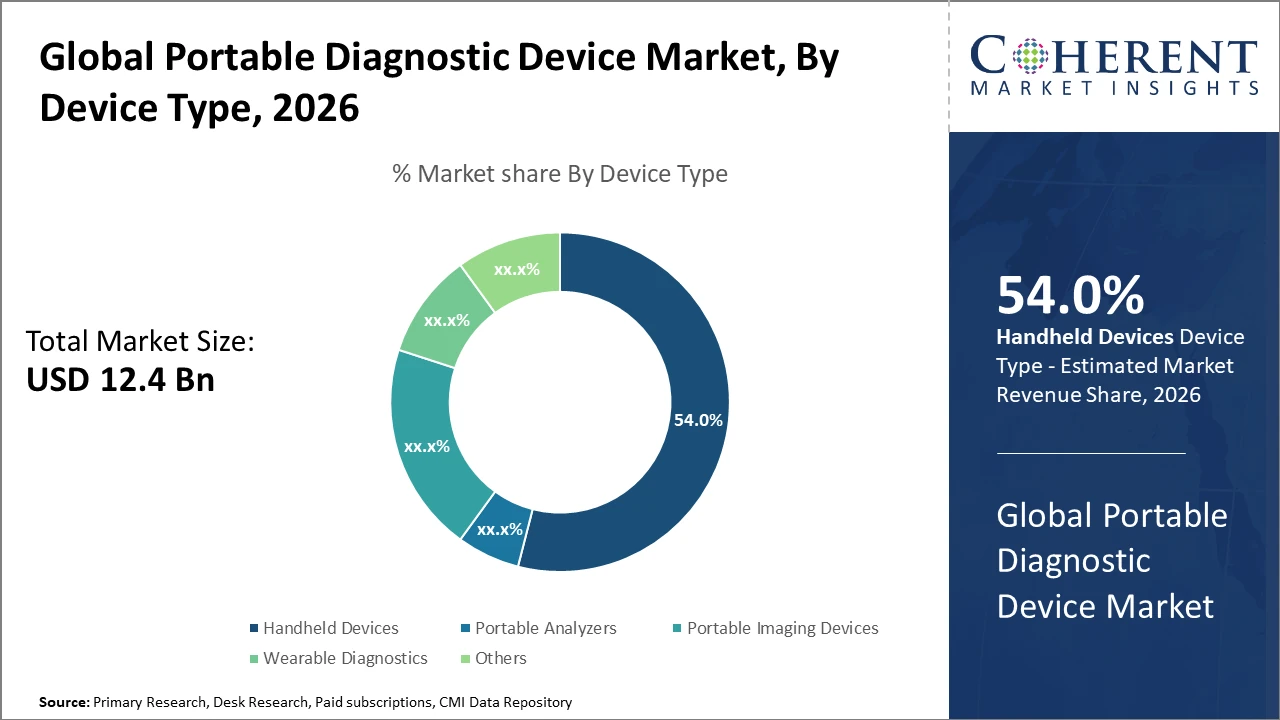
The handheld devices segment, with a 54% industry share, remains the dominant force, largely propelled by rapid adoption in emergency medical services and outpatient clinics.
Molecular diagnostics technology is experiencing the fastest growth driven by enhanced sensitivity requirements and expanded infectious disease testing applications.
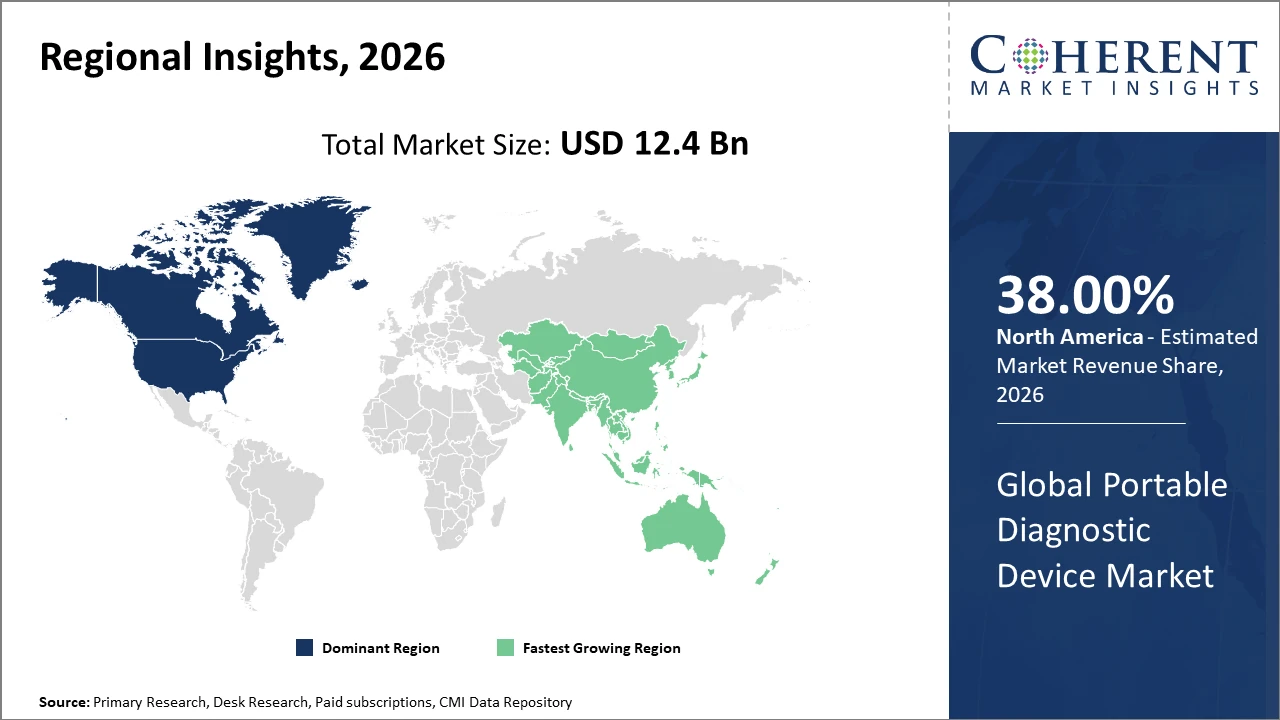
North America commands the highest regional market revenue attributed to advanced healthcare infrastructure and a strong presence of market players.
Asia Pacific emerges as the fastest-growing regional market, leveraging government investments and increasing awareness, with a CAGR surpassing 9% through 2033.
Global Portable Diagnostic Device Market Segmentation Analysis
To learn more about this report, Request Free Sample
Global Portable Diagnostic Device Market Insights, By Device Type
Handheld Devices dominate the market share, commanding 54%. Their dominance is primarily due to broad usability in emergency rooms, home care, and field diagnostics, supported by advancements in battery technology and miniaturized sensors, enhancing portability without compromising accuracy. Wearable Diagnostics represent the fastest-growing subsegment, driven by increasing consumer health monitoring needs and integration with mobile applications, enabling continuous glucose and cardiac monitoring. Portable Analyzers are preferred in smaller clinics requiring laboratory-grade precision onsite. Portable Imaging Devices are gaining incremental traction due to the rising need for real-time imaging during surgeries and remote consultations, while the Others category includes niche experimental devices catering to veterinary and environmental diagnostics.
Global Portable Diagnostic Device Market Insights, By Technology
Immunoassay leads in terms of market share, owing to its widespread application in infectious disease detection and chronic condition monitoring. Molecular Diagnostics is the fastest-growing technology segment, propelled by the increasing use in pathogen identification and genetic testing, especially pronounced after the COVID-19 pandemic, where portable molecular platforms became critical for rapid testing. Biosensors remain a crucial component supporting technological advancements across the market, facilitating improved sensitivity and specificity. Clinical Chemistry devices offer robust solutions for metabolic and electrolyte analysis primarily within hospital settings.
Global Portable Diagnostic Device Market Insights, By End-User
Hospitals hold the dominant market position given their extensive diagnostic needs and infrastructure supporting portable devices for critical care and emergency diagnostics. Home Healthcare emerges as the fastest-growing segment, reflecting changing healthcare delivery models towards decentralization and chronic disease management at home, driven by supportive government policies and increased consumer health consciousness. Diagnostic Laboratories utilize portable diagnostic devices for quick screenings and confirmatory tests, particularly in outbreak management. Ambulatory Care Centers offer flexible diagnostic services in outpatient contexts, while Others cover niche settings such as military and occupational health services.
Global Portable Diagnostic Device Market Trends
The portable diagnostic device market continues to capitalize on AI and IoT-enhanced diagnostics, evidenced by the introduction of next-generation handheld analyzers in 2026 that enhance both speed and accuracy.
Additionally, increased consumer demand for non-invasive diagnostic tools led to the development of portable imaging devices with augmented reality overlays, improving clinical decision-making.
Another emerging trend is the shift towards sustainable manufacturing practices, with companies initiating recyclable components to reduce environmental impact, thereby aligning market growth with global sustainability goals.
Global Portable Diagnostic Device Market Insights, By Geography
To learn more about this report, Request Free Sample
North America Global Portable Diagnostic Device Market Analysis and Trends
In North America, the dominance in the Portable Diagnostic Device market is sustained by extensive healthcare infrastructure, high adoption of technologically advanced devices, and significant R&D investments. The region accounts for nearly 38% of the total market share, bolstered by a strong presence of leading market companies such as Abbott Laboratories and Roche Diagnostics. Favorable regulatory frameworks and reimbursement policies further drive product launches and wide-scale adoption across clinical settings.
Asia Pacific Global Portable Diagnostic Device Market Analysis and Trends
Meanwhile, the Asia Pacific exhibits the fastest growth in this market, with a CAGR exceeding 9% from 2026 to 2033. Robust government initiatives to improve healthcare accessibility, increasing prevalence of chronic diseases, and rising per capita healthcare expenditure form the backbone of this growth. Countries like China and India benefit from expanding domestic manufacturing and increased import penetration, supported by key players like Mindray Medical International and Novatek International, actively investing in regional capacity expansion.
Global Portable Diagnostic Device Market Outlook for Key Countries
USA Global Portable Diagnostic Device Market Analysis and Trends
The USA’s market remains at the forefront globally due to strong innovation ecosystems and early adoption trends. In 2025 alone, the US saw a 14% increase in portable device usage in emergency medical services, driven by enhanced reimbursement policies and increasing investments in healthcare digitalization. Key market companies such as Thermo Fisher Scientific and Siemens Healthineers have leveraged AI-enabled diagnostic platforms, capturing significant market revenue and reinforcing the country’s leadership in portable diagnostic innovation.
India Global Portable Diagnostic Device Market Analysis and Trends
India’s market is rapidly expanding, fueled by government healthcare programs promoting rural diagnostics and telemedicine integration. In 2026, portable diagnostic device imports grew by 22%, reflecting rising institutional demand and increased consumer awareness. Local players like Mindray Medical International are investing in affordable, reliable diagnostic solutions adapted to domestic healthcare challenges. This combination of policy support and market player engagement positions India as a pivotal growth hub within the market.
Analyst Opinion
Supply-side dynamics indicate that production capacity for portable diagnostic devices surged by approximately 15% in 2025, driven primarily by enhanced manufacturing automation and materials innovation. This expanded capacity facilitated a 12% reduction in average unit prices, making devices more accessible to both healthcare providers and consumers, thereby directly impacting market size growth.
Demand-side indicators underscore a notable increase in device adoption across emerging economies, with imports of point-of-care diagnostic devices rising by over 18% in 2024. This uptick reflects a shifting healthcare paradigm emphasizing decentralized diagnostics, particularly in regions with limited hospital infrastructure.
Micro-indicators such as increased R&D investments have fueled innovations in device miniaturization and multi-functionality; for example, dual-mode platforms combining immunoassays and molecular diagnostics gained traction, evidenced by a 20% market penetration in North America during 2026.
Nano-size indicators reveal niche applications in the veterinary and sports medicine sectors expanding rapidly. For instance, a 25% year-over-year growth was seen in portable diagnostic kits specifically tailored for animal health, signaling diversification within the market players’ portfolio.
Market Scope
| Report Coverage | Details | ||
|---|---|---|---|
| Base Year: | 2025 | Market Size in 2026: | USD 12.4 billion |
| Historical Data for: | 2020 To 2024 | Forecast Period: | 2026 To 2033 |
| Forecast Period 2026 to 2033 CAGR: | 8.2% | 2033 Value Projection: | USD 21.6 billion |
| Geographies covered: |
|
||
| Segments covered: |
|
||
| Companies covered: | GE Healthcare, Hologic, Inc., Luminex Corporation, QIAGEN N.V., Masimo Corporation, Fujifilm Holdings Corporation, Novatek International, Inc., Mindray Medical International Limited, Cepheid Inc., Ortho Clinical Diagnostics | ||
| Growth Drivers: |
|
||
Uncover macros and micros vetted on 75+ parameters: Get instant access to report
Global Portable Diagnostic Device Market Growth Factors
Technological advancements in microfluidics and biosensor integration have drastically improved device sensitivity and diagnostic turnaround time, enabling swift patient triage and management. The increasing prevalence of chronic diseases like diabetes and cardiovascular disorders has amplified demand for portable diagnostics to facilitate timely intervention outside hospitals. Additionally, government initiatives promoting home-based healthcare and telemedicine have expanded the market scope by making portable diagnostics an integral part of remote patient monitoring frameworks. Rising investments in healthcare infrastructure, particularly in Asia Pacific and Middle East & Africa regions, have further stimulated market revenue growth by enhancing accessibility.
Global Portable Diagnostic Device Market Development
In 2022, Wipro GE Healthcare launched its next-generation Revolution Aspire CT scanner, expanding access to advanced diagnostic imaging with enhanced wireless capabilities and workflow efficiency. The system was designed to support faster scan times, lower radiation doses, and improved image quality, making it suitable for high-throughput hospitals as well as facilities seeking more flexible and connected CT imaging solutions. This launch reinforced Wipro GE’s focus on scalable, patient-centric imaging technologies in emerging and developed healthcare markets.
In 2022, Mobvoi debuted the TicWatch GTH Pro, a smartwatch positioned around advanced heart health and wellness monitoring. Developed in collaboration with medical technology partners, the device introduced features such as arterial health assessment, heart rate tracking, and blood oxygen monitoring in a consumer-friendly wearable format. The launch highlighted Mobvoi’s strategy to bridge consumer electronics and preventive digital health, targeting users seeking continuous, non-invasive cardiovascular insights.
Key Players
Leading Companies of the Market
GE Healthcare
Hologic, Inc.
Luminex Corporation
QIAGEN N.V.
Masimo Corporation
Fujifilm Holdings Corporation
Novatek International, Inc.
Mindray Medical International Limited
Cepheid Inc.
Ortho Clinical Diagnostics
Leading market players are adopting aggressive growth strategies such as strategic partnerships and acquisitions to enhance product portfolios and expand their geographic footprint. For instance, Thermo Fisher’s acquisition of a biosensor startup in 2025 accelerated its innovation pipeline, resulting in a 17% revenue uplift in their portable diagnostics segment. Similarly, Roche's investment in AI-driven diagnostic platforms has led to faster turnaround times and improved diagnostic accuracy, contributing to a competitive edge in evolving market landscapes.
Global Portable Diagnostic Device Market Future Outlook
The future outlook for the global portable diagnostic device market is highly promising as healthcare systems increasingly prioritize accessibility, speed, and personalized care. Advances in nanotechnology, biosensors, and artificial intelligence will continue to enhance sensitivity, specificity, and multi-analyte testing capabilities. Emerging technologies such as paper-based diagnostics and wearable biosensing platforms are expected to expand the range of conditions that can be monitored outside traditional facilities. Integration with telehealth ecosystems will enable continuous remote monitoring for chronic disease management and early disease detection. Regulatory frameworks are also adapting to support accelerated approvals for point-of-care technologies, particularly those that address unmet clinical needs. As global healthcare infrastructure strengthens in low- and middle-income regions, portable diagnostic devices will play an essential role in expanding access to quality care and reducing disparities.
Global Portable Diagnostic Device Market Historical Analysis
The global portable diagnostic device market has expanded rapidly over the past two decades as demand for decentralized, point-of-care testing has grown. Traditionally, diagnostic testing was centralized in clinical laboratories, requiring sample transport and delayed turnaround times. Portable diagnostic technologies emerged to address these limitations, leveraging miniaturization, microfluidics, and improved sensing modalities to bring testing closer to patients. Early products included glucose meters and rapid infectious disease assays, which demonstrated the feasibility and clinical value of near-patient testing.
The proliferation of smartphones and wireless connectivity further accelerated the development of portable devices capable of interfacing with apps and electronic health records, enabling real-time data capture and decision support. Public health initiatives and the need for rapid responses to outbreaks such as influenza highlighted the strategic importance of portable diagnostics, leading to widespread adoption across emergency departments, clinics, home care settings, and community health programs.
Sources
Primary Research Interviews:
Pathologists
diagnostic lab managers
point-of-care testing specialists
medical device engineers
healthcare administrators
Databases:
WHO Diagnostics Data
CDC Laboratory Statistics
FDA IVD Database
OECD Health Data
Magazines:
Diagnostics World
GenomeWeb
Medical Device Network
Clinical Lab Products
MedTech Dive
Journals:
Clinical Chemistry
Journal of Molecular Diagnostics
PLOS ONE
Journal of Clinical Microbiology
Biosensors & Bioelectronics
Newspapers:
Financial Times (Healthcare)
Reuters Health
The Guardian (Science)
Bloomberg Diagnostic
The New York Times (Health)
Associations:
Association for Diagnostics & Laboratory Medicine
Clinical & Laboratory Standards Institute
WHO
IFCC
American Society for Clinical Pathology
Share
Share
Komal Dighe is a Management Consultant with over 8 years of experience in market research and consulting. She excels in managing and delivering high-quality insights and solutions in Health-tech Consulting reports. Her expertise encompasses conducting both primary and secondary research, effectively addressing client requirements, and excelling in market estimation and forecast. Her comprehensive approach ensures that clients receive thorough and accurate analyses, enabling them to make informed decisions and capitalize on market opportunities.

Credibility and Certifications

860519526


9001:2015

27001:2022


Need a Custom Report?
We can customize every report - free of charge - including purchasing stand-alone sections or country-level reports
Customize NowJoining thousands of companies around the world committed to making the Excellent Business Solutions.
View All Our Clients