

Telerehabilitation Systems Market Size and Forecast – 2026-2033
Telerehabilitation Systems Market is estimated to be valued at USD 382.4 Mn in 2026 and is expected to reach USD 992.7 Mn in 2033, exhibiting a compound annual growth rate (CAGR) of 14.6% from 2026 to 2033.
Key Takeaways:
- On the basis of Application, Neurology Segment will lead the market with 51% market share. This is due to the growing incidence of neurological disorders and the demand for remote rehabilitation solutions.
- On the basis of Components, Hardware Segment leads the market during the forecast period. This is due to telerehabilitation systems are largely related to advanced techniques and technologies.
- North America is expected to retain a dominant market share of 41% in 2026. This is due to strong healthcare infrastructure, high rates of digital health technology adoption, and supportive reimbursement policies.
Market Overview:
The global telerehabilitation systems market has been growing significantly over the past few years This is influenced by the rise in chronic disease prevalence and the use of innovative technologies like AI and real-time monitoring. Yet, factors such as low awareness in rural communities and the availability of stable internet connectivity are among the challenges faced in its wide-scale adoption. In spite of these challenges, the market offers huge opportunities in emerging markets such as India and China, where rates of chronic diseases are increasing. In India, a country with over 1.3 billion people and a rapidly aging population, chronic diseases like diabetes and hypertension are on the rise. To address the healthcare burden, India's Ministry of Health and Family Welfare launched a National Telemedicine Network, which includes telerehabilitation services for patients suffering from chronic conditions.
Current Events and Its Impact on telerehabilitation systems market
Current Events | Description and its impact |
Integration of Advanced Technologies and AI |
|
Advances in Telecommunication Infrastructure |
|
Global Telerehabilitation Systems Market Dynamics
Global Telerehabilitation Systems Market Driver - Product Development programs will drive the market growth
Paralysis or weakness states, such as those following a stroke, are significantly benefited by the application of K-tapes in neurorehabilitation to enhance the performance of the upper and lower limbs. Thus, pain that may develop because of subluxation or partial dislocation of the shoulder joint, or because of expansion of the joint space as a result of loosening of tension in the muscles when the arm is paralyzed, will be greatly alleviated. The application of K-tapes may even correct the subluxation itself. The additional application of K-tapes also improved walking and balance function. Lymphatic tape application also reduces swelling of the hands following a stroke. Rock Tape launched Rock Flash Reflective Kinesiology Tape, designed to improve visibility for outdoor enthusiasts active in low-light conditions. This pre-cut, easy-to-apply tape combines the supportive benefits of kinesiology tape with reflective properties, making it ideal for runners, cyclists, and walkers during early-morning or evening activities.
Robotic Gait Training Systems: Global Telerehabilitation Systems Market Trends
Several of the stroke survivors experience extreme difficulties with walking and are usually confined to walking just within their domestic settings. Experiments reveal that 70% of survivors remaining able to walk find it very difficult to accomplish quickly. With a view towards mitigating such difficulties, more and more are employing robotic gait training devices as components in stroke rehabilitation efforts. Such mechanisms contribute towards increasing cardiovascular efficiency while aiding in reclaiming walking functionality, presenting one useful aid along the line in the case of stroke victims. In December 2024, the Hong Kong Polytechnic University (PolyU) revealed a revolutionary rehabilitation technology: the Mobile Ankle-foot Exo neuromusculoskeletal. This new device combines exoskeletons, soft pneumatic muscles, neuromuscular electrical stimulation, and vibrotactile sensory feedback into one light, wearable system.
Global Telerehabilitation Systems Market: Restraint
Complications associated with the market
Complications are bound to hinder the growth of the global telerehabilitation systems market. Most physical treatments, occupational treatments, audiology tests, optometry, and speech therapy assessments are dependent on costly equipment. Even during the treatment process, patients need to execute interventions appropriately. While the evolution of telerehabilitation has reinforced the bond between the patient and the therapist, communication is at times coupled with information-based issues brought about by the disabilities of the patient, for example, hearing, vision, or speech disability.
- Current Industry Events of 2026
- Market Size Estimation
- Regional Breakdown
- Competitive Landscape
- Customer Intelligence
- Segmental Analysis
- Pricing Analysis
- Key Market Drivers, Challenges & Future Trends
- Customized Insights Section
Segmental Insights
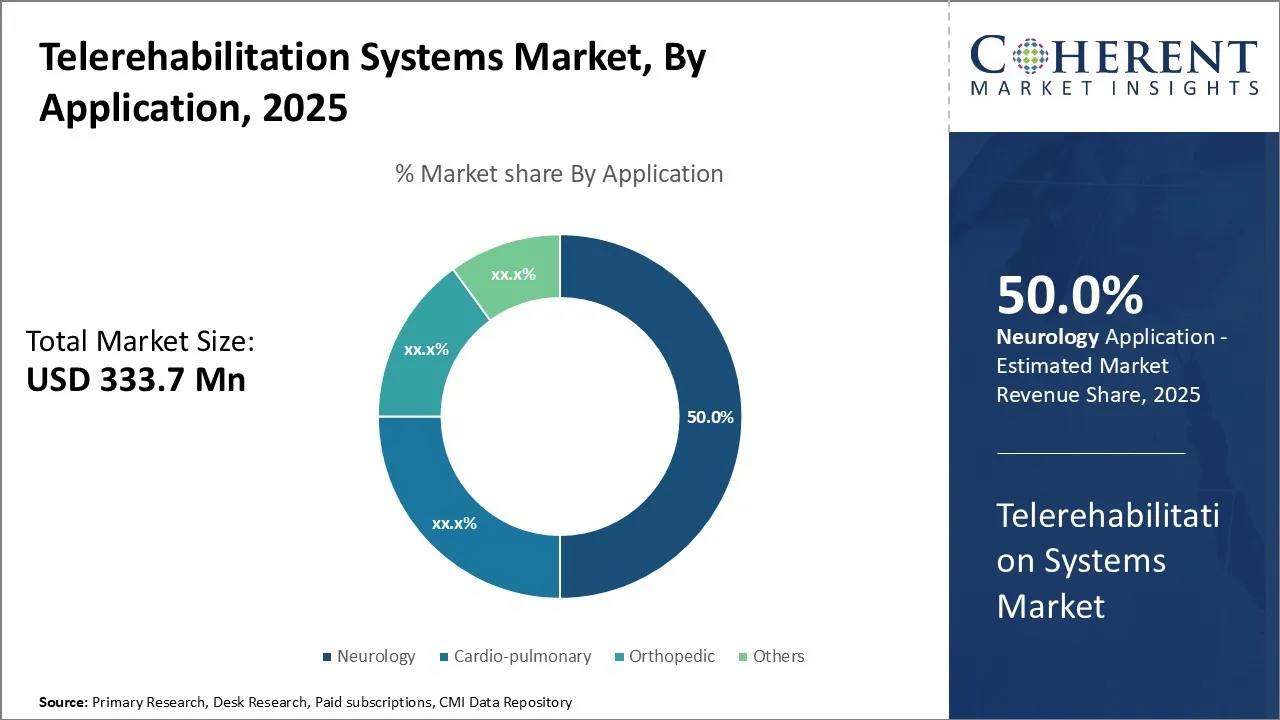
Global Telerehabilitation Systems Market Insights by Application- Neurology Segment Dominates the Market
On the basis of application, the telerehabilitation systems market in global arena is categorized into cardio-pulmonary, neurology, orthopedic, and others. Among which, neurology will lead the market during the forecast period through different applications and technologies.
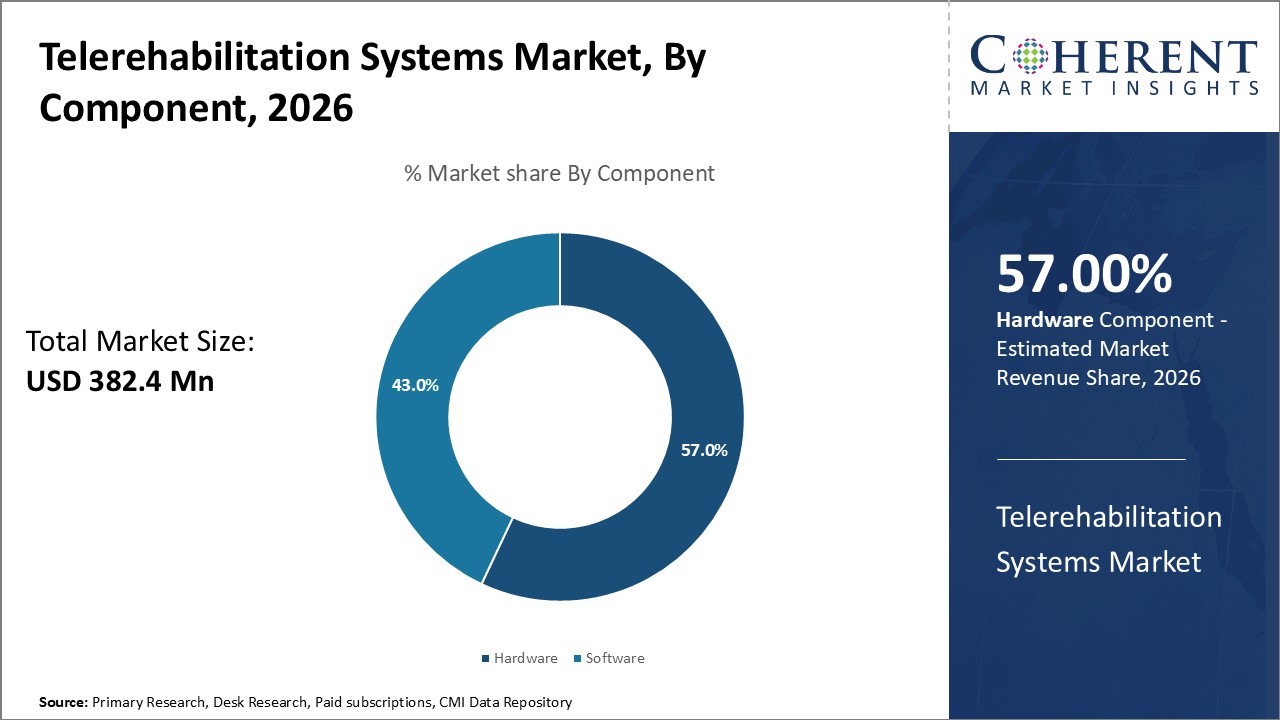
Global Telerehabilitation Systems Market Insights by Component – Hardware Division holds the larger share in the market
On the basis of components, telerehabilitation systems market has been divided on a global level into hardware and software. Of which, hardware holds the larger share in the market because telerehabilitation systems are most commonly related with sophisticated techniques and technologies.
Patent Landscape
The patent landscape of the telerehabilitation systems market indicates a rising trend towards technological advancement aimed at improving remote rehabilitation and telehealth capabilities. Prominent patents in this market mainly revolve around wearable devices, analytics based on artificial intelligence, virtual reality, and telecommunication technologies. Wearable sensors and motion-tracking devices, meant to monitor patient progress in real-time, are prominent, with patents filed for systems of data collection, adaptive adjustment of therapy, and biofeedback mechanisms. The continuous monitoring provided by these devices is essential to successful telerehabilitation.
Moreover, patents for AI and machine learning algorithm-related patents are increasing, especially those targeting the personalization of treatment plans according to real-time patient information. Such systems have the capability to modify therapy plans automatically, making the rehabilitation process more effective and ensuring improved outcomes. VR technologies are also increasingly popular, with patents targeting immersive rehabilitation experiences involving patients, especially in musculoskeletal and neurological rehabilitation.
Telecommunications firms are getting more engaged, with patents on systems that allow secure, high-definition video consultations and remote monitoring, overcoming connectivity issues in rural and underserved regions.
Pipeline Analysis
Telerehabilitation systems market pipeline depicts the active progression of innovations set to meet emerging patients' and health practitioners' demands. Highlighted developments along the pipeline involve incorporation of artificial intelligence (AI) and machine learning to complement highly individualized rehabilitation programs. Such AI-enhanced solutions make in-process modification to therapy schedules by real-time reliance on patients' information for improving clinical responses as well as adherence.
Wearable technology, including motion sensors and biofeedback devices, is also picking up steam in the pipeline, allowing remote tracking of patients' physical rehabilitation. These technologies provide data that can be used to modify therapy plans and identify complications at an early stage, enhancing the effectiveness and patient-centeredness of rehabilitation. Immersive technologies, especially virtual reality (VR), are also progressing in the pipeline, providing interactive and immersive rehabilitation experiences, which are likely to enhance patient motivation and recovery rates. Moreover, increasing emphasis is being placed on extending telerehabilitation interventions to underserved populations, such as mental health and children's rehabilitation, offering access to services where conventional systems are weak. Telehealth and telerehabilitation collaborations between healthcare providers and telecommunication firms are expected to overcome connectivity issues in rural and distant locations.
Regional Insights
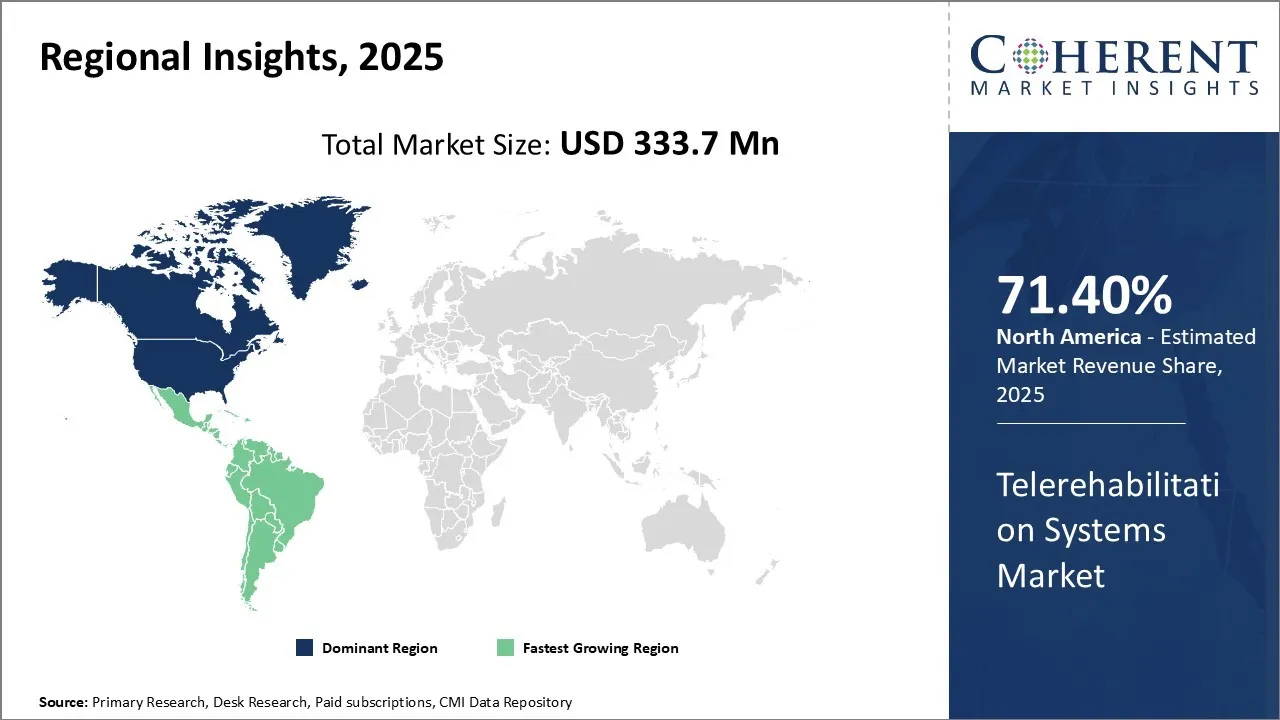
North America Telerehabilitation Systems Market and Trends
The North American region is expected to dominate the global telerehabilitation systems market due to increasing technologies related to telerehabilitation systems. Telerehabilitation can make an important difference in patient care by providing an engaging way of performing repetitive therapeutic activity and increasing adherence to treatment.
Global Telerehabilitation Systems Market Dominating countries
United States Telerehabilitation Systems Market and Trends
U.S. has a commanding position in the world telerehabilitation market, holding more than 41% of the market share in 2024. The country's dominance is based on a range of factors such as sophisticated healthcare infrastructure, high adoption of digital health technologies, and favorable regulatory policies encouraging telehealth services.
Italy Telerehabilitation Systems Market and Trends
Italy is developing as the quickest-growing telerehabilitation market in Europe, with estimates foreseeing a sharp rise in market size by 2030. The growth is fueled by an aging population in the country, high prevalence of chronic diseases, and a heavy focus on digital health programs. Investments by the Italian government in telemedicine infrastructure and favorable policies are making it easier for the widespread use of telerehabilitation services.
India Telerehabilitation Systems Market and Trends
India is witnessing a quick development in the telerehabilitation market, driven by the government's National Digital Health Mission (NDHM), which seeks to create an end-to-end digital health system. The move supports the adoption of telerehabilitation services, especially in rural and disadvantaged communities. The country's large population, growing burden of chronic illnesses, and expanding internet penetration support the growing need for remote rehabilitation solutions.
Australia Telerehabilitation Systems Market and Trends
The Australian telerehabilitation market is growing because the country has a strong healthcare system and high digital health literacy. The Federation Physiotherapy Virtual Care Clinic (FPVCC) is an example of successful deployment, with accessible physiotherapy telehealth options for the remote areas. Telehealth support from the Australian government and the rising use of digital health technologies are major drivers for market growth.
China Telerehabilitation Systems Market and Trends
China's telerehabilitation market is experiencing strong growth, led by fast-paced technological developments and a vast population with limited access to conventional healthcare services. The government's investments in digital health infrastructure and the rising incidence of chronic diseases are driving demand for remote rehabilitation solutions. Efforts such as the introduction of telerehabilitation software across different regions are improving the accessibility and efficiency of rehabilitation services.
Reimbursement Scenario
North America
United States Reimbursement Codes
- CPT Codes: - 99487 (Complex chronic care management): $133.18 average reimbursement.
- 99457 (Remote physiologic monitoring, 20+ mins/month): ~$47 reimbursed.
- Telehealth modifiers (95, GT, GQ) are added to rehabilitation-specific codes (e.g., 97110 for therapeutic exercises).
- HCPCS Codes: G2012 (Brief virtual check-ins) and G2252 (audio-only assessments.
Regulatory Agencies & Processes
- Centres for Medicare & Medicaid Services (CMS): Requirements for originating site restrictions (e.g., rural clinics), eligible providers (e.g., physicians, nurse practitioners), and real-time audio-video requirements.
- State Medicaid Programs: 39 states and DC pay Federally Qualified Health Centers (FQHCs) as distant sites, frequently including facility fees and transmission fees.
- Private Payers: UnitedHealthcare and Blue Cross Blue Shield generally replicate Medicare policies but might extend coverage for urban tele rehab.
Canada
- Reimbursement Codes: K700–K703 (Virtual physical therapy sessions).
- Agencies: Provincial health authorities (e.g., Ontario Health Insurance Plan) reimburse ~$65–$90 per session, 70–85% of costs.
- Coverage: 92% of employer-sponsored plans cover telerehab, with 15% annual spending increase since 2022.
Europe
Regulatory Framework- EU Cross-Border Directive: Mandates GDPR-compliant platforms and parity reimbursement for in-person care.
- Country-Specific Examples: - Germany: Statutory health insurers (e.g., AOK) reimburse €75–€110 per session under E-Health Act (2023).
- France: 60% of telerehab expenses are reimbursed by Caisse Primaire d'Assurance Maladie, up to €50/session.
Spend Data: Telehealth spending across Europe reached €9.6 billion in 2024, with rehabilitation accounting for 22% (€2.1 billion). 40–80% are covered by private insurers depending on deductibles
Asia Pacific
Australia- Medicare Benefits Schedule (MBS): 92118 (Telehealth physiotherapy) is reimbursed at AU$85 and covers 75% of expense.
- Total Spend: AU$1.2 billion every year, covered by 68% in public plans.
Japan- National Health Insurance: Codes B001–B004 pay ¥7,000–¥10,000 per session, reimbursing 70% of cost.
India- Ayushman Bharat: Reimburses 50% of tele rehab in empanelled hospitals, with add-on coverage offered by private payers such as Star Health.
Middle East & Africa
Gulf Cooperation Council (GCC)- Saudi Arabia: Council of Cooperative Health Insurance requires 90% reimbursement of virtual rehab through CPT-APTA codes.
- UAE: Dubai Health Authority pays 60–80% of the cost, on average AED 300–500 per session.
Sub-Saharan Africa- South Africa: Private insurance (e.g., Discovery Health) reimburses ZAR 500–800, paying 50–70%. Public sector pays less than 10%.
Prescribers’ preference
Musculoskeletal Rehabilitation
Lines of Treatment: - Physical Therapy: Remote-guided exercises for post-operative rehabilitation (e.g., ACL reconstruction) or chronic illness (e.g., osteoarthritis).
- Occupational Therapy: Adaptive strategies for work injuries or rheumatoid arthritis.
Medication Pairing: - Acute Phase: NSAIDs (e.g., ibuprofen, naproxen) and muscle relaxants (e.g., cyclobenzaprine) to help control pain and inflammation.
- Chronic Phase: Disease-modifying antirheumatic drugs (DMARDs such as methotrexate) for autoimmune disorders, combined with telerehabilitation to ensure joint mobility.
System Preferences: - Real-time movement tracking sensors (e.g., wearable IMUs) for observing exercise form.
- Electronic health records (EHR) integration for aligning therapy progress with drug adjustments.
Neurological Rehabilitation
Lines of Treatment: - Stroke Recovery: Virtual reality (VR)-assisted gait training and cognitive rehabilitation.
- Traumatic Brain Injury (TBI): Remote occupational and speech therapy.
Medication Pairing: - Acute Phase: Post-stroke anticoagulants (e.g., apixaban) and thrombolytics (e.g., alteplase), followed by telerehabilitation to treat motor deficits.
- Long-Term Management: Antispasticity medications (e.g., baclofen) with telehealth consultations to monitor the effectiveness of Botox injections for spasticity.
System Preferences: - AI-based platforms that adjust therapy difficulty levels based on patient performance metrics. Secure video conferencing software that is HIPAA/GDPR compliant for multidisciplinary team consultations.
Cardiovascular Rehabilitation
Lines of Treatment: - Post-CABG/PCI Recovery: Tele-monitoring of aerobic exercises and dietary adherence.
- Chronic Heart Failure: Tele-guided resistance training to enhance functional capacity.
Medication Pairing:
- Beta-blockers (e.g., metoprolol) and ACE inhibitors (e.g., lisinopril) to maximize cardiac output during supervised telerehabilitation sessions.
- Diuretics (e.g., furosemide) dose-adjusted according to weight patterns monitored through linked scales.
System Preferences:
- Connectivity with IoT devices (e.g., wearable ECG monitors) for exercise-induced arrhythmia detection.
- Automated risk stratification programs to find patients requiring in-clinic follow-ups.
Market Report Scope
Telerehabilitation Systems Market Report Coverage
| Report Coverage | Details | ||
|---|---|---|---|
| Base Year: | 2025 | Market Size in 2026: | USD 382.4 Mn |
| Historical Data for: | 2020 To 2024 | Forecast Period: | 2026 To 2033 |
| Forecast Period 2026 to 2033 CAGR: | 14.6% | 2033 Value Projection: | USD 992.7 Mn |
| Geographies covered: |
| ||
| Segments covered: |
| ||
| Companies covered: | Reflexion Health, Inc., 270 Vision Ltd., CoRehab srl, Hinge Health, SWORD Health, MIRA Rehab Limited, Flex, Neuro Rehab VR, Evolv Rehabilitation Technologies SL, Yancheng Tianrun Medical Technology Co., Ltd, Tyromotion Gmbh, Brontes Processing Ltd., Bridgeway Senior Healthcare, Rehametrics, Geminus-Qhom, MindMaze, DIH Medical, and Doctor Kinetics | ||
| Growth Drivers: |
| ||
| Restraints & Challenges: |
| ||
Global Telerehabilitation Systems Market: Key Developments
- In January 2025, Genrobotics launched India's first robotic-assisted pediatric gait trainer, G-Gaiter Paediatric, at SAT Hospital in Thiruvananthapuram. The equipment employs cutting-edge Virtual Reality (VR) technology and real-time interactive games to offer interactive therapy for children with mobility impairments, such as cerebral palsy.
- In 2025, Nvidia rolled out its newest AI chips, Rubin and Rubin Ultra, tailored for physical AI applications. They drive systems able to comprehend actual physics, for example, drones that learn and adapt to dynamic environments. Nvidia also unveiled the Isaac GR00T N1 model for robots that are human-like and the Newton physics engine for robotics simulation, which can be used to improve robotic-assisted telerehabilitation.
- In December 2024, Google introduced the Willow quantum processor, a 105-qubit superconducting quantum chip that can execute a Random Circuit Sampling task in 5 minutes—something present-day supercomputers would take 10^25 years to achieve. This advancement in quantum computing has the potential to revolutionize AI model training and simulation, providing unmatched processing power for functions such as robotic rehabilitation and real-time diagnostics.
Global Telerehabilitation Systems Market - Cross Sectional Analysis
As application segment, it comprises cardio-pulmonary, neurology, orthopedic, others. Neurology leads from the product base segment. Rehabilitation can assist most individuals with neurological disorders or injury to enhance daily activities. Stroke, Multiple Sclerosis (MS), cerebral palsy, Spinal Cord Injury (SCI), and Traumatic Brain Injury (TBI) are just a few of the conditions that may be aided by rehabilitation. A multidisciplinary rehabilitation team is made up of many qualified medical professionals with varying areas of specialty, all of whom are dedicated to helping patients improve.
Analyst View:
- The market for telerehabilitation systems is growing due to a mix of demographic changes and technological innovations. The aging population and the rising incidence of chronic diseases, including musculoskeletal disorders and post-stroke neurological impairments, are driving the need for affordable rehabilitation solutions. Sophisticated telehealth platforms, which allow real-time monitoring and customized treatment plans, are enhancing clinical outcomes and lowering healthcare costs.
- Even with this growth, the market is subject to a number of challenges. Among these are fragmented reimbursement models, which differ geographically, and interoperability problems between new technologies and existing healthcare IT systems. Security of data also remains an issue, especially as sensitive patient data is transferred to cloud-based systems, which can be troublesome in regions with less-developed digital infrastructure.
- With the use of AI-powered analytics to develop tailor-made and adaptive treatment regimens that improve patient outcomes, or by opening up rehabilitation services to new areas like mental health and paediatrics, could fill unmet needs. There is tremendous potential in emerging markets, particularly in the Middle East and Africa. These regions are experiencing high burdens of disease and have minimal access to conventional rehabilitation centres, which make remote rehabilitation services in demand. Partnerships among MedTech companies and telecommunication providers can bridge connectivity gaps in rural and underserved areas.
- North America and Europe are presently market leaders when it comes to service adoption, owing to robust reimbursement systems and well-established telehealth infrastructures. Nevertheless, the Asia-Pacific market is experiencing a huge surge due to public-private collaborations that are accelerating the digitalization of healthcare.
Market Segmentation:
- Global Telerehabilitation Systems Market, By Application (Revenue, USD Mn, 2021 - 2033)
- Cardio-pulmonary
- Neurology
- Orthopedic
- Others
- Global Telerehabilitation Systems Market, By component (Revenue, USD Mn, 2021 - 2033)
- Hardware
- Software
Regional Insights (Revenue, USD Mn, 2021 - 2033)
- North America
- U.S.
- Canada
- Latin America
- Brazil
- Argentina
- Mexico
- Rest of Latin America
- Europe
- Germany
- U.K.
- Spain
- France
- Italy
- Russia
- Rest of Europe
- Asia Pacific
- China
- India
- Japan
- Australia
- South Korea
- ASEAN
- Rest of Asia Pacific
- Middle East
- GCC Countries
- Israel
- Rest of Middle East
- Africa
- South Africa
- North Africa
- Central Africa
- North America
- Company Overview
- Reflexion Health, Inc.
- 270 Vision Ltd.
- CoRehab srl
- Hinge Health
- SWORD Health
- MIRA Rehab Limited
- Flex
- Neuro Rehab VR
- Evolv Rehabilitation Technologies SL
- Yancheng Tianrun Medical Technology Co, Ltd
- Tyromotion Gmbh
- Brontes Processing Ltd.
- Bridgeway Senior Healthcare
- Rehametrics
- Geminus-Qhom
- MindMaze
- DIH Medical
- Doctor Kinetics
Sources:
Primary Research Interviews
- Healthcare professionals utilizing telerehabilitation platforms
- Developers of telerehabilitation technology (e.g., Cisco Systems Inc., Koninklijke Philips N.V.)
- Patients utilizing remote rehabilitation services
- Insurance companies covering telehealth services
- Others
Databases
- Market Research Future (MRFR) Database
- Ken Research Industry Database
- Technavio Market Intelligence Platform
- Others
Magazines
- Healthcare IT Today
- Telehealth Magazine
- mHealth Intelligence
- Others
Journals’
- Journal of Telemedicine and Telecare
- JMIR Rehabilitation and Assistive Technologies
- Archives of Physical Medicine and Rehabilitation
- Others
Newspapers
- The Wall Street Journal (Healthcare Tech section)
- Forbes (Digital Health coverage)
- Modern Healthcare
- Others
Associations
- American Telemedicine Association (ATA)
- American Physical Therapy Association (APTA)
- World Federation for Neurorehabilitation (WFNR)
- Others
Public Domain sources
- MRFR Telerehabilitation Market Analysis
- Technavio Telerehabilitation Systems Market Study
- CDC Telehealth Guidelines
- Others
Proprietary Elements
- CMI Data Analytics Tool
- Proprietary CMI Existing Repository of information for last 8 years
Definition: A telerehabilitation system is that treats drug addiction and is used in educational services and mental health programs. Telerehabilitation services help medical professionals analyze, monitor, consult, and diagnose diseases. These services can be provided by healthcare providers in medical fields such as physiotherapy. Telerehabilitation is a form of telehealth that allows the remote delivery of rehabilitation services to the home, or place of choice of the patient.
Get access to 250+ pages report
Every segment, forecast, competitor profile and data table behind the analysis above — available for instant download.
- ESOMAR Member
- ISO 9001:2015 Certified
- D-U-N-S Registered
- GDPR & CCPA Compliant
Missing comfort of reading report in your local language? Find your preferred language:
Transform your Strategy with Exclusive Trending Reports
Frequently Asked Questions
The Telerehabilitation Systems Market is estimated to be valued at USD 382.4 Mn in 2026, and is expected to reach USD 992.7 Mn by 2033.
The CAGR of the Telerehabilitation Systems Market is projected to be 14.6% from 2026 to 2033.
The Development in Product is the major factor driving the market growth.
Hardware dominates as telerehabilitation system is all related to techniques and technologies.
Complications associated with the market are expected to hamper the market growth in the near future.
The major players operating in the market include Reflexion Health, Inc., 270 Vision Ltd., CoRehab srl, Hinge Health, SWORD Health, MIRA Rehab Limited, Flex, Neuro Rehab VR, Evolv Rehabilitation Technologies SL, Yancheng Tianrun Medical Technology Co., Ltd, Tyromotion Gmbh, Brontes Processing Ltd., Bridgeway Senior Healthcare, Rehametrics, Geminus-Qhom, MindMaze, DIH Medical, and Doctor Kinetics.