

Brain Cancer Therapeutics Market Size and Share Analysis - Growth Trends and Forecast (2026 - 2033)
The global brain cancer therapeutics market size is estimated to reach USD 4,052 Mn in 2026 and is projected to grow at a CAGR of 9.8% during the forecast period (2026-2033), surpassing USD 7,796.3 Mn by 2033. This growth is attributable to rising incidence of brain tumors, increasing adoption of targeted therapies as well as immunotherapies, and advancements in diagnostic and treatment technologies. More than 1.3 million Americans are living with a primary brain tumor, of which approximately 74% are benign and 26% are malignant, while females account for nearly 59% of all diagnosed cases.
Key Takeaways from the Brain Cancer Therapeutics Market Report
- Glioblastoma is expected to lead the market with a share of 50% in 2026 due to its aggressive nature, frequent recurrence, and high use of combination therapies. For example, a 2025
- Targeted therapy is projected to account for the largest market revenue share of 35% in 2026, toppling chemotherapy's long-held dominance due to superior efficacy and improved patient outcomes. For instance, a 2026 meta-analysis of 14 randomized clinical trials found that bevacizumab-based targeted therapy significantly improved progression-free survival compared with standard therapy.
- North America is expected to dominate the global brain cancer therapeutics industry with a share of 40% in 2026, owing to high diagnosis rates, availability of advanced brain cancer therapies, favorable reimbursement, and strong clinical trial activities in the U.S. For example, the U.S. led more than 310 active brain tumor clinical trials in 2026, expanding access to novel therapies.
- Asia Pacific is anticipated to emerge as the fastest growing market for brain cancer therapeutics, registering a CAGR of 11.0%, thanks to rising disease burden, improving access to advanced oncology care, and rising popularity of targeted therapies. For example, Asia Pacific accounts for nearly 50% of global cancer cases and almost 60% of cancer deaths, driving demand for advanced
Brain Cancer Therapeutics Market Overview
The global brain cancer therapeutics market is projected to register robust growth during the forecast period. This is primarily due to rising burden of brain tumors, increasing demand for targeted therapies, growing investments in oncology research, and expanding clinical trials for innovative treatment options. Continuous advancements in diagnostic technologies are also supporting market expansion.
Expansion of immunotherapy and novel treatment approaches is expected to support market expansion during the forecast period. Immunotherapies such as checkpoint inhibitors and CAR-T therapies are increasingly used for difficult brain tumors, opening new treatment pathways and expanding the market.
Advancements in brain cancer therapies are also driving market growth. Leading pharmaceutical companies and research institutes are developing novel therapies for brain cancer treatment. For instance, in May 2026, researchers at
Similarly, Kopra Bio, a biotechnology startup spun out of the University of California, San Francisco, raised $9.1 million in June 2026 to advance its genetically engineered viral therapy for glioblastoma. The company will inject the investigational therapy into glioblastoma patients in a Phase I clinical trial in China. These developments are expected to support the growth of the brain cancer therapies market during the forecast period.
Segmental Insights
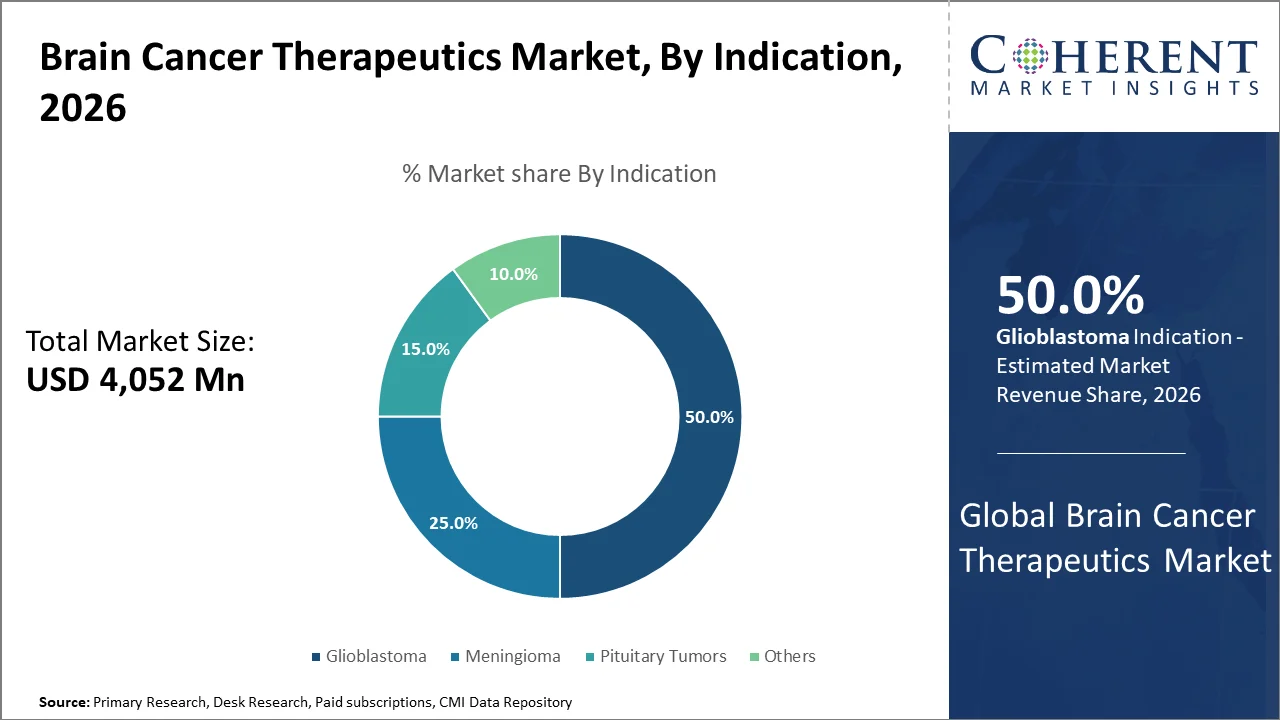
Which Indication Holds the Largest Share of the Brain Cancer Therapeutics Market?
Glioblastoma Accounts for Nearly Half of the Global Market in 2026
According to Coherent Market Insights’ latest brain cancer therapeutics market analysis, glioblastoma is set to lead the market, accounting for a 50% share in 2026. This dominance is attributable to its high incidence among malignant primary brain tumors, poor prognosis requiring aggressive treatment, high recurrence rates, and the increasing adoption of advanced therapies such as targeted therapies, immunotherapies, and tumor-treating fields.
Glioblastoma (GBM) is the most common and aggressive primary malignant brain tumor in adults. It accounts for around 50% of all primary central nervous system malignancies, creating strong demand for brain cancer therapeutics. Continuous clinical research, expanding clinical trials, and growing investments in novel glioblastoma treatments are also set to boost segment growth during the forthcoming period.
- Current Industry Events of 2026
- Market Size Estimation
- Regional Breakdown
- Competitive Landscape
- Customer Intelligence
- Segmental Analysis
- Pricing Analysis
- Key Market Drivers, Challenges & Future Trends
- Customized Insights Section
Which Treatment Type Dominates the Brain Cancer Therapeutics Market?
Targeted Therapy Set to Lead the Brain Cancer Therapeutics Industry
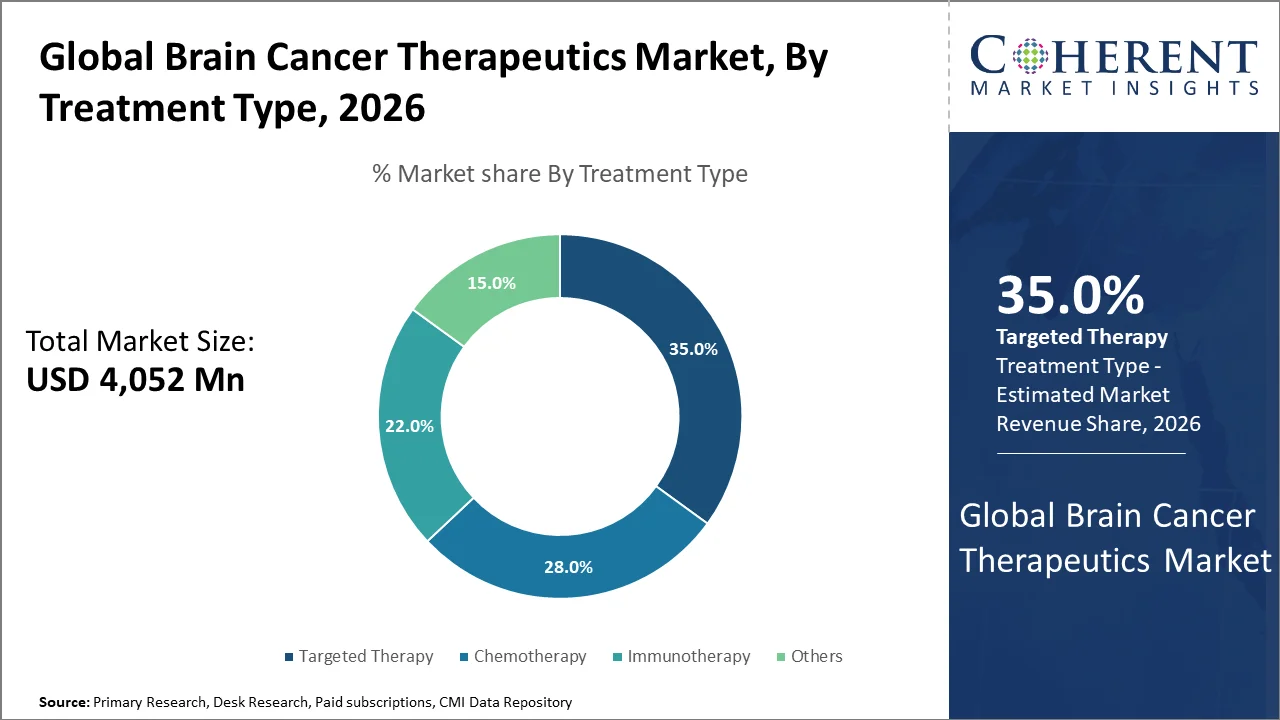
Based on treatment type, targeted therapy is expected to dominate the market, accounting for a share of 35% in 2026. This is mostly due to its ability to precisely target cancer cells while reducing damage to healthy tissues, resulting in better treatment outcomes and fewer side effects than conventional chemotherapy.
Growing popularity of biomarker-based diagnostics, rising approvals of new targeted drugs and personalized medicines are other factors fueling the demand. Similarly, ongoing clinical trials evaluating novel targeted agents for aggressive brain tumors such as glioblastoma are expanding treatment options as well as strengthening the market position of targeted therapies.
For example, a 2025 phase 1/2 umbrella trial evaluated molecularly matched targeted therapies in 228 newly diagnosed glioblastoma patients, highlighting the growing adoption of precision medicine. Such advancements are expected to support expansion of the targeted therapy segment during the forecast period.
Brain Cancer Therapeutics Market Growth Drivers
Rising Incidence of Brain Tumors Worldwide
Increasing global burden of brain tumors is providing a strong impetus for the growth of brain cancer therapeutics market. There is a steady rise in cases of brain cancers globally. For instance, approximately 321,000 new cases of brain and other CNS tumors were reported worldwide based on the latest global estimates. This rising disease incidence is expected to propel demand for brain cancer therapeutics over the forecast period.
Brain Cancer Therapeutics Market Opportunities
Advancements in Diagnostics and Early Detection
Advancements in brain cancer diagnostics are expected to create lucrative growth opportunities for the brain cancer therapeutics market during the forecast period. Improved imaging techniques such as MRI and PET, AI-based diagnostic tools, and biomarker identification are enabling earlier and more accurate detection of brain tumors. This is leading to earlier treatment initiation and increased utilization of therapeutic drugs. Thus, higher number of diagnosed cases is expected to drive greater demand for brain cancer therapies during the forthcoming period.
Brain Cancer Therapeutics Market Trends
Shift Towards Targeted and Precision Medicine
Increasing adoption of targeted therapies is a key growth-shaping trend in the brain cancer therapeutics market. Treatment approaches are shifting from traditional chemotherapy to biomarker-based targeted therapies that act on specific genetic mutations in tumors. This improves treatment outcomes as well as reduces side effects.
Rising adoption of combination therapies is another market trend. In contemporary clinical practice, physicians are increasingly using multiple approaches together, including surgery, radiation therapy, chemotherapy, and immunotherapy, to improve patient outcomes. This rising use of combination therapies is expected to boost overall brain cancer therapeutics market value during the forthcoming period.
Current Events and Their Impact
Current Event | Description and its Impact |
FDA Approval of the First Drug for Diffuse Midline Glioma (2025) |
|
More Than 310 Brain Tumor Clinical Trials Active Worldwide (2026) |
|
Regional Insights
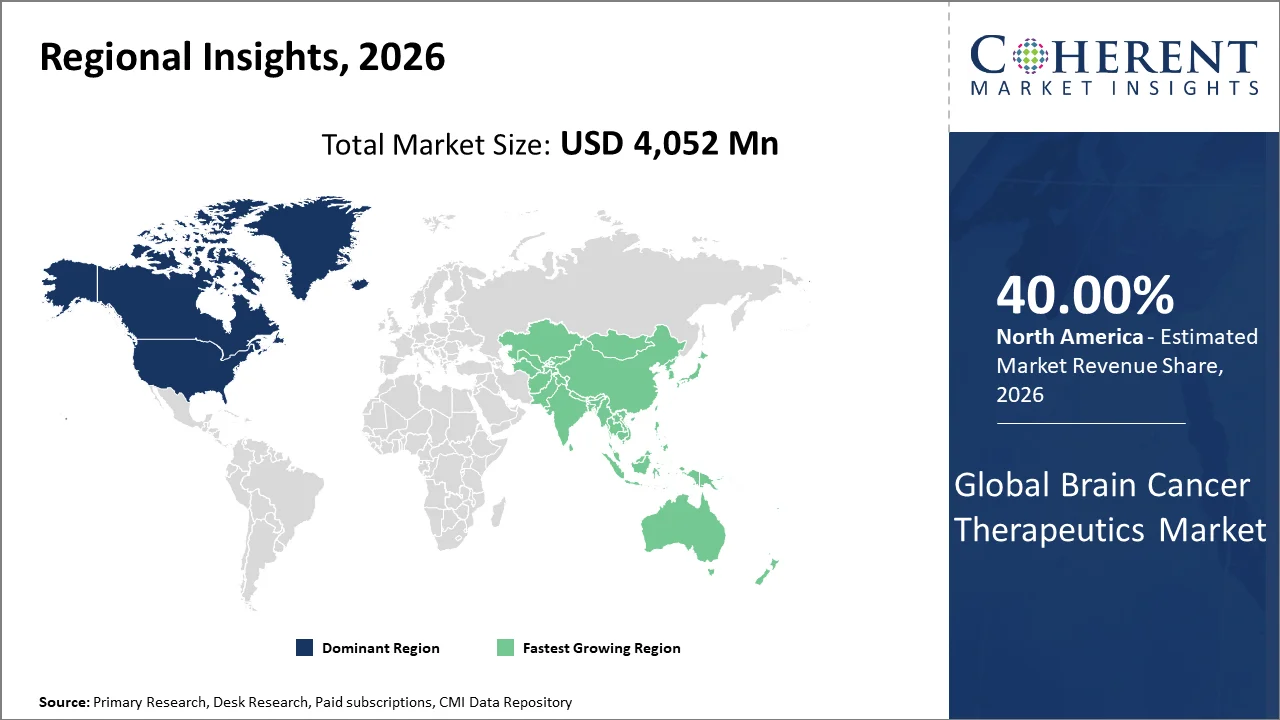
North America Remains at the Epicenter of Brain Cancer Therapeutics Market Growth
North America is expected to account for a prominent share of around 40% in the global brain cancer therapeutics market in 2026. This is attributable to the high incidence of brain and central nervous system (CNS) tumors, advanced oncology infrastructure, and early adoption of targeted therapies and immunotherapy-based treatment approaches. Strong clinical trial activity and widespread access to advanced diagnostics such as MRI and molecular profiling are also supporting market expansion.
Rising burden of brain tumors is acting as a catalyst for the growth of the North America brain cancer therapeutics market. According to the National Cancer Institute, there were approximately 24,820 new cases of brain and other nervous system tumors in the United States in 2025. This rising incidence is expected to fuel demand for brain cancer therapeutics in the region during the forecast period.
Asia Pacific Becoming a Hotbed for Brain Cancer Therapeutics Companies
Asia Pacific is anticipated to emerge as a highly lucrative market for manufacturers of brain cancer therapeutics during the forecast period, registering a CAGR of 11%. This is mainly due to the rising cancer burden, improving access to neurology and oncology care, and growing adoption of advanced diagnostic imaging and targeted therapies. Expansion of healthcare infrastructure and increasing awareness about early cancer detection are also supporting treatment uptake in the region.
Increasing incidence of brain and central nervous system (CNS) tumors and improving diagnostic reach are boosting the Asia Pacific brain cancer therapeutics market. According to the American Society of Clinical Oncology, Asia Pacific accounts for nearly 50% of global cancer cases. This, in turn, is increasing demand for surgical and pharmacological brain cancer treatments.
Brain Cancer Therapeutics Market Outlook – Country-wise
U.S. Brain Cancer Therapeutics Market Trends
The United States is expected to remain a leading market for brain cancer therapies throughout the forecast period. This can be attributed to presence of advanced oncology infrastructure, rising adoption of targeted therapies and immunotherapies, and a high rate of clinical research activity. Early availability of innovative drugs and rising use of advanced diagnostic tools such as MRI and molecular profiling, which improve early detection and treatment outcomes, are also boosting sales growth in the nation.
An increase in the prevalence of brain tumors is expected to drive growth in the U.S. brain cancer therapeutics market over the forecast period. For instance, according to the American Association of Neurological Surgeons (AANS), about 200,000 new cases of brain metastases are diagnosed in the United States each year, and this number is expected to increase with improved diagnostic techniques and greater clinical awareness.
China Brain Cancer Therapeutics Market Forecast
The brain cancer therapeutics market in China is projected to witness strong growth, owing to a large patient pool, improving access to advanced oncology care, and expanding healthcare infrastructure. Increasing awareness of early cancer diagnosis and growing availability of neurosurgical and targeted treatment options are also supporting market growth in the country.
Who are the Major Companies in the Brain Cancer Therapeutics Market?
Some of the major players in brain cancer therapeutics market are Amgen Inc., AstraZeneca PLC, F. Hoffmann-La Roche Ltd, Pfizer Inc., GlaxoSmithKline PLC, Novartis AG, Johnson & Johnson, Merck & Co, Bayer AG, and Bristol-Myers Squibb Company.
Key Strategies Adopted by Industry Players
Top manufacturers of interventional pulmonary devices are adopting various organic and inorganic strategies to boost their sales as well as gain a competitive edge over the industry. These include new product launches and approvals, investments in R&D, clinical trials, mergers, acquisitions, distribution agreements, partnerships, collaborations, and joint ventures.
- In May 2026, Johnson & Johnson announced pivotal results from the Phase 1b/2 OrigAMI-4 study. The study evaluated subcutaneous amivantamab in patients with recurrent or metastatic head and neck squamous cell carcinoma.
- Phase One Foundation and City of Hope have teamed up in January 2026 to undertake a Phase I trial for the next-generation gene-edited CAR-T cells therapy for recurrent glioblastoma.
- In January 2026, Amgen announced the acquisition of Dark Blue Therapeutics. The acquisition will strengthen Amgen's oncology pipeline by adding a potential treatment for acute myeloid leukemia (AML).
- In August 2024, the U.S. FDA approved Voranigo (vorasidenib) for the treatment of certain types of brain cancer. It is used to treat patients with IDH-mutant Grade 2 astrocytoma or oligodendroglioma following surgery.
Market Report Scope
Brain Cancer Therapeutics Market Report Coverage
| Report Coverage | Details | ||
|---|---|---|---|
| Base Year: | 2025 | Market Size in 2026: | USD 4,052 Mn |
| Historical Data for: | 2020 To 2024 | Forecast Period: | 2026 To 2033 |
| Forecast Period 2026 to 2033 CAGR: | 9.8% | 2033 Value Projection: | USD 7,796.3 Mn |
| Geographies covered: |
| ||
| Segments covered: |
| ||
| Companies covered: | Amgen Inc., AstraZeneca PLC, F. Hoffmann-La Roche Ltd, Pfizer Inc., GlaxoSmithKline PLC, Novartis AG, Johnson & Johnson, Merck & Co, Bayer AG, and Bristol-Myers Squibb Company | ||
| Growth Drivers: |
| ||
| Restraints & Challenges: |
| ||
Analyst Opinion (Expert Opinion)
- Brain cancer remains a major unmet medical need, supporting demand for new therapies. In the U.S. alone, an estimated 24,820 new brain and other CNS cancer cases and 18,330 deaths are expected in 2025, highlighting the need for more effective treatments and continued investment in novel therapeutics.
- A strong pipeline of targeted therapies and immunotherapies is expected to drive market growth. Increasing clinical research into CAR-T therapies, cancer vaccines, and precision medicines is expanding treatment options for difficult-to-treat brain cancers.
- Precision medicine is becoming a key trend in brain cancer treatment. Growing use of molecular biomarkers such as IDH mutations and MGMT methylation is helping physicians select more personalized therapies, improving treatment decisions and increasing demand for targeted drugs.
- Combination therapies are gaining wider adoption. Hospitals are increasingly combining surgery, radiation, chemotherapy, targeted therapy, and immunotherapy to improve patient outcomes, creating opportunities for companies developing innovative brain cancer therapeutics.
Speak to the analyst
Want personalized insights?
Take the findings above to one of our principal consultants, or have the report rebuilt around the segments, geographies and competitors you actually track.
Market Segmentation
- By Indication Insights ( Revenue, USD Mn, 2021 - 2033)
- Glioblastoma
- Meningioma
- Pituitary Tumors
- Others
- By Treatment Type Insights ( Revenue, USD Mn, 2021 - 2033)
- Targeted Therapy
- Chemotherapy
- Immunotherapy
- Others
- By Distribution Channel Insights ( Revenue, USD Mn, 2021 - 2033)
- Hospital Pharmacies
- Retail Pharmacies
- Online Pharmacies
- By Region Insights ( Revenue, USD Mn, 2021 - 2033)
- North America
- U.S.
- Canada
- Latin America
- Brazil
- Argentina
- Mexico
- Rest of Latin America
- Europe
- Germany
- U.K.
- Spain
- France
- Italy
- Russia
- Rest of Europe
- Asia Pacific
- China
- India
- Japan
- Australia
- South Korea
- ASEAN
- Rest of Asia Pacific
- Middle East
- GCC
- Israel
- Rest of Middle East
- Africa
- North Africa
- Central Africa
- South Africa
- North America
- Key Players in the Brain Cancer Therapeutics Market
- Amgen Inc.
- AstraZeneca PLC
- Hoffmann-La Roche Ltd
- Pfizer Inc.
- GlaxoSmithKline PLC
- Novartis AG
- Johnson & Johnson
- Merck & Co
- Bayer AG
- Bristol-Myers Squibb Company
Sources
Primary Research Interviews
- Neuro-oncologists
- Medical oncologists
- Neurosurgeons
- Radiation oncologists
- Hospital pharmacy procurement managers
- Clinical research investigators
- Biotechnology and pharmaceutical company executives
- Key opinion leaders (KOLs) in neuro-oncology
Databases
- PubMed
- ClinicalTrials.gov
- SEER (Surveillance, Epidemiology, and End Results) Program
- GLOBOCAN
- World Health Organization (WHO) Global Health Observatory
- National Cancer Institute (NCI)
- U.S. Food and Drug Administration (FDA)
- European Medicines Agency (EMA)
Magazines
- Cancer Today
- Oncology Times
- Nature Reviews Clinical Oncology
- Oncology Nursing News
- Drug Discovery World
Journals
- Neuro-Oncology
- Journal of Clinical Oncology
- The Lancet Oncology
- JAMA Oncology
- Nature Reviews Cancer
- Cancer Research
- Clinical Cancer Research
- CNS Oncology
Newspapers
- The Wall Street Journal
- Financial Times
- The New York Times
- The Guardian
- The Economic Times
Associations
- American Society of Clinical Oncology (ASCO)
- Society for Neuro-Oncology (SNO)
- European Association of Neuro-Oncology (EANO)
- National Brain Tumor Society (NBTS)
- American Association for Cancer Research (AACR)
- European Society for Medical Oncology (ESMO)
- World Federation of Neuro-Oncology Societies (WFNOS)
Public Domain Sources
- World Health Organization (WHO)
- National Cancer Institute (NCI)
- U.S. Food and Drug Administration (FDA)
- European Medicines Agency (EMA)
- Centers for Disease Control and Prevention (CDC)
- International Agency for Research on Cancer (IARC)
- National Institutes of Health (NIH)
- ClinicalTrials.gov
- SEER Program
- European Commission
Proprietary Elements
- CMI Data Analytics Tool, Proprietary CMI Existing Repository of Information for Last 10 Years
Get access to 250+ pages report
Every segment, forecast, competitor profile and data table behind the analysis above — available for instant download.
- ESOMAR Member
- ISO 9001:2015 Certified
- D-U-N-S Registered
- GDPR & CCPA Compliant
Missing comfort of reading report in your local language? Find your preferred language:
Transform your Strategy with Exclusive Trending Reports
Frequently Asked Questions
The global Brain Cancer Therapeutics Market size is estimated to reach USD 4,052 Mn in 2026.
The global Brain Cancer Therapeutics Market value is expected to reach USD 7,796.3 Mn by 2033
The global Brain Cancer Therapeutics Market is poised to exhibit a CAGR of 9.8% from 2026 to 2033.
Major growth factors include increasing prevalence of brain cancer, rising R&D spending for the development of new treatment methods and medical equipment, and increased research on novel therapies.
Targeted therapy is projected to lead the market with a share of 35% in 2026.
Some major companies in the Brain Cancer Therapeutics Market include Amgen Inc., AstraZeneca PLC, F. Hoffmann-La Roche Ltd, Pfizer Inc., GlaxoSmithKline PLC, Novartis AG, Johnson & Johnson, Merck & Co, Bayer AG, and Bristol-Myers Squibb Company.
North America, with a 40% share in 2026, is set to lead the market during the forecast period.