all report title image

Lifestyle Drugs Market Analysis & Forecast: 2026-2033
Lifestyle Drugs Market, By Drug Class (Phosphodiesterase (PDE) Inhibitors, 5-Alpha Reductase Inhibitors, Vasodilators, Prostamides, Neuromuscular Blocker, Stimulants, Contraceptives, and Antidepressants),By Application (Erectile Dysfunction, Baldness, Anti-ageing, Smart Drugs & Cognitive Enhancers, Energy Medication, Birth Control, Obesity, Smoking Cessation, and Others), By Dosage Form (Tablets, Oral Syrups, Gels, Creams, Parenteral and Chewing Gums), By Distribution Channel (Hospitals Pharmacies, Retail Pharmacies, and Online Pharmacies), By Geography (North America, Latin America, Europe, Asia Pacific, Middle East & Africa)

  • Published In : 13 Jan, 2026
  • Code : CMI4489
  • Pages :151
  • Formats :
      Excel and PDF :
  • Industry : Pharmaceutical
  • Historical Range : 2020 - 2024
  • Forecast Period : 2026- 2033

Lifestyle Drugs Market Size and Forecast – 2026 to 2033

The Lifestyle Drugs Market is estimated to be valued at USD 114.70 Bn in 2026 and is expected to reach USD 130.4 Bn by 2033, exhibiting a compound annual growth rate (CAGR) of 7.2% from 2026 to 2033.

Key Takeaways

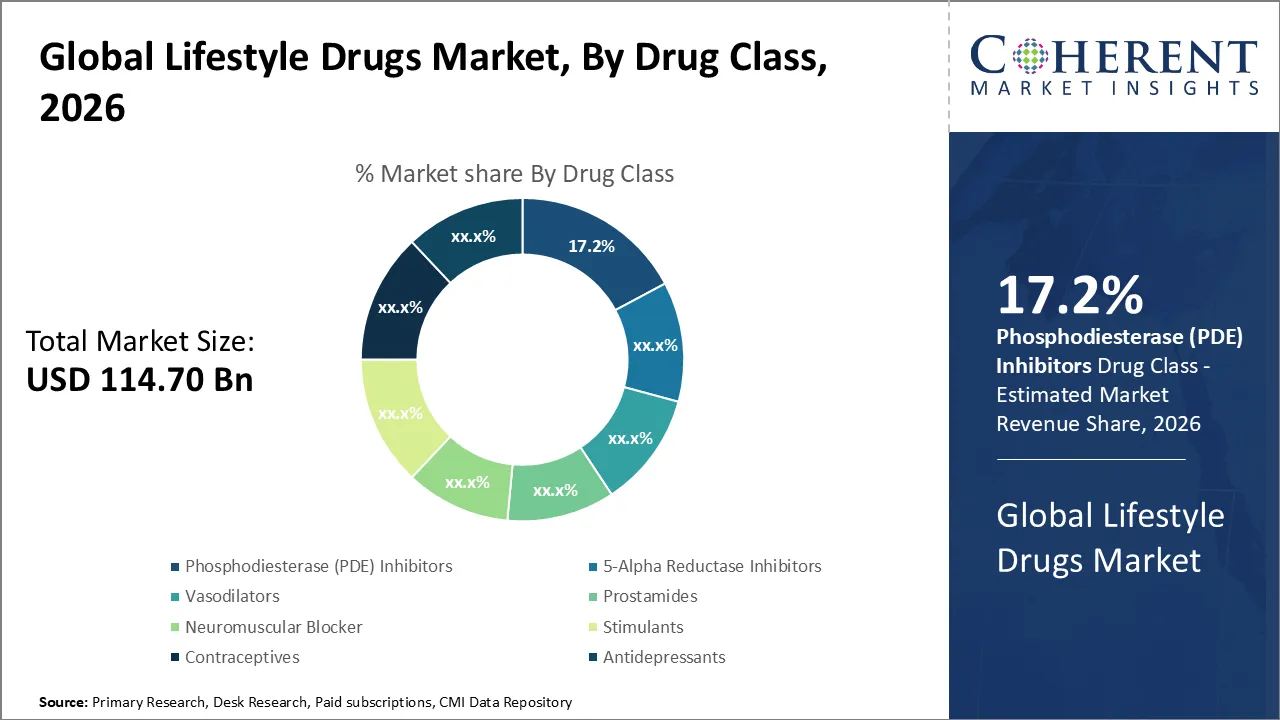
  • By Drug class, Phosphodiesterase (PDE) Inhibitors hold the largest market share of 17.2% in 2026 owing to the rising prevalence of erectile dysfunction (ed) and lifestyle‑related conditions.
  • By Application, Anti-ageing expected to hold largest market share of 21.5% in 2026 owing to its rapidly aging global population.
  • By Dosage form, Tablets acquired the prominent market share of 42.2% in 2026 owing to the patient preference & convenience.
  • By Distribution Channel, Hospital Pharmacies hold the largest market share of 19.2% in 2026 owing to the physician-directed prescriptions & hospital treatment pathways.
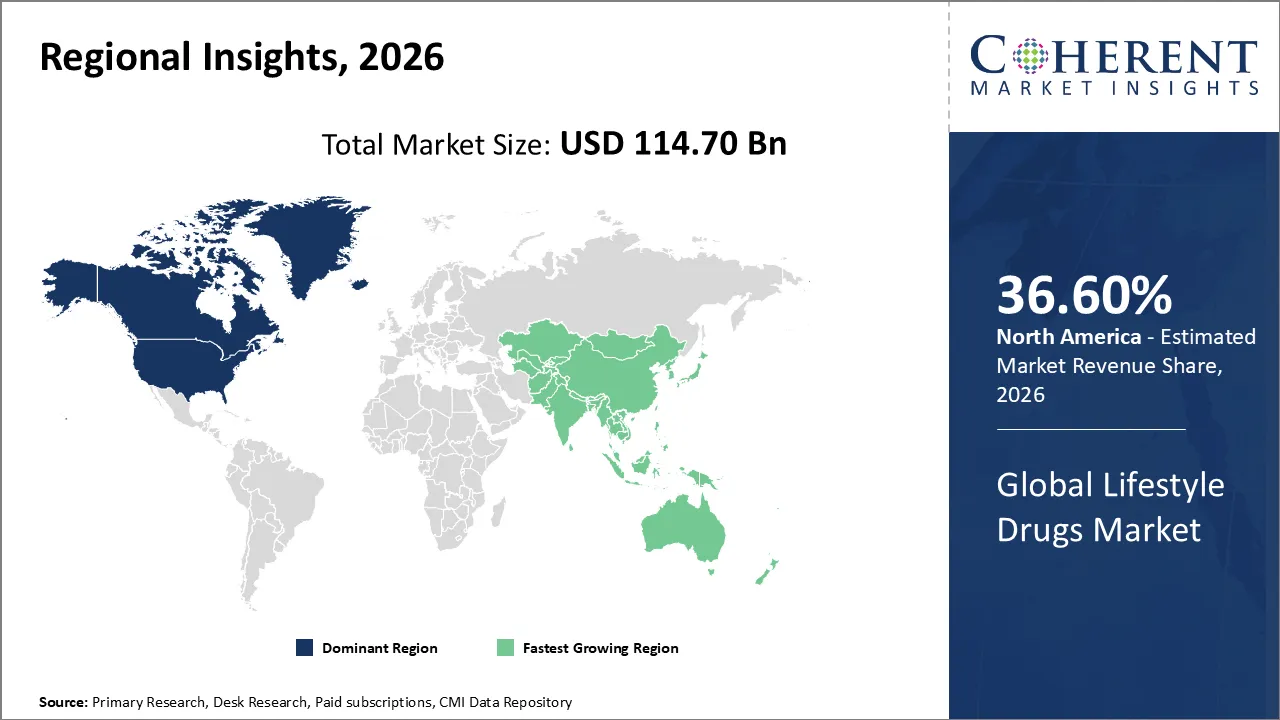
  • By Region, North America dominates the overall market with an estimated share of 36.6% in 2026 high prevalence of lifestyle-related health conditions.

Market Overview

The lifestyle drugs market addresses medications that improve quality of life by managing modern lifestyle-related conditions such as obesity, sexual wellness concerns, mental health disorders, anti-ageing requirements, and sleep disturbances. Increasing health consciousness, shifting lifestyles, urban growth, and broader acceptance of preventive and wellness-oriented care drive market development. Ongoing pharmaceutical advancements, expanded availability through hospital, retail, and online pharmacies, and strong demand from developed regions continue to accelerate market growth.

Current Events and Its Impacts on the Lifestyle Drugs Market

Current Events

Description and its impact

Regulatory Shifts in Major Markets

  • Description: U.S. FDA’s Increasing Scrutiny on Lifestyle Drug Approvals
  • Impact: May slow product launches and increase R&D costs, impacting innovation timelines.
  • Description: EU’s Push for Stricter Labeling and Consumer Protection Laws
  • Impact: Could raise compliance costs and restrict marketing strategies for lifestyle drugs.

Technological Advancements in Drug Formulation and Delivery

  • Description: Rise of Personalized Medicine and Genomic-Based Lifestyle Drugs
  • Impact: Enables tailored treatments, potentially commanding premium pricing and market differentiation.
  • Description: Integration of Digital Health Tools
  • Impact: Improves patient engagement and adherence, expanding market size and product value.

Shifts in Consumer Behavior and Demographic Trends

  • Description: Growing Global Aging Population Seeking Anti-Aging and Wellness Solutions
  • Impact: Expands demand for lifestyle drugs targeting age-related conditions and beauty enhancement.
  • Description: Influence of Social Media and Celebrities on Lifestyle Drug Popularity
  • Impact: Accelerates market adoption and shapes product portfolios based on trending consumer preferences.

Uncover macros and micros vetted on 75+ parameters: Get instant access to report

Segmental Insights 

Lifestyle Drugs Market By Drug Class

To learn more about this report, Download Free Sample

Lifestyle Drugs Market Insights, By Drug Class: Phosphodiesterase (PDE) Inhibitors contribute the highest share of the market owing to its increasing awareness & reduced stigma.

Phosphodiesterase (PDE) Inhibitors hold the largest market share of 17.2% in 2026. Phosphodiesterase (PDE) inhibitors gain momentum in the lifestyle drugs market as rising stress levels, aging populations, and chronic lifestyle conditions increase the occurrence of sexual health disorders. Greater openness toward sexual wellness and timely medical consultation encourages wider adoption. The availability of affordable generics, strong physician support, and user-friendly oral dosage forms further boost usage. Moreover, the growth of telemedicine and online pharmacies improves discreet access, while ongoing product enhancements build patient trust and sustained demand.

Lifestyle Drugs Market Insights, By Application: Anti-ageing contributes the highest share of the market owing to its increasing focus on preventive health and wellness.

Anti-ageing expected to hold largest market share of 21.5% in 2026. The anti-ageing segment of the lifestyle drugs market grows as people seek to preserve energy, appearance, and overall wellness alongside longer life spans. Increased understanding of age-related changes motivates individuals to adopt preventive therapies earlier. Greater disposable income, particularly in urban areas, enables spending on advanced wellness solutions. At the same time, progress in therapies that address cellular ageing, supported by strong wellness and media influence, continues to drive broader acceptance and use.

Lifestyle Drugs Market Insights, By Dosage Form: Tablets contribute the highest share of the market owing to its improved compliance & adherence.

Tablets acquired the prominent market share of 42.2% in 2026. Tablets hold a strong position in the lifestyle drugs market because consumers find them easy to use, portable, and familiar. Patients actively choose tablets for long-term and self-managed therapies, as these forms provide precise dosing and everyday convenience. Manufacturers benefit from cost-effective production and extended shelf life, which ensures broad availability. Ongoing improvements in tablet technologies, including modified-release and fast-dissolving formats, enhance treatment outcomes, while wide pharmacy and online distribution further boost adoption. In January 2026, Novo Nordisk has launched the first oral GLP-1 weight loss drug in the US at a lower price than injectable versions, intensifying competition and driving price pressure in the market.

Lifestyle Drugs Market Insights, By Distribution Channel: Hospital Pharmacies contribute the highest share of the market owing to its hospital infrastructure & parenteral / specialty therapies.

Hospital Pharmacies hold the largest market share of 19.2% in 2026. Hospital pharmacies drive the lifestyle drugs market by offering reliable access to medications prescribed for chronic and lifestyle-related conditions. As hospital visits rise for obesity, metabolic disorders, mental health conditions, and sexual wellness concerns, on-site dispensing continues to increase. Physicians and pharmacists work closely to deliver proper guidance, ensure safety, and improve adherence. Hospitals also handle specialized storage and monitoring needs for advanced therapies, while patient trust, insurance integration, and coordinated care further reinforce hospital pharmacies as an essential distribution channel. For instance, Aster CMI Hospital has launched a lifestyle medicine program to support people with lifestyle-related diseases and improve condition management.
Regional Insights 

Lifestyle Drugs Market By Regional Insights

To learn more about this report, Download Free Sample

North America Lifestyle Drugs Market Trends

North America dominates the overall market with an estimated share of 36.6% in 2026. Consumers in North America are actively reshaping the lifestyle drugs market by focusing on managing everyday health and well-being. Widespread use of weight-management and anti-aging therapies, along with growing access to telemedicine, drives this demand. In the U.S., strong healthcare infrastructure and digital prescription channels accelerate adoption, while Canadians increasingly pursue treatments for mental health and obesity. Innovative drug formulations and easier access continue to influence how people choose and use lifestyle medicines. For instance, in November 2025, Sarasota Memorial Hospital has launched “RENEW,” a lifestyle medicine program that helps individuals lower chronic disease risk factors and achieve their personal health and wellness goals.

Asia Pacific Lifestyle Drugs Market Trends

Consumers in the Asia-Pacific region are driving growth in the lifestyle drugs market by prioritizing preventive care, appearance enhancement, and overall wellness. Rising urban obesity and improved healthcare access in China and India are increasing prescriptions and encouraging local companies to offer competitive products. E-commerce platforms and telehealth services are actively expanding the market’s reach, while cultural emphasis on beauty and longevity motivates adoption, diversifying lifestyle medicine use across the region’s major economies. For instance, in June 2025, Innovent Biologics announced that China’s National Medical Products Administration has approved mazdutide, a first-in-class dual GCG/GLP-1 receptor agonist, for chronic weight management in adults with overweight or obesity.

United States Lifestyle Drugs Market Trends

Consumers in the United States are actively transforming the lifestyle drugs market by focusing on weight management, wellness, and self-care. They increasingly use medications for chronic conditions, while new oral therapies expand access through cash-pay options and telehealth services. Pharmacies and digital platforms are distributing these treatments more widely, and Americans are adjusting their food and lifestyle habits to incorporate them. However, concerns about cost and long-term use influence the pace at which these drugs are adopted nationwide. In December 2025, Hazard ARH launched a lifestyle medicine service line to help patients adopt sustainable daily habits that improve their health.

China Lifestyle Drugs Market Trends

Consumers in China are actively fueling growth in the lifestyle drugs market by prioritizing health and addressing rising obesity, especially through weight-management and wellness medications. Urban populations increasingly adopt semaglutide-based therapies like Ozempic and Wegovy, while domestic companies accelerate the development of local alternatives as global patents expire. Digital platforms expand access, and government health campaigns alongside broader insurance coverage guide how people choose and integrate lifestyle medicines for preventive care and appearance enhancement.

End-user Feedback and Unmet Needs in the Lifestyle Drugs Market

  • Accessibility and Affordability: End-users often highlight high costs and limited insurance coverage as key barriers. Many patients find therapies expensive, prompting reliance on self-pay or skipping doses. Affordability concerns restrict wider adoption, particularly in emerging regions, while patients seek more flexible pricing, generic options, and broader insurance support to make lifestyle medications accessible.
  • Convenience and Administration: Consumers express a preference for easy-to-use formulations, such as oral or weekly injectable options over daily regimens. Complex dosing schedules and invasive administration methods reduce adherence. End-users desire simplified treatments that fit into busy lifestyles without frequent clinical visits, highlighting the need for convenient, user-friendly delivery systems in the market.
  • Safety and Side Effects: Many patients report concerns about adverse effects, from mild digestive issues to more serious complications. Users seek therapies with minimal side effects, clear safety data, and guidance on long-term use. Transparent information from manufacturers and healthcare providers can help build trust and encourage adherence to lifestyle drug regimens.

Lifestyle Drugs Market Trend

Rising Health and Appearance Awareness

Consumers are increasingly integrating lifestyle drugs into daily routines to manage weight, enhance vitality, and support overall well-being. Preventive health, anti-aging, and wellness trends are driving demand beyond medical necessity. Cultural focus on appearance, combined with social media influence, encourages proactive use of lifestyle therapies, pushing manufacturers to innovate products that align with aesthetic and health-conscious lifestyles while maintaining safety and accessibility.

Digital and Telehealth Expansion

Telemedicine, online pharmacies, and digital health platforms are reshaping access to lifestyle drugs. Consumers can now consult healthcare providers virtually and obtain prescriptions without traditional barriers. This convenience increases adoption, especially in urban regions, and allows companies to leverage data analytics for targeted marketing, patient engagement, and personalized treatment recommendations, creating a tech-driven ecosystem for lifestyle medication consumption.

Lifestyle Drugs Market Opportunity

Digital Health and Telemedicine Channels

The rise of telehealth and e-pharmacy platforms allows companies to reach consumers directly and provide convenient access to lifestyle drugs. Opportunities exist in creating app-based prescription services, virtual monitoring, and subscription models that enhance adherence. Digital platforms also generate patient data that can guide personalized offerings, improve engagement, and expand market reach across regions where in-person consultations are limited.

Market Report Scope 

Lifestyle Drugs Market Report Coverage

Report Coverage Details
Base Year: 2025 Market Size in 2026: USD 114.70 Bn
Historical Data for: 2020 To 2024 Forecast Period: 2026 To 2033
Forecast Period 2026 to 2033 CAGR: 7.2% 2033 Value Projection: USD 130.4 Bn
Geographies covered:
  • North America: U.S. and Canada
  • Latin America: Brazil, Argentina, Mexico, and Rest of Latin America
  • Europe: Germany, U.K., Spain, France, Italy, Russia, and Rest of Europe
  • Asia Pacific: China, India, Japan, Australia, South Korea, ASEAN, and Rest of Asia Pacific
  • Middle East: GCC Countries, Israel, and Rest of Middle East
  • Africa: South Africa, North Africa, and Central Africa
Segments covered:
  • By Drug Class: Phosphodiesterase (PDE) Inhibitors, 5-Alpha Reductase Inhibitors, Vasodilators, Prostamides, Neuromuscular Blocker, Stimulants, Contraceptives, and Antidepressants
  • By Application: Erectile Dysfunction, Baldness, Anti-ageing, Smart Drugs & Cognitive Enhancers, Energy Medication, Birth Control, Obesity, Smoking Cessation, and Others
  • By Dosage Form: Tablets, Oral Syrups, Gels, Creams, Parenteral and Chewing Gums
  • By Distribution Channel: Hospitals Pharmacies, Retail Pharmacies, and Online Pharmacies
Companies covered:

Pfizer Inc, Biesterfeld Spezialchemie GmbH, Roman Inc, Sytheon Ltd., Unilever plc, Johnson & Johnson, Neutrogena Corporation, Oriflame cosmetics, Eli Lily &co, Novo Nordisk A/S, AstraZeneca plc. GlaxoSmithKline plc., and Allergan plc.

Growth Drivers:
  • Rising Health and Wellness Awareness
  • Product Innovation
Restraints & Challenges:
  • High Cost and Limited Insurance Coverage
  • Cultural Acceptance and Awareness Gaps

Uncover macros and micros vetted on 75+ parameters: Get instant access to report

Lifestyle Drugs Market News

  • In September 2025, Blue Zones and the American College of Lifestyle Medicine launched the "Blue Zones Certification Course for Physicians and Health Professionals," recognizing clinicians equipped to promote longevity, well-being, and health equity in both clinical settings and their communities.
  • In November 2025, UMass Chan Medical School unveiled a large-scale trial to test a digital lifestyle intervention for patients using GLP-1 therapies to manage obesity, diabetes, or cardiovascular disease. The study will establish the Lifestyle Change Implementation Research Network Collaborating Center, funded by a four-year, $2 million CDC award.

Analyst Opinion (Expert Opinion)

  • The landscape of the Lifestyle Drugs market is being fundamentally redefined by real‑world demand patterns and shifting therapeutic expectations. In the United States, providers wrote more than 9 million prescriptions for GLP‑1 class drugs like Ozempic and Wegovy in a single quarter, underscoring unprecedented adoption for weight management and chronic care beyond their original diabetic indications; this surge reflects transformed consumer attitudes toward medical interventions for lifestyle conditions.
  • However, this expansion exposes structural issues: long‑term adherence remains uncertain, with data showing that only about one in four patients prescribed Wegovy or Ozempic remain on treatment after two years, raising questions about clinical persistence and cost‑benefit balance in sustained use.
  • Globally, China’s online pharmacy sales highlight semaglutide’s disruptive influence, where its products topped listings with sales surging over 140 percent, signaling not just medical need but social demand for appearance‑driven therapies.
  • At the same time, adverse events and regulatory scrutiny—such as notable hospitalizations linked to weight‑loss injections and rising safety concerns—illustrate that rapid adoption has outpaced comprehensive patient education and monitoring frameworks.

Market Segmentation

  • By Drug Class
    • Phosphodiesterase (PDE) Inhibitors
    • 5-Alpha Reductase Inhibitors
    • Vasodilators
    • Prostamides
    • Neuromuscular Blocker
    • Stimulants
    • Contraceptives
    • Antidepressants
  • By Application
    • Erectile Dysfunction
    • Baldness
    • Anti-ageing
    • Smart Drugs & Cognitive Enhancers
    • Energy Medication
    • Birth Control
    • Obesity
    • Smoking Cessation
    • Others
  • By Dosage Form
    • Tablets
    • Oral Syrups
    • Gels
    • Creams
    • Parenteral
    • Chewing Gums
  • By Distribution Channel
    • Hospital Pharmacies
    • Retail Pharmacies
    • Online Pharmacies
  • By Regional Insights
    • North America
      • U.S.
      • Canada
    • Latin America
      • Brazil
      • Argentina
      • Mexico
      • Rest of Latin America
    • Europe
      • Germany
      • U.K.
      • Spain
      • France
      • Italy
      • Russia
      • Rest of Europe
    • Asia Pacific
      • China
      • India
      • Japan
      • Australia
      • South Korea
      • ASEAN
      • Rest of Asia Pacific
    • Middle East
      • GCC Countries
      • Israel
      • Rest of Middle East
    • Africa
      • South Africa
      • North Africa
      • Central Africa
  • Key Players Insights
    • Pfizer Inc
    • Biesterfeld Spezialchemie GmbH
    • Roman Inc
    • Sytheon Ltd.
    • Unilever plc
    • Johnson & Johnson
    • Neutrogena Corporation
    • Oriflame cosmetics
    • Eli Lily &co
    • Novo Nordisk A/S
    • AstraZeneca plc. GlaxoSmithKline plc.
    • Allergan plc.

Sources

Primary Research interviews

  • Pharmaceutical industry executives
  • Healthcare professionals (doctors, pharmacists)
  • Clinical researchers
  • Key stakeholders in lifestyle drug development and distribution

Databases

  • PubMed
  • ClinicalTrials.gov
  • FDA Drug Database
  • WHO Global Health Observatory

Magazines

  • Pharmaceutical Executive
  • Drug Discovery & Development
  • PharmaTimes
  • Modern Medicine

Journals

  • The Lancet
  • Journal of Clinical Pharmacology
  • British Journal of Clinical Pharmacology
  • International Journal of Clinical Practice

Newspapers

  • The New York Times – Health Section
  • The Guardian – Health & Science
  • The Washington Post – Health & Medicine
  • Financial Times – Healthcare Section

Associations

  • World Health Organization (WHO)
  • American Pharmacists Association (APhA)
  • International Society for Pharmacoeconomics and Outcomes Research (ISPOR)
  • European Federation of Pharmaceutical Industries and Associations (EFPIA)

Public Domain sources

  • Government health reports (CDC, NIH, FDA)
  • Patent filings and drug approval documents
  • Open access clinical trial results
  • WHO and UN health statistics

Proprietary Elements

  • CMI Data Analytics Tool
  • Proprietary CMI Existing Repository of information for last 8 years

Share

Share

About Author

Vipul Patil is a dynamic management consultant with 6 years of dedicated experience in the pharmaceutical industry. Known for his analytical acumen and strategic insight, Vipul has successfully partnered with pharmaceutical companies to enhance operational efficiency, cross broader expansion, and navigate the complexities of distribution in markets with high revenue potential.

Missing comfort of reading report in your local language? Find your preferred language :

Frequently Asked Questions

The Lifestyle Drugs Market is estimated to be valued at USD 114.70 Bn in 2026 and is expected to reach USD 130.4 Bn by 2033.

The CAGR of the Lifestyle Drugs Market is projected to be 7.2% from 2026 to 2033.

Demand is fueled by rising health consciousness, preventive care awareness, and the influence of social media on appearance and wellness trends.

Challenges include high costs, limited insurance coverage, long-term safety concerns, and regulatory complexities.

The market is seeing oral alternatives to injectables, combination therapies, biosimilars, and personalized treatment approaches tailored to individual health goals.

Select a License Type

EXISTING CLIENTELE

Joining thousands of companies around the world committed to making the Excellent Business Solutions.

View All Our Clients
trusted clients logo
© 2026 Coherent Market Insights Pvt Ltd. All Rights Reserved.