

Central Nervous System Disorders Therapeutics Market Size and Share Analysis - 2026 To 2033
The global central nervous system disorders therapeutics market is estimated to be valued at USD 139,307 Mn in 2026 and is projected to grow at a CAGR of 7.4% during the forecast period (2026-2033), reaching USD 228,639 Mn by 2033. This growth is attributable to rising prevalence of neurological and psychiatric disorders, growing awareness and diagnosis of CNS conditions, and introduction of innovative therapies like biologics and gene-based treatments. Over 3 billion people, around 43% of the global population live with a neurological condition. Neurological disorders are the leading cause of disability and health loss worldwide, accounting for more than 11 Mn deaths each year.
Key Takeaways from the Central Nervous System Disorders Therapeutics Market Report
- Neurodegenerative disorders are expected to dominate the market with a share of 32% in 2026 because Alzheimer's disease, Parkinson's disease, and Multiple Sclerosis require long-term pharmacological treatment. For example, according to the Alzheimer's Association, nearly 13 Mn Americans aged 65 and older are projected to have Alzheimer's disease by 2050, increasing demand for neurodegenerative therapeutics.
- Antidepressants are set to account for the largest market revenue share of 25% in 2026 due to high global prevalence of depression and anxiety disorders and rising demand for SSRIs, SNRIs, atypical antidepressants, and generic formulations. For instance, according to the WHO, around 301 Mn people worldwide have an anxiety disorder.
- North America is forecast to lead the global CNS disorders therapeutics market with a share of 41% in 2026, owing to high diagnosis rates, favorable reimbursement policies as well as strong presence of major pharmaceutical companies and rapid adoption of novel CNS therapies. According to the Alzheimer's Association (2025), an estimated 7.2 Mn Americans aged 65 years and older are living with Alzheimer's disease, creating demand for CNS therapeutics as well as supporting North America's leading position in the market.
- Asia Pacific, registering a CAGR of 9.1%, is anticipated to emerge as the fastest growing market for central nervous system disorders therapeutics during the forecast period, thanks to rising prevalence of neurological and mental health disorders, improving healthcare infrastructure, increasing healthcare expenditure, expanding access to treatment, and growing awareness of CNS diseases.
Central Nervous System Disorders Therapeutics Market Overview
The global central nervous system disorders therapeutics market is projected to register steady growth during the forecast period. This is primarily due to rising incidence of neurological and psychiatric disorders, increasing geriatric population, growing awareness of early diagnosis and treatment, and continuous advancements in drug development.
Increasing investments in neuroscience research and development of targeted biologics, gene therapies, and personalized treatment approaches are also expected to support market expansion over the coming years. Similarly, rising popularity of personalized and precision medicine will bode well for the target market during the forecast period.
Genetic profiling, biomarkers, and patient-specific treatment approaches are increasingly being used to improve treatment outcomes in CNS disorders. Moreover, combination drug regimens are becoming more common to improve efficacy in complex conditions like schizophrenia and depression.
Central nervous system (CNS) disorders comprise neurological and psychiatric conditions such as Alzheimer's disease, Parkinson's disease, epilepsy, stroke, migraines, meningitis, encephalitis, and spinal cord injuries. Rising prevalence of these conditions is expected to fuel demand for effective therapeutic interventions as well as boost central nervous system (CNS) disorders therapeutics market growth during the forthcoming period.
Shift towards disease-modifying therapies is an emerging trend in the central nervous system disorders therapeutics market. There is a rising trend toward therapies that slow or modify disease progression rather than only managing symptoms, especially in Alzheimer’s and Parkinson’s disease. For instance, UCB recently (2026) announced acquisition of Neurona Therapeutics to strengthen UCB’s epilepsy portfolio and support the development of next-generation disease-modifying therapies.
Segmental Insights
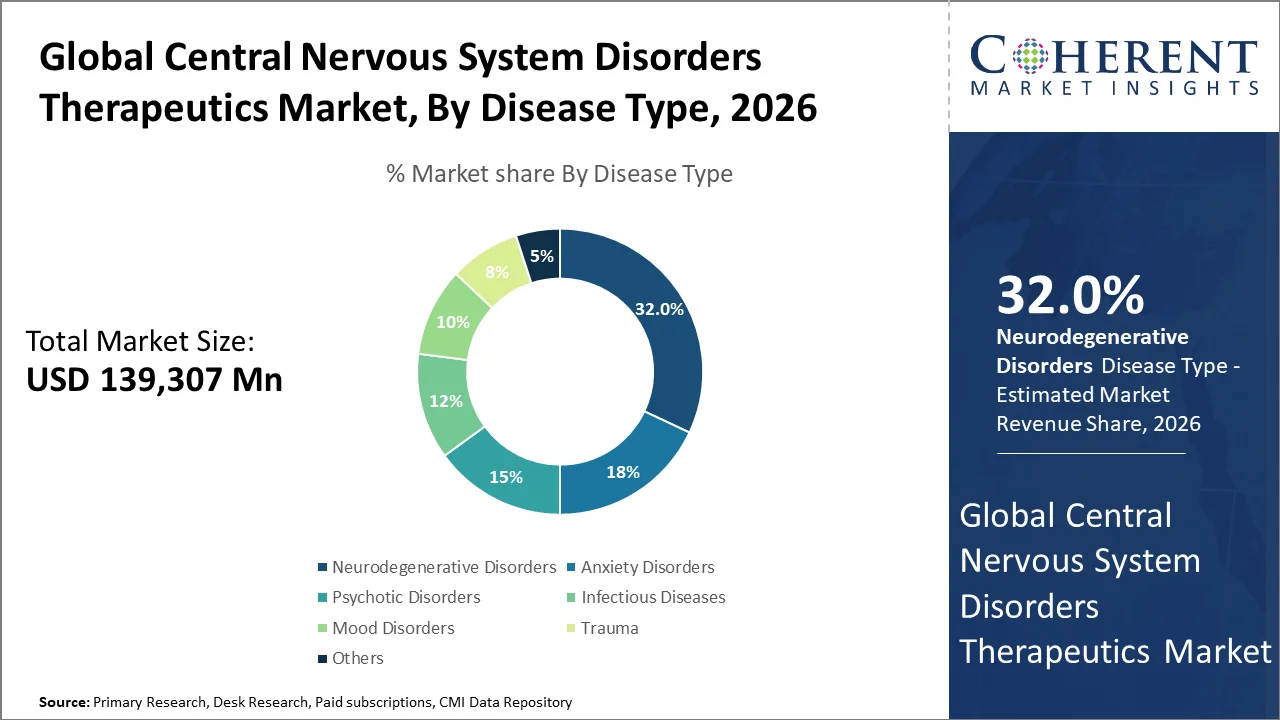
Which Disease Type Dominates the Central Nervous System Disorders Therapeutics Market?
Neurodegenerative Disorders to Hold Nearly One-Third Market Share in 2026
According to Coherent Market Insights' latest central nervous system disorders therapeutics market analysis, neurodegenerative disorders are slated to lead the market, capturing a 32% share in 2026. This dominance is attributable to rising prevalence of neurodegenerative conditions such as Alzheimer's disease, Parkinson's disease, and multiple sclerosis.
For instance, according to recent research, the number of people living with Parkinson’s disease is estimated to reach approximately 25.2 million by 2050. This anticipated increase in burden of neurological diseases is expected to create high demand for central nervous system disorders therapeutics during the forecast period.
These chronic, progressive disorders require long-term pharmacological management, resulting in rising demand for therapeutic products. In addition, the growing global aging population and ongoing advancements in disease-modifying therapies are expected to also boost segment growth in the coming years.
- Current Industry Events of 2026
- Market Size Estimation
- Regional Breakdown
- Competitive Landscape
- Customer Intelligence
- Segmental Analysis
- Pricing Analysis
- Key Market Drivers, Challenges & Future Trends
- Customized Insights Section
What Makes Antidepressants the Leading Drug Class in CNS Disorders Therapeutics Market?
Rising Prevalence of Depression and Anxiety Disorders Fuels Antidepressant Demand
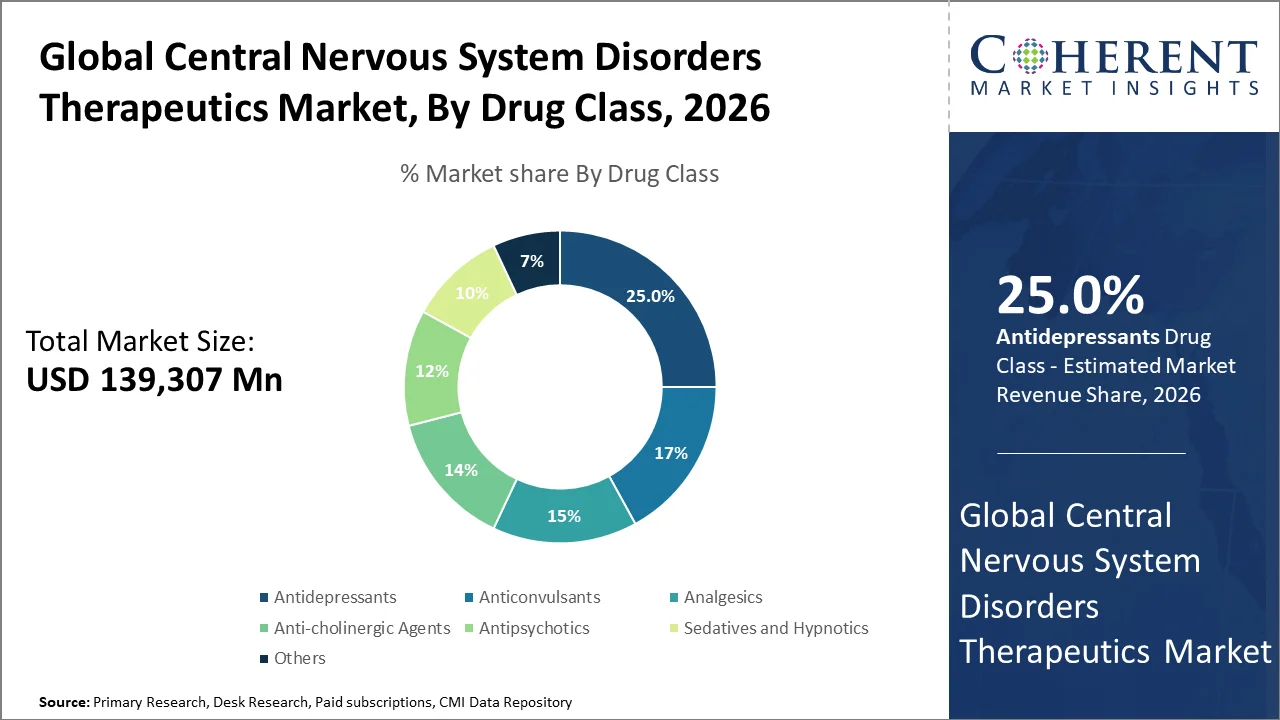
By drug class, antidepressants are anticipated to dominate the market, accounting for a revenue share of 25% in 2026. This is mostly due to rising prevalence of depression, anxiety, and other mood disorders across the world, increasing awareness of mental health, and improving access to treatment. Globally, an estimated 5.7% of adults live with depression.
According to the Similarly, anxiety disorders are becoming common. This rising burden, in turn, is expected to fuel demand for antidepressants like SSRIs, SNRIs, atypical antidepressants, and generic formulations during the forecast period.
Rising adoption of newer antidepressants with enhanced safety profiles and fewer side effects, along with expanding healthcare coverage and favorable reimbursement policies in developed countries, is also driving market demand. In addition, continuous research and development efforts focused on novel antidepressant therapies and increasing diagnosis of mental health conditions are expected to strengthen the segment's market leadership throughout the forecast period.
Central Nervous System Disorders Therapeutics Market Growth Drivers
Rising Prevalence of CNS Disorders
Increasing burden of central nervous system disorders is a key factor driving growth of the CNS disorders therapeutics market. There is a rising incidence of neurological and psychiatric conditions such as Alzheimer’s disease, Parkinson’s disease, epilepsy, multiple sclerosis, depression, and schizophrenia. For instance, around 50 million people globally are living with epilepsy, according to the Similarly, an estimated 13 million Americans aged 65 and older are expected to be living with Alzheimer’s disease by 2050. This expanding patient pool is anticipated to drive demand for CNS therapeutics during the forecast period.
Central Nervous System Disorders Therapeutics Market Opportunities
Growing Mental Health Awareness and Diagnosis Rates
Growing mental health awareness and improving diagnostic capabilities are increasing the identification and treatment rates of conditions such as depression, anxiety, bipolar disorder, and other psychiatric and neurodegenerative diseases. This is expected to create lucrative growth opportunities for central nervous system (CNS) disorders therapeutics market during the forecast period.
In parallel, improvements in digital health and brain care are helping doctors detect and manage CNS disorders earlier. For example, the Imperial College Healthcare NHS Trust has introduced a home monitoring service for dementia patients that uses remote tools and smart technology to track health changes as well as support early care. Such developments show how technology is becoming an important part of CNS care, improving patient outcomes and expanding treatment options.
Central Nervous System Disorders Therapeutics Market Trends
Rise of Biologics and Novel Drug Classes
Development of novel drugs and treatments for central nervous system disorders is a key market-shaping trend. The market is seeing increased adoption of biologics, immunotherapies, and advanced molecular therapies alongside traditional small-molecule drugs. In August 2025, for instance, Sumitomo Pharma sought an approval to manufacture and sell a drug that utilizes iPS cells to target advanced Parkinson’s disease in Japan. This was following the success of its trial in terms of proving safety and effectiveness of the regenerative stem cell treatment for the disease.
Current Events and Their Impact on the Central Nervous System Disorders Therapeutics Market
Current Event | Description and its Impact |
WHO Highlights the Growing Burden of Neurological Disorders |
|
Expansion of FDA Approvals for CNS Therapies (2025–2026) |
|
Regional Insights
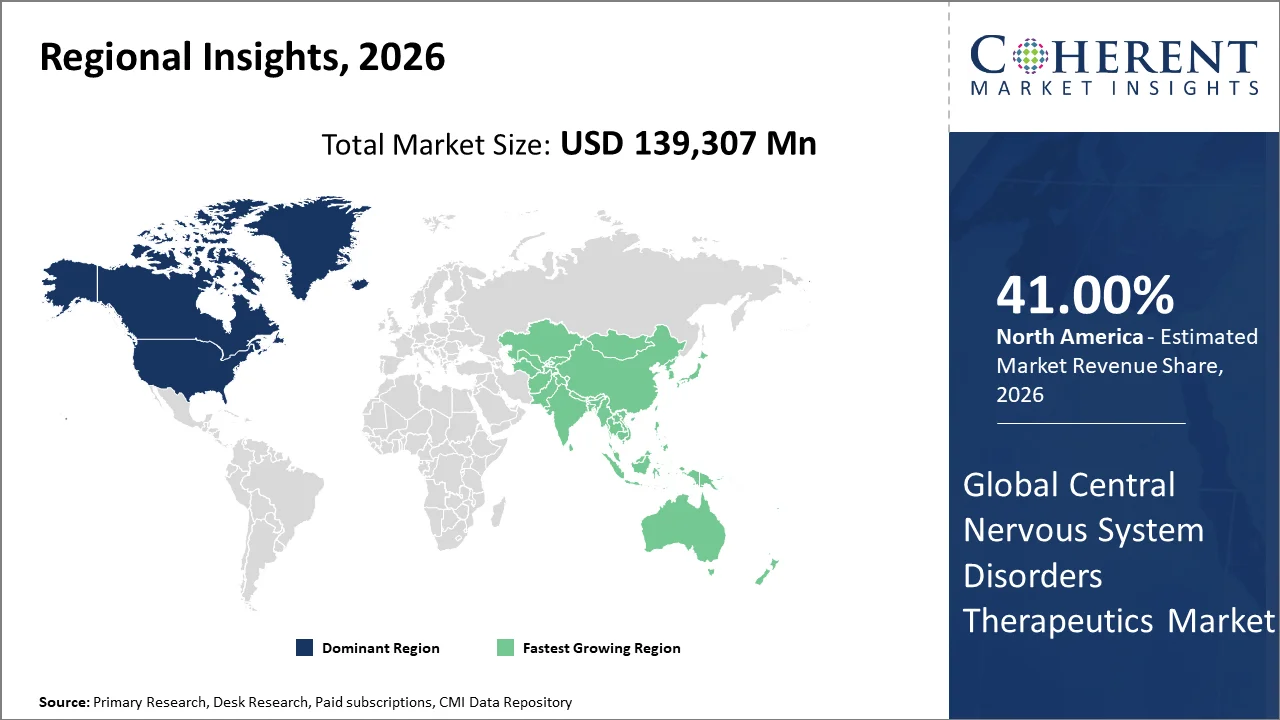
North America Remains at the Epicenter of CNS Disorders Therapeutics Market Growth
North America is expected to hold 41% of the global central nervous system disorders therapeutics market share in 2026. This is attributable to rising burden of neurodegenerative disorders such as Alzheimer’s disease and Parkinson’s disease, along with strong diagnosis rates for psychiatric conditions like depression, anxiety, and schizophrenia. Presence of advanced healthcare infrastructure and high adoption of novel CNS drug classes like antidepressants, anticonvulsants, and antipsychotics are also supporting market expansion in the region.
Increasing prevalence of neurodegenerative disorders, particularly Alzheimer’s disease, is playing a key role in boosting growth of North America central nervous system disorders therapeutics market. According to the Alzheimer’s Association, about 13 million Americans aged 65 and older are expected to live with Alzheimer’s disease by 2050. This expanding patient pool is set to fuel demand for neurodegenerative therapeutics.
Asia Pacific to Emerge as a Hotbed for Industry Players
Asia Pacific is anticipated to emerge as a highly lucrative market for central nervous system disorders therapeutics companies during the forecast period, registering a CAGR of 9.1%. This is mainly due to increasing prevalence of neurological and psychiatric disorders, rising urban stress-related conditions, and improving access to mental healthcare services. Growing adoption of antidepressants, antipsychotics, and anticonvulsants, along with increasing awareness of early diagnosis and treatment of CNS disorders, is also supporting market expansion in the region.
The growing burden of mental and neurological disorders is significantly increasing demand for CNS therapeutics and fostering market growth in Asia Pacific. According to the World Health Organization (WHO), an estimated 289 million people live with a mental, neurological, or substance use condition in the WHO South-East Asia Region. The large patient pool underscores the significant unmet need for CNS therapies, facilitating growth in the market across the region.
Central Nervous System Disorders Therapeutics Market Outlook – Country-wise
U.S. Central Nervous System Disorders Therapeutics Market Trends
The United States is expected to remain a leading market for central nervous system disorders therapeutics during the forecast period. This is due to its advanced neuro-oncology and psychiatric care infrastructure, along with strong adoption of innovative drug classes such as antidepressants, anticonvulsants, and targeted biologics.
Rising adoption of precision medicine approaches, including immunotherapy and molecularly targeted therapies, coupled with the widespread use of advanced diagnostic tools such as MRI and genetic testing for earlier and more accurate diagnosis of CNS disorders, is also driving market growth in the country. Reflecting this trend, the U.S. Food and Drug Administration approved Ztalmy for the treatment of seizures associated with cyclin-dependent kinase-like 5 (CDKL5) deficiency disorder, highlighting continued innovation in therapies for rare neurological disorders.
China Central Nervous System Disorders Therapeutics Market Forecast
The central nervous system disorders therapeutics market in China is projected to witness strong growth during the assessment period. This can be attributed to its large patient population and rapidly improving access to advanced neurological and oncology care. Expansion of healthcare infrastructure, increasing availability of neurosurgical procedures, and rising use of modern CNS drug classes such as antipsychotics, antidepressants, and anticonvulsants are supporting market expansion.
Who are the Major Companies in the Central Nervous System Disorders Therapeutics Market?
Some of the major players in central nervous system disorders therapeutics market are Biogen Inc., Pfizer Inc., Eli Lilly and Company, Merck & Co., Inc., Novartis AG, AstraZeneca Plc., Teva Pharmaceutical Industries Ltd., Takeda Pharmaceutical Company Limited, AbbVie Inc., Glaxosmithkline plc., Otsuka Pharmaceutical Co., Ltd., Dr. Reddy's Laboratories Ltd., Cipla Inc., Lupin Ltd, and Glenmark Pharmaceuticals.
Key Strategies Adopted by Industry Players
Top manufacturers of central nervous system disorders therapeutics are adopting various organic and inorganic strategies to boost their sales as well as gain a competitive edge in the industry. These include new product launches and approvals, increasing investments in R&D, clinical trials, mergers, acquisitions, distribution agreements, partnerships, collaborations, and joint ventures.
- In June 2026, Otsuka America, Inc. completed the acquisition of Transcend Therapeutics to strengthen its neuropsychiatry business. The acquisition supports the development of next-generation treatments for neuropsychiatric disorders, including post-traumatic stress disorder (PTSD).
- In June 2026, Tonix Pharmaceuticals announced the first patient enrollment in the Phase 2 HORIZON study of TNX-102 SL for major depressive disorder (MDD). The study is evaluating the safety and effectiveness of TNX-102 SL as a potential treatment for adults with MDD.
- In April 2026, UCB announced an agreement to acquire Neurona Therapeutics, a company developing cell therapies for epilepsy and other neurological disorders. The acquisition aims to strengthen UCB’s epilepsy portfolio and support the development of next-generation treatments.
- In August 2025, Biogen and Stoke Therapeutics announced the first patient dosed in the Phase 3 EMPEROR study of zorevunersen. The study is evaluating zorevunersen as a potential disease-modifying treatment for Dravet syndrome.
- In June 2024, Takeda announced positive Phase 3 topline results for soticlestat (TAK-935) in Dravet syndrome. The drug is being developed as a potential treatment for rare forms of epilepsy.
- In June 2025, Draig Therapeutics launched with a $140 million Series A investment to develop treatments for major neuropsychiatric disorders. The funding will support the clinical development of its lead drug and other pipeline programs.
Market Report Scope
Central Nervous System Disorders Therapeutics Market Report Coverage
| Report Coverage | Details | ||
|---|---|---|---|
| Base Year: | 2025 | Market Size in 2026: | USD 139,307 Mn |
| Historical Data for: | 2020 To 2024 | Forecast Period: | 2026 To 2033 |
| Forecast Period 2026 to 2033 CAGR: | 7.4% | 2033 Value Projection: | USD 228,639 Mn |
| Geographies covered: |
| ||
| Segments covered: |
| ||
| Companies covered: | Biogen Inc., Pfizer Inc., Eli Lilly and Company, Merck & Co., Inc., Novartis AG, AstraZeneca Plc., Teva Pharmaceutical Industries Ltd., Takeda Pharmaceutical Company Limited, AbbVie Inc., Glaxosmithkline plc., Otsuka Pharmaceutical Co., Ltd., Dr. Reddy's Laboratories Ltd., Cipla Inc., Lupin Ltd, and Glenmark Pharmaceuticals | ||
| Growth Drivers: |
| ||
| Restraints & Challenges: |
| ||
Analyst Opinion (Expert Opinion)
- The growing burden of neurological disorders is creating long-term demand for CNS therapies. According to the World Health Organization, neurological conditions affect more than 3 billion people worldwide, making them the leading cause of illness and disability. This large patient pool is expected to propel demand for innovative CNS treatments over the coming years.
- An aging global population is increasing the number of people living with disorders such as Alzheimer's and Parkinson's disease. Since the risk of many neurological diseases rises with age, healthcare systems are expected to invest more in long-term treatment options, supporting steady market growth.
- New disease-modifying therapies are changing the treatment landscape. Recent advances in therapies for conditions like Alzheimer's disease are shifting the focus from symptom management to slowing disease progression, encouraging higher investment in research and expanding commercial opportunities.
- Better diagnosis and greater awareness are helping more patients receive treatment. Improved brain imaging, biomarker testing, and public awareness campaigns are enabling earlier diagnosis of CNS disorders, increasing treatment rates and driving demand for therapeutic products.
Speak to the analyst
Want personalized insights?
Take the findings above to one of our principal consultants, or have the report rebuilt around the segments, geographies and competitors you actually track.
Market Segmentation
- By Disease Type Insights ( Revenue, USD Mn, 2021 - 2033)
- Neurodegenerative Disorders
- Alzheimer’s Disease
- Parkinson’s Disease
- Multiple Sclerosis
- Others
- Infectious Diseases
- Psychiatric Disorders
- Anxiety Disorders
- Trauma
- Mood Disorders
- Others
- Neurodegenerative Disorders
- By Drug Class Insights ( Revenue, USD Mn, 2021 - 2033)
- Analgesics
- Anti-cholinergic Agents
- Anticonvulsants
- Sedatives and Hypnotics
- Antidepressants
- Antipsychotics
- Others
- By Distribution Channel Insights ( Revenue, USD Mn, 2021 - 2033)
- Hospital Pharmacies
- Retail Pharmacies
- Online Pharmacies
- By Region Insights ( Revenue, USD Mn, 2021 - 2033)
- North America
- U.S.
- Canada
- Latin America
- Brazil
- Argentina
- Mexico
- Rest of Latin America
- Europe
- Germany
- U.K.
- Spain
- France
- Italy
- Russia
- Rest of Europe
- Asia Pacific
- China
- India
- Japan
- Australia
- South Korea
- ASEAN
- Rest of Asia Pacific
- Middle East
- GCC
- Israel
- Rest of Middle East
- Africa
- North Africa
- Central Africa
- South Africa
- North America
Sources
Primary Research interviews
- Neurologists
- Psychiatrists
- Neurosurgeons
- Hospital Pharmacists
- Clinical Research Professionals
- Pharmaceutical Executives
- Drug Development Specialists
- Regulatory Affairs Experts
- Healthcare Providers
- Key Opinion Leaders (KOLs)
Databases
- PubMed
- MEDLINE
- ClinicalTrials.gov
- Europe PMC
- Embase
- World Health Organization (WHO) Global Health Observatory
- U.S. Food and Drug Administration (FDA) Database
- European Medicines Agency (EMA) Database
Magazines
- Pharmaceutical Executive
- Drug Discovery & Development
- Pharma Manufacturing
- Neurology Today
- MedTech Outlook
Journals
- The Lancet Neurology
- Neurology
- Nature Reviews Neurology
- JAMA Neurology
- Brain
- Annals of Neurology
- Movement Disorders
- Multiple Sclerosis Journal
- Alzheimer's & Dementia
Newspapers
- The Wall Street Journal
- Financial Times
- The New York Times
- The Guardian
- The Economic Times
Associations
- American Academy of Neurology (AAN)
- European Academy of Neurology (EAN)
- World Federation of Neurology (WFN)
- Alzheimer's Association
- Parkinson's Foundation
- International League Against Epilepsy (ILAE)
- National Multiple Sclerosis Society
- Brain & Behavior Research Foundation
Public Domain sources
- World Health Organization (WHO)
- U.S. Food and Drug Administration (FDA)
- European Medicines Agency (EMA)
- U.S. National Institutes of Health (NIH)
- National Institute of Neurological Disorders and Stroke (NINDS)
- Centers for Disease Control and Prevention (CDC)
- Organisation for Economic Co-operation and Development (OECD)
- World Bank
- United Nations (UN)
- ClinicalTrials.gov
Proprietary Elements
- CMI Data Analytics Tool
- Proprietary CMI Existing Repository of information for last 10 years
Get access to 250+ pages report
Every segment, forecast, competitor profile and data table behind the analysis above — available for instant download.
- ESOMAR Member
- ISO 9001:2015 Certified
- D-U-N-S Registered
- GDPR & CCPA Compliant
Missing comfort of reading report in your local language? Find your preferred language:
Transform your Strategy with Exclusive Trending Reports
Frequently Asked Questions
The global Central Nervous System Disorders Therapeutics Market size is estimated to reach USD 139,307 Mn in 2026.
The global Central Nervous System Disorders Therapeutics Market value is expected to reach USD 228,639 Mn by 2033.
The global Central Nervous System Disorders Therapeutics Market is poised to exhibit a CAGR of 7.4% from 2026 to 2033.
What are the major factors driving the global Central Nervous System Disorders Therapeutics Market growth?
Major factors hampering growth of the market include adverse effects associated with CNS disorder drugs and time consuming drug development & approval process.
Antidepressants are set to lead the market with a share of 25% in 2026.
Some major companies in the central nervous system disorders therapeutics market include Biogen Inc., Pfizer Inc., Eli Lilly and Company, Merck & Co., Inc., Novartis AG, AstraZeneca Plc., Teva Pharmaceutical Industries Ltd., Takeda Pharmaceutical Company Limited, AbbVie Inc., Glaxosmithkline plc., Otsuka Pharmaceutical Co., Ltd., Dr. Reddy's Laboratories Ltd., Cipla Inc., Lupin Ltd, and Glenmark Pharmaceuticals.